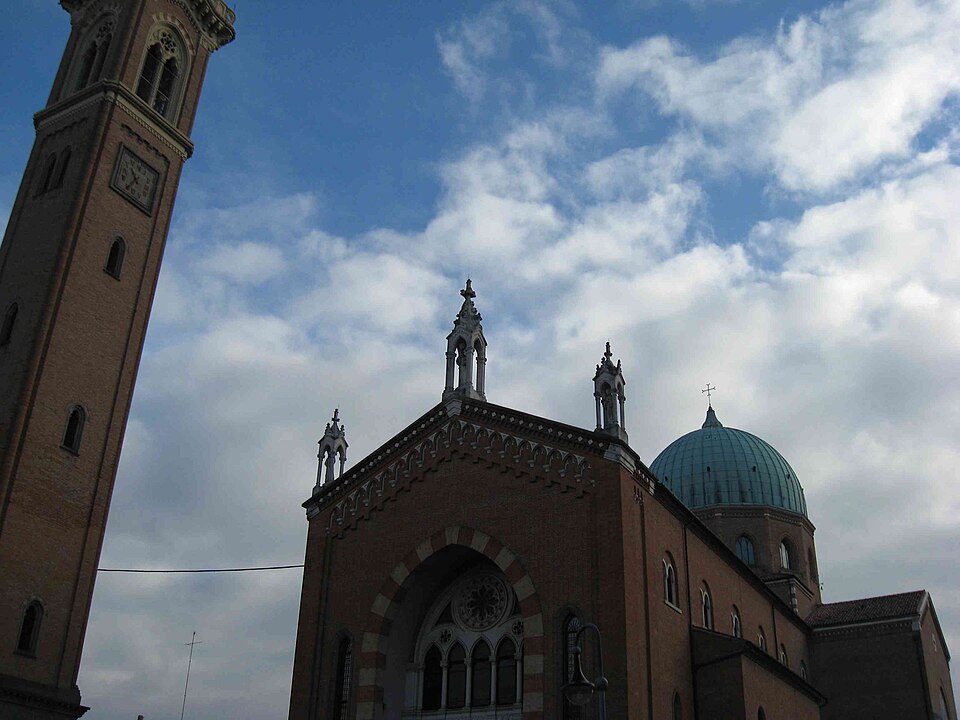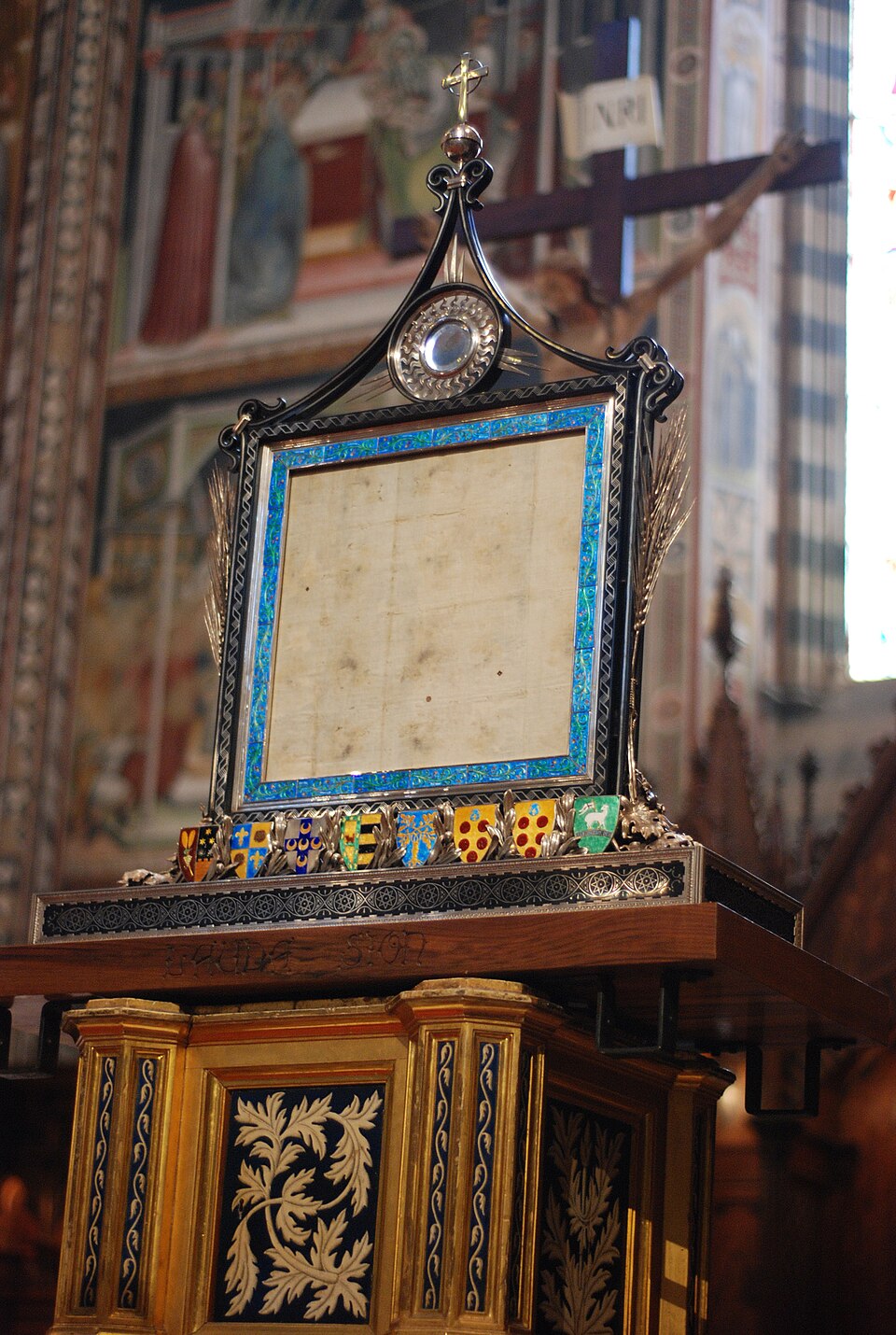
The Cathedral of Orvieto was built to house the bloodstained corporal from the Miracle of Bolsena. The relic is displayed annually during the Feast of Corpus Christi in a magnificent golden reliquary. The cathedral's facade features stunning reliefs depicting the miracle, making it one of the most important Eucharistic shrines in the world.
History
After the Miracle of Bolsena in 1264, Pope Urban IV ordered the bloodstained corporal to be brought to Orvieto, where he was residing. The relic was carried in solemn procession and became the most treasured possession of the city. To house this precious relic, construction of the magnificent Cathedral of Orvieto began in 1290 and continued for over three centuries. The cathedral's stunning Gothic facade, designed by Lorenzo Maitani, includes detailed marble reliefs depicting scenes from the Bible, including the Last Judgment. Inside, the Chapel of the Corporal (Cappella del Corporale) houses the bloodstained cloth in an elaborate golden reliquary crafted by Ugolino di Vieri between 1337 and 1338. The reliquary is a masterpiece of medieval goldsmithing, decorated with enamel scenes depicting the miracle. Each year during the Feast of Corpus Christi, the corporal is displayed in a grand procession through the streets of Orvieto, continuing a tradition that has lasted over 750 years.
Scientific Findings
The corporal has been examined multiple times. The linen cloth shows clear bloodstains that have been confirmed to contain hemoglobin. The pattern of staining is consistent with blood flowing from a central point (where the Host would have been placed). The relic has been continuously preserved under controlled conditions within the cathedral reliquary.
AI summary
A plain-language overview generated from this page's source material. Always verify with primary sources.