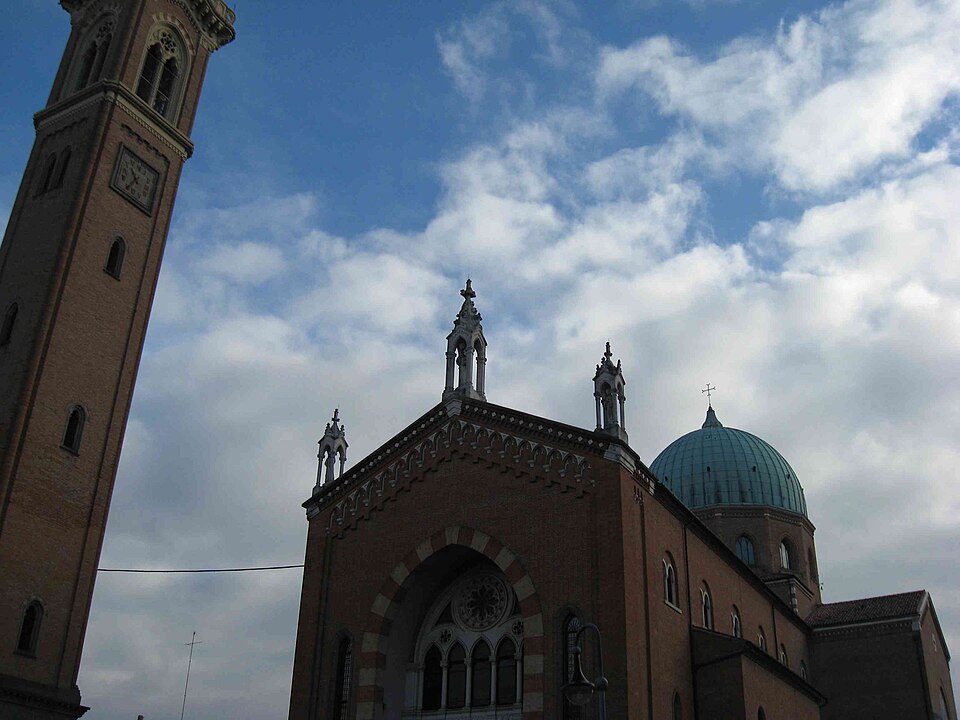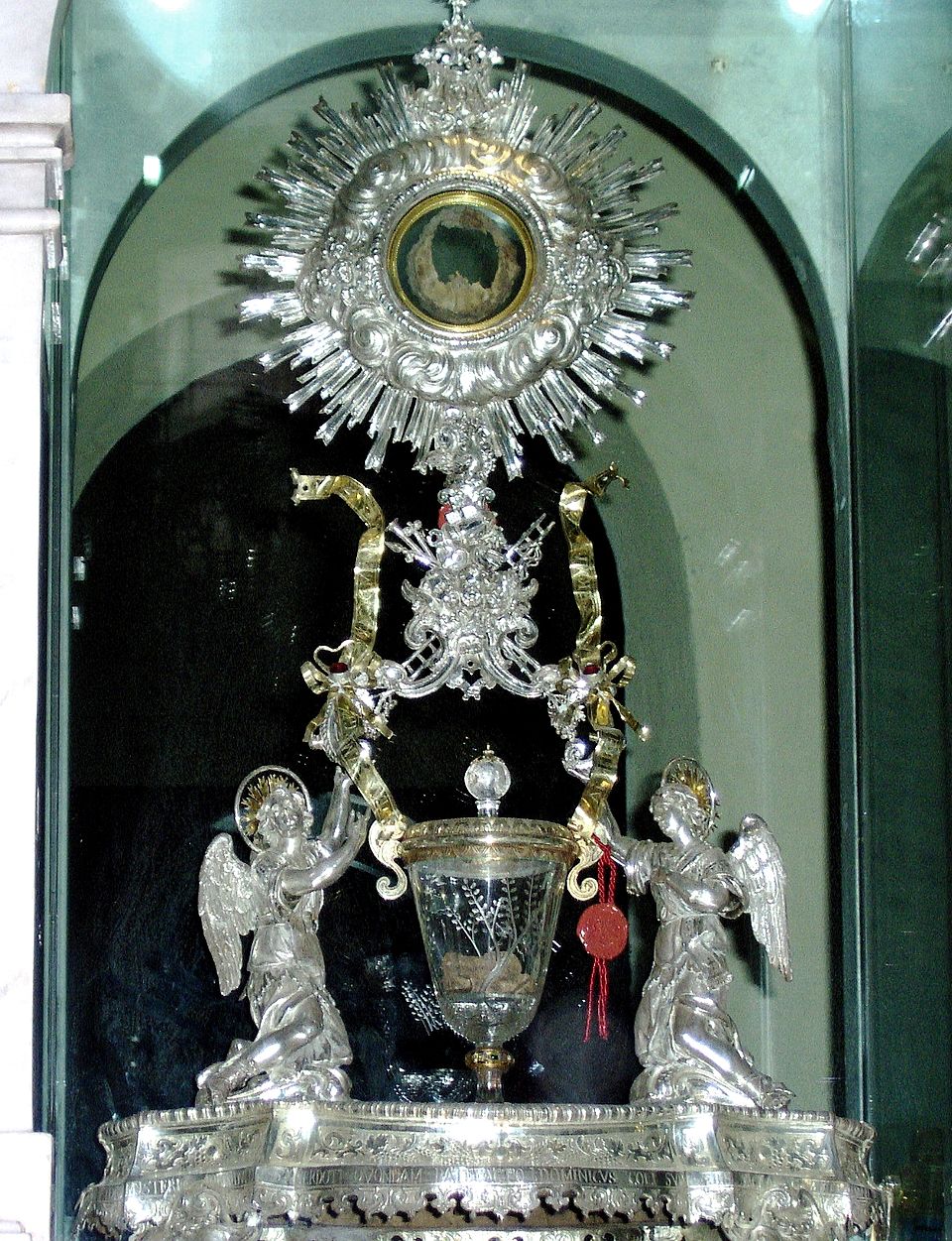
On August 14, 1730, thieves stole a ciborium containing 351 consecrated Hosts from the Basilica of San Francesco. The Hosts were found three days later in an offering box at the nearby Sanctuary of Santa Maria in Provenzano, covered in dust and cobwebs but perfectly intact. Nearly 300 years later, the Hosts remain fresh and uncorrupted — defying all natural laws of bread decomposition.
History
On August 14, 1730, thieves broke into the Basilica of San Francesco in Siena and stole a silver ciborium containing 351 consecrated Hosts. The entire city was thrown into mourning and prayer. Three days later, on August 17, the Hosts were discovered in the offering box of the nearby Sanctuary of Santa Maria in Provenzano, mixed with dust, cobwebs, and coins. The Hosts were carefully cleaned and returned to the Basilica of San Francesco in a triumphant procession. Initially, Church authorities expected the Hosts to naturally decompose within a short time. However, years passed and the Hosts remained perfectly fresh and intact. By 1789 — nearly 60 years later — the Hosts were still uncorrupted, prompting formal scientific investigation. Over the following centuries, the Hosts have been examined repeatedly by scientists, and each time they have been found to be in a state of perfect preservation. Today, 223 of the original 351 Hosts survive (some were consumed in earlier tests), and they remain as fresh as the day they were consecrated — nearly 300 years ago.
Scientific Findings
The Hosts of Siena have been subjected to rigorous scientific analysis multiple times. In 1789, a chemical analysis found the Hosts to be perfectly fresh, with no signs of decomposition. In 1914, Professor Siro Grimaldi of the University of Siena conducted extensive tests and declared that the Hosts were in a state of perfect conservation that could not be explained by natural means. Unleavened bread normally becomes stale and crumbles within a few years at most. In 1922, a formal canonical investigation confirmed the miraculous nature of the preservation. The most recent scientific examination was conducted in 2014, when the Hosts were found to still be in perfect condition after 284 years — a preservation that defies all known laws of physics and chemistry regarding organic matter decomposition.
AI summary
A plain-language overview generated from this page's source material. Always verify with primary sources.