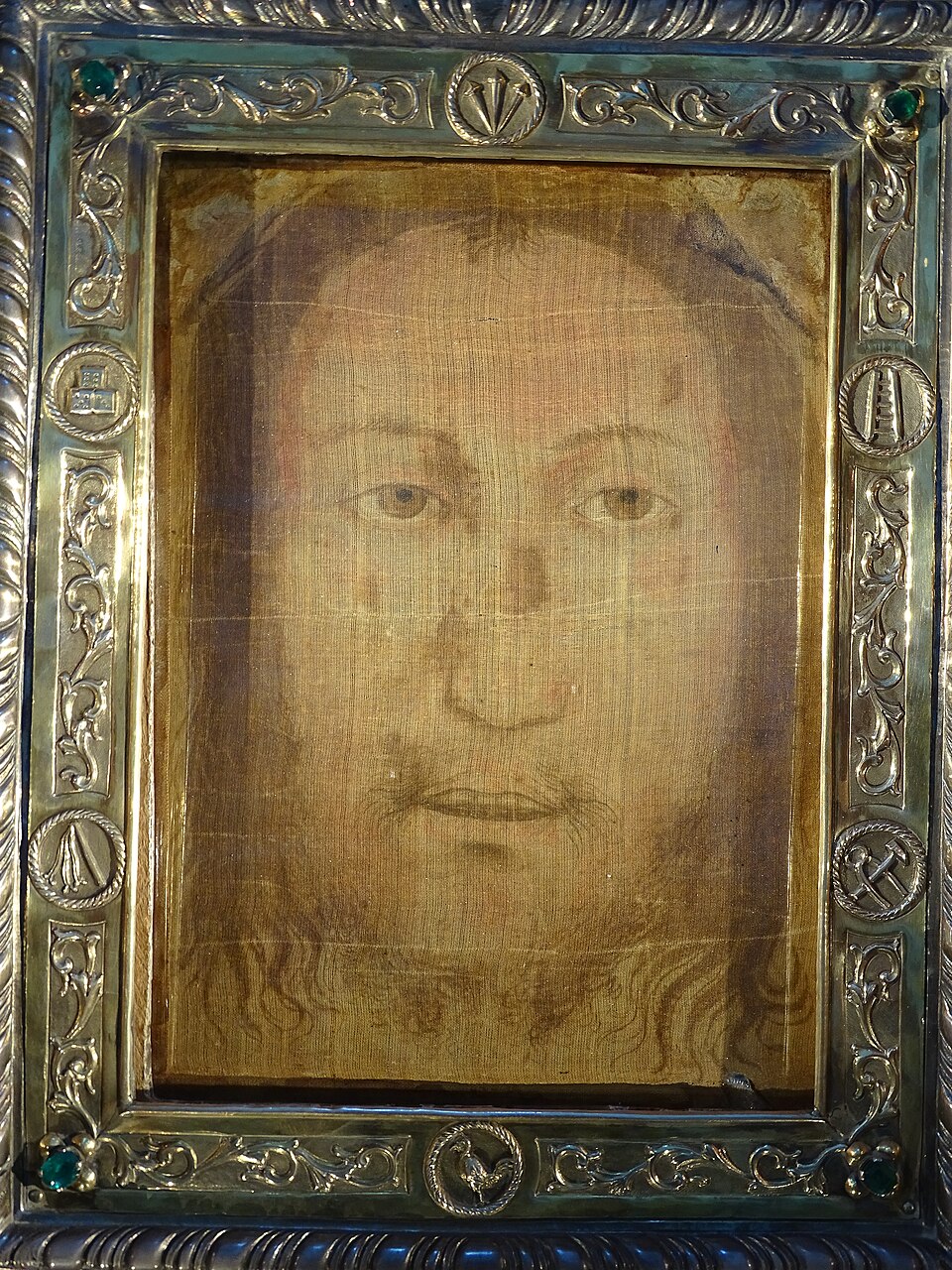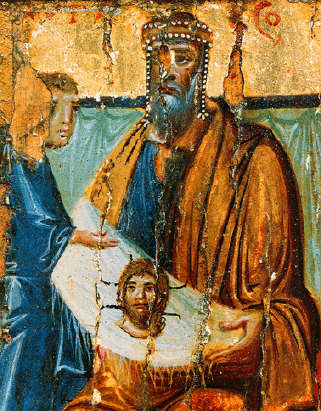

## The Image of Edessa: A Divine Portrait "Not Made by Human Hands" Among the most profound and mysterious relics in Christian history is the Image of Edessa, also known as the Mandylion. This venerated cloth, believed to bear the true likeness of Jesus Christ, holds a unique place as an *acheiropoieta* – an image "not made by human hands." Its legend traces back to the time of Christ, when King Abgar V of Edessa, suffering from a grievous illness, implored Jesus for healing. Tradition recounts that Christ, moved by the king's faith, pressed a cloth to His divine face, leaving an indelible imprint of His features, and sent it to Abgar, who was miraculously cured upon receiving it. This sacred object served as a powerful testament to Christ's divinity and a safeguard for the city of Edessa for centuries. The Mandylion's journey through history is as compelling as its origin. Hidden for a time, it was dramatically rediscovered in Edessa in 525 AD, its miraculous appearance confirming its authenticity and renewing devotion. Its spiritual significance grew immensely, becoming a preeminent icon in the Eastern Church. In 944 AD, it was ceremoniously translated to Constantinople, the heart of the Byzantine Empire, where it was revered as one of Christianity's most precious treasures, inspiring countless artistic depictions of Christ. Sadly, its physical trail vanishes after the sacking of Constantinople during the Fourth Crusade in 1204. While its ultimate fate remains a mystery, some scholars propose a fascinating connection, suggesting the Mandylion may have been the Shroud of Turin, folded to display only the face, thus linking two of Christianity's most enigmatic relics. Regardless, the Image of Edessa continues to inspire contemplation on the Incarnation and the enduring presence of Christ's divine humanity.
According to the earliest accounts, King Abgar V of Edessa sent a messenger to Jesus requesting healing. Jesus pressed a cloth to his face, leaving an imprint, and sent it to Abgar. The cloth was rediscovered in Edessa in 525 AD and transferred to Constantinople in 944. It disappeared during the Fourth Crusade in 1204. Some scholars identify it with the Shroud of Turin folded to show only the face.
Seeing the relic of Image of Edessa (Mandylion) in Edessa (modern Urfa) was an experience I will carry with me always. The church housing it has such a rich history. I was struck by how many people still come to venerate this relic after so many centuries.
June 16, 2025