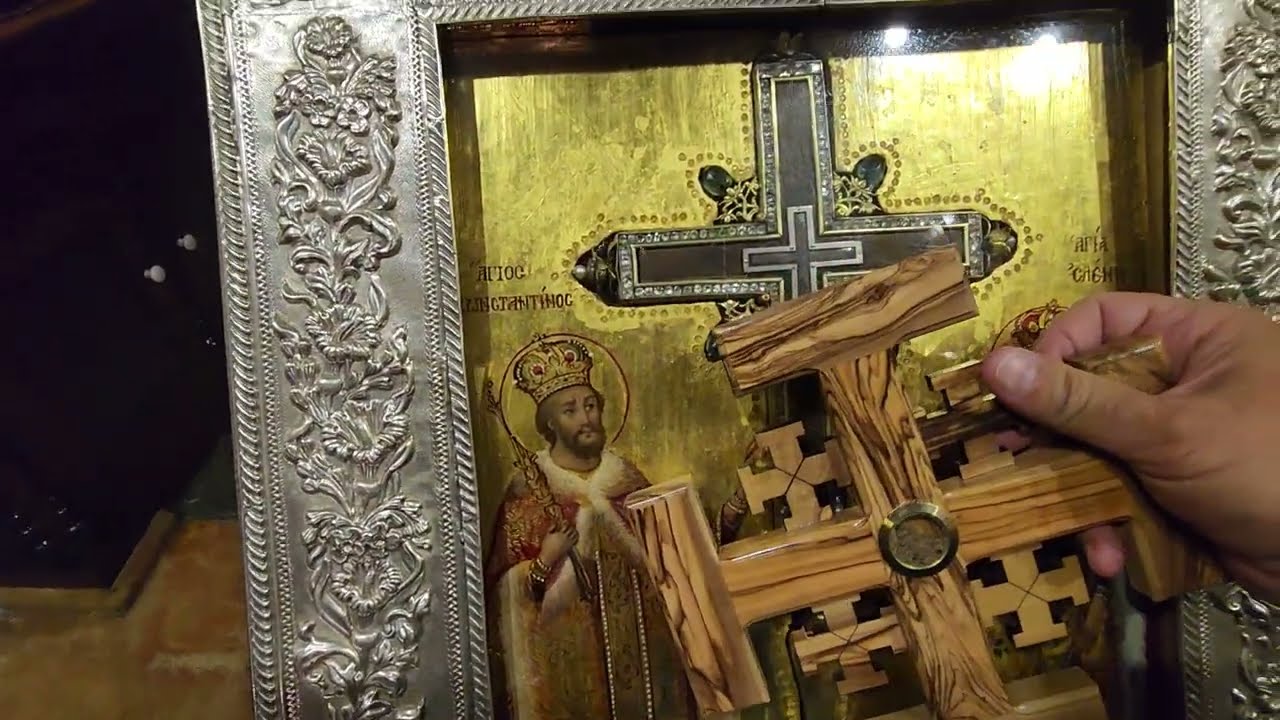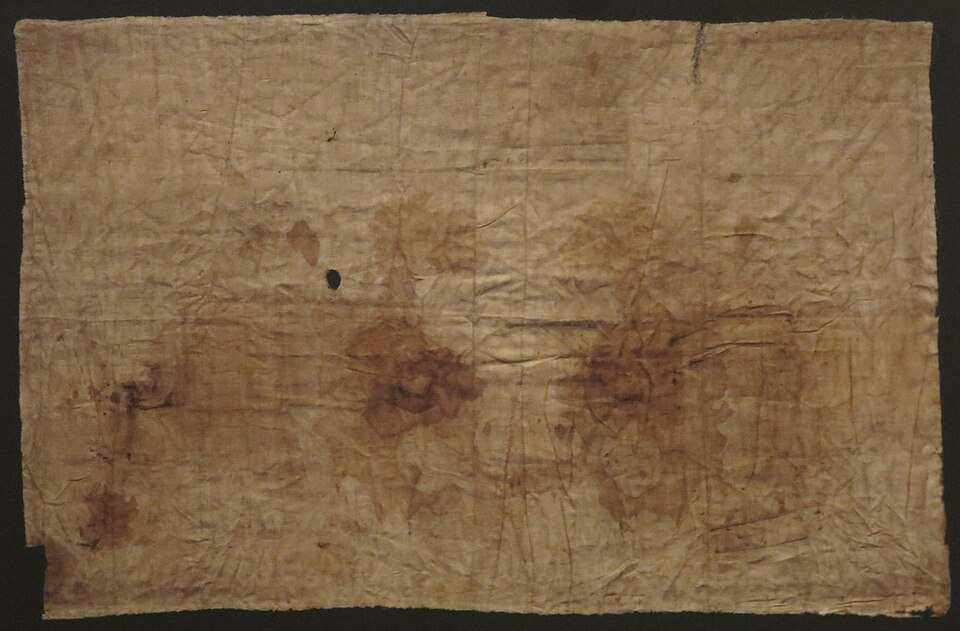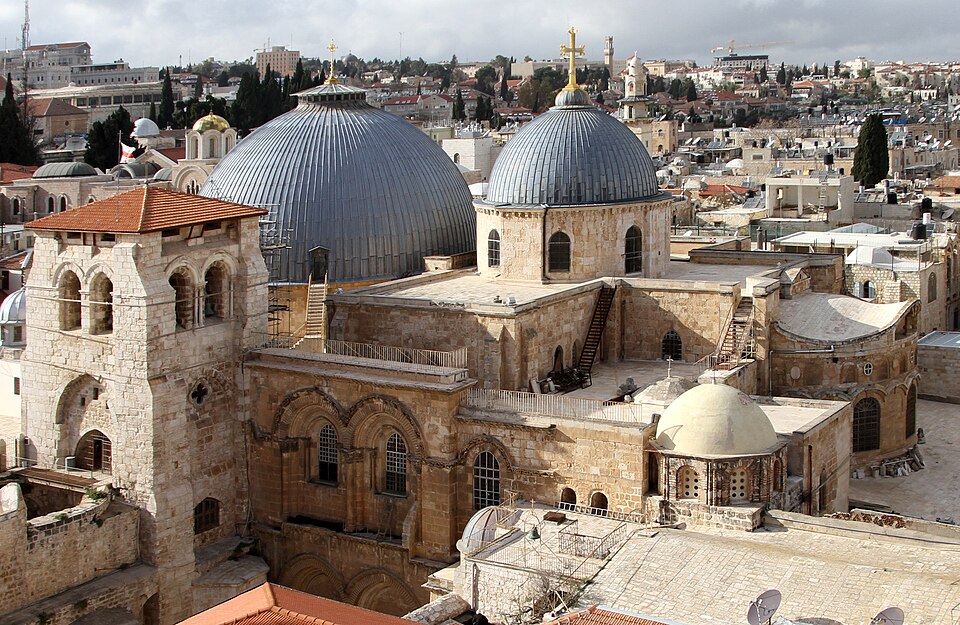

The Stone of Anointing, also known as the Stone of Unction, holds a profound place in Christian tradition as the revered spot where, according to pious belief, the body of Jesus Christ was prepared for burial following His crucifixion. While the precise historical origin of the current stone is difficult to definitively trace back to the first century, its veneration as the site of Christ's anointing dates back at least to the Crusader era. Early Christian pilgrims and chroniclers, such as Egeria in the 4th century, mention various sites associated with Christ's Passion within the area now occupied by the Church of the Holy Sepulchre, though specific mention of an "anointing stone" as it is known today emerges more clearly in later accounts. The present stone, a large, reddish-brown slab of limestone, was installed in 1810 after a fire destroyed the previous one, which itself replaced earlier stones. Despite the lack of direct archaeological evidence confirming its use in the 1st century, the continuous tradition of veneration has firmly established its spiritual significance. In Catholic tradition, the Stone of Anointing is a powerful symbol of Christ's sacrifice and the tender care with which His sacred body was prepared for its final rest. It evokes the poignant scene described in the Gospels where Joseph of Arimathea and Nicodemus took down Jesus' body, wrapped it in linen cloths with spices, and laid it in a tomb (John 19:38-42). For pilgrims, touching or kneeling before the stone is an act of profound devotion, a tangible connection to the suffering and love of Christ. It serves as a stark reminder of the reality of His death and the human experience of grief, yet also foreshadows the hope of the Resurrection. The act of anointing, traditionally associated with consecration and preparation, takes on an even deeper meaning here, signifying the ultimate offering of the Son of God. Today, the Stone of Anointing is prominently located just inside the main entrance of the Church of the Holy Sepulchre in Jerusalem, making it one of the first and most impactful sites encountered by pilgrims. It is typically covered with a protective slab of marble, which is frequently anointed with holy oil and rosewater by pilgrims, leaving a distinct fragrance in the air. Above the stone hang eight lamps, each representing one of the major Christian denominations that share custody of the Holy Sepulchre. The stone is a focal point for prayer, reflection, and acts of devotion, with countless individuals kneeling, touching, and kissing its surface, often placing religious articles upon it for blessing. This continuous veneration underscores its enduring significance as a sacred space where the faithful can intimately connect with the final moments of Christ's earthly life.
Historical details are being researched.
I traveled to Jerusalem specifically to see the relic of Stone of Anointing. The church was beautiful, and the relic is displayed with great reverence. I prayed for healing for a family member and felt a deep sense of peace afterward.
January 10, 2026
Seeing the relic of Stone of Anointing in Jerusalem was an experience I will carry with me always. The church housing it has such a rich history. I was struck by how many people still come to venerate this relic after so many centuries.
January 16, 2025