A cloak made of cactus fiber (ayate) bearing the image of the Virgin Mary, given to Saint Juan Diego in 1531. The tilma should have deteriorated within 20 years but has survived nearly 500 years.
History
According to tradition, the image miraculously appeared on Juan Diego's tilma on December 12, 1531, when he presented roses to Bishop Zumárraga. The image converted millions of indigenous Mexicans to Christianity. It has survived a 1791 acid spill and a 1921 bomb blast.
Scientific Investigation
NASA scientists reportedly found no brushstrokes and could not identify the pigments. The eyes of the Virgin contain what appear to be reflections of people, consistent with the Purkinje-Sanson effect. The fabric has not deteriorated despite being made of agave fibers that typically last 20 years. Infrared photography shows no underdrawing.
Spiritual Significance
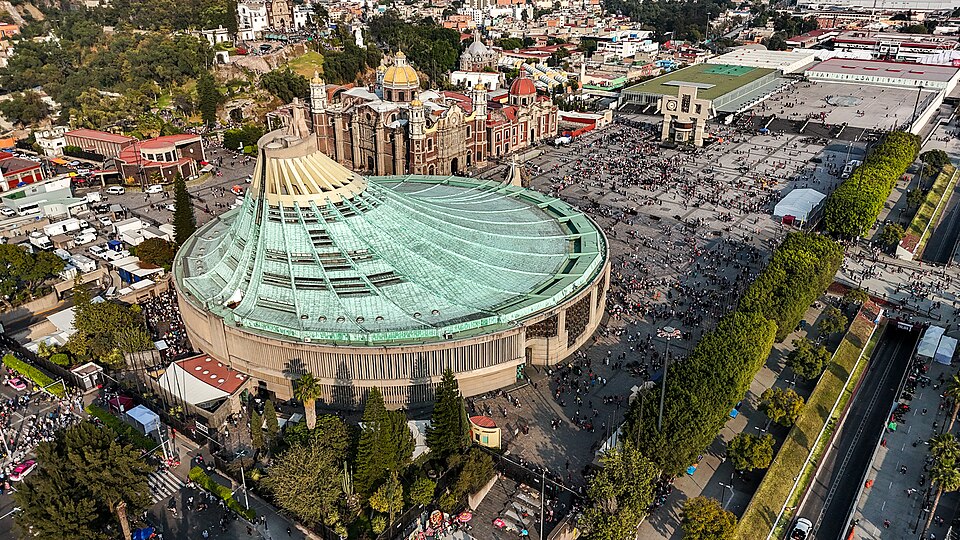
The most visited Marian shrine in the world, receiving over 10 million pilgrims annually. It is seen as a bridge between indigenous and European cultures.