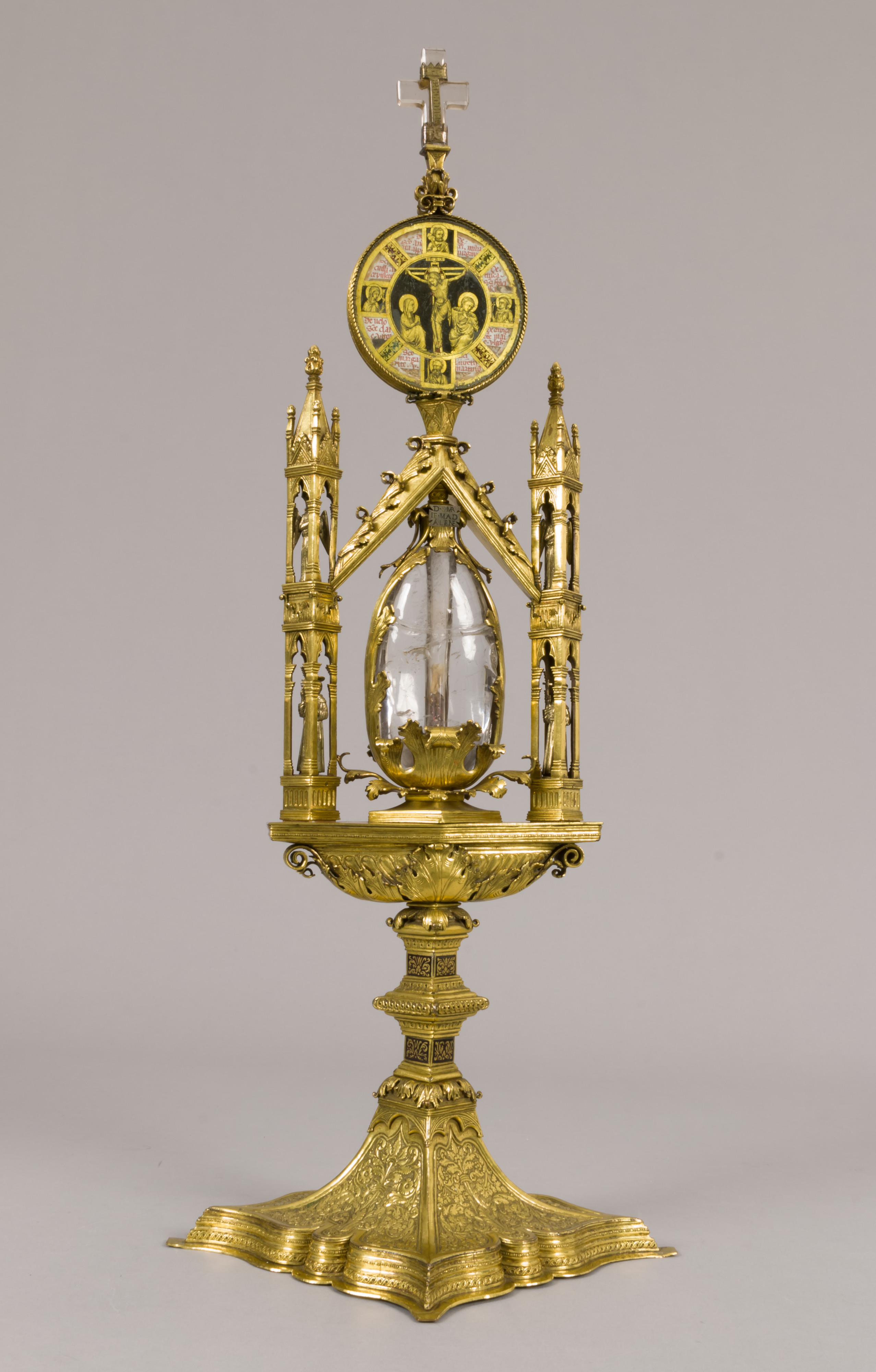

Among the most cherished and evocative relics in Christendom is the tooth of Saint Mary Magdalene, housed within the magnificent Basilica of Saint-Maximin-la-Sainte-Baume in Provence, France. This sacred fragment, alongside other precious bodily relics and most notably her skull, stands as a tangible link to one of the most beloved figures in the Gospels. According to ancient Provençal tradition, Mary Magdalene, after witnessing the Risen Christ, journeyed to southern France, dedicating her final thirty years to prayer and penance as a hermit in the nearby cave of La Sainte-Baume. Her relics, believed to have been miraculously preserved, were rediscovered in 1279, confirming centuries of local veneration and establishing Saint-Maximin as a primary pilgrimage destination. The spiritual significance of these relics, particularly the skull with its famed "noli me tangere" mark—a piece of flesh believed to be where Christ touched her forehead at the Resurrection—is profound. It symbolizes Mary Magdalene's transformation from a sinner to a saint, a faithful disciple, and the "Apostle to the Apostles." Her tooth, though a small part, represents the entirety of her being, consecrated to God and radiating the grace she received. Pilgrims throughout the centuries have sought her intercession and inspiration, drawing strength from her unwavering faith, profound repentance, and intimate encounter with the Risen Lord. These relics invite us to contemplate her journey of conversion, her ardent love for Christ, and the universal call to holiness that she so beautifully embodies.
According to Provençal tradition, Mary Magdalene traveled to southern France after the Resurrection and spent her final years as a hermit in a cave (La Sainte-Baume). Her relics were discovered in 1279 in the crypt of the church at Saint-Maximin. The skull, with a piece of flesh still attached at the forehead (the 'noli me tangere' — the spot where Jesus touched her), is the most notable relic.
Basilica of Saint-Maximin-la-Sainte-Baume
Saint-Maximin-la-Sainte-Baume, France
The basilica is open daily. The skull is displayed in a golden reliquary in the crypt. The cave of La Sainte-Baume, where Mary Magdalene is said to have lived, is a 45-minute hike from the Plan d'Aups parking area.
The relic of Tooth of Mary Magdalene in Saint-Maximin-la-Sainte-Baume is housed in a stunning church. What moved me most was seeing other pilgrims there, some who had traveled even farther than I had. We are all connected by this shared faith.
October 14, 2025