Biography
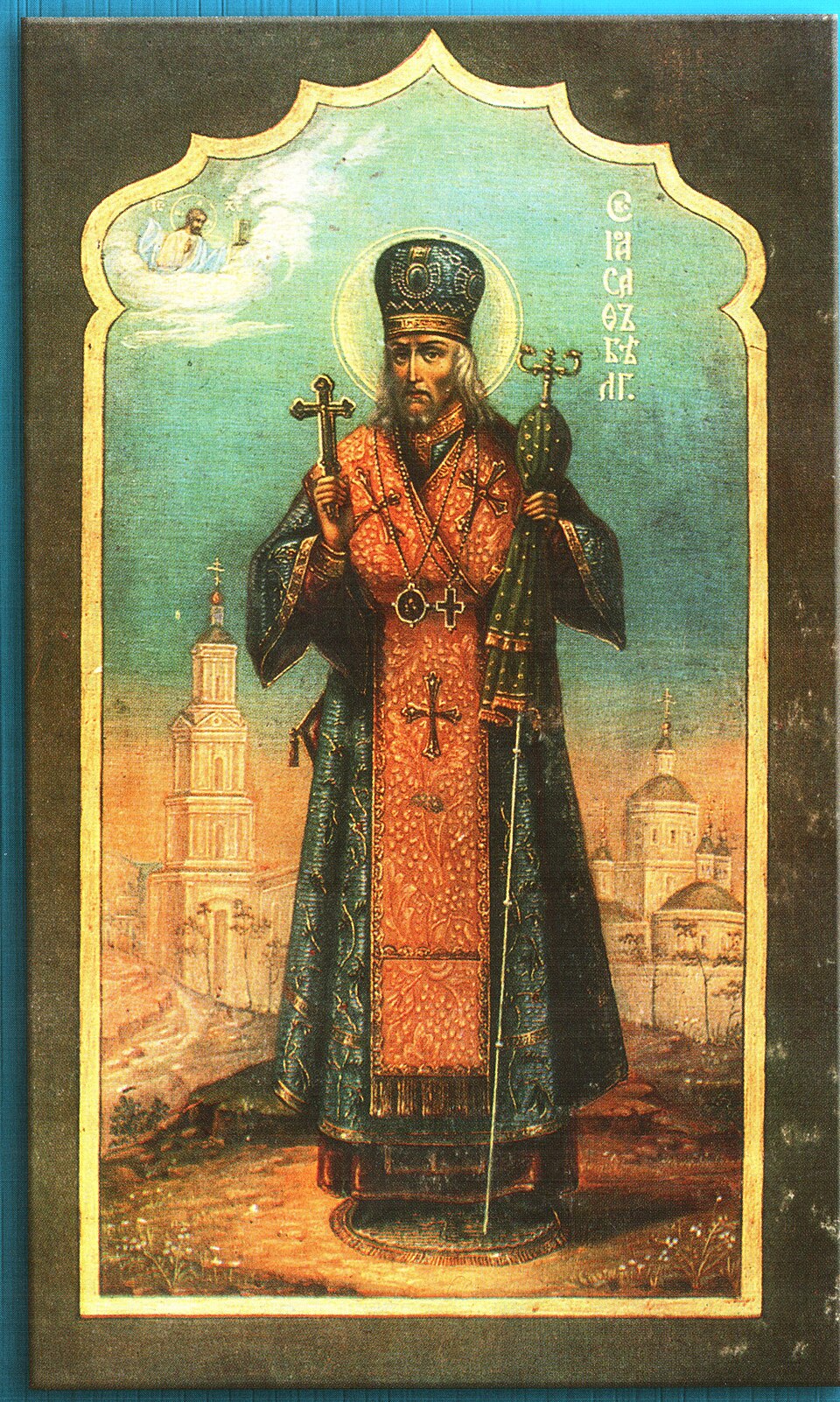
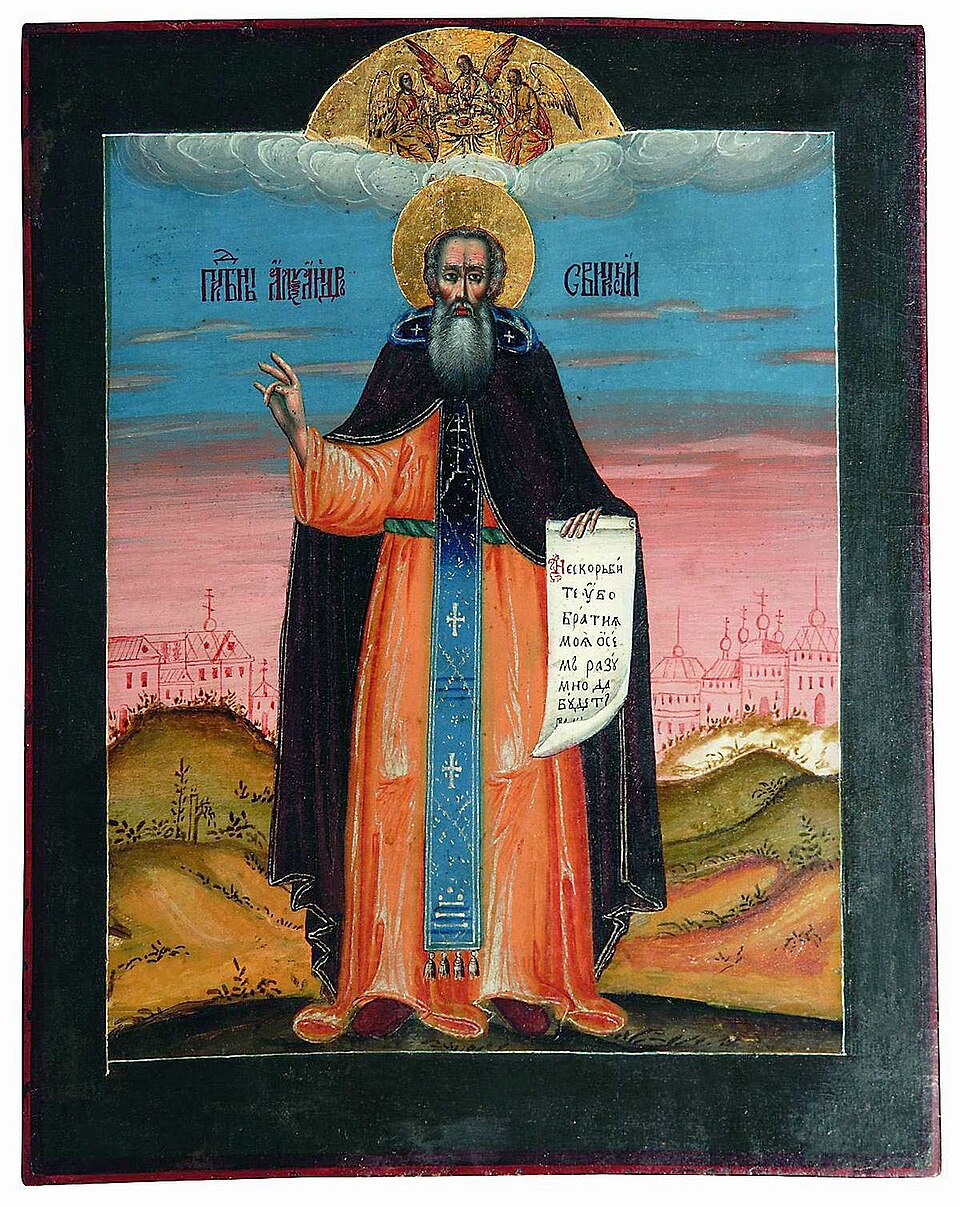
Saint Alexander Svirsky, the revered Wonderworker of Svir, was born in 1448 to a peasant family in the Novgorod region of Russia, receiving the baptismal name Amos. From a young age, Amos displayed a profound spiritual inclination, marked by a quiet piety and an aversion to worldly pleasures. His parents, Stephen and Vassa, were devout Orthodox Christians who instilled in him a deep love for God and the Church. As he matured, Amos felt an irresistible call to monastic life, a path he pursued despite his parents' initial desire for him to marry. At the age of 26, he secretly left his home and journeyed to the Valaam Monastery, a renowned spiritual center on Lake Ladoga, where he was tonsured a monk with the name Alexander. He spent several years in rigorous asceticism, cultivating a life of prayer, fasting, and humility, which laid the foundation for his extraordinary spiritual journey.
After some time at Valaam, Alexander sought an even greater solitude, establishing a hermitage on an island in Lake Roshchinsky, near the Svir River. Here, he lived a life of extreme austerity, subsisting on wild herbs and dedicating himself entirely to God. His profound holiness and spiritual wisdom soon attracted disciples, leading to the establishment of the Holy Trinity Alexander Svirsky Monastery around 1500. It was in this secluded wilderness that Saint Alexander was granted a singular grace: a vision of the Holy Trinity, a rare and profound mystical experience that solidified his reputation as a true man of God. This vision inspired the construction of a church dedicated to the Holy Trinity within his monastery, a testament to the depth of his spiritual encounter. He guided his monastic community with paternal love and unwavering spiritual insight, performing numerous miracles of healing and prophecy, and tirelessly working for the salvation of souls until his peaceful repose in 1533.
The sanctity of Saint Alexander was affirmed not only by his miraculous life but also by the extraordinary preservation of his mortal remains. In 1641, over a century after his death, his tomb was opened, and his body was found to be incorrupt, a powerful sign of God's favor in the Eastern Orthodox tradition. This miraculous state of preservation endured through centuries, even through the turbulent era of the Russian Revolution. In 1918, Soviet authorities confiscated his relics, subjecting them to scientific scrutiny and storing them in the military medical academy in St. Petersburg. Despite these non-ideal conditions and the passage of many decades, when his relics were returned to the Alexander Svirsky Monastery in 1998, they were still found to be incorrupt, emitting a sweet, fragrant aroma – a phenomenon that defied scientific explanation and further deepened the mystery and reverence surrounding his person.
Saint Alexander Svirsky was canonized by the Russian Orthodox Church in 1547, a mere fourteen years after his death, a testament to the immediate recognition of his sanctity. His feast day is celebrated on August 30th. Today, pilgrims from across Russia and beyond journey to the Alexander Svirsky Monastery in Staraya Sloboda to venerate his incorrupt relics. The enduring incorruption of his body, particularly its survival through Soviet confiscation and its continued fragrant emanation, serves as a powerful spiritual witness to his extraordinary holiness and God's miraculous power. His life continues to inspire countless Orthodox Christians to pursue a path of asceticism, prayer, and unwavering devotion, embodying the profound spiritual depth and mystical tradition of the Russian Orthodox Church.
Discovery
The remarkable journey of Saint Alexander Svirsky's incorrupt body began over a century after his earthly repose. It was in the year 1641, a time of spiritual fervor and renewed devotion in Russia, that the monastery brethren, perhaps moved by local tradition or a divine prompting, decided to exhume the remains of their revered founder. The circumstances surrounding this initial discovery are steeped in the reverence typical of such events. The grave, located within the Transfiguration Cathedral of the Alexander-Svirsky Monastery, was carefully opened in the presence of the abbot, a delegation of monks, and likely a number of devout laypeople who had gathered in anticipation. As the earth was meticulously removed, a profound sense of awe descended upon those present. Instead of the skeletal remains one would expect after 108 years, they beheld a body remarkably preserved, its features discernible, its skin retaining a lifelike quality. The immediate reaction was one of profound wonder and confirmation of Alexander's sanctity, a tangible sign of God's favor upon His faithful servant. This discovery quickly solidified his veneration and cemented his place as a truly blessed Wonderworker.
Following this initial revelation, the incorrupt body of Saint Alexander Svirsky became a focal point of veneration and pilgrimage. For centuries, it remained within the confines of the monastery, a sacred relic drawing countless faithful seeking spiritual solace and miraculous intercession. While detailed records of subsequent systematic examinations in the early centuries are scarce, the continuous public veneration implies a consistent state of preservation. The body was typically enshrined in a reliquary, often adorned with precious metals and jewels, allowing pilgrims to gaze upon the miraculous incorrupt remains. This period of relatively undisturbed veneration, however, was dramatically interrupted by the tumultuous events of the 20th century. With the advent of the Russian Revolution and the subsequent anti-religious campaigns of the Soviet regime, the monastery was closed, and its treasures, including the relics of Saint Alexander, were confiscated. In 1918, the body was removed from its sacred resting place and, in a stark display of scientific skepticism and ideological opposition, was subjected to a series of examinations by Soviet authorities. These examinations, conducted primarily at the Military Medical Academy in Petrograd (later Leningrad, now St. Petersburg), were intended to debunk the notion of incorruptibility and expose it as a religious fraud. Yet, even under such hostile scrutiny, the body's remarkable state of preservation persisted, defying scientific explanation and remaining a silent testament to its miraculous nature.
The preservation journey of Saint Alexander Svirsky's incorrupt body is perhaps one of the most dramatic in the annals of Christian relics. After its confiscation by Soviet authorities, the body was not destroyed as many other relics were. Instead, it was kept for decades in the anatomical museum of the Military Medical Academy, an ironic twist for a sacred object. Stripped of its religious context, it was treated as a scientific curiosity, an anomaly to be studied. Despite the lack of proper veneration and the secular environment, the body continued to defy the natural laws of decay. It was not until the collapse of the Soviet Union and the resurgence of religious freedom in Russia that the possibility of its return emerged. In 1998, a truly momentous event occurred: the incorrupt body of Saint Alexander Svirsky was formally returned to the Alexander-Svirsky Monastery, over eighty years after its confiscation. This return was met with immense joy and spiritual celebration by the Orthodox faithful. Today, the body is reverently enshrined in a glass casket within the Transfiguration Cathedral, allowing pilgrims to once again behold the Wonderworker. The casket is typically placed within a larger, ornate reliquary, ensuring both protection and dignified display.
Throughout its long and eventful history, the incorrupt body of Saint Alexander Svirsky has been associated with several remarkable phenomena, most notably the emission of a sweet fragrance. This "fragrant oil," or myrrh, is a common characteristic attributed to incorrupt saints, often perceived as a sign of divine grace and spiritual purity. Upon its return to the monastery in 1998, numerous witnesses attested to the presence of this sweet, almost floral aroma emanating from the relics, a powerful affirmation for the faithful that the saint's spiritual presence remained vibrant. Furthermore, throughout its centuries of veneration and even during its period of secular custody, the body consistently resisted the natural processes of decomposition. Unlike mummified remains, which are often desiccated and brittle, accounts suggest a certain flexibility and lifelike quality to the skin and tissues, even after centuries. This enduring preservation, coupled with the recurring reports of the sweet fragrance, serves as a profound testament to the miraculous nature of Saint Alexander Svirsky's incorruptibility, inspiring awe and strengthening the faith of countless pilgrims who come to venerate his holy relics.
Preservation
Body returned to Alexander-Svirsky Monastery in 1998.
Scientific Analysis
The phenomenon of bodily incorruption, particularly in the case of Alexander Svirsky, presents a compelling subject for scientific inquiry, blending historical accounts with forensic challenges. Documented examinations of his remains have been sporadic and often politically motivated, making a comprehensive scientific understanding difficult. Following the Russian Revolution, in 1918, Soviet authorities, as part of their anti-religious campaign, exhumed the body from the Alexander-Svirsky Monastery. Initial reports from these examinations, conducted by state-appointed medical commissions, described the body as remarkably preserved, with flexible tissues and intact internal organs, despite the passage of centuries. These early assessments, though lacking the rigor of modern forensic science, consistently noted the absence of typical signs of advanced decomposition. Further examinations occurred during its period of storage in various Soviet museums and later in the Military Medical Academy in Leningrad (now St. Petersburg). While specific names of medical examiners and detailed institutional reports from these periods are scarce or remain largely inaccessible, the consistent narrative from these state-controlled inspections was one of unusual preservation, often framed by the authorities as a "hoax" to be debunked, yet paradoxically confirming the physical state of the remains. After its return to the monastery in 1998, further, albeit limited, visual inspections by medical personnel and scientists have reaffirmed the body's exceptional state of preservation. However, a thorough, independent, and modern scientific examination involving advanced imaging and tissue analysis has yet to be publicly documented.
The scientific mystery surrounding Alexander Svirsky's incorruption is profound, as the reported state of preservation defies conventional understanding of post-mortem decomposition. He died in 1533 and was reportedly interred directly into the earth, without elaborate embalming procedures typical of some historical figures. The local climate in the Novgorod region, characterized by cold winters and relatively warm, humid summers, coupled with the likely soil conditions of a monastery burial ground, would typically accelerate decomposition through microbial activity, insect infestation, and enzymatic breakdown. The reported flexibility of tissues and the integrity of internal organs, if accurate, are particularly anomalous. While natural processes such as saponification (the transformation of body fat into adipocere, a waxy, soap-like substance) can preserve external features, it usually results in a rigid, brittle state and does not typically maintain the pliability of tissues or the detailed preservation of internal structures over such an extended period. Furthermore, the body's preservation through periods of confiscation and storage in potentially non-ideal conditions, including varying temperatures and humidity levels in museum environments, adds another layer of complexity. These conditions would normally be detrimental to any naturally preserved remains, potentially leading to desiccation, fungal growth, or further degradation. The absence of documented evidence of sophisticated embalming techniques, which were not widely practiced in medieval Russia to the extent seen in other cultures, further deepens the enigma.
Several natural explanations have been proposed for cases of incorruption, including the formation of adipocere, mummification due to dry conditions, or preservation in anaerobic environments. However, these explanations often fall short in fully accounting for the reported characteristics of Alexander Svirsky's remains. Adipocere formation typically occurs in wet, anaerobic conditions and primarily affects fatty tissues, leading to a hardened, waxy appearance rather than flexible tissues. Natural mummification, conversely, requires extremely dry conditions that desiccate the body, resulting in a brittle and shrunken form, which is not consistent with the descriptions of Svirsky's body. The specific environmental factors of his original burial site, while not fully detailed, do not immediately suggest conditions conducive to either extreme mummification or complete adipocere formation that would explain the reported state. Skeptics often attribute such cases to natural mummification, misidentification, or even intentional, unrecorded preservation efforts. However, the consistent accounts of remarkable preservation across multiple examinations, including those conducted by hostile Soviet authorities seeking to discredit the phenomenon, lend credence to the unusual nature of this case. The lack of a definitive natural explanation that fully encompasses all reported characteristics of the remains leaves a significant scientific gap.
From a modern scientific perspective, the case of Alexander Svirsky represents a unique opportunity for interdisciplinary research into post-mortem preservation. The application of advanced techniques, such as computed tomography (CT) scans, magnetic resonance imaging (MRI), and detailed histological and biochemical analysis of tissue samples, could provide invaluable insights. CT and MRI could non-invasively map the internal structures, assess tissue density, and identify any foreign materials or signs of past interventions. Carbon dating could precisely determine the age of the remains, corroborating historical timelines. Furthermore, DNA analysis could provide genetic information and potentially reveal insights into the individual's health and any pre-existing conditions that might have influenced post-mortem processes. Microbiological studies of the preserved tissues could identify any unique microbial communities or absence thereof that contributed to the lack of decomposition. The broader scientific study of body preservation aims to understand the complex interplay of environmental factors, intrinsic biological characteristics, and post-mortem processes. While some cases of natural mummification or adipocere formation are well-understood, the reported combination of flexibility, internal organ integrity, and historical context in Svirsky's case presents a challenge that current scientific models struggle to fully explain. Without comprehensive, modern scientific examination, many questions remain unanswered, leaving the phenomenon within the realm of both scientific curiosity and spiritual wonder.
Spiritual Significance
The phenomenon of incorruption, particularly as exemplified by figures like Saint Alexander Svirsky, offers a profound theological meditation within the Catholic tradition, echoing fundamental truths about the human person and divine grace. While Saint Alexander is revered within Eastern Orthodoxy, the spiritual significance of his preserved remains resonates deeply with Catholic doctrines concerning the sanctity of the body as a temple of the Holy Spirit, as articulated in 1 Corinthians 6:19. This incorrupt state, where the natural processes of decay are miraculously suspended, is seen not merely as a biological anomaly but as a divine affirmation of extraordinary holiness, a testament to a life so thoroughly permeated by God's grace that even the physical shell is touched by eternity. It foreshadows the glorious resurrection of the body, a central tenet of Christian faith, reminding us that our physical existence is not merely transient but destined for transfiguration. For the Church, such incorruption serves as a visible sign of the communion of saints, a tangible link between the Church Militant and the Church Triumphant, demonstrating that those who have faithfully served God continue to intercede for us and inspire us from heaven. The Church interprets this phenomenon not as a guarantee of salvation, but as a powerful, albeit rare, indicator of exceptional sanctity, inviting the faithful to contemplate the transformative power of divine love.
Saint Alexander Svirsky’s life was characterized by a unique charism of profound asceticism and mystical contemplation, embodying a heroic pursuit of holiness that deeply influenced the Russian Orthodox spiritual tradition. From his early years, even before his monastic tonsure, he exhibited an extraordinary detachment from worldly concerns, a quiet piety that spoke volumes of his inner spiritual striving. His journey to Valaam Monastery and subsequent hermitage in the wilderness demonstrated a radical commitment to poverty, humility, and obedience, virtues he practiced with unwavering devotion. He embraced a life of rigorous fasting, ceaseless prayer, and solitary contemplation, seeking union with God in the deepest recesses of his soul. This particular way of holiness, rooted in the desert fathers' tradition, emphasized interior purification and the acquisition of the Holy Spirit through arduous spiritual labor. His spiritual legacy includes the establishment of the Alexander-Svirsky Monastery, which became a beacon of monastic life and a center for spiritual guidance, attracting numerous disciples who sought to emulate his profound dedication to God. His life was a living testament to the transformative power of divine grace, illustrating how a human being, through unwavering commitment, can attain an extraordinary degree of sanctity.
Devotion to Saint Alexander Svirsky has flourished over centuries, particularly within the Eastern Orthodox Church, where he is venerated as a powerful intercessor and a model of monastic virtue. His canonization in 1547, a mere fourteen years after his repose, speaks to the immediate recognition of his sanctity and the profound impact he had on the faithful. His feast day, August 30th, is a significant occasion for pilgrims and monastics alike, marked by special liturgical services and fervent prayers. While he is primarily a figure within Orthodoxy, the spiritual principles he embodied transcend denominational boundaries, offering inspiration to all Christians. Pilgrims today journey to the Alexander-Svirsky Monastery, his resting place, to venerate his incorrupt relics, which are housed in a silver reliquary. The experience of visiting his shrine is often described as deeply moving, a palpable encounter with holiness that transcends time. The faithful approach his relics with reverence, offering prayers for healing, guidance, and spiritual strength, believing in his continued intercession before God. This tangible connection to a saint, whose body remains miraculously preserved, serves as a powerful encouragement for those seeking to deepen their own faith and draw closer to the divine.
Numerous miracles have been attributed to the intercession of Saint Alexander Svirsky, both during his earthly life and after his repose, further solidifying his reputation as a powerful wonderworker. Accounts abound of documented healings, conversions of heart, and answers to fervent prayers offered through his intercession. These miracles range from physical cures for various ailments to spiritual transformations, where individuals experienced profound shifts in their faith and moral compass. The incorrupt body itself has been a source of immense spiritual consolation for the faithful, serving as a tangible focal point for prayer and a visible sign of God's power working through His saints. Pilgrims often report a sense of peace, comfort, and renewed hope when in the presence of his relics, testifying to the enduring spiritual energy emanating from his sacred remains. These miraculous occurrences, carefully documented and attested to by generations of believers, underscore the belief that saints, even after death, remain active participants in the life of the Church, interceding for humanity and manifesting God's boundless mercy and love.
The enduring message of Saint Alexander Svirsky holds profound relevance for contemporary believers and seekers navigating a world often characterized by materialism and secularism. His life, dedicated to radical detachment from worldly possessions and an unwavering pursuit of spiritual truth, stands as a powerful challenge to the prevailing consumerist culture. In an age of constant distraction and superficiality, his commitment to silence, solitude, and deep contemplation offers a compelling alternative, inviting individuals to seek meaning beyond transient pleasures. His incorruption, a tangible bridge between the visible and invisible worlds, serves as a potent reminder of the spiritual dimension of existence, urging us to look beyond the purely material and embrace the eternal. From his example, people today can learn the profound value of spiritual discipline, the transformative power of prayer, and the enduring joy found in a life surrendered to God. His legacy encourages us to cultivate interior peace, to prioritize our spiritual well-being, and to remember that true fulfillment lies not in worldly accumulation but in communion with the divine.
AI summary
A plain-language overview generated from this page's source material. Always verify with primary sources.