Biography
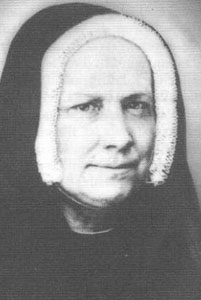
Blessed Anna Maria Taigi, born Anna Maria Giannetti in Siena, Italy, in 1769, emerged from humble beginnings to become one of the most remarkable mystics of the 19th century. Her early life was marked by the struggles common to the working class of her time. Her father, a pharmacist, faced financial ruin, forcing the family to relocate to Rome when Anna Maria was a young girl. There, she worked as a domestic servant, a testament to her family's straightened circumstances. Despite the hardships, a deep piety began to blossom within her, nurtured by her devout parents. At the age of twenty, she married Domenico Taigi, a hot-tempered but ultimately good-hearted servant of the noble Chigi family. Their marriage, though initially challenging due to Domenico's volatile nature, became a crucible in which Anna Maria's virtues were refined, transforming her into a model of patience, charity, and unwavering faith.
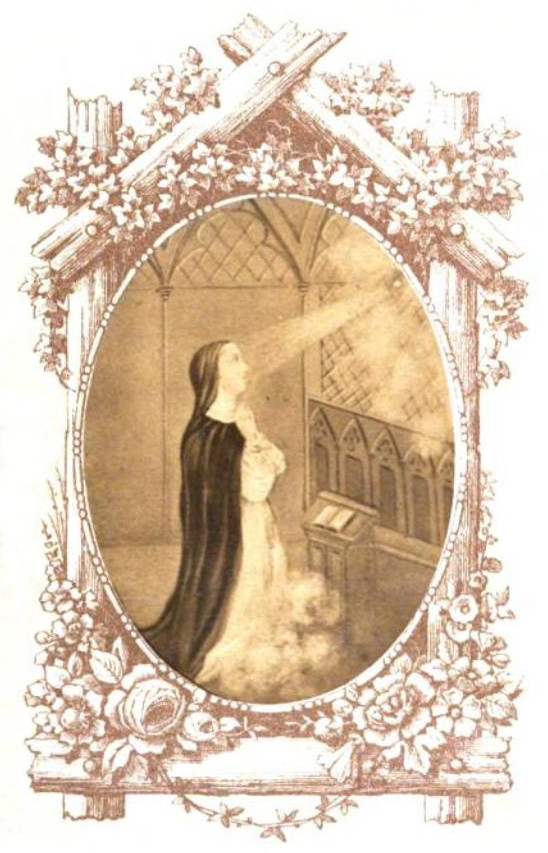
Anna Maria's vocation was not to the cloister, but to the demanding life of a wife and mother, raising seven children, three of whom died in infancy. It was within this domestic sphere that her extraordinary spiritual gifts began to manifest. She experienced profound mystical ecstasies, visions, and prophetic insights, often receiving divine messages and warnings for individuals and the Church. Her home became a sanctuary for the poor, the sick, and the troubled, who sought her counsel and prayers. She possessed the gift of healing, often alleviating suffering through her intercession. Most notably, she was granted the vision of a "mystic sun" or "luminous globe" that appeared before her eyes for forty-seven years, revealing past, present, and future events, and allowing her to discern the spiritual state of souls. This divine illumination guided her in her spiritual direction and her tireless work of charity.
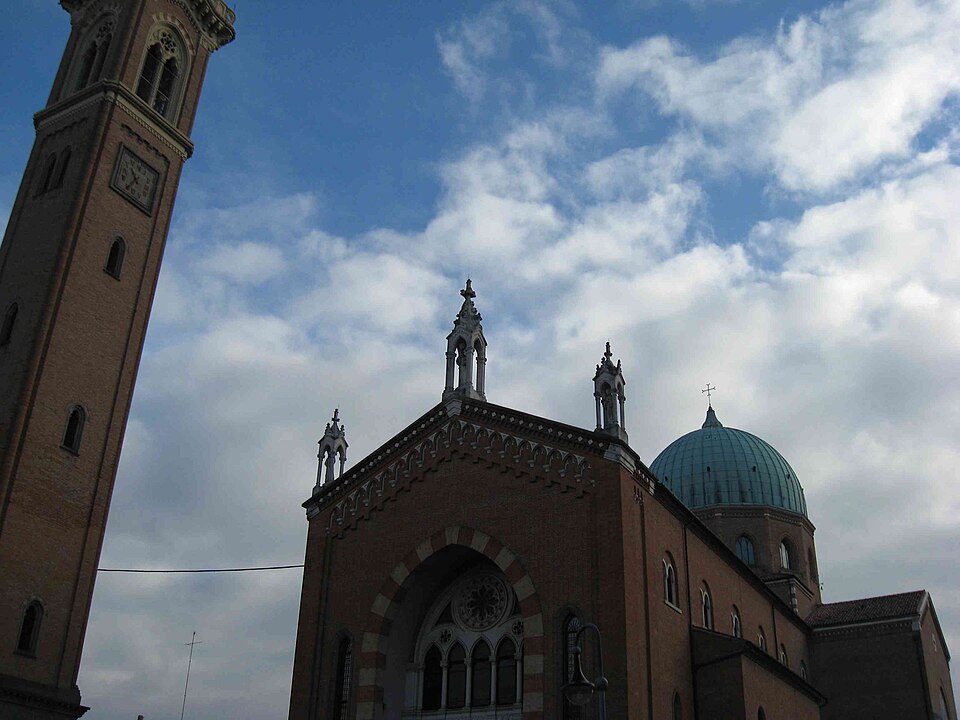
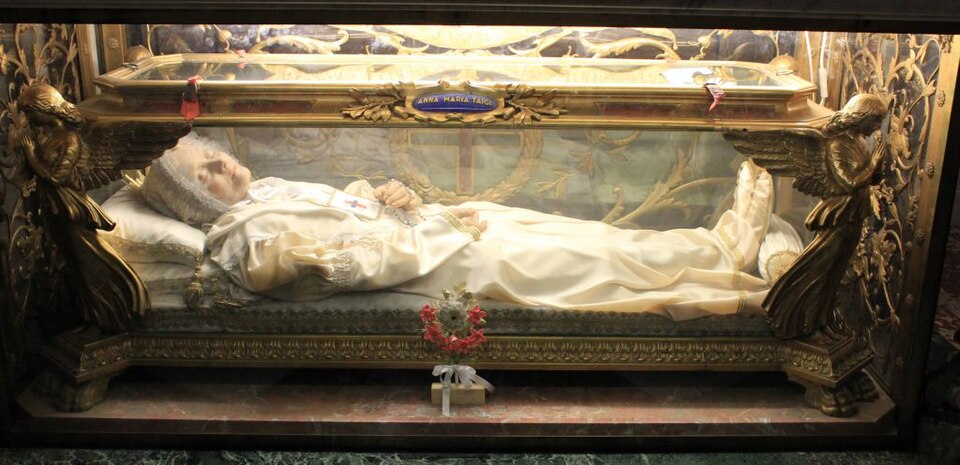
Blessed Anna Maria Taigi departed this life on June 9, 1837, at the age of 68, after a life of intense suffering and profound spiritual grace. Her passing was mourned by countless individuals who had been touched by her sanctity. Nine months after her death, her body was exhumed and found to be perfectly preserved, a testament to God's favor and a sign of her extraordinary holiness. Her skin was supple, her joints flexible, and her features serene, as if she were merely sleeping. This miraculous state of incorruption has persisted to this day. Her body, clad in the habit of a Trinitarian Tertiary, now rests in a glass reliquary in the Basilica of San Crisogono in Rome, where it continues to inspire awe and devotion.
The legacy of Blessed Anna Maria Taigi is one of profound faith lived out in the ordinary circumstances of family life. She demonstrated that sanctity is attainable not only in monasteries but also amidst the demands of marriage and motherhood. Her canonization process began swiftly, and she was beatified by Pope Benedict XV in 1920, a testament to the enduring recognition of her virtues and miraculous gifts. Today, pilgrims from around the world visit her shrine in Rome, drawn by her story of unwavering faith, heroic charity, and the tangible presence of her incorrupt body. She remains a powerful intercessor and a shining example of how a life dedicated to God, even in the midst of worldly cares, can blossom into extraordinary holiness.
Discovery
The remarkable journey of Blessed Anna Maria Taigi's physical remains, a testament to her sanctity, began not at the moment of her death in 1837, but decades later, when the Church began to formally investigate her extraordinary life. It was during the preliminary stages of her beatification process that the decision was made to exhume her body, a common practice to verify identity and to assess the state of the remains. On August 18, 1865, twenty-eight years after her passing, the tomb of Anna Maria Taigi in the crypt of the Basilica of San Crisogono in Rome was opened. Present at this solemn occasion were ecclesiastical officials, medical professionals, and witnesses, all keenly aware of the spiritual significance of the event. As the lid of her coffin was carefully lifted, a collective gasp reportedly filled the chamber. Instead of the skeletal remains typically expected after nearly three decades, the body of Anna Maria Taigi was found to be remarkably preserved. Her skin, though somewhat darkened, retained its suppleness, and her features were still discernible. The exhumation team noted that her clothing, the simple habit of a Trinitarian tertiary, was also intact, showing no signs of significant decay. This initial discovery sent ripples of wonder through the assembled witnesses, immediately suggesting a divine intervention, a sign of God's favor upon His humble servant.
Following this initial, astonishing discovery, the body of Blessed Anna Maria Taigi underwent several subsequent examinations, each meticulously documented, as her cause for beatification progressed. In 1865, after the initial exhumation, her body was transferred to a more accessible location within the basilica, placed in a new coffin with a glass lid, allowing for easier veneration and further observation. A more thorough medical examination was conducted in 1868, confirming the extraordinary state of preservation. Physicians noted the flexibility of her limbs and the absence of the typical signs of decomposition, such as putrefaction or skeletonization. Over the ensuing decades, as the Church continued its rigorous investigation into her life and miracles, her body remained an object of profound interest and careful study. In 1920, just prior to her beatification by Pope Benedict XV, another detailed examination was performed. This time, after eighty-three years since her death, her body was still found to be remarkably intact, though some natural desiccation had occurred, a common phenomenon in incorruptibles where the tissues dry out rather than decay. The consistent reports across these examinations underscored the miraculous nature of her preservation, defying natural processes of decomposition.
The preservation journey of Blessed Anna Maria Taigi's body has been one of careful veneration and respectful display, reflecting the Church's belief in the sanctity of her earthly vessel. After the 1920 examination, her body was prepared for public veneration. To ensure its continued preservation and to present it in a manner befitting a blessed, her face and hands were covered with a thin, lifelike wax mask. This practice, common for incorruptibles, allows pilgrims to behold a more natural representation of the saint while protecting the delicate underlying tissues from environmental degradation. Her body was then clothed in a new Trinitarian habit, reflecting her spiritual affiliation. Today, Blessed Anna Maria Taigi rests in a glass-sided reliquary in the Basilica of San Crisogono in Rome, where she has been venerated by countless pilgrims. The reliquary is situated in a prominent side chapel, allowing for quiet prayer and reflection. The controlled environment within the reliquary helps to maintain the current state of preservation, protecting it from fluctuations in temperature and humidity. Her serene repose continues to serve as a powerful visual reminder of her holy life and the enduring mystery of divine grace.
Among the remarkable details associated with Blessed Anna Maria Taigi's incorrupt body, beyond its mere resistance to decay, are accounts of a sweet, floral fragrance that has occasionally emanated from her remains. This phenomenon, often referred to as the "odor of sanctity," has been reported by various witnesses over the years, particularly during periods of intense veneration or examination. Unlike the putrid smell associated with decomposition, this delicate perfume is perceived as a supernatural sign, a spiritual balm to those who experience it. While not a constant occurrence, its occasional manifestation adds another layer of mystique to her incorruption. Furthermore, it has been noted that despite the passage of centuries, her body has maintained a degree of flexibility, defying the rigor mortis and subsequent stiffening that typically characterize deceased human remains. These subtle yet profound details elevate her incorruption beyond a mere scientific anomaly, imbuing it with a spiritual significance that continues to inspire faith and devotion among the faithful.
Scientific Analysis
The phenomenon of incorruption, particularly as observed in the case of Blessed Anna Maria Taigi, presents a compelling subject for scientific inquiry, challenging conventional understanding of post-mortem decomposition. Upon her death in 1837, Taigi's body was interred in the Basilica of San Crisogono in Rome. Initial observations of her remains noted an unusual state of preservation. Formal medical examinations, while not extensively documented with modern forensic rigor in the immediate aftermath of her death, were nonetheless conducted by ecclesiastical and medical authorities of the time. Records from the beatification process indicate that multiple physicians examined her body over the decades following her death. For instance, in 1865, during the first canonical recognition, Dr. Carlo Caccia, a physician from the Roman Curia, reportedly observed the body and noted its flexibility and lack of putrefaction, a finding corroborated by other medical professionals present. Further examinations occurred in 1920, prior to her beatification, where a team of physicians, whose names are not consistently recorded in public archives but were part of the Vatican's medical commission, performed a more detailed inspection. These examinations consistently reported a body that retained a lifelike appearance, with supple skin and intact organs, defying the expected processes of decomposition for a body interred for such an extended period without artificial preservation. These early assessments, while lacking the detailed analytical tools of contemporary forensic science, nevertheless established a consistent pattern of unusual preservation.
The scientific enigma surrounding Blessed Anna Maria Taigi's incorruption lies in the apparent defiance of normal decomposition processes. Human decomposition is a complex biological cascade involving autolysis, putrefaction, and the activity of microorganisms, typically leading to skeletalization within a few years, especially in the warm, humid climate of Rome. The basilica environment, while offering some protection from direct environmental exposure, is not inherently sterile or conducive to long-term preservation without specific interventions. Factors such as ambient temperature, humidity, and the presence of entomological activity should have accelerated decay. There is no historical documentation or physical evidence suggesting any embalming or deliberate preservation treatments were applied to Taigi's body. Embalming techniques of the early 19th century, while existing, were not universally applied and typically involved arterial injection of chemical solutions, which would leave discernible traces. The reported flexibility and natural appearance of the body, as noted in historical accounts, are inconsistent with typical mummification processes, which often result in a hardened, desiccated state. The absence of these conventional preservation methods, coupled with the reported longevity of soft tissue integrity, makes her case scientifically remarkable.
Various natural explanations have been proposed for instances of unusual body preservation, such as saponification (the formation of adipocere) or natural mummification. Adipocere formation, a waxy substance resulting from the hydrolysis of body fats in anaerobic, moist environments, can preserve body contours but typically alters tissue texture significantly, making it firm and waxy. While it can occur in graves, it does not usually account for the reported suppleness and lifelike appearance attributed to Taigi's remains. Natural mummification, occurring in extremely dry or cold conditions, desiccates tissues, preserving them but often leading to a shrunken, leathery appearance. Neither of these processes fully aligns with the consistent historical descriptions of Taigi's body. Skeptical perspectives often point to the subjective nature of historical observations, the potential for misinterpretation of natural processes, or the possibility of unrecorded preservation efforts. However, the consistent reports across multiple examinations by different individuals over many decades, all noting an unusual state of preservation, challenge simple dismissals. The specific environmental conditions of her tomb, while not definitively known to possess unique preservative qualities, have never been shown to be so exceptional as to entirely explain such a phenomenon through known natural mechanisms.
From a modern scientific perspective, the case of Blessed Anna Maria Taigi presents an opportunity for advanced forensic and anthropological investigation. While historical records offer valuable insights, the application of contemporary techniques could provide definitive answers. Non-invasive methods such as multi-spectral imaging, CT scans, and MRI could reveal internal organ preservation, tissue density, and any subtle signs of past interventions without disturbing the remains. Chemical analysis of tissue samples, if ethically permitted, could identify the presence of embalming agents or unique biological compounds contributing to preservation. Carbon dating could confirm the age of the tissues, ruling out any later substitutions. Microbiological analysis of the surrounding environment and the body's surface could identify any unusual microbial communities that might inhibit decomposition. The study of incorrupt bodies, including Taigi's, could contribute to a broader understanding of taphonomy – the study of decomposition – and potentially uncover novel biochemical pathways or environmental factors that influence post-mortem preservation. The unanswered questions revolve around the precise biochemical mechanisms at play, the exact environmental conditions within her tomb, and the definitive exclusion of all forms of artificial preservation. A comprehensive, interdisciplinary scientific study, respecting the religious significance of the remains, could bridge the gap between historical accounts and empirical data, offering profound insights into the complex interplay of biology, environment, and the human body after death.
Spiritual Significance
The phenomenon of incorruption, particularly as exemplified by Blessed Anna Maria Taigi, stands as a profound testament within Catholic theology to the sanctity of the human body and the enduring power of divine grace. Far from being a mere biological anomaly, the preservation of a saint's body after death, often for centuries, is understood as a miraculous sign from God, affirming the individual's exceptional holiness and serving as a foreshadowing of the general resurrection of the body. This extraordinary preservation of Anna Maria's earthly remains, nearly two centuries after her passing, powerfully echoes Saint Paul's teaching that our bodies are temples of the Holy Spirit (1 Corinthians 6:19). It suggests that the indwelling Spirit so thoroughly sanctified her physical being during life that even in death, a special divine favor is manifest. The Church interprets such incorruption not as a guarantee of salvation, which is known only to God, but as a tangible affirmation of a life lived in heroic virtue and profound union with Christ, a visible sign of the communion of saints, where the glorified body is already anticipated in a unique way. It reminds us that our earthly existence, including our physical selves, is destined for glory and transformation, not mere decay and oblivion.
Blessed Anna Maria Taigi's spiritual journey was marked by a unique charism of mystical experience and prophetic insight, coupled with an unwavering commitment to the heroic virtues within the demanding context of ordinary family life. Her particular gift was a profound interior vision, often manifested as a luminous "sun" or "globe" that appeared before her, through which she received divine illuminations concerning the past, present, and future, including insights into the hearts of others and the state of the Church. This extraordinary mystical grace, however, never detached her from her duties as a wife and mother. Instead, it fueled her heroic practice of humility, as she sought no recognition for her gifts, and charity, as she tirelessly served her family and countless others who sought her counsel, often enduring great personal suffering and misunderstanding with remarkable patience. Her obedience to her spiritual directors was absolute, even when her visions seemed to contradict conventional wisdom. She lived a life of profound poverty of spirit, despite her family's fluctuating financial circumstances, always trusting in divine providence. Her holiness was not cultivated in a cloister but in the bustling, often chaotic, environment of a Roman household, making her a powerful model for lay spirituality and the sanctification of everyday life.
Devotion to Blessed Anna Maria Taigi has steadily grown since her death in 1837, initially among those who knew her personally and witnessed her extraordinary life, and later spreading throughout the Church. She is particularly invoked as a patroness of families, especially those facing marital difficulties, and of the sick, given her own experiences of suffering and her compassionate care for others. Her feast day is observed on June 9th, a day when many faithful reflect on her life and seek her intercession. Pilgrims today can visit her incorrupt body, reverently displayed in a glass casket within the Basilica of San Crisogono in Rome. The experience of visiting her shrine is often described as deeply moving, a tangible encounter with holiness that transcends time. To stand before her perfectly preserved form, seemingly asleep in death, is to be confronted with the reality of eternal life and the power of God to work wonders even in the physical realm. Many come to pray for family intentions, for strength in adversity, or simply to draw inspiration from her enduring example of faith lived amidst the challenges of the world.
Numerous miracles have been attributed to the intercession of Blessed Anna Maria Taigi, both during her lifetime and after her death, solidifying her reputation for sanctity and divine favor. Accounts include documented healings of various illnesses, often instantaneous and complete, that defy medical explanation. There are also numerous testimonies of conversions, where individuals experiencing spiritual dryness or moral struggles found renewed faith and direction after seeking her prayers. Her prophetic insights, often delivered through her mystical visions, frequently proved accurate, guiding individuals and even influencing ecclesiastical decisions. The incorrupt body itself has been a continuous source of spiritual consolation for the faithful. The very sight of her preserved form, so many years after her passing, serves as a powerful reminder of God's presence and intervention in the world, offering hope and strengthening belief in the resurrection and the communion of saints. It acts as a silent, yet eloquent, witness to the truth of the Catholic faith, drawing many to a deeper relationship with Christ through her intercession.
Blessed Anna Maria Taigi's enduring message for contemporary Catholics and seekers is profoundly relevant in an age often characterized by materialism and secularism. Her life challenges the modern notion that holiness is reserved for the cloistered or the clergy, demonstrating that profound union with God is attainable within the ordinary circumstances of family life and secular professions. She offers a powerful counter-narrative to the relentless pursuit of worldly success and pleasure, reminding us that true fulfillment lies in heroic virtue, self-sacrifice, and unwavering trust in divine providence. Her incorruption serves as a tangible bridge between the visible and invisible worlds, a physical sign that spiritual realities are not mere abstractions but have concrete manifestations. From her example, people today can learn the importance of prayer, perseverance in suffering, and the transformative power of love within the family unit. She teaches us that even in the midst of daily struggles and imperfections, God's grace can elevate and sanctify, making our lives a testament to His glory and a beacon of hope for a world yearning for meaning.
AI summary
A plain-language overview generated from this page's source material. Always verify with primary sources.