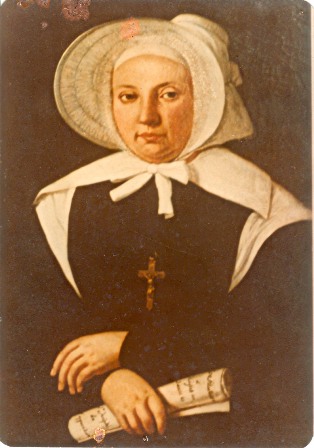
Biography
Blessed Emily de Vialar, born Anne Marguerite Adelaide de Vialar on May 12, 1797, in Gaillac, France, entered a world steeped in the tumultuous aftermath of the French Revolution. Her father, Baron Antoine de Vialar, was a respected physician, and her mother, Antoinette Portal, instilled in her a deep faith and a compassionate heart from a young age. Growing up amidst the social and spiritual upheaval of post-revolutionary France, Emily witnessed firsthand the suffering and neglect of many, particularly the poor and the sick. These early experiences, coupled with a profound spiritual awakening during her adolescence, solidified her resolve to dedicate her life to God and the service of others. Despite her family's comfortable circumstances, Emily felt a powerful call to a life of evangelical poverty and selfless charity, a call that would define her extraordinary life.
Driven by an unyielding desire to alleviate suffering and spread the Gospel, Emily de Vialar founded the Congregation of the Sisters of St. Joseph of the Apparition in Gaillac on Christmas Day, 1832. This new religious order was dedicated to a wide range of charitable works, including the education of girls, care for the sick, and missionary endeavors in distant lands. Blessed Emily's vision was remarkably expansive for her time, and under her dynamic leadership, the Sisters quickly established schools, hospitals, and orphanages, first in France and then courageously venturing into Algeria, Tunisia, and beyond. Her unwavering faith, organizational genius, and profound love for Christ empowered her to overcome numerous obstacles, including financial hardship and ecclesiastical opposition, as she relentlessly pursued her mission to bring Christ's healing presence to all.
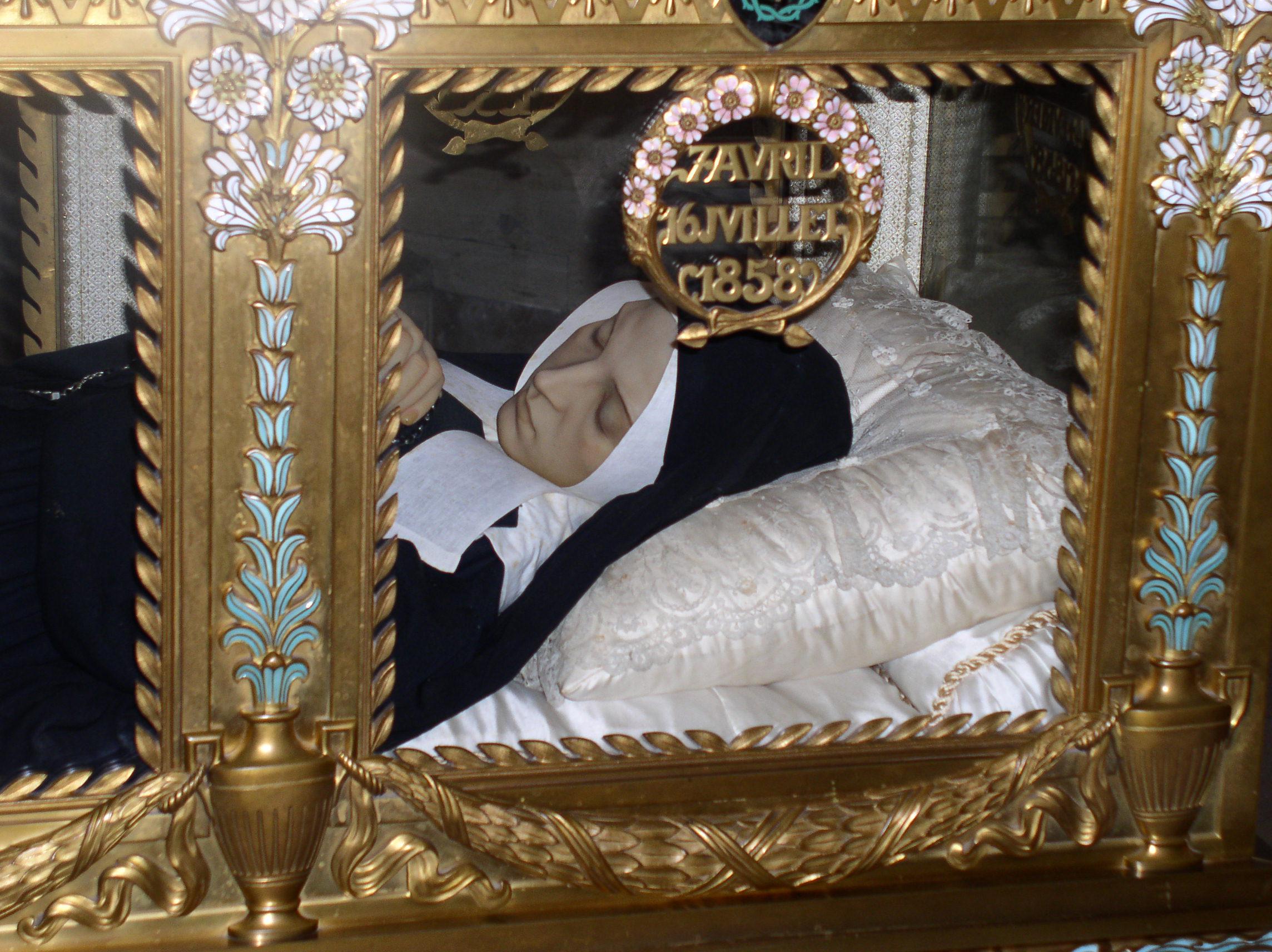
Blessed Emily de Vialar passed away on August 24, 1856, in Marseille, France, after a life of tireless service and profound devotion. Her death was met with deep sorrow by the countless lives she had touched. Upon the exhumation of her remains, her body was discovered to be remarkably preserved, a testament to her sanctity and a source of inspiration for the faithful. Today, her incorrupt body rests in the Motherhouse of the Sisters of St. Joseph of the Apparition in Marseille, a sacred site where pilgrims can venerate her and reflect on her enduring legacy. The remarkable state of her preservation continues to draw pilgrims from around the world, who come to witness this miraculous sign and seek her intercession.
The enduring legacy of Blessed Emily de Vialar is profound, marked by the continued flourishing of the Sisters of St. Joseph of the Apparition, who today serve in numerous countries across five continents, upholding her original charism of charity and mission. She was beatified by Pope Pius XII on June 18, 1939, and canonized by the same Pope on May 17, 1951, as Saint Emily de Vialar. Her feast day is celebrated on August 24th, commemorating her passage into eternal life. Pilgrims visiting Marseille can experience a deep sense of peace and spiritual connection at her shrine, a place where the tangible presence of a saint who dedicated her life to God's love continues to inspire and uplift all who come seeking solace and grace. Her life stands as a powerful example of faith in action, a beacon of hope and charity in a world ever in need of Christ's boundless love.
Discovery
The remarkable preservation of Blessed Emily de Vialar's earthly remains came to light decades after her passing, a testament to a life dedicated to God and service. She died in 1856, and it was not until 1888, thirty-two years later, that her body was exhumed from its initial resting place in the cemetery of the Sisters of St. Joseph of the Apparition in Marseille. This exhumation was undertaken as part of the initial process for her beatification, a standard procedure to verify the identity of the deceased and to transfer their remains to a more suitable location within the Motherhouse. Those present for this momentous occasion included ecclesiastical authorities, medical professionals, and members of her religious congregation. To their profound astonishment, upon opening the coffin, they discovered that her body, though interred for over three decades, showed no signs of the expected decomposition. Her features were recognizable, her skin supple, and her limbs flexible, as if she had only recently fallen into a peaceful sleep. The immediate reaction was one of awe and reverence, a hushed wonder spreading through those gathered, confirming for many the sanctity of the woman they had known and revered.
Following this initial, astonishing discovery, the body of Blessed Emily de Vialar underwent further scrutiny and transfer. In 1904, during the ongoing process for her beatification, a second exhumation and canonical examination were conducted. This was a more formal and detailed inspection, involving a panel of medical experts and Church officials who meticulously documented their findings. They confirmed the earlier observations: the body remained remarkably intact, defying the natural processes of decay. The skin retained its natural color, and the tissues exhibited an unusual degree of elasticity. No artificial embalming agents were found to have been used, further deepening the mystery of her preservation. These examinations, separated by sixteen years, consistently reported the same extraordinary state of incorruption, reinforcing the belief that a divine intervention was at play. This consistent state of preservation over such an extended period, without any scientific explanation, became a significant factor in her cause for beatification.
The journey of Blessed Emily de Vialar's incorrupt body from the cemetery to its current place of veneration reflects the reverence and care afforded to such sacred relics. After the 1904 examination, her remains were carefully placed in a new, more ornate coffin and then enshrined within the chapel of the Motherhouse of the Sisters of St. Joseph of the Apparition in Marseille. To ensure its continued protection and to allow for public veneration, the body was eventually placed within a glass casket. This transparent reliquary allows pilgrims and the faithful to view her remarkably preserved form, offering a tangible connection to her holy life. The environment within the reliquary is carefully controlled to prevent any deterioration, though the primary preservation remains a phenomenon beyond scientific explanation. The display is both respectful and accessible, inviting prayer and reflection, and serving as a constant reminder of her enduring spiritual presence.
Throughout the decades, several remarkable details have been associated with Blessed Emily de Vialar's incorrupt body, further enhancing the sense of her sanctity. Accounts from the early examinations speak of a delicate, sweet fragrance emanating from her remains, a phenomenon often reported in cases of incorruption and interpreted as the "odor of sanctity." While the body does not exhibit the flexibility or bleeding sometimes attributed to other incorruptibles, its consistent state of preservation, particularly the suppleness of the skin and the absence of desiccation, is itself a profound marvel. The resistance to decay in the ordinary conditions of a grave for over thirty years, and its continued integrity without any artificial intervention, stands as the central and most compelling extraordinary detail. This enduring state of natural preservation, defying the common fate of human remains, continues to inspire awe and devotion among those who come to venerate Blessed Emily de Vialar.
Scientific Analysis
The phenomenon of incorruption, particularly as observed in the case of Blessed Emily de Vialar, presents a compelling subject for scientific inquiry, bridging historical observation with modern forensic understanding. While detailed records of formal medical or scientific examinations immediately following her death in 1856 are scarce, consistent with the practices of the era, later inspections have provided some insights. Accounts from the Catholic tradition indicate that upon exhumation, her body was found to be remarkably preserved. For instance, during the process of her beatification, canonical inspections would have been conducted to verify the state of her remains. These inspections, typically performed by ecclesiastical authorities in conjunction with medical professionals, would have documented the degree of preservation. Specific details regarding the names of physicians or institutional affiliations from these early examinations are often not publicly detailed in scientific literature but rather within hagiographical accounts. However, the consistent reporting of her incorrupt state across multiple exhumations, including those preceding her beatification in 1951, suggests a sustained observation of this unusual preservation. These examinations would have primarily involved visual inspection and tactile assessment, noting the flexibility of limbs, the condition of skin and tissues, and the absence of significant putrefaction. The lack of extensive scientific documentation from the 19th and early 20th centuries is a common challenge when studying historical cases of incorruption, as forensic science as a distinct discipline was still in its nascent stages.
The scientific mystery surrounding Blessed Emily de Vialar's incorruption lies in the apparent defiance of normal decomposition processes. Human decomposition is a complex biological sequence driven by autolysis (self-digestion by cellular enzymes) and putrefaction (bacterial activity). Factors such as temperature, humidity, oxygen availability, and the presence of insects and scavengers typically dictate the rate and extent of decay. Given her death in 1856 and subsequent burial, one would expect complete skeletalization within a few decades, particularly in a climate like that of Marseille, France, which experiences warm temperatures. The soil conditions, while not explicitly detailed in publicly available scientific records, would typically contain a diverse microbial ecosystem contributing to decomposition. The reported preservation of soft tissues, even if desiccated or mummified, without evidence of deliberate embalming or sophisticated preservation treatments, is what makes this case scientifically remarkable. There are no historical records indicating that Blessed Emily de Vialar underwent any form of embalming with chemicals such as arsenic, mercury, or formaldehyde, which became more common later in the 19th century. The absence of such interventions, combined with the reported state of preservation, challenges conventional forensic understanding of post-mortem changes.
Natural explanations for body preservation, such as saponification (adipocere formation) or mummification, are often proposed for cases of apparent incorruption. Adipocere is a waxy, soap-like substance formed from the hydrolysis and hydrogenation of body fats, typically occurring in wet, anaerobic environments. While adipocere can preserve body contours, it significantly alters tissue texture and appearance, often resulting in a rigid, yellowish-white mass. Mummification, on the other hand, involves the desiccation of tissues, usually in dry, arid, or cold environments, or through deliberate artificial means. In the context of Blessed Emily de Vialar, descriptions of her incorruption often emphasize a more lifelike or flexible state than typically associated with advanced adipocere or natural mummification. Furthermore, the environmental conditions of a typical burial in Marseille are not inherently conducive to widespread natural mummification or complete adipocere formation across the entire body in a manner that would result in the reported state. Skeptics often point to these natural processes, suggesting that the perception of "incorruption" may be an interpretation of natural mummification or adipocere. However, the specific details often reported, such as the preservation of facial features and internal organs, frequently exceed what is typically observed in these natural processes, leaving aspects unexplained by purely conventional forensic pathology.
From a modern scientific perspective, the case of Blessed Emily de Vialar, like other historical cases of incorruption, offers a unique opportunity for interdisciplinary research. While historical accounts provide valuable qualitative data, the application of modern forensic techniques could yield precise, objective insights. Non-invasive methods such as computed tomography (CT) scans could provide detailed three-dimensional imaging of internal structures, assessing organ preservation and identifying any internal anomalies or signs of past embalming. Magnetic resonance imaging (MRI) could further characterize tissue composition. Carbon dating of tissue samples, if permissible, could verify the age of the remains, while advanced tissue analysis, including histology and immunohistochemistry, could identify the specific cellular and molecular changes that have occurred, potentially revealing unique mechanisms of preservation. Microbiological analysis of surrounding soil and any remaining tissues could shed light on the microbial communities present and their role, or lack thereof, in decomposition. These techniques could differentiate between natural mummification, adipocere, or an unknown form of preservation. The primary challenges remain access to the remains for such detailed analysis and the ethical considerations surrounding the disturbance of revered relics. Until such comprehensive scientific examinations are conducted, the exact mechanisms behind the remarkable preservation of Blessed Emily de Vialar's body will continue to be a subject of both scientific curiosity and spiritual contemplation.
Spiritual Significance
The phenomenon of incorruption, as exemplified by Blessed Emily de Vialar, stands as a profound theological signpost within Catholic tradition, offering a tangible glimpse into the eschatological hope of the Church. Her preserved body, resting in Marseille, is not merely a biological anomaly but a sacramental echo of the doctrine of the resurrection of the body, a central tenet of Christian faith. Incorruptibility, while not a prerequisite for sainthood, is often interpreted by the Church as a divine affirmation of a saint's exceptional sanctity and their profound union with Christ, whose own body triumphed over decay. It underscores the sacredness of the human body, created in God's image and destined for glory, as articulated in 1 Corinthians 6:19, where Saint Paul proclaims our bodies to be temples of the Holy Spirit. For Blessed Emily, whose life was a testament to self-giving love and unwavering faith, her incorrupt state serves as a powerful reminder that the grace of God can permeate and transform even our physical being, preparing it for the ultimate glorification. It is a foretaste of the communion of saints, where the faithful, both living and departed, are united in Christ, and where the resurrected bodies of the blessed will shine forth in eternal splendor. The Church, in recognizing and venerating such incorruptible saints, invites the faithful to contemplate the ultimate destiny of humanity – not dissolution, but eternal life in Christ.
Blessed Emily de Vialar's unique charism was undeniably rooted in an extraordinary spirit of evangelical charity and an unwavering commitment to the suffering. Born into a privileged background, she heroically transcended societal expectations and personal comfort to embrace a life of radical service, founding the Sisters of St. Joseph of the Apparition. Her virtues were manifold, but perhaps most prominent was her profound humility, which allowed her to see Christ in the poorest and most marginalized, and her boundless charity, which propelled her across continents to establish schools, hospitals, and orphanages. Her obedience to God's will, often in the face of immense opposition and personal hardship, was a hallmark of her spiritual journey. Emily's spirituality was deeply practical, blending contemplative prayer with active ministry, a testament to her belief that faith must manifest in concrete acts of love. She contributed significantly to the tradition of active religious life, demonstrating how women could dedicate themselves fully to God through service to others, particularly in a post-revolutionary era that presented immense challenges to religious institutions. Her life exemplified a robust, incarnational spirituality, where the love of God was made visible and tangible through selfless action, echoing the very mission of Christ to heal and to save.
Devotion to Blessed Emily de Vialar has steadily grown since her passing, particularly among those who minister to the sick, the poor, and the marginalized, reflecting her life's work. While not yet canonized, her beatification in 1951 solidified her place within the Church's venerated figures. Her feast day, celebrated on June 17th, is a time for the Sisters of St. Joseph of the Apparition and countless others to honor her legacy of compassion and service. Pilgrims from around the world journey to the Motherhouse in Marseille, France, where her incorrupt body reposes, seeking her intercession and drawing inspiration from her enduring presence. The experience of visiting her shrine is often described as deeply moving and spiritually uplifting. To stand before her preserved remains is to encounter a tangible link to a life lived entirely for God, a powerful reminder of the reality of sainthood and the communion of saints. Many come to pray for healing, guidance, or strength in their own ministries, finding solace and encouragement in the silent witness of her incorrupt body, a testament to the enduring power of faith and the promise of eternal life.
Miracles attributed to Blessed Emily de Vialar's intercession have been numerous, both during her lifetime and after her death, contributing significantly to her beatification. Documented healings from various ailments, conversions of heart, and countless answered prayers have been reported by the faithful who have invoked her name. These miracles often reflect the very charism she embodied: healing the sick, comforting the afflicted, and guiding those lost in spiritual darkness. The incorrupt body itself has been a profound source of spiritual consolation for the faithful. Its preservation, defying natural decay, is perceived by many as a miraculous sign of God's favor and a tangible affirmation of the Catholic belief in the resurrection of the body. For those who visit her shrine, the sight of her preserved remains often evokes a sense of awe and wonder, strengthening their faith and reminding them of the power of God to transcend the limitations of the material world. It offers a unique form of spiritual encouragement, a silent yet eloquent testimony to the reality of the divine and the enduring presence of the saints in the life of the Church.
For modern believers and seekers alike, Blessed Emily de Vialar's life and incorruption offer a compelling and enduring message that challenges the prevailing materialism and secularism of our age. Her radical commitment to Christ, expressed through selfless service to the poor and the sick, stands in stark contrast to a world often preoccupied with self-interest and transient pleasures. Her example reminds us that true fulfillment is found not in accumulating wealth or power, but in emptying oneself for the sake of others, mirroring Christ's own self-sacrificial love. In a society that often dismisses the spiritual and the supernatural, her incorrupt body serves as a tangible bridge between the visible and invisible worlds, a powerful reminder of God's active presence in human history and the ultimate destiny of humanity beyond earthly existence. She teaches us that holiness is not an abstract concept but a lived reality, capable of transforming lives and leaving an indelible mark on the world. Her legacy inspires us to embrace a spirituality that is both deeply contemplative and actively engaged, urging us to find God in the faces of the suffering and to dedicate our lives to building a more just and compassionate world, rooted in the enduring hope of the Gospel.
AI summary
A plain-language overview generated from this page's source material. Always verify with primary sources.