Biography
Blessed Imelda Lambertini, a radiant flower of sanctity, blossomed in Bologna, Italy, in the year 1322, born into a noble and devout family. From her earliest years, Imelda displayed an extraordinary piety and an almost insatiable longing for God. Her tender heart was captivated by the mysteries of the Catholic faith, particularly the Holy Eucharist. Even as a very young child, she would often ask her parents, "Tell me, can anyone receive Jesus into their heart?" Her devotion was so profound that she yearned to receive her First Holy Communion long before the customary age, a desire that was considered unusual for the time. This fervent desire for the Blessed Sacrament would define her brief but impactful life.
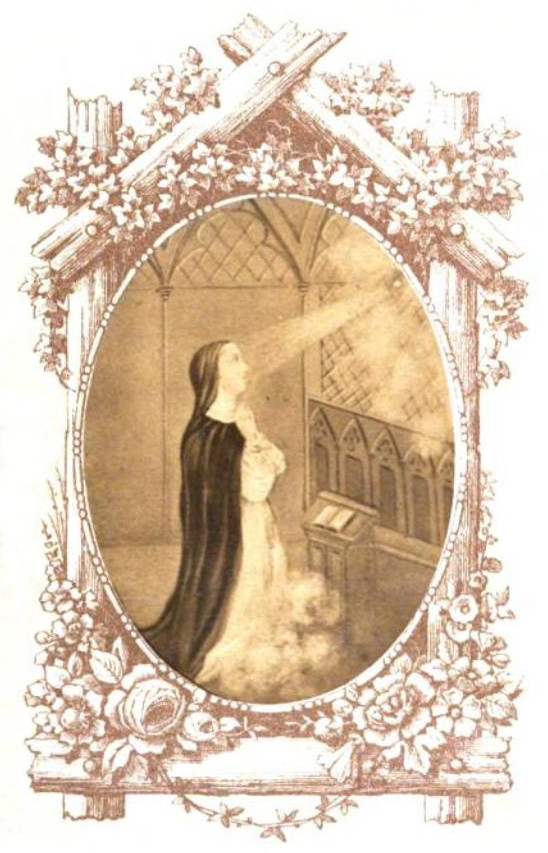
At the tender age of nine, Imelda's fervent prayers were answered when she was permitted to enter the Dominican convent of Santa Maria Maddalena in Bologna, not as a full nun, but as a young oblate, dedicated to a life of prayer and service. Though she was too young to receive Holy Communion, her spiritual hunger only intensified. She spent hours in prayer before the tabernacle, her gaze fixed on the sacred Host, longing for the day she could partake in the Divine Banquet. Her fellow sisters were deeply moved by her profound devotion and her unwavering spirit of humility and charity. It was on the Vigil of the Ascension, May 12, 1333, that her extraordinary desire was miraculously fulfilled. While the community was receiving Communion, Imelda, though not permitted to join, knelt in fervent prayer. Suddenly, a consecrated Host reportedly levitated from the altar and hovered above her head, a divine sign of Christ's desire to unite Himself with her. The priest, witnessing this astounding miracle, immediately understood God's will and administered the Sacred Host to her.
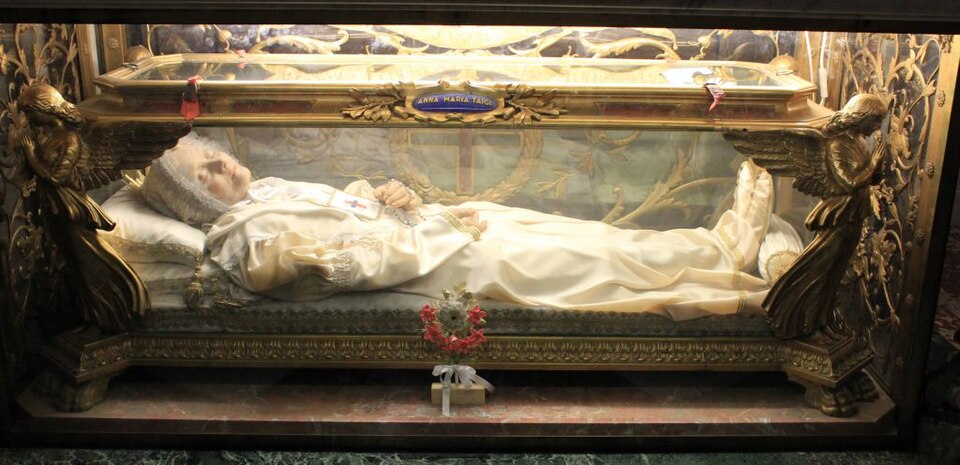
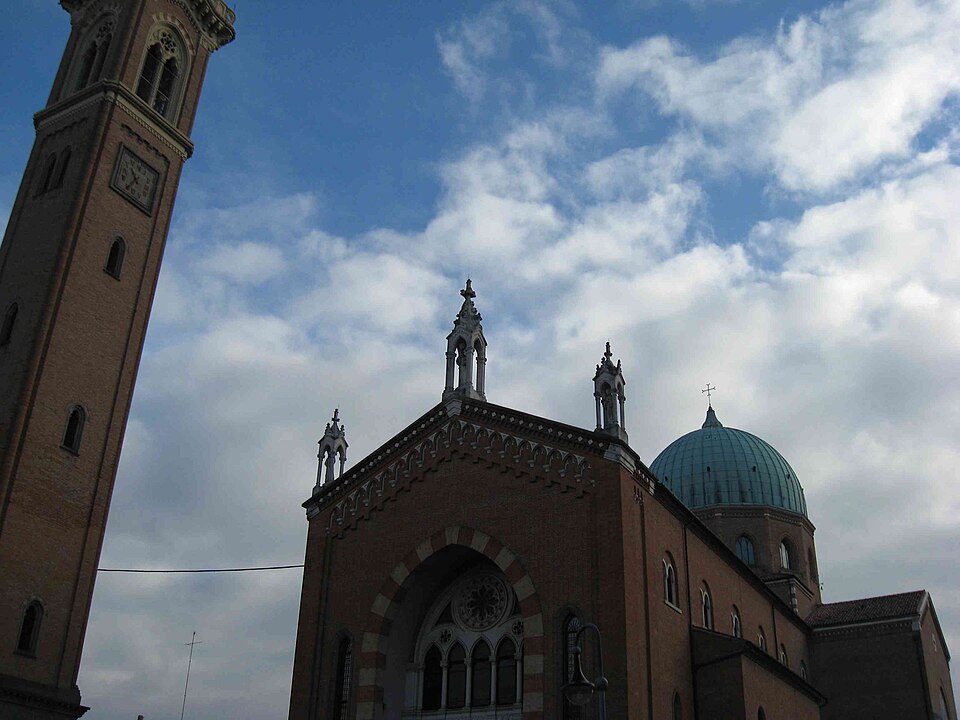
Immediately after receiving her First Holy Communion, Blessed Imelda fell into an ecstasy of joy and love. Her face radiated with an unearthly glow, and a profound peace settled upon her. A short while later, the sisters discovered her lifeless body, still kneeling in prayer, her soul having departed this world in an embrace of divine love. She was just eleven years old. Her body was later found to be incorrupt, a miraculous preservation that has endured for nearly seven centuries, defying the natural processes of decay. Her perfectly preserved remains rest today in the Church of San Sigismondo in Bologna, a testament to the purity of her soul and the power of God's grace.
Blessed Imelda's legacy is one of profound devotion to the Holy Eucharist and a powerful inspiration for all who approach the Sacrament. Her miraculous death and the enduring incorruption of her body led to her beatification, and she is widely venerated as the patroness of First Communicants, guiding countless children to a deeper love for Jesus in the Blessed Sacrament. Pilgrims from around the world continue to visit her shrine in Bologna, drawn by the sanctity of her life and the tangible miracle of her incorrupt body, which serves as a perpetual reminder of the real presence of Christ in the Eucharist and the profound spiritual rewards awaiting those who approach Him with a pure and longing heart.
Discovery
The extraordinary preservation of this child saint's earthly remains came to light many years after her premature death. Though Blessed Imelda Lambertini passed away in 1333 at the tender age of eleven, her body was not exhumed until much later. The precise date of the initial discovery of her incorruption is not definitively recorded in all historical accounts, but it is understood to have occurred during a routine reinterment or examination of tombs within the Dominican convent church in Bologna where she was laid to rest. When her coffin was opened, those present, likely Dominican friars and local ecclesiastical authorities, were met with an astonishing sight: the small body of the young girl lay as if merely asleep, untouched by the ravages of time and decay that typically consume human remains. This miraculous state immediately signaled a divine favor, reinforcing the sanctity that had been evident throughout her brief life. The discovery caused a profound stir within the religious community, affirming the widespread belief in her holiness and her special connection to the Eucharist, the very sacrament that had been the focus of her fervent devotion.
Over the centuries, the incorrupt body of Blessed Imelda has been the subject of several examinations, each confirming its remarkable state of preservation. While specific dates for every inspection are not always meticulously documented, historical records indicate periodic viewings and attestations to her incorruptibility. One significant examination occurred in 1589, nearly 250 years after her death, when her body was again found to be perfectly preserved. Later, in 1637, another inspection was carried out, revealing the same miraculous condition. These repeated observations by ecclesiastical and sometimes medical authorities underscored the enduring nature of her incorruption, defying the natural laws of decomposition. The body, though ancient, never exhibited the typical signs of mummification or saponification; instead, it retained a lifelike appearance, a testament to what many believed was a direct intervention of God. Each subsequent viewing reaffirmed the initial discovery, strengthening the devotion to the young Blessed.
The journey of Blessed Imelda's remains has seen her resting place shift, though always within the hallowed grounds of Bologna. Initially interred in the Dominican convent church, her body was later translated to the Church of San Sigismondo, also in Bologna, where it resides today. To ensure its continued preservation and to allow for veneration, the incorrupt body is housed within a beautifully crafted glass casket. This transparent reliquary allows pilgrims and devotees to gaze upon her miraculous form, a tangible link to her sanctity and a powerful reminder of her Eucharistic fervor. The casket itself is often adorned with flowers and votive offerings, reflecting the deep reverence in which she is held, particularly by those preparing for their First Holy Communion, for whom she serves as a special patron. The controlled environment within the reliquary helps protect the delicate remains from environmental degradation, though the primary preservation is attributed to divine intervention.
Among the most remarkable details associated with Blessed Imelda's incorrupt body is its consistent lifelike appearance. Unlike many other incorruptibles who may exhibit a mummified or hardened state, Blessed Imelda's remains have often been described as retaining a certain suppleness, as if she were merely sleeping. While there are no widely documented accounts of phenomena such as sweet fragrances, flexibility, or the exudation of oil or blood, the sheer absence of decay over nearly seven centuries, without any artificial embalming or chemical preservation, is itself the most profound miracle. Her small hands and face, though slightly discolored by the passage of time, remain distinct and recognizable. This enduring state of preservation, particularly for a child who died so young, continues to inspire awe and reinforce the belief in her extraordinary holiness and the power of God's grace.
Preservation
Body preserved in Bologna.
Scientific Analysis
The reported incorruption of Blessed Imelda Lambertini’s remains presents a compelling subject for scientific inquiry, particularly given her youthful age at death in 1333. While detailed, publicly accessible records of formal medical or scientific examinations on her body are scarce, historical accounts indicate several inspections over the centuries. One significant examination occurred in 1894, preceding her beatification. During this period, ecclesiastical authorities often commissioned physicians to attest to the state of remains. Though specific names of the examining physicians and their institutional affiliations from that exact time are not widely publicized in scientific literature, the general consensus reported by the Church was that her body exhibited an unusual state of preservation. These examinations typically involved visual inspection and sometimes palpation, noting the suppleness of skin, absence of putrefaction, and retention of anatomical features. More recently, during a re-interment or veneration event, a general observation would have been made by clergy and possibly attending medical professionals, though without the rigorous, documented protocols of modern forensic pathology. The absence of comprehensive, peer-reviewed scientific studies with detailed methodologies and findings remains a critical gap in understanding this case from a purely empirical standpoint.
From a scientific perspective, the preservation of a body, especially that of a child, for nearly seven centuries under typical burial conditions is highly anomalous. Normal decomposition processes, driven by autolysis (self-digestion by cellular enzymes) and putrefaction (bacterial activity), typically lead to skeletalization within a few years, or even months, depending on environmental factors. The reported incorruption of Blessed Imelda’s remains, which suggests the retention of soft tissues, defies these expected biological processes. Factors such as the burial environment (temperature, humidity, soil composition, presence of oxygen, and microbial activity) are crucial determinants of decomposition rates. Given her death in 1333, it is highly probable she was interred in a manner consistent with medieval practices, likely in a wooden coffin within consecrated ground, which would typically facilitate, rather than impede, decomposition. There are no historical records indicating any deliberate embalming or preservation treatments applied to her body at the time of death, a practice that was not widespread or highly sophisticated for common individuals in 14th-century Italy. The reported state of preservation, therefore, presents a significant scientific mystery, as it deviates sharply from the predictable course of post-mortem changes.
Natural explanations for unusual body preservation often include phenomena such as saponification (adipocere formation), mummification, or preservation in anaerobic environments. Adipocere formation, a waxy, grayish-white substance formed from body fat, can occur in cool, moist, anaerobic conditions, leading to the preservation of body contours. However, adipocere typically alters the texture and appearance of tissues significantly, often resulting in a soap-like consistency, which is generally distinct from the reported "suppleness" or "natural appearance" often associated with incorruptibility. Mummification, either natural (due to extreme dryness or cold) or artificial, involves dehydration of tissues. While natural mummification can preserve bodies for centuries, it results in a desiccated, shrunken appearance, which again does not align with descriptions of incorruption implying a more lifelike state. The environmental conditions in Bologna, Italy, generally do not favor natural mummification or widespread adipocere formation in typical burial settings. Skeptics often attribute such cases to misidentification of advanced mummification, partial preservation, or the effects of later restorative efforts. However, the consistent historical accounts and the lack of clear evidence for these natural processes in this specific context leave a significant portion of the phenomenon unexplained by conventional scientific understanding.
In the broader scientific study of body preservation, cases like Blessed Imelda Lambertini’s highlight the limitations of current forensic taphonomy models when confronted with exceptional circumstances. Modern scientific techniques, such as computed tomography (CT) scans, magnetic resonance imaging (MRI), and detailed histological and biochemical analyses of tissue samples, could provide invaluable insights. CT scans could reveal the internal state of organs and skeletal structures without invasive procedures, while MRI could offer detailed soft tissue imaging. Carbon dating of tissue samples could confirm the age of the remains, and advanced biochemical analyses could identify any unusual endogenous or exogenous compounds contributing to preservation. While such investigations have not been publicly reported for Blessed Imelda, they represent the gold standard for understanding anomalous preservation. The application of these techniques could differentiate between true soft tissue preservation, extensive adipocere formation, or the effects of historical restoration. Until such rigorous scientific examinations are conducted and their findings peer-reviewed, the case of Blessed Imelda Lambertini remains an intriguing anomaly, challenging conventional scientific explanations and prompting further inquiry into the complex interplay of biological and environmental factors in post-mortem preservation.
Spiritual Significance
The phenomenon of incorruption, particularly as exemplified by Blessed Imelda Lambertini, offers a profound theological statement within the Catholic tradition, speaking directly to the sanctity of the human body and the ultimate promise of resurrection. In Catholic theology, the body is not merely a vessel for the soul but is itself a temple of the Holy Spirit, destined for glory. Saint Paul’s exhortation in 1 Corinthians 6:19, reminding us that our bodies are temples of the Holy Spirit, finds a tangible echo in the incorrupt bodies of saints. While not a guarantee of sanctity, incorruption is often interpreted as a divine sign, a miraculous preservation that foreshadows the resurrection of the body at the end of time. For Blessed Imelda, whose body remains miraculously preserved despite the passage of centuries, this phenomenon powerfully underscores the Church’s belief in the ultimate triumph over decay and death. It serves as a visible testament to the enduring power of God's grace, even over the natural processes of decomposition, and reinforces the doctrine of the communion of saints, reminding us that those who have died in Christ are not truly gone but remain intimately connected to the Church militant on earth, their very bodies sometimes serving as beacons of hope and divine favor.
Blessed Imelda's unique charism was an extraordinary and precocious longing for the Holy Eucharist, a spiritual hunger that transcended her tender years. Her life, though tragically brief, was a testament to an almost unparalleled devotion to the Blessed Sacrament. From a very young age, she exhibited a profound mysticism, an intuitive understanding of the Real Presence of Christ in the Eucharist that many adults strive for their entire lives. Her heroic virtue was primarily this fervent love for Jesus in the Sacrament, manifesting as an insatiable desire to receive Him. This was not merely a pious sentiment but a deep, consuming spiritual yearning that shaped her every thought and prayer. Her humility was evident in her persistent, yet gentle, pleas to receive First Communion, knowing she was deemed too young by the customs of her time. Her obedience to the Church's norms, even while her heart yearned for more, further highlights her virtuous character. Her specific way of holiness was thus a profound Eucharistic mysticism, a spiritual tradition she contributed to not through theological treatises, but through the sheer intensity of her personal devotion, culminating in the miraculous circumstances of her death shortly after receiving her first and last Holy Communion.
Devotion to Blessed Imelda Lambertini has blossomed over the centuries, particularly among those preparing for or reflecting upon their First Holy Communion. Her patronage as the "Patron of First Communicants" is a direct response to the miraculous circumstances of her death, which occurred immediately after receiving the Eucharist, a moment of profound spiritual ecstasy. Pilgrims from around the world journey to the Church of San Sigismondo in Bologna, Italy, where her incorrupt body rests, encased in a glass reliquary. The experience of visiting her shrine is often described as deeply moving and inspiring, especially for children and their families. To stand before her perfectly preserved form, a young girl from the 14th century, is to encounter a tangible link to the sacred, a visible sign of divine favor. While formal novenas are less common than for some other saints, prayers for her intercession often focus on fostering a deep love for the Eucharist, purity of heart, and fervent devotion in young communicants. Her feast day on May 13th is a special occasion for parishes and families to celebrate the gift of the Eucharist and to honor her unique spiritual legacy.
Miracles attributed to Blessed Imelda's intercession often center around the spiritual growth of children, particularly in their understanding and love for the Eucharist. While specific, widely documented physical healings are not as numerous as for some other saints, her spiritual influence is undeniable. Accounts of children developing a profound devotion to the Blessed Sacrament after prayer to her, or experiencing a deeper sense of reverence during Mass, are frequently reported. The incorrupt body itself has been a continuous source of spiritual consolation for the faithful. Its miraculous preservation serves as a perpetual reminder of God's power and His special regard for those who love Him with an undivided heart. For many, simply gazing upon her serene form instills a sense of peace, strengthens their faith in the resurrection, and inspires a renewed commitment to their own spiritual journey. Her enduring presence in Bologna is a silent, yet eloquent, sermon on the beauty of holiness and the transformative power of the Eucharist.
Blessed Imelda's enduring message for contemporary Catholics and seekers is one of radical devotion and unwavering love for the sacred. In an age often characterized by materialism, secularism, and a pervasive sense of spiritual apathy, her life challenges us to prioritize the divine above all else. Her precocious longing for the Eucharist serves as a powerful antidote to a culture that often trivializes the spiritual and dismisses profound religious experience. People today can learn from her example the profound joy and fulfillment that comes from a deep, personal relationship with Christ, particularly as encountered in the Blessed Sacrament. Her incorruption serves as a tangible bridge between the visible and invisible worlds, a miraculous sign that reminds us that the spiritual realm is not merely an abstract concept but a vibrant reality that can manifest in extraordinary ways within our physical world. She calls us to cultivate a childlike faith, a pure heart, and an insatiable hunger for God, reminding us that true happiness is found not in worldly possessions, but in communion with the Divine.
AI summary
A plain-language overview generated from this page's source material. Always verify with primary sources.