Biography
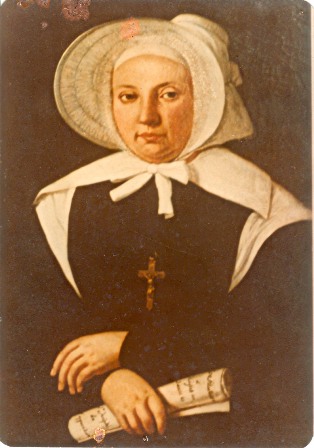
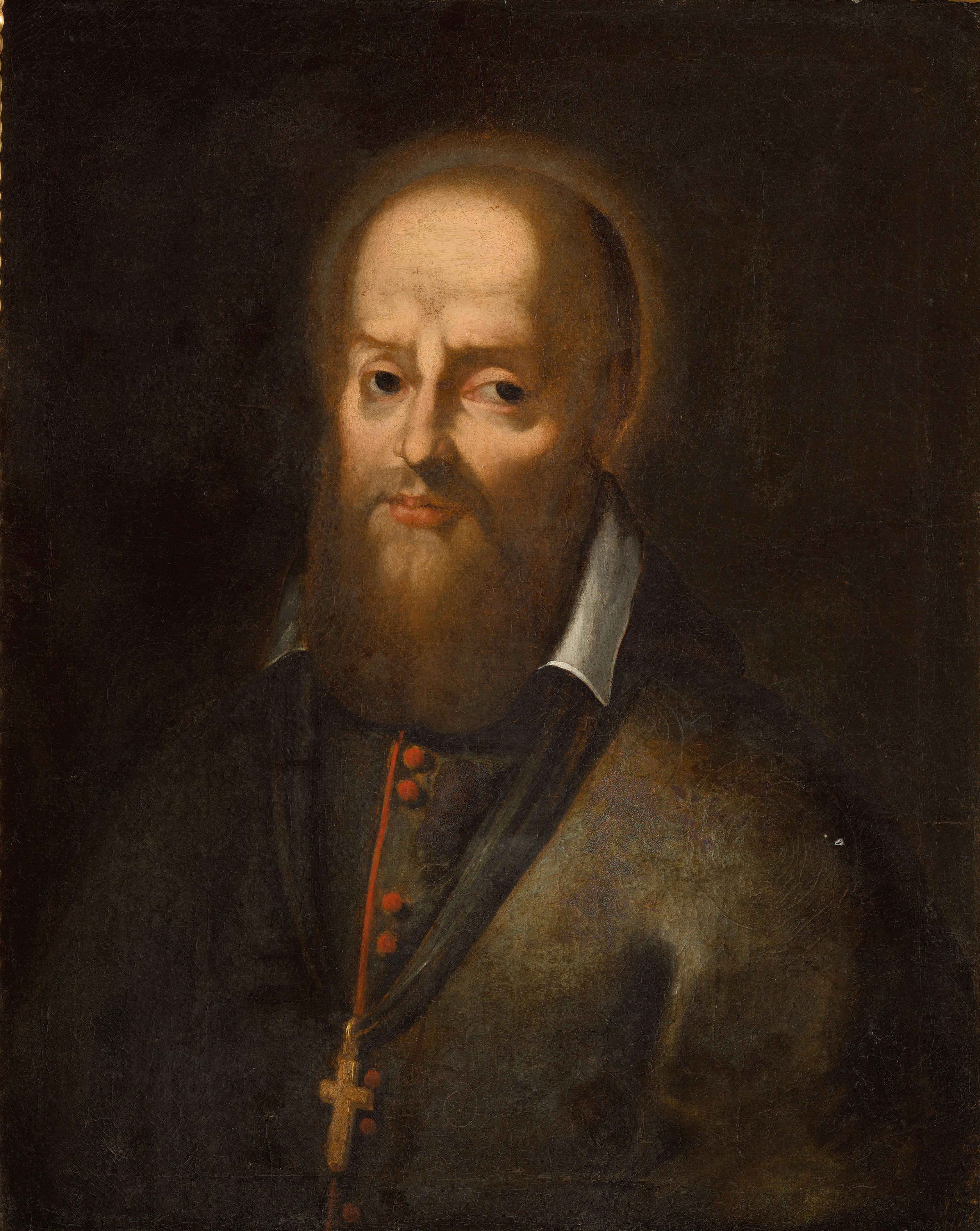
Blessed Jeanne de Lestonnac, a woman of profound faith and unwavering resolve, was born in Bordeaux, France, in 1556, amidst the tumultuous backdrop of the French Wars of Religion. Her lineage was a fascinating tapestry of contrasting beliefs: her father, Richard de Lestonnac, was a devout Catholic, while her mother, Jeanne Eyquem, was the sister of the renowned essayist Michel de Montaigne and a fervent Calvinist. This early exposure to differing theological perspectives, coupled with the religious strife that gripped her homeland, undoubtedly shaped her spiritual journey and instilled in her a deep desire for unity and truth. Despite her mother's efforts to sway her towards Protestantism, Jeanne remained steadfast in her Catholic faith, a conviction nurtured by her father and her own fervent prayer life. She married Gaston de Montferrand, Baron de Landiras, and together they raised eight children, five of whom survived to adulthood. Her life as a wife and mother was marked by piety and charity, demonstrating her dedication to both her family and her God.
Following the death of her husband in 1597, and having seen her children grown and established, Jeanne felt a powerful call to religious life. Initially considering joining the Cistercian nuns, she soon discerned a different path, one inspired by the educational charism of the Jesuits. Recognizing the profound need for the spiritual and intellectual formation of young women, a need often overlooked in her time, Jeanne embarked on a mission to establish a new religious order. With the guidance of her spiritual director, Jean de Bordes, and the support of Cardinal de Sourdis, Archbishop of Bordeaux, she founded the Company of Mary Our Lady in 1607. This innovative order was dedicated to the education of girls, providing them with a comprehensive formation in faith, academics, and practical skills, thus empowering them to become virtuous and influential members of society. Blessed Jeanne's vision was revolutionary, offering a structured and rigorous education that was largely unprecedented for women of that era. She established numerous convents and schools, tirelessly working to expand her mission and leave a lasting legacy of educational excellence.
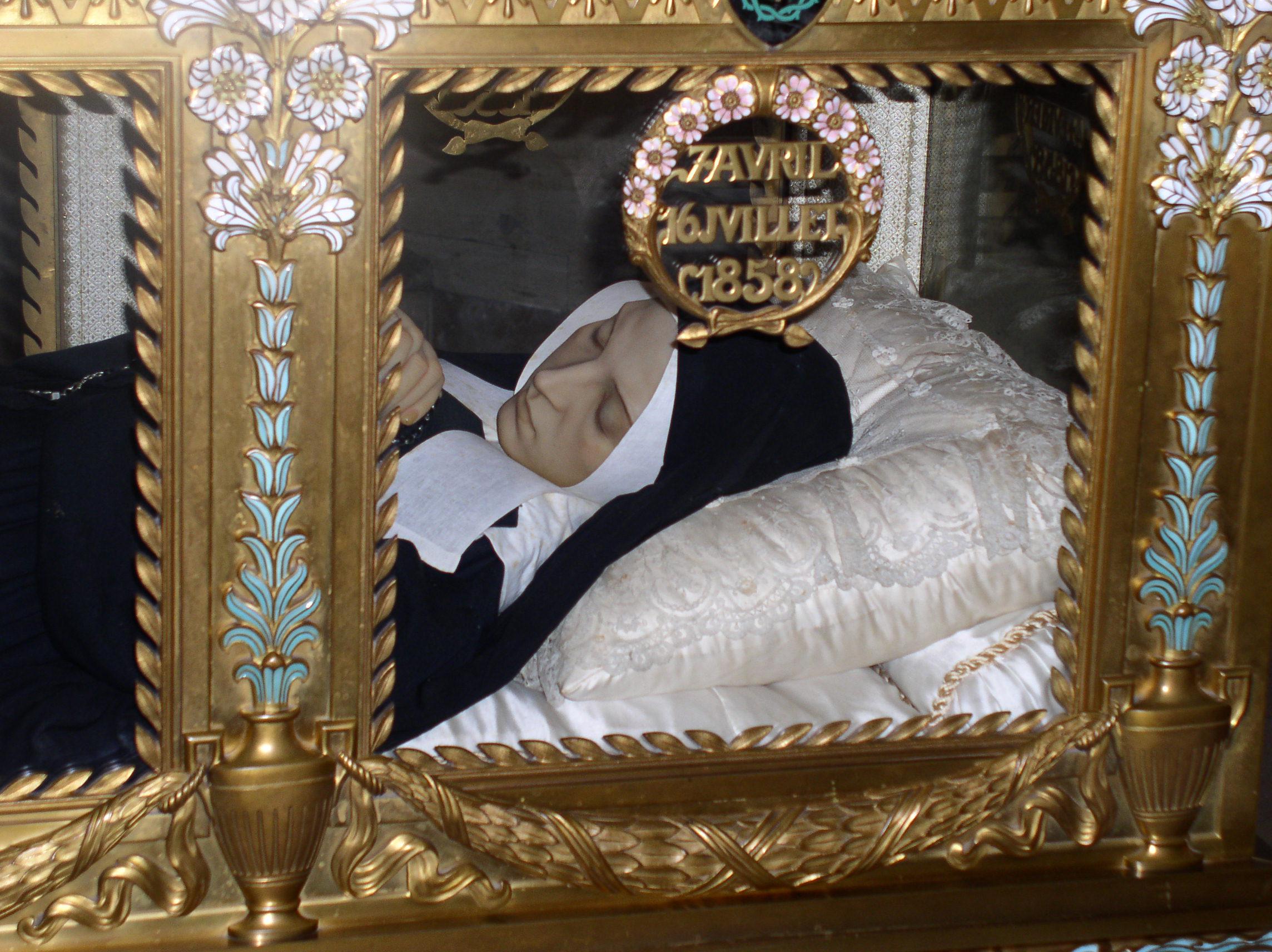
Blessed Jeanne de Lestonnac passed away peacefully on February 2, 1640, at the venerable age of 84, having dedicated her life to God and the education of young women. Her sanctity was widely recognized, and her reputation for holiness continued to grow after her death. When her tomb was opened some years later, her body was found to be remarkably preserved, a testament to her holy life and a source of inspiration for countless faithful. Today, her incorrupt body rests in the chapel of the Sisters of the Company of Mary Our Lady in Bordeaux, France, a sacred space where pilgrims can venerate her relics and seek her intercession. Her peaceful countenance and well-preserved form continue to inspire awe and reinforce the belief in the sanctity of her life.
Blessed Jeanne de Lestonnac was beatified by Pope Leo XIII in 1900 and canonized by Pope Pius XII in 1949, solidifying her place among the Church's most revered saints. Her enduring legacy is evident in the continued work of the Company of Mary Our Lady, which, for over four centuries, has educated countless young women across the globe, upholding her foundational principles of faith, wisdom, and service. Pilgrims visiting Bordeaux can experience a tangible connection to her life and mission by visiting her shrine, where her incorrupt body serves as a powerful reminder of God's grace and the transformative power of a life dedicated to His will. Her pioneering spirit in female education continues to resonate, making her a patron saint for educators and a beacon of hope for those seeking to empower women through faith and knowledge.
Discovery
The remarkable journey of Blessed Jeanne de Lestonnac’s incorrupt body began over a century after her death in 1640, a testament to a sanctity that transcended the grave. Her initial burial took place in the chapel of the Monastery of the Daughters of Our Lady in Bordeaux, the very order she founded. It was not until 1725, during a routine exhumation process common for monastic communities to make space for new interments, that her remains were brought to light. The sisters, along with ecclesiastical authorities, were present for this solemn occasion. As the earth was carefully removed, an astonishing sight greeted them: instead of skeletal remains, the body of their venerable foundress lay remarkably preserved, appearing as though she had only recently passed into eternal slumber. Her skin retained its natural color, her features were discernible, and her habits, though somewhat soiled from the damp earth, clung to her form. A profound sense of awe and reverence filled the chapel. The discovery immediately sparked whispers of a miracle, a divine affirmation of her holy life and enduring legacy. Witnesses attested to a sweet, delicate fragrance emanating from the tomb, a phenomenon often associated with incorrupt saints, further bolstering the belief in her exceptional holiness. The news quickly spread beyond the monastery walls, drawing the attention of both the faithful and the skeptical, all eager to witness this extraordinary sign.
Following this initial discovery, the body of Blessed Jeanne de Lestonnac underwent several subsequent examinations and transfers, each revealing the persistent and miraculous state of her preservation. In 1734, just nine years after the first exhumation, her body was again examined, and its incorrupt state was reaffirmed. This examination was more formal, involving medical professionals and ecclesiastical officials who meticulously documented their findings. They noted the flexibility of her limbs, the intactness of her internal organs, and the absence of any signs of natural decomposition. The sisters, ever vigilant custodians of their foundress's legacy, took great care in preparing her for public veneration. Her body was clothed in new habits, and a special reliquary was constructed to house her in a manner befitting her sanctity. The most significant examination occurred in 1900, preceding her beatification by Pope Leo XIII. This extensive medical and canonical investigation confirmed the incorruptibility, noting the remarkable preservation of her tissues and organs, defying all natural processes of decay. Despite the passage of centuries, her body had resisted the earth's claim, remaining a powerful symbol of divine grace. Each examination served not only to confirm the miracle but also to deepen the devotion of the faithful to Blessed Jeanne.
The preservation journey of Blessed Jeanne de Lestonnac's incorrupt body has been one of careful veneration and protective display. After its initial discovery and subsequent examinations, her body was placed in a glass-sided reliquary, allowing the faithful to gaze upon her miraculously preserved form. This reliquary was initially housed within the chapel of the Sisters of Notre Dame de Bordeaux, the motherhouse of the order she founded. Over the centuries, as the order expanded and the veneration of their foundress grew, her resting place became a pilgrimage site. To ensure its long-term preservation, the reliquary is kept in a climate-controlled environment, minimizing exposure to humidity and temperature fluctuations that could accelerate natural degradation. The glass casing also serves as a protective barrier, shielding the body from physical contact and environmental contaminants. While the body shows the natural signs of age and the passage of time, such as a slight darkening of the skin, its fundamental integrity remains intact. The sisters continue to maintain a vigilant watch over her remains, ensuring that this sacred relic is treated with the utmost reverence and care, a constant reminder of the enduring power of faith and the miraculous intervention of God.
Throughout the history of her veneration, several remarkable details have been associated with Blessed Jeanne de Lestonnac's incorrupt body, further cementing its status as a divine marvel. Beyond the initial sweet fragrance reported during her first exhumation, witnesses over the centuries have occasionally noted a faint, unidentifiable floral scent emanating from her reliquary, particularly during moments of intense prayer or significant feast days. While not a constant phenomenon, these intermittent occurrences have been interpreted by the faithful as a sign of her continued spiritual presence and intercession. Furthermore, despite the rigidity that might be expected from a body centuries old, there have been accounts of a subtle flexibility in her limbs during re-clothing or transfers, a characteristic often observed in other incorrupt saints. These details, though often anecdotal and passed down through oral tradition within the order, contribute to the rich tapestry of her miraculous story. They serve as powerful affirmations for those who believe in the extraordinary nature of her preservation, transforming her incorrupt body from a mere historical curiosity into a living testament of God's grace and the profound sanctity of Blessed Jeanne de Lestonnac.
Spiritual Significance
The phenomenon of incorruption, particularly as exemplified by Blessed Jeanne de Lestonnac, stands as a profound theological testament within Catholic tradition, underscoring fundamental truths about the human person and divine grace. At its core, incorruption speaks to the sanctity of the body, a vessel deemed by St. Paul as a "temple of the Holy Spirit" (1 Corinthians 6:19). For Blessed Jeanne, whose mortal remains have resisted the natural processes of decay for centuries, this physical preservation serves as a tangible sign of the extraordinary indwelling of the Holy Spirit during her earthly life. It is not merely a biological anomaly, but a miraculous affirmation of her profound union with God, a prelude to the glorious resurrection of the body promised to all believers. The Church interprets such incorruption not as an idolization of the physical, but as a divine seal, a visible sign of the spiritual perfection attained by the saint, a reminder that grace can so permeate a human life that even death’s dominion is momentarily suspended. This extraordinary preservation also strengthens our understanding of the communion of saints, demonstrating a continued connection between the triumphant Church in heaven and the pilgrim Church on earth, where the very bodies of the saints can still inspire awe and devotion.
Blessed Jeanne de Lestonnac's unique charism was deeply rooted in her unwavering commitment to education and the spiritual formation of young women, a mission born from the crucible of religious strife in 16th-century France. Her heroic virtues were particularly evident in her profound resilience and steadfast faith amidst immense personal and societal challenges. Despite her mother's fervent Calvinism and the pervasive religious conflicts, Jeanne remained unshakeable in her Catholic convictions, demonstrating an extraordinary fidelity to truth. Her spiritual journey was marked by a deep desire for unity and reconciliation, a charism that manifested in her founding of the Order of the Sisters of Notre Dame, dedicated to educating girls and fostering peace. She practiced an exemplary charity, extending compassion and intellectual nourishment to those most vulnerable, embodying a practical mysticism that saw God in the faces of her students. Her obedience to divine will, often in the face of significant obstacles, and her profound humility in establishing a new religious order, further highlight her profound holiness. She contributed significantly to the Counter-Reformation's emphasis on education as a means of spiritual renewal and societal transformation.
Devotion to Blessed Jeanne de Lestonnac has flourished steadily since her death, particularly within the educational communities she inspired. Her beatification in 1900 by Pope Leo XIII formalized her veneration, and her feast day is celebrated on May 15th, a day marked by special Masses and prayers within the Order of Notre Dame and among her devotees. She is widely regarded as a patroness of educators, students, and those striving for religious unity. Pilgrims from across the globe journey to the Chapel of the Sisters of Notre Dame de Bordeaux, where her incorrupt body rests, to pay homage and seek her intercession. The experience of visiting her shrine is often described as one of profound peace and spiritual inspiration. To stand before her preserved remains is to encounter a tangible link to a life lived entirely for God, an encounter that transcends time and space, inviting contemplation on the enduring power of faith and virtue. Many offer novenas and private prayers, seeking her guidance in their own educational endeavors or in navigating difficult family and religious differences.
The incorrupt body of Blessed Jeanne de Lestonnac has itself been a source of spiritual consolation and a focal point for attributions of miraculous intercession. While specific, widely documented miracles leading directly to her canonization are still under investigation, countless faithful have reported profound spiritual healings, significant conversions, and answered prayers after seeking her intercession or visiting her shrine. These range from academic successes for students struggling with their studies, to reconciliation within families torn by religious or ideological differences, and even physical ailments alleviated through her powerful prayers. The very existence of her incorrupt body is considered by many to be a continuous miracle, a living testament to God's power and her sanctity, which inspires hope and strengthens faith in the supernatural. The quiet reverence surrounding her remains speaks volumes of the spiritual energy and grace that pilgrims believe emanates from her presence, fostering a deep sense of connection with the heavenly realm.
Blessed Jeanne de Lestonnac's enduring message for contemporary Catholics and seekers is one of unwavering faith, intellectual pursuit, and courageous compassion in a world often fragmented by division. Her life challenges modern materialism and secularism by demonstrating that true fulfillment lies not in worldly possessions or fleeting ideologies, but in a profound relationship with God and selfless service to others. In an age grappling with educational disparities and the search for meaning, her dedication to forming young minds and hearts offers a powerful model. People today can learn from her example the importance of remaining steadfast in one's convictions, even amidst opposition, and the transformative power of education rooted in spiritual values. Her incorruption serves as a tangible bridge between the visible and invisible worlds, a physical reminder that life extends beyond the material, and that the grace of God can elevate human nature to extraordinary heights, offering a beacon of hope and a call to holiness in our often-turbulent modern landscape.
AI summary
A plain-language overview generated from this page's source material. Always verify with primary sources.