Biography
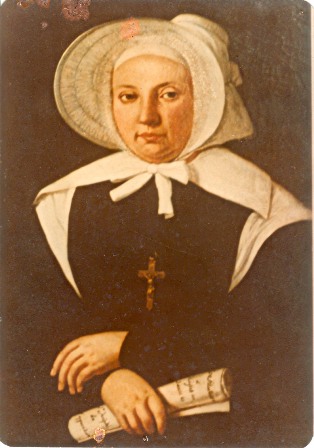
Blessed Madeleine Sophie Barat, a woman whose heart burned with an unquenchable love for Christ and a profound dedication to the education of young women, was born in Joigny, France, on December 12, 1779. Her early life was shaped by the tumultuous years of the French Revolution, a period that deeply impacted her family and instilled in her a fervent desire to restore Catholic life and values. Her father, a cooper and vintner, was a man of deep faith, and her older brother, Louis, a priest, became her primary educator and spiritual guide. Under his rigorous tutelage, Sophie received an exceptional classical education, far exceeding what was typically offered to girls of her time. This intellectual formation, coupled with her profound piety and a mystical experience at a young age, laid the groundwork for her future vocation, igniting within her a vision for a new religious order dedicated to the Sacred Heart of Jesus and the education of girls.
Responding to the spiritual devastation wrought by the Revolution, Sophie, guided by her spiritual director, Father Joseph Varin, S.J., founded the Society of the Sacred Heart in 1800. Her charism was clear: to provide a Christian education that would form young women into individuals of strong character, deep faith, and intellectual rigor, capable of transforming society through their commitment to Christ. Under her tireless leadership, the Society rapidly expanded, establishing schools across Europe and eventually reaching the Americas. Mother Barat, as she became known, was a woman of immense administrative skill, profound spiritual insight, and unwavering courage, navigating political complexities and ecclesiastical challenges with grace and determination. She emphasized a balanced curriculum that nurtured both the intellect and the spirit, fostering a deep devotion to the Sacred Heart and a commitment to social justice.
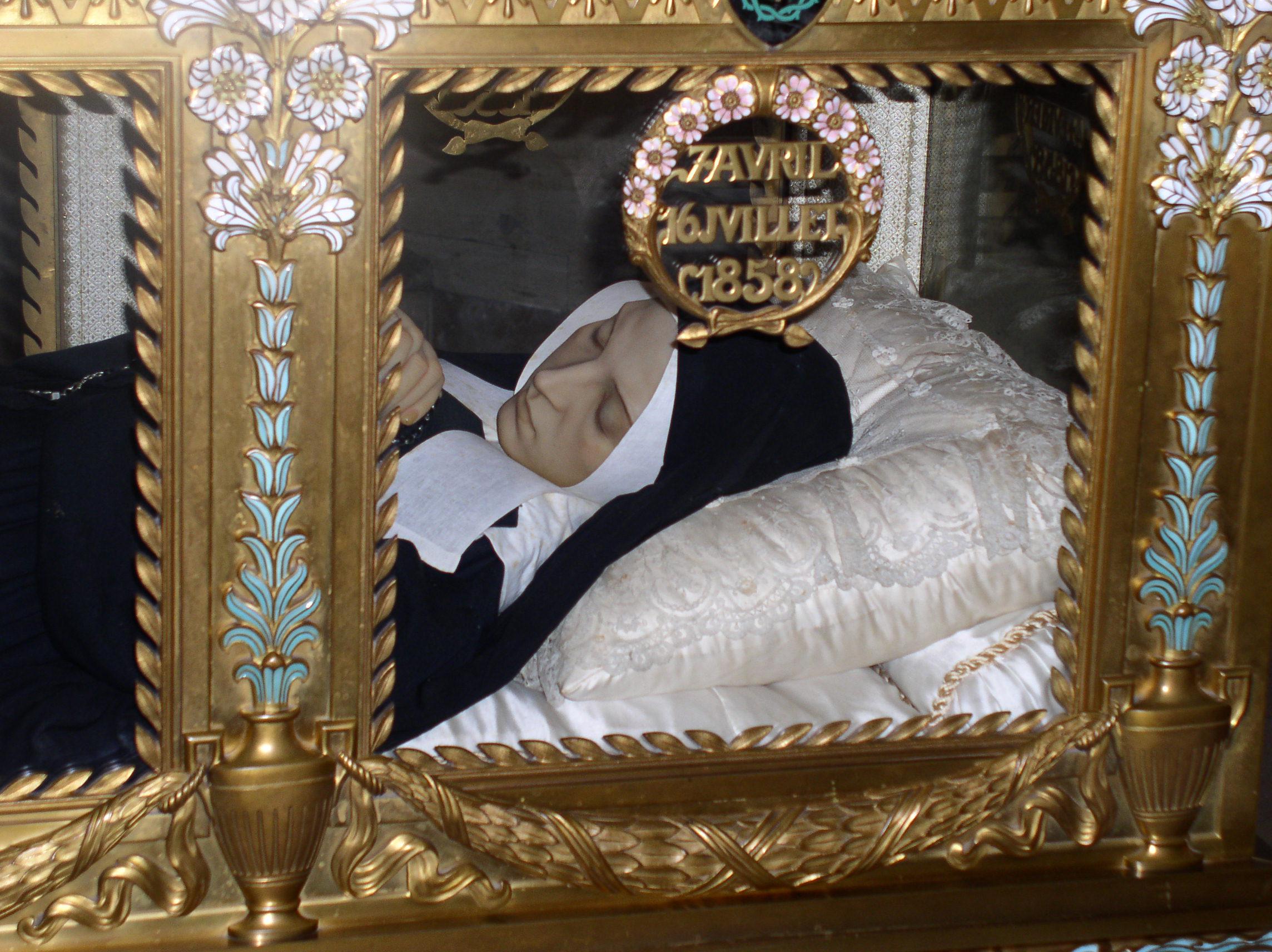
Blessed Madeleine Sophie Barat passed into eternal life on May 25, 1865, at the age of 85, after a life of extraordinary dedication and service. Her body was initially interred in the cemetery of the Society's motherhouse in Paris. However, upon exhumation in 1893, her body was found to be remarkably preserved, exhibiting the phenomenon of incorruption. This miraculous preservation, a testament to her sanctity, further solidified her reputation as a holy woman. Today, her incorrupt body rests in a glass reliquary at the Church of Saint Francis Xavier in Paris, a place of pilgrimage and veneration for countless faithful.
Her legacy endures as a testament to the transformative power of Catholic education and the enduring appeal of the Sacred Heart devotion. Canonized by Pope Pius XI in 1925, Saint Madeleine Sophie Barat is revered as a patroness of educators and a model of spiritual fortitude. Pilgrims visiting her shrine can witness the tangible evidence of God's grace in her preserved remains, drawing inspiration from her life of faith, her unwavering commitment to Christ, and her pioneering work in shaping generations of women through the Society of the Sacred Heart, which continues its mission of education and spiritual formation around the globe.
Discovery
The remarkable state of preservation of Blessed Madeleine Sophie Barat's earthly remains was first brought to light during the initial exhumation of her body, a standard procedure preceding the beatification process. She had died on May 25, 1865, and was initially interred in the cemetery of the Society of the Sacred Heart in Conflans, a suburb of Paris. It was not until 1893, nearly three decades after her passing, that her tomb was opened. The exhumation was conducted under the watchful eyes of ecclesiastical authorities, medical professionals, and members of her religious order, the Society of the Sacred Heart, which she had founded. As the coffin lid was carefully lifted, those present were met with an astonishing sight. Despite the passage of twenty-eight years and the usual processes of decomposition, her body lay remarkably intact. Her features were recognizable, her skin retained a natural hue, and her religious habit, though somewhat discolored by the damp earth, clung to a form that appeared largely untouched by decay. A profound sense of awe and reverence filled the small gathering, as the extraordinary nature of this discovery immediately suggested a divine intervention, a sign of God's favor upon His faithful servant. The initial examination confirmed the absence of any artificial embalming, deepening the mystery surrounding her incorruption.
Following this initial discovery, the body of Blessed Madeleine Sophie Barat underwent several subsequent examinations, each affirming the miraculous preservation. In 1904, during the preparations for her beatification, a more thorough canonical examination was conducted. Medical experts, including Dr. Papillon, a renowned physician, meticulously inspected the remains. Their findings corroborated the earlier observations, noting the suppleness of her skin and the remarkable integrity of her internal organs, particularly her heart, which was found to be in an exceptionally well-preserved state. This examination further solidified the belief in her incorruption, a phenomenon that defied natural explanation. The body was then placed in a temporary reliquary, allowing for veneration by the faithful. Another significant examination occurred in 1940, during the tumultuous period of World War II, when her remains were moved for safekeeping. Despite the passage of seventy-five years since her death, her body continued to exhibit the same extraordinary preservation, a testament to its enduring incorruptibility. Each successive inspection, separated by decades, consistently reported the absence of significant deterioration, a fact that deeply impressed both scientific observers and devout believers.
The journey of Blessed Madeleine Sophie Barat's preserved body has been one of careful veneration and protection. After the initial exhumation and subsequent examinations, her remains were eventually transferred to the motherhouse of the Society of the Sacred Heart in Paris. For a time, they rested in a simple casket, accessible for private veneration by the sisters. However, as her cause for sainthood progressed and her reputation for holiness spread, a more fitting and publicly accessible display became necessary. Today, her incorrupt body is enshrined in a magnificent glass casket, allowing the faithful to gaze upon her serene form. This reliquary is housed within the Church of Saint Francis Xavier (Saint-François-Xavier) in Paris, a prominent location where countless pilgrims and devotees come to seek her intercession and marvel at the enduring sign of her sanctity. The glass casket is meticulously maintained, ensuring a controlled environment that protects the delicate remains from environmental degradation. The display is designed to be both reverent and informative, often accompanied by historical plaques detailing her life and the miraculous preservation of her body, inviting contemplation and prayer.
Beyond the remarkable physical preservation, several notable details have been associated with Blessed Madeleine Sophie Barat's incorrupt body. While there are no documented accounts of phenomena such as sweet fragrances, bleeding, or the exudation of oils, the sheer consistency of her preservation across multiple decades and varying conditions stands as a profound testament to her incorruption. The medical reports from the various exhumations consistently highlighted the natural appearance of her skin and the integrity of her internal organs, particularly her heart, which was often singled out for its exceptional state. This resistance to the natural processes of decay, without any known artificial intervention, is the primary miraculous aspect of her incorruption. It is this enduring, inexplicable preservation that has captivated observers for over a century, serving as a powerful visual reminder of her sanctity and a source of inspiration for those who believe in the enduring power of God's grace. Her incorrupt body remains a cherished relic, a silent witness to a life lived in profound devotion to Christ and a legacy that continues to inspire.
Scientific Analysis
The phenomenon of human body preservation beyond typical post-mortem decomposition, particularly in cases attributed to religious incorruption, presents a compelling subject for scientific inquiry. In the case of Blessed Madeleine Sophie Barat, who died in 1865, her remains are interred in the Church of Saint Francis Xavier in Paris, France, and are noted for their apparent state of incorruption. Formal medical and scientific examinations of her body have been documented, albeit with varying degrees of detail and modern scientific rigor. Early examinations were primarily undertaken by ecclesiastical authorities, often involving physicians. For instance, canonical inspections, which are standard procedures in the Catholic Church for verifying the physical state of a potential saint's remains, would have occurred at various stages, including her beatification in 1908 and canonization in 1925. These inspections typically involve a visual assessment by medical professionals, often accompanied by church officials, to document the condition of the body. While specific names of the examining physicians and their institutional affiliations from the 19th and early 20th centuries are not widely disseminated in public scientific literature, these reports would have detailed the state of her skin, tissues, and skeletal structure. Anecdotal accounts often describe the body as supple, with natural skin tone, and without the characteristic odor or extensive tissue degradation associated with normal decomposition. It is crucial to note that these historical examinations, while medically informed for their time, lacked the advanced analytical tools available today, such as molecular or histological analysis, which could provide deeper insights into the cellular and biochemical preservation mechanisms. The primary finding from these historical examinations consistently reported a state of preservation that defied the expected degree of decay for a body interred for decades.
The scientific mystery surrounding Blessed Madeleine Sophie Barat's incorruption lies in how her remains have seemingly resisted the natural processes of decomposition for over a century and a half. Normal decomposition involves a complex series of biochemical reactions driven by intrinsic enzymes (autolysis) and microbial activity (putrefaction), leading to the breakdown of soft tissues and eventually skeletalization. Factors such as temperature, humidity, oxygen availability, and the presence of microorganisms in the burial environment significantly influence the rate and extent of decomposition. Paris, with its temperate climate, and typical church burial conditions (often in vaults or crypts, but still susceptible to ambient environmental factors), would generally promote decomposition rather than preservation. The absence of significant putrefaction, liquefaction of tissues, or skeletal disarticulation, as often reported in incorrupt cases, defies the expected biological trajectory. Furthermore, the question of embalming or other deliberate preservation treatments is critical. While embalming practices existed in the 19th century, the techniques were not as sophisticated or long-lasting as modern methods. Historical records or examination reports would typically mention any known embalming procedures. In many cases of alleged incorruption, the absence of documented embalming, or the inadequacy of known 19th-century methods to explain such extensive preservation, contributes to the scientific enigma. If no advanced embalming was performed, the natural preservation of soft tissues, skin, and internal organs, as is often claimed, represents a significant deviation from expected post-mortem changes.
Various natural explanations have been proposed to account for unusual post-mortem preservation, such as saponification (adipocere formation) and mummification. Saponification occurs in anaerobic, moist environments, where body fats are converted into a waxy, soap-like substance (adipocere), which can preserve the body's contours but typically results in a hardened, grayish appearance, distinct from the reported supple, natural state of some incorrupt bodies. Mummification, on the other hand, requires extremely dry conditions, leading to desiccation and shriveling of tissues. Neither of these processes fully aligns with the descriptions often given for incorrupt bodies, which frequently emphasize a lifelike appearance, flexibility, and lack of significant desiccation or adipocere formation. Skeptics often point to these natural processes, or to undocumented embalming, as plausible explanations. They may also highlight the subjective nature of historical observations and the potential for post-mortem alterations (e.g., wax masks, cosmetic treatments) to enhance the appearance of preservation, especially when bodies are displayed for veneration. However, in cases where detailed medical examinations, even historical ones, report pliable tissues and an absence of extensive chemical treatments, these natural hypotheses often fall short in providing a complete explanation. The precise environmental conditions of her original burial and subsequent reinterments, including temperature, humidity, and soil composition, would be crucial for evaluating these natural hypotheses, but such detailed data from the 19th century are often scarce or incomplete.
From a modern scientific perspective, the case of Blessed Madeleine Sophie Barat, like other instances of alleged incorruption, offers a unique opportunity to study the complex interplay of biological, chemical, and environmental factors in post-mortem preservation. While historical accounts provide valuable qualitative data, modern scientific techniques could offer unprecedented insights. Non-invasive methods such as computed tomography (CT) scans could reveal the internal state of organs and tissues without disturbing the remains, providing objective evidence of preservation or degradation. Carbon dating could precisely determine the age of the remains and any associated materials, while advanced tissue analysis, if samples were permitted, could identify specific biochemical markers, microbial communities, or residual embalming chemicals. For example, gas chromatography-mass spectrometry (GC-MS) could detect the presence of specific lipids, proteins, or exogenous compounds indicative of natural preservation pathways or artificial treatments. The application of forensic taphonomy principles, which study the processes affecting decomposition and preservation, could also be invaluable in reconstructing the post-mortem history of the body. Such studies could help differentiate between natural preservation phenomena, deliberate human intervention, or truly anomalous preservation. The unanswered questions largely revolve around the precise mechanisms at play: Is it an extreme, rare form of natural preservation not yet fully understood? Are there subtle, undocumented interventions that contributed to the state? Or does it represent a phenomenon that current scientific understanding cannot yet fully explain? The scientific community, while maintaining a commitment to empirical evidence, remains open to exploring all possibilities, recognizing that such cases, even if ultimately explained by natural processes, can push the boundaries of our knowledge regarding human decomposition and preservation.
Spiritual Significance
The phenomenon of incorruption, particularly as exemplified by figures like Blessed Madeleine Sophie Barat, holds a profound and multifaceted theological significance within Catholicism, serving as a tangible testament to core doctrines concerning the human person and salvation history. At its heart, incorruption speaks to the sacredness of the human body, echoing Saint Paul's declaration in 1 Corinthians 6:19 that our bodies are temples of the Holy Spirit. This supernatural preservation, often defying natural processes of decay, is not merely a biological anomaly but a divine affirmation of the body's inherent dignity and its ultimate destiny. For Blessed Madeleine Sophie, whose life was dedicated to sanctifying souls and bodies through education, her incorruption underscores the Church's belief in the integral nature of human existence, where the spiritual and physical are inextricably linked. It foreshadows the resurrection of the body, a central tenet of Christian faith, reminding believers that death is not the end but a passage, and that one day, all bodies will be reunited with their souls in glory. Furthermore, it powerfully illustrates the communion of saints, demonstrating that those who have faithfully served God in this life continue to participate in His divine life, even after physical death, offering intercession and inspiration to those still on their earthly pilgrimage. The Church interprets such cases not as mere curiosities, but as signs of God's favor, confirming the sanctity of the individual and offering a visible reassurance of the invisible realities of grace and eternal life.
Blessed Madeleine Sophie Barat’s unique charism was undeniably her profound dedication to the education of young women, rooted in a mystical union with Christ and an unyielding commitment to the Sacred Heart. Her heroic virtues were manifest in her extraordinary humility, which allowed her to lead a burgeoning religious congregation through immense challenges while always deferring to divine will. Her charity extended beyond the classroom, encompassing a deep compassion for all souls, especially those suffering from spiritual ignorance. Obedience was a cornerstone of her spiritual life, evident in her unwavering fidelity to the Church and her superiors, even when faced with personal hardship or misunderstanding. Her spirituality was deeply contemplative, marked by intense prayer and a profound experience of God's presence, yet it was always oriented towards active service. She founded the Society of the Sacred Heart, an order dedicated to the spiritual and intellectual formation of girls, thereby contributing significantly to the tradition of Catholic education and the empowerment of women through knowledge and faith. Her daily life was a testament to her belief that true holiness blossomed in the integration of prayer and action, intellectual rigor and spiritual fervor, all directed towards revealing the love of Christ's Sacred Heart to a world yearning for truth and grace.
Devotion to Blessed Madeleine Sophie Barat has flourished since her passing, a testament to the enduring power of her sanctity and her profound impact on countless lives. Her patronage extends primarily to educators, students, and those dedicated to the spiritual formation of young women, reflecting her life's work. Pilgrims today visit her resting place in the Church of Saint Francis Xavier in Paris, drawn by the palpable sense of her presence and the visible sign of her incorruption. The experience of visiting her shrine is often described as one of profound peace and spiritual upliftment. Many come to offer prayers, seeking her intercession for educational endeavors, family matters, and personal spiritual growth. While specific novenas or feast day traditions might vary regionally, her feast day on May 25th is observed with special Masses and prayers within the Society of the Sacred Heart and among her devotees. The very sight of her incorrupt body, preserved in a state of natural repose, serves as a powerful catalyst for faith, bridging the gap between the earthly and the divine. It invites reflection on the mysteries of grace, the triumph over death, and the enduring power of a life lived in complete surrender to God.
Miracles attributed to Blessed Madeleine Sophie Barat’s intercession are numerous and varied, encompassing documented healings, profound conversions, and answered prayers that defy natural explanation. Throughout the history of the Society of the Sacred Heart, countless individuals have reported miraculous cures from illnesses, both physical and spiritual, after invoking her name. Stories abound of students who, facing academic or personal crises, found guidance and strength through her intercession. Beyond individual petitions, her spiritual influence has been credited with fostering widespread renewals of faith and inspiring vocations to religious life. The incorrupt body itself has served as a continuous source of spiritual consolation for the faithful. For many, its preservation is a direct, visible sign of God's special favor and a powerful reminder of the sanctity she achieved. This tangible connection to a holy life lived centuries ago provides a unique anchor for prayer and contemplation, strengthening belief in the communion of saints and the efficacy of intercessory prayer. The quiet reverence surrounding her remains speaks volumes of the profound spiritual impact she continues to have, offering hope and reassurance to those who seek her aid.
Blessed Madeleine Sophie Barat’s enduring message for contemporary Catholics and seekers resonates deeply in a world often characterized by materialism and secularism. Her life challenges the prevailing notion that success is measured solely by worldly achievements or possessions, instead pointing to the profound and lasting fulfillment found in a life dedicated to God and the service of others. In an age grappling with questions of identity and purpose, her unwavering commitment to the formation of character and intellect, grounded in faith, offers a powerful antidote to superficiality. People today can learn from her example the importance of a holistic education that nurtures not only the mind but also the soul, fostering virtues that build resilient individuals and compassionate communities. Her incorruption serves as a tangible bridge between the visible and invisible worlds, a concrete sign that there is more to existence than what meets the eye. It invites us to contemplate the eternal, to embrace the spiritual dimension of our being, and to recognize that true legacy is built not on fleeting trends but on enduring truths and a profound love for God and neighbor. Her life and preserved remains stand as a beacon of hope, reminding us that sanctity is attainable, and that a life lived in Christ can indeed transcend the boundaries of time and death.
AI summary
A plain-language overview generated from this page's source material. Always verify with primary sources.