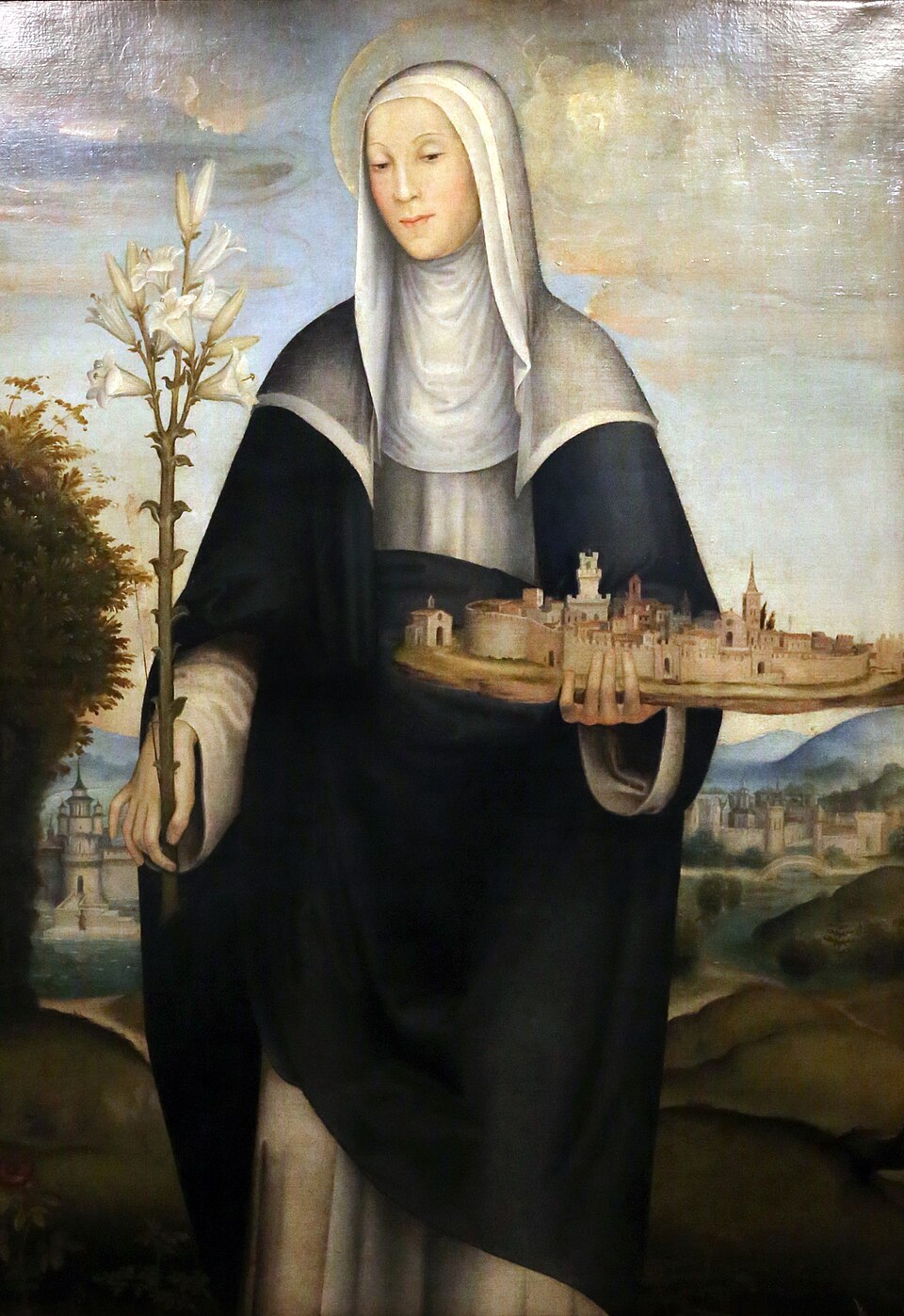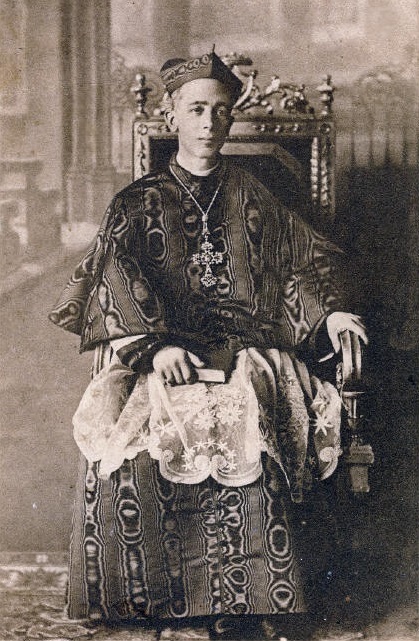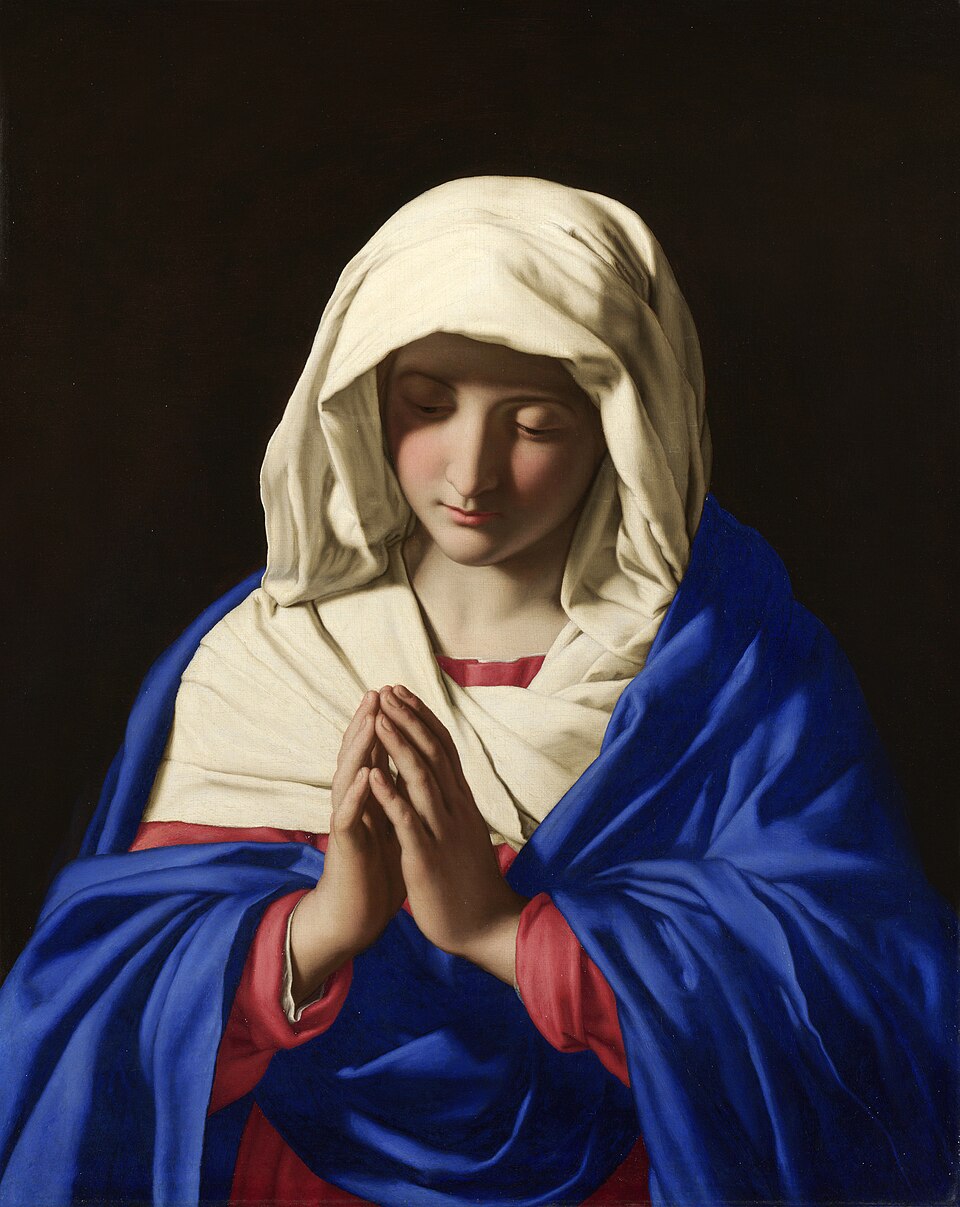
Biography
Blessed Maria Domenica Mazzarello, known affectionately as Maín, was born on May 9, 1837, in Mornese, a small village nestled in the hills of Piedmont, Italy. The eldest of ten children to a devout farming family, Maria Domenica was raised in an atmosphere of deep faith and hard work. From a young age, her piety was evident; she possessed a strong will and a profound love for God, often spending hours in prayer and contemplation. Her formative years were marked by the simple rhythms of rural life, tending to the vineyards and fields, yet her spirit yearned for something more. At the age of 15, she joined the Association of the Daughters of Mary Immaculate, a group dedicated to Marian devotion and works of charity, under the spiritual guidance of Don Domenico Pestarino. This period deepened her commitment to Christ and laid the groundwork for her future vocation.
In 1860, a severe bout of typhoid fever nearly claimed Maria Domenica's life. Though she recovered, the illness left her physically weakened, forcing her to abandon the strenuous work in the fields. This pivotal moment, however, opened new doors for her. With a renewed sense of purpose, she dedicated herself to teaching and caring for the young girls of Mornese, recognizing their need for education and spiritual formation. Her humble endeavors soon caught the attention of Saint John Bosco, who, on a visit to Mornese in 1864, recognized in her a kindred spirit and a potential co-foundress for a female religious institute. Together, they established the Institute of the Daughters of Mary Help of Christians (Salesian Sisters) in 1872, with Maria Domenica, now Mother Mazzarello, serving as its first Superior General. Under her inspired leadership, the congregation flourished, dedicated to the Christian education of poor and abandoned girls, spreading rapidly throughout Italy and beyond.
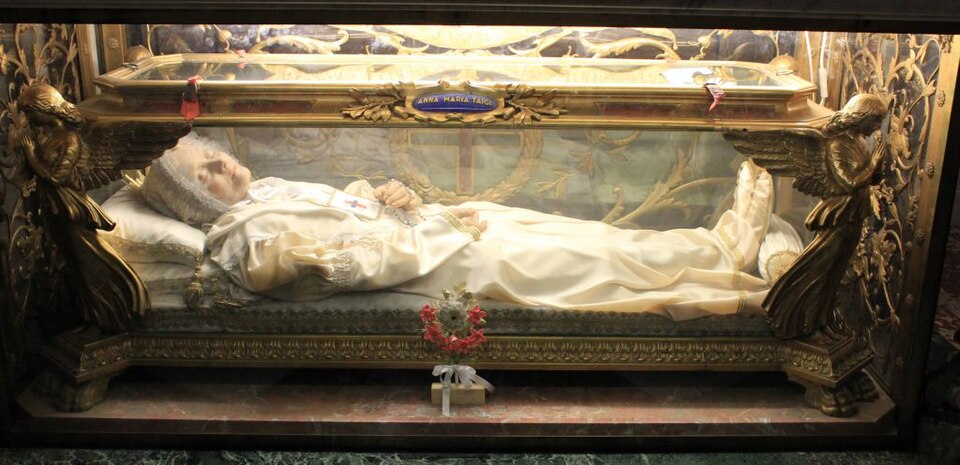
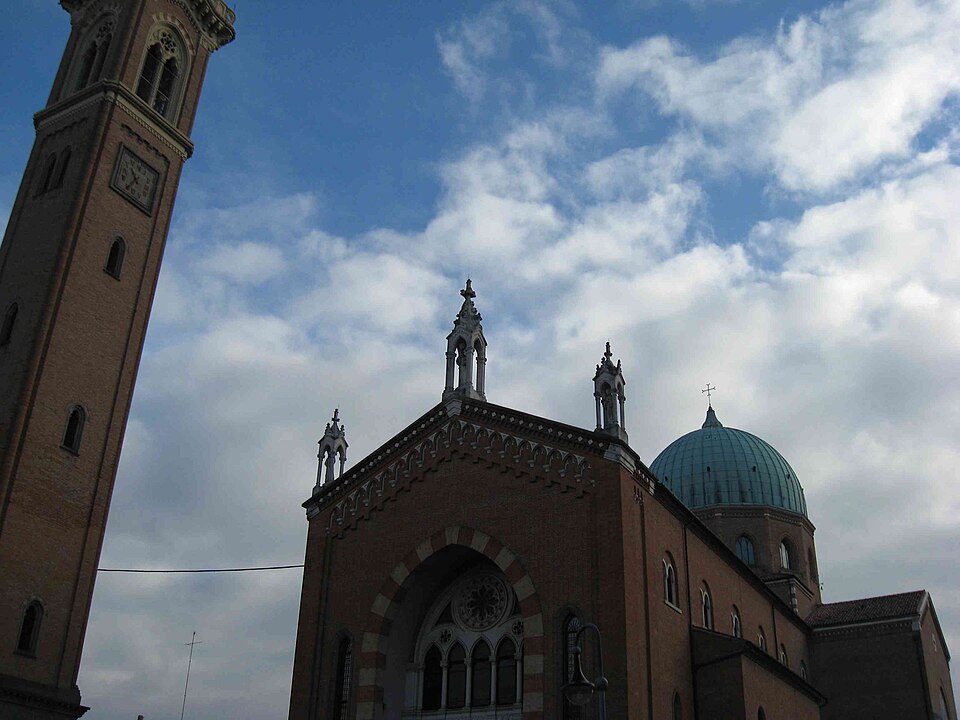
Mother Mazzarello’s life of tireless service and profound holiness came to an end on May 14, 1881, at the young age of 44, in Nizza Monferrato. Her death, though mourned deeply by her spiritual daughters, was met with a sense of peace and resignation to God's will. Following her passing, her body was interred, and years later, during the process for her beatification, her remains were exhumed. To the astonishment and joy of those present, her body was found to be incorrupt, a miraculous sign of God's favor and her sanctity. Today, the incorrupt body of Blessed Maria Domenica Mazzarello rests in the Basilica of Our Lady Help of Christians in Nizza Monferrato, Italy, preserved in a glass reliquary, a testament to her enduring holiness.
Blessed Maria Domenica Mazzarello was beatified on November 20, 1938, and canonized a saint by Pope Pius XII on June 24, 1951. Her legacy continues to inspire millions worldwide. As co-foundress of the Salesian Sisters, she established a vibrant congregation that today numbers over 12,000 sisters serving in more than 90 countries, continuing her mission of educating and evangelizing young women. Pilgrims from across the globe visit her shrine in Nizza Monferrato, where they can venerate her incorrupt body and draw inspiration from her life of faith, humility, and dedication to the youth. Her feast day is celebrated on May 13, and she remains a powerful intercessor and a shining example of Marian devotion and Salesian charism.
Discovery
The first revelation of Maria Domenica Mazzarello's remarkable preservation occurred on August 14, 1938, a significant date that marked the exhumation of her remains from the cemetery in Nizza Monferrato. This was not a routine transfer but an event imbued with a sense of anticipation, as the process for her beatification was well underway. Witnesses to this solemn occasion included ecclesiastical authorities, medical professionals, and members of the Salesian Sisters, the order she co-founded with Saint John Bosco. Upon opening the casket, an extraordinary sight met their gaze: the body of Maín, who had passed away fifty-seven years prior in 1881, lay remarkably intact. Her features, though somewhat shrunken, were discernible, and her habit remained largely preserved. The immediate reaction was one of profound awe and reverence, a hushed testament to what many believed was a sign of divine favor. The discovery was meticulously documented, with detailed reports outlining the condition of the body and the surprise of those present, confirming the absence of the expected decomposition.
Following this initial discovery, further examinations were conducted to ascertain the body's continued state of preservation. In 1939, just a year after the first exhumation, another inspection was carried out, which reaffirmed the incorrupt nature of her remains. These subsequent examinations consistently noted the body's remarkable resistance to natural decay, a phenomenon that continued to defy scientific explanation. Over the decades, while some natural desiccation occurred, the essential integrity of her form remained. This ongoing state of preservation was particularly significant as it coincided with the advancement of her cause for canonization, serving as a powerful visual testament to her sanctity. The consistent findings across multiple inspections underscored the extraordinary nature of her incorruption, distinguishing it from mere mummification or saponification, which typically exhibit different characteristics of degradation.
The journey of Blessed Maria Domenica's remains from the cemetery to their current venerated resting place is a testament to the care and devotion surrounding her legacy. After the 1938 exhumation, her body was carefully prepared for public veneration. To ensure its long-term preservation and to allow the faithful to witness this extraordinary sign, her body was encased in a beautifully crafted glass casket. This transparent reliquary not only protects the remains from environmental factors but also allows for continuous viewing. Her body now reposes in the Basilica of Our Lady Help of Christians in Turin, Italy, a place of profound significance for the Salesian family and countless pilgrims. The display is designed to be reverent and accessible, allowing visitors to contemplate the enduring presence of this beloved foundress. Measures such as controlled environmental conditions within the casket help to mitigate further deterioration, ensuring that future generations can continue to witness this remarkable phenomenon.
Among the most striking details associated with Blessed Maria Domenica Mazzarello's incorrupt body is the consistent observation of its remarkable flexibility and the absence of the typical rigidity of death, even decades after her passing. While not exhibiting phenomena like bleeding or the exuding of oil, the sheer preservation of her soft tissues, especially her facial features and hands, has been a source of wonder. Eyewitness accounts from the initial exhumation and subsequent inspections speak of the body's natural appearance, defying the expected skeletal remains. This enduring state of preservation, particularly in the absence of embalming or other artificial means, sets her apart as a truly remarkable example of incorruptibility within the Catholic tradition. The fact that her body has remained largely intact for over a century, resisting the natural processes of decay, continues to inspire devotion and serves as a powerful reminder of her sanctity and the mysterious workings of divine grace.
Scientific Analysis
The phenomenon of incorruption, particularly in the case of Blessed Maria Domenica Mazzarello, presents a compelling subject for scientific inquiry, bridging historical observation with modern forensic understanding. Records indicate that her body, interred in 1881, was exhumed on several occasions, notably in 1924 and again in 1938, as part of the canonical processes for her beatification and canonization. During these examinations, medical professionals were present to document the state of the remains. While specific names of examining physicians from the early 20th century are not widely publicized in readily accessible scientific literature, the official reports from the Vatican archives would detail their findings. These reports consistently described a body that exhibited an unusual degree of preservation, particularly of soft tissues, despite the passage of decades. The skin was noted to be supple, and the facial features, though somewhat altered, were still recognizable. The internal organs, while not always explicitly detailed in publicly available summaries, were reportedly in a state that defied typical post-mortem decomposition. The clothing she was buried in was also often found to be in a remarkably good state of preservation. These observations were critical in the Church's assessment of her incorruptibility, a status that implies a preservation beyond natural explanation.
From a purely scientific perspective, the reported state of Blessed Maria Domenica Mazzarello's remains poses significant challenges to conventional understanding of decomposition. Normal post-mortem processes, driven by autolysis (self-digestion by cellular enzymes) and putrefaction (bacterial action), typically lead to the rapid disintegration of soft tissues within months, especially in unsealed burial environments. Mornese, her birthplace, and Turin, her final resting place, both experience temperate climates, with varying humidity and soil conditions that would generally promote, rather than inhibit, decay. The absence of widespread insect activity or significant fungal growth, often noted in similar cases of alleged incorruption, further complicates a purely naturalistic explanation. There is no historical record or scientific evidence suggesting any deliberate embalming or sophisticated preservation treatments were applied to her body at the time of her death in 1881. Embalming techniques of that era, while existing, were not universally applied, particularly to individuals of her social standing, and would likely have been documented if performed. The reported preservation of her body, therefore, stands in stark contrast to the expected outcomes of natural decomposition under the prevailing environmental conditions.
Various natural explanations are often proposed for cases of unusual body preservation, such as adipocere formation (saponification), mummification, or preservation in specific soil types. Adipocere, a waxy, grayish-white substance formed from body fat, can preserve body contours but typically results in a hard, brittle texture, unlike the reported suppleness in Mazzarello's case. Mummification requires extremely dry or cold conditions, which were not consistently present in her burial environment. Specific soil compositions, such as those high in heavy metals or with unusual pH levels, can inhibit bacterial growth, but these conditions are usually localized and would need to be exceptionally potent and widespread to account for the reported degree of preservation over decades. Skeptics often point to potential misinterpretations of visual evidence, the effects of dehydration, or the possibility of clandestine preservation efforts. However, the consistent reports from multiple exhumations, overseen by medical professionals and ecclesiastical authorities, describe a state of preservation that goes beyond simple mummification or adipocere formation, particularly regarding the reported integrity of soft tissues and internal organs. The lack of documented embalming, combined with the observed preservation, leaves a significant gap in purely naturalistic explanations.
From a modern scientific perspective, the case of Blessed Maria Domenica Mazzarello, like other alleged incorruptibles, represents an intriguing area for interdisciplinary research. While historical accounts and visual examinations provide valuable qualitative data, contemporary forensic science offers a suite of advanced techniques that could provide more definitive answers. Non-invasive methods such as CT scans or MRI could provide detailed internal anatomical information without disturbing the remains, allowing for precise assessment of organ integrity and tissue density. Chemical analysis of tissue samples, if ethically permissible and sanctioned, could identify the presence of any natural or artificial preserving agents. Carbon dating could confirm the age of the remains and rule out any later substitutions. Microbiological analysis of the burial environment could shed light on the specific conditions that might have inhibited decomposition. While the Church's stance on incorruptibility often emphasizes a miraculous dimension, a thorough scientific investigation, conducted with respect for both the religious context and empirical rigor, could potentially uncover novel insights into the complex processes of post-mortem preservation, perhaps even identifying previously unknown natural mechanisms or unique environmental factors. Many questions remain, and a comprehensive scientific study, if ever undertaken, would undoubtedly contribute significantly to our understanding of human decomposition and preservation.
Spiritual Significance
The remarkable preservation of Blessed Maria Domenica Mazzarello's body, known as incorruption, stands as a profound testament within Catholic theology to several core doctrines. This phenomenon, observed in various saints throughout history, speaks directly to the sacredness of the human body as a temple of the Holy Spirit, as articulated in 1 Corinthians 6:19. For Maria Domenica, whose life was a continuous offering to God, her incorrupt state signifies a divine affirmation of her exceptional holiness and the indwelling presence of the Spirit even after death. It foreshadows the glorious resurrection of the body, a central tenet of Christian faith, reminding believers that our physical forms, though perishable, are destined for transformation and eternal life. The Church interprets this preservation not as a mere biological anomaly, but as a supernatural sign, a tangible link between the earthly pilgrimage and the heavenly communion of saints. It underscores the belief that those who lived lives of extraordinary virtue are already participating in the resurrected life, their bodies serving as silent, enduring witnesses to God's power and grace, inviting the faithful into deeper contemplation of eternal realities.
Blessed Maria Domenica Mazzarello’s unique charism was deeply rooted in her profound Marian devotion and an unwavering commitment to the education and spiritual formation of young women. Her specific way of holiness manifested in a life of heroic simplicity, tireless labor, and an almost childlike trust in Divine Providence. Partnering with Saint John Bosco, she co-founded the Daughters of Mary Help of Christians, an order dedicated to bringing the Salesian charism to girls. Her virtues shone brightly in her daily life: humility, evident in her reluctance to assume leadership despite her clear spiritual gifts; charity, expressed in her boundless love and care for the girls under her charge, often sacrificing her own comfort for theirs; and an extraordinary obedience to God's will and her spiritual directors. She contributed significantly to the Salesian spiritual tradition, emphasizing practical piety, joy, and a deep, personal relationship with Mary, the Help of Christians. Her spirituality was not abstract but intensely practical, rooted in the daily realities of life in Mornese and Turin, transforming mundane tasks into acts of profound love for God and neighbor.
Devotion to Blessed Maria Domenica Mazzarello has blossomed since her passing, particularly within the Salesian family and among those dedicated to the education of young women. Her patronage extends to educators, young women, and those seeking to live a life of simple, profound faith. Pilgrims from across the globe journey to the Basilica of Our Lady Help of Christians in Turin, Italy, where her incorrupt body reposes, to offer prayers, seek her intercession, and draw inspiration from her enduring presence. The experience of visiting her shrine is often described as one of profound peace and spiritual upliftment. Many come to pray novenas in her honor, especially leading up to her feast day on May 14th, seeking her guidance in their own vocational discernment or in their work with youth. The physical presence of her incorrupt body serves as a powerful focal point for devotion, a visible reminder of her sanctity and her continued intercession from heaven, fostering a tangible connection between the faithful and the heavenly realm she now inhabits.
Numerous miracles have been attributed to Blessed Maria Domenica Mazzarello's intercession, testifying to her powerful advocacy in heaven. Documented healings, often of chronic illnesses or debilitating conditions, have been reported by those who have invoked her name in prayer. Beyond physical cures, countless conversions and spiritual transformations have been attributed to her intercession, particularly among young people struggling with faith or seeking direction in their lives. The incorrupt body itself has been a source of immense spiritual consolation for the faithful, acting as a tangible sign of God's enduring love and the reality of the communion of saints. For many, witnessing her preserved remains reinforces their belief in the resurrection and the eternal life promised by Christ. This visible sign of grace strengthens faith, offers hope in times of despair, and deepens the understanding that the saints, though departed from this earthly life, remain active participants in the life of the Church, interceding for us before God's throne.
Blessed Maria Domenica Mazzarello's enduring message for contemporary Catholics and seekers resonates powerfully in an age often characterized by materialism and secularism. Her life challenges the notion that true fulfillment lies in worldly possessions or fleeting pleasures, instead pointing to the profound joy and purpose found in a life dedicated to God and service to others. From her example, people today can learn the transformative power of humility, the strength found in simple faith, and the profound impact one individual can have through unwavering commitment to a divine mission. Her incorruption serves as a tangible bridge between the visible and invisible worlds, a concrete reminder that there is more to existence than what meets the eye, and that the spiritual realm is intimately intertwined with our earthly lives. In a world yearning for authenticity and meaning, Maria Domenica’s preserved body stands as a silent, yet eloquent, sermon, inviting all to embrace a life of holiness, trust in God's providence, and dedicate themselves to the betterment of humanity, especially the most vulnerable among us.
AI summary
A plain-language overview generated from this page's source material. Always verify with primary sources.