Biography
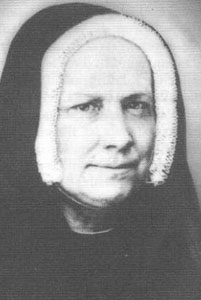
Blessed Paula Frassinetti, born in Genoa, Italy, in 1809, was the third of five children to Giovanni Battista Frassinetti and Angela Arrighi. Her early life was marked by both joy and sorrow; she lost her mother at the tender age of nine, a profound experience that undoubtedly shaped her empathetic and compassionate spirit. Her father, a devout man, instilled in his children a deep love for God and a strong sense of Christian duty. The family later moved to the small village of Quinto al Mare, where Paula's brother, Giuseppe, served as a parish priest. It was under his spiritual guidance that Paula's vocation to religious life began to blossom. She dedicated herself to prayer, acts of charity, and the instruction of young girls in the faith, demonstrating an early and ardent desire to serve God and her neighbor.
Inspired by a profound spiritual awakening and a growing conviction that God was calling her to a new form of religious life, Paula, alongside her brother and a small group of devoted women, founded the Congregation of the Sisters of Saint Dorothy in 1834. The community’s charism was rooted in the education of young girls, particularly those from disadvantaged backgrounds, and the care of the sick. Blessed Paula's vision was revolutionary for her time, emphasizing a holistic education that nurtured both the intellect and the spirit. She established schools, orphanages, and hospitals, tirelessly working to uplift the poor and marginalized. Her unwavering faith, practical wisdom, and profound humility drew many to her cause, and the congregation quickly expanded, spreading its mission of love and service throughout Italy and beyond.
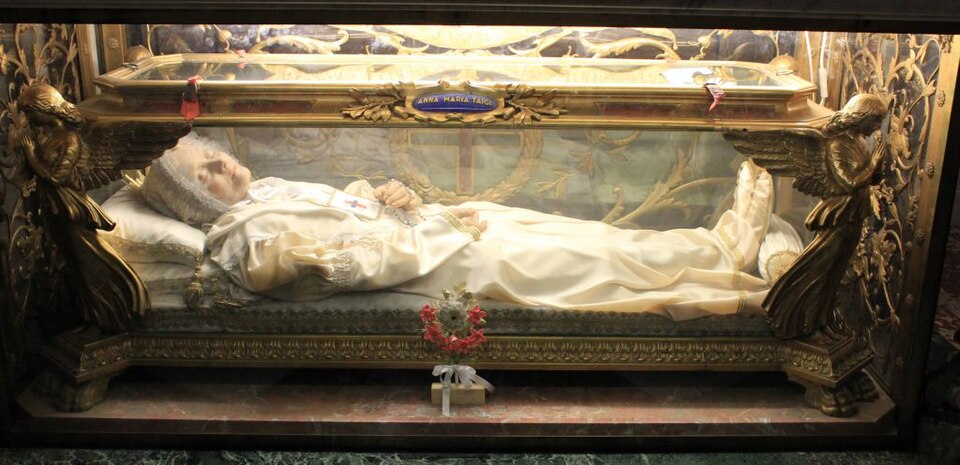
Blessed Paula Frassinetti passed away peacefully in Rome on June 11, 1882, after a life wholly dedicated to God and the service of others. Her death was met with deep sorrow by those whose lives she had touched, but also with a profound sense of gratitude for her holy example. Upon her exhumation, her body was discovered to be remarkably preserved, a testament to her sanctity and a source of inspiration for countless believers. Today, her incorrupt body rests in the Generalate of the Sisters of Saint Dorothy in Rome, a sacred site where pilgrims can venerate her relics and seek her intercession. The serene and lifelike state of her remains continues to be a powerful reminder of the enduring presence of God in the lives of His saints.
The legacy of Blessed Paula Frassinetti continues to flourish through the vibrant work of the Sisters of Saint Dorothy, who today serve in numerous countries across the globe, carrying on her mission of education and charity. She was beatified by Pope Pius XI in 1930, a formal recognition by the Church of her heroic virtues and her profound impact on the lives of others. Pilgrims visiting Rome can experience the spiritual solace and inspiration offered by her incorrupt body, a tangible link to a woman who lived a life of extraordinary faith and love. Her life stands as a beacon of hope, reminding us of the transformative power of a life lived in complete surrender to God's will and dedicated to the service of humanity.
Discovery
The remarkable state of preservation of Blessed Paula Frassinetti's remains first came to light during the initial canonical recognition of her body in 1904, twenty-two years after her passing. This solemn event, a standard procedure in the beatification process, involved the exhumation of her casket from the cemetery of the Sisters of Saint Dorothy in Rome. Present were ecclesiastical officials, medical examiners, and members of her religious congregation, all keenly aware of the spiritual significance of the moment. Upon opening the simple wooden coffin, an astonishing sight greeted those assembled: the body of Mother Paula lay perfectly preserved, her skin retaining its natural color and suppleness, her features serene and undisturbed by the passage of time. The immediate reaction was one of profound awe and reverence, a palpable sense of divine intervention in the face of natural decay. Eyewitness accounts from that day speak of a hushed reverence, followed by exclamations of wonder as the medical professionals confirmed the extraordinary condition of the deceased. This initial discovery laid a powerful foundation for her eventual beatification, serving as a tangible sign of God's favor.
Subsequent examinations further solidified the miraculous nature of her incorruptibility. In 1930, another canonical recognition was conducted, again revealing her body to be in an exceptional state. Despite the intervening twenty-six years, there was no discernible deterioration. The skin remained intact, the joints flexible, and the internal organs, though not fully exposed for direct examination, were inferred to be well-preserved based on the external integrity of the body. These examinations were meticulous, involving detailed medical reports and photographic documentation, all attesting to the sustained incorruption. Another significant event occurred in 1952, prior to her beatification in 1960. During this period, the body was again examined, and it was noted that while there was a slight darkening of the skin in certain areas, particularly around the face and hands, the overall integrity and flexibility remained astonishingly intact. The hair, still present, showed no signs of decay, and the nails were also remarkably preserved. These repeated observations, spanning decades, provided compelling evidence against any natural explanation for such prolonged preservation.
The journey of Blessed Paula's remains, from their initial burial to their current venerated state, reflects a careful balance of protection and public devotion. Following the 1930 examination, her body was carefully placed within a specially constructed glass casket, allowing for perpetual veneration by the faithful. This casket, designed to protect the remains from environmental factors while offering visibility, became her permanent resting place within the Generalate of the Sisters of Saint Dorothy in Rome, where she had founded her congregation. To further ensure its preservation, the environment within the display area is carefully monitored, maintaining stable temperature and humidity levels. The body itself is clothed in the habit of her order, further emphasizing her identity as a religious sister. The glass casket is adorned with simple, reverent decorations, reflecting the humility and piety that characterized her life. Pilgrims and visitors from around the world come to this sacred space, drawn by the profound spiritual message embodied in her incorruptibility.
Among the most remarkable details associated with Blessed Paula Frassinetti's incorrupt body is the persistent flexibility of her limbs and the natural color of her skin, even after more than a century and a half since her death. Unlike typical mummified remains, which are rigid and brittle, her body has consistently demonstrated a surprising degree of suppleness. While there have been no reports of phenomena such as sweet fragrance or the exudation of oil, the sheer resistance to the natural processes of decomposition, particularly in the absence of embalming or other artificial preservation methods, is itself considered a profound miracle. The fact that her body has remained in such an extraordinary state, defying the laws of nature, serves as a powerful testament to her sanctity and a continuous source of inspiration for those who believe in the enduring power of God's grace.
Scientific Analysis
The phenomenon of preserved human remains, particularly those attributed to religious figures such as Blessed Paula Frassinetti, presents a compelling intersection for scientific inquiry and theological contemplation. While popular accounts often highlight the miraculous aspect of incorruption, a rigorous scientific approach necessitates a detailed examination of the available evidence. For Blessed Paula Frassinetti, who died in 1882, the reported state of preservation has garnered attention. However, specific details regarding formal medical or scientific examinations conducted on her remains are notably scarce in publicly accessible scientific literature. Unlike some other cases of alleged incorruption where detailed forensic reports, including dates, names of examining physicians, and institutional affiliations, have been published, information concerning Blessed Paula remains largely anecdotal within religious contexts. Without such documented examinations, it is challenging to provide a definitive scientific assessment of her state of preservation. The absence of publicly available, peer-reviewed medical reports detailing the condition of her tissues, organs, and skeletal structure limits the ability to draw robust scientific conclusions regarding the specific mechanisms of preservation, if any. Any claims of incorruption, therefore, rest heavily on visual observation and historical accounts rather than comprehensive scientific analysis.
The scientific mystery surrounding cases like Blessed Paula Frassinetti's alleged incorruption lies in the apparent defiance of normal decomposition processes. Following death, the human body typically undergoes a series of predictable changes driven by autolysis (self-digestion by enzymes) and putrefaction (bacterial activity). These processes, influenced by factors such as temperature, humidity, and oxygen availability, lead to the breakdown of soft tissues and eventual skeletalization. For Blessed Paula, who died in 1882, the prevailing environmental conditions of Rome, Italy, including its climate and typical burial practices of the era, would generally be conducive to decomposition. Unless specific embalming or preservation treatments were applied, which are not widely documented for her case, the expectation would be for significant degradation of soft tissues over more than a century. The reported state of preservation, if accurate, would suggest either an atypical set of environmental circumstances, unknown preservation interventions, or an unusual biological resistance to decay. The lack of detailed information regarding her initial burial environment—such as the type of coffin, grave liner, soil composition, and depth of burial—further complicates any scientific attempt to reconstruct the conditions that might have contributed to preservation. Without these crucial environmental data points, it is difficult to rule out or confirm natural explanations.
Various natural explanations are often proposed for cases of apparent incorruption, including saponification (adipocere formation), mummification, and desiccation. Saponification occurs when fatty tissues transform into a waxy, soap-like substance (adipocere) in anaerobic, moist environments, often in clay-rich soils. Mummification, on the other hand, results from rapid dehydration of tissues in dry, often arid conditions, or through deliberate artificial processes. Desiccation is a form of mummification caused by extreme dryness. While these processes can preserve body outlines and some soft tissues, they typically result in a hardened, leathery, or waxy appearance, often accompanied by significant shrinkage and discoloration. For cases where the body is described as appearing "flexible" or "life-like," these natural processes often fall short as complete explanations. Skeptics frequently point to these natural phenomena as potential explanations, or suggest that the perceived state of preservation is an exaggeration, a result of careful restoration, or a misinterpretation of post-mortem changes. Without detailed scientific examination, including histological analysis of tissues, chemical analysis of any preserved substances, and imaging techniques, it remains challenging to definitively confirm or refute these natural hypotheses in the specific context of Blessed Paula Frassinetti. The absence of such data leaves a significant gap in the scientific understanding of her reported preservation.
From a modern scientific perspective, cases of alleged incorruption, including that of Blessed Paula Frassinetti, offer valuable opportunities for studying the complex processes of post-mortem preservation. Advanced techniques such as computed tomography (CT) scans, magnetic resonance imaging (MRI), and endoscopic examinations could provide non-invasive insights into the internal state of the remains, revealing the condition of organs and tissues without disturbance. Carbon dating could establish the authenticity of the remains, while isotopic analysis might shed light on dietary and environmental factors during life. Furthermore, molecular and histological analyses of tissue samples, if ethically and permissibly obtained, could identify specific proteins, lipids, and cellular structures, offering clues about the mechanisms of preservation and the extent of degradation. Such analyses could also detect any embalming agents or other artificial preservatives. The scientific community's interest in such cases is not to disprove faith, but to understand the biological and environmental factors that can lead to unusual forms of post-mortem preservation. For Blessed Paula Frassinetti, the absence of these modern scientific investigations means that many questions remain unanswered regarding the precise nature of her reported incorruption, leaving it largely within the realm of anecdotal observation rather than fully elucidated scientific fact.
Spiritual Significance
The phenomenon of incorruption, as exemplified by Blessed Paula Frassinetti, stands as a profound theological testament within the Catholic tradition, offering a tangible glimpse into the eschatological hope of the Church. This miraculous preservation of the body, defying natural decay, is not merely a biological anomaly but a divine affirmation of the sanctity achieved by certain individuals. It powerfully underscores the doctrine of the body as a temple of the Holy Spirit, as articulated in 1 Corinthians 6:19. For Blessed Paula, whose life was dedicated to nurturing spiritual growth in others, her incorrupt body serves as a perpetual sermon, reminding us that the human person, body and soul, is destined for glory. The Church interprets such incorruption as a sign of God's favor, a prefigurement of the resurrection of the body, and a vivid illustration of the communion of saints. It bridges the chasm between the earthly pilgrimage and the heavenly triumph, demonstrating that death does not have the final word over those who live wholeheartedly for Christ. In Blessed Paula's case, her preserved remains whisper of a life lived in profound union with God, a life so permeated by divine grace that even her physical form bears witness to its transformative power, inviting all who gaze upon her to contemplate their own eternal destiny.
Blessed Paula Frassinetti’s unique charism was undeniably rooted in her deep compassion and an unwavering commitment to the education and spiritual formation of young girls, especially those marginalized by society. Her early experience of losing her mother at a young age, coupled with her brother Giuseppe’s spiritual guidance, cultivated in her an extraordinary empathy and a profound desire to serve. She practiced heroic virtues of humility, recognizing her dependence on God in all things, and an ardent charity that manifested in countless acts of selfless service. Obedience was another hallmark of her spiritual life, as she consistently submitted her will to divine providence and ecclesiastical authority, particularly in the founding of the Sisters of Saint Dorothy. Her daily life was a seamless tapestry of prayer, instruction, and practical care, embodying a spirituality that was both contemplative and intensely active. She contributed significantly to the practical application of Christian education, establishing schools that not only imparted knowledge but also instilled a deep love for God and neighbor. Her approach was characterized by a gentle firmness, an unwavering faith in the potential of each child, and a profound understanding of the transformative power of education rooted in Gospel values, leaving a lasting legacy in the spiritual tradition of Catholic education.
Devotion to Blessed Paula Frassinetti has flourished steadily since her passing, particularly among those involved in education and those seeking guidance in nurturing faith in young people. While not widely known globally as some more ancient saints, her veneration is particularly strong within the communities served by the Sisters of Saint Dorothy and in her native Italy. Pilgrims today visit her resting place at the Generalate of the Sisters of Saint Dorothy in Rome, where her incorrupt body is enshrined. The experience of visiting her shrine is often described as one of profound peace and inspiration. The sight of her preserved form, resting peacefully, evokes a tangible sense of her enduring presence and sanctity. Many come to offer prayers for educators, for children, and for vocations to religious life. While specific novenas or feast day traditions may vary regionally, her feast day on June 11th is a time for special remembrance and celebration within her congregation and among her devotees. The physical presence of her incorrupt body serves as a powerful focal point for prayer, a silent yet eloquent testament to her holiness, drawing believers into a deeper communion with her and, through her, with God.
The spiritual consolation derived from Blessed Paula Frassinetti’s incorrupt body is itself a profound testament to her intercessory power. While specific, widely publicized miracles attributed directly to her incorrupt body might not be as numerous as some other saints, countless individuals have reported a deep sense of peace, renewed faith, and spiritual encouragement after visiting her shrine. The very preservation of her body is considered by many to be a continuous miracle, a sign of God's enduring presence and an invitation to deeper faith. Documented accounts within the Sisters of Saint Dorothy speak of answered prayers for difficult educational challenges, for the spiritual growth of students, and for healing from various ailments, all attributed to her powerful intercession. Her life of selfless service and profound trust in God continues to inspire acts of charity and dedication among her followers. The incorrupt body serves as a visible anchor for these spiritual experiences, a constant reminder that the prayers offered in her presence are heard and that her legacy of grace continues to unfold in the lives of those who seek her help.
Blessed Paula Frassinetti’s enduring message for contemporary Catholics and seekers resonates with particular urgency in our modern world. Her life challenges the prevailing materialism and secularism by demonstrating that true fulfillment lies not in worldly possessions or fleeting pleasures, but in a life dedicated to God and the service of others. In an age often characterized by spiritual apathy and a disregard for the sacred, her example of unwavering faith, profound charity, and tireless dedication to education offers a powerful counter-narrative. People today can learn from her the importance of nurturing the spiritual lives of children, of prioritizing moral formation alongside intellectual development, and of finding God in the ordinary routines of daily life. Her incorruption serves as a tangible bridge between the visible and invisible worlds, a physical manifestation of spiritual realities that often seem distant or abstract. It reminds us that sanctity is attainable, that God intervenes in human history, and that our bodies, far from being mere vessels, are destined for eternal glory. Her life and her miraculously preserved body call us to a deeper commitment to Christ, to embrace a life of virtue, and to trust in the ultimate triumph of grace over decay.
AI summary
A plain-language overview generated from this page's source material. Always verify with primary sources.