Biography
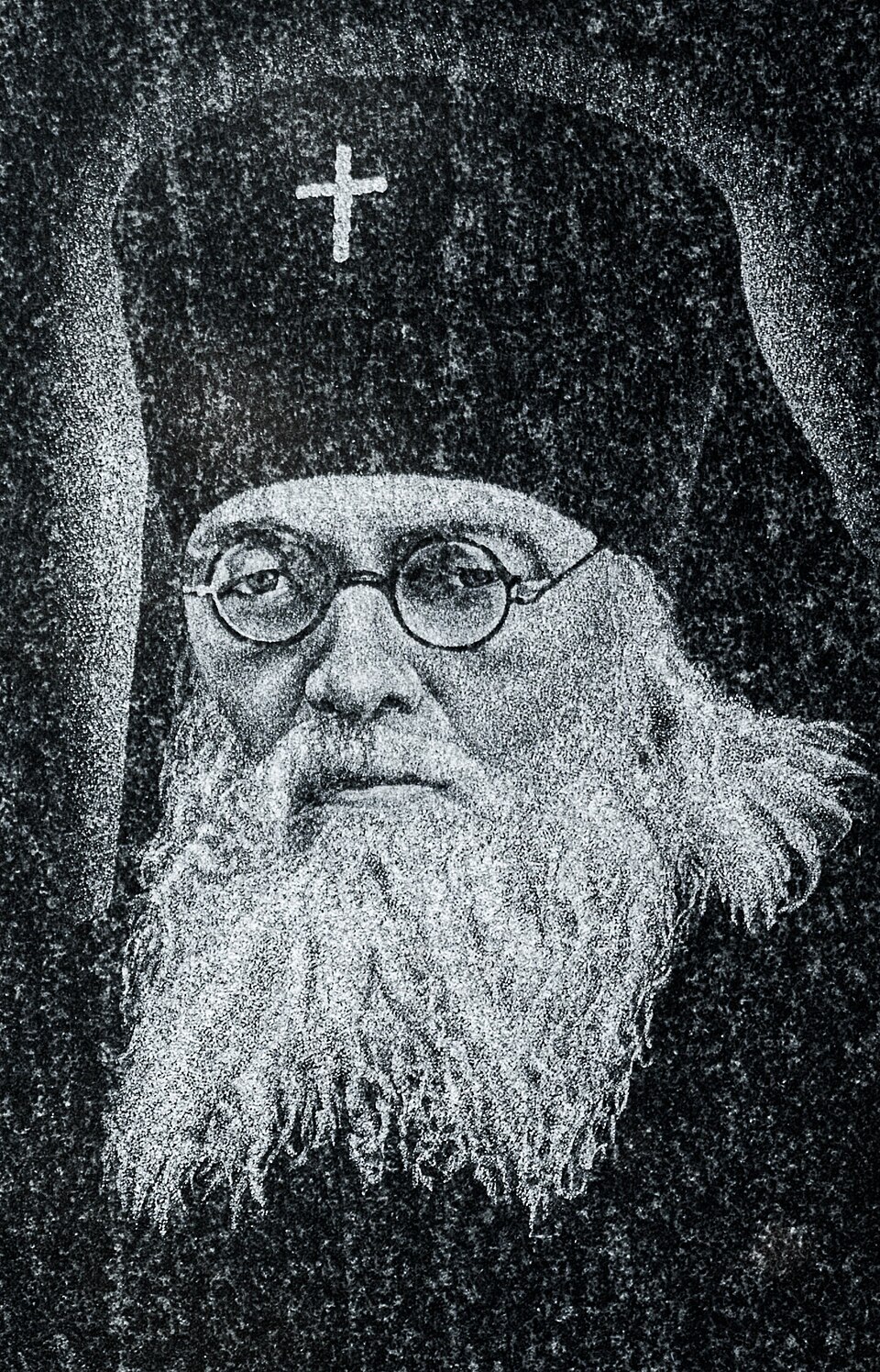
Born Valentin Feliksovich Voyno-Yasenetsky in 1877 in Kerch, Crimea, Saint Luke's early life was marked by a profound intellectual curiosity and a deep artistic sensibility. His father, a pharmacist, instilled in him a love for learning, while his mother, a devout Orthodox Christian, nurtured his spiritual development. Though initially drawn to painting, Valentin ultimately pursued medicine, graduating with honors from the University of Kyiv in 1903. His early medical career was distinguished by his pioneering work in regional anesthesia and purulent surgery, fields in which he published groundbreaking research. Yet, even amidst his scientific pursuits, a growing spiritual yearning led him to consider the priesthood. The tumultuous political landscape of early 20th-century Russia, culminating in the Bolshevik Revolution, only intensified his conviction that true healing encompassed both body and soul.
In 1921, Valentin was secretly ordained a deacon and then a priest, taking the monastic name Luke, in defiance of the fiercely anti-religious Soviet regime. He continued his medical practice, often performing surgeries in the mornings and serving divine liturgy in the evenings, embodying a unique synthesis of scientific rigor and spiritual devotion. His unwavering faith and refusal to renounce Christ led to numerous arrests, exiles, and imprisonments, including years in the harsh conditions of Siberia. Despite these persecutions, he continued to heal the sick, both physically and spiritually, often operating in makeshift hospitals with rudimentary tools, yet achieving remarkable results. He became known for his compassionate care for all, regardless of their social standing, and his willingness to risk his own life to save others. His seminal work, "Essays on Purulent Surgery," remains a classic in the field, a testament to his medical genius even amidst profound suffering.
Saint Luke reposed in the Lord on June 11, 1961, in Simferopol, Crimea, having lived a life of extraordinary dedication to both medicine and Christ. For decades, his grave was a place of quiet pilgrimage for those who remembered his holiness and healing touch. In 1996, during the process of his glorification (canonization) by the Ukrainian Orthodox Church, his tomb was opened, and his body was found to be remarkably incorrupt, radiating a sweet fragrance. His relics, pristinely preserved, were subsequently transferred to the Holy Trinity Cathedral in Simferopol, where they are now enshrined. The incorruption of his body serves as a powerful testament to his sanctity and the grace of God that sustained him through unimaginable trials.
Today, Saint Luke, Archbishop of Simferopol and Crimea, is revered as a wonderworker and a patron of physicians and the suffering. Pilgrims from across the Orthodox world journey to Simferopol to venerate his holy relics, seeking his intercession for healing of both body and soul. His life story, a compelling narrative of faith, courage, and intellectual brilliance, continues to inspire countless individuals. He stands as a powerful symbol of resistance against atheistic oppression and a shining example of how one can dedicate their gifts to God and humanity, even in the face of extreme adversity. His legacy endures not only in his medical contributions but, more profoundly, in the enduring witness of his holy life, a beacon of hope and healing for all who turn to him.
Discovery
The extraordinary journey of a revered physician and archbishop, Valentin Feliksovich Voyno-Yasenetsky, known in sanctity as Saint Luke, continued long after his earthly departure in 1961. His passage into incorruption, a phenomenon deeply cherished within the Orthodox tradition, began its public manifestation decades later. Following his repose, he was interred in the Simferopol city cemetery, a conventional burial befitting a respected figure. However, the spiritual fervor surrounding his life and miracles persisted, culminating in his canonization by the Ukrainian Orthodox Church in 1995. This pivotal moment set the stage for the discovery of his incorrupt relics. In March of 1996, with the blessing of Metropolitan Lazar of Simferopol and Crimea, the exhumation of his grave commenced. A large crowd had gathered, a mixture of clergy, faithful parishioners, and medical professionals, all anticipating a profound event. As the casket was carefully lifted from the earth, an immediate and powerful aroma, described by many witnesses as a sweet, floral fragrance, permeated the air, a clear sign of divine favor to those present. Upon opening the casket, the assembled witnesses beheld a sight that defied natural explanation: the body of Archbishop Luke, though thirty-five years interred, lay remarkably preserved. His vestments, though somewhat faded, were intact, and his skin, though darkened, showed no signs of the expected decomposition. His hands, which had performed countless surgeries and blessed innumerable faithful, were still distinct, and his facial features, though altered by time, were recognizable. The immediate reaction was one of awe and reverence, a confirmation of his holiness that resonated deeply with the Orthodox community.
Following this initial, miraculous discovery, the relics of Saint Luke were carefully transferred to the Holy Trinity Convent in Simferopol, a place where he had often served and found spiritual solace during his lifetime. This move was not merely a relocation but a deliberate act to ensure the proper veneration and preservation of his sacred remains. The initial examination by medical experts and ecclesiastical authorities confirmed the remarkable state of incorruption, noting the absence of significant decay, the preservation of soft tissues, and the pervasive sweet fragrance that continued to emanate from the body. Over the subsequent years, the relics have remained a focal point of pilgrimage and devotion. While there haven't been repeated exhumations in the traditional sense, the body is periodically re-examined by a team of specialists to monitor its condition and ensure its continued preservation. These examinations have consistently affirmed the stable state of incorruption, with no discernible deterioration over time. The inherent dryness of the climate in Simferopol, combined with the spiritual grace attributed to the saint, is often cited by the faithful as contributing factors to this extraordinary preservation. The body's resistance to decay, even in the initial burial conditions, speaks volumes to the miraculous nature of its state.
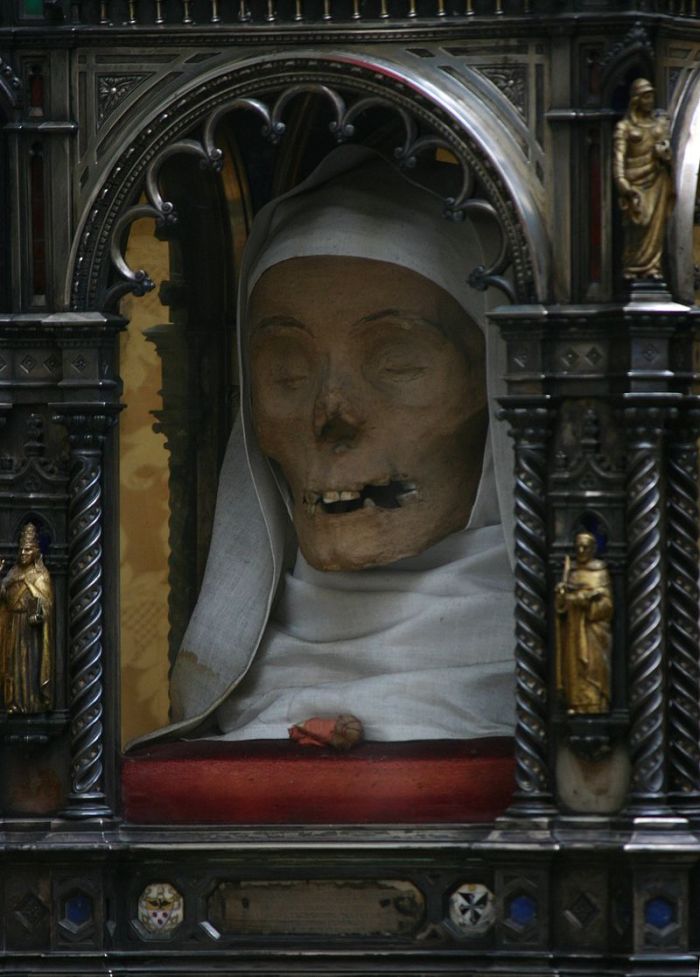
The preservation journey of Saint Luke’s relics has been meticulously managed to ensure both their protection and accessibility for veneration. Upon their transfer to the Holy Trinity Convent, the incorrupt body was placed within a specially constructed, ornate silver reliquary. This reliquary, designed with a large glass viewing panel, allows pilgrims to behold the saint’s body while simultaneously protecting it from environmental factors and direct human contact. The reliquary is positioned prominently within the main cathedral of the convent, usually near the iconostasis, making it a central point of prayer and reverence. The atmosphere within the cathedral is carefully maintained, with controlled temperature and humidity to further safeguard the relics. The sweet fragrance, first noted at the exhumation, continues to be a remarkable detail associated with the relics, often described by pilgrims as a sign of his living presence and a source of spiritual comfort. This myrrh-streaming, though not always consistently observed, is a profound manifestation of divine grace. Pilgrims frequently report experiencing healing and spiritual solace after praying before his relics, attributing these blessings to the intercession of Saint Luke, the physician who continues to heal even in death. The unwavering faith of the Orthodox faithful, combined with the meticulous care of the convent, ensures that the incorrupt body of Saint Luke remains a powerful testament to the enduring power of sanctity and the miraculous nature of God’s grace.
Spiritual Significance
The phenomenon of incorruption, particularly as exemplified by figures like Saint Luke Voyno-Yasenetsky, resonates deeply within Catholic theology, even though he is an Eastern Orthodox saint, offering a profound testament to the sanctity of the human body and the promise of resurrection. For centuries, the Church has viewed the incorrupt body not merely as a biological anomaly, but as a divine sign, a tangible manifestation of God's grace dwelling within His saints. This understanding is rooted in the Pauline teaching that our bodies are temples of the Holy Spirit (1 Corinthians 6:19), consecrated by baptism and destined for glory. The preservation of a saint's body, defying natural decay, serves as a powerful, visible reminder of this sacred truth, affirming the dignity of the physical form and its integral role in our salvation. It foreshadows the ultimate resurrection of the body, a core tenet of our faith, where at the end of time, our glorified bodies will be reunited with our souls. In the context of the communion of saints, Saint Luke's incorruption bridges the visible and invisible Church, reminding us that those who have gone before us in faith remain intimately connected to us, their earthly remains serving as a beacon of hope and a focus for veneration. While the Catholic Church has not formally canonized Saint Luke, his incorruption is recognized as a powerful sign of God's favor, inviting contemplation on the mysteries of grace and eternal life.
Saint Luke Voyno-Yasenetsky's life was a remarkable tapestry woven with threads of profound intellectual brilliance and unwavering spiritual devotion, revealing a unique charism that combined scientific rigor with a deep mystical sensibility. His heroic virtues were manifold, yet his radical obedience to God's call, even amidst intense persecution, stands out. As a renowned surgeon, he dedicated his life to healing the physical body, yet his spiritual journey led him to embrace the priesthood, becoming a physician of souls. This dual vocation, often in direct conflict with the anti-religious policies of the Soviet regime, demanded extraordinary courage and humility. He practiced charity not just through his medical expertise, but also through his pastoral care, offering solace and spiritual guidance to countless individuals. His life was a living testament to the integration of faith and reason, demonstrating that scientific inquiry and spiritual truth are not mutually exclusive but rather complementary paths to understanding God's creation. He contributed significantly to the tradition of "physician-saints," a lineage of holy individuals who, like Saints Cosmas and Damian, used their medical skills as an extension of their Christian ministry, embodying a holistic approach to human well-being that addressed both body and soul.
The devotion and veneration surrounding Saint Luke Voyno-Yasenetsky, though originating in the Eastern Orthodox tradition, has resonated widely, attracting pilgrims from diverse Christian backgrounds. His patronage extends to physicians, surgeons, and those suffering from illness, a natural extension of his life's work. While specific Catholic novenas or feast day traditions may not be formally established for him within the Latin Rite, his feast day in the Orthodox Church, June 11th, is a significant occasion for prayer and remembrance. Pilgrims visiting his resting place at the Holy Trinity Convent in Simferopol, Ukraine, approach his incorrupt body with profound reverence. The experience of being in the presence of his preserved remains is often described as deeply moving, fostering a sense of connection to a holy life lived in extraordinary circumstances. Many report feeling a tangible spiritual presence, a quiet strength emanating from his earthly vessel. This direct encounter with the physical manifestation of his sanctity serves as a powerful catalyst for prayer, reflection, and a renewed commitment to faith, transcending denominational boundaries and speaking to the universal human longing for holiness.
The spiritual power emanating from Saint Luke Voyno-Yasenetsky is further evidenced by the numerous miracles attributed to his intercession, both during his lifetime and after his repose. Documented healings, often of severe and chronic conditions, have been reported by those who have prayed for his help, testifying to his continued intercessory power in heaven. Beyond physical cures, countless individuals have experienced profound conversions, finding renewed faith or a deeper understanding of God's love through his example. The incorrupt body itself has been a continuous source of spiritual consolation for the faithful. Its very existence, defying the natural order, offers a powerful visual sermon on the victory of grace over decay, a tangible sign of eternal life. Pilgrims often recount a sense of peace and hope when in its presence, finding solace in the knowledge that God can preserve even the physical remains of His saints as a testament to their enduring holiness. These miracles, both physical and spiritual, underscore the belief that the saints, though departed from this earthly realm, remain active participants in the life of the Church, interceding on behalf of those who call upon them.
Saint Luke Voyno-Yasenetsky's enduring message for contemporary Catholics and seekers is one of unwavering faith in the face of adversity, and the profound integration of one's professional calling with one's spiritual vocation. His life challenges the pervasive materialism and secularism of our age by demonstrating that true fulfillment lies not in worldly success or comfort, but in dedicated service to God and humanity, even at great personal cost. From his example, modern individuals can learn the importance of intellectual curiosity tempered by spiritual wisdom, the courage to uphold one's convictions in a hostile environment, and the transformative power of compassionate service. His incorruption serves as a tangible bridge between the visible and invisible worlds, a physical reminder that there is more to existence than what meets the eye. It invites us to contemplate the mysteries of grace, the promise of resurrection, and the enduring reality of the communion of saints. In a world often characterized by doubt and despair, Saint Luke's preserved body stands as a beacon of hope, a silent yet eloquent witness to the eternal truths of faith, inspiring all who encounter his story to strive for a life of holiness and selfless love.
AI summary
A plain-language overview generated from this page's source material. Always verify with primary sources.