Biography
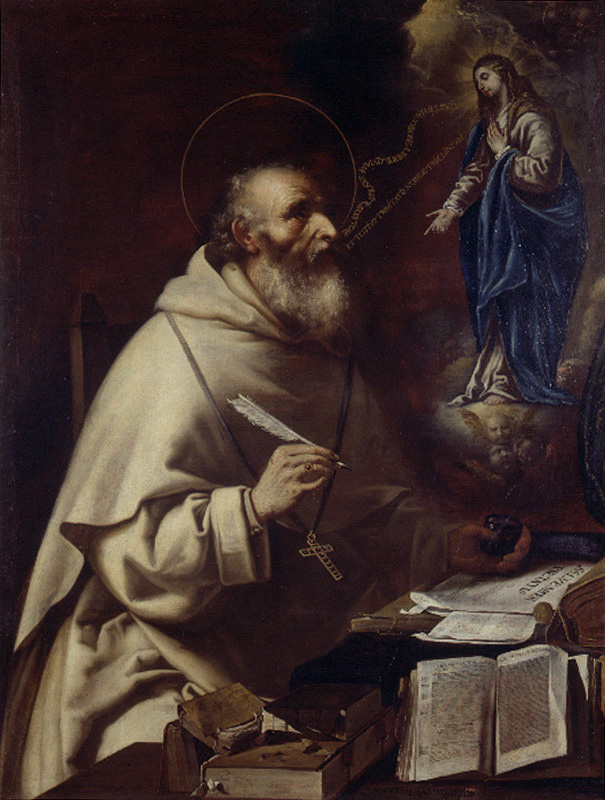
Saint Albertus Magnus, a towering intellect of the 13th century, was born Albert von Bollstädt around 1200 in Lauingen, Bavaria, into a noble German family. His formative years were marked by a profound intellectual curiosity, which led him to the University of Padua, a renowned center of learning. It was there, amidst the vibrant academic atmosphere, that he encountered the nascent Dominican Order. Drawn to their commitment to study and preaching, Albertus made the pivotal decision to join the Dominicans in 1223, a choice that would forever shape the course of Western thought. His early life was thus a blend of aristocratic upbringing and a burgeoning spiritual and intellectual awakening, setting the stage for his extraordinary contributions.
As a Dominican friar, Albertus Magnus embarked upon a remarkable vocation as a scholar, teacher, and theologian. He taught at various Dominican houses of study, including Cologne, Regensburg, Freiburg, and Strasbourg, eventually becoming a master of theology at the University of Paris. His intellectual prowess was legendary; he was the first to systematically introduce and interpret the complete works of Aristotle to the Christian West, synthesizing Greek philosophy with Christian doctrine. His extensive writings spanned theology, philosophy, natural sciences, logic, and metaphysics, earning him the moniker "Doctor Universalis" – the Universal Doctor. He was also a mentor to Saint Thomas Aquinas, guiding the young theologian in his early studies. His contributions were not merely academic; he served as Bishop of Regensburg for a time, demonstrating his administrative capabilities and pastoral care.
Saint Albertus Magnus passed away peacefully in Cologne on November 15, 1280. His death was met with widespread mourning, as his intellectual and spiritual stature was already widely recognized. Over time, as his tomb was opened, it was discovered that his body had remained remarkably preserved, a testament to his sanctity and a source of wonder for the faithful. Today, his incorrupt remains are venerated in the Church of St. Andreas in Cologne, Germany, where pilgrims can witness this extraordinary sign of God's grace. The state of his body, though centuries old, continues to inspire awe and devotion.
The legacy of Saint Albertus Magnus is immense and enduring. He was formally canonized and declared a Doctor of the Church by Pope Pius XI in 1931, acknowledging his profound theological and philosophical contributions. He is revered as the patron saint of natural scientists, a fitting tribute to his groundbreaking work in empirical observation and scientific inquiry. Pilgrims journey to Cologne to venerate his relics, seeking his intercession and reflecting on his life of profound scholarship and unwavering faith. His intellectual synthesis of faith and reason continues to resonate today, reminding us that truth, whether revealed or discovered through human intellect, ultimately emanates from the same divine source.
Discovery
The venerable remains of Albertus Magnus, the Doctor Universalis, have long been a source of profound veneration and scientific curiosity within the Catholic Church. His death in 1280 in Cologne, Germany, marked the end of a life dedicated to scholarship and spiritual devotion. For centuries, his body rested undisturbed within the Dominican church in Cologne. It was not until 1483, nearly two centuries after his passing, that the first official exhumation and examination of his remains took place. This event was prompted by the need to transfer his relics to a more prominent location within the church, a common practice for revered individuals. When the tomb was opened, those present, including Dominican friars and ecclesiastical officials, were astonished. Despite the passage of 203 years, the body of Albertus Magnus was found to be remarkably preserved. While not in a state of perfect suppleness, the skin, though darkened, was largely intact, and the skeletal structure was fully articulated, showing none of the typical signs of advanced decomposition one would expect after such a long period. This discovery immediately fueled the growing belief in his sanctity and the miraculous nature of his incorruption.
Over the succeeding centuries, the body of Saint Albertus Magnus underwent several further examinations, each providing additional insights into its remarkable state. A significant re-examination occurred in 1622, during the process of beatification. At this time, the body was again exhumed and carefully inspected by a panel of physicians and theologians. Their report confirmed the earlier findings: the body remained largely intact, though there was a natural progression of desiccation. The skin had become more taut, adhering closely to the bones, and the eyes had receded, yet the overall form of the body was clearly discernible. This examination was crucial in solidifying the claims of incorruption and contributed significantly to his eventual beatification. Another notable event took place in 1860, when the remains were transferred to the crypt of the Church of Saint Andreas in Cologne, their current resting place. During this transfer, a detailed anatomical inspection was conducted, which further corroborated the extraordinary preservation. While not exhibiting the fresh appearance sometimes associated with incorruption, the body displayed an unusual resistance to the natural processes of decay, far exceeding what could be explained by embalming practices of the 13th century, which were rudimentary at best.
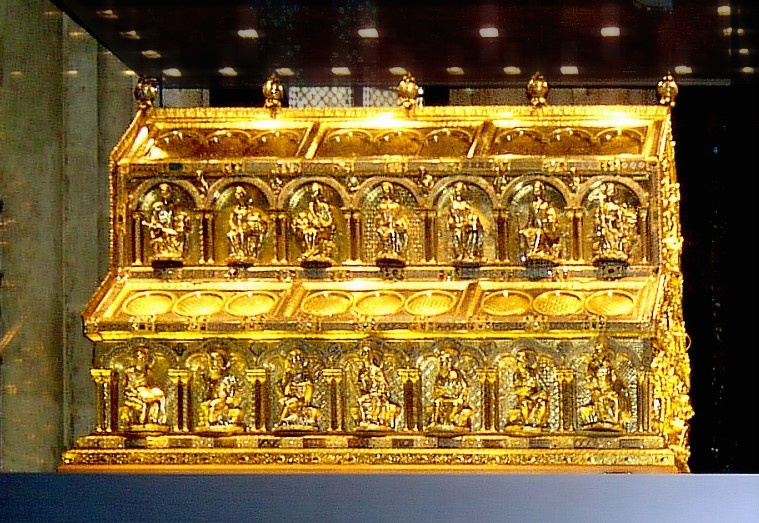
The journey of preservation for Saint Albertus Magnus's body has been one of careful stewardship and evolving display methods. Following the 1860 transfer, the remains were placed within a magnificent silver reliquary, designed to both honor the saint and protect his venerable body. This reliquary, a testament to the artistic and devotional fervor of the era, initially housed the body in a way that was not fully visible to the public. However, with modern advancements in preservation and the desire for greater public veneration, a more accessible display was eventually implemented. Today, the body of Saint Albertus Magnus is encased within a glass casket, allowing pilgrims and visitors to view his preserved form directly. This casket is maintained in a climate-controlled environment within the crypt of Saint Andreas Church, ensuring optimal conditions for its continued preservation. The display is both reverent and educational, offering a tangible connection to one of the Church's greatest intellectual figures.
While the incorruption of Saint Albertus Magnus's body is primarily characterized by its unusual resistance to decay, there have been no widely documented accounts of more sensational phenomena such as sweet fragrances, flexibility, or the exudation of oils or blood, as sometimes attributed to other incorrupt saints. His case is more aligned with a profound and inexplicable natural preservation, where the body has desiccated over centuries yet retained its overall anatomical structure and integrity far beyond the norm. The remarkable aspect lies in the sheer duration of this preservation without artificial intervention for the initial centuries. This enduring state, defying conventional scientific explanation for such an extended period in unsealed conditions, remains a powerful testament to his sanctity for the faithful and a subject of ongoing wonder for all who encounter his venerable remains.
Scientific Analysis
The phenomenon of bodily preservation, particularly in cases attributed to incorruption within religious traditions, presents a compelling area for scientific inquiry. In the specific instance of Saint Albertus Magnus, who died in 1280 and whose remains are interred at Saint Andreas Church in Cologne, Germany, the reported state of incorruption has long attracted attention. While detailed, formal medical or scientific examinations with modern methodologies are not extensively documented in publicly accessible scientific literature for Albertus Magnus specifically, historical accounts and anecdotal observations form the primary basis of claims regarding his preservation. Unlike some more recent cases where exhumations have been accompanied by forensic anthropological or medical evaluations, the early medieval context of Albertus Magnus’s death and subsequent veneration means that contemporary scientific scrutiny as understood today was absent. Reports from various historical exhumations, often conducted for canonical purposes such as relic authentication or reinterment, describe the body as remarkably intact, with pliable skin and discernible features, defying the expected processes of putrefaction and skeletonization. These historical observations, while lacking the rigor of modern forensic analysis, are the foundational data points for the assertion of incorruption. The absence of detailed reports from named medical professionals with institutional affiliations, along with specific dates of examinations that would meet contemporary scientific standards, highlights a critical gap in the empirical understanding of this particular case.
The scientific mystery surrounding the reported incorruption of Saint Albertus Magnus lies in the apparent defiance of normal decomposition processes. Human decomposition is a complex biological and chemical cascade, typically initiated by autolysis (self-digestion by cellular enzymes) and followed by putrefaction (bacterial breakdown of tissues). Environmental factors such as temperature, humidity, oxygen availability, and soil composition profoundly influence the rate and extent of decay. In the temperate climate of Cologne, and considering the burial practices of the 13th century, which often involved simple interment in earth or stone sarcophagi without elaborate embalming, a body would ordinarily undergo complete skeletonization within a few decades, if not sooner. The reported preservation of soft tissues, even if desiccated or altered, for centuries without deliberate, sophisticated preservation techniques, stands in stark contrast to these expected outcomes. While natural processes like saponification, leading to the formation of adipocere (grave wax), can preserve fatty tissues, this typically results in a waxy, brittle substance and does not usually maintain the overall anatomical integrity and pliability often described in accounts of incorruption. Desiccation, or natural mummification, can occur in extremely dry environments, but the conditions within a church crypt in Cologne are unlikely to provide the sustained aridity necessary for such extensive preservation without significant tissue degradation. The lack of historical records detailing any sophisticated embalming practices for Albertus Magnus further deepens the scientific enigma, as medieval embalming, while practiced, was often rudimentary compared to ancient Egyptian techniques and rarely resulted in such long-term preservation of soft tissues.
Natural explanations for exceptional body preservation, such as adipocere formation, mummification, or specific environmental conditions, are often proposed as scientific counterpoints to claims of incorruption. However, in the case of Saint Albertus Magnus, these explanations often fall short of fully accounting for the historical descriptions. Adipocere, while preserving some form, alters the texture and appearance of tissues significantly, typically transforming fat into a grayish-white, soap-like substance. This differs from descriptions of pliable skin and discernible features. Natural mummification requires extremely dry conditions, which are not characteristic of a typical church crypt environment in Central Europe. Furthermore, medieval embalming techniques, if applied, were generally not capable of preserving a body for over seven centuries in a state described as "incorrupt." Skeptics often point to the possibility of misinterpretation of desiccated or partially preserved remains, where the natural mummification process might be perceived as miraculous preservation due to a lack of understanding of taphonomy. The subjective nature of historical observations, often influenced by religious belief, also contributes to the difficulty in objectively assessing these claims. What remains unexplained, even considering natural processes, is the consistent historical reporting of an unusual state of preservation that appears to exceed the typical outcomes of natural decomposition or rudimentary historical preservation methods under the given environmental conditions.
From a modern scientific perspective, the case of Saint Albertus Magnus, like other reported cases of incorruption, presents a unique opportunity for interdisciplinary research. While historical accounts provide qualitative data, modern forensic science offers a suite of quantitative and analytical tools that could potentially shed light on the mechanisms of preservation. Non-invasive techniques such as CT scans or MRI could reveal the internal state of the remains, including bone density, tissue integrity, and the presence of any foreign materials or embalming agents, without disturbing the body. Microscopic tissue analysis, if samples were permitted, could identify cellular structures, signs of decomposition at a molecular level, or evidence of specific preservation processes like adipocere formation. Carbon dating could precisely determine the age of the remains, confirming their authenticity. Furthermore, environmental analysis of the crypt, including temperature, humidity, and atmospheric composition, could provide crucial context for understanding any natural preservation mechanisms. The application of these modern techniques, while respecting the cultural and religious significance of the remains, could transition the study of incorruption from anecdotal observation to empirical investigation, potentially revealing novel insights into taphonomy, microbiology, and the complex interplay of factors influencing human decomposition. The unanswered questions largely revolve around the precise biochemical and environmental conditions that have contributed to the reported state of preservation, and whether these conditions represent an extreme manifestation of known natural processes or suggest mechanisms yet to be fully understood by science.
Spiritual Significance
The phenomenon of incorruption, particularly as exemplified by figures like Saint Albertus Magnus, stands as a profound testament within Catholic theology to the enduring sanctity of certain individuals and the ultimate triumph of grace over the natural processes of decay. For the Church, the preservation of a saint's body, often centuries after death, is not merely a biological anomaly but a divine signpost, pointing to deeper spiritual truths. It powerfully underscores the doctrine of the body as a temple of the Holy Spirit, as articulated in 1 Corinthians 6:19. If the Holy Spirit truly dwells within believers, consecrating their very being, then the incorrupt body of a saint suggests a particularly intense and sustained indwelling, a holiness so profound that it permeates even the physical form. Furthermore, it serves as a tangible prefigurement of the resurrection of the body, a core tenet of Christian faith. While not a full resurrection, the incorrupt body offers a glimpse into the glorified state promised to all believers at the end of time, a physical manifestation of the victory of Christ over death. It strengthens the communion of saints, reminding the faithful that those who have gone before us in holiness remain intimately connected to the Church Militant, their earthly remains still bearing witness to their heavenly glory. The Church interprets this phenomenon not as a guarantee of salvation, but as a special grace, a visible sign of God's favor and a call to deeper faith for the living.
Saint Albertus Magnus, known as the "Universal Doctor" and "Doctor Expertus," possessed a unique charism rooted in an extraordinary intellectual curiosity coupled with profound spiritual devotion. His particular spiritual gift was the harmonious integration of faith and reason, a pioneering effort in an age when these two realms were often perceived as separate or even antagonistic. He heroically practiced the virtue of intellectual humility, constantly seeking truth wherever it might be found, even in the then-reintroduced works of Aristotle, which many contemporaries viewed with suspicion. His charity extended not only to the poor and needy but also to his students, most famously Thomas Aquinas, whom he mentored with unparalleled generosity and foresight. Obedience to his Dominican order and to the Church guided his vast scholarly endeavors, ensuring his intellectual pursuits remained firmly rooted in theological truth. While not a mystic in the traditional sense of direct visions, his deep contemplation of God's creation, from the smallest insect to the grandest celestial body, was itself a form of intellectual mysticism, revealing the divine hand in all things. His daily life was a rigorous blend of prayer, study, teaching, and administrative duties, embodying the Dominican ideal of "contemplata aliis tradere" – to hand on to others the fruits of contemplation. He contributed significantly to the scholastic tradition, laying the groundwork for much of medieval philosophy and theology, and his work continues to inspire those who seek to reconcile scientific inquiry with religious belief.
Devotion to Saint Albertus Magnus has evolved over centuries, reflecting his multifaceted legacy as a scholar, theologian, and saint. Initially venerated within the Dominican Order and academic circles, his cultus expanded as his intellectual contributions gained wider recognition. He is widely invoked as the patron saint of scientists, philosophers, students, and those seeking to reconcile faith and reason. His feast day, November 15th, is celebrated with special Masses and academic symposia, particularly in universities and institutions connected to the Dominican tradition. While specific novenas dedicated solely to him are less common than for some other saints, he is frequently included in prayers for wisdom and guidance in studies. Pilgrims today visit his resting place in the Saint Andreas Church in Cologne, Germany, drawn by his enduring spiritual and intellectual presence. The experience of visiting his shrine is often one of quiet reverence and intellectual inspiration. To stand before the incorrupt remains of a man who bridged the intellectual chasm of his age, whose mind soared to understand both the divine and the natural world, is to feel a tangible connection to a profound legacy. It is a place where one can contemplate the harmony of faith and reason, and seek his intercession for clarity of thought and spiritual discernment in one's own intellectual pursuits.
Miracles attributed to Saint Albertus Magnus's intercession, while perhaps not as widely publicized as those of some other saints, are nonetheless present in the annals of Catholic tradition. Throughout history, individuals have reported healings, particularly those related to mental and intellectual afflictions, believing that his intercession brings clarity of mind and resolution to complex problems. There are accounts of students experiencing breakthroughs in their studies after praying to him, and scholars finding inspiration for their research. Conversions, both intellectual and spiritual, have also been linked to his influence, as his life and writings have guided many towards a deeper understanding of Catholic doctrine and a more profound faith. The incorrupt body itself has been a source of immense spiritual consolation for the faithful. Its remarkable preservation serves as a visual sermon, a silent witness to the power of God and the sanctity of a life lived in His service. For those who gaze upon his preserved form, it is a reminder that the spiritual realm is not distant or abstract, but can manifest in tangible ways, offering hope and reassurance that the saints remain powerful intercessors in heaven, their earthly remains still radiating a sacred presence.
Saint Albertus Magnus's enduring message for contemporary Catholics and seekers is profoundly relevant in our increasingly secular and fragmented world. His life challenges the modern tendency to compartmentalize knowledge, to separate faith from scientific inquiry, and to dismiss the spiritual as irrelevant to intellectual pursuits. He stands as a powerful counter-narrative to materialism, demonstrating that the pursuit of truth, whether through scientific observation or theological contemplation, ultimately leads to a deeper appreciation of God's creation and His divine plan. For seekers, his example offers a compelling model of intellectual honesty and spiritual integrity, showing that one can embrace both rigorous reason and profound faith without compromise. People today can learn from his meticulous scholarship, his unwavering commitment to truth, and his ability to synthesize diverse fields of knowledge. His incorruption serves as a tangible bridge between the visible and invisible worlds, a physical manifestation of the spiritual realities that often elude our senses. It reminds us that grace can permeate and transform even the physical body, offering a powerful symbol of hope for our own ultimate redemption and glorification. In an age often characterized by doubt and cynicism, Saint Albertus Magnus's incorruption is a silent, yet eloquent, affirmation of the transcendent, beckoning us to look beyond the immediate and embrace the eternal.
AI summary
A plain-language overview generated from this page's source material. Always verify with primary sources.