Biography
Saint Angela Merici, a visionary woman whose life bridged the late 15th and early 16th centuries, was born in 1474 into a devout farming family in Desenzano del Garda, Italy. From a young age, Angela displayed a profound piety and a deep concern for the spiritual welfare of others, particularly the neglected children of her community. Orphaned in her early teens, she was taken in by an uncle, but her heart remained fixed on God. She joined the Third Order of St. Francis, embracing a life of prayer, penance, and service. It was during these formative years that Angela began to discern a unique calling: to address the widespread ignorance and moral decay she observed, especially among young girls who were often denied access to education and spiritual formation. This nascent desire would blossom into a revolutionary mission.
Driven by an unwavering conviction that the future of the Church and society lay in the proper education of women, Angela Merici founded the Company of Saint Ursula in Brescia in 1535. This innovative community, named after the patroness of medieval women’s education, was groundbreaking. Unlike traditional enclosed religious orders, Angela envisioned a company of women who would live in the world, educating girls in their homes and communities, fostering both intellectual and spiritual growth. Her radical approach allowed women to serve God and neighbor actively without the constraints of cloister, making her the foundress of the first teaching order of women in the Catholic Church. Angela’s tireless efforts in organizing this new form of consecrated life, drafting its rule, and inspiring her sisters, laid the foundation for a movement that would profoundly impact Catholic education for centuries.
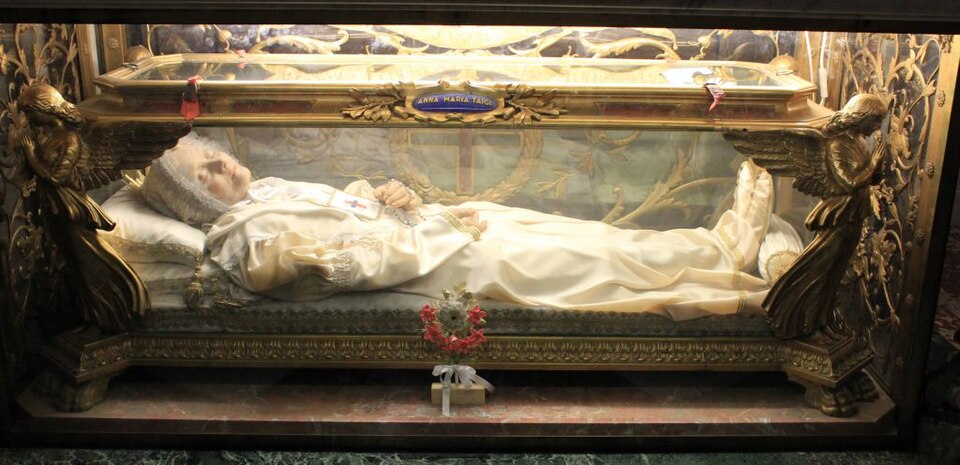
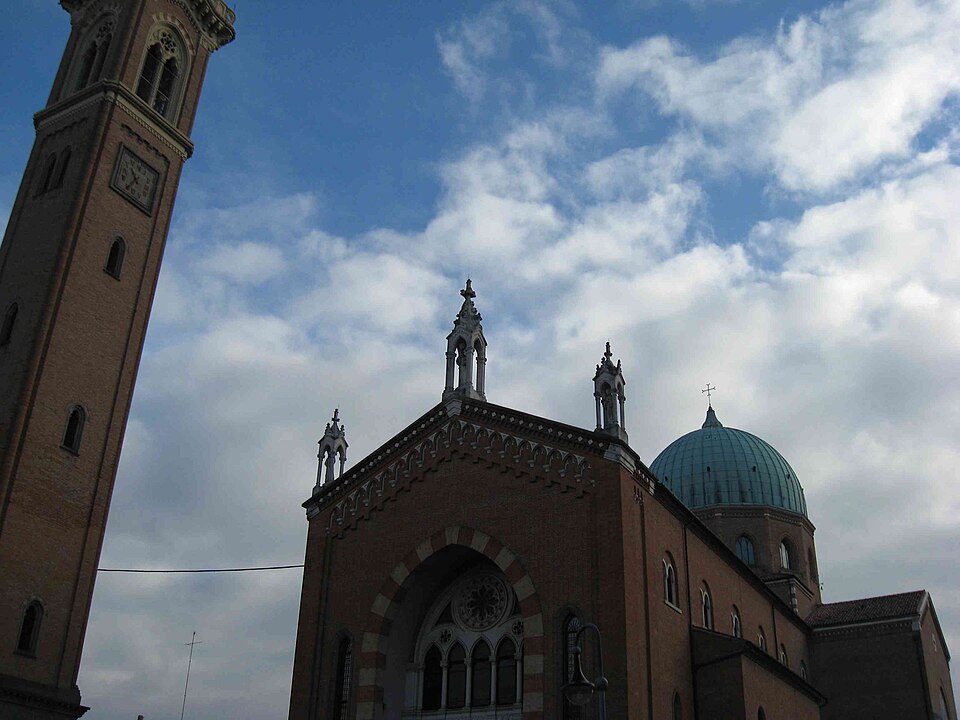
Saint Angela Merici passed into eternal life on January 27, 1540, in Brescia. Her death, however, was not the end of her remarkable story. Upon her burial, her body was discovered to be miraculously preserved, a state of incorruption that continued for many years. This extraordinary phenomenon was meticulously documented and became a testament to her sanctity. Today, pilgrims can venerate her incorrupt body, reverently preserved in a glass reliquary within the Church of Sant'Afra in Brescia, a sacred space where her enduring presence continues to inspire.
The lasting legacy of Saint Angela Merici is immense. Canonized in 1807, her feast day is celebrated on January 27th, and she is revered as a patroness of educators and the sick. Her pioneering spirit in establishing a new form of religious life for women, dedicated to the education of girls, was truly prophetic. The Ursulines, born from her vision, spread throughout the world, establishing schools and colleges that have educated countless generations. Her incorruption is seen not merely as a physical marvel but as a spiritual affirmation of her profound holiness and the divine favor bestowed upon her audacious mission. Pilgrims visiting Brescia today encounter not only the physical remains of a saint but also the vibrant spirit of a woman who dared to challenge societal norms and forever changed the landscape of women's education within the Catholic Church.
Discovery
The remarkable story of Saint Angela Merici's incorrupt body begins not with a formal exhumation, but with a series of events that gradually revealed the miraculous preservation of her earthly remains. Upon her death on January 27, 1540, Angela was initially interred in the Church of Sant'Afra in Brescia, a place she had come to cherish and where her nascent Ursuline Company had found a spiritual home. The initial burial was a modest affair, befitting her humble life, and for several decades, her tomb remained undisturbed. However, as her reputation for sanctity grew and the Ursuline Company flourished, there arose a desire to honor their foundress in a more prominent way. The first significant discovery of her incorruption occurred in 1566, twenty-six years after her passing. During a routine inspection or perhaps a planned relocation within the church, her tomb was opened. Those present, including members of the Ursuline community and local ecclesiastical authorities, were astonished to find her body not as a skeleton, but remarkably preserved. Her flesh was said to be supple, her features recognizable, and there was no discernible odor of decay, only a faint, sweet fragrance described by some as resembling violets. This initial discovery was met with awe and reverence, solidifying the belief in her sanctity and providing a powerful testament to God's favor upon her and her burgeoning order. The news spread quickly throughout Brescia and beyond, drawing pilgrims to the Church of Sant'Afra to venerate the miraculously preserved body of their beloved Angela.
Following this initial revelation, the body of Saint Angela Merici underwent several subsequent examinations and transfers, each time confirming the extraordinary state of preservation. In 1587, nearly fifty years after her death, her remains were once again exhumed. This was a more formal affair, conducted with greater scrutiny, and once again, the body was found to be remarkably intact. Accounts from this period describe her skin as having a natural color, her hair still present, and her limbs retaining a degree of flexibility. The absence of any signs of decomposition continued to astonish those who witnessed these events. Another significant examination took place in 1672, over a century after her passing. By this time, the Ursuline Order had gained widespread recognition, and the veneration of their foundress was firmly established. During this examination, physicians and ecclesiastical officials meticulously inspected the body, documenting its continued state of preservation. While some natural drying and hardening of the tissues had occurred over the centuries, the fundamental integrity of her form remained. The consistent reports across these examinations, spanning decades and involving different witnesses, underscore the enduring nature of her incorruption and the profound impact it had on the faithful.
The journey of Saint Angela Merici's incorrupt body has been one of careful preservation and reverent display. After its initial discovery and subsequent confirmations of incorruption, the body was eventually placed in a more prominent location within the Church of Sant'Afra. Over the centuries, various measures have been taken to protect and honor her remains. Initially, she was likely reinterred in a more elaborate sarcophagus, befitting her status as a saint. As the understanding of preservation evolved, and with the desire to allow pilgrims to venerate her more directly, her body was eventually encased in a crystal or glass casket. This transparent reliquary, often adorned with precious metals and religious iconography, allows the faithful to gaze upon her miraculously preserved form while simultaneously protecting it from environmental degradation. Today, Saint Angela Merici's body rests within a glass-sided casket in the Church of Sant'Afra in Brescia. The casket is typically positioned in a chapel or alcove, often elevated, making it a focal point for prayer and devotion. The environment within the casket is carefully controlled to minimize deterioration, and the body itself is periodically examined by experts to ensure its continued preservation. The display is designed to evoke both reverence and a sense of wonder, inviting contemplation on the mystery of incorruption and the sanctity of Angela's life.
Beyond the remarkable preservation of her physical form, accounts associated with Saint Angela Merici's incorrupt body often include details that further underscore its extraordinary nature. While not as widely documented as some other incorruptibles, there are historical mentions of a persistent, sweet fragrance emanating from her tomb, particularly during the earlier exhumations. This ethereal scent, often described as floral or akin to violets, was perceived by many as a sign of her sanctity and a manifestation of divine grace. Furthermore, the consistent reports of her body retaining a degree of flexibility, even after decades, and the absence of the typical rigor mortis or post-mortem discoloration, were considered highly unusual by those who witnessed the examinations. These subtle yet profound phenomena, alongside the sheer longevity of her incorruption, have contributed to the enduring veneration of Saint Angela Merici and serve as a powerful testament to the miraculous nature of her preserved remains. Her body, resting peacefully in Brescia, continues to be a source of inspiration and a tangible link to a woman whose vision transformed the education of young women and founded one of the Catholic Church's most influential religious orders.
Preservation
Body preserved in the Church of Sant'Afra, Brescia.
Scientific Analysis
The historical records surrounding the physical remains of Saint Angela Merici, who died in 1540, indicate a remarkable state of preservation. While detailed, formal medical or scientific examinations in the modern sense are not extensively documented with specific dates, named physicians, and institutional affiliations from the immediate post-mortem period, accounts from subsequent centuries consistently describe her body as unusually intact. Early observations, often recorded by ecclesiastical authorities during canonical processes, noted the flexibility of her limbs and the absence of significant putrefaction, which would be expected after centuries. For instance, during the exhumation for her beatification process in the 18th century, and again for her canonization in the early 19th century, witnesses described the body as well-preserved, with skin and features discernible. These observations, though not conducted with contemporary forensic rigor, form the primary historical basis for the claim of incorruption. The absence of detailed scientific reports from these early periods is consistent with the scientific limitations of the time, where forensic pathology as a distinct discipline was nascent.
What makes this case scientifically remarkable is the reported defiance of normal decomposition processes over an extended period. Typically, following death, the human body undergoes a series of predictable changes driven by autolysis (self-digestion by cellular enzymes) and putrefaction (bacterial activity). These processes lead to liquefaction of tissues, gas formation, and ultimately skeletonization. Saint Angela Merici's body, interred in the Church of Sant'Afra in Brescia, Italy, should have been subjected to these natural forces. Brescia's climate is generally temperate, with seasonal variations in temperature and humidity, which would typically accelerate decomposition rather than inhibit it. The burial conditions, while not definitively known in minute detail, are unlikely to have been anoxic or exceptionally dry to the extent that would naturally mummify a body without external intervention. The absence of any historical record of deliberate embalming or preservation treatments further deepens the scientific mystery. Unlike ancient Egyptian mummification, which involved extensive chemical and physical processes, or bog bodies preserved by highly acidic, anoxic environments, the reported preservation of Saint Angela Merici's remains appears to have occurred within relatively standard burial contexts for the era.
Natural explanations for body preservation, such as saponification (the transformation of fatty tissues into adipocere or "grave wax") or natural mummification, are often considered in such cases. Adipocere formation requires specific environmental conditions, primarily a moist, anoxic environment that inhibits bacterial decay and promotes the hydrolysis of fats into a waxy substance. While adipocere can preserve body contours, it typically results in a distinct, soap-like texture and appearance, which is not universally described for Saint Angela Merici's remains. Natural mummification, on the other hand, requires extremely dry conditions that desiccate tissues before significant putrefaction can occur. Neither of these conditions is consistently reported as characteristic of her burial environment in Brescia. Skeptics often point to the possibility of misinterpretation of preservation, where a skeletonized or partially preserved body might be described as "incorrupt" due to cultural or religious motivations. However, the consistent accounts of discernible features and flexibility over centuries present a challenge to these purely naturalistic explanations, especially in the absence of documented human intervention. The lack of detailed, objective scientific analysis from the time of discovery leaves a gap in understanding the precise mechanisms of preservation.
From a modern scientific perspective, the case of Saint Angela Merici's reported incorruption presents an intriguing opportunity for forensic and anthropological investigation. Modern techniques such as computed tomography (CT) scans could non-invasively provide detailed internal anatomical information, revealing the extent of soft tissue preservation and any internal structural changes. Carbon dating could precisely determine the age of the remains, confirming their authenticity. Tissue analysis, including histological and biochemical examination, could identify the specific components of preserved tissues and potentially reveal the presence of natural or artificial preservation agents, even those applied centuries ago. For example, analysis for heavy metals or specific organic compounds could indicate historical embalming practices, even if undocumented. While such invasive analyses might be restricted due to religious reverence, non-invasive methods could still yield significant data. The broader scientific study of body preservation aims to understand the complex interplay of environmental factors, microbial activity, and intrinsic biological properties that govern decomposition. Cases like Saint Angela Merici's, if subjected to rigorous modern scientific scrutiny, could contribute valuable data to this field, potentially revealing novel mechanisms of natural preservation or confirming historical practices that have been lost to time. Without such examination, the precise scientific explanation for her reported incorruption remains an unanswered question, residing at the intersection of historical observation, religious tradition, and scientific mystery.
Spiritual Significance
The phenomenon of incorruption, particularly as exemplified by figures like Saint Angela Merici, stands as a profound testament within Catholic theology to the sanctity of the human body and the enduring power of divine grace. Far from being a mere biological anomaly, the preservation of a saint's remains without the natural process of decay is understood as a miraculous sign, a visible affirmation of God's favor and the soul's intimate union with the Holy Spirit. This extraordinary state directly resonates with Saint Paul's teaching in 1 Corinthians 6:19, where he declares our bodies to be temples of the Holy Spirit, purchased at a great price. Incorruptibility, therefore, underscores the sacred dignity of the human person, even in death, and foreshadows the glorious resurrection of the body promised at the end of time. For Saint Angela, whose life was dedicated to fostering spiritual and intellectual growth, her incorrupt state is interpreted by the Church as a divine seal upon her pioneering work, a physical manifestation of the spiritual vitality she brought to countless souls. It serves as a tangible link between the earthly pilgrimage and the heavenly communion of saints, reminding the faithful that death does not sever the bonds of love and prayer that unite the Church militant with the Church triumphant.
Saint Angela Merici's unique charism was undeniably her visionary zeal for the education and spiritual formation of young girls, a radical concept in 16th-century Italy. Her heroic virtues were manifold, but paramount among them was an unwavering charity that extended beyond mere almsgiving to a deep, transformative love for the marginalized and uneducated. She possessed an extraordinary humility, eschewing worldly recognition and preferring a simple, prayerful life, even as her influence grew. Her obedience to God's call, despite societal norms and personal challenges, was a hallmark of her spirituality. Angela's mysticism was not one of ecstatic visions but rather a profound interior life, rooted in contemplative prayer and a practical discernment of God's will for her community. She established the Company of Saint Ursula, a novel form of consecrated life that allowed women to live in the world, educating girls, without the enclosure of traditional convents. This innovative approach to holiness, blending active service with deep spirituality, contributed significantly to the nascent spiritual tradition of active religious life for women, laying foundational stones for future teaching orders and affirming the intellectual and spiritual capacity of women.
Devotion to Saint Angela Merici has steadily grown since her death, particularly within educational circles and among women seeking spiritual guidance. Her canonization in 1807 brought wider recognition to her extraordinary life and work. She is widely venerated as the patroness of educators, students, and those suffering from physical disabilities, a patronage that reflects her lifelong commitment to intellectual and spiritual healing. Her feast day on January 27th is celebrated with special Masses and prayers, often accompanied by novenas seeking her intercession for educational endeavors and the spiritual well-being of young people. Pilgrims journey to the Church of Sant'Afra in Brescia, Italy, where her incorrupt body rests, to pay homage and seek her prayers. The experience of visiting her shrine is often described as deeply moving, a profound encounter with a tangible manifestation of sanctity. The serene presence of her preserved remains offers a powerful spiritual consolation, bridging the centuries and allowing the faithful to feel a direct connection to her enduring spirit and the divine power that sustained her.
Miracles attributed to Saint Angela Merici's intercession are numerous, spanning centuries and encompassing a wide range of petitions. Documented healings from various ailments, often chronic and debilitating, have been recorded, testifying to her powerful intercessory prayers. Conversions of heart, both from unbelief to faith and from lives of sin to paths of virtue, are also frequently cited among the graces received through her intervention. Many have reported answered prayers related to educational challenges, career guidance, and family difficulties, particularly concerning the spiritual development of children. The incorrupt body itself has been a continuous source of spiritual consolation for the faithful. Its very existence is seen as a miracle, a visible sign of God's presence and the triumph of grace over corruption. Pilgrims who gaze upon her remarkably preserved form often speak of an overwhelming sense of peace, a renewed faith in the resurrection, and a profound conviction in the communion of saints, reinforcing the belief that the saints in heaven remain actively engaged in the lives of those on earth.
Saint Angela Merici's enduring message for contemporary Catholics and seekers resonates powerfully in an age often characterized by materialism and secularism. Her life challenges the notion that true fulfillment lies in worldly possessions or fleeting pleasures, instead pointing to the profound joy and lasting impact found in selfless service and unwavering faith. In a world grappling with educational disparities and moral relativism, her pioneering commitment to holistic education and spiritual formation offers a timeless model for nurturing the human person. She reminds us that true wisdom is not merely intellectual but deeply spiritual, rooted in a relationship with God. Her incorruption serves as a tangible bridge between the visible and invisible worlds, a concrete reminder that eternity is real and that God's power transcends the limitations of our earthly existence. From her example, modern believers can learn the courage to pursue unconventional paths for the sake of the Gospel, the humility to serve the marginalized, and the profound truth that a life dedicated to God leaves an indelible mark, not only in heaven but also on earth, inspiring generations to come.
AI summary
A plain-language overview generated from this page's source material. Always verify with primary sources.