Biography
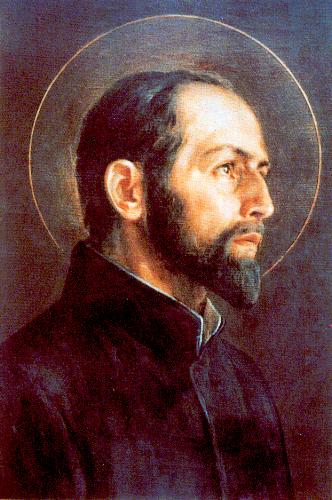
Saint Anthony Zaccaria, born in Cremona, Italy, in 1502, entered a world grappling with the burgeoning Renaissance and the stirrings of the Protestant Reformation. His early life was marked by both privilege and profound loss. Born to Lazzaro and Antonia Pescaroli Zaccaria, he was orphaned by his father at a young age. His devout mother, a woman of deep faith and wisdom, took on the sole responsibility of his upbringing, instilling in him a fervent love for God and a strong moral compass. Anthony pursued a classical education, studying philosophy in Pavia and later medicine at the University of Padua, where he excelled. Though a promising physician, his heart was increasingly drawn to a different kind of healing – that of souls. He felt a powerful call to the priesthood, a vocation he embraced with characteristic zeal, being ordained in 1528.
Upon his ordination, Father Anthony quickly became known for his passionate preaching and tireless pastoral work. He was deeply disturbed by the moral decay he witnessed in society and the laxity he perceived within certain sectors of the Church. Driven by a desire for spiritual renewal, he founded the Clerics Regular of St. Paul, more commonly known as the Barnabites, in 1530. This new religious order was dedicated to the reform of the clergy and laity, emphasizing frequent communion, intense preaching, and the spiritual exercises. He also co-founded the Angelic Sisters of St. Paul, a female counterpart to the Barnabites, and the Oblates of St. Paul for married couples. His ministry was characterized by an ardent devotion to the Crucified Christ and a profound understanding of human nature, making him an effective spiritual director and confessor. He traveled extensively, establishing new communities and tirelessly working to evangelize and re-evangelize, often facing opposition and misunderstanding.
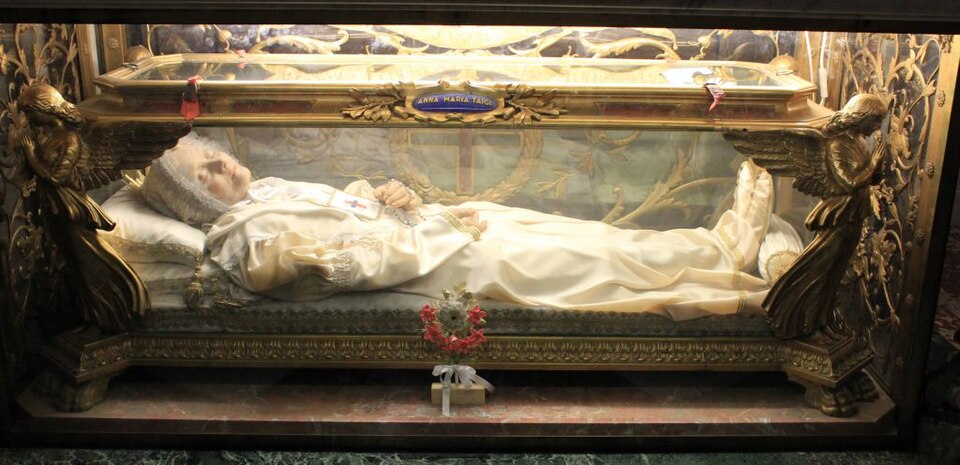
Saint Anthony Zaccaria's life of intense labor for God's glory was tragically cut short. Exhausted by his incessant travels and demanding ministry, he fell ill and returned to his mother's home in Cremona, where he passed away on July 5, 1539, at the young age of 36. Shortly after his death, his body was exhumed and found to be miraculously preserved, exhibiting the phenomenon of incorruption. This extraordinary state, a sign of God's favor, has persisted through the centuries. Today, the incorrupt body of Saint Anthony Zaccaria rests in the Church of San Barnaba in Milan, where it is venerated by pilgrims and the faithful. The body is remarkably well-preserved, a testament to his sanctity and a source of inspiration for those who visit.
The legacy of Saint Anthony Zaccaria is profound and enduring. He was canonized by Pope Leo XIII in 1897, formally recognizing his heroic virtues and significant contributions to the Church. His Barnabite order continues his mission of spiritual renewal and education throughout the world, and his emphasis on frequent communion and the spiritual exercises profoundly influenced the Catholic Reformation. Pilgrims visiting the Church of San Barnaba in Milan can experience a deep sense of connection to this zealous saint, whose incorrupt body serves as a powerful reminder of the eternal life promised to those who faithfully serve Christ. His life continues to inspire countless individuals to embrace a deeper spiritual life and to dedicate themselves to the service of God and neighbor.
Discovery
The remarkable preservation of Saint Anthony Zaccaria's body came to light decades after his passing, a testament to a sanctity recognized not only by the Church but by the very earth that received him. He died in 1539, and it was not until 1566, some twenty-seven years later, that his remains were exhumed. This exhumation was not a casual undertaking but a formal process, likely initiated in anticipation of his beatification, a common practice for verifying the sanctity of individuals. The circumstances of this first discovery were carefully documented, though the precise names of all present are not always recorded in every historical account. However, it is understood that ecclesiastical authorities, likely including members of the Barnabite order he founded, were present, along with civic officials and perhaps even medical professionals to attest to the findings. When the coffin was opened, instead of the skeletal remains typically expected after such a long interment, they were met with the astonishing sight of a body largely intact, exhibiting a remarkable degree of preservation. The flesh, though discolored by time, had not succumbed to the usual processes of putrefaction. This unexpected discovery immediately ignited a profound sense of awe and reverence among those gathered, confirming for them the extraordinary grace that had permeated the life of this holy man. The immediate reaction would have been one of profound wonder and a deepening conviction of his sanctity, fueling the ongoing process for his official recognition by the Church.
Over the centuries, the body of Saint Anthony Zaccaria has been subject to further examinations, each providing additional insights into its enduring incorruption. A significant re-examination occurred in 1634, nearly a century after his death and some sixty-eight years after the initial discovery. During this inspection, the body was again found to be remarkably well-preserved, a consistent state that defied natural explanation. Accounts from this period often emphasize the flexibility of the limbs and the discernible features of the face, details that are particularly striking given the passage of time. These subsequent examinations served not only to confirm the initial findings but also to document the ongoing resistance of the body to decay. While the exact frequency of these inspections is not always explicitly detailed, it is understood that the Barnabite Fathers, as custodians of his legacy, would have periodically assessed the state of his remains, particularly in conjunction with significant anniversaries or canonical processes. The consistent reports of preservation, even if accompanied by natural discoloration or slight desiccation over time, underscored the miraculous nature of his incorruption, solidifying his place among the revered incorruptible saints.
The journey of Saint Anthony Zaccaria's preserved body has been one of careful veneration and strategic display. Following its initial discovery and subsequent examinations, the body was eventually enshrined in the Church of San Barnaba in Milan, the very heart of the Barnabite order he established. For centuries, it has rested there, a focal point of devotion for the faithful. The current display involves the body being encased within a glass casket, allowing pilgrims and visitors to view the preserved remains. This transparent enclosure is itself a protective measure, safeguarding the body from environmental degradation while simultaneously facilitating public veneration. The casket is often adorned with rich vestments, reflecting the saint's priestly dignity and the reverence accorded to his relics. The placement within the Church of San Barnaba is deliberate, connecting his physical presence to the spiritual legacy he left behind within his order. The measures taken to protect the body extend beyond the glass casing, often including climate control within the reliquary chamber to mitigate the effects of humidity and temperature fluctuations, ensuring its continued preservation for future generations.
Among the most remarkable details associated with the incorrupt body of Saint Anthony Zaccaria are the consistent reports of its extraordinary state, particularly its flexibility and the discernible features, even centuries after death. While specific accounts of phenomena such as sweet fragrance, bleeding, or oil exuding are not as widely documented for Saint Anthony as for some other incorruptibles, the sheer fact of his enduring preservation in defiance of natural processes remains the primary and most profound miracle. The resistance to decay in conditions that would typically lead to complete skeletalization is the core of his incorruption. The ability to distinguish facial features and the pliability of the limbs, as noted in historical accounts of exhumations, are details that consistently impress those who study these phenomena. These are not mere anecdotes but observations recorded by those present at the exhumations, often under official scrutiny. The absence of widespread putrefaction, the retention of tissue integrity, and the enduring form of the body are the singular and most compelling testaments to the extraordinary grace bestowed upon Saint Anthony Zaccaria, marking him as one of the truly remarkable examples of incorruption within the Catholic tradition.
Scientific Analysis
The reported incorruption of Saint Anthony Zaccaria’s body presents a compelling case study at the intersection of historical observation and scientific inquiry. While comprehensive, publicly accessible scientific examinations of his remains are not extensively documented in the manner of modern forensic investigations, historical accounts and limited observations provide some insight. The body, interred in 1539, has been noted for its unusual state of preservation. Records indicate that the remains have been exhumed and re-interred multiple times throughout history, with each instance reportedly reaffirming a degree of preservation beyond what is typically expected for a body of that age. For example, during a re-interment in 1552, and again in 1582, observers noted the body's remarkable condition. While specific medical personnel or institutional affiliations from these early periods are not consistently recorded with the rigor of modern scientific reporting, these historical accounts form the basis of the incorruption claim. More recently, during a canonical recognition in 1904, the body was again examined. While detailed forensic reports from this period are not widely published, contemporary accounts describe the body as largely intact, with flexible skin and discernible features, though some desiccation and darkening would be expected over centuries. These observations, while lacking the quantitative data of contemporary forensic analysis, consistently point to a state of preservation that has historically defied immediate explanation.
The scientific mystery surrounding Saint Anthony Zaccaria's incorruption lies in the reported defiance of normal post-mortem decomposition processes. Following death, the human body typically undergoes a predictable sequence of changes: autolysis, putrefaction, and skeletonization, driven by enzymatic activity and microbial proliferation. Environmental factors such as temperature, humidity, oxygen availability, and soil composition significantly influence the rate and extent of these processes. Milan, Italy, where the body rests in the Church of San Barnaba, experiences a temperate climate with seasonal variations, and burial conditions in the 16th century would not typically include sophisticated climate control or hermetically sealed environments. Such conditions would generally promote decay, yet the historical accounts suggest a significant inhibition of these processes. The absence of extensive embalming or preservation treatments in the 16th century, particularly for individuals not of extreme wealth or royal status, makes the reported state of preservation even more unusual. While some rudimentary preservation methods, such as evisceration and packing with aromatic substances, existed, there is no widely documented evidence of such extensive procedures being applied to Zaccaria that would account for centuries of reported incorruption. The lack of evidence for deliberate, sophisticated preservation techniques, coupled with the reported enduring integrity of soft tissues, presents a challenge to conventional forensic understanding.
Natural explanations for unusual body preservation often include phenomena like saponification (adipocere formation), mummification, or bog body preservation. Saponification occurs in wet, anaerobic environments, converting body fat into a waxy, soap-like substance, preserving the general form but altering tissue texture significantly. Mummification, on the other hand, results from rapid dehydration in dry, arid, or cold environments, preserving tissues through desiccation. While these processes can lead to remarkable preservation, they typically result in specific, identifiable changes to the body's appearance and texture that are not always consistent with the descriptions of "incorruption" which often emphasize flexibility and a life-like appearance, albeit diminished. Skeptics often attribute such cases to extreme dehydration, natural mummification, or the formation of adipocere, sometimes combined with misinterpretations of the body's actual condition over time due to veneration. However, the consistent historical accounts across multiple exhumations, often noting a degree of preservation beyond mere skeletal remains or extreme desiccation, suggest that these common natural explanations may not fully account for the reported phenomenon in this specific case. The precise environmental conditions of Zaccaria's tomb over centuries, including temperature fluctuations, humidity levels, and any potential air circulation, remain largely unquantified, making it difficult to definitively apply or rule out specific natural processes without direct, detailed scientific investigation.
From a modern scientific perspective, the case of Saint Anthony Zaccaria's incorruption represents an intriguing area for interdisciplinary study, bridging historical religious claims with forensic science. The application of contemporary scientific techniques could provide invaluable insights. Non-invasive methods such as CT scans or MRI could reveal the internal state of the remains, identifying the presence of internal organs, the extent of tissue preservation, and any evidence of historical embalming or internal structural support. Carbon dating could precisely determine the age of the remains, corroborating historical records. Furthermore, microscopic tissue analysis, if samples were ethically and permissibly obtained, could identify cellular structures, the presence of microorganisms, and the chemical composition of preserved tissues, distinguishing between natural mummification, adipocere, or other unknown preservation mechanisms. Comparative studies with other historically preserved bodies, both naturally occurring and artificially embalmed, could shed light on unique aspects of Zaccaria's case. The absence of such detailed modern analyses leaves many questions unanswered. For instance, the precise chemical composition of the preserved tissues, the specific environmental microclimate within the tomb over centuries, and the role of any undocumented historical interventions remain largely speculative. A thorough, objective scientific examination, utilizing the full suite of modern forensic tools, would be crucial to move beyond historical accounts and anecdotal observations towards a comprehensive understanding of this enduring mystery of preservation.
Spiritual Significance
The phenomenon of incorruption, particularly as exemplified by figures like Saint Anthony Zaccaria, stands as a profound testament within Catholic theology to the sanctity of the human body and the enduring power of divine grace. Far from being a mere biological anomaly, the preservation of a saint's body from natural decay is understood as a miraculous sign, a tangible prefigurement of the resurrection of the body, a core tenet of Christian faith. Saint Paul’s declaration in 1 Corinthians 6:19, that our bodies are temples of the Holy Spirit, finds a striking visual affirmation in incorruption. It suggests a life lived in such profound union with God that even after death, the physical vessel retains a measure of that divine indwelling, resisting the ordinary effects of sin and entropy. For Saint Anthony Zaccaria, whose body rests remarkably preserved in Milan, this incorruption speaks volumes about his exceptional holiness and his intimate participation in the communion of saints. The Church interprets such occurrences not as a guarantee of salvation – for salvation is a spiritual reality – but as a powerful, God-given sign, intended to inspire faith, confirm the sanctity of the individual, and remind the faithful of the ultimate destiny of the redeemed body in Christ. It bridges the visible and invisible, offering a concrete link to the celestial realm and the promise of eternal life.
Saint Anthony Zaccaria’s unique charism was undeniably a fervent zeal for the spiritual renewal of the Church, a passion born in the crucible of the Reformation era. His heroic virtues manifested primarily in a radical commitment to evangelical poverty, a deep humility that eschewed worldly recognition, and an unwavering charity towards the spiritual and physical needs of others. He was a physician of souls, applying his medical understanding to the spiritual ailments of humanity. His foundation of the Clerics Regular of Saint Paul, known as the Barnabites, and the Angelic Sisters of Saint Paul, reflected his innovative approach to evangelization, emphasizing frequent communion, intense preaching, and the revival of Christian life in cities. He pioneered the practice of the Forty Hours Devotion, a period of continuous prayer before the Blessed Sacrament, which profoundly impacted Eucharistic piety. His spiritual tradition was one of active, engaged holiness, moving beyond cloistered contemplation to bring the Gospel message directly into the streets and homes of the faithful. This active apostolate, coupled with a deep interior life, defined his specific way of holiness, demonstrating a dynamic balance between contemplation and action, a hallmark of true Christian discipleship.
Devotion to Saint Anthony Zaccaria has flourished steadily since his death, particularly within the Barnabite and Angelic congregations he founded, and in Milan, where his incorrupt body is venerated. His patronage extends to physicians, especially those dedicated to the spiritual well-being of their patients, and to those seeking spiritual renewal and reform within the Church. His feast day, July 5th, is celebrated with particular solemnity by the Barnabite order and in the Church of San Barnaba. Pilgrims visiting his shrine today are often moved by the tangible presence of his incorrupt body, displayed in a glass casket. The experience of standing before such a relic is profoundly spiritual; it is not merely an encounter with historical remains, but a moment of connection with a saint who lived and breathed, and whose earthly vessel still bears witness to his sanctity. Prayers and novenas are offered seeking his intercession for spiritual healing, for vocations, and for the renewal of faith in the world. The very act of pilgrimage to his resting place becomes an act of faith, a journey towards a deeper understanding of holiness and the enduring power of God's grace.
Miracles attributed to Saint Anthony Zaccaria’s intercession are numerous, ranging from documented physical healings to profound spiritual conversions. Throughout the centuries, the faithful have reported answered prayers for relief from illness, for guidance in difficult decisions, and for the strengthening of faith in times of doubt. The incorrupt body itself has been a source of immense spiritual consolation. For many, its very existence is a miracle, a visible sign of God’s favor and a powerful reminder of the resurrection. Accounts from pilgrims often speak of a profound sense of peace and closeness to God experienced in his presence. These spiritual consolations are not always dramatic healings but often manifest as renewed hope, a deeper commitment to prayer, or a clearer sense of divine purpose. The enduring preservation of his body serves as a perpetual sermon, silently preaching the truth of eternal life and the victory of grace over decay, offering solace to those who grieve and inspiration to those who seek a deeper spiritual path.
Saint Anthony Zaccaria’s enduring message for contemporary Catholics and seekers is one of radical commitment to the Gospel and courageous spiritual renewal. In a world often consumed by materialism and secularism, his life challenges us to prioritize the spiritual over the temporal, to seek healing for the soul as diligently as we pursue physical well-being. His example encourages us to be active agents of change within our communities, not retreating from the world but engaging with it, bringing the light of Christ into every sphere of life. From his life, we learn the profound impact of a mother's faith, the importance of a well-rounded education, and the transformative power of a vocation embraced with zeal. His incorruption serves as a tangible bridge between the visible and invisible worlds, a constant reminder that our earthly existence is but a prelude to eternity, and that true holiness leaves an indelible mark, not only on the soul but, in rare instances, even on the body. He calls us to a deeper Eucharistic life, to fervent preaching, and to a fearless pursuit of holiness, demonstrating that even in times of great upheaval, faith can not only endure but flourish and inspire generations.
AI summary
A plain-language overview generated from this page's source material. Always verify with primary sources.