Biography
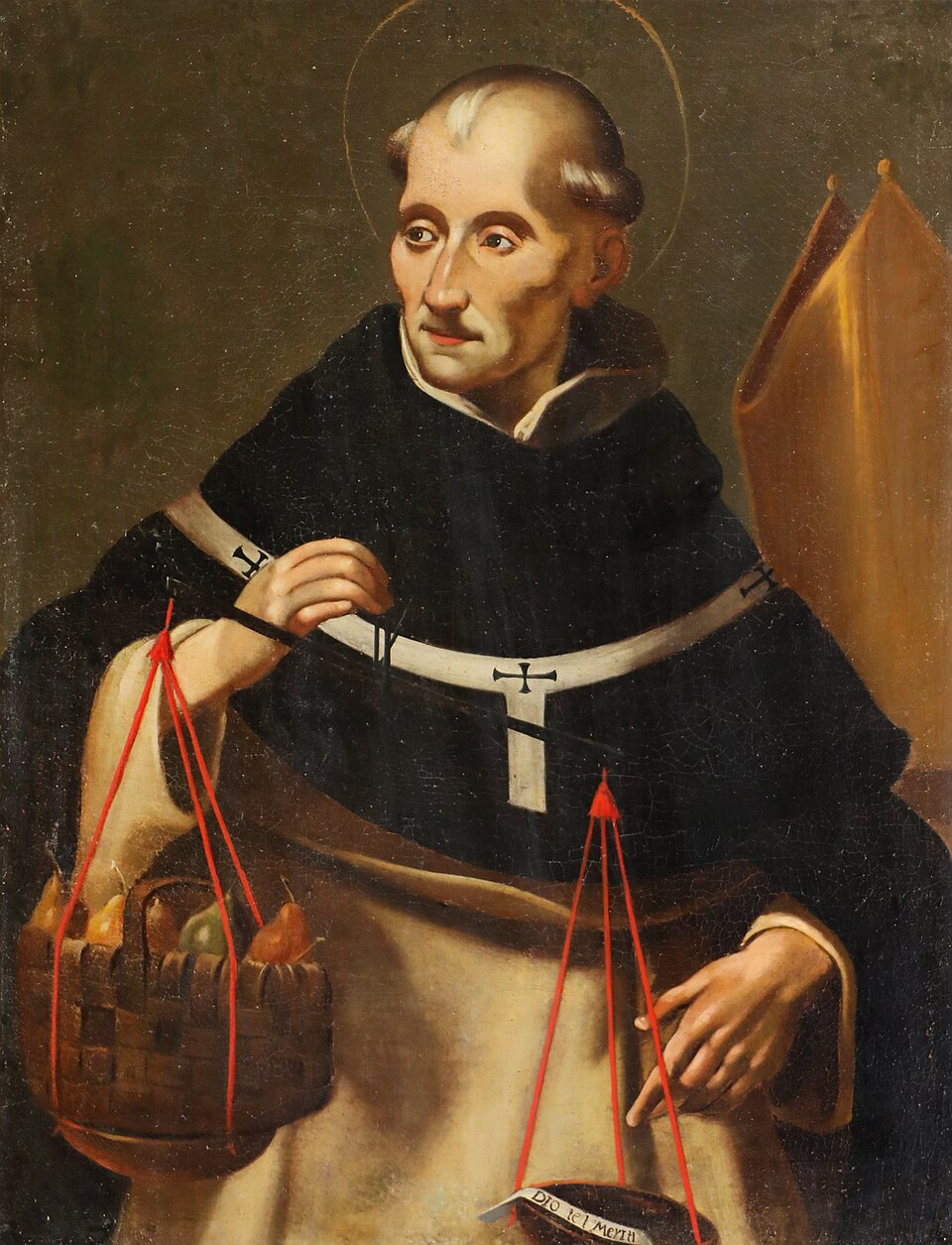
Saint Antoninus of Florence, born Antonio Pierozzi in 1389, emerged from a prominent Florentine family, steeped in the vibrant intellectual and spiritual currents of the Italian Renaissance. From a young age, he displayed a remarkable piety and an exceptional intellect, drawn to the rigorous life of prayer and study. At the tender age of fifteen, he sought admission to the Dominican Order, a decision initially met with hesitation by the Prior, Blessed John Dominici, who deemed him too frail for the demanding monastic life. However, Antoninus's unwavering resolve and profound understanding of the Dominican Constitutions ultimately convinced the Prior, and he was received into the Order in 1405. His early formation was characterized by intense theological study, a deep devotion to the Eucharist, and a burgeoning reputation for prudence and holiness, which would define his illustrious career.
Antoninus's vocation blossomed within the Dominican Order, where he served with distinction in various capacities, including Prior of several important convents in Rome, Naples, and Florence. His administrative acumen and profound theological insights were widely recognized, leading to his appointment as Vicar General of the reformed Dominican convents in Italy. In 1446, despite his profound humility and initial reluctance, Pope Eugene IV appointed him Archbishop of Florence. As Archbishop, Antoninus proved to be a tireless shepherd, dedicating himself to the spiritual and material well-being of his flock. He was renowned for his pastoral care, his commitment to social justice, and his efforts to alleviate poverty. He founded the charitable organization known as the "Buonomini di San Martino" (Good Men of Saint Martin) to assist the needy, and his moral theology, particularly his *Summa Moralis*, became a foundational text for subsequent generations of theologians and confessors, addressing complex ethical issues with clarity and compassion. He was also a prolific writer, contributing significantly to the fields of history and canon law.
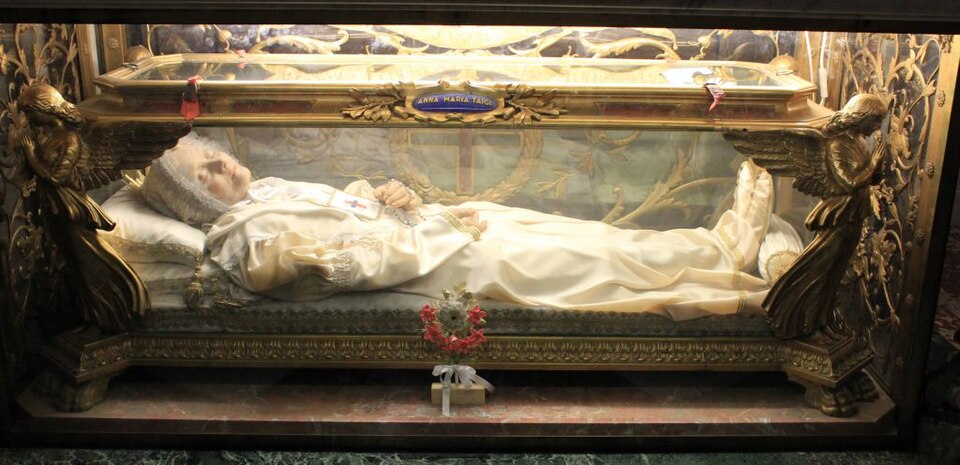
Saint Antoninus passed away peacefully on May 2, 1459, mourned by the entire city of Florence. So profound was the reverence for him that Pope Pius II, who had known him personally, presided over his funeral. His incorrupt body, a testament to his sanctity, was discovered years later and remains remarkably preserved to this day. His earthly remains are venerated in the Church of San Marco in Florence, where they rest in a glass reliquary, a silent witness to a life lived in extraordinary devotion to God and neighbor. The sight of his incorrupt body has inspired countless pilgrims and continues to be a source of wonder and spiritual reflection, affirming the power of divine grace.
The legacy of Saint Antoninus endures as a beacon of holiness, intellectual rigor, and compassionate service. He was canonized by Pope Adrian VI in 1523, a testament to his enduring impact on the Church. Today, pilgrims from around the world visit the Church of San Marco to venerate his incorrupt body, seeking his intercession and inspiration. His *Summa Moralis* continues to be studied and admired for its profound insights into Christian ethics, while his life serves as a powerful example of how intellectual pursuits and spiritual devotion can be harmoniously integrated for the greater glory of God and the service of humanity. His memory continues to enrich the spiritual heritage of Florence and the universal Church, reminding us of the enduring power of a life dedicated to Christ.
Discovery
The remarkable preservation of Saint Antoninus of Florence, a figure whose sanctity illuminated the vibrant intellectual and spiritual landscape of the Italian Renaissance, has long captivated the faithful and intrigued scholars. His incorrupt body was first discovered during a routine exhumation in 1470, a mere eleven years after his death. The exhumation was undertaken in preparation for his beatification process, a standard procedure for assessing the physical state of a potential saint's remains. As the tomb in the Church of San Marco was opened, those present, including Dominican friars and ecclesiastical officials, were astonished to find the Archbishop's body in an extraordinary state of preservation. Rather than the skeletal remains typically expected after a decade in the earth, Antoninus's form was remarkably intact, his skin still adhering to his bones, and his features recognizably his own. This unexpected discovery immediately fueled veneration, serving as a powerful testament to his sanctity and a clear sign of divine favor. The initial reaction was one of profound awe and reverence, solidifying the belief that a miracle had occurred.
Over the centuries, the incorrupt body of Saint Antoninus has been the subject of several examinations, each revealing the consistent and inexplicable nature of its preservation. A significant re-examination occurred in 1589, during which the body was again found to be largely intact, though some natural desiccation had occurred, as is common with such phenomena. Despite the passage of over a century, the flesh remained firm, and the limbs, though stiffened, retained their anatomical integrity. Further inspections, notably in 1708 and 1883, continued to confirm this remarkable state. Each time, the reports consistently noted the absence of putrefaction and the enduring recognizability of the saint's features. These repeated observations, spanning several centuries, underscore the enduring nature of this incorruption, defying the natural course of decay and strengthening the devotion of the faithful. The consistent findings across these examinations have been crucial in maintaining the Church's recognition of this extraordinary phenomenon.
The journey of Saint Antoninus's preserved body has been one of careful veneration and thoughtful display. Initially interred within the Church of San Marco, his remains were later moved to a more prominent location within the same church, now part of the San Marco Museum in Florence. To ensure its continued protection and allow for public veneration, the body is housed within a magnificent glass casket, allowing pilgrims and visitors to behold the saint's enduring form. This transparent reliquary is itself encased within a larger altar, providing a dignified and secure resting place. Throughout the years, various measures have been implemented to protect the body from environmental degradation and physical damage. While no artificial embalming was ever performed, the consistent temperature and humidity within its display environment contribute to its stability. The careful curation within the museum ensures that this sacred relic is both preserved for future generations and accessible to those who seek inspiration and intercession from the beloved Archbishop.
Among the most remarkable details associated with Saint Antoninus's incorrupt body is the consistent observation of its natural, unadorned state. Unlike some other incorruptibles who have been reported to exude sweet fragrances or oils, Antoninus's preservation is characterized by its sheer resistance to decay without such additional phenomena. The body has never been noted for unusual flexibility or bleeding; rather, its miracle lies in the simple, yet profound, fact that it has not decomposed as expected. The skin, though desiccated, remains attached to the bone, and the skeletal structure is fully articulated. This understated yet powerful form of incorruption speaks to a different aspect of divine intervention—a quiet, persistent defiance of natural processes that has endured for over five centuries. It is a testament to a life lived in profound sanctity, a visible sign that, even in death, God can choose to honor His servants in extraordinary ways, leaving an enduring legacy for the faithful to contemplate.
Scientific Analysis
The phenomenon of exceptional human body preservation, particularly in cases attributed to religious incorruption, presents a compelling subject for scientific inquiry. One such instance is the remarkably preserved body of Saint Antoninus of Florence, who died in 1459. While detailed, formal medical or scientific examinations with modern methodologies are not extensively documented in publicly available records for Saint Antoninus specifically, historical accounts and general scientific understanding of similar cases allow for an informed analysis. Traditionally, examinations of venerated bodies were often conducted by ecclesiastical authorities, sometimes involving physicians of the era, primarily to confirm identity and assess the state of preservation. These examinations, while lacking the rigorous forensic protocols of today, would typically note the absence of putrefaction, the flexibility of limbs, and the preservation of skin and internal organs. For Saint Antoninus, the continuous veneration and public display of his remains since his death strongly suggest a sustained state of preservation that has defied the typical course of decomposition. The San Marco Museum, where his body rests, has undoubtedly overseen its care, and any interventions would likely be documented within their archives, though not widely disseminated as formal scientific papers. The absence of widespread, peer-reviewed scientific studies on Saint Antoninus's specific case highlights a common challenge in examining such relics: access restrictions and the delicate balance between scientific investigation and religious reverence.
The scientific remarkable nature of Saint Antoninus's preservation lies in its apparent defiance of normal decomposition processes over several centuries. Human bodies, post-mortem, typically undergo autolysis (self-digestion by enzymes) and putrefaction (decomposition by bacteria), leading to liquefaction and skeletalization within a relatively short period, usually months to a few years, depending on environmental conditions. Florence, with its Mediterranean climate, generally experiences warm, humid summers and mild winters, conditions that would typically accelerate decomposition rather than inhibit it. Burial conditions, such as interment in a tomb or crypt, can sometimes slow decay by limiting oxygen exposure, but rarely to the extent of preserving soft tissues for over 500 years without deliberate intervention. The absence of strong evidence for extensive embalming or preservation treatments in the 15th century that could account for such long-term preservation further deepens the scientific mystery. While rudimentary embalming practices existed, they were not as sophisticated as later methods and rarely resulted in such sustained integrity of soft tissues. The continuous public veneration implies a state of preservation that has resisted the natural forces of decay over centuries, making it a subject of considerable scientific curiosity.
Natural explanations for exceptional body preservation often include phenomena like saponification (adipocere formation), mummification, or preservation in specific environmental conditions such as peat bogs or extremely dry, cold, or anaerobic environments. Adipocere, a waxy substance formed from body fat under specific conditions of moisture and alkalinity, can preserve body contours but typically alters tissue texture significantly, turning it into a soap-like material. Mummification, either natural (through extreme dryness) or artificial (through chemical treatment), can also preserve bodies, but the appearance and texture are distinct from the reported "incorrupt" state, which often describes a more lifelike or flexible preservation. In the case of Saint Antoninus, the reported state of preservation, often described as retaining a natural appearance and flexibility, does not align perfectly with the typical outcomes of these natural processes. Skeptics often point to the possibility of historical embalming techniques that were not fully documented, or to the gradual desiccation and natural mummification that can occur in dry environments over centuries, which might be interpreted as "incorruption." However, the specific details of "incorruption" often include the preservation of internal organs and a lack of odor, which are harder to explain by simple desiccation or rudimentary embalming alone. The perceived "freshness" or "flexibility" often attributed to incorrupt bodies remains a point of contention and scientific challenge.
From a modern scientific perspective, cases like Saint Antoninus offer invaluable opportunities to study the complex processes of post-mortem preservation. While direct access for extensive modern analysis may be challenging due to religious sensitivities, techniques such as non-invasive imaging (CT scans, MRI), advanced chemical analysis of tissue samples (if accessible), and environmental monitoring of the resting place could provide crucial insights. CT scans could reveal the state of internal organs and skeletal structures without disturbing the body, while chemical analysis could identify any embalming agents or unique biochemical markers of preservation. Carbon dating, if permitted on a small sample, could confirm the age of the remains and rule out later replacements. The study of microbial communities within and around the body could also shed light on the inhibition of putrefactive bacteria. Such investigations could contribute significantly to forensic science's understanding of taphonomy – the study of decomposition and preservation – and potentially uncover novel mechanisms of natural preservation. Many questions remain unanswered, particularly regarding the precise biochemical and environmental factors that have contributed to Saint Antoninus's sustained preservation over centuries, making it a compelling subject at the intersection of faith, history, and scientific inquiry.
Spiritual Significance
The phenomenon of incorruption within the Catholic tradition stands as a profound testament to the sanctity of certain individuals and the enduring power of God's grace, particularly as it pertains to Saint Antoninus of Florence. Theologically, the preservation of his body, defying the natural processes of decay, resonates deeply with the Christian understanding of the human body as a temple of the Holy Spirit, as articulated in 1 Corinthians 6:19. This extraordinary preservation hints at a foretaste of the resurrection of the body, a core tenet of Catholic faith, suggesting that God can, and sometimes does, intervene in the natural order to foreshadow the glorified state awaiting the faithful. For Saint Antoninus, whose life was a continuous offering to God, his incorruption is interpreted by the Church not as a mere biological anomaly, but as a divine affirmation of his exceptional holiness and his profound participation in the communion of saints. It serves as a tangible reminder that death is not the final word for those who live in Christ, and that the physical body, though destined for the grave, holds an intrinsic dignity and a future hope of transformation. This miraculous preservation bridges the visible and invisible, offering a palpable connection to the heavenly realm and the enduring presence of those who have gone before us in faith.
Saint Antoninus’s unique charism was deeply rooted in a profound synthesis of intellectual rigor and pastoral compassion, a hallmark of the Dominican Order to which he belonged. His heroic virtues manifested most prominently in his unwavering commitment to justice, his exceptional administrative abilities, and his profound humility. Despite his intellectual brilliance and his rise to the Archbishopric of Florence, he remained remarkably detached from worldly honors, consistently prioritizing the spiritual and material well-being of his flock. His daily life was a testament to his Dominican vows, characterized by rigorous study, fervent prayer, and tireless service to the poor and marginalized. He was a prolific writer, contributing significantly to moral theology and canon law, yet his scholarship was always directed towards practical application for the good of souls. His particular way of holiness was defined by a deep contemplative life that fueled an active and effective apostolate, demonstrating that true spiritual depth is not divorced from engagement with the world's needs. He embodied the Dominican ideal of "contemplata aliis tradere" – to hand on to others the fruits of contemplation – through his preaching, his governance, and his personal example of evangelical poverty and selfless service.
Devotion to Saint Antoninus has flourished since his death in 1459, a testament to the profound impact he had on his contemporaries and subsequent generations. His patronage extends to economists, moral theologians, and those involved in charitable works, reflecting his intellectual contributions and his tireless efforts for social justice. His feast day, May 10th, is celebrated with particular reverence in Florence, where his legacy is deeply interwoven with the city's history. Pilgrims today journey to the San Marco Museum, where his incorrupt body reposes in the Church of San Marco, offering a unique opportunity for veneration and spiritual reflection. The experience of visiting his shrine is often described as one of profound peace and inspiration. To stand before the remarkably preserved remains of a saint who lived centuries ago is to encounter a tangible link to the sacred, a powerful reminder of the enduring presence of holiness. Prayers and novenas dedicated to Saint Antoninus often focus on seeking his intercession for wisdom, justice, and compassion, echoing the virtues he so heroically practiced during his earthly life. This enduring devotion highlights the Catholic belief in the communion of saints, where those in heaven remain connected to and intercede for those on earth.
Numerous miracles have been attributed to the intercession of Saint Antoninus, both during his lifetime and after his death, further solidifying his reputation for sanctity. Documented accounts speak of healings, conversions, and answered prayers, often related to difficult legal cases, financial distress, or spiritual guidance. His incorrupt body itself has been a source of immense spiritual consolation for the faithful, serving as a powerful visual aid to faith and a tangible sign of God's favor. The very persistence of his uncorrupted state, defying scientific explanation, has inspired countless individuals to deepen their belief in the supernatural and the power of prayer. For many, simply being in the presence of his preserved remains evokes a profound sense of awe and reverence, fostering a deeper connection to the spiritual realm and a renewed commitment to their own spiritual journey. These miracles, whether physical or spiritual, underscore the Catholic understanding of saints as powerful intercessors, whose lives continue to bear fruit through God's grace long after their earthly pilgrimage has ended.
The enduring message of Saint Antoninus for modern believers is profoundly relevant in a world often characterized by materialism and secularism. His life challenges the contemporary pursuit of wealth and power by demonstrating that true fulfillment lies in selfless service, intellectual pursuit for the common good, and an unwavering commitment to God. In an age that often prioritizes fleeting pleasures, his incorruption serves as a powerful reminder of the eternal destiny of the human person and the ultimate triumph of grace over decay. People today can learn from his example of integrating rigorous intellectual life with profound spiritual devotion, proving that faith and reason are not antithetical but complementary. His life encourages us to seek justice, to care for the poor, and to use our talents for the greater glory of God and the good of humanity. His incorrupt body acts as a tangible bridge between the visible and invisible worlds, a concrete sign that the spiritual realm is not a distant abstraction but a vibrant reality that intersects with our earthly existence, offering hope, inspiration, and a powerful call to holiness in every generation.
AI summary
A plain-language overview generated from this page's source material. Always verify with primary sources.