Biography
Saint Bénézet, a humble shepherd boy from the rugged hills near Avignon, France, emerged from obscurity in the 12th century to fulfill an extraordinary divine calling. Born around 1165, little is known of his early family life beyond his simple, pastoral existence. Yet, even in his youth, Bénézet possessed a deep piety and an unwavering faith that set him apart. It was during his solitary hours tending sheep that he experienced a profound spiritual awakening, receiving what he believed to be a direct command from God to build a bridge across the treacherous Rhône River at Avignon. This seemingly impossible task, given his youth and lack of resources, would become the defining mission of his life.
Driven by this divine inspiration, the young Bénézet traveled to Avignon, where he faced initial skepticism and ridicule from both the populace and the ecclesiastical authorities. Undeterred, he recounted his vision and, according to tradition, miraculously lifted a massive stone, demonstrating the divine power behind his mission. This miraculous sign convinced the local bishop and the townspeople, who then rallied to support his endeavor. Under Bénézet's fervent guidance, and with the help of numerous volunteers and benefactors, construction of the Pont Saint-Bénézet, or the Pont d'Avignon, began in 1177. He dedicated his life to this monumental project, tirelessly overseeing its progress and inspiring others with his unwavering faith and zeal. The bridge, a crucial artery for pilgrims, merchants, and armies, would span the mighty Rhône, connecting the two banks and facilitating travel and commerce for centuries.
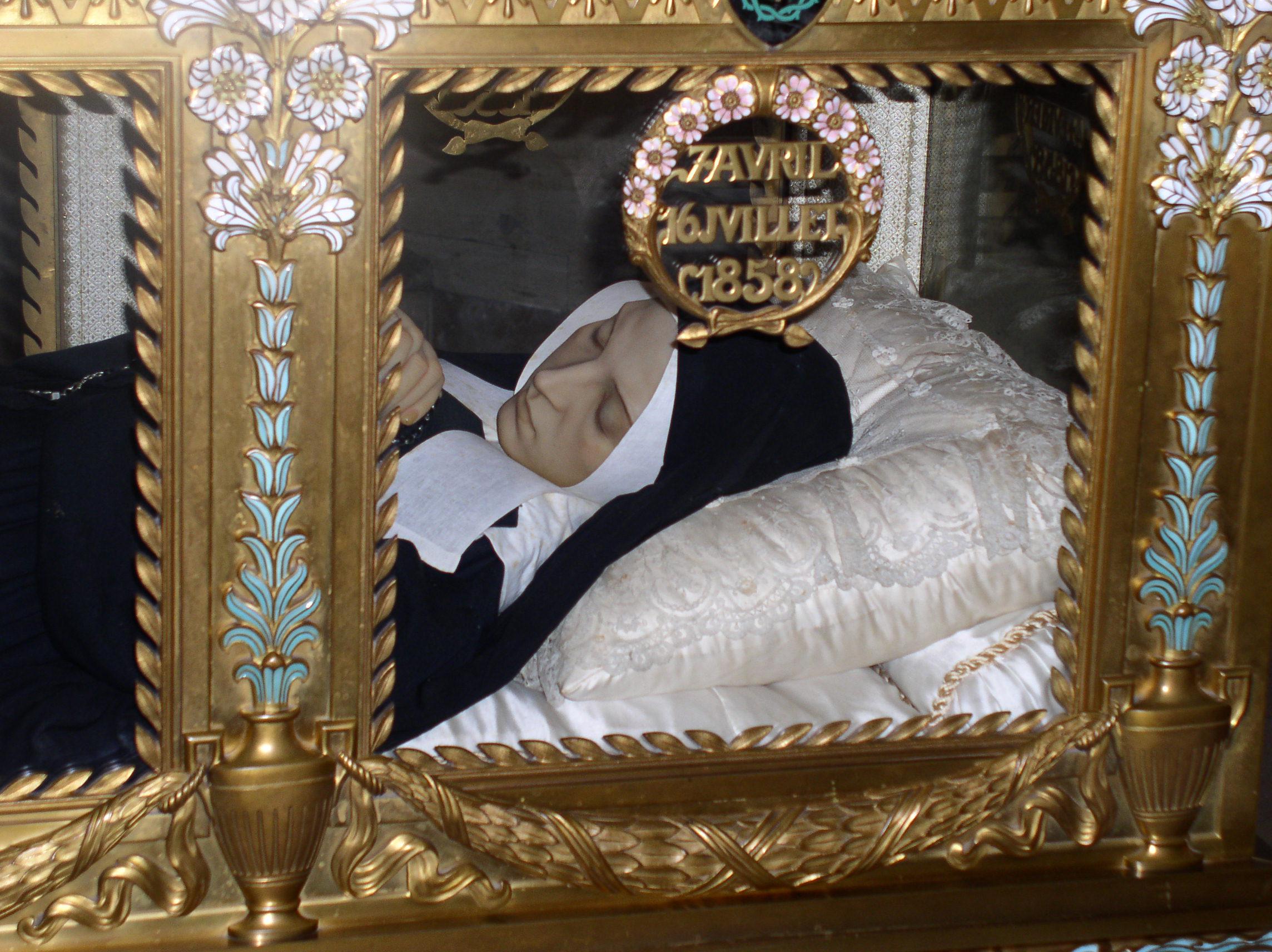
Sadly, Saint Bénézet did not live to see the completion of his magnificent bridge, succumbing to the arduous demands of his labor in 1184, at the tender age of 19. He was initially interred in a small chapel built on one of the bridge's piers, a testament to his enduring connection to his life's work. Over the centuries, as the bridge suffered damage from floods and wars, his relics were moved for safekeeping. When his tomb was opened, his body was found to be remarkably preserved, a profound sign of divine favor. Today, the incorrupt body of Saint Bénézet, a testament to his sanctity and God's miraculous power, rests in the Cathedral of Notre-Dame des Doms in Avignon, where pilgrims can venerate his sacred remains.
Saint Bénézet's legacy extends far beyond the physical structure of the Pont d'Avignon, which, though largely in ruins, remains an iconic symbol of the city and a UNESCO World Heritage site. He was canonized shortly after his death, and his feast day is celebrated on April 14th. He is revered as the patron saint of bridge builders and engineers, and his story continues to inspire those who face seemingly insurmountable challenges with faith and perseverance. Pilgrims visiting Avignon can still walk upon the remaining arches of his famous bridge, contemplating the extraordinary faith of the young shepherd boy who, guided by divine will, literally bridged the impossible, leaving behind a testament to human ingenuity and the enduring power of God's grace.
Discovery
The remarkable journey of Saint Bénézet’s incorrupt body began not with a grand procession, but with the practical necessity of relocating his earthly remains. Having died in 1184, his initial burial was within the small chapel dedicated to Saint Nicholas, situated on the very bridge he had so miraculously inspired and helped construct across the Rhône River at Avignon. For centuries, his tomb remained undisturbed, a quiet testament to his sanctity amidst the bustling activity of the bridge. It was in 1669, a year etched into the annals of Avignon's history, that a catastrophic flood of the Rhône threatened the very foundations of the Pont Saint-Bénézet. The relentless waters, swollen and powerful, began to undermine the chapel where the saint lay. Fearing the loss of such a precious relic, the ecclesiastical authorities, with the blessing of the Bishop of Avignon, ordered the exhumation of Bénézet's body. This was not a routine transfer; it was an urgent rescue mission. When the coffin was carefully unearthed from its ancient resting place, those present – a small group of clergy, civic officials, and workmen – were prepared for the skeletal remains typical of someone interred for nearly five centuries. Instead, they were met with an astonishing sight. The body of Saint Bénézet lay remarkably preserved, his flesh intact, a testament to God's miraculous intervention. The immediate reaction was one of profound awe and reverence, a hushed wonder that quickly spread through the city. The discovery confirmed the popular belief in his sanctity and solidified his place as a true patron of Avignon.
Following this initial, astonishing discovery, Saint Bénézet's body underwent several subsequent examinations and transfers, each revealing further details of its extraordinary preservation. After its rescue from the flooded chapel in 1669, the body was temporarily housed in the Church of the Celestines in Avignon. It was here that more thorough examinations were conducted by ecclesiastical and medical professionals, all confirming the remarkable state of incorruption. The skin, though discolored by the passage of time and burial, remained supple. The features were recognizable, and the limbs retained a degree of flexibility, defying the natural laws of decomposition. In 1670, just a year after its exhumation, the body was formally transferred to the Cathedral of Notre-Dame des Doms in Avignon, a more secure and fitting resting place for such a revered relic. This move allowed for greater veneration by the faithful and further scholarly observation. Over the ensuing decades, despite the natural processes that should have long since reduced it to dust, the body continued to maintain its integrity. Accounts from the 18th century consistently describe its preserved state, noting the absence of any artificial embalming agents, which would have been anachronistic for the 12th century anyway. These repeated observations, spanning centuries, underscore the enduring nature of this miraculous preservation, a phenomenon that continues to defy conventional scientific explanation.
The journey of Saint Bénézet's incorrupt body has been one of careful preservation and reverent display, reflecting the profound respect accorded to him by the Church and the people of Avignon. After its time in the Cathedral of Notre-Dame des Doms, the body was eventually moved to its current, most fitting resting place: the Cathedral of Saint-Bénézet, also known as the Cathedral of Saint-Pierre, in Avignon. This relocation ensures that the saint remains intimately connected to the city he served so devotedly. To protect this precious relic from the ravages of time and environmental factors, the body is now encased within a glass casket, allowing for public veneration while safeguarding its integrity. This transparent reliquary is itself housed within a larger, ornate shrine, often adorned with votive offerings and surrounded by candles, creating an atmosphere of solemn devotion. The measures taken for its preservation are primarily passive: maintaining a stable environment within the reliquary, protecting it from direct light, and ensuring its security. The current display allows pilgrims and visitors to gaze upon the remarkably preserved form of the humble shepherd boy who built a bridge to God, a tangible link to a miraculous past.
Beyond the astonishing state of preservation itself, several remarkable details have been associated with Saint Bénézet's incorrupt body, further enhancing its sanctity and inspiring devotion. One of the most frequently cited phenomena is the notable flexibility of his limbs, even centuries after his death. Unlike the rigid stiffness expected of a cadaver, observers have often noted a degree of pliability, particularly in his hands and fingers, as if he were merely sleeping. While not as widely reported as some other incorruptibles, there have been occasional accounts of a sweet, unearthly fragrance emanating from his remains, a phenomenon often associated with sanctity and divine favor. This "odor of sanctity" is a recurring motif in the hagiography of incorrupt saints, serving as a spiritual perfume that defies the natural odors of decay. Furthermore, the sheer duration of his incorruption, spanning over eight centuries, is a marvel in itself. Despite being interred in damp earth for nearly five hundred years before its exhumation, and then exposed to air and numerous transfers, the body has resisted the natural processes of decomposition with an unwavering persistence. These extraordinary characteristics contribute to the profound spiritual impact of Saint Bénézet's incorrupt body, serving as a powerful reminder of God's miraculous power and the enduring sanctity of His saints.
Scientific Analysis
The historical record regarding formal medical or scientific examinations of the remains attributed to Saint Bénézet is notably sparse, particularly concerning modern forensic analysis. While traditional accounts often cite the body's remarkable state of preservation over centuries, detailed, peer-reviewed scientific investigations employing contemporary methodologies are not readily available in public archives. Early observations, primarily conducted by ecclesiastical authorities or local physicians, often focused on the visual assessment of the remains. For instance, during the various translations of the relics, such as the move from the Chapel of Saint Nicholas to the Cathedral of Saint-Bénézet, chroniclers noted the apparent intactness of the body. These observations, however, lacked the rigorous protocols of modern forensic pathology. There is no widely documented instance of a comprehensive autopsy, histological analysis, or advanced imaging (like CT or MRI scans) performed by a recognized medical institution or forensic anthropologist. Consequently, specific dates, names of examining physicians, or institutional affiliations for such in-depth studies are largely absent from the publicly accessible historical and scientific literature concerning Saint Bénézet. The primary documentation of his incorruption relies heavily on historical accounts and visual attestations rather than detailed scientific reports.
The scientific remarkable nature of this case, as presented in traditional narratives, lies in the reported defiance of normal post-mortem decomposition processes. Human remains, under typical environmental conditions, undergo a predictable sequence of decay involving autolysis (self-digestion by cellular enzymes), putrefaction (bacterial decomposition), and eventual skeletalization. The region of Avignon, France, characterized by a Mediterranean climate with warm, dry summers and mild, wet winters, would generally facilitate decomposition rather than inhibit it, particularly if the body were interred in soil. Factors such as temperature, humidity, oxygen availability, and microbial activity are critical determinants of decomposition rates. Without deliberate embalming or preservation treatments, a body interred since 1184 would be expected to have fully skeletonized centuries ago. The absence of historical records detailing any sophisticated embalming techniques, which were not widely practiced or as effective in 12th-century Europe as later periods, further deepens the scientific mystery. The reported state of preservation, often described as retaining supple tissues or natural coloration, stands in stark contrast to the expected outcome of natural decay over nearly a millennium.
Various natural explanations have been proposed for cases of apparent incorruption, including saponification (adipocere formation) and mummification. Saponification occurs when body fats hydrolyze into a waxy, soap-like substance (adipocere) in anaerobic, moist environments, often in clay soils. This process can preserve soft tissues, but typically results in a distinctive, often grayish-white, waxy appearance and a loss of natural tissue elasticity and color. Mummification, on the other hand, involves the desiccation of tissues in extremely dry or cold conditions, preventing bacterial growth and preserving the body through dehydration. However, the reported characteristics of Saint Bénézet's remains, if accurately described by historical accounts, do not perfectly align with the typical outcomes of either saponification or natural mummification. Skeptical perspectives often attribute such preservation to specific, albeit undocumented, environmental conditions (e.g., a tomb with unique microclimates or soil chemistry) or to the gradual degradation of the body over time, with later observations perhaps focusing on the best-preserved elements. Without direct scientific examination, it remains challenging to definitively rule out natural processes, even if they appear atypical. The core of the unexplained phenomenon lies in the reported maintenance of lifelike qualities over an extended period without clear evidence of intentional preservation.
From a modern scientific perspective, the case of Saint Bénézet represents a historical account of anomalous body preservation that could significantly benefit from contemporary forensic and anthropological techniques. While historical descriptions are valuable, they lack the precision and objectivity of modern scientific inquiry. Non-invasive techniques such as high-resolution CT or MRI scans could provide detailed insights into the internal state of the remains, revealing tissue density, bone integrity, and any signs of past embalming or natural preservation processes. Carbon dating of bone or tissue samples could definitively establish the age of the remains, confirming their historical attribution. Furthermore, advanced tissue analysis, including histology and molecular biology techniques, could identify the specific mechanisms of preservation at a cellular level, distinguishing between adipocere formation, natural mummification, or other unknown processes. The application of these techniques would move the discussion beyond anecdotal evidence and provide empirical data to either support natural explanations or highlight truly unique preservation phenomena. Such studies would contribute to the broader scientific understanding of post-mortem changes and the diverse factors influencing human decomposition, potentially revealing novel insights into natural preservation mechanisms that remain largely unexplored. The questions that remain unanswered are fundamental: what is the true state of preservation, what are the underlying biological and chemical mechanisms, and can these be replicated or explained within known scientific frameworks?
Spiritual Significance
The phenomenon of incorruption, as exemplified by Saint Bénézet, stands as a profound testament within Catholic theology to the sanctity of the human body and the enduring power of divine grace. The Church interprets such miraculous preservation not merely as a biological anomaly, but as a visible sign of God's favor and a foretaste of the resurrection. It powerfully affirms the doctrine that the body is a temple of the Holy Spirit, as articulated in 1 Corinthians 6:19, suggesting that a life lived in profound union with God can imbue even the physical remains with an extraordinary grace. For Saint Bénézet, whose life was marked by an unwavering obedience to a divine command, his incorrupt body serves as a tangible link to the communion of saints, reminding the faithful that those who have passed into glory remain intimately connected to the Church Militant. This preservation underscores the Catholic belief in the integral salvation of both body and soul, offering a hopeful glimpse into the glorified bodies promised at the general resurrection, where the corruptible will put on incorruption. It is a visible sermon, preached silently across centuries, about the eternal destiny of those who faithfully serve God.
Saint Bénézet's unique charism was undeniably a profound and unshakeable faith, coupled with an extraordinary obedience to what he perceived as a divine mandate. His heroic virtues were primarily humility, evidenced by his simple shepherd origins and his willingness to undertake a seemingly impossible task without worldly resources or recognition, and an unwavering perseverance in the face of skepticism and opposition. His life was a living embodiment of practical charity, as the bridge he envisioned and initiated was a vital service to the community, facilitating travel and commerce and saving countless lives from the treacherous Rhône. While not a mystic in the traditional sense of contemplative orders, his profound spiritual awakening and direct reception of a divine command place him within a unique tradition of divinely inspired action. He contributed to the spiritual landscape not through theological treatises, but through a lived example of faith that moves mountains, or in his case, builds bridges, demonstrating that holiness is found not only in cloistered contemplation but also in active, selfless service to God and neighbor, even in the most challenging circumstances.
Devotion to Saint Bénézet has flourished since his death, particularly in Avignon and the surrounding regions, where his legacy is inextricably linked to the iconic Pont Saint-Bénézet. His primary patronage is naturally over bridge builders, engineers, and those who work to overcome obstacles, both physical and spiritual. Pilgrims have for centuries journeyed to the Cathedral of Saint-Bénézet, where his incorrupt body has been a focal point of veneration. While specific novenas or feast day traditions beyond his general feast day are not as widely known as for some other saints, the act of visiting his shrine and contemplating his preserved remains serves as a powerful spiritual exercise. The experience of standing before his incorrupt body is often described as deeply moving, fostering a sense of proximity to the divine and a tangible connection to a life lived in radical faith. It is a place where the faithful can reflect on the power of obedience and the extraordinary results that can spring from humble beginnings when guided by divine will, offering solace and inspiration to those facing their own seemingly insurmountable challenges.
Miracles attributed to Saint Bénézet's intercession began even during his lifetime, most notably the initial miraculous feats that allowed him to commence the bridge's construction, such as moving an enormous stone single-handedly. Over the centuries, countless healings, conversions, and answered prayers have been reported by those who have sought his intercession, particularly concerning safety in travel, overcoming physical impediments, and finding strength to complete difficult tasks. The incorrupt body itself has been a continuous source of spiritual consolation for the faithful. Its very existence is seen as a miracle, a constant reminder of God's power and the sanctity of a life dedicated to Him. For generations, pilgrims have found comfort and renewed faith by witnessing this extraordinary preservation, perceiving it as a tangible sign of divine presence and a confirmation of the eternal rewards promised to those who live virtuously. The body acts as a silent witness, inspiring a deeper trust in God's providence and the efficacy of prayer.
Saint Bénézet's enduring message for contemporary Catholics and seekers resonates profoundly in an age often characterized by skepticism and a focus on material achievements. His life challenges modern materialism by demonstrating that true greatness lies not in wealth or power, but in humble obedience to a higher calling and selfless service. In a secular world that often dismisses the miraculous, his incorruption serves as a powerful, tangible bridge between the visible and invisible worlds, reminding us that there is more to reality than what can be scientifically explained. People today can learn from his example the importance of listening to inner promptings, cultivating an unwavering faith, and pursuing seemingly impossible tasks with courage and trust in divine assistance. He teaches us that even the simplest among us can be instruments of God's extraordinary will, and that perseverance in the face of adversity can lead to monumental achievements, both spiritual and temporal, leaving a legacy that transcends centuries and continues to inspire hope and faith.
AI summary
A plain-language overview generated from this page's source material. Always verify with primary sources.