Biography
Saint Bernadette Soubirous, born Marie Bernarde Soubirous in 1844 in Lourdes, France, emerged from the humblest of beginnings. Her family, the Soubirous, lived in abject poverty, often struggling to find enough food. Her father, François, was a miller whose fortunes had dwindled, and her mother, Louise, worked tirelessly to support their children. Bernadette herself was a frail child, suffering from chronic asthma and cholera, which left her weakened and small of stature. Despite these hardships, she possessed a simple, devout faith instilled by her parents. It was this unassuming, unlettered girl, often ridiculed for her piety and lack of education, whom the Blessed Mother chose for a profound mission, forever altering the course of her life and the history of the Church.
At the tender age of fourteen, in 1858, Bernadette experienced a series of eighteen apparitions of a beautiful lady at the Grotto of Massabielle. This celestial visitor, who eventually identified herself as the Immaculate Conception, instructed Bernadette to drink from and wash in the spring, and to ask the local priests to build a chapel at the site. Despite initial skepticism and even hostility from civil and ecclesiastical authorities, Bernadette remained steadfast in her testimony, enduring interrogations and public scrutiny with remarkable calm and unwavering conviction. The emergence of a miraculous spring and the subsequent healings that occurred at Lourdes began to convince the doubters, ultimately leading to the Church's recognition of the apparitions in 1862. Bernadette, however, sought no earthly glory. She eventually entered the Sisters of Charity of Nevers in 1866, adopting the name Sister Marie-Bernard, where she lived a life of quiet humility, prayer, and service, often enduring physical suffering with patient resignation until her death from tuberculosis at the age of 35 in 1879.
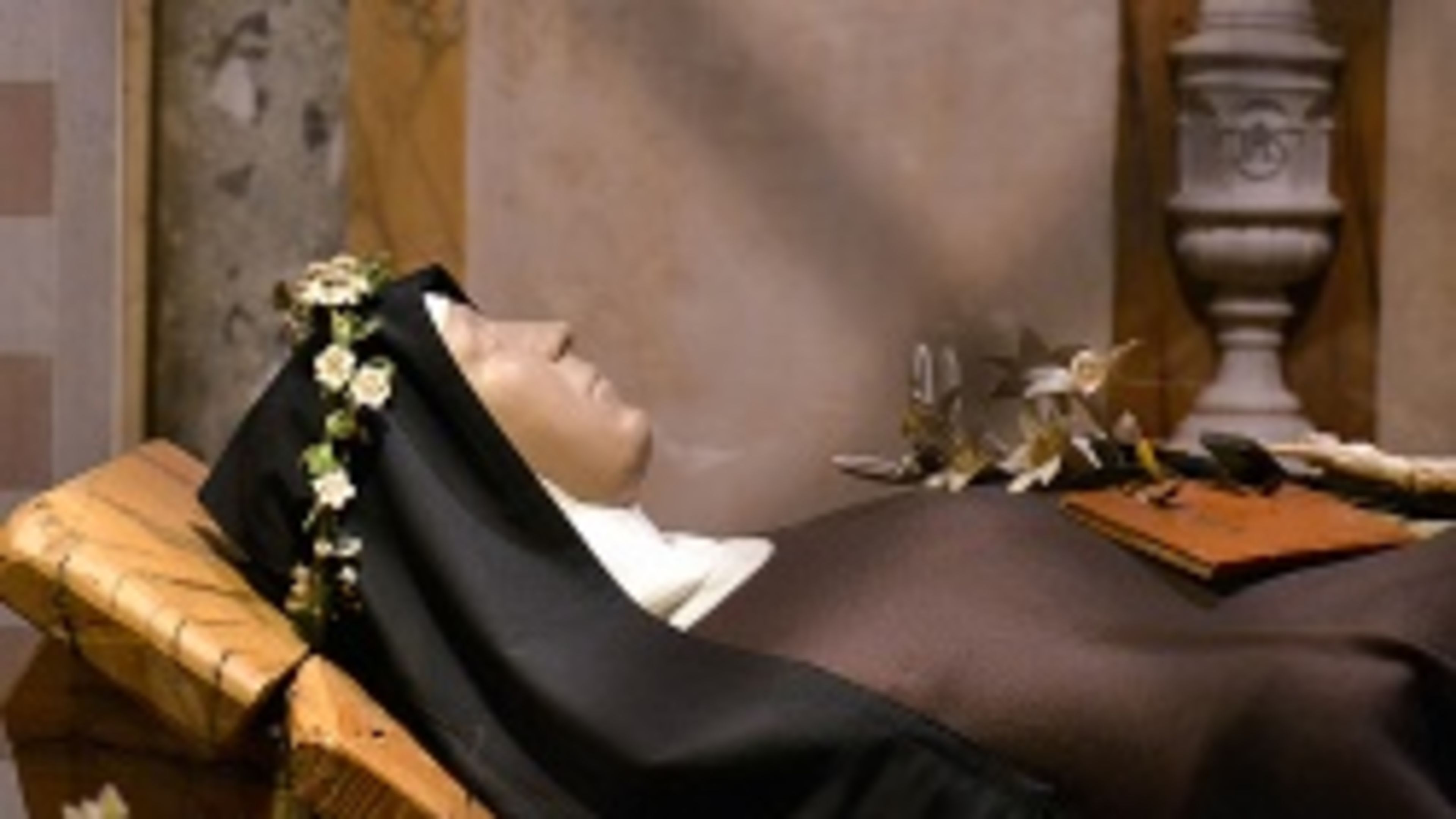
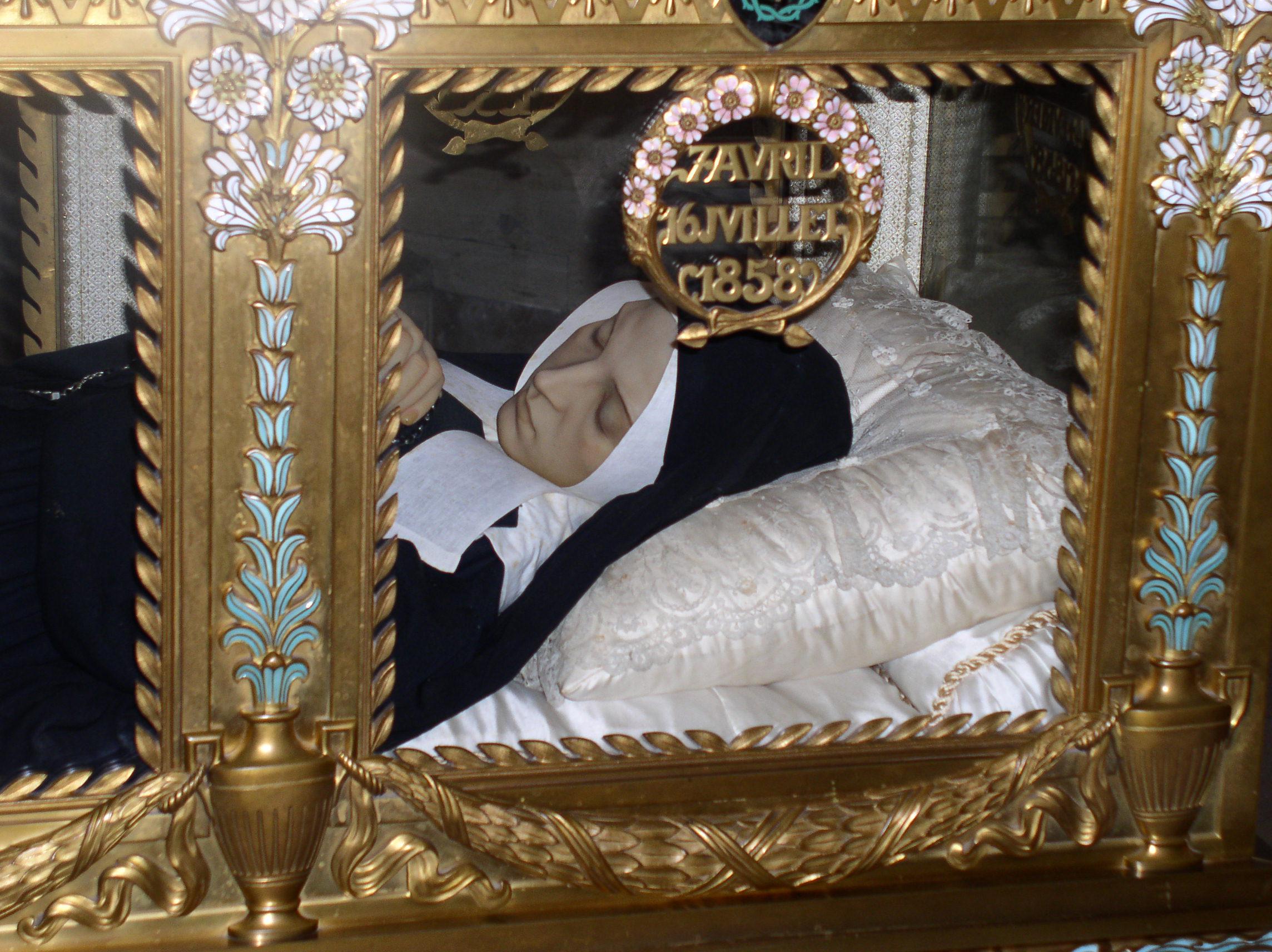
Thirty years after her passing, in 1909, Bernadette's body was exhumed as part of the canonization process. To the astonishment of those present, her body was found to be perfectly preserved, her skin soft and pliable, defying the natural laws of decomposition. A second exhumation in 1919 confirmed this remarkable state, with medical experts noting the body's mummified yet intact condition, covered only by patches of mildew and calcium salts, with no scientific explanation for its preservation. After a third exhumation in 1925, a delicate wax mask was placed over her face and hands to protect against discoloration and to present a more lifelike appearance to the faithful. Today, pilgrims to the Convent of Saint-Gildard in Nevers, France, can gaze upon her incorrupt body, reposing peacefully in a crystal reliquary, a silent testament to her sanctity.
Saint Bernadette's lasting legacy is inextricably linked to the miraculous spring of Lourdes, which continues to draw millions of pilgrims seeking healing and spiritual solace. Her incorruption is widely regarded as a divine confirmation of the authenticity of the apparitions and a powerful affirmation of her extraordinary holiness. Canonized in 1933 by Pope Pius XI, she is revered as the patron saint of illness, those ridiculed for their faith, and shepherds, embodying humility, perseverance, and unwavering faith in the face of adversity. Her life serves as a perennial reminder that God often chooses the simple and the lowly to manifest His greatest wonders, and that true sanctity lies not in worldly acclaim, but in steadfast devotion to His will.
Discovery
The remarkable journey of Saint Bernadette Soubirous's incorrupt body began thirty years after her passing, a period often considered a critical benchmark for natural decomposition. On September 22, 1909, in accordance with canon law requiring the identification of remains for beatification, the first exhumation took place at the Convent of Saint-Gildard in Nevers, France, where Bernadette had spent the final years of her life as a sister of the Congregation of the Sisters of Charity of Nevers. Present were Bishop Gauthey of Nevers, Canon A. Comminges, Father A. David, Dr. Ch. David, and Dr. A. Jourdan, among others. As the coffin, made of oak and lead, was opened, a profound silence fell over those gathered. To their astonishment, Bernadette's body lay perfectly preserved. Her rosary, though rusted, was still clutched in her hands. Her habit, however, had decayed. Dr. Jourdan, a physician, meticulously examined the body, noting its supple skin, natural color, and the absence of any putrefaction. He recorded that her eyes were closed, her mouth slightly open, and her hands perfectly joined, though the nails were long. The body was washed, reclothed in a fresh habit, and placed into a new double coffin, one of lead and one of oak, which was then sealed and reinterred in the convent's crypt. The immediate reaction was one of awe and profound spiritual significance, reinforcing the belief in her sanctity.
A decade later, on April 3, 1919, a second exhumation was performed, again for the purpose of canonical identification, this time in preparation for her canonization. The witnesses included Bishop Patrice of Nevers, Dr. Comte, and Dr. Talon, along with several sisters of the convent. Once more, the body was found in an astonishing state of preservation, defying the natural processes of decay. Dr. Comte, a medical doctor, conducted a thorough examination, confirming the observations made ten years prior. He noted the perfect condition of her skeleton, the preserved muscles, tendons, and skin, and even the liver, which he described as "of normal size and consistency." The doctors were particularly struck by the remarkable flexibility of her limbs, a phenomenon rarely observed in bodies of such age. Despite the passage of forty years since her death, there were no signs of desiccation or mummification. The body was once again washed, dressed in a new habit, and returned to its coffin. These repeated findings solidified the conviction among the ecclesiastical authorities and the faithful that Bernadette's incorruptibility was a miraculous sign.
The final exhumation, and perhaps the most significant in terms of her public veneration, occurred on April 18, 1925, just eight years before her canonization. This time, the purpose was not merely identification but also to prepare her body for public display. The examination was conducted by Dr. Comte, assisted by Dr. Péchou, and witnessed by numerous ecclesiastical and civil dignitaries. While the body remained remarkably preserved, the prolonged exposure to air during the previous exhumations and the natural process of time had caused some slight discoloration and a slight sinking of her facial features. To present a more lifelike and reverent image for public veneration, it was decided to apply a light wax mask to her face and hands. This delicate task was entrusted to Pierre Barias, a skilled artist and sculptor from Paris. He created molds of her face and hands, from which the thin wax coverings were meticulously crafted. These additions were not intended to conceal decay but rather to protect the delicate skin from further deterioration and to restore a more natural appearance, allowing pilgrims to gaze upon her with greater devotion.
Following this final preparation, Saint Bernadette's body was reverently placed in a crystal reliquary, a magnificent glass casket, which was then installed in the Chapel of Saint Bernadette at the Convent of Saint-Gildard in Nevers. There, she has remained on public display ever since, a powerful testament to her sanctity and the enduring mystery of incorruptibility. While the wax mask covers her face and hands, the rest of her body, visible through the glass, continues to exhibit the remarkable preservation observed during the exhumations. Pilgrims from around the world visit Nevers to venerate her, drawn by the profound spiritual significance of her life and the extraordinary state of her earthly remains. The absence of any strong odor of decay, the pliability of her tissues noted in earlier examinations, and the sheer longevity of her preservation without artificial embalming are among the most remarkable details associated with her incorruptibility, making her one of the most compelling examples of this phenomenon in the Catholic Church.
Preservation
Body preserved since 1879. Wax mask applied in 1925 to protect the face. Body displayed in crystal reliquary since 1925.
Scientific Analysis
The preservation of the remains of Saint Bernadette Soubirous has been the subject of several medical and scientific examinations since her death in 1879. The initial exhumation occurred on September 22, 1909, thirty years after her burial. This examination was mandated by canon law in preparation for her beatification process. Dr. David, a physician, and Dr. Jourdan, a surgeon, were the primary medical professionals present. Their report, notarized and submitted to the Church, described the body as remarkably preserved. They noted that the skin was adherent to the muscles, the muscles firm, and the organs, including the liver, appeared intact and of normal consistency. The report specifically stated that the body had not undergone any embalming or preservation treatments. A second exhumation took place on April 3, 1919, in preparation for her canonization. This examination involved Dr. A. Comte, a physician, and Dr. Talon, a surgeon. Their findings largely corroborated the earlier report, emphasizing the exceptional state of preservation despite the passage of an additional decade. Dr. Comte’s official report from 1919 notably stated: "The body is practically mummified, covered with patches of mildew and calcium salts, but intact. The skin has disappeared in some places, but the muscles are still well preserved and firm. The liver is still soft and of normal consistency. The lungs are collapsed, but the heart is still firm and intact. The diaphragm is intact. The stomach is empty. The intestines are in good condition. The bladder is empty. The uterus is intact. The skeleton is complete." This detailed account highlighted the preservation of internal organs, a phenomenon rarely observed in natural decomposition. A final examination occurred on April 18, 1925, before the body was placed in its current reliquary. During this examination, the physicians, including Dr. Comte, noted some discoloration and slight deterioration of the skin, particularly on the face and hands, which led to the application of a light wax mask for presentation purposes. The overall structural integrity of the body, however, was still considered exceptional.
The scientific mystery surrounding Saint Bernadette's preservation lies in its defiance of typical post-mortem decomposition processes. Normal decomposition, driven by autolysis (self-digestion by cellular enzymes) and putrefaction (bacterial action), typically leads to liquefaction and skeletonization within a few years, especially in the environmental conditions of a damp burial vault. Bernadette was interred in a double coffin – lead within oak – in a crypt beneath the chapel of the Convent of Saint-Gildard in Nevers, France. This environment, characterized by consistent humidity and cool temperatures, would ordinarily accelerate anaerobic decomposition, leading to the rapid breakdown of soft tissues. The presence of a lead coffin, while offering some protection from external elements, also creates an anoxic (oxygen-deprived) environment that generally favors the putrefactive processes of anaerobic bacteria. Despite these conditions, which should have promoted decay, the medical reports consistently described firm muscles, intact organs, and well-preserved skin over decades. Crucially, all medical examinations unequivocally confirmed that no embalming or artificial preservation methods had been employed. The absence of chemical preservatives, combined with the damp, cool, and anoxic burial environment, makes the observed state of preservation highly anomalous from a conventional forensic taphonomy perspective.
Several natural explanations have been proposed for instances of unusual body preservation, such as saponification (adipocere formation) and mummification. Saponification, the transformation of body fat into a waxy, soap-like substance known as adipocere, can occur in cool, wet, anaerobic environments. While adipocere can preserve the general form of a body, it typically alters the texture and appearance of tissues significantly, often turning them brittle or greasy. The medical reports on Saint Bernadette, however, describe firm muscles and organs of normal consistency, which is not characteristic of extensive saponification. Furthermore, while mummification can preserve soft tissues, it usually requires dry, arid conditions that promote desiccation, or specific chemical treatments. The damp environment of her burial vault contradicts the conditions necessary for natural mummification. The official 1919 report did mention the body being "practically mummified," but this term might have been used in a broader sense to denote preservation rather than indicating true desiccation. Skeptics often point to the possibility of overlooked environmental factors or subtle forms of preservation that are not fully understood. However, the consistent findings of intact internal organs and firm tissues over decades, without any known preservative interventions, continue to challenge conventional scientific explanations for decomposition in such burial conditions. The wax mask applied later also complicates visual assessment, but the underlying medical reports from prior exhumations remain the primary scientific evidence.
From a modern scientific perspective, the case of Saint Bernadette Soubirous presents an intriguing subject for advanced forensic taphonomic study. While direct re-examination with modern techniques is unlikely due to religious veneration, hypothetical applications could shed further light on the phenomenon. Techniques such as high-resolution computed tomography (CT) scans could provide detailed three-dimensional imaging of internal organs and tissue structures without invasive procedures, potentially revealing micro-level preservation mechanisms or the extent of any adipocere formation. Carbon dating of tissue samples, if ethically permissible, could confirm the age of the remains and rule out any historical discrepancies, though this is not a primary question in this case. Detailed histological and biochemical analysis of minute tissue samples, if available, could identify specific proteins, lipids, and cellular structures that have resisted degradation, offering clues into the unique chemical environment within the coffin or intrinsic properties of her tissues. For instance, the presence of specific microbial communities or unusual soil chemistry within the burial environment could theoretically contribute to altered decomposition pathways, though this is speculative without direct analysis. The broader scientific study of exceptional preservation often examines cases of bog bodies, ice mummies, or chemically preserved remains, each with distinct environmental or anthropogenic factors. Saint Bernadette's case stands apart due to the absence of these known factors, placing it within a category of unexplained preservation that continues to prompt questions about the limits of natural decomposition and the potential for rare, uncharacterized biological or environmental interactions. The questions that remain unanswered revolve around the precise biochemical mechanisms that inhibited autolysis and putrefaction over such an extended period in a seemingly unsupportive environment.
Spiritual Significance
The phenomenon of incorruption, particularly as exemplified by Saint Bernadette Soubirous, offers a profound theological statement within Catholic tradition, serving as a tangible testament to the sanctity of the human body and the promise of eternal life. In Catholic theology, the body is not merely a vessel but a temple of the Holy Spirit, destined for resurrection and glorification. Saint Paul's words in 1 Corinthians 6:19 resonate deeply here, reminding us that our bodies are bought with a price and are meant to glorify God. The incorruptibility of a saint's body, therefore, is often interpreted as a divine sign, a prefigurement of the resurrection of the body, and a powerful affirmation of the Church's teaching on the communion of saints. It suggests that God, in His infinite wisdom, can choose to preserve the earthly remains of certain individuals whose lives were so exceptionally dedicated to Him, offering a visible sign of their profound union with Christ even after death. For Saint Bernadette, whose life was marked by extraordinary humility and a unique encounter with the Blessed Mother, her incorruption is seen by many as a divine seal on the authenticity of the Lourdes apparitions and a confirmation of her singular holiness. It underscores the belief that her earthly struggles and unwavering faith were not in vain, but have been honored by God in a remarkable and enduring way, bridging the gap between the visible and invisible realms.
Saint Bernadette's life was a radiant example of profound humility, unwavering obedience, and a simple yet profound faith that became her unique spiritual charism. Born into abject poverty and plagued by chronic illness, she embodied the Beatitudes, particularly "Blessed are the poor in spirit, for theirs is the kingdom of heaven." Her unlettered simplicity and lack of worldly sophistication made her an unlikely choice for divine revelation, yet it was precisely these qualities that allowed her to be a pure vessel for the Blessed Mother's message. She faced ridicule and skepticism with quiet fortitude, never seeking personal glory but always deferring to the authority of the Church. Her obedience to her superiors, even when it meant enduring harsh conditions and misunderstanding, was exemplary. Bernadette's spirituality was not one of grand theological treatises but of profound, childlike trust and an intimate relationship with the divine. She embraced suffering as a path to holiness, offering her constant ailments for the conversion of sinners. Her life, spent largely in the quiet discipline of the convent, was a testament to the power of interior prayer and a deep communion with God, demonstrating that true holiness can flourish even in the most unassuming of lives, far from the world's acclaim.
Devotion to Saint Bernadette has flourished since the Lourdes apparitions, growing exponentially after her canonization in 1933. She is widely revered as the patron saint of illness, people ridiculed for their faith, and shepherds, reflecting the key aspects of her life and mission. Her feast day on April 16th is observed with special Masses and prayers, and countless novenas are offered seeking her intercession, particularly for healing and for strength in times of spiritual trial. Pilgrims from across the globe flock to the Chapel of Saint Bernadette at the Convent of Saint-Gildard in Nevers, France, where her incorrupt body lies in repose. The experience of visiting her shrine is often described as deeply moving and spiritually transformative. To stand before her preserved form, even with the protective wax mask, is to encounter a tangible link to the sacred, a silent sermon on the enduring power of faith and the reality of the communion of saints. It is a moment where the historical reality of her life converges with the spiritual truth of her sanctity, inviting profound reflection and renewed commitment to one's own spiritual journey.
The spiritual consolation derived from Saint Bernadette's incorrupt body extends far beyond mere curiosity; it is a profound source of faith and hope for countless believers. While the Church carefully discerns miracles attributed to intercession, numerous documented healings and conversions have been reported through her prayers, particularly those associated with the waters of Lourdes. These range from physical cures of debilitating diseases to profound spiritual transformations, where individuals experience a renewed sense of purpose, forgiveness, and a deeper relationship with God. The very presence of her incorrupt body acts as a continuous, silent miracle, offering a visible sign of God's power and love. For those who struggle with doubt or despair, encountering such a phenomenon can be a powerful catalyst for faith, reminding them that God's grace transcends the limitations of human understanding. It serves as a tangible bridge between the visible world of human suffering and the invisible realm of divine intervention, offering comfort and assurance that the saints in heaven continue to intercede for those on earth.
Saint Bernadette's enduring message holds profound relevance for contemporary Catholics and seekers alike, offering a compelling antidote to the pervasive materialism and secularism of our age. Her life, marked by poverty, illness, and ridicule, challenges the modern obsession with wealth, comfort, and worldly success, reminding us that true fulfillment lies not in external possessions but in an interior life of faith and surrender to God's will. She teaches us the profound dignity of humility and the power of simple, unwavering trust in divine providence, even when faced with skepticism and opposition. For those who feel marginalized or overlooked, Bernadette's story is a beacon of hope, demonstrating that God often chooses the least among us to accomplish His greatest works. Her incorruption serves as a powerful, tangible bridge between the visible and invisible worlds, a constant reminder that there is more to existence than what meets the eye. It invites us to look beyond the transient and embrace the eternal, inspiring us to cultivate a deeper spiritual life and to recognize the sacred in the ordinary, just as she did in the grotto of Massabielle.
AI summary
A plain-language overview generated from this page's source material. Always verify with primary sources.