Biography
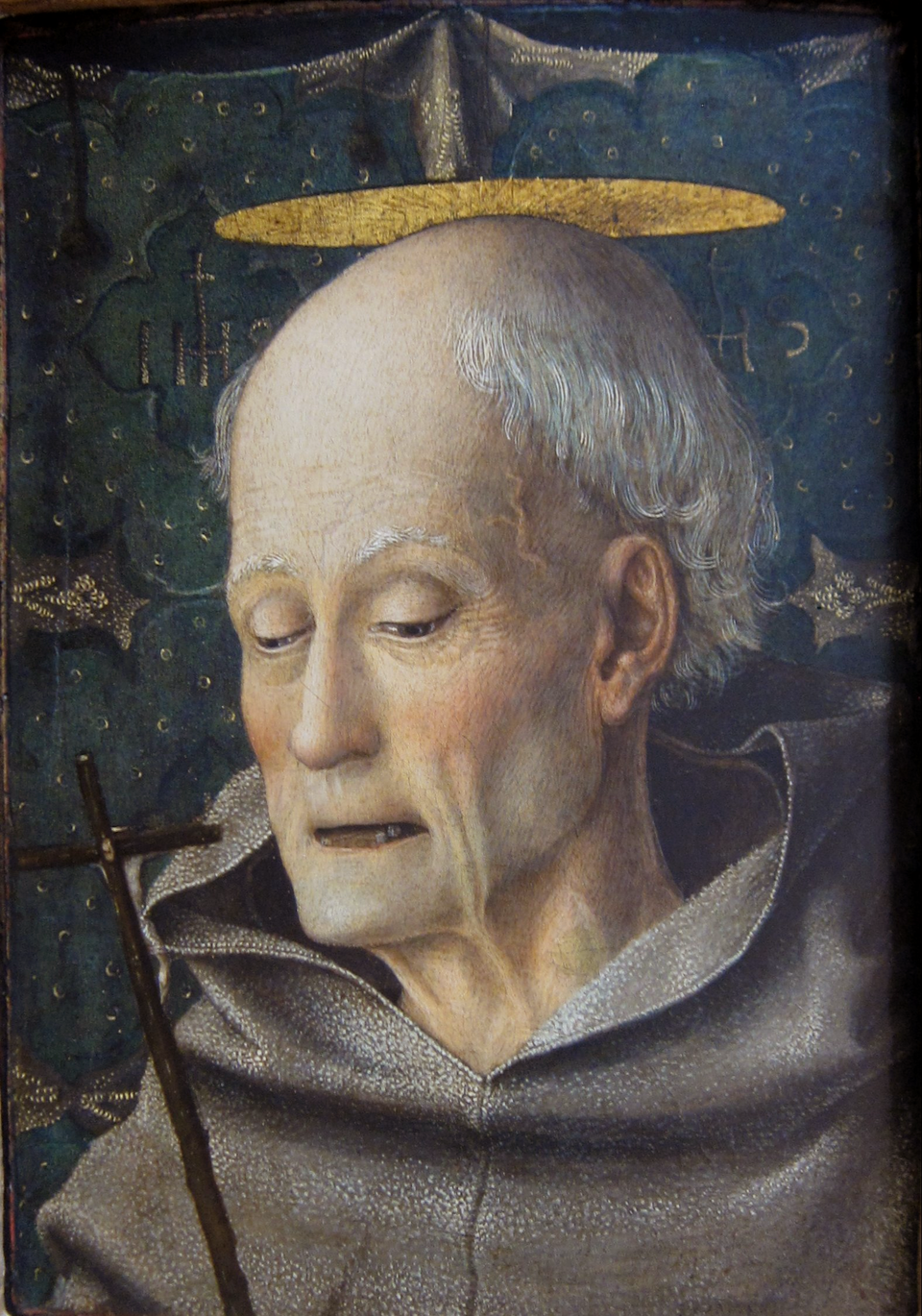
Saint Bernardino of Siena, born Bernardino degli Albizeschi in 1380 to a noble Sienese family, was orphaned at a young age and raised by his pious aunt. From his earliest years, he displayed a profound devotion to God and a tender heart for the poor and suffering. He pursued studies in civil and canon law at the University of Siena, but his true calling lay elsewhere. During a devastating plague that swept through Siena in 1400, Bernardino, then barely twenty, courageously dedicated himself to nursing the sick in the city's hospital, organizing volunteers and fearlessly tending to the dying. This harrowing experience deepened his spiritual resolve and solidified his desire for a life consecrated to God. In 1402, he entered the Franciscan Order, embracing a life of poverty, penance, and fervent prayer.
After his ordination, Bernardino initially lived a life of quiet contemplation, but his superiors soon recognized his extraordinary gifts for preaching. He quickly became one of the most celebrated and influential preachers of the 15th century, traversing the length and breadth of Italy, often on foot. His sermons were renowned for their fiery eloquence, penetrating insight, and ability to move vast crowds to repentance and conversion. He tirelessly denounced usury, gambling, and factionalism, while passionately advocating for peace and reconciliation. His most enduring contribution was his fervent promotion of devotion to the Holy Name of Jesus. He would carry a wooden tablet inscribed with the monogram "IHS" (the first three letters of Jesus in Greek) surrounded by a sunburst, which he would display during his sermons, encouraging people to venerate it as a symbol of divine love and mercy. This devotion spread rapidly throughout Europe, leaving an indelible mark on Catholic spirituality.
Saint Bernardino died on May 20, 1444, in L'Aquila, while on a preaching mission. His death was met with widespread grief, and numerous miracles were attributed to his intercession. Only six years later, in 1450, he was canonized by Pope Nicholas V, a remarkably swift process that underscored his profound impact. Upon the exhumation of his body, it was discovered to be miraculously preserved, a testament to his sanctity and the power of God. This incorrupt state, later confirmed by medical examination, has been seen as a physical manifestation of the spiritual vitality and purity that characterized his life and his powerful preaching ministry.
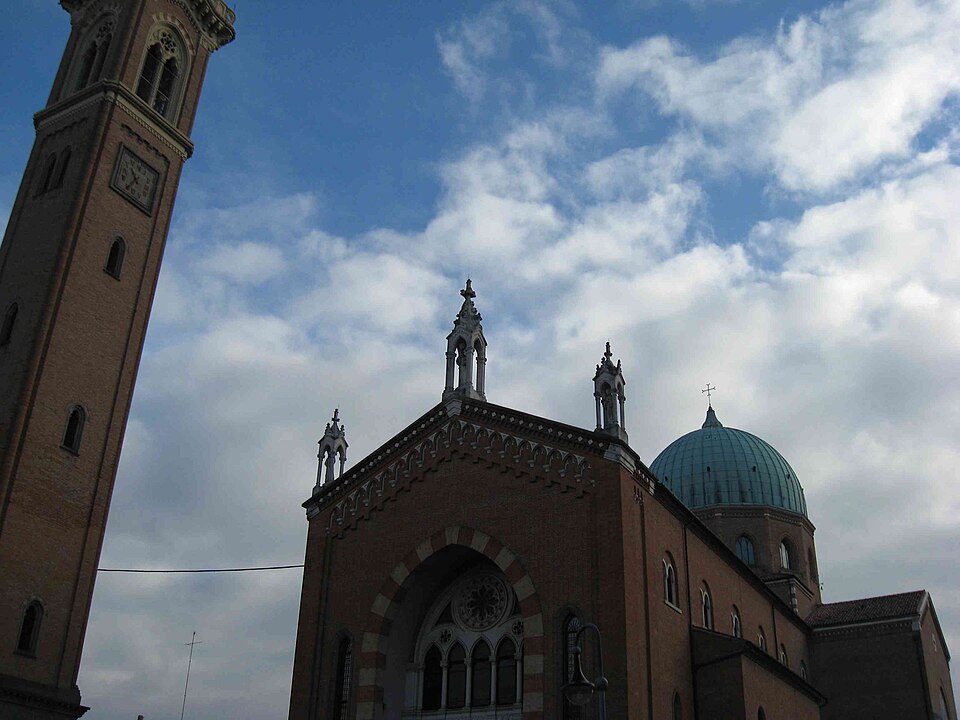
Today, pilgrims can venerate the incorrupt body of Saint Bernardino in the Basilica of San Bernardino in L'Aquila, Italy, where it rests in a magnificent tomb. His legacy as the "Apostle of Italy" endures, not only through the continued devotion to the Holy Name of Jesus but also through his example of courageous evangelization, unwavering commitment to justice, and profound love for Christ. He remains a powerful intercessor for preachers, those seeking reconciliation, and all who strive to live a life devoted to the Lord.
Discovery
The miraculous preservation of the Apostle of Italy, Bernardino of Siena, became evident shortly after his passing in 1444. He had died in L'Aquila, a city he had tirelessly served with his powerful preaching, and it was there, just six years later, that the extraordinary discovery unfolded. In 1450, a mere six years after his earthly demise and the same year of his canonization by Pope Nicholas V, the decision was made to translate his remains from their initial resting place within the Franciscan convent of San Francesco to a more prominent position fitting for a newly declared saint. This exhumation was not merely a practical matter of relocation; it was an event of profound spiritual significance, attended by numerous clergy, civic officials, and a throng of the faithful who had revered Bernardino during his lifetime. As the earth was carefully removed and the coffin opened, a collective gasp rippled through the onlookers. There, before their astonished eyes, lay the body of Bernardino, remarkably intact. His skin retained a natural hue, his limbs were flexible, and a sweet, unearthly fragrance, often described as a blend of roses and lilies, emanated from his person, filling the air and dispelling any lingering doubts about the divine favor bestowed upon him. This immediate and vivid incorruption served as a powerful affirmation of his sanctity, solidifying his veneration among the populace of L'Aquila and beyond.
Over the centuries, the incorrupt body of Saint Bernardino has been the subject of numerous examinations, each reaffirming its miraculous state and offering further insights into its preservation. While precise dates for every inspection are not always meticulously recorded in every historical account, it is known that the body was regularly viewed and venerated, particularly during significant ecclesiastical events or periods of intense devotion. Accounts from the 16th and 17th centuries consistently describe the body as remaining supple, with its features discernibly preserved, though some natural desiccation and darkening of the skin were noted over time, as might be expected even in cases of incorruption. One particularly notable examination occurred in 1703, following a devastating earthquake that severely damaged L'Aquila and the basilica where he rested. Despite the immense upheaval and destruction, Bernardino's body was found to be undisturbed and still remarkably preserved, a testament to its enduring nature. These subsequent inspections, often involving medical professionals and ecclesiastical authorities, consistently marveled at the lack of putrefaction and the persistence of a natural appearance, defying the normal processes of decomposition.
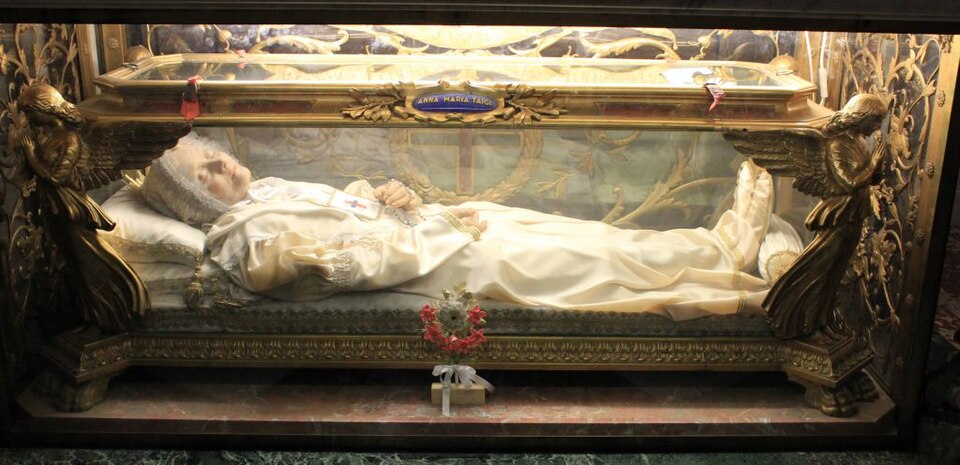
The journey of Saint Bernardino's incorrupt body has been one of careful veneration and meticulous preservation, reflecting the profound respect accorded to such a sacred relic. Following its initial discovery, the body was placed in a magnificent tomb within the Basilica of San Bernardino in L'Aquila, a grand edifice specifically constructed in his honor. Over time, to ensure both its security and accessibility for veneration, the body was enclosed within a crystal urn or glass casket, allowing the faithful to gaze upon his preserved form. This transparent reliquary is itself often housed within a more elaborate altar or shrine, adorned with precious metals and intricate carvings, further emphasizing its sacred importance. The environment within the basilica is carefully monitored to maintain stable conditions, protecting the body from environmental factors that could accelerate any natural deterioration. Today, visitors to the Basilica of San Bernardino can still behold the saint's incorrupt body, reposing peacefully within its glass enclosure, a powerful and tangible link to a man who profoundly shaped the spiritual landscape of 15th-century Italy.
Beyond the remarkable visual preservation, several extraordinary phenomena have been historically associated with Saint Bernardino's incorrupt body, reinforcing the belief in its divine intervention. As mentioned, the sweet, fragrant odor emanating from his remains was a consistent report at the time of his exhumation and for many years thereafter, a characteristic often cited in accounts of incorruptibility. More profoundly, there are documented instances, particularly in the centuries immediately following his death, of a clear, oily liquid, sometimes referred to as "manna," exuding from his body. This substance was collected by the faithful, who attributed miraculous healing properties to it, and its appearance was considered a further sign of his sanctity. While such exudations are less commonly reported in modern times, the historical accounts provide compelling evidence of these unusual occurrences. The enduring flexibility of his limbs, even centuries after death, was also a frequently noted detail, distinguishing his incorruption from mere mummification. These remarkable details, interwoven with the historical accounts of his life and ministry, contribute to the profound spiritual significance and enduring veneration of Saint Bernardino of Siena.
Preservation
Body preserved in the Basilica of San Bernardino, L'Aquila.
Scientific Analysis
The remarkable state of preservation of the body attributed to Saint Bernardino of Siena has been the subject of intermittent medical and scientific scrutiny over centuries. While comprehensive, modern forensic examinations with advanced imaging and tissue analysis techniques are not extensively documented for public record, historical accounts detail several inspections. Notably, during the process of his canonization in 1450, a formal examination was conducted by ecclesiastical authorities, which included medical observers of the time. These early assessments, though lacking the rigor of contemporary forensic science, consistently reported an unusual degree of preservation, particularly noting the flexibility of the limbs and the absence of the expected putrefactive changes. Later, during various translations and venerations, including a significant re-interment in the Basilica of San Bernardino in L'Aquila, Italy, further informal observations were made by attending physicians and clerics, who continued to attest to the body's integrity. Specific names of these early medical examiners are often lost to history, but their findings, recorded in hagiographical texts and archival documents, form the foundation of the claims of incorruption.
The scientific enigma surrounding Saint Bernardino's preservation lies in its apparent defiance of normal post-mortem decomposition processes. Human remains, under typical environmental conditions, undergo a predictable sequence of autolysis, putrefaction, and skeletonization. Factors such as temperature, humidity, oxygen availability, and microbial activity usually dictate the rate and extent of decay. Siena and L'Aquila, both located in central Italy, possess climates that, while varying, generally promote decomposition rather than inhibit it. The burial conditions within a basilica, while offering some protection from direct exposure to the elements, do not inherently create an environment conducive to long-term soft tissue preservation without intervention. The absence of evidence for deliberate embalming or sophisticated preservation treatments, especially considering the technological limitations of the 15th century, makes the reported state of incorruption particularly perplexing. While natural phenomena like saponification (the conversion of fatty tissues into adipocere, a waxy substance) or mummification (desiccation of tissues) can lead to preservation, these processes typically result in a hardened, often brittle, or shrunken form, which does not align with historical descriptions of flexibility and lifelike appearance attributed to Saint Bernardino.
Various natural explanations have been proposed for instances of apparent incorruption, including the aforementioned adipocere formation, natural mummification due to extreme dryness, or even specific soil chemistry with antimicrobial properties. However, in the case of Saint Bernardino, these explanations often fall short. Adipocere formation, while preserving form, fundamentally alters tissue texture, and the reported flexibility would be inconsistent with this. Natural mummification requires very dry conditions, which may not have been consistently present in his burial environment. Skeptics often point to the possibility of incomplete or unrecorded embalming practices, the subjective interpretation of "preservation" by observers influenced by religious belief, or the gradual desiccation and hardening of tissues over centuries being mistaken for incorruption. Yet, the consistent accounts of unusual preservation, spanning centuries and noted by multiple observers, including those with medical backgrounds, present a challenge to purely naturalistic explanations that do not account for the reported characteristics. The absence of clear evidence for deliberate, effective preservation techniques from the period remains a significant unexplained factor.
From a modern scientific perspective, the case of Saint Bernardino of Siena, like other alleged cases of incorruption, represents a fascinating intersection of historical claims and forensic science. While detailed, non-invasive examinations using modern techniques such as CT scans, MRI, or endoscopic analysis have not been widely publicized for Saint Bernardino, such methods could provide invaluable data. These techniques could reveal internal organ preservation, tissue density, and structural integrity without disturbing the remains. Carbon dating could precisely determine the age of the tissues, while advanced chemical analysis could identify any trace elements or compounds indicative of natural preservation processes or even rudimentary embalming agents. The study of microbial communities within the burial environment could also offer insights into conditions that might inhibit decomposition. While the phenomenon of incorruption is often interpreted through a lens of faith, a rigorous, multidisciplinary scientific investigation, employing contemporary forensic tools, could potentially shed light on the complex interplay of environmental factors, intrinsic biological properties, and post-mortem changes that contribute to such unusual states of preservation, offering a more complete understanding of these historically significant human remains. Many questions regarding the precise mechanisms of preservation and the exact condition of the internal organs remain unanswered without such comprehensive modern analysis.
Spiritual Significance
The phenomenon of incorruption, particularly as exemplified by figures like Saint Bernardino of Siena, holds profound theological significance within Catholic doctrine, serving as a tangible testament to the sanctity of the human body and the promise of future resurrection. The Church teaches that the body is a temple of the Holy Spirit, a sacred vessel through which God's grace operates and a participant in the divine life. When a saint's body remains miraculously preserved after death, it is seen not merely as a biological anomaly, but as a divine affirmation of this truth, a sign that the Holy Spirit so permeated their earthly existence that even their physical remains reflect a special grace. For Saint Bernardino, whose life was a vibrant testament to the power of the Word, his incorruption underscores the sanctity of his entire being, body and soul, dedicated to God's service. It is a prefigurement of the glorified body promised at the general resurrection, offering a glimpse into the ultimate destiny of those who live in Christ. This miraculous preservation also reinforces the communion of saints, reminding the faithful that those who have passed into glory remain intimately connected to the Church militant, their physical presence, even in death, a powerful link between heaven and earth. The Church has consistently interpreted such phenomena as a divine seal upon the saint's heroic virtue and a call to deeper faith for the living.
Saint Bernardino's unique charism was undeniably his powerful and transformative preaching ministry, earning him the title "Apostle of Italy." His eloquence was not merely rhetorical skill, but a profound expression of his deep personal conversion and ardent love for Christ. He was a tireless evangelist, traveling extensively throughout Italy, often on foot, to proclaim the Gospel and call people to repentance. His sermons were characterized by their directness, passion, and innovative use of visual aids, such as the monogram of Jesus' Holy Name (IHS), which he popularized. Beyond his preaching, Bernardino embodied heroic virtues, particularly a profound humility that belied his intellectual prowess and noble birth. He embraced radical poverty as a Franciscan, living a life of austerity and self-denial, mirroring Christ's own detachment from worldly possessions. His charity was boundless, evident in his courageous service during the plague and his constant concern for the spiritual and material welfare of the poor. He was a mystic, whose interior life was deeply rooted in contemplative prayer and devotion to the Holy Name of Jesus, which he believed to be a source of immense spiritual power and protection. His holiness manifested in a relentless pursuit of souls for Christ, a burning desire to see hearts transformed and society reformed according to Gospel principles, making him a pivotal figure in the Franciscan Observant reform movement.
Devotion to Saint Bernardino of Siena blossomed rapidly after his death, fueled by his extraordinary preaching and the numerous miracles attributed to his intercession. He was canonized a mere six years after his passing, a testament to the widespread recognition of his sanctity. His feast day, May 20th, is celebrated with particular reverence, especially in Italy. He is widely invoked as the patron saint of advertisers, communicators, public relations professionals, and those with speech impediments, a fitting patronage given his extraordinary oratorical gifts. Pilgrims have flocked to his tomb in the Basilica of San Bernardino in L'Aquila for centuries, drawn by the enduring presence of his incorrupt body. Visiting his shrine is often described as a deeply moving experience, a tangible encounter with a saint whose physical remains continue to bear witness to the power of God's grace. The opportunity to venerate his body, to pray in its presence, provides a profound sense of connection to the heavenly realm and reinforces the belief in the enduring efficacy of the saints' intercession. This devotion is often expressed through novenas and prayers, seeking his intercession for clarity of speech, effective communication, and spiritual renewal, reflecting the very charisms that defined his earthly ministry.
Numerous miracles have been attributed to Saint Bernardino's intercession, both during his lifetime and after his death, solidifying his reputation as a powerful intercessor with God. Documented healings of various ailments, conversions of hardened sinners, and answers to fervent prayers were frequently reported by those who sought his aid. The incorrupt body itself has been a source of immense spiritual consolation for the faithful, serving as a constant reminder of God's miraculous power and the sanctity attainable through a life dedicated to Christ. Throughout history, pilgrims have recounted feeling a profound sense of peace, hope, and renewed faith when in the presence of his preserved remains. These experiences often transcend mere intellectual assent, touching the heart and soul with a palpable sense of the divine. The very existence of his incorrupt body is considered a perpetual miracle, a silent sermon that continues to preach God's glory and the triumph of grace over the natural processes of decay. It stands as a beacon of hope, assuring believers that death is not the end, but a transition to eternal life, and that the saints in heaven remain actively engaged in the spiritual welfare of humanity.
Saint Bernardino's enduring message for contemporary Catholics and seekers resonates powerfully in an age often characterized by materialism, secularism, and a crisis of communication. His life challenges the modern preoccupation with worldly possessions and fleeting pleasures, reminding us of the profound joy found in radical detachment and a life centered on Christ. In a world saturated with information yet often starved for truth, his emphasis on clear, passionate, and Gospel-centered communication offers a powerful antidote to superficiality and cynicism. People today can learn from his unwavering commitment to evangelization, his courage in proclaiming unpopular truths, and his innovative methods for reaching diverse audiences. His incorruption serves as a tangible bridge between the visible and invisible worlds, a physical sign of the spiritual realities that often elude our senses. It invites us to contemplate the mystery of life beyond death, the sanctity of the human body, and the enduring power of God's grace to transform and preserve. In an era that often dismisses the miraculous, Saint Bernardino's preserved body stands as a silent, yet eloquent, witness to the transcendent, urging us to look beyond the material and embrace the spiritual dimensions of our existence, finding inspiration in a life lived entirely for God.
AI summary
A plain-language overview generated from this page's source material. Always verify with primary sources.