Biography
Saint Camillus de Lellis, a towering figure of charity and compassion, began his earthly journey in 1550 in Bucchianico, Italy, born to an aristocratic but aging mother and a military father. His early life was marked by a restless spirit and a penchant for gambling, a habit he inherited from his father. After his mother's death when he was a boy, Camillus joined his father in military campaigns, serving as a soldier of fortune in the Venetian army. During these tumultuous years, he developed a severe leg wound that would plague him for the rest of his life, forcing him to seek treatment at the San Giacomo Hospital for Incurables in Rome. It was there, amidst suffering and poverty, that a profound conversion experience transformed his heart, leading him to abandon his dissolute life and embrace a path of fervent devotion to God and service to the sick.
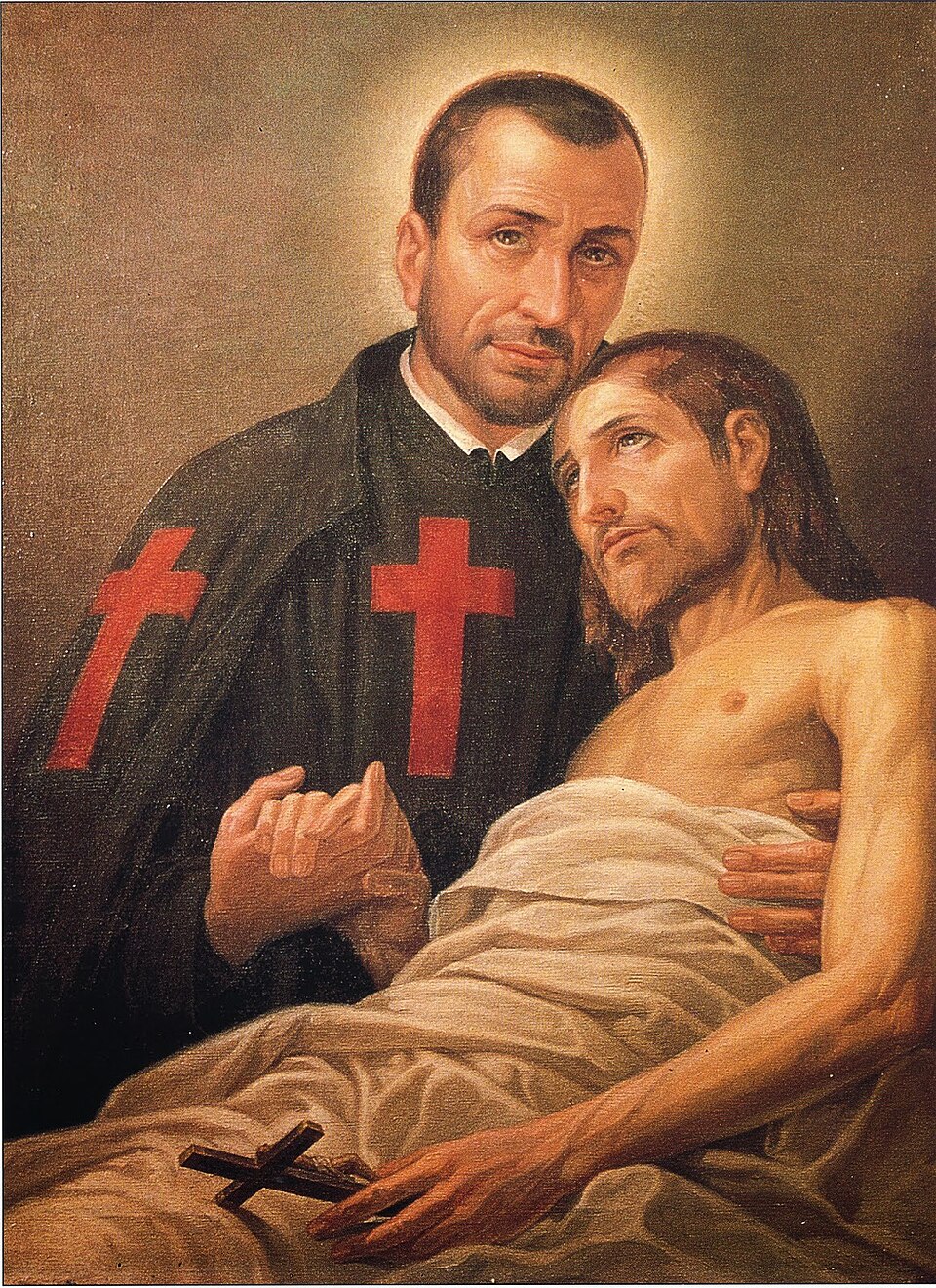
Inspired by his own experiences as a patient and witnessing the often-neglected plight of the infirm, Camillus felt a divine call to dedicate his life to their care. He initially sought to join the Capuchin friars but was prevented by his persistent leg ailment. Undeterred, he returned to San Giacomo, where he began to organize a group of devoted men, teaching them to serve the sick "with the tenderness of a mother for her only child." This small band of caregivers, distinguished by the red cross they wore on their habits, eventually formed the nucleus of the Ministers of the Infirm, or Camillians, a religious order officially recognized by Pope Sixtus V in 1586. Camillus and his followers established new standards of hygiene and compassionate care in an era when hospitals were often places of despair, revolutionizing the treatment of the sick and dying with their holistic approach that ministered to both body and soul.
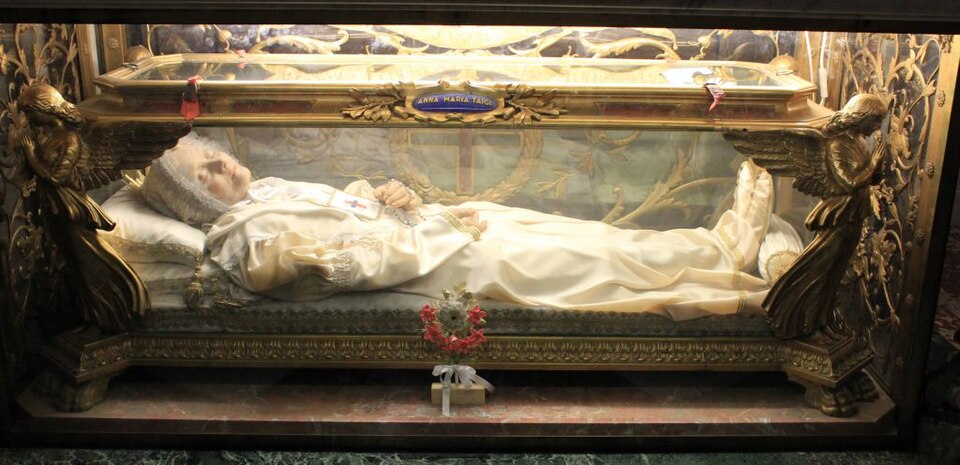
Saint Camillus passed into eternal life on July 14, 1614, in Rome, having spent his final years battling illness with the same fortitude and faith he had shown throughout his life. After his death, his body was exhumed, and to the astonishment of all, it was found to be incorrupt, a miraculous preservation that defied the natural processes of decay. Medical examinations conducted centuries later confirmed this extraordinary state of preservation, a testament to the profound sanctity of his life. Today, his incorrupt body rests in the Church of St. Mary Magdalene in Rome, a sacred pilgrimage site where the faithful can venerate this remarkable saint.
Canonized by Pope Benedict XIV in 1746, Saint Camillus de Lellis is revered as the patron saint of the sick, hospitals, nurses, and all who minister to the infirm. His enduring legacy is embodied in the Camillian Fathers and Sisters, who continue his mission of compassionate care in hospitals and healthcare facilities around the world, upholding his foundational principle that "the sick are the apple of God's eye." Pilgrims visiting his tomb in Rome are not only drawn by the miraculous incorruption of his remains but also by the powerful inspiration of a man who, despite his humble beginnings and personal struggles, transformed the landscape of healthcare through his unwavering love for Christ and His suffering brethren.
Discovery
The remarkable story of Saint Camillus de Lellis's incorruptibility begins not long after his passing. He died on July 14, 1614, in Rome, having dedicated his life to the sick and suffering, founding the Ministers of the Infirm, later known as the Camillians. His initial burial was in the Church of Santa Maria Maddalena, the mother church of his order. It was during the process of his beatification, a crucial step towards sainthood, that his remains were exhumed for canonical inspection. This first exhumation occurred in 1632, a mere eighteen years after his death. The anticipation among the Camillian fathers and the ecclesiastical authorities present must have been immense, as the sanctity of a life was often believed to be reflected in the state of the body after death. Upon opening the tomb, those gathered were met with an astonishing sight: the body of Camillus de Lellis was found to be supple and remarkably well-preserved, showing none of the expected signs of decomposition. His skin retained its natural color, and his limbs were flexible, as if he had only recently passed. The immediate reaction was one of profound awe and reverence, a clear sign to many that God had indeed blessed this man who had so selflessly served His most vulnerable children. This initial discovery fueled the fervor for his beatification and subsequently, his canonization.
Over the centuries, the body of Saint Camillus has been subject to several further examinations, each time confirming its extraordinary state of preservation. A significant re-exhumation took place in 1716, as part of the preparations for his canonization, which eventually occurred in 1746. Again, the ecclesiastical and medical examiners were astonished by the body's integrity. Accounts from this period describe the skin as still appearing natural, and the tissues as supple, defying the passage of nearly a century. These repeated inspections, documented by official Church notaries, served not only to verify the incorrupt state but also to record any changes, or rather, the lack thereof, in the body's condition. The consistency of these findings across multiple centuries has been a cornerstone of the belief in his miraculous incorruptibility. While some natural mummification can occur, the reported flexibility and lifelike appearance consistently noted in Camillus's case set it apart from mere desiccation.
The preservation journey of Saint Camillus de Lellis's body is a testament to both natural phenomenon and human veneration. Following the initial discoveries, the body was carefully prepared for public veneration. It was clothed in the habit of his order and placed in a glass-sided casket, allowing the faithful to gaze upon the preserved remains of their beloved saint. This casket is housed within a magnificent altar in the Church of Santa Maria Maddalena in Rome, the very church where he was first interred and where his order continues its work. The environment within the altar is carefully controlled to protect the body from degradation, though specific details of atmospheric control are not always publicly disclosed. The display is designed to inspire devotion, with the saint’s hands and face, in particular, being clearly visible. The body has remained in this location since its final placement, becoming a central point of pilgrimage for those seeking intercession for the sick and for healthcare workers, for whom he is a patron.
Among the most remarkable details associated with Saint Camillus de Lellis's incorrupt body is the consistent report of its flexibility and the lifelike appearance of the skin and tissues, even centuries after death. Unlike typical mummified remains, which are often rigid and brittle, accounts frequently emphasize the body's suppleness. While there are no widespread reports of phenomena such as a sweet fragrance, bleeding, or oil exuding, the sheer resistance to decay in a manner that transcends natural mummification processes is itself considered a profound marvel. The continuous preservation of his body, despite the passage of over 400 years, in a state that has consistently been described as remarkably intact and flexible, remains a powerful testament to his sanctity and a source of inspiration for countless faithful who visit his shrine in Rome.
Preservation
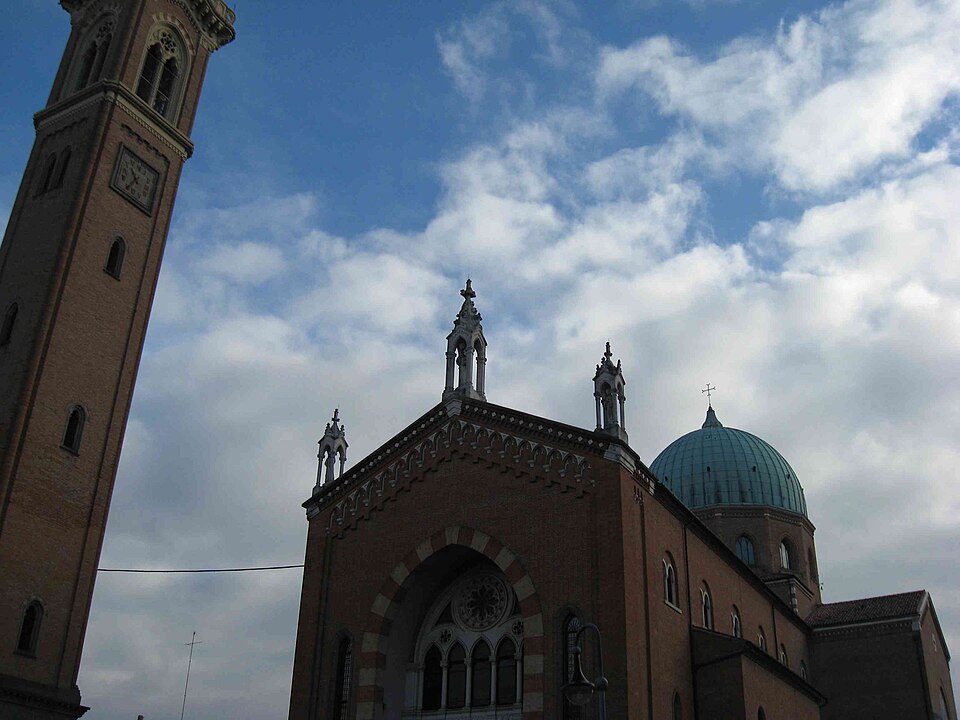
Body preserved in the Church of Santa Maria Maddalena, Rome.
Scientific Analysis
The phenomenon of preserved human remains, particularly those attributed to religious figures, often prompts rigorous scientific scrutiny. In the case of Saint Camillus de Lellis, whose body rests in the Church of Santa Maria Maddalena in Rome, Italy, claims of incorruption have led to various examinations over centuries. While detailed, publicly accessible records of formal, modern medical or scientific examinations are somewhat limited, historical accounts and ecclesiastical documentation provide insight into the assessments performed. For instance, following his death in 1614 and subsequent canonization in 1746, the body would have undergone inspections by ecclesiastical authorities, often involving physicians or anatomists of the era, to verify its state of preservation as part of the canonization process. These early examinations, though lacking the sophisticated tools of modern forensic science, would have noted the absence of typical putrefaction, the retention of tissue integrity, and the general appearance of the remains. More recently, anecdotal reports and some historical texts suggest that examinations have continued during various re-interments or veneration events. For example, during a transfer of relics or a significant anniversary, it is plausible that medical professionals, perhaps affiliated with local universities or hospitals in Rome, would have been present to document the condition. However, specific names of doctors, dates of examinations beyond the initial post-mortem inspections, and detailed institutional affiliations for these later assessments are not widely publicized in scientific literature. The primary findings consistently report a remarkable degree of preservation, particularly of soft tissues, defying the expected course of natural decomposition.
The scientific remarkable aspect of Saint Camillus de Lellis's preservation lies in its defiance of conventional post-mortem processes. Normal human decomposition involves a series of stages: autolysis, putrefaction, and ultimately skeletonization. Autolysis is the breakdown of cells and tissues by the body's own enzymes, while putrefaction is the decomposition of organic matter by microorganisms, leading to liquefaction, gas formation, and discoloration. Environmental factors such as temperature, humidity, and the presence of oxygen significantly accelerate these processes. Given that Saint Camillus died in 1614, and was not subjected to modern embalming techniques, his body should have undergone complete skeletonization centuries ago. The climate of Rome, characterized by warm, humid summers and mild winters, is generally conducive to decomposition, not preservation. Burial conditions, typically in a coffin within a crypt or church, would usually provide an environment for microbial activity. The absence of significant decay, particularly of soft tissues, challenges these expected outcomes. There is no historical record of deliberate embalming or sophisticated preservation treatments being applied to his body at the time of death that would account for such long-term preservation. While some historical figures were embalmed, the methods of the 17th century were rudimentary compared to modern techniques and would not typically result in centuries of soft tissue integrity without further intervention. This lack of documented artificial preservation, coupled with environmental conditions generally favoring decomposition, presents a significant scientific enigma.
Various natural explanations are often proposed for cases of apparent incorruption, such as saponification (adipocere formation), mummification, or exceptional environmental conditions. Saponification, the conversion of body fats into a waxy, soap-like substance called adipocere, can preserve soft tissues, particularly in moist, anaerobic environments. However, adipocere typically results in a distinct appearance and texture, often described as greasy or crumbly, which may not align with descriptions of Saint Camillus's body. Mummification, either natural (due to extreme dryness or cold) or artificial, can also preserve remains, but again, the Roman climate is not inherently conducive to natural mummification, and artificial mummification was not a standard practice for religious figures in this period. While crypts can sometimes offer stable microclimates, it is rare for them to halt decomposition entirely for centuries without other contributing factors. Skeptics often attribute such cases to a combination of these natural processes, perhaps an unusually dry or cool crypt environment, or even misidentification of the preserved state (e.g., mistaking a mummified or adipocere-laden body for a miraculously preserved one). However, the specific details of Saint Camillus's case, particularly the reported long-term preservation of soft tissues without clear evidence of these natural processes or artificial intervention, leave a gap in purely scientific explanations. The absence of comprehensive, publicly available forensic reports detailing the specific chemical and histological analysis of the tissues makes it difficult to definitively apply or dismiss these natural hypotheses.
From a modern scientific perspective, the case of Saint Camillus de Lellis represents an intriguing subject for advanced forensic investigation. Such cases contribute to the broader scientific study of taphonomy, the processes that affect an organism after death, and the various pathways of human decomposition and preservation. Modern techniques, such as non-invasive CT scans or MRI, could provide detailed internal anatomical information without disturbing the remains. Carbon dating could precisely determine the age of the tissues, while advanced tissue analysis, including histology and immunohistochemistry, could identify the specific cellular and molecular structures present, potentially revealing the underlying mechanisms of preservation. For instance, identifying the presence and type of lipids, proteins, and DNA could shed light on whether adipocere formation, natural mummification, or an unknown mechanism is at play. The absence of such detailed modern analyses means that many questions remain unanswered. While respecting the religious significance of such relics, a thorough scientific examination could provide invaluable data to the fields of forensic anthropology, taphonomy, and even microbiology, potentially uncovering novel mechanisms of tissue preservation or challenging existing understandings of decomposition. Without these modern interventions, the phenomenon of Saint Camillus's incorruption continues to exist at the intersection of faith and scientific inquiry, a testament to the enduring mysteries of the human body after death.
Spiritual Significance
The phenomenon of incorruption, particularly as exemplified by figures like Saint Camillus de Lellis, holds a profound theological significance within Catholic doctrine, offering a tangible testament to the sanctity of the human body and the promise of future resurrection. For centuries, the Church has regarded incorruptibility not as a mere biological anomaly, but as a divine sign, a miraculous preservation that underscores the extraordinary grace dwelling within certain individuals. This miraculous state resonates deeply with Saint Paul’s teaching in 1 Corinthians 6:19, where he declares the body to be a temple of the Holy Spirit. In the case of Saint Camillus, whose life was utterly dedicated to caring for the physical bodies of the sick, his incorrupt remains serve as a powerful visual sermon, proclaiming that the body, even in its earthly fragility and suffering, is destined for glory and is worthy of profound respect. It foreshadows the ultimate triumph over death promised in the resurrection of the body, reminding us that our physical existence is not merely transient but is an integral part of our eternal destiny. The Church, in acknowledging and venerating such incorrupt saints, reaffirms the interconnectedness of the communion of saints, bridging the gap between the Church Militant on earth and the Church Triumphant in heaven, offering a visible link to those who have already attained their heavenly reward.
Saint Camillus de Lellis possessed a unique charism, a singular spiritual gift that manifested as an extraordinary, almost revolutionary, compassion for the sick. His life, initially marked by gambling and military exploits, underwent a profound conversion, transforming him into a zealous servant of Christ through the suffering. His heroic virtues were not merely practiced but embodied in a radical way. Humility, once alien to his proud soldier's spirit, became the bedrock of his service as he knelt to tend to the most repulsive wounds. Charity, the very essence of his mission, extended beyond mere almsgiving to a complete self-giving, establishing an order solely dedicated to the care of the infirm. His obedience was to the divine call to alleviate suffering, even when it meant defying societal norms or personal comfort. While not a mystic in the traditional contemplative sense, his deep spiritual connection was forged in the crucible of suffering, finding Christ in the faces of the dying. His poverty was not merely material but an emptying of self, pouring out his life for others. He founded the Ministers of the Sick, or Camillians, a new spiritual tradition that elevated nursing from a menial task to a sacred ministry, emphasizing holistic care for both body and soul, a revolutionary concept for his time.
Devotion to Saint Camillus has flourished since his canonization in 1746, deeply rooted in the gratitude of countless individuals whose lives have been touched by his intercession and the enduring legacy of his order. As the patron of the sick, nurses, hospitals, and those who care for the ill, his veneration is particularly poignant in times of illness and suffering. Pilgrims from across the globe journey to the Church of Santa Maria Maddalena in Rome, where his incorrupt body rests, to seek his powerful intercession. The experience of visiting his shrine is often described as profoundly moving, a tangible encounter with holiness. Many come with specific intentions for healing, offering prayers and novenas, particularly the Novena to Saint Camillus, which invokes his aid in times of sickness and distress. The presence of his preserved remains serves as a powerful focal point for prayer, a physical reminder of his enduring commitment to the suffering and his continued spiritual presence among the faithful. This tangible connection allows pilgrims to feel closer to the saint, fostering a deeper sense of communion and hope.
Miracles attributed to Saint Camillus's intercession are numerous and span centuries, encompassing documented healings, conversions, and answered prayers. From the earliest days of his ministry, tales circulated of miraculous recoveries among those he tended, often defying medical explanation. These accounts continued after his death, with petitions to him resulting in extraordinary cures from various ailments. The incorrupt body itself has been a source of profound spiritual consolation for the faithful, serving as a powerful symbol of God's enduring love and the triumph of grace over corruption. Many who visit his shrine report a deep sense of peace and renewed faith, finding solace in the visible sign of his sanctity. The very preservation of his remains is considered a continuous miracle, an ongoing testament to his extraordinary holiness and the divine favor bestowed upon him. This physical manifestation of God's power reinforces belief in the communion of saints and the efficacy of their intercession, offering hope and encouragement to those facing their own struggles with illness and suffering.
Saint Camillus de Lellis offers an enduring and profoundly relevant message for contemporary Catholics and seekers alike, challenging the prevailing materialism and secularism of our age. In a world often obsessed with physical perfection and the avoidance of suffering, his life stands as a powerful counter-narrative, demonstrating the profound spiritual value found in compassionate service to the sick and the vulnerable. His example encourages us to see Christ in the suffering, reminding us that true dignity lies not in worldly success or physical prowess, but in love and self-sacrifice. For modern believers, he teaches that authentic faith is not merely intellectual assent but active engagement with the world's pain, transforming it through acts of mercy. His incorruption, a tangible bridge between the visible and invisible worlds, serves as a powerful reminder of the ultimate destiny of the human body and soul, offering a glimpse into the glory that awaits those who live lives of heroic virtue. It calls us to look beyond the transient and embrace the eternal, finding meaning and purpose in lives dedicated to God and neighbor, particularly those most in need.
AI summary
A plain-language overview generated from this page's source material. Always verify with primary sources.