Biography
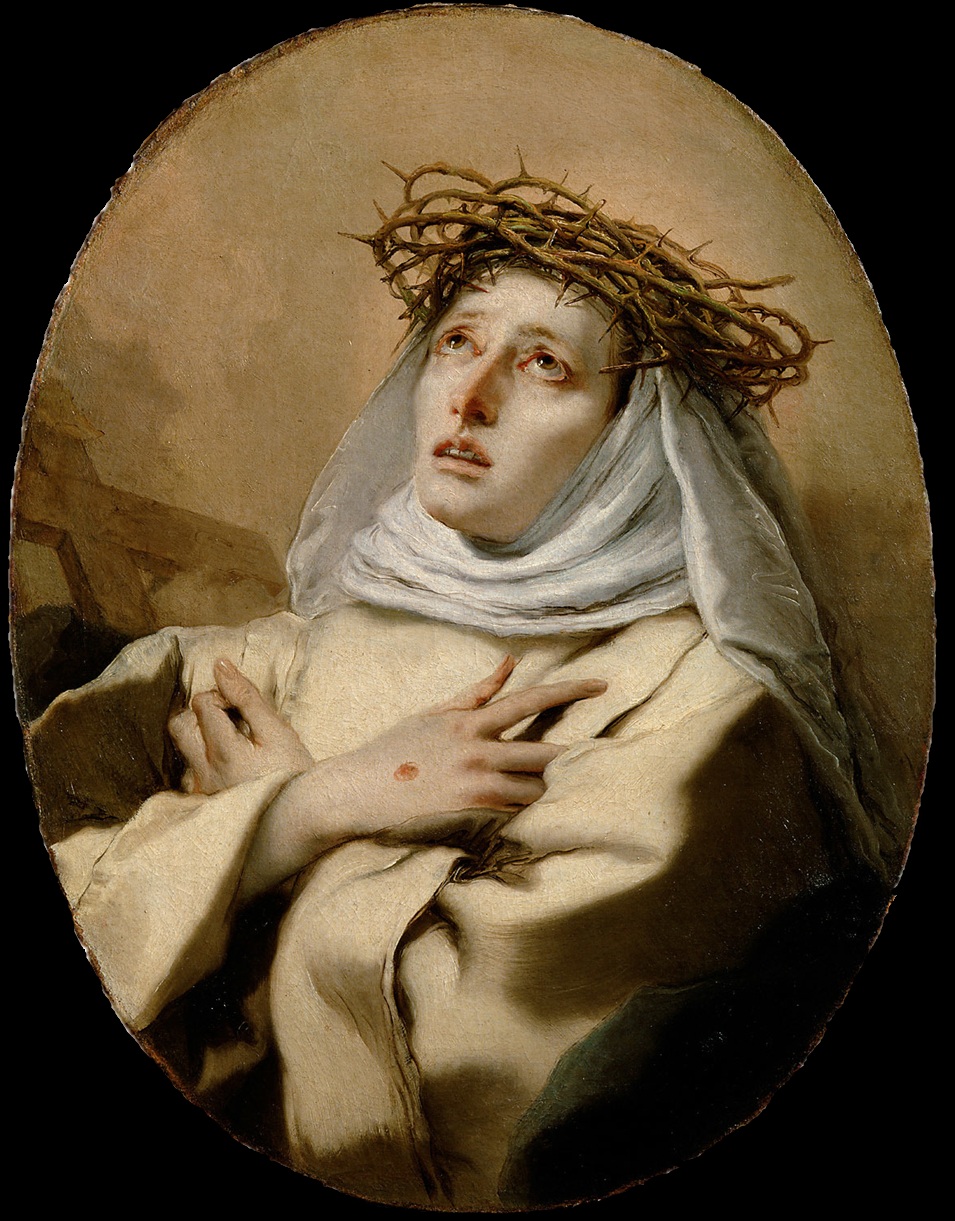
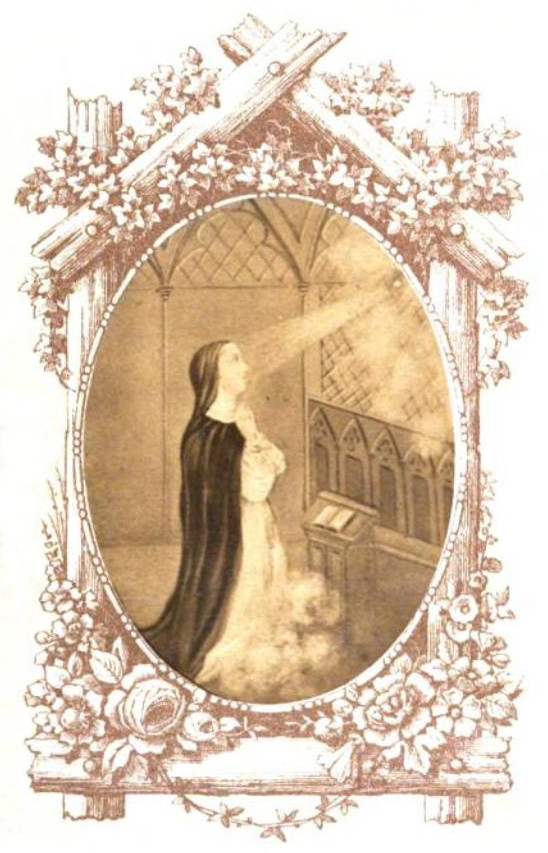
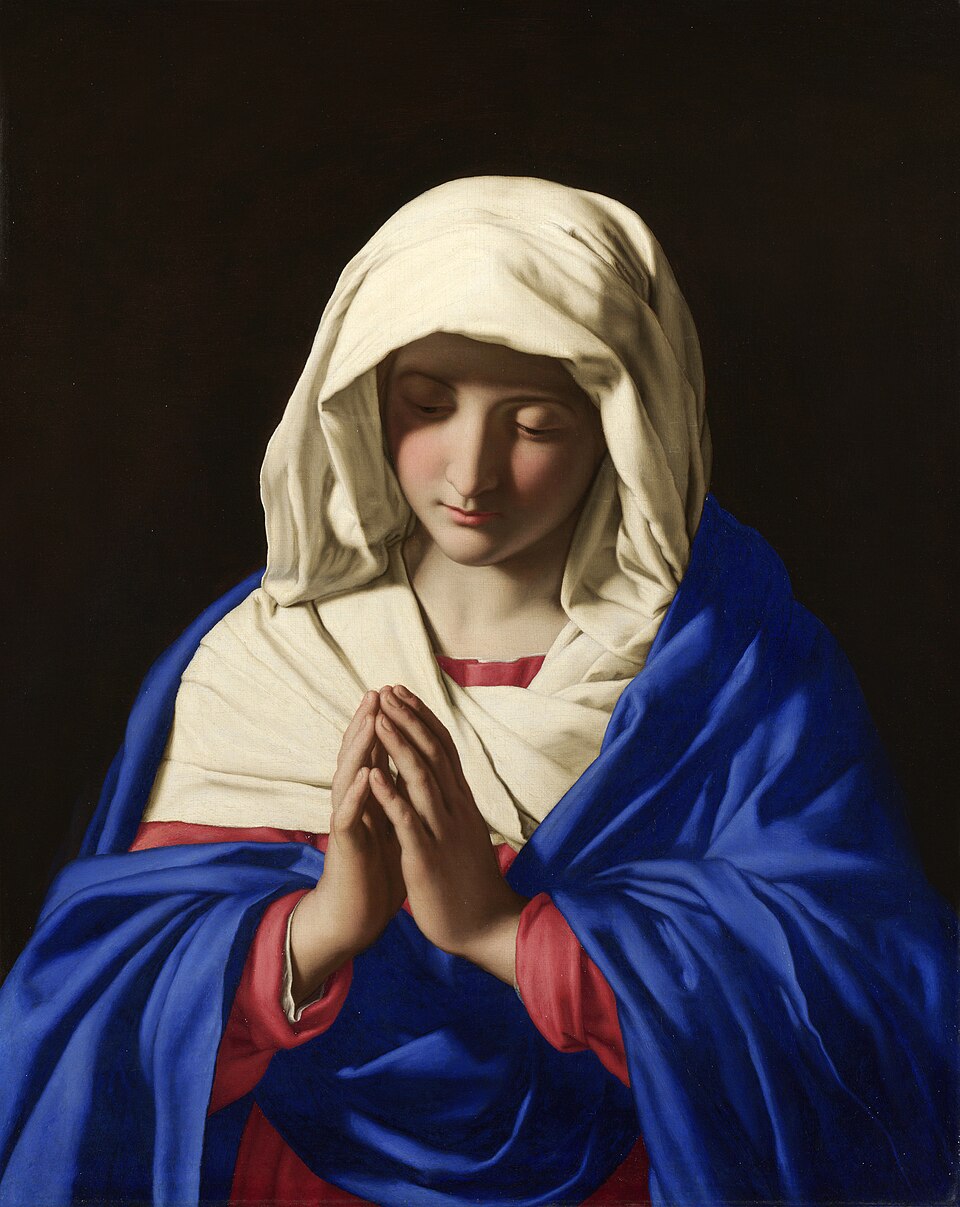
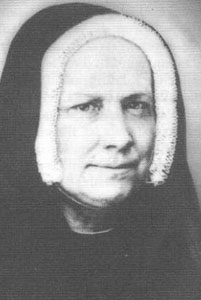
Saint Catherine of Siena, born Caterina di Giacomo di Benincasa in 1347, entered a world rife with plague, political upheaval, and spiritual disquiet. The twenty-third of twenty-five children to her dyer father, Giacomo, and mother, Lapa, Catherine’s early life was marked by profound spiritual experiences. From the tender age of six, she began to experience visions of Christ, which intensified as she matured, leading her to vow perpetual virginity. Despite her parents' desire for her to marry, she steadfastly refused, even cutting off her hair to discourage suitors. At 16, she joined the Third Order of St. Dominic, known as the Mantellate, a group of pious women who lived in the world but followed a monastic rule. Unlike her fellow tertiaries, Catherine lived an austere life of prayer and penance within her family home, dedicating herself to intense solitude and communion with God, preparing for the extraordinary public ministry that awaited her.
Catherine’s vocation blossomed into a powerful and influential ministry that transcended the confines of her contemplative life. Guided by divine inspiration, she emerged from her solitude to serve the poor and sick, particularly those afflicted by the plague, demonstrating immense charity and courage. Her extraordinary spiritual gifts, including visions, ecstasies, and the stigmata (though visible only to herself), drew many disciples, forming a vibrant spiritual family around her. Most notably, Catherine became a formidable voice for Church reform and peace. She fearlessly corresponded with popes, kings, and political leaders, urging them to end conflicts and to embrace justice. Her most significant contribution was her tireless advocacy for the return of the papacy from Avignon to Rome, a mission she undertook with remarkable diplomatic skill and spiritual authority, eventually persuading Pope Gregory XI to make the momentous journey in 1377. Her spiritual masterpiece, "The Dialogue of Divine Providence," dictated during her ecstasies, remains a profound work of mystical theology.
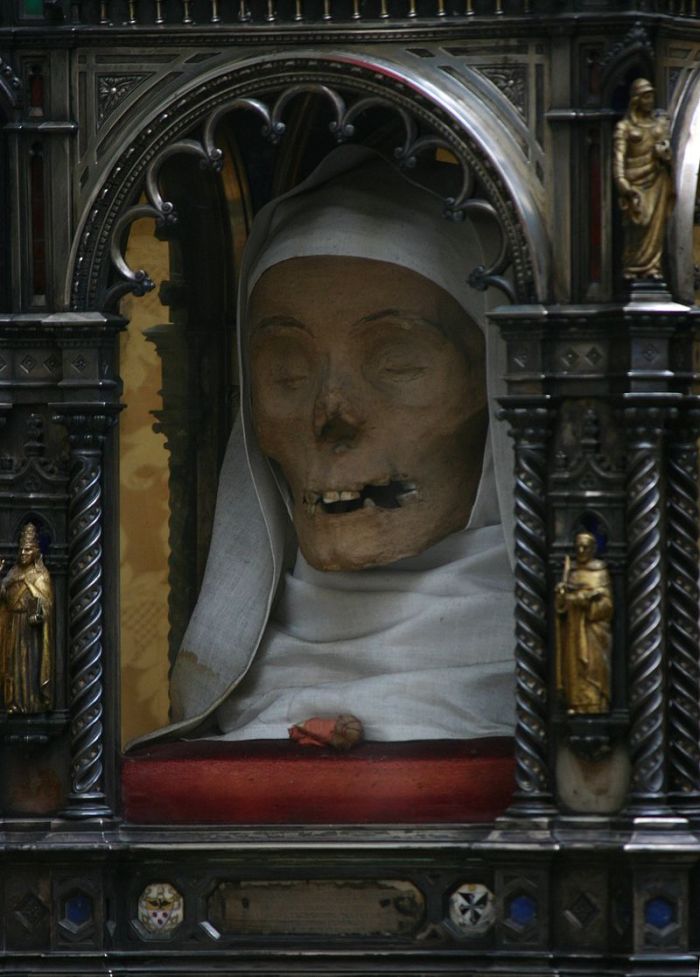
Catherine's life of intense prayer, penance, and tireless service culminated in her death in Rome in 1380, at the young age of 33, exhausted by her labors for the Church. So revered was she that her followers desired to bring her body back to her beloved Siena. Fearing that the Roman authorities would prevent the removal of her entire body, they ingeniously transported her head, concealing it in a sack. Upon reaching Siena, the head was miraculously discovered to be incorrupt, a testament to her sanctity. Her body, meanwhile, remains interred beneath the high altar of the Basilica of Santa Maria sopra Minerva in Rome. Today, pilgrims can venerate her remarkably preserved head, still displaying a serene countenance, enshrined in the Basilica of San Domenico in Siena, a powerful visual reminder of her enduring presence.
The lasting legacy of Saint Catherine of Siena is immense and multifaceted. Canonized in 1461 by Pope Pius II, she was later declared a Doctor of the Church in 1970 by Pope Paul VI, one of only four women to hold this distinguished title, recognizing her profound theological insights and spiritual wisdom. Her feast day is celebrated on April 29, and she is revered as a patroness of Italy and Europe. Her partial incorruption, particularly the preservation of her head, is a source of deep veneration and inspiration, symbolizing the enduring truth and spiritual vitality of her teachings. Pilgrims visiting Siena can experience a tangible connection to this extraordinary saint, contemplating her incorrupt head and reflecting on her courageous life, her unwavering devotion to Christ, and her pivotal role in shaping the history of the Catholic Church.
Discovery
The extraordinary story of Saint Catherine of Siena’s incorruptibility begins not with a peaceful repose, but with a clandestine operation born of devotion and geopolitical maneuvering. Following her death in Rome on April 29, 1380, Catherine was initially interred in the Basilica of Santa Maria sopra Minerva. However, her beloved hometown of Siena, ever proud of its spiritual daughter, yearned for her sacred remains. The political climate of the time, marked by tensions between Rome and Siena, made a direct request for the entire body unlikely to succeed. Thus, in 1381, a year after her passing, a bold plan was conceived. Raymond of Capua, Catherine’s confessor and biographer, along with other devoted followers, undertook the solemn task of exhuming her body. Their intention was to transport her entire remains back to Siena. However, fearing discovery and the potential for the Roman authorities to reclaim the body, they made a difficult decision. In a moment of profound reverence and perhaps desperation, they separated Catherine's head from her body. The head, considered the most precious relic due to its association with her profound intellect and mystical visions, was then secretly conveyed to Siena. The rest of her body, though initially left in Rome, would later be moved to its current resting place in Santa Maria sopra Minerva. The immediate reaction to the arrival of her head in Siena was one of immense joy and veneration, a testament to the deep love and respect the Sienese held for their saint.
Subsequent examinations of Saint Catherine’s head have consistently affirmed its remarkable state of preservation over the centuries. The initial exhumation in 1381, though partial, revealed a body that had defied the natural processes of decay, a phenomenon that immediately underscored her sanctity. The head, upon its arrival in Siena, was found to be remarkably intact, with discernible features, a testament to its incorruptibility. This extraordinary preservation was noted by countless witnesses throughout the generations. Over the centuries, the head has been periodically examined, always confirming its miraculous state. While specific dates for all examinations are not meticulously recorded from the earliest periods, the consistent tradition and veneration surrounding the relic attest to its enduring incorruptibility. Unlike some incorruptibles whose features might soften or change slightly over time, Saint Catherine’s head has maintained a striking fidelity to its original appearance, a powerful visual reminder of her sanctity for over six hundred years.
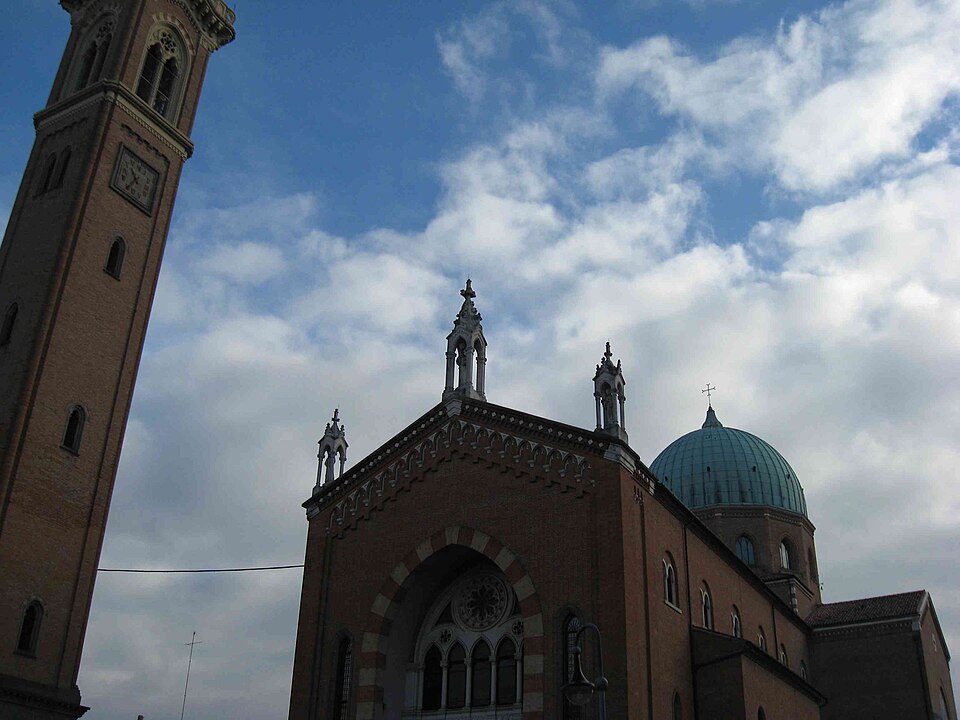
The preservation journey of Saint Catherine’s head is one of careful veneration and public display. Upon its arrival in Siena, the head was initially housed in the Basilica of San Domenico, a Dominican church where Catherine herself had spent much of her spiritual life. To ensure its protection and allow for public veneration, the head was eventually encased within a magnificent gilded reliquary. This reliquary, often adorned with precious stones and intricate craftsmanship, serves not only as a protective vessel but also as a testament to the reverence accorded to the relic. The reliquary containing Saint Catherine’s head is prominently displayed in the Basilica of San Domenico, specifically within the Chapel of St. Catherine, allowing pilgrims and visitors from around the world to gaze upon the preserved features of this Doctor of the Church. The rest of her body, as mentioned, remains in Rome, interred beneath the high altar of the Basilica of Santa Maria sopra Minerva, also within a protective sarcophagus, though not displayed in the same manner as her head.
While the primary miracle associated with Saint Catherine’s remains is the incorruptibility of her head, there are no widespread, officially documented accounts of other unusual phenomena such as sweet fragrance, flexibility, or exuding oil, which are sometimes attributed to other incorruptible saints. The profound and enduring nature of her head’s preservation, defying the natural laws of decomposition for over six centuries, stands as the central and most remarkable detail. This singular phenomenon has been consistently observed and attested to by countless individuals, from the clergy responsible for its care to the throngs of pilgrims who have knelt before it. The very act of its clandestine transport and the subsequent veneration of this preserved relic underscore the deep spiritual significance attributed to her incorruptibility, serving as a perpetual testament to her sanctity and her powerful intercession.
Preservation
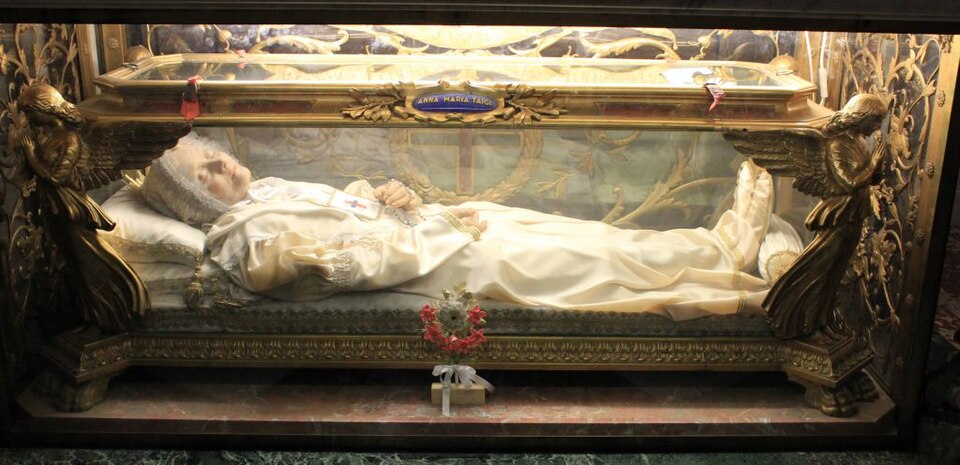
Head preserved in the Basilica of San Domenico, Siena. Body in Santa Maria sopra Minerva, Rome.
Scientific Analysis
The partial preservation of the remains of Saint Catherine of Siena, specifically her head, for over 640 years presents a compelling subject for scientific inquiry. While comprehensive, modern medical and scientific examinations with detailed published findings are notably scarce, anecdotal accounts and historical observations provide some insight. Records indicate that her body was initially interred in the Basilica of Santa Maria sopra Minerva in Rome following her death in 1380. However, due to the fervent desire of the Sienese people to possess her remains, her head was purportedly separated from her body and brought back to Siena in 1381, where it has since been housed in a reliquary in the Basilica of San Domenico. There are no widely documented formal medical examinations by independent forensic pathologists or conservators using contemporary scientific methods. Historical accounts often refer to the head's "incorrupt" state, but these are generally descriptive observations rather than systematic scientific analyses. Without specific dates, names of examiners, or institutional affiliations for formal studies, the scientific community relies on historical descriptions, which, while valuable for context, lack the rigorous methodology of modern forensic science. The absence of such detailed examinations leaves a significant gap in understanding the precise nature and extent of the preservation.
The scientific mystery surrounding the preserved head of Saint Catherine of Siena lies in its apparent defiance of normal decomposition processes, particularly given the historical context and environmental conditions. Human decomposition is a complex biological process driven by autolysis (self-digestion by cellular enzymes) and putrefaction (bacterial activity), typically leading to significant tissue degradation within weeks or months, especially in the absence of deliberate preservation techniques. The climate of Siena, while not tropical, is generally temperate, with humidity and temperature fluctuations that would normally accelerate decay. Burial conditions in the 14th century were rudimentary compared to modern practices, typically involving interment directly into soil or simple tombs, which would expose remains to microorganisms and insects. The historical narrative does not suggest any sophisticated embalming or preservation treatments were applied to Catherine's body at the time of her death. While some historical figures were embalmed, the methods were often crude and not consistently effective for long-term preservation. The continued preservation of soft tissues, particularly skin and facial features, for centuries without obvious signs of advanced decay or mummification through desiccation, challenges conventional understanding of post-mortem changes. This raises questions about whether unique environmental factors within the reliquary or an unknown natural process contributed to this remarkable state.
Several natural explanations have been proposed for instances of unusual body preservation, such as saponification (adipocere formation) or natural mummification. Saponification occurs when fatty tissues transform into a waxy, soap-like substance (adipocere) in anaerobic, moist environments, often in burial conditions with clay soils. This process can preserve the general form of the body but typically results in a distinct waxy texture and color, which is not consistently described for Catherine's head. Natural mummification, conversely, occurs in extremely dry or cold environments where desiccation prevents microbial growth, leading to the preservation of tissues through dehydration. The descriptions of Catherine's head do not consistently align with the typical appearance of a naturally mummified specimen, which often involves significant shrinkage and darkening of tissues. Skeptics often attribute such cases to a combination of favorable microclimates, limited exposure to oxygen, or the gradual desiccation of tissues over centuries, possibly aided by the specific conditions within the reliquary. However, without direct scientific analysis, these remain speculative. The lack of detailed historical records regarding the initial post-mortem state, any immediate preservation attempts, or the precise environmental conditions within the reliquary over centuries makes it difficult to definitively apply or refute these natural explanations. The persistent preservation of soft tissues without clear evidence of extensive mummification or saponification remains a subject of scientific curiosity.
From a modern scientific perspective, the case of Saint Catherine of Siena's preserved head represents an intriguing opportunity for interdisciplinary study, though such studies have not been widely reported. Modern techniques such as computed tomography (CT) scans could provide non-invasive insights into the internal structure of the head, revealing the extent of soft tissue preservation, bone integrity, and any signs of past interventions or natural processes. Carbon dating could precisely determine the age of the tissues, confirming their authenticity. Advanced tissue analysis, including histological examination of microscopic samples (if ethically permitted and minimally invasive), could identify the cellular and molecular mechanisms behind the preservation, distinguishing between natural mummification, adipocere formation, or other unknown processes. Microbiological analysis could identify any dormant or active microbial communities that might have played a role. These techniques could potentially differentiate between natural phenomena and any historical, undocumented preservation efforts. The broader scientific study of body preservation benefits from examining such cases, as they can reveal novel insights into taphonomy – the study of decomposition and fossilization – and the resilience of biological tissues under varying conditions. However, without the application of these modern scientific tools, many fundamental questions about the precise nature of the preservation, its contributing factors, and its implications for forensic science and taphonomy remain unanswered, leaving the phenomenon largely within the realm of historical observation and spiritual interpretation.
Spiritual Significance
The partial incorruption of Saint Catherine of Siena, particularly the miraculous preservation of her head, stands as a profound theological statement within the Catholic tradition, speaking volumes about the sanctity of the human body and the enduring power of divine grace. In Catholic theology, the body is not merely a vessel for the soul but is itself a temple of the Holy Spirit, destined for resurrection and glorification. Saint Paul’s exhortation in 1 Corinthians 6:19 reminds us that our bodies are bought with a price and are meant to glorify God. The incorruption of saints, therefore, is often seen as a prefigurement of the resurrection of the body, a tangible sign that God honors those who have honored Him with their lives, even in their physical remains. For Saint Catherine, a Doctor of the Church whose intellectual and spiritual contributions were immense, the preservation of her head, the very seat of her profound wisdom and mystical insight, carries particular symbolic weight. It signifies not only the integrity of her person but also the divine approval of her teachings and her unwavering devotion. The Church interprets such phenomena not as mere biological anomalies but as supernatural affirmations of heroic virtue, drawing a direct line between a life lived in radical conformity to Christ and a body miraculously preserved from the natural processes of decay, thereby strengthening the communion of saints by offering a visible link to those who now dwell in glory.
Saint Catherine’s life was a testament to a unique charism of profound spiritual intimacy with Christ, coupled with an unyielding commitment to justice and truth in the temporal sphere. Her heroic virtues were manifold, perhaps most strikingly her mystical union with God, which manifested in visions, ecstasies, and the reception of the stigmata, albeit invisibly. This deep interior life fueled an extraordinary external ministry. She practiced radical humility, despite her growing influence, always attributing her wisdom and strength to God. Her charity extended beyond personal acts of kindness to include tireless service to the poor and sick, even during the devastating plagues of her era. Her obedience was to God’s will, even when it led her to challenge powerful figures, including popes, for the good of the Church. She was a fierce advocate for peace and unity, bravely intervening in political conflicts and tirelessly working to bring the papacy back to Rome from Avignon. Her spiritual tradition is deeply rooted in Dominican spirituality, emphasizing contemplation and action, truth, and preaching. She contributed significantly to mystical theology through her seminal work, “The Dialogue of Divine Providence,” which remains a cornerstone of Christian spirituality, revealing a profound understanding of God’s love and mercy.
Devotion to Saint Catherine of Siena has flourished over the centuries, cementing her place as one of the most beloved and influential figures in Christian history. Her canonization in 1461, a relatively swift process for the time, speaks to the immediate and widespread recognition of her sanctity. She is venerated as one of the patron saints of Italy and Europe, a testament to her far-reaching impact on both ecclesiastical and political affairs. Pilgrims from across the globe journey to the Basilica of San Domenico in Siena, where her head is enshrined, to pay homage and seek her intercession. The experience of visiting her shrine is often described as deeply moving, a tangible encounter with a saint whose spiritual power continues to resonate. Prayers and novenas to Saint Catherine are popular, particularly for those seeking guidance, courage in the face of adversity, or intercession for peace and unity. Her feast day on April 29th is celebrated with solemnity, marked by special liturgies and devotions that recall her extraordinary life and enduring legacy. The veneration of her incorrupt relic serves as a powerful focal point for prayer, drawing believers into a deeper communion with the Church triumphant.
Miracles attributed to Saint Catherine’s intercession are numerous and span centuries, reflecting her continued role as a powerful advocate in heaven. Documented healings, conversions, and answered prayers have been reported by those who have sought her aid, often in desperate circumstances. Her reputation for intercessory power was established even during her lifetime, as people flocked to her seeking spiritual and physical healing. The incorrupt body itself, particularly her preserved head, has been a source of immense spiritual consolation for the faithful. It serves as a visible reminder of God’s power to transcend natural laws and to honor His saints. For many, the sight of her preserved remains reinforces their faith in the resurrection and the eternal life promised to believers. These miracles, both those attributed to her direct intercession and the ongoing miracle of her incorruption, underscore the Catholic belief in the communion of saints – that those who have passed into glory remain actively engaged in the life of the Church on earth, offering their prayers and assistance to those still on their pilgrim journey.
Saint Catherine of Siena’s enduring message holds profound relevance for contemporary Catholics and seekers alike, offering a compelling counter-narrative to the prevailing materialism and secularism of our age. Her life challenges us to prioritize spiritual realities over temporal concerns, demonstrating that true fulfillment is found not in worldly possessions or power, but in an unreserved love for God and neighbor. In a world often characterized by division and cynicism, her unwavering commitment to peace, unity, and truth serves as a powerful inspiration. She teaches us that even in times of great upheaval, one person, deeply rooted in prayer and guided by divine grace, can effect profound change. For modern believers, her example of courageous faith, intellectual rigor, and compassionate action provides a blueprint for living an authentic Christian life. Her incorruption, a tangible bridge between the visible and invisible worlds, reminds us that eternity is not a distant abstraction but a present reality, and that the saints are not merely historical figures but active participants in our spiritual journey, offering a constant invitation to draw closer to God.
AI summary
A plain-language overview generated from this page's source material. Always verify with primary sources.