Biography
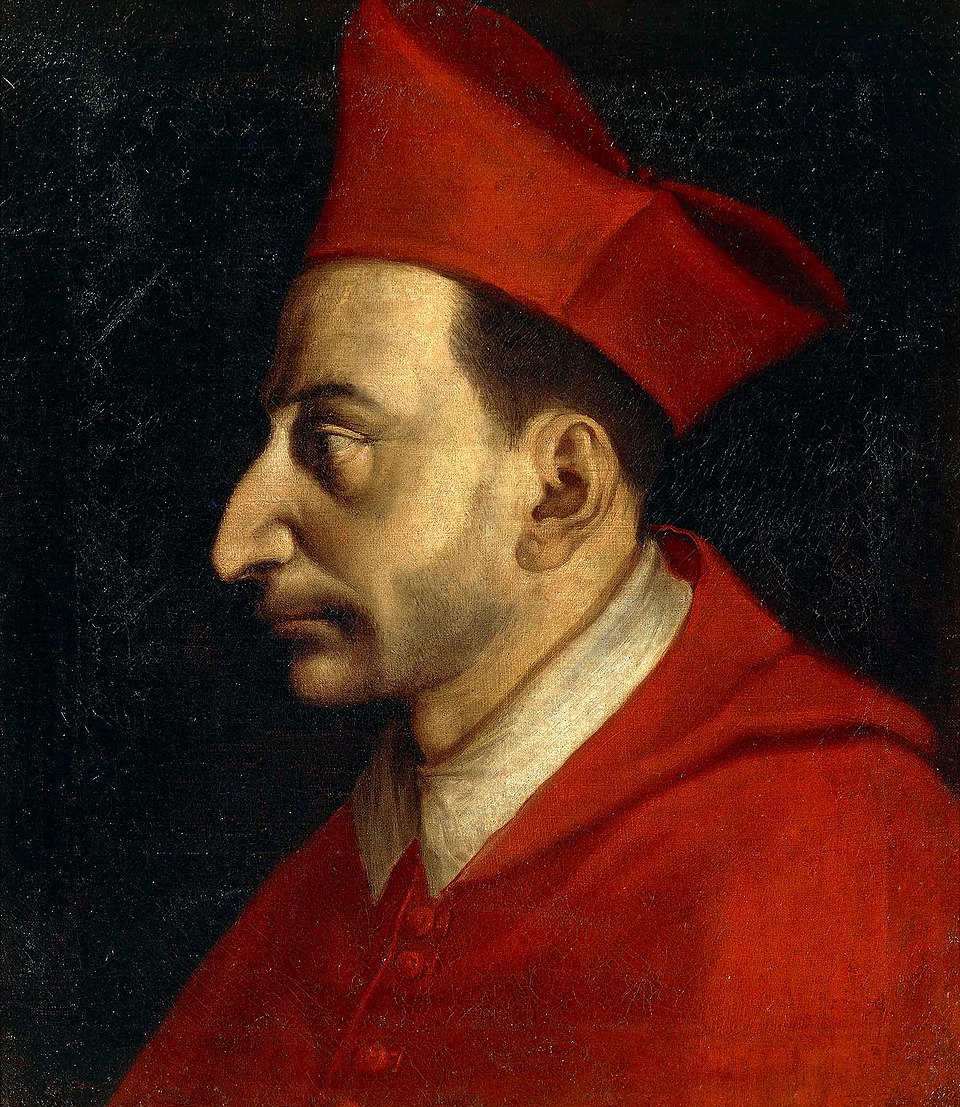
Saint Charles Borromeo, a towering figure of the Counter-Reformation, was born in 1538 into a powerful and influential Italian noble family, the House of Borromeo, in Arona, Italy. His mother, Margherita de' Medici, was the sister of Pope Pius IV, a connection that would profoundly shape his future. From a young age, Charles displayed a profound piety and intellectual brilliance, pursuing studies in civil and canon law at the University of Pavia. Though destined for a life of privilege, he felt a strong call to serve God, a call that intensified after the death of his elder brother, Federico. This personal tragedy, coupled with the moral decay prevalent in the Church at the time, spurred him towards a life of fervent reform and dedication.
Upon his uncle's election as Pope Pius IV in 1559, Charles was swiftly elevated to cardinal-deacon and administrator of the Archdiocese of Milan, despite being only 22 years old and not yet ordained. He played a pivotal role in the final sessions of the Council of Trent, diligently working to implement its decrees and restore discipline and doctrine within the Church. As Archbishop of Milan, he embarked on a tireless and rigorous program of reform, establishing seminaries for the proper formation of priests, founding schools for the poor, and tirelessly visiting parishes, often on foot, to assess and address the spiritual needs of his flock. His personal austerity, unwavering commitment to pastoral care, and courageous stand against corruption earned him both admiration and opposition, yet he remained steadfast in his mission to renew the Church. He was also instrumental in caring for the sick during the devastating plague of 1576, personally tending to the dying and organizing relief efforts, even when others fled the city.
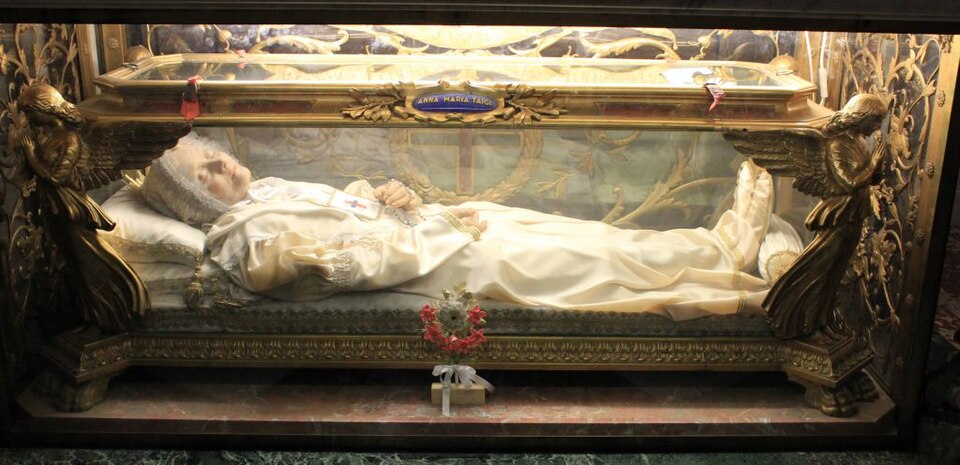
Saint Charles Borromeo died on November 3, 1584, at the age of 46, exhausted by his relentless labors. His body was interred in the crypt of the Milan Cathedral, where it remains to this day. Upon exhumation, his body was found to be remarkably preserved, a phenomenon that quickly became a source of veneration and inspiration for the faithful. Today, pilgrims can visit his tomb in the crypt of the Duomo di Milano, where his incorrupt body, clad in pontifical vestments, is encased in a crystal coffin, allowing for veneration. Though his skin has darkened over centuries, the preservation of his features is a powerful testament to his sanctity.
His legacy is immense and enduring. Canonized by Pope Paul V in 1610, Saint Charles Borromeo is revered as a model bishop, a patron of seminarians, and a champion of Catholic reform. His efforts to implement the decrees of the Council of Trent laid the groundwork for a revitalized Church, influencing countless bishops and priests for centuries to come. His commitment to pastoral care, his emphasis on catechesis, and his personal example of holiness continue to inspire Catholics worldwide. Pilgrims who visit his tomb are not only presented with a tangible sign of God's grace but are also reminded of the profound impact one dedicated individual can have on the spiritual landscape of the Church.
Discovery
Upon his death in 1584, the revered Saint Charles Borromeo, a titan of the Counter-Reformation, was laid to rest in the crypt of the Milan Cathedral. The initial burial was a relatively simple affair, reflecting the saint’s personal humility despite his exalted position. However, the subsequent exhumation and the discovery of his remarkably preserved remains would solidify his reputation for sanctity and contribute to the enduring Catholic tradition of incorruptibility. The first formal examination of his body occurred in 1606, twenty-two years after his passing, during the process of his beatification. This event was meticulously documented and attended by numerous ecclesiastical dignitaries, medical professionals, and civic leaders. The crypt was opened, and the body was carefully raised from its tomb. Witnesses reported a profound sense of awe and reverence as they beheld the saint. Despite the passage of decades, his body was found to be remarkably intact, exhibiting none of the expected signs of advanced decomposition. His skin, though darkened, still adhered to his bones, and his features were recognizable. This initial discovery sent ripples of wonder throughout the Catholic world, providing a tangible sign of divine favor and reinforcing the belief in the sanctity of Saint Charles. The immediate reaction was one of profound veneration, further fueling the momentum towards his canonization.
The state of Saint Charles Borromeo’s body has been a subject of continuous observation and documentation throughout the centuries, with subsequent examinations offering further insights into its remarkable preservation. In 1627, a more extensive examination was conducted, revealing that while some natural desiccation had occurred, the overall integrity of the body remained astonishing. The internal organs, though shrunken, were still discernible, and the flexibility of some joints was noted, a detail often associated with incorruptibility. These findings were meticulously recorded and served to bolster the claims of miraculous preservation. Over the years, the body has been periodically re-examined, each time confirming its extraordinary state, albeit with a gradual and natural process of mummification. The skin has continued to darken and tighten, and the features have become more pronounced, yet the overall form and recognizable likeness of the saint persist. These examinations, often carried out in the presence of medical experts and Church officials, have consistently attested to the unusual degree of preservation, defying the typical course of natural decay.
The journey of Saint Charles Borromeo's body, from its initial burial to its current revered display, is a testament to the enduring devotion it inspires. Following the initial discoveries, the body was placed in a crystal and silver casket, allowing for public veneration. This elaborate reliquary was designed not only to protect the sacred remains but also to present them in a manner befitting a saint. The casket was then enshrined within the crypt of the Milan Cathedral, a space specifically designed for its veneration. Over time, as the body naturally desiccated and darkened, measures were taken to enhance its presentation while respecting its authenticity. In the early 20th century, a silver mask was placed over his face, and his vestments were renewed, both to offer a more lifelike appearance to pilgrims and to further protect the delicate remains from environmental factors. Today, the body of Saint Charles Borromeo rests within this magnificent crystal and silver casket, visible to pilgrims in the crypt beneath the main altar of the Duomo di Milano. The casket is illuminated, allowing visitors to gaze upon the saint, a powerful and tangible link to a pivotal figure in Catholic history.
Among the remarkable details associated with the incorrupt body of Saint Charles Borromeo, beyond its general state of preservation, are the accounts of a sweet fragrance emanating from the tomb during earlier exhumations. While such phenomena are often reported in connection with incorrupt saints, the specific instances with Saint Charles were noted by multiple witnesses and contributed to the sense of the miraculous surrounding his remains. Furthermore, early accounts mention a degree of flexibility in the limbs, particularly during the 1627 examination, which is a characteristic frequently cited in cases of incorruptibility, suggesting a resistance to the typical rigor mortis and subsequent stiffening of the body. While there are no widespread reports of bleeding or oil exuding from his body, the consistent and documented resistance to the full effects of putrefaction, even in the absence of embalming, remains the most profound and enduring detail associated with his incorruptibility. This sustained preservation, defying the natural order over centuries, continues to be a source of wonder and spiritual reflection for countless faithful.
Scientific Analysis
The preservation of the body of Saint Charles Borromeo, who died in 1584, has been a subject of both religious veneration and scientific curiosity. While formal, modern scientific examinations employing advanced forensic techniques are limited, historical accounts provide some insight into the state of his remains. Following his death, Borromeo's body underwent a rudimentary form of embalming, a common practice for individuals of high ecclesiastical or societal standing during that era. Historical records indicate that his internal organs were removed, and the body cavity was filled with aromatic substances and spices, a method intended to delay decomposition. The body was then dressed in pontifical vestments and placed in a crystal and silver casket within the Milan Cathedral. Over the centuries, several exhumations and inspections have been documented, primarily for canonical recognition and public veneration. For instance, in 1606, during the process of his beatification, the body was examined by ecclesiastical authorities and medical personnel of the time. These examinations, while not adhering to modern scientific protocols, consistently noted a remarkable degree of preservation, particularly of the facial features and hands. Subsequent inspections, including one in 1906, prior to the installation of the current crystal sarcophagus, similarly reported the persistence of soft tissues, albeit darkened and shrunken, and the presence of skeletal integrity. The identities of the specific medical professionals involved in these earlier inspections are often lost to history or recorded in ecclesiastical archives rather than peer-reviewed scientific literature, making a precise reconstruction of their findings challenging from a purely scientific standpoint. However, the consistent narrative across centuries of observation points to a preservation status that has been deemed exceptional by contemporary observers.
The scientific remarkable nature of Borromeo's preservation lies in its apparent defiance of typical post-mortem decomposition processes, especially considering the historical context and the limitations of 16th-century embalming techniques. Normal decomposition involves autolysis, the breakdown of tissues by endogenous enzymes, and putrefaction, the bacterial degradation of organic matter, leading to liquefaction and skeletalization within a relatively short period, often within months to a few years depending on environmental factors. Borromeo's body, interred in a crypt within the Milan Cathedral, would have been subjected to conditions that, while relatively stable in terms of temperature and humidity compared to an open grave, would still typically promote decay. The crypt environment, though enclosed, is not sterile and would harbor microorganisms. Furthermore, the air circulation, while perhaps limited, would not be entirely absent. The embalming practices of the time, often involving evisceration and packing with desiccants and aromatics, were designed to slow decay but rarely resulted in centuries-long preservation of soft tissues without significant mummification or saponification. The reported persistence of facial features and other soft tissues, even if discolored and shrunken, suggests a degree of preservation that goes beyond what might be expected from these historical methods alone. The absence of significant skeletal disarticulation or widespread insect activity further contributes to the scientific enigma.
Natural explanations for such preservation often revolve around processes like mummification or adipocere formation (saponification). Mummification occurs under conditions of extreme dryness, leading to dehydration of tissues and inhibition of bacterial growth. Adipocere, or "grave wax," forms when fatty tissues convert into a waxy, soap-like substance under anaerobic, moist conditions, typically in waterlogged environments. Neither of these processes fully aligns with the reported state of Borromeo's body. While some degree of desiccation may have occurred, the environment of a cathedral crypt is not typically arid enough to induce complete mummification. Similarly, the conditions are not consistently anaerobic and moist enough to promote widespread adipocere formation, which usually results in a distinct waxy appearance rather than the reported preserved, albeit darkened, soft tissues. Skeptics often attribute such cases to a combination of effective historical embalming, the protective environment of the crypt, and the natural process of desiccation over centuries, leading to a leathery, shrunken appearance that is then interpreted as "incorruption" through a faith-based lens. However, the consistent historical accounts across multiple centuries, noting the exceptional state of preservation even by the standards of the time, suggest that the phenomenon warrants further scientific inquiry beyond simple desiccation. The precise interplay of environmental factors, the specific embalming agents used, and any unique biological characteristics of the individual that might have contributed to this prolonged preservation remain largely unexplained without modern forensic analysis.
From a modern scientific perspective, the case of Saint Charles Borromeo represents a fascinating, albeit historically constrained, example of post-mortem preservation that could significantly contribute to the understanding of taphonomy – the study of decomposition and fossilization. While direct, invasive modern techniques such as CT scans, MRI, or comprehensive tissue analysis have not been publicly applied to Borromeo's remains due to religious veneration and ethical considerations, such methods could provide invaluable data. A non-invasive CT scan, for instance, could reveal the internal state of the body, the extent of skeletal preservation, and the presence of any remaining embalming materials without disturbing the remains. Carbon dating, if ethically permissible, could confirm the age of any preserved tissues and potentially differentiate between original tissues and any later interventions. Microscopic tissue analysis, if a small sample could be obtained, could identify the specific cellular structures that have resisted decomposition, potentially revealing unique biochemical properties or the effects of specific embalming agents. The current understanding of decomposition is largely based on studies of unpreserved or poorly preserved remains. Cases like Borromeo's offer a unique opportunity to study extreme examples of preservation, potentially revealing novel mechanisms of tissue stabilization or the long-term effects of historical preservation techniques. Without such modern scientific scrutiny, the precise mechanisms behind the reported incorruption of Saint Charles Borromeo remain largely within the realm of historical observation and religious interpretation, leaving many scientific questions unanswered regarding the extent, nature, and contributing factors to this remarkable phenomenon.
Spiritual Significance
The phenomenon of incorruption, particularly as exemplified by figures like Saint Charles Borromeo, stands as a profound testament within Catholic theology to the sanctity of the human body and the enduring power of divine grace. For centuries, the Church has regarded the preservation of a saint's body from natural decay as a miraculous sign, a tangible foreshadowing of the resurrection of the body, a core tenet of Christian faith. This extraordinary state directly echoes Saint Paul's teaching in 1 Corinthians 6:19, where he reminds believers that their bodies are "temples of the Holy Spirit." The incorrupt body, therefore, is not merely a biological anomaly but a spiritual icon, signifying that the Holy Spirit, dwelling within the saint during their earthly life, has so sanctified their very flesh that it resists the natural processes of corruption. It serves as a powerful reminder of the dignity of the human person, created in God's image, and the ultimate destiny of the redeemed body in eternal glory. For Saint Charles Borromeo, whose life was a relentless pursuit of holiness and reform, his incorruption is interpreted as God's affirmation of his profound sanctity and his unwavering fidelity to Christ, a visible sign of his participation in the communion of saints, where the living and the dead remain united in Christ.
Saint Charles Borromeo's unique charism was undeniably his extraordinary capacity for pastoral leadership and reform, coupled with an unyielding commitment to the spiritual renewal of the Church. His heroic virtues manifested most vividly in his profound humility, despite his noble birth and immense ecclesiastical power. He famously renounced much of his family's wealth, embracing a life of evangelical poverty to better serve the poor and the Church. His charity was boundless, particularly during the plague of Milan in 1576, when he personally ministered to the sick and dying, often risking his own life, selling his possessions to feed the hungry, and organizing relief efforts when others fled. His obedience to the dictates of the Council of Trent was absolute, making him a primary architect of its implementation and a model for episcopal responsibility. He was not a mystic in the traditional sense, but his deep prayer life fueled his tireless efforts, grounding his practical reforms in profound spiritual conviction. He contributed significantly to the Counter-Reformation, not through theological innovation, but through practical, disciplined, and courageous application of existing Church doctrine, establishing seminaries, reforming clergy, and catechizing the laity, embodying the ideal of the zealous, self-sacrificing bishop.
Devotion to Saint Charles Borromeo flourished immediately after his death and has continued unabated for centuries, particularly in Italy and among those dedicated to Catholic education and clerical formation. His patronage extends to bishops, catechists, seminarians, and those suffering from stomach ailments, a testament to his pastoral care and his own struggles with health. Pilgrims today can experience a profound connection to this saint by visiting his tomb in the crypt of the Milan Cathedral, where his incorrupt body is displayed in a crystal coffin. The experience of seeing his preserved form is often described as deeply moving, a tangible encounter with a holy life lived centuries ago. Many come to pray for his intercession, to seek inspiration from his life of service, or simply to marvel at this extraordinary sign of God's grace. Feast day traditions on November 4th often include special Masses, prayers, and reflections on his life and legacy, reinforcing his enduring role as a spiritual guide and intercessor within the Catholic tradition.
Numerous miracles have been attributed to Saint Charles Borromeo's intercession throughout history, both during his lifetime and after his death. Documented healings from various illnesses, particularly those affecting the stomach and internal organs, are frequently cited, reflecting his patronage. Stories abound of conversions of heart, where individuals inspired by his example or seeking his prayers experienced profound spiritual transformations. The incorrupt body itself has been a source of spiritual consolation for the faithful, acting as a focal point for prayer and a tangible reminder of the power of God working through His saints. Pilgrims often report a sense of peace and renewed faith upon viewing his preserved remains, feeling a direct connection to the holiness that permeated his life. These accounts, often recorded in diocesan archives and local histories, underscore the belief that the saints, though in heaven, remain actively involved in the lives of believers, interceding on their behalf and offering spiritual succor.
Saint Charles Borromeo's enduring message for contemporary Catholics and seekers is one of radical commitment to Christ and selfless service to others, a powerful antidote to modern materialism and secularism. His life challenges the notion that worldly success or comfort should be our ultimate pursuit, demonstrating instead the profound joy and fulfillment found in spiritual poverty and unwavering dedication to God's will. In an age often characterized by spiritual apathy and moral relativism, his unwavering adherence to truth and his courageous reforms offer a compelling example of integrity and principled leadership. People today can learn from his example the importance of personal holiness as the foundation for effective action, the necessity of compassion in the face of suffering, and the transformative power of a life lived entirely for God. His incorruption serves as a tangible bridge between the visible and invisible worlds, a miraculous sign that reminds us that there is more to existence than what we perceive with our senses, pointing towards the ultimate reality of eternal life and the glory that awaits those who faithfully serve the Lord.
AI summary
A plain-language overview generated from this page's source material. Always verify with primary sources.