Biography
Saint Clare of Montefalco, known as "The Mystic of Montefalco," was born in 1268 in the picturesque town of Montefalco, Umbria, Italy, into a devout and moderately prosperous family. From her earliest years, Clare exhibited a profound piety and an intense longing for God. At the tender age of six, she joined her elder sister, Joan, and a small community of women living an austere, contemplative life in a hermitage. This nascent community, which eventually adopted the Augustinian Rule, became the crucible of Clare's spiritual formation. Under the guidance of her sister and the spiritual direction of local friars, Clare embraced a life of rigorous penance, prayer, and profound contemplation, setting the foundation for the extraordinary mystical experiences that would define her life.
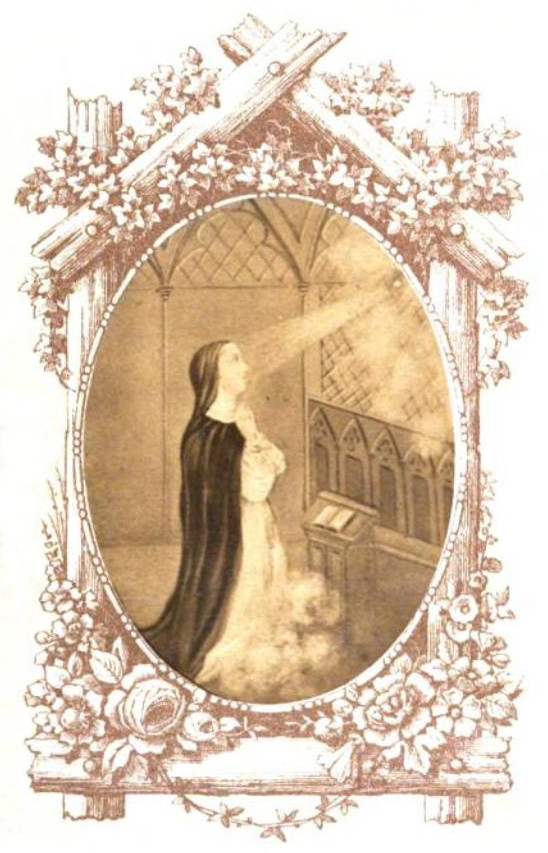
As she matured, Clare's spiritual gifts deepened, and she became known for her profound wisdom and humility. In 1290, when the hermitage was formally established as the Monastery of the Holy Cross, Clare, despite her youth, was unanimously elected abbess, a testament to her sanctity and leadership qualities. Under her gentle yet firm guidance, the community flourished, attracting many vocations. Her ministry was marked by an unwavering devotion to the Passion of Christ, which she meditated upon ceaselessly. She was known for her ecstasies and visions, particularly those concerning the suffering of Christ, and she frequently bore physical manifestations of her spiritual union, enduring intense pain and spiritual trials with remarkable fortitude. It was during this period that she began to speak of Christ having imprinted the instruments of His Passion upon her heart, a claim that would later be astonishingly substantiated.
Saint Clare of Montefalco passed into eternal life on August 17, 1308, at the age of 40, after a prolonged illness. Immediately following her death, her sisters, recalling her mystical pronouncements, felt compelled to open her body. What they discovered was nothing short of miraculous: within her heart, perfectly formed in the tissue, were miniature representations of the instruments of Christ's Passion – a crucifix, a scourge, a column, a crown of thorns, nails, a lance, and a sponge. Furthermore, three gallstones of equal size and weight were found in her gallbladder, interpreted by many as a symbolic representation of the Most Holy Trinity. Her body itself was found to be remarkably preserved, exhibiting an incorrupt state. Over the centuries, her incorrupt remains and the sacred relics of her heart have been meticulously examined by medical professionals, who, while offering some natural explanations for tissue formations, have been unable to fully account for the specific, recognizable shapes of the Passion instruments or the body's extraordinary preservation.
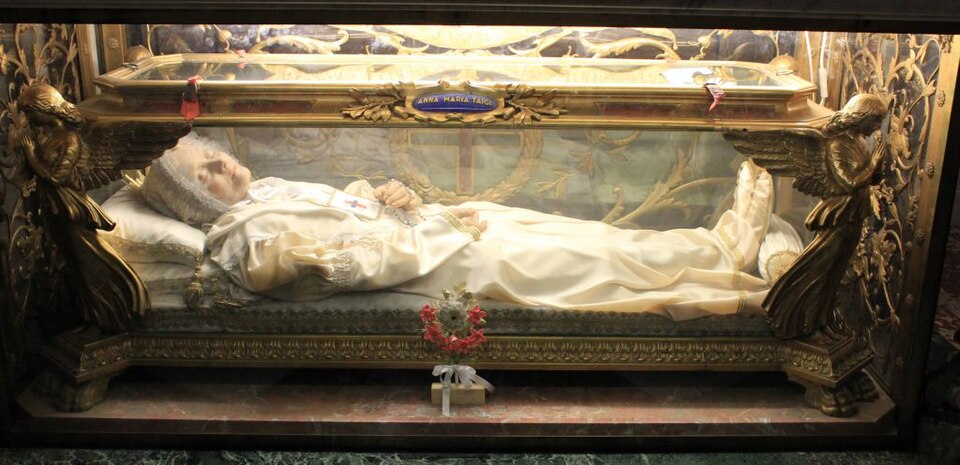
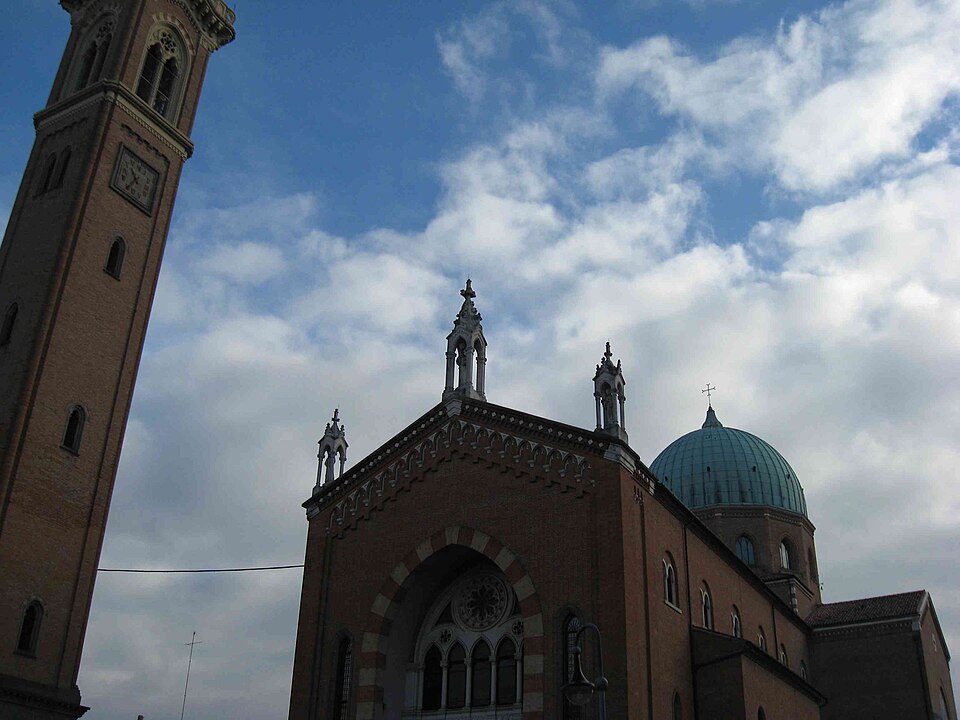
The enduring legacy of Saint Clare of Montefalco rests firmly on her profound mysticism and the extraordinary physical evidence of her union with Christ's Passion. Her canonization in 1881 by Pope Leo XIII officially recognized her sanctity and the authenticity of her spiritual experiences. Today, pilgrims from around the world journey to Montefalco, Italy, to venerate her incorrupt body, which reposes in the Church of Santa Chiara della Croce. There, they can also behold the preserved relics of her heart, a tangible testament to her deep love for Christ and His suffering. Saint Clare remains a powerful intercessor and an inspiration for all who seek a deeper understanding of the Paschal Mystery, reminding us of the profound and often mysterious ways in which God manifests His grace in His saints.
Discovery
Upon her death in 1308, the sisters of the Augustinian community in Montefalco, deeply revering their abbess, prepared her for burial. It was during this solemn process, or shortly thereafter during an initial exhumation, that the extraordinary nature of Clare's sanctity began to reveal itself. The most astonishing discovery, however, occurred when the sisters, driven by a profound spiritual curiosity and perhaps a premonition, performed an autopsy on her body. Within her heart, they found miniature, perfectly formed representations of the instruments of Christ's Passion: a tiny crucifix, a scourge, a column, a crown of thorns, nails, a lance, and a sponge. This miraculous internal iconography was immediately interpreted as a tangible manifestation of her deep mystical union with Christ's suffering. Furthermore, within her gallbladder, three gallstones of equal size and weight were discovered, a detail quickly understood by the faithful as a symbolic representation of the Holy Trinity. The body itself, even at this early stage, exhibited an unusual pliancy and a lack of the usual signs of decomposition, hinting at the incorruption that would become her enduring legacy. The immediate reaction among the sisters and the local populace was one of awe and profound spiritual affirmation, solidifying Clare's reputation as a saint long before her official canonization.
Over the centuries, the incorrupt body of Clare of Montefalco has undergone numerous examinations, each affirming its remarkable state of preservation. One significant exhumation occurred in 1681, nearly four centuries after her death, when the body was carefully inspected by ecclesiastical authorities and medical professionals. They documented the continued flexibility of her limbs and the lifelike quality of her skin, noting the absence of any artificial embalming agents. Another detailed examination took place in 1804, during which the body was found to be in an excellent state of preservation, despite the passage of five centuries and various environmental changes. These inspections consistently reported the absence of putrefaction and the persistence of her natural features. The heart, with its miraculous Passion symbols, has been particularly scrutinized and remains a focal point of veneration. While the body has naturally darkened and dehydrated over time, its integrity has been maintained, defying the normal processes of decay.
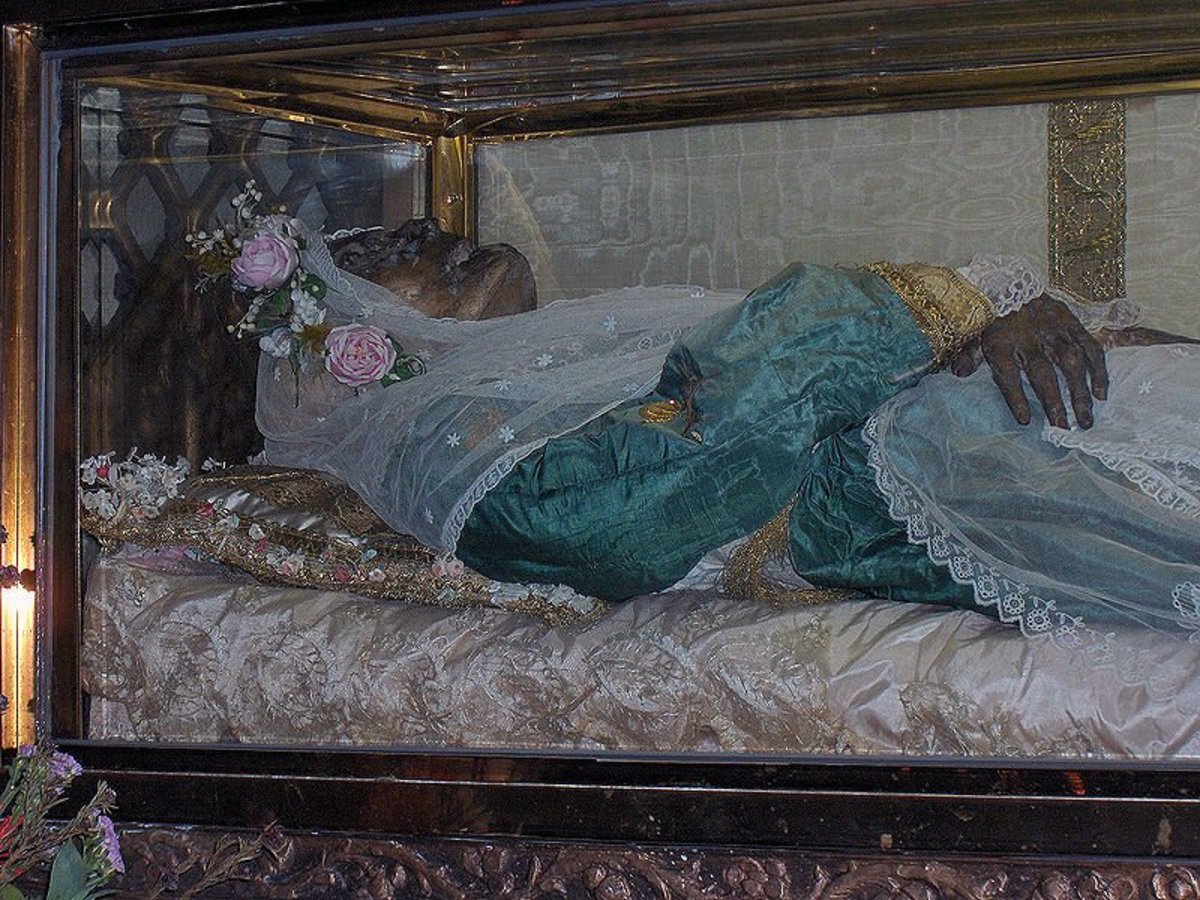
The journey of Saint Clare's preservation and display reflects the enduring devotion to her sanctity. Initially, following her death and the discovery of her incorruption, her body was interred within the convent church. As her cult grew, and particularly after her beatification and later canonization in 1881, greater measures were taken to ensure her veneration and protection. Her body is now housed in the Church of Santa Chiara in Montefalco, within a glass-sided casket, allowing pilgrims and visitors to view her remains. The heart, with its extraordinary internal relics, is separately enshrined in a precious reliquary, often displayed near the main altar or within a dedicated chapel. The environment within the church is carefully monitored to mitigate the effects of humidity and temperature fluctuations, though no artificial preservation techniques have been applied to the body itself beyond its initial natural state. The display is designed to facilitate prayer and reflection, presenting the saint's body as a testament to God's power and her profound holiness.
Beyond the physical incorruption, several remarkable details have been associated with Saint Clare's body throughout history. For centuries, a sweet, ethereal fragrance, often described as a scent of roses or lilies, has been reported emanating from her remains, particularly during periods of intense veneration or on her feast day. This phenomenon, known as the odor of sanctity, is a recurring theme in the lives of incorruptible saints. While the body itself is largely desiccated, there have been historical accounts, though less frequently documented in recent centuries, of a subtle flexibility in her limbs, defying the rigidity typically associated with ancient remains. These phenomena, coupled with the extraordinary internal relics of the Passion within her heart and the symbolic gallstones, have cemented Saint Clare of Montefalco's place as one of the most compelling examples of incorruption within the Catholic tradition, drawing countless pilgrims to Montefalco to witness these profound mysteries.
Preservation
Body and heart displayed in the Church of Santa Chiara, Montefalco.
Scientific Analysis
The phenomenon of incorruption, particularly as observed in the case of Saint Clare of Montefalco, presents a compelling intersection for scientific and theological inquiry. Her body, interred in 1308, has remained remarkably preserved, a state that defies typical post-mortem decomposition processes. Over centuries, various examinations have been conducted, though detailed records from earlier periods are often sparse or anecdotal, reflecting the medical understanding and documentation practices of their respective eras. One of the most notable aspects of Saint Clare's incorruption pertains to formations found within her heart. Tradition holds that these formations resemble instruments of the Passion of Christ. These internal structures, described as being of a cartilaginous or fibrous nature, have been a focal point of medical scrutiny. While specific dates and names of early examiners are difficult to ascertain definitively, it is understood that clergy and physicians, often acting in concert, would have inspected the body during various canonical processes, particularly leading up to her beatification and canonization. More recently, in the 20th century, pathologists and medical professionals have had opportunities to examine these internal formations. For instance, reports from the early to mid-20th century describe examinations that confirmed the presence of these structures, noting their unusual morphology. While some medical professionals have posited that these could be highly unusual calcifications or fibrous growths, their distinct shapes, as described by witnesses, continue to elude a purely pathological explanation that accounts for their symbolic resemblance to religious iconography. The preservation of her organs, particularly the heart with its unique inclusions, within a body that has not undergone conventional embalming, remains a subject of ongoing scientific fascination.
The scientific mystery surrounding Saint Clare's incorruption lies primarily in the defiance of normal decomposition. Following death, the human body typically undergoes a series of predictable changes: autolysis, putrefaction, and decay, driven by endogenous enzymes and exogenous microorganisms. These processes are accelerated by factors such as warmth and humidity, and generally result in skeletal remains within decades, if not sooner, depending on environmental conditions. Saint Clare's body, interred in Montefalco, Italy, a region with a Mediterranean climate, would ordinarily be expected to decompose fully. There is no historical record or physical evidence suggesting any deliberate embalming or sophisticated preservation treatments, which were not widely practiced or as effective in the 14th century as modern techniques. The absence of significant adipocere formation, a waxy substance resulting from the hydrolysis of body fat in anaerobic, moist environments, further complicates naturalistic explanations. While adipocere can preserve body contours, it often alters tissue consistency significantly, which is not consistently reported in Saint Clare's case. The overall soft tissue preservation, including internal organs, without evidence of mummification (which typically involves desiccation in dry environments) or extensive saponification, presents a significant challenge to standard forensic taphonomy. The conditions within the Church of Santa Chiara, while potentially stable, are unlikely to provide the extreme environmental controls necessary for such prolonged preservation without external intervention.
Several hypotheses have been proposed to explain cases of incorruption, including saponification, adipocere formation, and mummification due to specific environmental conditions. However, these explanations often fall short when applied comprehensively to Saint Clare's case. Saponification, or the conversion of fatty tissues into a soap-like substance, typically occurs in wet, anaerobic conditions and results in a distinct waxy texture. While some degree of this might be present, it does not fully account for the reported preservation of internal organs and the overall supple nature described by some observers. Mummification, on the other hand, requires extremely dry conditions that lead to rapid dehydration and inhibition of microbial growth; Montefalco's climate is not conducive to natural mummification. Skeptics often attribute such phenomena to unusual burial conditions, misidentification of remains, or the natural variability of decomposition. They might suggest that limited air exposure, specific soil chemistry, or even the accidental presence of preserving agents could play a role. However, the specific details of Saint Clare's case, particularly the internal formations within her heart, transcend simple environmental explanations. The consistency of reports over centuries, describing both the external preservation and the internal anomalies, makes it difficult to dismiss the phenomenon entirely as a product of misinterpretation or natural processes alone. The remarkable preservation of soft tissues, including the distinct formations within the heart, without clear evidence of embalming or extreme environmental conditions, continues to be the primary point of scientific inquiry and debate.
From a modern scientific perspective, the case of Saint Clare of Montefalco offers a unique opportunity for advanced forensic and biological investigation. While historical examinations provided valuable qualitative observations, contemporary techniques could offer unprecedented insights. Non-invasive methods such as computed tomography (CT) scans or magnetic resonance imaging (MRI) could provide detailed three-dimensional reconstructions of the internal structures, including the heart formations, without disturbing the remains. This could help determine their precise composition, density, and morphology, potentially clarifying whether they are calcifications, fibrous tissue, or another material. Carbon dating could precisely establish the age of the tissues, confirming their authenticity. Furthermore, advanced tissue analysis, if deemed permissible and minimally invasive, could involve microscopic examination, immunohistochemistry, or even molecular analysis to identify cellular structures, protein composition, and potential microbial presence or absence. Such analyses could shed light on the mechanisms that inhibited decomposition at a cellular level. The scientific community, while maintaining a commitment to empirical evidence, could approach such cases with a blend of respectful curiosity and rigorous methodology. The overarching questions remain: what specific biological and chemical processes have arrested decomposition, and what is the precise nature of the internal formations within her heart? Answering these questions would not only contribute to the scientific understanding of post-mortem preservation but also enrich the broader dialogue concerning phenomena that intersect faith and empirical observation.
Spiritual Significance
The phenomenon of incorruption, particularly as exemplified by Saint Clare of Montefalco, stands as a profound theological testament within the Catholic tradition, speaking directly to core doctrines concerning the sacredness of the human body and the ultimate promise of resurrection. For centuries, the Church has viewed these miraculous preservations not as mere biological anomalies, but as divine affirmations of sanctity, a visible sign that certain individuals have so thoroughly embodied the Holy Spirit that even their earthly remains are touched by eternity. Saint Paul's assertion that our bodies are temples of the Holy Spirit (1 Corinthians 6:19) finds a striking, albeit exceptional, manifestation in incorrupt saints. Their unblemished flesh, resisting the natural decay that is the common lot of humanity, serves as a powerful, albeit rare, prefiguration of the glorified body promised at the general resurrection. In Clare's case, this incorruption is interpreted as a divine seal upon her extraordinary mystical life, a tangible bridge between the earthly realm and the heavenly communion of saints, reminding us that death does not sever our connection with those who have gone before us in faith. It underscores the belief that the saints, though departed from this world, remain vibrant participants in the life of the Church, interceding for us from glory.
Saint Clare of Montefalco’s unique charism was undeniably her profound mystical union with Christ, a union so intense it transcended the spiritual and imprinted itself upon her very being. Known as "The Mystic of Montefalco," her life was a continuous ascent into the depths of divine love, marked by rigorous penance, unwavering prayer, and an unparalleled devotion to the Passion of Christ. Her heroic virtues included an extraordinary humility, evident in her desire for obscurity and her acceptance of leadership only out of obedience; profound charity, which she extended to her community and those who sought her counsel; and an absolute obedience to the Augustinian Rule, which guided her contemplative life. Her specific way of holiness manifested in a relentless pursuit of union with God through suffering, mirroring Christ’s own sacrifice. She belonged to the Augustinian tradition, emphasizing communal life, intellectual pursuit of truth, and a deep interiority. Her spiritual contributions lie in demonstrating the transformative power of contemplative prayer and the profound reality of mystical experience, pushing the boundaries of what is physically possible through divine grace.
The devotion to Saint Clare of Montefalco has flourished over the centuries, rooted deeply in the extraordinary physical signs associated with her sanctity. Pilgrims have flocked to Montefalco since her death, drawn by the compelling narrative of her mystical life and the tangible presence of her incorrupt body. Her patronage extends to those seeking spiritual guidance, relief from suffering, and a deeper understanding of Christ's Passion. While specific novenas dedicated solely to her may be less widespread than those for more universal saints, her feast day on August 17th is observed with solemnity in Montefalco and by Augustinian communities worldwide, often involving special Masses and veneration of her relics. The experience of visiting her shrine in the Church of Santa Chiara is profoundly moving. Pilgrims approach her incorrupt body, often displayed for veneration, with a mixture of awe and reverence. The palpable sense of her enduring presence, coupled with the visual evidence of her incorruption and the visible symbols of the Passion within her heart, creates an atmosphere of deep spiritual contemplation, inviting believers to reflect on the mysteries of faith and the power of divine love.
Miracles attributed to Saint Clare of Montefalco's intercession have consistently accompanied her veneration, ranging from documented healings to profound spiritual conversions and answered prayers. While the most extraordinary "miracle" associated with her remains the incorruption of her body itself and the discovery of the Passion symbols within her heart, numerous accounts of divine favor have been recorded through the centuries. These often involve physical ailments being alleviated after prayers offered at her shrine or through the invocation of her name. Beyond physical cures, her intercession is frequently sought for spiritual healing, for guidance in difficult decisions, and for strength in times of suffering, reflecting her own life of profound spiritual struggle and triumph. The incorrupt body itself, far from being a mere curiosity, has consistently served as a powerful source of spiritual consolation for the faithful. Its enduring presence acts as a tangible reminder of God's power, the reality of the communion of saints, and the ultimate victory over death, offering hope and strengthening faith in the face of life's trials and uncertainties.
Saint Clare of Montefalco's enduring message for contemporary Catholics and seekers resonates powerfully in an age often characterized by materialism and secularism. Her life challenges the modern world's preoccupation with transient pleasures and external achievements, redirecting our gaze toward the profound and lasting joy found in intimate union with God. Her radical commitment to contemplation, penance, and selfless love stands in stark contrast to a culture that often prioritizes self-gratification and instant gratification. For those grappling with the superficiality of contemporary life, Clare offers a compelling alternative: a path of deep spiritual fulfillment that transcends worldly concerns. Her incorruption, a physical manifestation of divine grace, serves as a tangible bridge between the visible and invisible worlds, reminding us that there is more to reality than what can be perceived by the senses. It invites modern individuals to consider the supernatural, to embrace the mystery of faith, and to recognize that true meaning and lasting peace are found not in material possessions, but in a profound relationship with the divine, echoing her own extraordinary journey into the heart of God.
AI summary
A plain-language overview generated from this page's source material. Always verify with primary sources.