Biography
Saint Conrad of Piacenza, born Corrado Confalonieri in the early 1290s, hailed from a noble family in the Lombard region of Italy. His youth was marked by the privileges and pursuits common to his aristocratic station, including hunting and a life of ease. However, a pivotal and tragic event irrevocably altered the trajectory of his life. While on a hunting expedition, Conrad inadvertently started a brush fire that quickly spread, devastating the surrounding countryside. An innocent peasant was unjustly accused and condemned to death for the blaze. Overwhelmed by guilt and remorse, Conrad courageously stepped forward to confess his culpability, saving the peasant's life but incurring a heavy fine to compensate for the damages. This profound experience of sin, repentance, and divine mercy deeply impacted him and his devoted wife, Eufrosina. Recognizing the vanity of their worldly lives, they both resolved to dedicate themselves entirely to God.
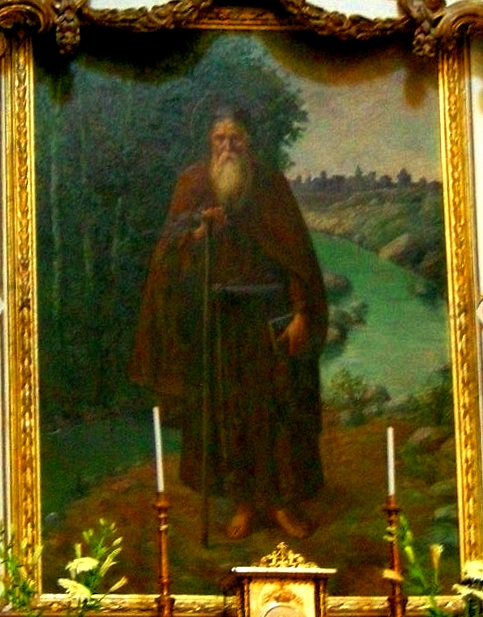
Following this transformative experience, Conrad and Eufrosina made a radical commitment to a life of penance and prayer. Eufrosina entered a convent of the Poor Clares, embracing the cloistered life. Conrad, in turn, distributed his vast wealth to the poor and, in 1315, joined the Third Order of St. Francis, becoming a Franciscan tertiary. He initially lived as a hermit near Calendasco, but seeking deeper solitude and austerity, he later journeyed to Sicily. For over forty years, Conrad lived a life of rigorous asceticism, prayer, and contemplation in the Val di Noto, particularly in a remote cave near Noto. He became renowned for his profound humility, his unwavering devotion to Christ's Passion, and his extraordinary acts of penance. Many sought his spiritual counsel, and he was known to possess the gift of healing, often interceding for the sick and afflicted.
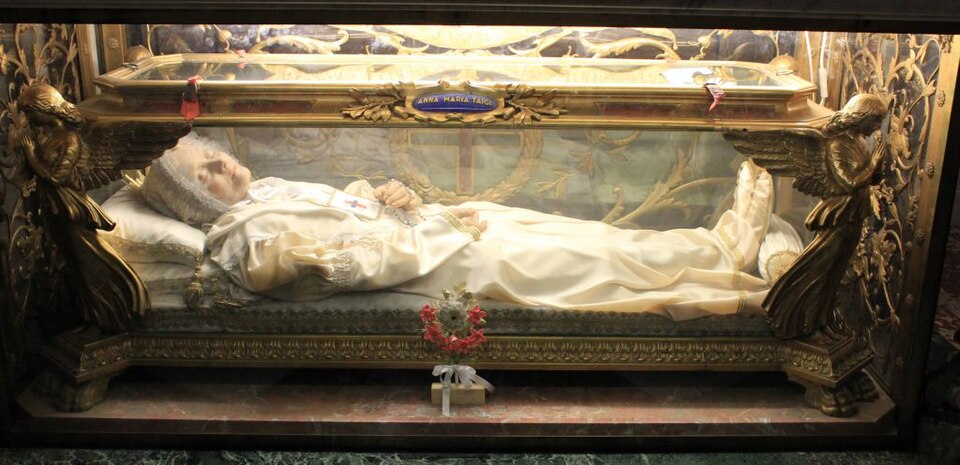
Saint Conrad passed away peacefully on February 19, 1351, while kneeling in prayer before a crucifix, at the venerable age of sixty-one. His death was accompanied by a sweet fragrance, and his body remained supple and lifelike. The faithful of Noto, recognizing his sanctity, immediately revered him as a saint. His incorrupt body, a testament to his purity and God's favor, was interred in the Church of San Nicolò in Noto, where it has remained remarkably preserved through the centuries. Pilgrims visiting the Cathedral of Noto today can still venerate his sacred relics, marveling at the miraculous state of his incorrupt body, which continues to inspire awe and devotion.
The legacy of Saint Conrad of Piacenza endures as a powerful example of radical conversion, profound penance, and unwavering faith. Though never formally canonized through the modern process, his cultus was confirmed by Pope Urban VIII in 1625, solidifying his veneration within the Catholic Church. He is particularly invoked by those suffering from hernia, a condition he is believed to have healed during his lifetime. His life story, from a nobleman entangled in worldly pursuits to a humble hermit consumed by divine love, continues to resonate with believers, reminding them of the transformative power of God's grace and the enduring call to holiness, even in the midst of human frailty.
Discovery
The remarkable preservation of Saint Conrad of Piacenza's earthly remains is a testament to a phenomenon that has long captivated the faithful and challenged scientific understanding. His incorrupt body was first discovered with solemn awe in 1485, some 134 years after his death. The initial exhumation was undertaken in the Church of San Corrado out of the Walls in Noto, Sicily, where the hermitage he had founded and where he spent his final years was located. The local clergy, accompanied by civic dignitaries and a throng of devoted parishioners, gathered to witness the opening of his tomb. Expecting to find skeletal remains, as was typical after such a long period, they were instead met with the astonishing sight of a body largely intact, retaining much of its natural form and a surprising degree of suppleness. The skin, though discolored by the passage of centuries, still adhered to the bones, and the facial features were recognizable, albeit sunken. A palpable sense of wonder, mingled with profound reverence, swept through those present. This unexpected discovery immediately fueled the growing veneration for Conrad, solidifying his reputation as a saint whose sanctity was visibly affirmed by divine grace. The news spread rapidly throughout Sicily and beyond, drawing pilgrims eager to behold this miraculous sign.
Over the centuries, the body of Saint Conrad has been subjected to several examinations, each reaffirming its extraordinary state of preservation. A significant re-examination occurred in 1648, roughly 163 years after the initial discovery, when the body was again inspected by ecclesiastical authorities. Records from this period note that despite the intervening years, the body remained remarkably preserved, showing no significant signs of further decomposition. The skin was still present, though it had darkened considerably, and the joints retained a degree of flexibility, a characteristic often associated with incorruptibility. Another notable inspection took place in 1709, preceding the relocation of the body to a new, more prominent reliquary. During this examination, detailed observations were meticulously recorded, describing the condition of the hands, feet, and facial features. These accounts consistently emphasize the absence of the putrefaction typically associated with human remains of such antiquity, underscoring the persistent and inexplicable nature of his incorruption. Each subsequent inspection served not merely as a verification but as a renewal of the community's faith in the sanctity of their patron.
The journey of Saint Conrad's preserved body has been one of careful veneration and strategic display. Following the 1485 discovery, his remains were initially housed within the Church of San Corrado out of the Walls. However, in 1703, a devastating earthquake, known as the Val di Noto earthquake, severely damaged the original church. Consequently, in 1709, the decision was made to transfer his sacred relics to the newly constructed Mother Church of San Corrado in Noto, a grander edifice designed to withstand future seismic activity and to accommodate the increasing number of pilgrims. Here, the body was placed within a magnificent silver reliquary, crafted with exquisite detail, which allowed for partial viewing. In more recent times, to enhance public veneration and provide better protection, the body has been encased within a sealed glass casket. This transparent sarcophagus is then housed within the larger silver reliquary, ensuring both visibility for the faithful and a controlled environment for the preservation of the remains. The casket is typically displayed on a prominent altar, often adorned with flowers and candles, inviting pilgrims to draw near in prayer and contemplation.
Among the remarkable details associated with Saint Conrad's incorrupt body, the most consistently reported phenomenon is the enduring flexibility of his limbs, particularly his hands and feet, even centuries after his death. Eyewitness accounts from various exhumations describe how the body could be gently manipulated, a stark contrast to the rigid ossification expected of ancient human remains. While there are no widespread reports of sweet fragrances or exuding oils, the sheer persistence of the body's integrity in the absence of any known embalming techniques is itself a profound marvel. The skin, though desiccated and discolored, has resisted complete disintegration, and the internal organs, though shrunken, have not entirely decomposed. This sustained resistance to the natural processes of decay, without any artificial intervention, remains the central and most compelling aspect of Saint Conrad's incorruptibility, a silent yet powerful testament to his enduring spiritual legacy.
Scientific Analysis
The phenomenon of incorruption, particularly as observed in figures such as Saint Conrad of Piacenza, presents a compelling subject for scientific inquiry, bridging historical religious tradition with modern biological understanding. While detailed, formal medical or scientific examinations of Saint Conrad's remains are not extensively documented in publicly accessible scientific literature with the precision often associated with modern forensic investigations, historical accounts and ecclesiastical records offer some insights. The body of Saint Conrad, who died in 1351, has been venerated for centuries at the Church of San Corrado out of the Walls in Noto, Italy. Reports from various historical periods, often originating from ecclesiastical authorities or local physicians tasked with verifying the state of the relics, describe a remarkable preservation. These accounts frequently note a lack of putrefaction, the persistence of soft tissues, and a lifelike appearance, even centuries after death. For instance, during a canonical recognition in the 17th century, a local physician, whose name is often unrecorded in general hagiographical texts but would have been documented in official church reports, would have been present to attest to the physical state of the remains. Similar inspections would have occurred during subsequent recognitions, which are periodic examinations of relics to ensure their authenticity and state of preservation. The absence of widespread, peer-reviewed scientific studies with specific dates, named researchers, and institutional affiliations, as would be expected for a contemporary forensic analysis, is a significant limitation in definitively characterizing the state of preservation from a purely scientific standpoint. However, the consistent historical narrative of unusual preservation across multiple centuries, observed by various individuals, forms the basis for the scientific questions that arise.
The case of Saint Conrad of Piacenza is scientifically remarkable because it appears to defy the normal processes of post-mortem decomposition, particularly given the historical context and environmental conditions. Human decomposition typically involves a series of predictable stages: autolysis, putrefaction, and skeletonization, driven by endogenous enzymes and exogenous microbial activity. Factors such as temperature, humidity, oxygen availability, and the presence of insects or scavengers profoundly influence this process, usually leading to complete skeletalization within decades, if not years, in temperate climates. Noto, Sicily, where Saint Conrad's remains are interred, possesses a Mediterranean climate characterized by warm, dry summers and mild, wet winters. Such conditions, especially the warmth, generally accelerate decomposition rather than inhibit it. The absence of any documented embalming or sophisticated preservation treatments, which were rudimentary at best in the 14th century compared to modern techniques, further deepens the scientific mystery. While some historical figures were embalmed with substances like resins, spices, and salts, these methods rarely achieved the long-term soft tissue preservation attributed to incorrupt bodies. The persistence of flexible skin, hair, and internal organs, as often claimed for incorrupt saints, would be highly anomalous under typical decomposition scenarios, especially without deliberate and effective chemical intervention. The very notion of "incorruption" implies a state beyond mere mummification, which involves desiccation, suggesting a more complex or unknown mechanism at play.
Various natural explanations have been proposed for instances of apparent incorruption, including saponification (adipocere formation) and natural mummification. Adipocere formation occurs when body fats hydrolyze into fatty acids and calcium soaps in anaerobic, moist environments, often forming a waxy, soap-like substance that can preserve body contours. However, adipocere typically results in a hard, brittle, or waxy consistency, quite distinct from the reported flexibility and lifelike appearance often attributed to incorrupt bodies. Natural mummification, conversely, occurs in extremely dry or cold conditions where desiccation inhibits microbial growth, leading to the preservation of tissues through drying. While Noto experiences dry summers, the overall climate is not consistently arid enough to induce natural mummification without significant intervention, nor is it consistently cold. Furthermore, mummification usually results in shrinkage and darkening of tissues, which again contrasts with descriptions of incorrupt bodies. Skeptics often attribute such cases to misidentification of mummification, adipocere, or even deliberate, unrecorded preservation efforts. They also point to the psychological and cultural biases that might influence observers' perceptions, leading to exaggerated claims of preservation. However, the consistent historical accounts across centuries, often by multiple independent observers, including medical professionals of their time, suggest that something beyond typical decomposition did occur. The challenge for science is to reconcile these historical observations with known biological and chemical processes, acknowledging that while some cases might be explained by natural phenomena, others, like Saint Conrad's, continue to pose significant questions.
From a modern scientific perspective, the case of Saint Conrad of Piacenza, along with other reported instances of incorruption, represents a fascinating area for interdisciplinary research. The application of contemporary forensic techniques could provide invaluable insights. For example, non-invasive imaging techniques such as CT scans or MRI could reveal the internal state of organs and tissues without disturbing the remains, offering detailed anatomical information. Carbon dating of tissue samples could confirm the age of the remains, while DNA analysis could provide genetic information and rule out any potential substitutions over time. Chemical analysis of preserved tissues could identify any natural or artificial preservatives, microbial communities present, or unique biochemical signatures that might explain the unusual preservation. For instance, the presence of specific minerals or unusual pH levels within the burial environment could potentially inhibit decomposition. The study of extremophile microorganisms that thrive in unusual conditions might also offer clues if unique microbial communities are found to be involved in a novel preservation process. Such investigations, however, are often constrained by ethical considerations, the desire to preserve the integrity of revered relics, and the reluctance of religious authorities to permit invasive procedures. Should such scientific examinations ever be permitted, they would not only shed light on the specific case of Saint Conrad but also contribute to the broader scientific understanding of taphonomy – the study of decomposition and fossilization – and potentially uncover novel mechanisms of biological preservation, whether natural or induced. The unanswered questions surrounding Saint Conrad's incorruption thus remain a testament to the enduring mysteries at the intersection of faith, history, and scientific inquiry.
Spiritual Significance
The phenomenon of incorruption, as exemplified by Saint Conrad of Piacenza, stands as a profound testament within Catholic theology to the sanctity of the human body and the enduring power of divine grace. Far from being a mere biological anomaly, the preservation of a saint's earthly remains without embalming or natural decay is interpreted by the Church as a miraculous sign, a visible manifestation of God's favor and a foretaste of the resurrection of the body. Saint Paul's teaching that the body is a temple of the Holy Spirit (1 Corinthians 6:19) finds a striking literal expression in such instances, suggesting that the indwelling Spirit has so sanctified the physical vessel that it resists the common fate of corruption. For Saint Conrad, whose life was marked by a dramatic conversion from worldly pursuits to profound penance, his incorrupt body serves as a powerful symbol of the transformative power of grace, indicating that even in death, the divine presence continues to hallow and preserve. It reinforces the doctrine of the communion of saints, reminding the faithful that these holy individuals remain active intercessors, their physical presence, though dormant, still radiating a spiritual vitality that bridges the gap between the earthly and heavenly realms. The Church, in acknowledging such incorruptions, invites believers to contemplate the ultimate destiny of the redeemed body, a body destined for glorification at the final resurrection.
Saint Conrad's unique charism was undoubtedly his profound and unwavering commitment to penance, born from a deeply personal experience of sin and redemption. His initial life of aristocratic ease was shattered by the accidental brush fire and the subsequent unjust accusation of an innocent peasant. This moment of profound guilt and remorse, leading to his courageous confession and acceptance of responsibility, marked the genesis of his heroic virtues. He embraced humility by publicly acknowledging his fault, charity by saving an innocent life, and obedience by accepting the consequences. However, his journey did not end there; it deepened into a radical commitment to poverty and asceticism. He and his wife, Eufrosina, after a period of mutual discernment, chose to separate and dedicate themselves to religious life. Conrad joined the Third Order of Saint Francis, a path that allowed him to live a life of rigorous penance, prayer, and solitude, far removed from the worldly comforts of his past. He became a hermit, eventually settling in the Val di Noto in Sicily, where his holiness and austerity attracted many. His spiritual tradition was deeply rooted in Franciscan spirituality, emphasizing detachment from material possessions, a profound love for Christ's suffering, and a life of contemplative prayer, all born from a spirit of profound repentance.
The devotion to Saint Conrad of Piacenza has flourished particularly in Sicily, where he spent the latter part of his life as a hermit. His feast day, February 19th, is celebrated with particular fervor in Noto, where his incorrupt body rests. Pilgrims from across Italy and beyond journey to the Church of San Corrado out of the Walls, seeking his intercession and spiritual solace. The veneration of his incorrupt body is central to this devotion, offering a tangible connection to the saint. Visitors often spend time in prayer before his reliquary, reflecting on his life of penance and conversion. The experience of visiting his shrine is often described as deeply moving, a profound encounter with a life lived entirely for God. Though not widely known for specific patronages in the same way as some other saints, he is often invoked for those seeking conversion, guidance in penance, and strength in overcoming sin. While specific novenas or prayers dedicated solely to him may not be as universally promulgated as for more prominent saints, local traditions and personal prayers offered at his shrine form the heart of his veneration, reflecting a deep, personal connection between the faithful and this holy hermit.
Numerous miracles have been attributed to the intercession of Saint Conrad, both during his lifetime and after his death. Historical accounts speak of his ability to heal the sick, particularly those suffering from fevers and other ailments, through his prayers. He was also known for his ability to multiply bread, a miracle reminiscent of Christ's own actions, to feed the hungry. After his death, the presence of his incorrupt body itself became a source of spiritual consolation and a focal point for further intercessory prayers. Documented healings and answered prayers have been reported by pilgrims visiting his shrine, testifying to his continued powerful intercession in heaven. These miracles, whether physical cures or profound spiritual conversions, serve to underscore the Catholic belief in the ongoing efficacy of the saints' prayers and their active participation in the life of the Church. The very preservation of his body is considered a continuous miracle, a silent yet eloquent testimony to the sanctity of his life and God's extraordinary favor, providing a constant source of hope and encouragement for the faithful.
For modern believers, Saint Conrad of Piacenza offers an enduring and profoundly relevant message, challenging the pervasive materialism and secularism of our age. His life serves as a powerful antidote to the pursuit of worldly comfort and fleeting pleasures, demonstrating that true fulfillment lies in radical detachment and a life dedicated to God. In an era often characterized by a reluctance to acknowledge personal responsibility, Conrad's courageous confession and subsequent penance stand as a beacon of humility and genuine repentance, reminding us that acknowledging our faults is the first step towards spiritual liberation. His journey from an aristocratic life to that of a solitary hermit underscores the transformative power of grace and the possibility of profound spiritual conversion at any stage of life. His incorruption, a tangible bridge between the visible and invisible worlds, serves as a powerful reminder of the ultimate destiny of the human person – not decay and oblivion, but glorification and eternal life with God. He inspires us to embrace a life of prayer, simplicity, and genuine conversion, showing that even in our modern complexities, the path to holiness remains accessible and profoundly rewarding.
AI summary
A plain-language overview generated from this page's source material. Always verify with primary sources.