Biography
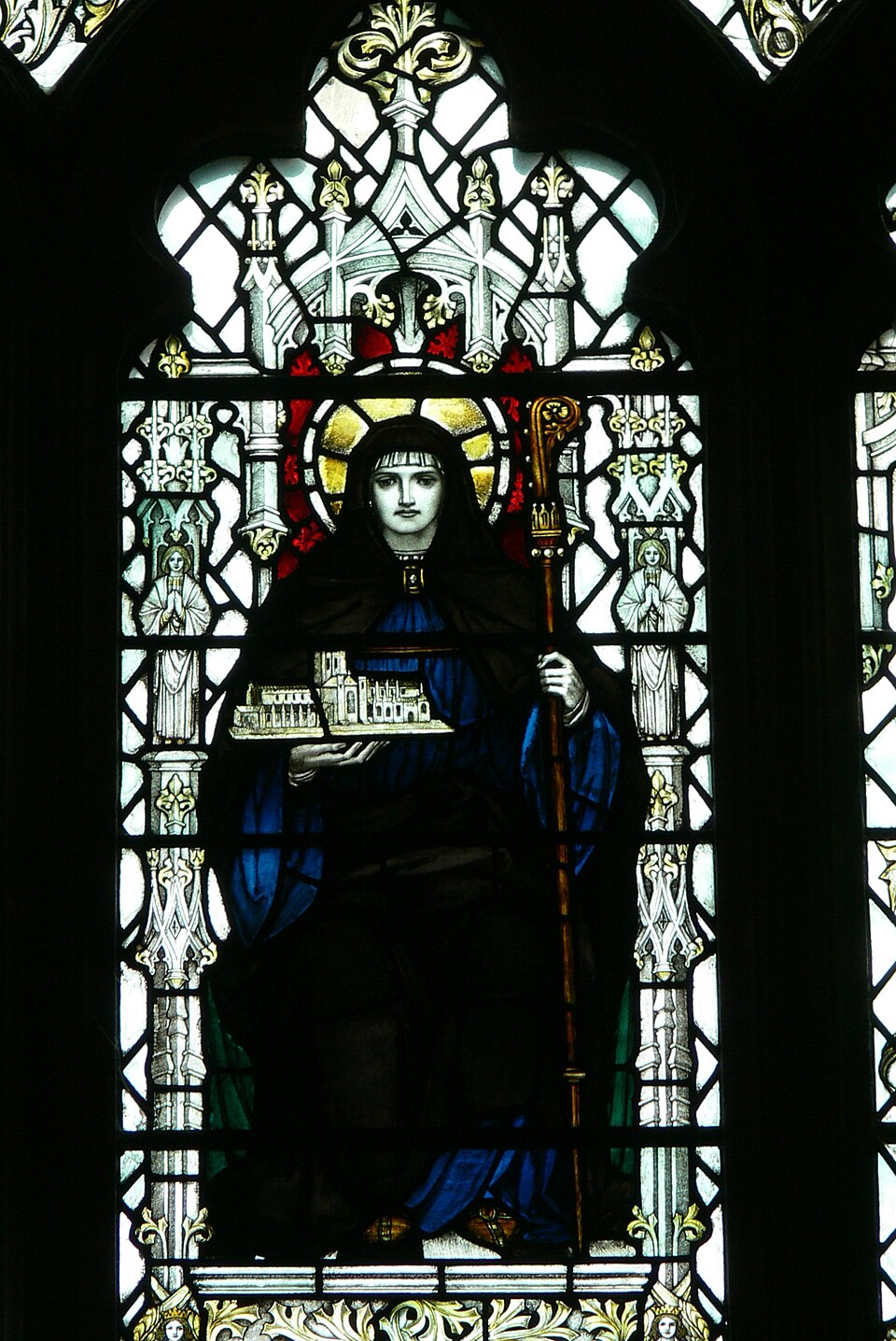
Saint Cuthbert, a figure of profound spiritual depth and unwavering faith, emerged from the turbulent landscape of seventh-century Anglo-Saxon England. Born around 634 in Northumbria, his early life was marked by humble beginnings, yet a divine calling soon became apparent. As a young shepherd boy, he experienced a vision of angels escorting the soul of Saint Aidan to heaven, an event that profoundly shaped his spiritual trajectory. This mystical encounter ignited within him a fervent desire for monastic life, leading him to the monastery of Melrose in 651. Under the guidance of Saint Boisil, Cuthbert quickly distinguished himself through his fervent prayer, rigorous asceticism, and compassionate service to others. He embraced the monastic rule with zeal, becoming known for his gentle demeanor, his tireless preaching to the rural communities, and his unwavering commitment to the poor and sick, often traveling great distances on foot to bring them comfort and the Gospel message.
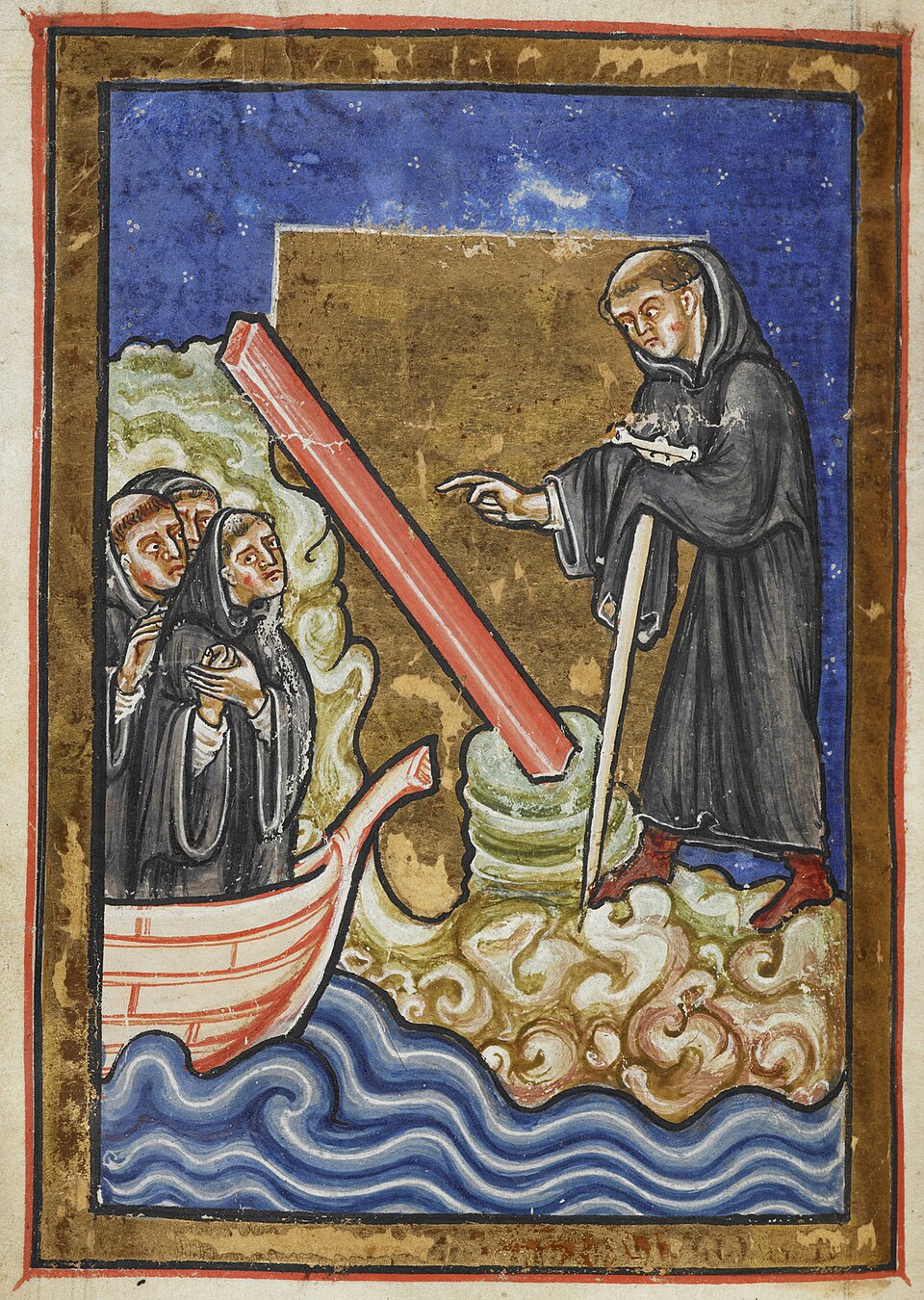
Cuthbert's exceptional holiness and administrative acumen led him to various positions of leadership within the burgeoning Northumbrian Church. He served as prior of Melrose and later as prior of Lindisfarne, where he played a crucial role in reconciling the Celtic and Roman traditions following the Synod of Whitby. His ministry was characterized by a deep love for God's creation, often depicted with birds and animals, who were said to flock to him. He was renowned for his prophetic gifts and his ability to work miracles, healing the sick and casting out demons, drawing many to Christ through his powerful example. Though he initially resisted, Cuthbert was eventually consecrated Bishop of Lindisfarne in 685. He served for only two years, yet his episcopacy was marked by tireless pastoral care, emphasizing evangelization and the spiritual well-being of his flock. Feeling a renewed call to solitude, he retired to his hermitage on Inner Farne Island, seeking a deeper union with God in prayer and contemplation.
Saint Cuthbert passed into eternal life on Inner Farne Island on March 20, 687. Nine years later, in 698, his monastic brethren, intending to transfer his relics to a more prominent shrine within the church at Lindisfarne, were astonished to discover his body perfectly preserved, as if he had only just fallen asleep. This miraculous incorruption was a powerful testament to his sanctity and quickly cemented his veneration throughout England. For centuries, his body remained incorrupt, a visible sign of God's favor. Even during the Viking invasions, his community carried his body across Northumbria for seven years, eventually finding a permanent resting place in Durham. Today, while his body has undergone some natural changes over the millennia, the historical accounts of its incorruption are well-documented, and his shrine at Durham Cathedral remains a site of profound pilgrimage and reverence.
The legacy of Saint Cuthbert is immense, deeply interwoven with the spiritual and cultural fabric of England. He is revered as one of the most important medieval English saints, a patron of Northumbria, and a powerful intercessor. His life exemplified the virtues of humility, charity, and unwavering faith, inspiring countless individuals to dedicate their lives to God. Canonized by popular acclamation and venerated for centuries, his feast day is celebrated on March 20th. Pilgrims to Durham Cathedral can visit his shrine, a place of quiet contemplation and prayer, and witness the enduring devotion to this holy man. The stunning Lindisfarne Gospels, a masterpiece of Anglo-Saxon art, were created in his honor, further testifying to his profound and lasting impact on Christian art and spirituality. Saint Cuthbert remains a beacon of holiness, reminding us of the transformative power of a life lived in complete surrender to God.
Discovery
The year 698, a mere eleven years after his passing, marked the initial, astonishing discovery of Saint Cuthbert's incorrupt body. It was a moment of profound spiritual significance for the monastic community of Lindisfarne, who, in accordance with his dying wishes, sought to translate his remains from their original grave to a more prominent position within the church. As the monks, led by Bishop Eadberht, carefully opened the tomb, they were prepared for the natural decay that time inflicts upon mortal flesh. Instead, they were met with a sight that defied all expectation: the body of Cuthbert lay as if in peaceful slumber, whole and supple, his vestments pristine, his face serene. The air, far from the stench of corruption, was said to have been filled with a sweet, unearthly fragrance, a common hallmark of incorruptibility. This miraculous preservation was immediately interpreted as a powerful sign of God's favor and Cuthbert's sanctity, solidifying his already revered status among the Northumbrian people. The discovery was not a private affair; word quickly spread, drawing pilgrims and reinforcing the belief in his intercessory power. The monks, awestruck, carefully reinterred him in a new, more elaborate coffin, now certain of the divine protection afforded to their beloved saint.
Over the centuries, the incorrupt body of Saint Cuthbert would undergo numerous examinations, each reaffirming the extraordinary nature of its preservation, even as circumstances forced its relocation. The most significant early re-examination occurred in 1104, when the monks, now settled in Durham and having endured centuries of Viking raids and forced migrations with their precious cargo, decided to transfer Cuthbert's remains to a new, magnificent shrine within the newly consecrated Durham Cathedral. This was not a mere reinterment; it was a grand ceremonial event, witnessed by a multitude of dignitaries, including Ranulf Flambard, the Bishop of Durham, and the Abbot of St. Mary's, York. When the stone coffin was opened, the assembled witnesses were once again astonished. Despite the passage of over four centuries, Cuthbert's body remained intact, his skin soft, his joints flexible. A small, beautifully bound copy of the Gospel of St. John, believed to be Cuthbert's own, was found resting on his chest, perfectly preserved. This 1104 examination is particularly well-documented, with detailed accounts from contemporary chroniclers such as Symeon of Durham, who described the body's remarkable condition with awe. Later examinations, though less frequent, continued to confirm the body's enduring state. During the Reformation, in 1537, commissioners sent by King Henry VIII, intent on dismantling Catholic shrines, also examined the body. While their intent was to discredit the relics, their own reports, albeit grudgingly, acknowledged the body's extraordinary preservation, noting its lightness and the intact state of its vestments. These repeated inspections, spanning over eight centuries, consistently attested to a phenomenon that defied natural explanation.
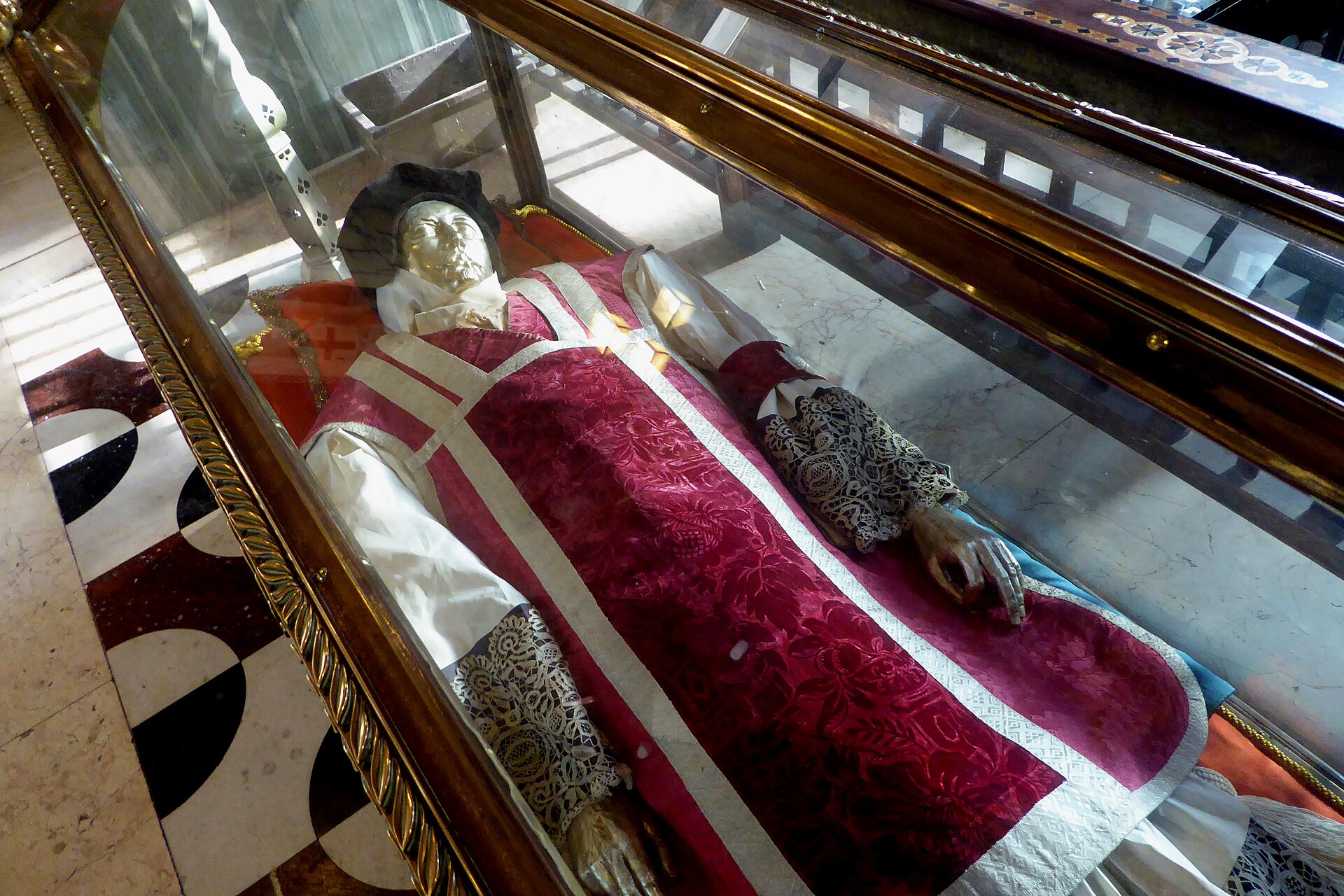
The preservation journey of Saint Cuthbert's body is a testament to the unwavering devotion of his followers and the tumultuous history of early medieval England. From its initial resting place on Lindisfarne, the body became a sacred palladium, carried by the monastic community during their flight from Viking incursions in the late 9th century. For over a century, the monks wandered, carrying Cuthbert's coffin, a portable shrine that symbolized their faith and their enduring connection to their saint. This peripatetic existence, often under harsh conditions, makes the body's continued incorruption all the more remarkable. Eventually, the community settled in Durham, where a magnificent cathedral was built to house his relics. Today, Saint Cuthbert's remains are not displayed in a glass casket in the conventional sense, nor are they fully visible to the public. Following the Reformation, his shrine was desecrated, and his body was reburied in a plain grave beneath the floor of the Feretory in Durham Cathedral. While the exact location is marked by a simple stone slab, the body itself rests within a wooden coffin, enclosed within a stone vault. This unassuming resting place belies the extraordinary history of its contents. The decision to keep the body interred rather than openly displayed reflects a historical shift in devotional practices and a desire to protect the sacred remains from further desecration, yet the knowledge of its presence continues to draw pilgrims and inspire reverence.
Beyond its remarkable physical preservation, Saint Cuthbert's incorrupt body has been associated with several extraordinary phenomena that have further cemented its miraculous status. The recurring mention of a sweet, unearthly fragrance emanating from the tomb, particularly during its exhumations, is a consistent detail in historical accounts. This "odor of sanctity" is a traditional sign of incorruption, believed to signify divine favor and the purity of the saint's soul. While not as frequently reported as some other incorruptibles, there are also historical allusions to the body's unusual flexibility, particularly during the 1104 translation, when the monks were able to adjust its position within the new coffin with relative ease. Perhaps one of the most compelling and enduring details is the discovery of the aforementioned Gospel of St. John. Its perfect preservation, nestled against the saint's chest after centuries, speaks volumes about the protective aura surrounding Cuthbert's remains. Furthermore, the very fact that the body endured centuries of forced migrations, exposure to various environmental conditions, and multiple reburials without succumbing to natural decay is, in itself, a remarkable and enduring phenomenon. These details, woven into the fabric of Cuthbert's story, transform his incorruption from a mere biological anomaly into a profound spiritual testament, underscoring the extraordinary power attributed to his sanctity.
Scientific Analysis
The historical accounts surrounding the preservation of Saint Cuthbert's body present a fascinating intersection of historical tradition and scientific inquiry. While the term "incorrupt" is often used within religious contexts, a rigorous scientific examination seeks to understand the underlying biological and chemical processes, or lack thereof, that contribute to such remarkable states of preservation.
Formal medical and scientific examinations of Saint Cuthbert's remains have been conducted at various points throughout history, though detailed scientific reports, particularly from earlier periods, are often limited by the nascent state of forensic science. One of the most significant examinations occurred in 1827. During this period, the tomb of Saint Cuthbert in Durham Cathedral was opened, and his remains were inspected by a group including Dr. James Raine, a prominent antiquarian and prebendary of Durham Cathedral, and several medical professionals of the time. Their observations, though not documented with the precision of modern forensic pathology, noted the remarkable state of preservation of the skeleton and some soft tissues. Later, in 1899, another examination took place, led by Canon William Greenwell, a renowned archaeologist. This inspection focused primarily on the skeletal remains and associated artifacts, with less emphasis on soft tissue analysis due to their diminished state by that time. The findings from these historical examinations consistently reported the presence of well-preserved skeletal elements, and in earlier accounts, indications of dried soft tissue. However, a comprehensive, multi-disciplinary forensic analysis utilizing modern techniques has not been performed on the scale that would fully address the scientific questions surrounding his preservation.
The scientific mystery surrounding Saint Cuthbert's preservation lies in the reported defiance of normal decomposition processes, particularly given the historical context and burial conditions. Human decomposition is a complex biological process driven by autolysis (self-digestion by cellular enzymes) and putrefaction (bacterial activity). Environmental factors such as temperature, humidity, oxygen availability, and soil composition significantly influence the rate and extent of decay. Saint Cuthbert died in 687 and was initially buried on Lindisfarne, an island off the coast of Northumberland, before his body was moved multiple times, eventually resting in Durham Cathedral. The burial environment, particularly during his initial interment, would have been subject to the natural elements, and subsequent reburials and transport would have exposed the remains to varying conditions. Without specific embalming or preservation treatments, which are not historically documented for Cuthbert, the expectation would be complete skeletalization within a relatively short period, certainly within centuries. The historical accounts, particularly from the 11th century when his tomb was opened and his body was reportedly found to be "whole and undecayed," present a challenge to conventional understanding of decomposition.
Various natural explanations have been proposed for instances of unusual body preservation, such as saponification (adipocere formation) or mummification. Saponification occurs when body fat is converted into a waxy, soap-like substance (adipocere) in anaerobic, moist environments, often in clay soils. This process can preserve the general form of the body but typically results in a distinct waxy texture. Mummification, on the other hand, involves the desiccation of tissues, often in dry, arid conditions or through deliberate artificial means. While these processes can explain some cases of unusual preservation, their applicability to Saint Cuthbert's case is debated. Historical descriptions do not consistently align with the characteristics of extensive adipocere formation, nor do the reported burial conditions universally suggest a consistently dry, mummifying environment. Skeptics often point to the possibility of misinterpretation of historical accounts, the natural drying of remains over centuries, or the limited scientific understanding of decomposition at the time of early inspections. However, the consistent reporting of unusual preservation across multiple historical periods, even if not fully detailed by modern standards, suggests something beyond typical decay.
From a modern scientific perspective, the case of Saint Cuthbert represents an intriguing subject for further investigation into the complex interplay of taphonomy, environmental factors, and biological processes. While historical accounts provide valuable qualitative data, the application of modern forensic techniques could offer definitive answers. Non-invasive methods such as CT scans and MRI could reveal the internal state of any remaining soft tissues and bone density without disturbing the remains. Carbon dating could precisely determine the age of the remains and any associated materials. Advanced tissue analysis, including histological examination and biochemical assays, could identify any residual cellular structures, proteins, or lipids, and potentially detect the presence of naturally occurring or introduced preservation agents. Furthermore, analysis of the microenvironment within the tomb, including air quality, humidity, and microbial presence, could provide crucial insights. While the historical claims of incorruption remain a matter of faith for many, a thorough scientific investigation, if permitted, could significantly advance our understanding of post-mortem changes and the rare circumstances under which human remains can defy the usual course of decay. Many questions remain unanswered, particularly regarding the precise conditions of his various interments and the exact state of his body at each historical exhumation.
Spiritual Significance
The phenomenon of incorruption, particularly as exemplified by figures like Saint Cuthbert, holds profound theological significance within Catholic doctrine, serving as a tangible testament to the sanctity of the human body and the promise of future resurrection. For the Church, the body of a saint, even after death, is understood as a temple of the Holy Spirit, a vessel consecrated by a life lived in profound union with God. Saint Paul’s exhortation in 1 Corinthians 6:19, reminding believers that their bodies are temples of the Holy Spirit, finds a striking visual echo in the preserved remains of an incorrupt saint. This extraordinary preservation, defying natural decay, is not merely a biological anomaly but is interpreted as a divine sign, a prefigurement of the glorified body promised at the general resurrection. It underscores the Catholic belief in the integral nature of the human person – body and soul – and the ultimate redemption of both. For Saint Cuthbert, whose body was found remarkably preserved centuries after his death, this served as a powerful affirmation of his exceptional holiness, a divine seal upon a life dedicated entirely to Christ. The Church has consistently viewed such phenomena as a confirmation of the communion of saints, demonstrating that even in death, the holy ones remain intimately connected to the living Church, their earthly remains continuing to bear witness to the power of God's grace.
Saint Cuthbert's unique charism was deeply rooted in a profound mysticism interwoven with an intense asceticism and an unwavering pastoral heart. His spiritual gift was arguably his remarkable ability to balance the contemplative life with active service, a testament to the Benedictine ideal he embraced. He practiced heroic virtues of humility, famously preferring the solitude of Farne Island to the worldly acclaim of his episcopal office, and an extraordinary charity, tending to the sick and poor with unreserved compassion. His obedience to monastic rule and to the promptings of the Holy Spirit was absolute, leading him from shepherd boy to monk, prior, bishop, and ultimately, hermit. Cuthbert's way of holiness manifested in his deep love for creation, his communion with animals, and his ceaseless prayer, often spent in solitary vigil. He contributed significantly to the spiritual tradition of early Anglo-Saxon monasticism, emphasizing personal sanctity, rigorous discipline, and compassionate outreach. His life served as a beacon, illuminating a path of holiness that transcended the political and social upheavals of his era, demonstrating that true spiritual authority stemmed not from worldly power but from an intimate relationship with God. His legacy underscored the transformative power of a life lived in constant devotion, a model of Christian discipleship that continues to inspire.
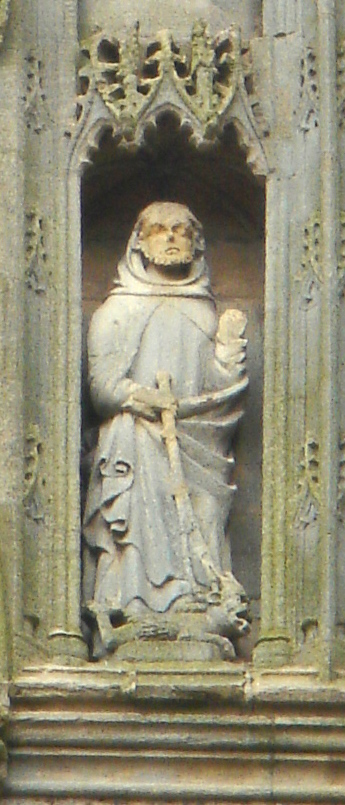
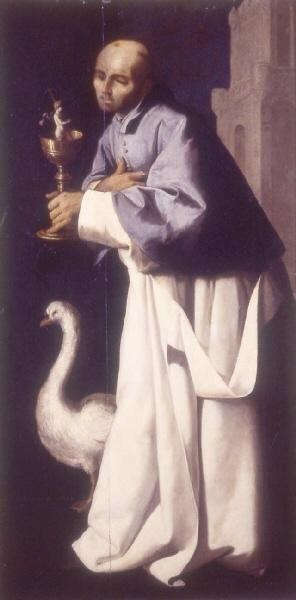
Devotion to Saint Cuthbert has flourished for over a millennium, evolving from local veneration in Northumbria to widespread reverence across England and beyond. His patronage is diverse, encompassing Northumbria itself, sailors, and even geese, reflecting his deep connection to nature and his coastal hermitage. Over the centuries, countless pilgrims have journeyed to his resting place, initially at Lindisfarne, then at Chester-le-Street, and finally, majestically, at Durham Cathedral, where his shrine remains a focal point of prayer and reflection. While specific novenas directly attributed to him might be less common than for some later saints, his feast day on March 20th is celebrated with solemnity, and countless personal prayers have been offered seeking his intercession. Visiting his shrine at Durham is a profoundly moving experience; the sheer architectural grandeur of the cathedral, built to house his relics, speaks volumes about the enduring respect for his sanctity. Pilgrims often spend time in quiet contemplation before his tomb, feeling a tangible connection to a spiritual giant whose life continues to resonate. The very presence of his historical incorrupt body, even if not directly visible to the public today, underpins the sacred atmosphere, inviting believers to reflect on the eternal truths he embodied.
Miracles attributed to Saint Cuthbert's intercession are numerous and span centuries, testifying to his powerful spiritual legacy. Documented accounts include healings of the sick, particularly those suffering from various ailments, and instances of divine protection. During his lifetime, he was known for his prophetic gifts and his ability to work wonders, including the healing of a paralyzed boy and the calming of storms. After his death, his tomb became a site of pilgrimage and miraculous cures, with chronicles detailing the restoration of sight to the blind, the strengthening of the lame, and the alleviation of chronic illnesses. These miracles were not merely physical cures but often led to profound spiritual conversions, drawing many closer to faith. The incorrupt body itself, discovered periodically throughout history, has been a source of immense spiritual consolation for the faithful, serving as a powerful visual reminder of God's grace and the promise of eternal life. In times of national crisis or personal despair, the enduring presence of Cuthbert's relics has offered hope and reassurance, anchoring communities in their faith and demonstrating the enduring power of intercessory prayer through the communion of saints.
Saint Cuthbert's enduring message for contemporary Catholics and seekers is one of profound spiritual authenticity and a radical commitment to God above all else. In a world increasingly dominated by materialism and secularism, his life challenges us to re-evaluate our priorities, reminding us that true wealth lies not in earthly possessions but in a life lived in union with the divine. His embrace of solitude and contemplation offers a powerful antidote to the relentless noise and distraction of modern life, inviting us to cultivate inner peace and a deeper relationship with God. People today can learn from his example of compassionate service, his humility in rejecting worldly honors, and his unwavering faith in the face of adversity. His life serves as a compelling argument for the transformative power of asceticism and prayer, demonstrating how these practices can lead to profound spiritual freedom and an intimate connection with the Creator. Moreover, his incorruption serves as a tangible bridge between the visible and invisible worlds, a physical manifestation of spiritual realities. It reminds us that there is more to existence than what meets the eye, that divine grace can transcend natural laws, and that the saints, though departed, remain vibrant participants in the ongoing story of salvation, offering guidance and intercession to those who seek it.
AI summary
A plain-language overview generated from this page's source material. Always verify with primary sources.