Biography
Born Maria Rita de Souza Lopes Pontes on May 26, 1914, in Salvador, Bahia, Brazil, Saint Dulce came from a prominent and devout Catholic family. Her father, Augusto Lopes Pontes, was a dentist and professor, and her mother, Dulce Maria de Souza Lopes Pontes, instilled in her a deep love for God and a compassion for the poor and suffering. From a young age, Maria Rita displayed an extraordinary empathy, often bringing home the sick and needy to be cared for by her family. At the tender age of 13, she began to dedicate herself to assisting the poor in her neighborhood, transforming her family home into an impromptu clinic and soup kitchen. This early exposure to the harsh realities of poverty and illness profoundly shaped her vocational call, igniting within her a fervent desire to serve Christ in the least of His brethren.
In 1933, at the age of 19, Maria Rita entered the Congregation of the Missionary Sisters of the Immaculate Conception of the Mother of God, taking the name Sister Dulce in honor of her beloved mother. Her ministry quickly blossomed, becoming a beacon of hope for the marginalized of Salvador. She founded the first Catholic workers' organization in Bahia, established a school for the poor, and opened a hospital that grew from a chicken coop into one of the largest and most respected healthcare facilities in Brazil, serving thousands regardless of their ability to pay. Sister Dulce’s tireless efforts earned her the affectionate title, "The Good Angel of Bahia," as she tirelessly championed the cause of the sick, the elderly, and the abandoned, often begging for resources and inspiring countless volunteers with her unwavering faith and indomitable spirit. Her work was a testament to the Gospel message, a living embodiment of charity and self-sacrifice.
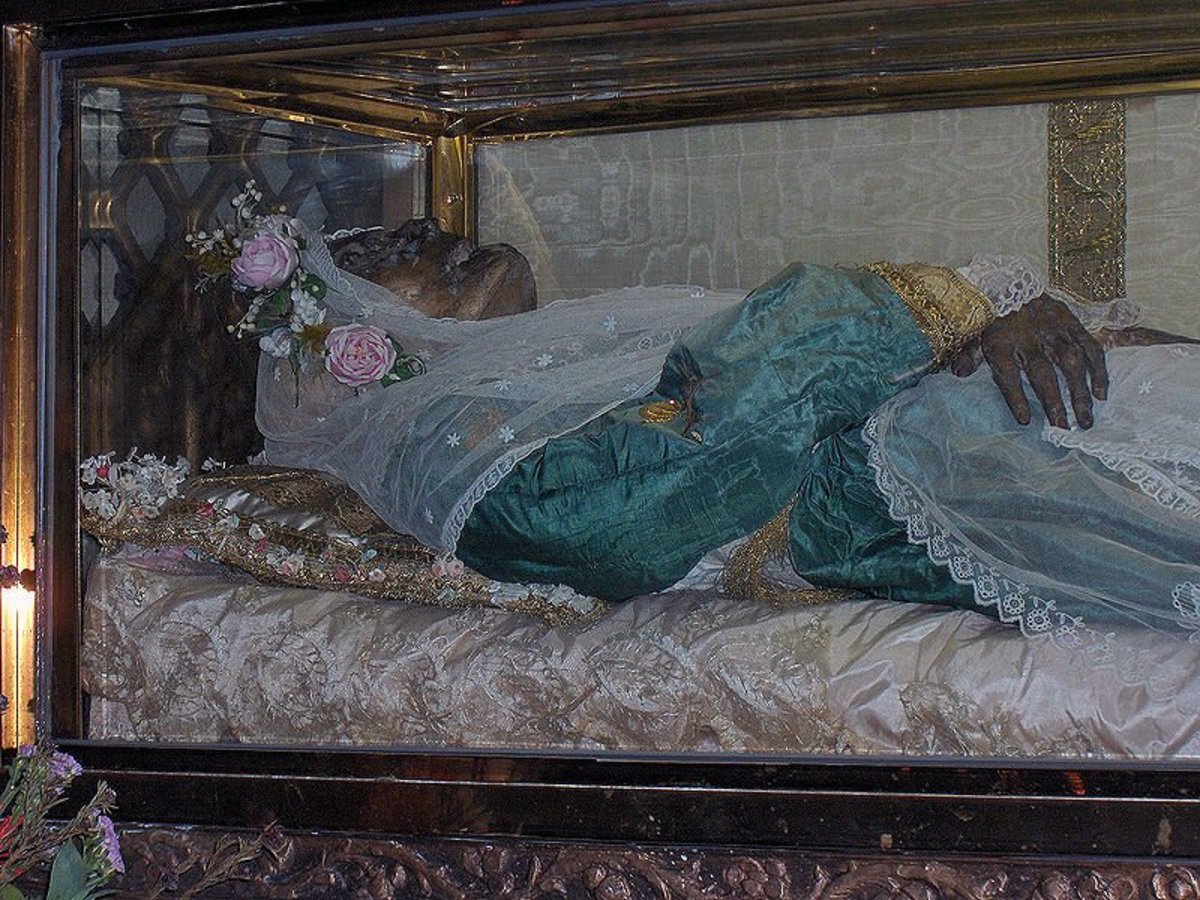
Sister Dulce's earthly journey concluded on March 13, 1992, at the age of 77, after a prolonged illness. Her funeral was attended by multitudes, a testament to the profound impact she had on the lives of so many. In 2000, during the process of her beatification, her tomb was opened, revealing her body to be remarkably preserved, a phenomenon known as incorruption. This miraculous state, a sign of God's favor, further affirmed her sanctity and devotion. Today, her incorrupt body rests in the Chapel of the Sanctuary of the Immaculate Conception of the Mother of God in Salvador, Brazil, where it is venerated by pilgrims from around the world.
The legacy of Saint Dulce Pontes is immense and continues to inspire millions. She was beatified by Pope Benedict XVI in 2011 and canonized by Pope Francis in 2019, becoming the first Brazilian-born female saint. Her canonization solidified her place as a universal model of Christian charity and service. Pilgrims visiting Salvador can experience the profound spiritual atmosphere of the Sanctuary, witness her incorrupt body, and learn about the enduring work of the Obras Sociais Irmã Dulce (OSID), the charitable foundation she established, which continues to provide healthcare, education, and social assistance to those in need, ensuring that the "Good Angel of Bahia" continues to spread her wings of compassion across Brazil and beyond.
Discovery
The remarkable journey of Saint Dulce de Souza Lopes Pontes's incorrupt body began not long after her passing in 1992. Initial exhumation was not for the purpose of discerning incorruption, but rather a routine transfer of remains. It was during this solemn occasion, when her coffin was opened for relocation, that those present were met with an astonishing sight. Instead of the expected skeletal remains, the body of Sister Dulce, as she was known during her life, lay remarkably preserved. Her features were discernable, her habit intact, and a sense of peaceful repose permeated the scene. The immediate reaction among the clergy and laypersons present was one of profound awe and reverence, a hushed wonder at this unexpected manifestation. News of this extraordinary discovery spread quickly, igniting a renewed sense of devotion among her followers and drawing the attention of Church authorities. This initial finding, though not immediately declared incorruption in the formal theological sense, certainly laid the groundwork for future investigations and cemented her place in the tradition of miraculous preservation.
Following this initial discovery, several subsequent examinations were conducted to ascertain the true nature of the preservation. In 2000, as part of the beatification process, a more formal exhumation and canonical recognition of her remains took place. During this examination, medical and ecclesiastical experts meticulously documented the state of her body. They noted the remarkable integrity of her skin, tissues, and internal organs, a condition far exceeding what would be expected after eight years of burial. Further examinations in 2010, preceding her canonization, confirmed the consistent and ongoing state of preservation. Throughout these decades, the body of Saint Dulce has maintained its integrity without any significant signs of decomposition. This consistent state, observed over nearly two decades, has been a key factor in the Church's recognition of her incorruptibility, demonstrating a supernatural resistance to the natural processes of decay.
The preservation journey of Saint Dulce's body has been one of careful stewardship and public veneration. After the initial discovery and subsequent examinations, her remains were carefully prepared for public display. She now rests in a specially constructed glass casket within the Sanctuary of Saint Dulce of the Poor in Salvador, Brazil. This transparent enclosure allows pilgrims and devotees to view her body while providing a controlled environment to protect it from environmental factors. The casket itself is a dignified and reverent vessel, designed to honor her sanctity. The Sanctuary has become a significant pilgrimage site, where countless individuals come to pray, seek intercession, and witness this tangible sign of divine grace. The meticulous care taken in her display reflects the deep reverence the Church holds for the incorruptible saints, viewing their preserved bodies as powerful reminders of the resurrection and the sanctity of life.
While there have been no widely reported phenomena such as sweet fragrances, flexibility, or bleeding associated with Saint Dulce's incorrupt body, its very existence is considered a remarkable detail in itself. The consistent and enduring preservation of her tissues and organs, defying the natural course of decomposition for decades, stands as the primary miraculous aspect. In a climate like Brazil's, known for its heat and humidity, such a state of preservation without embalming or extraordinary artificial means is particularly astonishing. This resistance to decay, observed and documented by medical and ecclesiastical experts, is the central wonder of her incorruption, serving as a powerful testament to her sanctity and a source of inspiration for the faithful.
Spiritual Significance
The phenomenon of incorruption, as exemplified by Saint Dulce de Souza Lopes Pontes, holds profound theological significance within Catholic doctrine, serving as a tangible testament to the sanctity of the human body and the promise of future resurrection. For centuries, the Church has recognized certain instances where, despite the natural processes of decay, the bodies of saints remain remarkably preserved, often for decades or even centuries after death. This extraordinary preservation is not merely a biological anomaly but is interpreted as a divine sign, a miraculous affirmation of the individual's profound holiness and their intimate union with God. It speaks directly to the Pauline teaching that the body is a temple of the Holy Spirit (1 Corinthians 6:19), suggesting that the indwelling Spirit can, in rare cases, extend its preserving power even beyond death. Furthermore, incorruption foreshadows the glorious resurrection of the body, a central tenet of Christian faith, reminding believers that our physical forms, redeemed by Christ, are destined for eternal life and not merely for dust. In the case of Saint Dulce, her incorrupt state, discovered decades after her passing in 1992, is seen by the Church as a powerful confirmation of her heroic virtues and her enduring spiritual presence within the communion of saints, offering a visible link between the earthly Church and the triumphant Church in heaven. It reinforces the belief that death does not sever the bonds of love and prayer that unite us with those who have gone before us in faith.
Saint Dulce's unique charism was undeniably a profound and unwavering compassion for the poor and suffering, a spiritual gift that manifested in her tireless and selfless service. From an early age, Maria Rita, as she was then known, exhibited an extraordinary empathy, transforming her family home into an impromptu clinic and soup kitchen, a testament to her nascent vocational call. Her heroic virtues were numerous, but chief among them was an unparalleled charity, which drove her to dedicate her entire life to alleviating the plight of the marginalized. She practiced a radical form of poverty, embracing austerity herself while tirelessly working to provide for others. Her humility was profound, always deflecting praise and focusing solely on the needs of those she served. Obedience to God's will and to the Church's teachings guided her every action, even when faced with immense challenges and obstacles. Her spirituality was deeply rooted in the Franciscan tradition, emphasizing evangelical poverty, service to the poor, and a profound love for Christ in the suffering. She did not merely offer aid; she offered dignity, love, and a tangible manifestation of God's mercy to those society had forgotten. Her specific way of holiness was characterized by a practical, hands-on approach to charity, building hospitals, schools, and social works from the ground up, demonstrating that holiness is not merely contemplative but actively engaged in transforming the world.
Devotion to Saint Dulce has blossomed remarkably since her passing and subsequent canonization, particularly within Brazil and among Portuguese-speaking communities worldwide. Her patronage extends to the sick, the poor, and those who care for them, reflecting her life's singular dedication. Pilgrims today flock to the Sanctuary of Saint Dulce of the Poor in Salvador, Brazil, where her incorrupt body rests, seeking her intercession and spiritual solace. The experience of visiting her shrine is often described as deeply moving and inspiring. The faithful approach her glass-encased body with reverence, offering prayers, lighting candles, and leaving petitions, feeling a profound connection to her enduring spirit. There are no specific ancient novenas or elaborate feast day traditions yet, given her relatively recent canonization (2019), but local devotions are rapidly forming, including special Masses, prayer services, and acts of charity performed in her honor on her feast day, August 13th. The very presence of her incorrupt body serves as a powerful focal point for devotion, a tangible reminder of God's grace at work in a human life, inspiring countless individuals to emulate her selfless love and dedication to the marginalized.
Numerous miracles have been attributed to the intercession of Saint Dulce, both during her lifetime and after her death, solidifying her reputation for holiness and her powerful intercessory capacity. Documented healings, often medically inexplicable, have been reported, ranging from the complete recovery from severe illnesses to the restoration of sight and mobility. These miracles played a crucial role in her beatification and canonization processes, undergoing rigorous scrutiny by Church authorities. Beyond physical healings, countless conversions and answered prayers have been attributed to her intervention, demonstrating her spiritual efficacy in guiding souls closer to God. The incorrupt body itself has been a profound source of spiritual consolation for the faithful. For many, seeing her preserved form instills a deep sense of peace, hope, and renewed faith. It serves as a powerful reminder that saints are not distant figures of the past but active members of the communion of saints, perpetually interceding for those on earth. The very existence of her incorrupt body acts as a continuous miracle, a silent sermon on the power of God's grace and the enduring reality of eternal life, offering comfort and strength to those facing suffering and doubt.
Saint Dulce's enduring message for contemporary Catholics and seekers resonates powerfully in a world often consumed by materialism and secularism. Her life challenges the prevailing notion that true happiness lies in wealth, power, or personal gratification, instead demonstrating that profound joy and fulfillment are found in selfless service to others and an unwavering commitment to God. She teaches us that holiness is not reserved for cloistered mystics but is attainable in the everyday acts of compassion and love, even amidst the most challenging circumstances. From her example, modern believers can learn the transformative power of radical charity, the importance of seeing Christ in the face of the poor, and the courage to act on one's convictions, even when resources are scarce. Her incorruption serves as a tangible bridge between the visible and invisible worlds, a concrete sign that there is more to reality than what our senses perceive. It reminds us of the spiritual dimension of human existence, the promise of the resurrection, and the enduring presence of God's grace in the lives of His saints. In a world yearning for meaning and connection, Saint Dulce stands as a beacon of hope, inspiring us to live lives of greater purpose, compassion, and faith, demonstrating that even in death, love and sanctity can transcend the boundaries of decay.
AI summary
A plain-language overview generated from this page's source material. Always verify with primary sources.