Biography
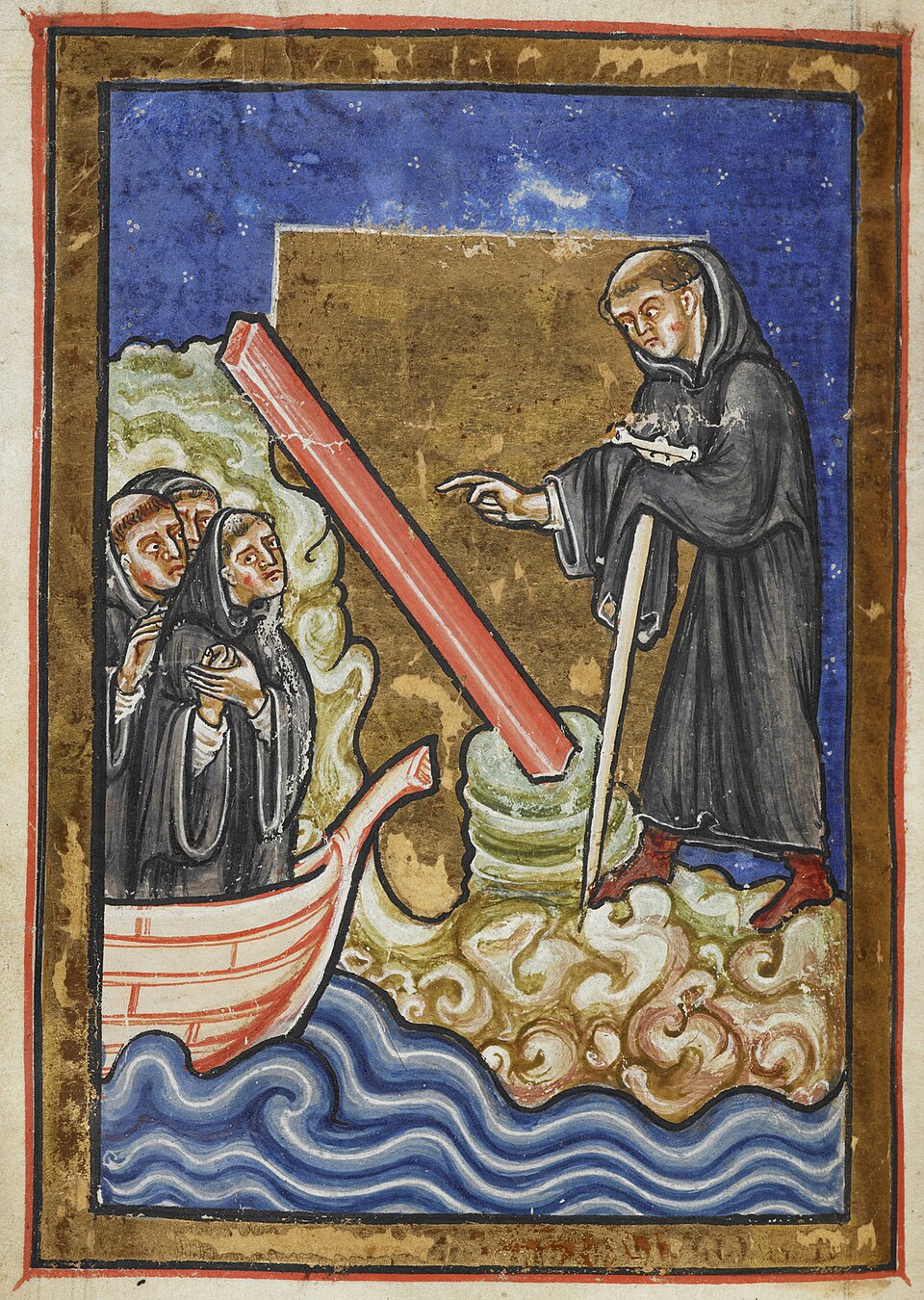
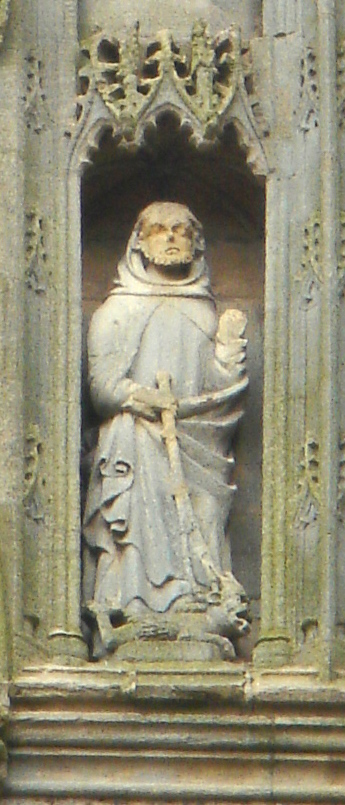
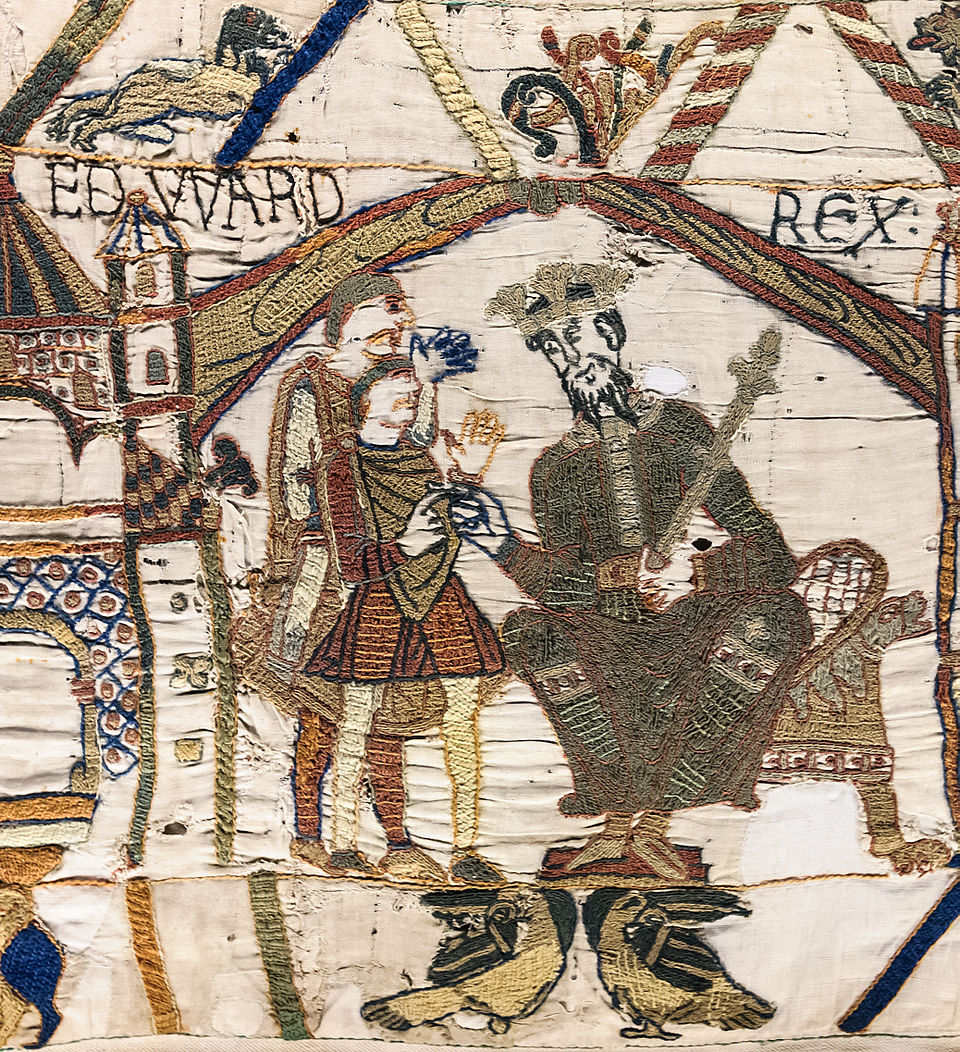
Saint Edward the Confessor, born around 1003, emerged from a turbulent era in English history, the son of King Æthelred the Unready and Emma of Normandy. His early life was marked by exile, as he and his family fled to Normandy during the Danish conquest of England. This period of displacement and dependence profoundly shaped his character, instilling in him a deep piety and a detachment from worldly ambitions. He spent much of his youth in monastic settings, developing a profound spiritual life that would later define his reign. These formative years, steeped in prayer and contemplation, laid the groundwork for his future role as a Christian king, one who prioritized spiritual welfare over political machinations.
Upon his return to England and his eventual coronation in 1042, Edward embarked on a reign characterized by peace, justice, and a profound devotion to God. Though a king, he lived with an asceticism more befitting a monk, often spending his time in prayer and acts of charity. His most enduring legacy is undoubtedly the founding and construction of Westminster Abbey, a magnificent edifice he envisioned as a royal burial church and a testament to his faith. He personally oversaw its design and construction, dedicating immense resources and energy to its completion. Beyond this architectural marvel, Edward was known for his just rule, his compassion for the poor, and his unwavering commitment to peace, earning him the moniker "the Confessor" – a title reserved for saints who suffered for their faith but were not martyred. He was also credited with miraculous healings, particularly of scrofula, a disease often referred to as the "King's Evil," which further solidified his reputation for sanctity.
King Edward passed away on January 5, 1066, just days after the consecration of Westminster Abbey, and was interred within its hallowed walls. His death marked a pivotal moment in English history, preceding the Norman Conquest by mere months. When his tomb was opened in 1102, and again in 1161 for his canonization, his body was found to be remarkably preserved, a phenomenon that deeply impressed the faithful and contributed to his veneration. Witnesses described his body as being perfectly intact, his vestments fresh, and his beard long and white. This incorruption was seen as a divine sign of his sanctity. Today, Saint Edward the Confessor's remains rest in a magnificent shrine within Westminster Abbey, a place of pilgrimage and historical significance.
Saint Edward the Confessor was canonized by Pope Alexander III in 1161, a testament to his enduring sanctity and the widespread veneration he received. His legacy extends far beyond his incorrupt body; he remains a patron saint of England and a model of Christian kingship. Pilgrims and visitors to Westminster Abbey can still visit his shrine, a focal point of devotion and a tangible link to a saint who embodied piety, peace, and justice. His life serves as a powerful reminder that true leadership is rooted in faith and service, and his story continues to inspire those who seek to integrate their spiritual lives with their worldly responsibilities.
Discovery
The story of Edward the Confessor’s incorruptibility begins not at his death in 1066, but nearly a century later, with a remarkable discovery that solidified his burgeoning cult. In the year 1102, forty-six years after his burial, a significant event occurred that would forever link his name with the miraculous. Abbot Gilbert Crispin of Westminster, a man of considerable piety and learning, undertook the solemn task of translating Edward’s remains to a more prominent tomb within the Abbey. This was not merely a reburial; it was a formal recognition of Edward’s sanctity, a step towards his eventual canonization. As the tomb was opened, those present were struck by an extraordinary sight. The body of King Edward, despite the passage of nearly five decades, lay remarkably preserved. His garments, though somewhat faded, were intact, and his flesh, rather than having succumbed to the natural processes of decay, appeared supple and whole. The chronicler Aelred of Rievaulx, writing later, vividly described the scene, noting the "whole and undecayed" state of the body, and the "sweet odour" that emanated from the tomb. Among those present, besides Abbot Crispin, were other monks and dignitaries, all bearing witness to this profound phenomenon. The immediate reaction was one of awe and reverence, a clear sign from above, they believed, of Edward’s holiness. This initial exhumation was a pivotal moment, transforming a respected king into a venerated saint in the eyes of the faithful.
The initial discovery in 1102 was not an isolated event; rather, it initiated a series of examinations and translations that further attested to Edward's incorruptibility. A more significant translation occurred in 1163, a year after his canonization by Pope Alexander III. On October 13th of that year, in a grand ceremony attended by King Henry II and Thomas Becket, Archbishop of Canterbury, Edward’s body was moved to a new, more elaborate shrine within Westminster Abbey. During this translation, the body was again observed to be in an astonishing state of preservation. Aelred of Rievaulx, who was present, meticulously recorded that the body was found "entire and incorrupt, the skin and flesh adhering to the bones, and the limbs flexible." He even noted the "long, white beard" that remained intact. This second public viewing further cemented the belief in Edward’s miraculous preservation. Later, in 1269, during the reign of King Henry III, Edward’s remains were once more translated, this time to the magnificent new shrine in the rebuilt Westminster Abbey, where they largely rest today. Accounts from this period, though less detailed regarding the body's specific condition, consistently refer to his "incorrupt" state, suggesting that the remarkable preservation continued. Throughout these centuries, the consistent reports of his undecayed state, despite multiple disturbances and exposures, served as powerful evidence for his sanctity.
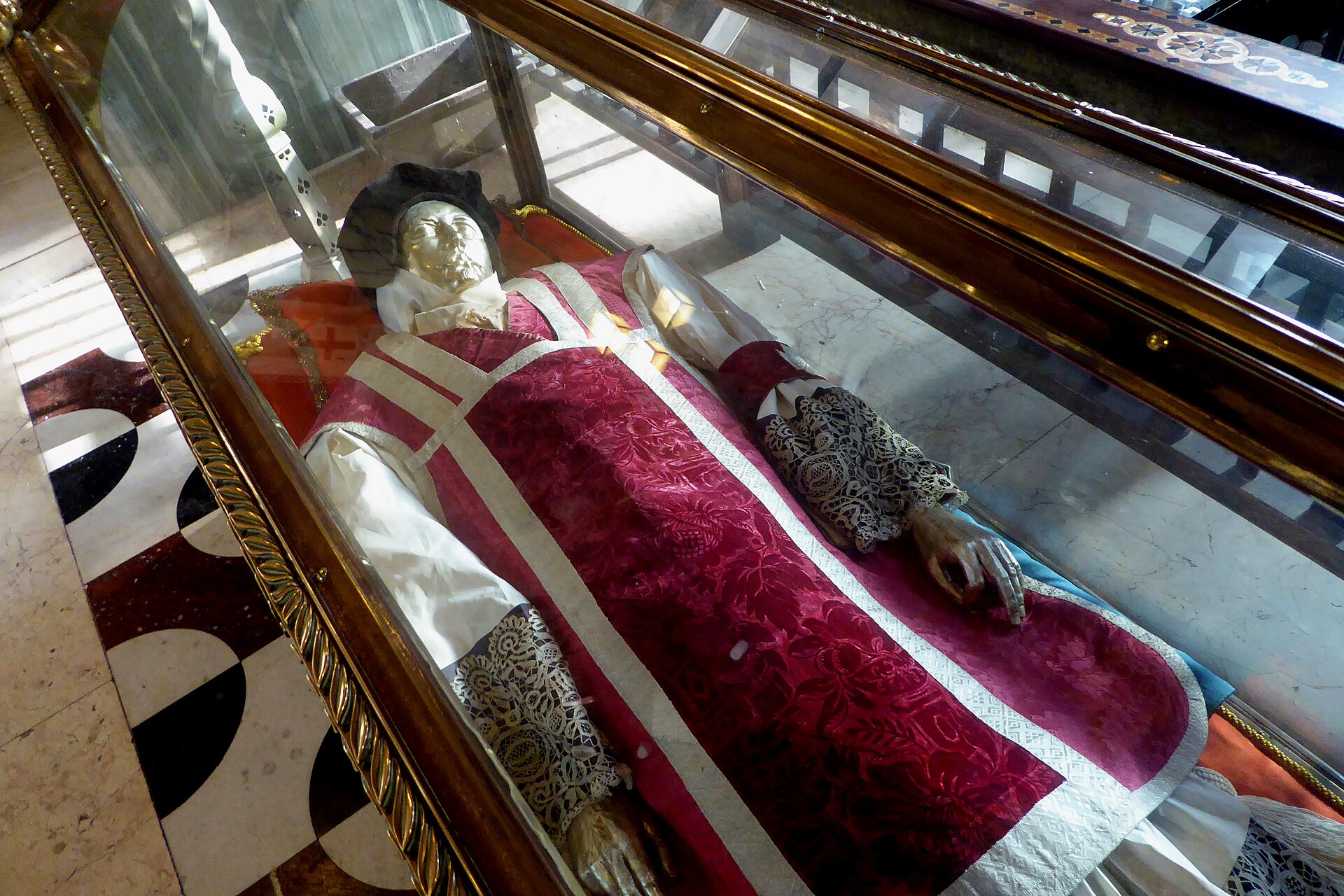
The journey of Edward the Confessor's remains has been one of careful preservation and veneration, culminating in their current revered placement. After the 1269 translation, the body was enshrined in a magnificent marble and mosaic tomb, a testament to the high regard in which he was held. This shrine, located behind the high altar of Westminster Abbey, became a focal point for pilgrims from across England and beyond. While the body itself is not openly displayed in a glass casket in the manner of some other incorrupt saints, it lies within this ornate, sealed shrine. The shrine itself has undergone periods of damage and restoration, particularly during the Reformation when it was desecrated and its treasures plundered. However, the body of Edward was not destroyed. It was reportedly reinterred in a less conspicuous location within the Abbey, only to be restored to its original shrine in the reign of Queen Mary I. Since then, it has remained within the confines of the shrine, protected from the elements and the gaze of the curious. The decision to keep the body within a sealed shrine, rather than a transparent reliquary, reflects both the historical context of its veneration and the ongoing respect for the saint's repose. While direct visual confirmation of its current state is not readily available to the public, the historical accounts of its incorruption are well-documented and form a cornerstone of his enduring legacy.
Beyond the remarkable preservation of his physical form, several unusual phenomena have been historically associated with Edward the Confessor’s incorrupt body. The most frequently cited is the "sweet odour" or "fragrance" that was said to emanate from his tomb upon its opening in 1102 and again in 1163. This phenomenon, often interpreted as a sign of sanctity, contrasted sharply with the expected smell of decay. While not as dramatic as bleeding or oil exuding, the persistent reports of this pleasant aroma added to the mystique surrounding his remains. Furthermore, the accounts of his "flexible limbs" during the 1163 translation are particularly striking. For a body nearly a century old, to retain such suppleness defies natural explanation and is a characteristic often attributed to incorruptible saints. Though not documented to have resisted decay in extreme conditions like some desert fathers, the simple fact of his preservation over centuries in a damp English climate, despite multiple exhumations and reinterments, is itself a remarkable detail. These details, woven into the historical fabric of his veneration, underscore the extraordinary nature of Edward the Confessor’s incorruptibility, solidifying his place among the most revered saints whose bodies defied the natural order.
Scientific Analysis
The historical accounts surrounding the bodily preservation of Edward the Confessor, who died in 1066, present a compelling subject for scientific inquiry, particularly given the historical context and the reported state of his remains. Formal medical or scientific examinations, as understood in a modern forensic sense, were not conducted at the time of his death or initial exhumations. The earliest detailed observations come from monastic chroniclers and later historical records. For instance, in 1102, during the first translation of his relics, chroniclers noted the body appeared "entire and uncorrupted," with skin and vestments intact. A more significant examination occurred in 1163, when his body was again translated to a new shrine in Westminster Abbey. Aelred of Rievaulx, a Cistercian abbot and historian, recorded that the body was found in a state of remarkable preservation, with limbs flexible and skin soft, and a sweet odor emanating from the tomb. Later, in 1685, during renovations of Westminster Abbey, the tomb was inadvertently opened. King James II, a devout Catholic, reportedly examined the body himself, noting its intact state. He is said to have touched the body and removed a cross and chain from around its neck, which he later presented to the College of English Jesuits at St. Omer. While these accounts lack the rigor of modern scientific documentation, they consistently describe a body that defied the typical decomposition expected after centuries. There is no record of professional medical personnel or anatomists performing a detailed, systematic examination akin to an autopsy or forensic analysis during these historical periods. The observations were primarily qualitative and descriptive, often imbued with religious significance by the observers.
The scientific mystery surrounding Edward the Confessor's incorruption lies in the reported defiance of normal decomposition processes over an extended period, particularly in an environment that would typically accelerate decay. Human decomposition is a complex biological process driven by autolysis (self-digestion by cellular enzymes) and putrefaction (bacterial activity). Factors such as temperature, humidity, oxygen availability, and the presence of microorganisms significantly influence its rate. Buried within Westminster Abbey, a structure that has experienced varying environmental conditions over centuries, a body would normally undergo complete skeletalization within decades, if not sooner, depending on the specifics of the burial environment. The reported flexibility of limbs and softness of skin centuries after death are particularly difficult to reconcile with natural processes. While embalming practices existed in the 11th century, they were generally rudimentary compared to later techniques and focused more on temporary preservation for viewing rather than long-term incorruption. There is no historical record or archaeological evidence suggesting extensive embalming or sophisticated preservation treatments were applied to Edward's body. The absence of such interventions, coupled with the reported state of preservation, challenges conventional understanding of taphonomy – the study of how organisms decay and fossilize. The temperate, often damp climate of London and the typical soil conditions within a medieval abbey would normally promote microbial growth and accelerate decomposition, making the reported incorruption even more anomalous.
Natural explanations for exceptional body preservation, such as saponification (adipocere formation) or mummification, are often considered in such cases. Adipocere, a waxy, soap-like substance formed from body fats in moist, anaerobic conditions, can preserve soft tissues, but it typically results in a rigid, brittle consistency, not the reported flexibility. Mummification, either natural (desiccation in dry environments) or artificial (embalming), can preserve tissues, but again, the descriptions of Edward's body do not perfectly align with typical mummified remains, particularly regarding the reported softness and flexibility. Skeptics often attribute such accounts to exaggeration, misinterpretation, or the influence of religious belief on observation. They might suggest that the descriptions were more symbolic than literal, or that any perceived preservation was a result of minimal, unnoticed embalming combined with favorable microenvironmental conditions within the tomb that slowed, but did not entirely halt, decomposition. However, the consistent reporting of remarkable preservation across multiple centuries and by different observers, even if anecdotal, suggests something beyond mere skeletalization. The exact environmental conditions within the original and subsequent tombs are not fully documented, making it challenging to definitively rule out or confirm specific natural preservation mechanisms without direct examination.
From a modern scientific perspective, the case of Edward the Confessor's reported incorruption remains largely an unexamined phenomenon. While historical accounts provide intriguing qualitative data, the absence of modern forensic analysis leaves many questions unanswered. Techniques such as CT scans could non-invasively assess the internal state of the body, identify any remaining soft tissues, and potentially reveal evidence of ancient embalming practices or unusual taphonomic processes. Carbon dating of tissue samples, if available and ethically permissible, could confirm the age of the remains and rule out any later substitutions. Microscopic tissue analysis could identify specific preservation mechanisms at a cellular level, such as the presence of adipocere or other altered biological structures. DNA analysis, while challenging on ancient, potentially degraded samples, could offer insights into the individual's health and genetic profile. The ethical and logistical challenges of accessing and examining such a revered historical and religious relic are significant. However, a comprehensive, non-invasive scientific study, conducted with respect for its historical and religious significance, could provide invaluable data to the broader scientific study of exceptional body preservation, potentially shedding light on novel taphonomic pathways or even challenging existing scientific paradigms regarding decomposition. Until such an examination is conducted, the reported incorruption of Edward the Confessor remains a compelling historical and scientific enigma, a testament to the complex interplay between biological processes, environmental factors, and human observation.
Spiritual Significance
The phenomenon of incorruption, as exemplified by figures like Saint Edward the Confessor, holds profound theological significance within Catholic tradition, serving as a tangible testament to the sanctity of the human body and the promise of future glory. Within Catholic theology, the body is understood not merely as a vessel for the soul, but as a temple of the Holy Spirit, consecrated through Baptism and destined for resurrection. Saint Paul's admonition in 1 Corinthians 6:19, "Do you not know that your body is a temple of the Holy Spirit within you, whom you have from God, and that you are not your own?" resonates deeply here. The preservation of a saint's body, defying natural decay, is interpreted by the Church as a divine sign, a miraculous affirmation of that individual's exceptional holiness and their intimate union with God. It foreshadows the ultimate resurrection of the body, a central tenet of Christian faith, reminding believers that the physical form, redeemed by Christ, will one day be reunited with the soul in glorified perfection. For Saint Edward, this incorruption has been historically understood as a divine seal upon his life of piety and his dedication to God's will, reinforcing his place within the communion of saints, that mystical bond uniting the living and the dead in Christ.
Saint Edward the Confessor's unique charism was undoubtedly his profound piety and his unwavering commitment to peace and justice, even amidst the tumultuous political landscape of 11th-century England. His early life, marked by exile and a monastic upbringing, instilled in him a deep spiritual discipline and a detachment from worldly power. He practiced heroic virtues of humility, preferring prayer and contemplation to the trappings of kingship, and charity, famously dedicating much of his royal income to the poor and to the rebuilding of churches, most notably Westminster Abbey. His reign was characterized by a remarkable aversion to warfare, earning him the epithet "the Confessor" – a title reserved for saints who suffered for their faith but were not martyred. He embodied a spiritual tradition that sought to integrate Christian principles directly into governance, viewing his kingship as a sacred trust from God rather than a means of personal aggrandizement. His holiness manifested in his daily life through acts of prayer, fasting, and a profound sense of justice, often mediating disputes with a gentle hand and prioritizing reconciliation over retribution. He stands as an exemplar of a king who truly sought to serve God and his people, rather than merely rule them.
Devotion to Saint Edward the Confessor has flourished over the centuries, particularly in England, where he remains a revered figure in both Catholic and Anglican traditions. His patronage extends to difficult marriages, separated spouses, and kings, reflecting his own personal struggles and his commitment to peace. His feast day is celebrated on October 13th, a day marked by special prayers and reflections on his life of virtue. Pilgrims have historically flocked to Westminster Abbey, his final resting place, drawn by the spiritual power emanating from his shrine. While his body is no longer publicly displayed as "incorrupt" in the same manner as some other saints, the historical accounts of its remarkable preservation have fueled centuries of veneration. The experience of visiting his shrine, even today, offers a profound connection to a saint whose life bridged the sacred and the secular, reminding visitors of the enduring power of faith in shaping history. The very location of his tomb within Westminster Abbey, a site of immense historical and spiritual significance, underscores his lasting legacy and the continuous flow of prayer and devotion directed towards him.
Numerous miracles have been attributed to Saint Edward the Confessor's intercession, both during his lifetime and after his death. Chroniclers of his era recorded instances of his healing the sick and restoring sight, often through simple acts of prayer and touch. One famous account tells of his healing a blind man by washing his eyes with water that had been used to wash the king's hands. After his death, the incorrupt state of his body itself was considered a continuous miracle, a source of profound spiritual consolation for the faithful. Pilgrims would touch his tomb, seeking his intercession for various ailments and spiritual needs, and many documented healings and answered prayers were attributed to his powerful intercession. The very longevity of his cult and the enduring reverence for his memory speak to the tangible impact of his spiritual presence. For centuries, the faithful have found solace and hope in his example, believing that his closeness to God allows him to intercede effectively on their behalf, offering a bridge between earthly suffering and divine grace.
Saint Edward the Confessor's enduring message holds profound relevance for modern believers and seekers alike, offering a compelling counter-narrative to contemporary materialism and secularism. His life challenges the modern pursuit of power and wealth for their own sake, demonstrating that true fulfillment lies in service to God and humanity. In an age often characterized by cynicism and division, his unwavering commitment to peace, justice, and reconciliation provides a powerful model for ethical leadership and personal integrity. He teaches us that even in positions of immense worldly authority, one can maintain a profound spiritual life and prioritize eternal values over fleeting earthly gains. His incorruption, though no longer a visible phenomenon, serves as a symbolic bridge between the visible and invisible worlds, a reminder that there is more to existence than what meets the eye. It invites us to contemplate the ultimate destiny of humanity, the resurrection of the body, and the eternal communion with God, offering a beacon of hope and a profound challenge to live lives of deeper faith and purpose in the modern world.
AI summary
A plain-language overview generated from this page's source material. Always verify with primary sources.