Biography
Saint Frances of Rome, born Francesca Bussa de Leoni in 1384, entered a world of privilege and piety in the heart of Rome. From a tender age, Frances displayed an extraordinary devotion to God, preferring prayer and acts of charity to the typical pursuits of a young noblewoman. Despite her fervent desire for a monastic life, her parents, following the customs of the time, arranged her marriage at the age of thirteen to Lorenzo Ponziani, a wealthy nobleman and commander of the papal troops. This union, initially a source of sorrow for Frances, blossomed into a loving and respectful partnership. She bore him several children, though tragically, some succumbed to the plagues that swept through Rome. These profound losses, coupled with the political turmoil and famine that plagued the city, deepened her spiritual resolve and fueled her commitment to serving the poor and suffering.
Frances's vocation truly blossomed within the confines of her married life. While diligently managing her household and raising her children, she transformed her home into a sanctuary for the needy. She nursed the sick, distributed alms, and offered comfort to the distressed, often sacrificing her own well-being for the sake of others. Her profound humility and unwavering faith were evident in every action. In 1425, inspired by the Benedictine tradition, she founded the Oblates of Mary, a community of pious women who, while not bound by strict monastic vows, lived a life of prayer, service, and obedience, ministering to the poor and ill. This innovative community, later known as the Oblates of Tor de' Specchi, allowed women to pursue a consecrated life without withdrawing entirely from the world, a groundbreaking concept for its time. Frances herself joined the Oblates after her husband's death, living among them as their superior and spiritual guide.
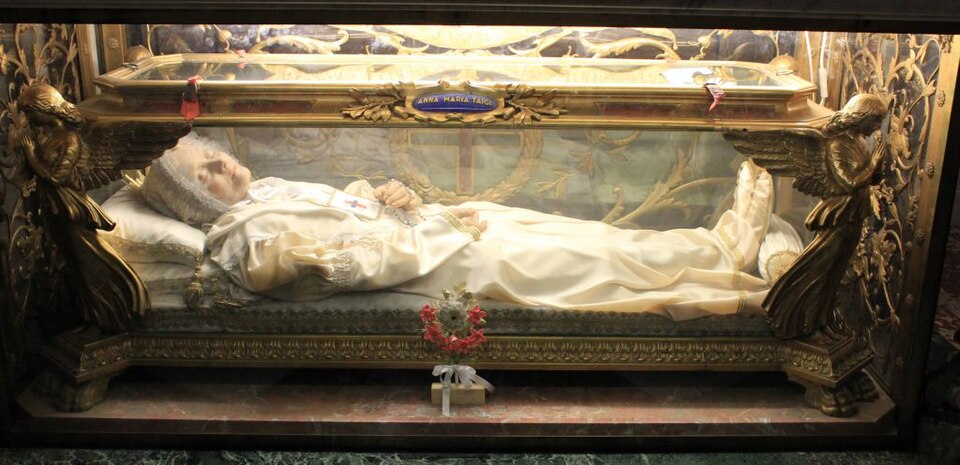
Saint Frances of Rome passed away on March 9, 1440, after a life of exemplary holiness and tireless service. Her death was marked by a profound sense of peace, and it is said that her face radiated an unearthly beauty. Nine months after her burial, her tomb was opened, and her body was found to be remarkably preserved, a testament to her sanctity. Though not entirely free from the effects of time, her remains, particularly her hands and feet, remained flexible and lifelike. Today, her incorrupt body rests in the Church of Santa Francesca Romana in the Roman Forum, encased in a glass coffin, allowing pilgrims to venerate her sacred relics.
The legacy of Saint Frances of Rome endures as a beacon of faith, charity, and resilience. Canonized in 1608, she is revered as the patron saint of widows, motorists, and the city of Rome itself. Her life demonstrates that holiness can be achieved not only in cloistered monasteries but also within the demands of family and societal life. Pilgrims visiting her church in Rome can experience a profound sense of her presence, reflecting on her unwavering devotion to God and her boundless compassion for humanity. Her story continues to inspire countless individuals to embrace a life of service and to find God in the ordinary moments of existence.
Discovery
The remarkable journey of Saint Frances of Rome's incorrupt body began not at her death in 1440, but centuries later, with the first recorded exhumation occurring in 1638. This event, undertaken with solemnity and considerable anticipation, was prompted by the desire to verify the persistent local traditions of her sanctity and the extraordinary preservation of her remains. When the tomb was opened, the witnesses – a gathering of ecclesiastical dignitaries, medical professionals, and devout laypeople – were met with a sight that defied the natural course of decay. Her body, interred for nearly two centuries, was found to be remarkably intact. Accounts from the time describe a figure that, while certainly aged by the passage of time, retained a discernible human form, with features still recognizable. The immediate reaction was one of profound awe and reverence, confirming for many the miraculous nature of her preservation and reinforcing her burgeoning cult. This initial discovery cemented her place among the pantheon of saints whose physical remains offered a tangible testament to their spiritual grace.
Following this initial discovery, the body of Saint Frances of Rome underwent several subsequent examinations and re-interments, each offering further opportunities to observe its enduring state. In 1869, another significant exhumation took place, meticulously documented by Church authorities. By this time, the body had been interred for over four centuries, and while some natural desiccation was evident, the overall preservation remained astonishing. Observers noted that the skin, though darkened and leathery, still adhered to the bone, and the general contours of her face and limbs were clearly discernible. It was during this period that more systematic measures for its preservation began to be considered, moving beyond simple re-interment. The consistency of its state over such a vast span of time, despite the varying conditions of its resting places, continued to baffle and inspire those who witnessed it. These examinations served not only to confirm the incorruption but also to inform the ongoing methods of its veneration and protection.
The journey of Saint Frances's preservation and display reflects a careful balance between veneration and the practicalities of safeguarding such a sacred relic. For many years, her body rested within the crypt of the Basilica of Santa Francesca Romana in Rome, the church built on the site of her former home. In the late 19th and early 20th centuries, as the science of preservation advanced, more sophisticated methods were employed to ensure its longevity. The body was eventually placed within a glass casket, allowing the faithful to view her without direct exposure to the elements, thereby mitigating further degradation. This transparent coffin is housed within a beautiful altar in the basilica, often adorned with flowers and votive offerings. The environment within the display case is carefully controlled to maintain stable temperature and humidity, crucial for the long-term preservation of organic material. The current display is designed to facilitate public veneration while offering maximum protection, a testament to the Church's enduring commitment to honoring its saints.
Among the most remarkable details associated with the incorrupt body of Saint Frances of Rome are the persistent accounts of a sweet, ethereal fragrance emanating from her remains, even centuries after her death. This phenomenon, often referred to as the "odor of sanctity," has been reported by numerous witnesses during various exhumations and periods of veneration. While difficult to quantify scientifically, it is a recurring motif in the hagiography of incorruptible saints, serving as a spiritual signifier of divine favor. Furthermore, while the body has naturally undergone some mummification over the centuries, early accounts sometimes spoke of a surprising degree of flexibility in her limbs, a characteristic that further defied the expected rigidity of a deceased body. These extraordinary details, passed down through generations of faithful, contribute to the profound sense of wonder and spiritual connection that pilgrims experience when visiting her shrine, solidifying her status as a revered intercessor and a tangible link to the miraculous.
Scientific Analysis
The reported incorruption of the body of Saint Frances of Rome, who died in 1440, presents a compelling subject for scientific inquiry, particularly given the historical context and the absence of modern preservation techniques at the time of her death. While detailed, publicly accessible scientific examinations of her remains are not extensively documented in the same manner as some other historical figures, the Catholic Church's tradition of recognizing incorruptibility often involves a process of canonical inspection. These inspections, typically conducted by ecclesiastical authorities, sometimes include the consultation of medical professionals to assess the state of preservation. For Saint Frances, historical accounts indicate that her body was exhumed on several occasions, notably in 1638 and again in 1869, when it was transferred to the church of Santa Francesca Romana. During these transfers, observations were made regarding the state of her remains. While specific names of physicians or detailed medical reports from these early periods are not readily available in public scientific literature, the consistent reporting of her body's unusual preservation over centuries forms the basis of its incorrupt status. These historical observations, though lacking the rigor of modern forensic analysis, consistently describe a body that resisted the expected processes of putrefaction and decay, a phenomenon that has historically intrigued both religious adherents and scientific observers. The lack of detailed forensic reports from these early examinations underscores a significant gap in the scientific understanding of this specific case, as the methodologies of the time were not geared towards comprehensive biological analysis.
The scientific mystery surrounding the preservation of Saint Frances of Rome's body lies in its reported resistance to natural decomposition over an extended period without apparent artificial intervention. Normal decomposition processes, including autolysis (self-digestion by enzymes) and putrefaction (bacterial breakdown), typically lead to significant tissue degradation within weeks or months, especially in the absence of embalming. The climate of Rome, characterized by warm, humid summers and mild winters, generally favors microbial activity and would accelerate decomposition rather than inhibit it. Burial conditions in the 15th century, often involving simple interment in soil, would further expose the body to environmental factors like moisture, soil microorganisms, and insect activity, all of which contribute to decay. The reported state of preservation, which has led to her classification as "incorrupt," suggests that these natural processes were either significantly slowed or entirely arrested. There is no historical record or scientific evidence to suggest that any embalming or sophisticated preservation treatments were applied to her body after her death in 1440. The absence of such treatments, coupled with the environmental conditions, makes the reported incorruption a remarkable deviation from expected post-mortem changes, prompting scientific curiosity regarding the underlying mechanisms, if any, that could account for this phenomenon.
Natural explanations for unusual body preservation, such as saponification (adipocere formation) or mummification, are often considered in cases of apparent incorruption. Adipocere formation occurs when fatty tissues in a body convert into a waxy, soap-like substance under specific environmental conditions, typically in wet, anaerobic environments. This process can preserve body contours but results in a distinct chemical transformation of the tissues. Mummification, on the other hand, involves the desiccation of tissues, usually in dry, arid conditions, which inhibits bacterial growth. In the case of Saint Frances of Rome, the reported state of her body does not align perfectly with the typical characteristics of either adipocere or mummification as scientifically understood, particularly given the Roman climate. Skeptics often attribute such cases to natural processes that are not fully understood or to the subjective interpretation of preservation, suggesting that what is perceived as "incorrupt" might be a degree of preservation that falls within the spectrum of natural post-mortem changes, albeit at the rarer end. However, the consistent historical accounts and the duration of the reported preservation continue to pose a challenge to purely naturalistic explanations, especially in the absence of detailed forensic analysis to confirm the presence or absence of these specific chemical or physical transformations. The lack of modern scientific examination leaves a significant void in definitively categorizing the preservation mechanism.
From a modern scientific perspective, the case of Saint Frances of Rome presents an opportunity for interdisciplinary research into the complex processes of decomposition and preservation. While no modern, comprehensive scientific examinations have been publicly reported for her remains, techniques such as computed tomography (CT) scans, magnetic resonance imaging (MRI), carbon dating, and detailed tissue analysis (histology, proteomics, genomics) could provide invaluable insights. CT scans could reveal internal organ preservation, bone density, and potential evidence of embalming fluids or other foreign substances. Carbon dating could confirm the age of the remains, while tissue analysis could identify the biochemical composition of any preserved tissues, distinguishing between natural adipocere, mummified tissue, or other forms of preservation. Such analyses could also detect microbial activity or the presence of specific enzymes that might have inhibited decay. The scientific community's interest in such cases lies in understanding the full spectrum of post-mortem changes and the environmental or intrinsic factors that can lead to unusual preservation. Without such detailed investigations, the phenomenon of incorruption, including that of Saint Frances of Rome, remains largely within the realm of historical observation and religious tradition, presenting unanswered questions about the limits of natural decomposition and the potential for extraordinary preservation under specific, yet unidentified, conditions.
Spiritual Significance
The phenomenon of incorruption, particularly as exemplified by Saint Frances of Rome, holds profound theological significance within the Catholic tradition, serving as a tangible testament to the sanctity of the human body and the promise of future resurrection. For the Church, the incorrupt body of a saint is not merely a biological anomaly but a divine sign, a miraculous preservation that points to the indwelling of the Holy Spirit during life, transforming the body into a temple of God, as articulated in 1 Corinthians 6:19. In Frances’s case, her extraordinary life of prayer, penance, and tireless service to the poor and suffering, even amidst personal tragedy and societal upheaval, is seen as having merited this singular grace. The Church interprets her incorruption as an affirmation of her heroic virtue and a foretaste of the glorified body promised at the general resurrection, reinforcing the doctrine that the body, far from being a mere vessel, is an integral part of our redeemed humanity. It underscores the communion of saints, reminding us that those who have gone before us in faith remain connected to us, their earthly remains sometimes serving as a powerful conduit of grace and inspiration.
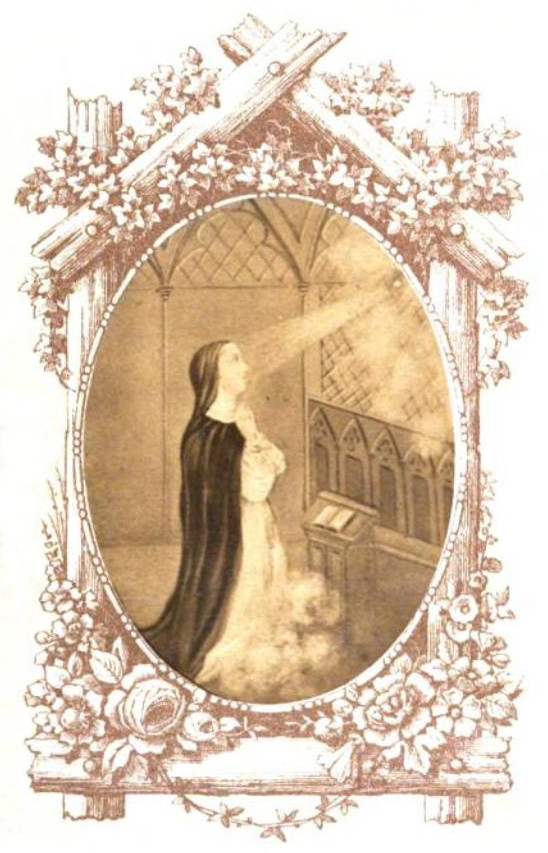
Saint Frances of Rome’s unique charism was a profound blend of contemplative mysticism and active charity, lived out in the crucible of a demanding family life and a turbulent historical period. Her heroic virtues were manifold, but perhaps most striking was her unwavering humility, which allowed her to embrace a life of service despite her noble birth and societal expectations. She practiced radical charity, transforming her home into a hospital for the sick and a refuge for the poor, often sacrificing her own comfort and resources. Her obedience to her husband, even when it conflicted with her spiritual desires, was a testament to her profound understanding of Christian submission within marriage, eventually leading to a partnership that fostered mutual holiness. Frances was also a mystic, experiencing visions and profound spiritual ecstasies, often accompanied by the visible presence of her guardian angel. Her unique contribution was the founding of the Oblates of Tor de’ Specchi, a community of women who, while not bound by strict monastic vows, lived a common life dedicated to prayer and service, pioneering a new form of consecrated life for women in the heart of the city. This blend of active and contemplative life, rooted in profound faith and self-giving love, defined her path to holiness.
Devotion to Saint Frances of Rome blossomed almost immediately after her death in 1440, a testament to the profound impact she had on the people of Rome. Her incorrupt body, housed in the Basilica of Santa Francesca Romana, became a focal point for pilgrims seeking her intercession. She is widely recognized as the patron saint of motorists, due to a legend that her guardian angel would light her path with a lantern, and also of widows, given her own experience of profound loss and her subsequent dedication to God. Her feast day, March 9th, is celebrated with special solemnity in Rome, often including processions and veneration of her relics. Pilgrims today approach her shrine with a deep sense of reverence, often spending time in prayer before her preserved remains, which are encased in a glass coffin. The experience of visiting her tomb is often described as one of profound peace and spiritual connection, a tangible link to a woman whose life exemplified unwavering faith and boundless compassion, inspiring countless individuals to emulate her virtues and seek her powerful intercession.
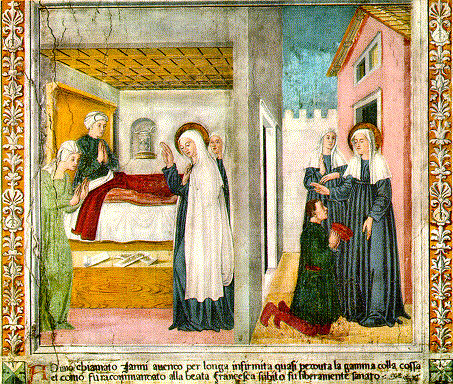
Numerous miracles have been attributed to the intercession of Saint Frances of Rome, both during her lifetime and in the centuries following her death. Documented healings of the sick, often from seemingly incurable ailments, were reported by those who sought her prayers. Stories of conversions, where individuals experienced profound spiritual transformations after encountering her or invoking her name, also abound. Her incorrupt body itself has been a continuous source of spiritual consolation for the faithful, serving as a visible sign of God's power and a reminder of the sanctity achievable through a life dedicated to Christ. Pilgrims often report a sense of spiritual upliftment and renewed faith after visiting her shrine, and many have attested to answered prayers and divine interventions attributed to her powerful intercession. The enduring presence of her incorrupt remains acts as a perpetual miracle, silently testifying to the reality of the spiritual realm and the enduring power of saintly intercession, fostering hope and strengthening the faith of generations.
Saint Frances of Rome’s enduring message for contemporary Catholics and seekers is one of radical discipleship lived within the ordinary circumstances of life. In an age often characterized by materialism and secularism, her life challenges us to prioritize spiritual values over worldly possessions and fleeting pleasures. Her unwavering faith amidst personal tragedy and societal chaos offers a powerful antidote to despair, demonstrating that even in the darkest times, God's grace can sustain and transform us. She teaches us that holiness is not reserved for cloistered monks or nuns but can be achieved in the midst of family life, professional responsibilities, and civic engagement. Her example encourages us to find God in the mundane, to serve Christ in the poor and suffering, and to cultivate a deep interior life of prayer. Her incorruption serves as a tangible bridge between the visible and invisible worlds, a physical manifestation of the spiritual realities she embraced, reminding us that true life extends beyond the grave and that our earthly pilgrimage is but a prelude to eternal glory. She calls us to live lives of profound love, humility, and service, confident in the promise of resurrection and the enduring communion of saints.
AI summary
A plain-language overview generated from this page's source material. Always verify with primary sources.