Biography
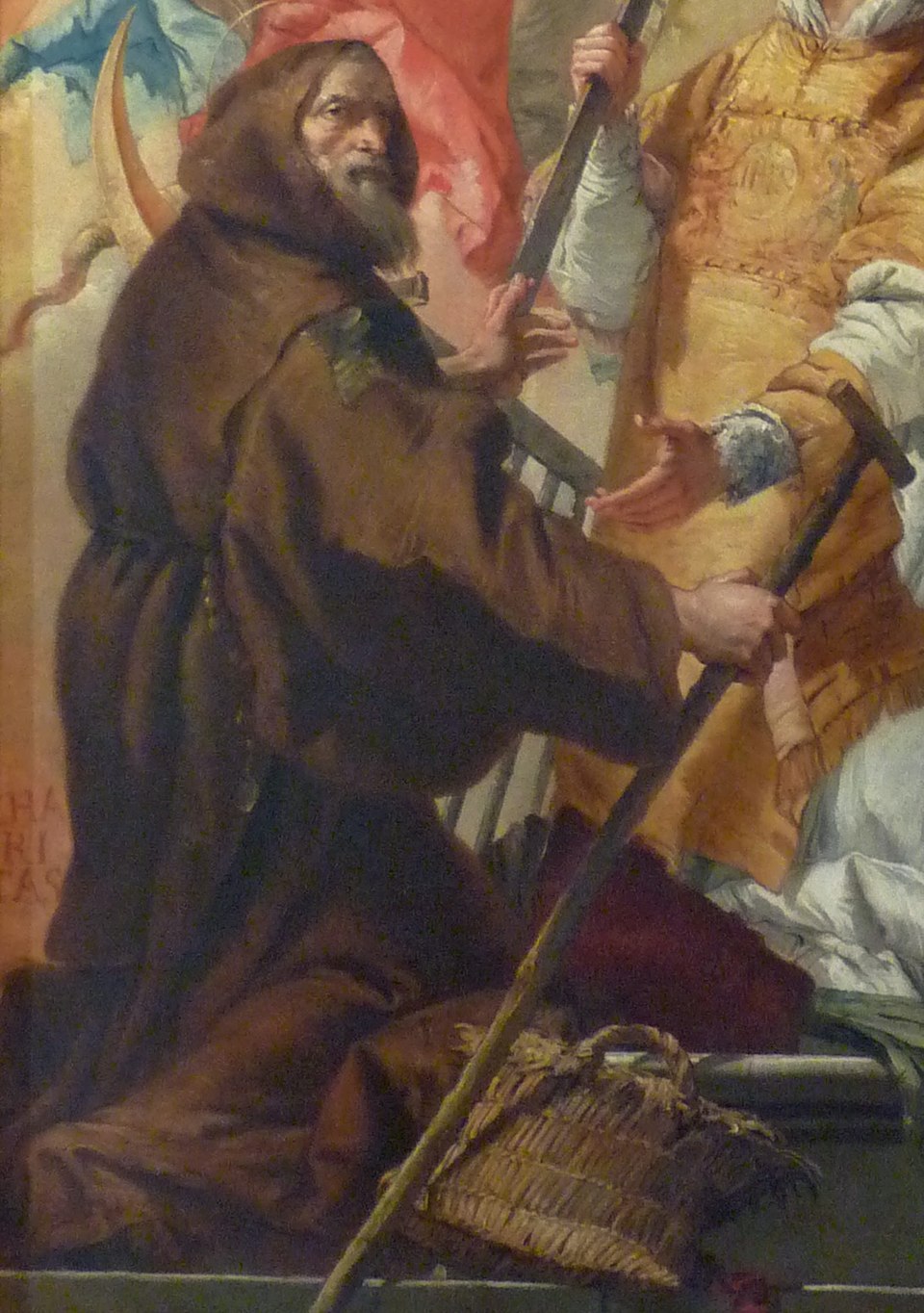
Saint Francis of Paola, born Francesco Martolilla in 1416 in the small town of Paola, Calabria, Italy, emerged from a devout and humble family. His parents, Giacomo and Vienna, had long prayed for a child, and Francis's birth was seen as a divine answer to their fervent petitions, particularly after a pilgrimage to Assisi. From a tender age, Francis displayed an extraordinary piety and a profound love for solitude and prayer. At 13, he briefly joined the Franciscans, fulfilling a vow his parents had made, but soon felt called to a more austere and solitary life. He retreated to a cave near Paola, embracing a life of extreme penance, fasting, and contemplation, laying the foundation for the rigorous spiritual path he would later champion.
His reputation for holiness, wisdom, and miraculous healing quickly spread, drawing disciples who sought to emulate his ascetic way of life. This burgeoning community, founded around 1435, became the nucleus of the Order of Minims (meaning "the least"), formally recognized by Pope Sixtus IV in 1474. The Minims were characterized by their strict adherence to a Lenten-like diet of perpetual abstinence from meat, eggs, and dairy, emphasizing humility, penance, and charity. Francis himself was renowned for his profound humility, his prophetic gifts, and numerous miracles, including the extraordinary feat of crossing the Strait of Messina on his cloak when denied passage by a boatman. His spiritual counsel was sought by many, including King Louis XI of France, who summoned Francis to his deathbed in 1483, hoping for a miraculous cure. Though the king was not cured, he was deeply moved by Francis's holiness and spiritual guidance.
Saint Francis of Paola passed away on April 2, 1507, at the age of 91, in Plessis-les-Tours, France, where he had spent the last 24 years of his life. His body was laid to rest in the Minim convent church in Tours. Forty-three years later, in 1550, his tomb was opened, and his body was found to be remarkably preserved, remaining supple and lifelike, a clear sign of divine favor. Tragically, during the Huguenot Wars in 1562, Protestant soldiers desecrated his tomb, removing his incorrupt body and burning it. However, some of his bones were salvaged by Catholics and are now venerated as relics in various churches, including his birthplace in Paola and the Minim monastery in Tours.
Despite the destruction of his incorrupt body, Saint Francis of Paola's legacy endures as a powerful testament to the transformative power of humility, penance, and unwavering faith. He was canonized by Pope Leo X in 1519, just twelve years after his death, a testament to his immediate and widespread veneration. Today, pilgrims can visit the Basilica Santuario di San Francesco di Paola in his hometown, a magnificent complex built around the cave where he lived, and the Minim monastery in Tours, France, where his spirit and influence are still palpable. He remains a beloved patron saint of Calabria, seafarers, and those in need of healing, inspiring countless faithful to embrace a life of profound prayer and service to God.
Discovery
The remarkable state of preservation of Saint Francis of Paola’s remains was first brought to light during the initial exhumation of his body, a significant event that transpired in 1562, some fifty-five years after his death in 1507. This exhumation was not a casual undertaking but a formal process, initiated by ecclesiastical authorities in anticipation of his canonization, which had occurred just two years prior in 1519. The site of his burial was the Minims’ convent in Tours, France, where he had spent the final years of his life. Witnesses to this momentous occasion included several high-ranking Church officials, local dignitaries, and members of the Minim Order, all of whom were undoubtedly filled with a mixture of solemn expectation and pious curiosity. As the tomb was opened and the shroud carefully removed, a collective gasp of astonishment reportedly rippled through the assembled crowd. Instead of the skeletal remains one would expect after more than half a century, the body of Saint Francis was found to be remarkably intact, his flesh supple and his features recognizable, as if he had only recently passed. The air around the tomb was said to be filled with a sweet, unidentifiable fragrance, further enhancing the sense of the miraculous. This initial discovery immediately cemented his reputation for sanctity and served as a powerful testament to divine favor, reinforcing the belief in his extraordinary spiritual gifts.
Over the centuries, the incorrupt body of Saint Francis of Paola has undergone several examinations, each reaffirming its miraculous state and providing further insights into its enduring preservation. One particularly harrowing episode occurred in 1562, the very year of its discovery, during the tumultuous period of the French Wars of Religion. Huguenot soldiers, driven by iconoclastic fervor, desecrated the saint’s tomb in Tours. In a shocking act of barbarism, they dragged his body from its resting place and attempted to burn it. However, according to historical accounts, the flames reportedly refused to consume the sacred remains, leaving them largely unscathed. The body was then thrown into a bonfire, yet it miraculously resisted complete incineration. Later, faithful Catholics recovered the partially charred but still remarkably intact body. This incident, far from destroying the relic, served to amplify its miraculous nature, demonstrating its resistance not only to natural decay but also to violent destruction. Following this ordeal, the body was carefully reinterred. Subsequent examinations, though less dramatic, consistently noted the body's continued flexibility and the absence of putrefaction, a phenomenon that continued to defy natural explanation. These inspections, often conducted by medical professionals and ecclesiastical commissions, meticulously documented the body's condition, providing a continuous record of its extraordinary preservation.
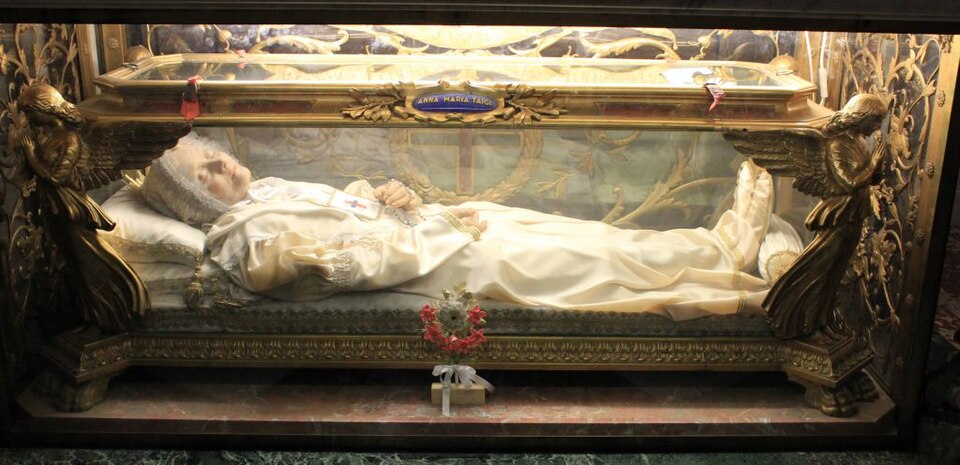
The journey of Saint Francis of Paola's incorrupt body has been one marked by both reverence and careful custodianship. After the desecration in Tours, a portion of his remains, specifically the head and some bones, were eventually returned to his native Paola, Italy, to the Sanctuary of Saint Francis of Paola, which stands as a testament to his life and legacy. The main portion of his body, however, remained in France for a considerable period. Throughout its various movements, the body has been housed in increasingly elaborate and protective reliquaries. Initially, it would have been encased in a simple coffin, but as its fame grew and the understanding of its miraculous nature deepened, more sophisticated measures were implemented. Today, in the Sanctuary of Saint Francis of Paola, the saint's incorrupt body is displayed in a magnificent glass casket, allowing pilgrims and visitors to venerate his remains directly. This transparent enclosure not only protects the body from environmental degradation but also permits an unobstructed view of its extraordinary state. The casket itself is often adorned with precious metals and intricate carvings, reflecting the profound veneration accorded to the saint. Strict environmental controls are often maintained within the display area to ensure the long-term preservation of the relic, safeguarding it for future generations of the faithful.
Beyond its remarkable physical integrity, several extraordinary phenomena have been associated with the incorrupt body of Saint Francis of Paola, further cementing its miraculous reputation. As mentioned, during its initial exhumation and on subsequent occasions, a sweet, unidentifiable fragrance, often described as a "odor of sanctity," was said to emanate from the remains. This phenomenon, distinct from the stench of decay, was taken as a clear sign of divine favor. While reports of bleeding or oil exuding are not prominently documented in the case of Saint Francis of Paola, the consistent accounts of his body retaining its flexibility and suppleness decades and even centuries after death are particularly noteworthy. This continued pliability, in defiance of the natural rigor mortis and subsequent stiffening of a deceased body, has been a recurring observation during various examinations. Furthermore, the body's extraordinary resistance to decay, even when subjected to the destructive forces of fire during the Huguenot desecration, stands as a powerful and unusual detail. This resistance to both natural decomposition and deliberate destruction underscores the unique and profound nature of Saint Francis of Paola's incorruption, setting it apart as a truly remarkable testament to the enduring power of faith.
Scientific Analysis
The phenomenon of incorruption, particularly as observed in figures such as Saint Francis of Paola, presents a compelling intersection of historical accounts, religious belief, and scientific inquiry. While comprehensive, formal medical or scientific examinations of Saint Francis of Paola's remains are not extensively documented in publicly accessible scientific literature with the rigor typically associated with modern forensic analysis, historical accounts and ecclesiastical records offer some insights. It is generally understood that the Catholic Church, when investigating claims of incorruption, often relies on visual inspection and historical testimonies rather than invasive scientific procedures, especially for older cases. For Saint Francis of Paola, who died in 1507, detailed medical reports from the 16th century, with named physicians and institutional affiliations, are not readily available in a format comparable to contemporary forensic reports. However, the consistent observation over centuries by various ecclesiastical authorities and guardians of the relics has maintained the claim of his incorruption. These observations typically note the absence of significant decomposition, the preservation of skin, and sometimes the flexibility of limbs, which defy the expected post-mortem changes. Without specific dates, named doctors, or institutional affiliations for formal examinations beyond general historical attestations, a detailed scientific analysis of *what* was done is limited. The primary evidence remains the continuous visual testimony of his preserved state throughout history, which has been acknowledged by the Church as a miraculous phenomenon.
The scientific mystery surrounding the preservation of Saint Francis of Paola's body lies in its defiance of typical decomposition processes. Following death, the human body undergoes a series of predictable changes: autolysis, putrefaction, and ultimately, skeletonization. Autolysis involves the breakdown of tissues by the body's own enzymes, while putrefaction is the decomposition of organic matter by microorganisms, leading to liquefaction and gas production. These processes are accelerated by warm, moist environments and the presence of oxygen. Saint Francis of Paola died in 1507, and his resting place in Paola, Italy, is characterized by a Mediterranean climate, which, particularly in the absence of specific preservation techniques, would typically promote rapid decay. There are no historical records indicating any embalming or sophisticated preservation treatments applied to his body at the time of death or shortly thereafter. Unlike mummification, which involves deliberate dehydration and chemical treatment, or bog body preservation, which occurs in anaerobic, acidic environments, the reported incorruption of Saint Francis of Paola is said to have occurred under conditions that would normally lead to complete skeletalization within decades, if not years. The absence of significant putrefaction, the reported retention of soft tissues, and the lack of skeletal disarticulation, if true, represent a significant deviation from expected post-mortem taphonomy. This lack of conventional decomposition, without apparent human intervention or specific environmental conditions known to naturally preserve bodies, is what makes the case scientifically remarkable.
Various natural explanations have been proposed for instances of apparent incorruption, such as saponification (adipocere formation) and natural mummification. Adipocere, or "grave wax," is a waxy, crumbly substance formed from the hydrolysis and hydrogenation of body fats, typically occurring in cool, moist, anaerobic environments. While adipocere can preserve body contours and some soft tissues, it significantly alters the texture and appearance of the body, often turning it into a soap-like mass. Natural mummification, on the other hand, occurs in extremely dry or cold conditions where rapid dehydration prevents microbial activity, preserving tissues by desiccation. However, these explanations often fall short in cases like Saint Francis of Paola, where the reported state of preservation – often described as flexible, lifelike, or with intact skin and features – does not align with the brittle, leathery texture of mummified remains or the waxy consistency of adipocere. Furthermore, the environmental conditions in Paola, Italy, are not consistently dry or cold enough to induce natural mummification without intervention, nor are they consistently cool, moist, and anaerobic in a way that would produce extensive adipocere throughout the entire body while retaining a lifelike appearance. Skeptics often attribute such phenomena to misinterpretation, selective observation, or the possibility of unrecorded historical preservation techniques, even rudimentary ones. However, the consistent historical accounts across centuries, coupled with the absence of definitive evidence for such interventions, leaves a significant gap in purely naturalistic explanations for the reported state of preservation.
From a modern scientific perspective, the case of Saint Francis of Paola, like other alleged cases of incorruption, presents an intriguing subject for advanced forensic and anthropological investigation. While invasive techniques might be deemed inappropriate due to religious veneration, non-invasive methods could offer valuable insights. For instance, high-resolution CT scans or MRI could reveal the internal state of tissues, organs, and skeletal structures without disturbing the remains. These techniques could ascertain the extent of soft tissue preservation, identify any internal signs of decomposition or mummification, and potentially detect the presence of embalming agents or foreign materials. Carbon dating of small tissue samples, if permissible, could confirm the age of the remains and rule out later substitutions. Tissue analysis, using techniques like mass spectrometry or gas chromatography-mass spectrometry, could identify the chemical composition of preserved tissues, distinguishing between natural mummification, adipocere, or the presence of unknown preserving agents. Such analyses could also reveal the presence of microorganisms or the absence thereof, providing clues about the taphonomic environment. The broader scientific study of body preservation benefits from understanding cases that challenge conventional decomposition models, whether through unique environmental factors, unknown biological processes, or unrecorded historical practices. The primary questions that remain unanswered for Saint Francis of Paola concern the precise chemical and physical state of his remains, the exact environmental conditions of his burial throughout history, and the definitive absence or presence of any preserving agents, natural or artificial. Without such detailed scientific examination, the phenomenon remains largely within the realm of historical observation and religious interpretation, awaiting the application of modern forensic science to unravel its mysteries.
Spiritual Significance
The phenomenon of incorruption, as exemplified by Saint Francis of Paola, stands as a profound theological statement within Catholic tradition, offering a tangible testament to the sanctity of the human body and the promise of resurrection. In Catholic theology, the body is not merely a vessel but an integral part of the human person, destined for glory. Saint Paul's assertion in 1 Corinthians 6:19, that our bodies are temples of the Holy Spirit, finds a striking visual echo in the preserved remains of saints. For Saint Francis, whose life was marked by rigorous asceticism and profound holiness, his incorruption is interpreted by the Church as a divine affirmation of his exceptional virtue and a foretaste of the resurrected body. It serves as a powerful symbol of God's power to transcend the natural order, reminding the faithful that death is not the final word, but rather a gateway to eternal life. This miraculous preservation reinforces the doctrine of the communion of saints, illustrating that those who have passed into glory remain intimately connected to the Church militant, their physical presence, however miraculous, acting as a bridge between heaven and earth. It is a visible sign of the triumph of grace over corruption, a beacon of hope for all believers.
Saint Francis of Paola's unique charism was profoundly rooted in an extraordinary commitment to penance and humility, which he forged in the solitude of his cave near Paola. His early life, marked by a deep spiritual longing after a brief experience with the Franciscans, led him to embrace an eremitical existence of extreme austerity. This rigorous spiritual path, characterized by perpetual fasting, abstinence from meat and dairy, and a life of profound contemplation, became the foundation of the Minim Friars, the order he later founded. His heroic virtues extended beyond self-denial; he possessed a remarkable charity, particularly towards the poor and marginalized, and an unwavering obedience to divine inspiration. His mysticism was not merely introspective but actively manifested in his prophetic gifts and miraculous healings, which drew countless people to him. He contributed to a spiritual tradition emphasizing radical humility, epitomized by the name "Minim," meaning "the least," a constant reminder of their commitment to being the humblest servants of God. His way of holiness challenged the prevailing norms of his time, advocating for a return to Gospel simplicity and a profound reliance on divine providence.
Devotion to Saint Francis of Paola has flourished over the centuries, evolving from local veneration to widespread international reverence. His patronage is extensive, encompassing seafarers, because of his miraculous crossing of the Strait of Messina on his cloak, and those suffering from infertility, a reflection of his parents' own fervent prayers for a child. He is also invoked by those seeking relief from various illnesses and by Calabria, his homeland, as its patron saint. Pilgrims today flock to the Sanctuary of Saint Francis of Paola in Italy, where his incorrupt body is enshrined. The experience of visiting the shrine is deeply moving, offering a tangible connection to a saint whose life was a testament to extraordinary faith. Many come to offer prayers, light candles, and seek his intercession, often leaving behind ex-votos as tokens of gratitude for answered prayers. Novenas and feast day traditions, particularly on April 2nd, his feast day, are observed with great solemnity, featuring processions, special Masses, and communal prayers that underscore the enduring power of his spiritual legacy and the vibrant devotion of the faithful.
Miracles attributed to Saint Francis of Paola's intercession are numerous and well-documented, spanning his lifetime and continuing long after his death. His biographers recount instances of miraculous healings, including the restoration of sight to the blind and the curing of the gravely ill. Perhaps most famously, his miraculous crossing of the Strait of Messina on his cloak after being denied passage by a ferryman stands as a powerful testament to his divine favor and unwavering faith. Converts to Catholicism, inspired by his profound holiness and the efficacy of his prayers, were also a common occurrence. The incorrupt body itself has been a continuous source of spiritual consolation for the faithful. Pilgrims who behold his preserved remains often report a profound sense of peace, renewed faith, and a deeper connection to the divine. This physical manifestation of sanctity serves as a powerful reminder of God's presence in the lives of His saints, offering hope and encouragement to those facing personal struggles, illness, or spiritual doubt, reaffirming the belief in the enduring power of intercessory prayer.
The enduring message of Saint Francis of Paola holds profound relevance for contemporary Catholics and seekers alike, offering a powerful counter-narrative to modern materialism and secularism. His life, characterized by radical detachment from worldly possessions and an unwavering focus on spiritual realities, challenges the pervasive consumerism and self-centeredness of our age. In a world often driven by instant gratification and superficial pursuits, Saint Francis's commitment to penance, humility, and profound prayer serves as a compelling invitation to seek deeper meaning and lasting fulfillment in God. He reminds us that true freedom lies not in accumulation, but in surrender and simplicity. His incorruption acts as a tangible bridge between the visible and invisible worlds, a physical manifestation of divine grace that transcends scientific explanation. It calls us to consider the supernatural, to acknowledge that there are realities beyond our immediate comprehension, and to embrace a faith that is both rational and mystical. From his example, modern believers can learn the transformative power of self-sacrifice, the profound peace found in solitude with God, and the enduring truth that holiness is attainable, even in the most challenging of times.
AI summary
A plain-language overview generated from this page's source material. Always verify with primary sources.