Biography
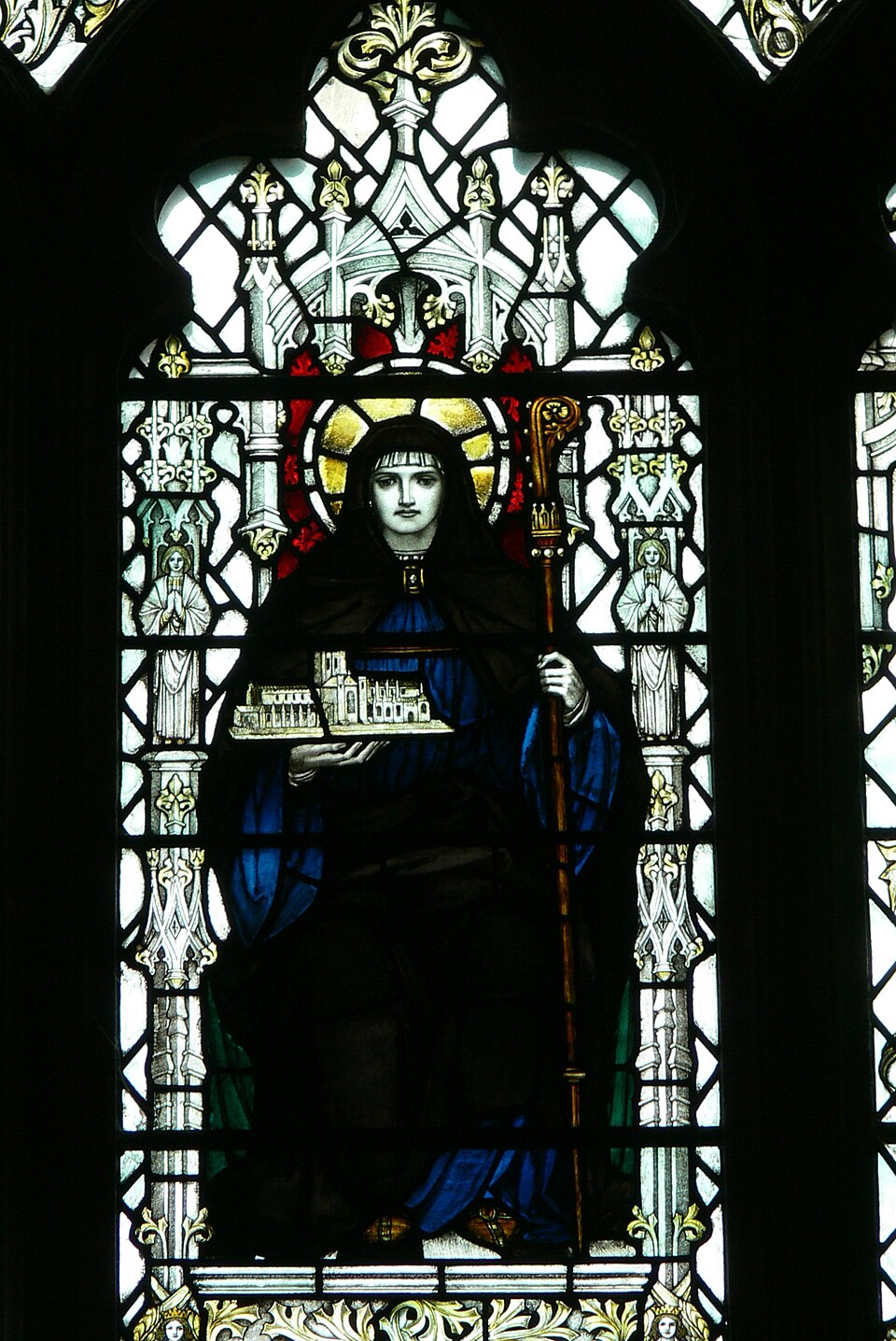
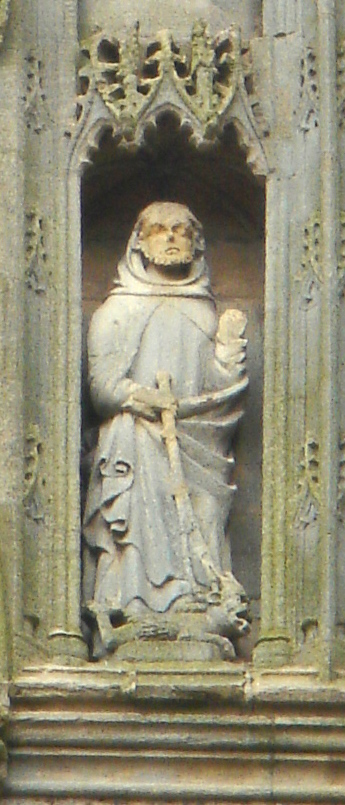
Saint Guthlac of Crowland, a figure of profound spiritual depth in Anglo-Saxon England, was born around 674 into a noble Mercian family, a lineage that afforded him a privileged upbringing. His early life, however, was not one of quiet piety. As a young man, Guthlac embraced the martial traditions of his aristocratic heritage, leading a band of warriors and engaging in raids and skirmishes, a common practice among the Anglo-Saxon nobility of the era. Yet, even amidst the clang of swords and the spoils of war, a deeper spiritual yearning began to stir within him. At the age of twenty-four, he experienced a profound conversion, renouncing his warrior's life and seeking the solitude of monasticism. He first entered the monastery of Repton, where he diligently studied the Scriptures and the lives of the Desert Fathers, preparing himself for an even more rigorous ascetic path.
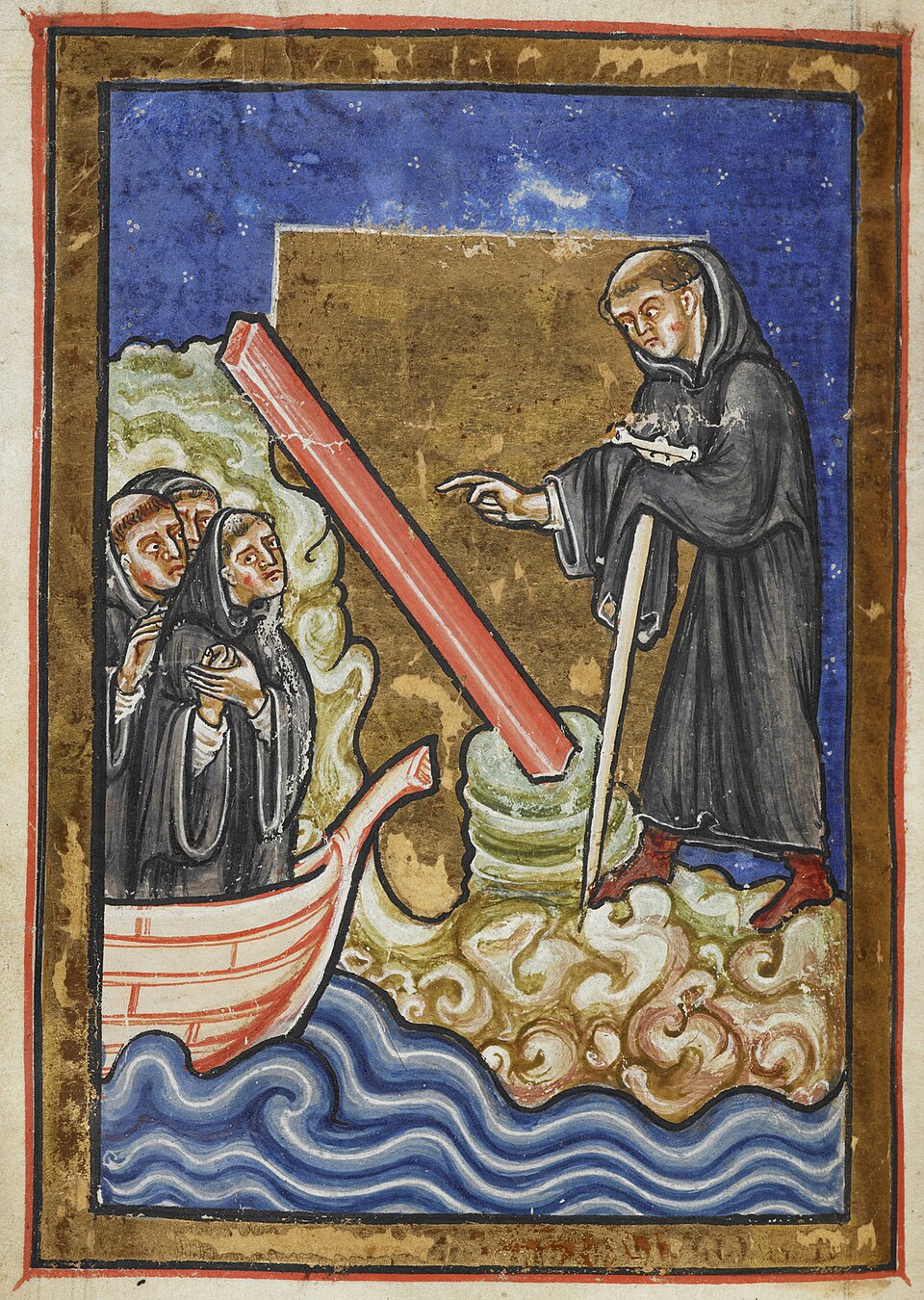
After two years at Repton, Guthlac felt called to an even greater solitude, drawn to the desolate fens of Crowland in Lincolnshire. In 699, he settled on a remote island in the fens, a place then considered wild and inhospitable, inhabited only by wild beasts and, according to local legend, by demons. Here, in a humble hermitage, he dedicated himself entirely to prayer, fasting, and penance, enduring extreme privations and spiritual battles. His reputation for sanctity and wisdom soon spread, attracting numerous visitors, including kings, nobles, and common folk, who sought his counsel, prayers, and healing. He became known for his prophetic gifts and his ability to intercede for the sick, and many miracles were attributed to his prayers. He was a spiritual guide to King Æthelbald of Mercia, who later built a monastery at Crowland in his honor.
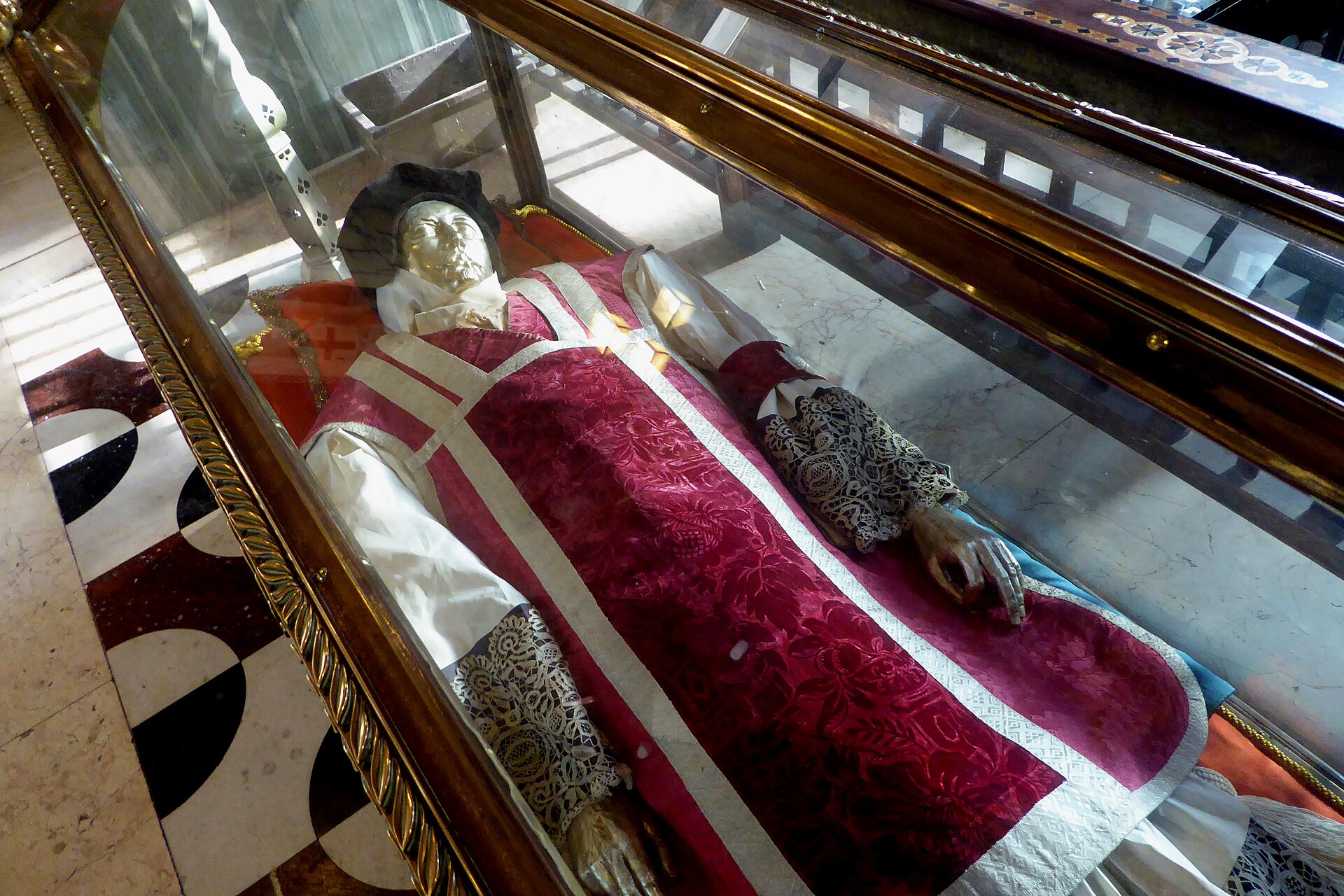
Saint Guthlac passed away peacefully on April 11, 714, after a life of intense spiritual devotion. His death was marked by a profound sense of peace, and his body was initially interred in his hermitage. A year later, when his sister, Pega, came to move his remains to a more fitting burial place, his body was discovered to be perfectly preserved, appearing as if he had only just fallen asleep. This miraculous incorruption, a testament to his sanctity, became a cornerstone of his veneration. Though his original incorrupt body is no longer extant, having been lost during the Danish invasions and subsequent historical upheavals, the tradition of his incorruption has been meticulously preserved through historical accounts and hagiographies.
The legacy of Saint Guthlac endures as a powerful symbol of spiritual fortitude and the triumph of faith over adversity. He was swiftly venerated as a saint, and Crowland Abbey, founded on the site of his hermitage, became a significant pilgrimage destination in medieval England, a testament to his enduring influence. Though the abbey itself suffered greatly during the Dissolution of the Monasteries, the ruins still stand, and a parish church continues to serve the local community. Pilgrims today can visit the site of Crowland Abbey, walk the grounds where Saint Guthlac lived and prayed, and reflect on the life of this remarkable hermit saint whose unwavering devotion transformed a desolate fen into a beacon of holiness, inspiring generations with his example of asceticism, prayer, and profound communion with God.
Discovery
The story of Saint Guthlac of Crowland, a figure of profound spiritual depth in Anglo-Saxon England, begins not in the quietude of a monastery, but amidst the clang of swords and the clamor of battle. Born around 674 into a noble Mercian family, Guthlac's early life was marked by a martial prowess, leading a band of warriors in raids and skirmishes. Yet, even amidst this worldly pursuit, a deeper calling stirred within him. At the age of twenty-four, he renounced his warrior's life, seeking spiritual solace first at Repton Abbey, and later, around 699, embracing the solitary life of a hermit on the remote island of Crowland in the Fens. It was here, in this isolated wilderness, that he lived a life of intense asceticism, prayer, and contemplation, battling demonic temptations and communing with angels, until his death on April 11, 714. His sanctity was recognized almost immediately, and his burial at Crowland was overseen by his devoted disciple, Beccel.
The first remarkable discovery concerning Guthlac's remains occurred just one year after his death, in 715. According to Felix's *Vita Sancti Guthlaci*, a contemporary account, Beccel, along with Guthlac's sister Pega, decided to move the saint's body from its initial resting place – a humble grave within the hermitage – to a more fitting shrine. When the tomb was opened, a profound sense of awe and wonder permeated the small gathering. Instead of the expected decay and corruption, they found Guthlac's body perfectly preserved, as if he were merely sleeping. His skin retained its natural color, his limbs were flexible, and a sweet, unearthly fragrance emanated from the open coffin, filling the air with a perfume far surpassing any earthly aroma. This miraculous state of incorruption was immediately interpreted as a clear sign of divine favor, confirming Guthlac's sanctity and the power of God manifested through His chosen servants. The immediate reaction was one of profound reverence and joyful affirmation of his holiness.
Over the centuries, the incorrupt body of Saint Guthlac continued to be a source of veneration and wonder, though its exact fate and subsequent examinations are somewhat shrouded in the mists of time and the tumultuous history of England. Crowland Abbey, founded in his honor, became a significant pilgrimage site, and the saint's relics were undoubtedly central to its spiritual life. While detailed records of repeated exhumations or scientific examinations in the modern sense are scarce from the Anglo-Saxon and early medieval periods, the persistent tradition of his incorruption suggests that his body was periodically viewed and revered. The Abbey itself suffered greatly during the Danish invasions of the 9th century, and again during the Norman Conquest, leading to periods where the precise location and condition of his relics might have been uncertain. However, the tradition of his incorruption endured, passed down through monastic chronicles and hagiographical accounts, indicating that the body's remarkable state was a consistent feature whenever it was accessible. It is believed that his remains were eventually enshrined within the Abbey church, likely in a prominent position, to allow for veneration by pilgrims.
The ultimate fate of Saint Guthlac's incorrupt body, like many relics in England, was profoundly impacted by the English Reformation in the 16th century. With the dissolution of the monasteries, Crowland Abbey was largely destroyed, and its treasures, including its sacred relics, were either dispersed, destroyed, or hidden to protect them from iconoclastic fervor. While the Abbey church itself is now a ruin, with only parts remaining, the exact whereabouts of Saint Guthlac's body after the Reformation remain unknown. It is highly probable that his remains were either secretly reburied by devout monks or local faithful, or perhaps destroyed. Despite the loss of his physical remains, the legacy of Saint Guthlac and the historical accounts of his incorruption continue to inspire. The remarkable details of his initial discovery – the perfectly preserved body, the natural color of his skin, the flexibility of his limbs, and the sweet fragrance – stand as a testament to a phenomenon that has captivated believers for centuries, a visible sign of God's power and the sanctity of His saints.
Spiritual Significance
The phenomenon of incorruption, as exemplified by Saint Guthlac of Crowland, offers a profound theological statement within Catholic tradition, underscoring the sanctity of the human body and foreshadowing the glorious resurrection promised to believers. For centuries, the Church has viewed these preserved remains not as mere biological anomalies, but as tangible signs of divine favor and a testament to the indwelling of the Holy Spirit. Saint Paul’s exhortation in 1 Corinthians 6:19, that our bodies are temples of the Holy Spirit, finds a striking visual affirmation in incorruption. It suggests that the Spirit's presence can so permeate a life of heroic virtue that even after death, the physical vessel retains an extraordinary integrity, resisting the natural processes of decay. This miraculous preservation serves as a powerful prefigurement of the general resurrection of the body, a core tenet of Christian eschatology, reminding us that our ultimate destiny is not disembodied spirit but glorified flesh. In Guthlac’s case, his incorruption was interpreted by his contemporaries and subsequent generations as a clear sign of his exceptional holiness, a divine seal upon his ascetic life and unwavering faith, solidifying his place within the communion of saints as a powerful intercessor. It speaks to a divine intervention that transcends natural law, beckoning the faithful to contemplate the profound mystery of God's power over life and death.
Saint Guthlac's unique charism was undeniably his profound commitment to eremitical asceticism, a spiritual path he embraced with remarkable fervor after renouncing his warrior past. His heroic virtues were primarily manifested in his radical detachment from worldly comforts and his unwavering pursuit of solitude and spiritual warfare against demonic forces in the desolate fens of Crowland. He exemplified a profound humility, exchanging the prestige of a noble warrior for the austerity of a hermit, and practiced an extraordinary degree of self-denial, subsisting on meager fare and enduring harsh environmental conditions. His life was a testament to intense prayer and contemplation, often battling spiritual temptations and finding solace in divine communion. Guthlac contributed significantly to the burgeoning eremitical tradition in Anglo-Saxon England, demonstrating that a life of solitary devotion, far from being a retreat from the world, could be a powerful spiritual battleground and a source of profound holiness. His example inspired others to seek God in the wilderness, forging a distinct path of holiness characterized by rigorous penance, unwavering faith, and an intimate relationship with the divine, a spiritual legacy that resonated deeply within the monastic movements of his era.
Devotion to Saint Guthlac flourished rapidly after his death, drawing pilgrims from across Anglo-Saxon England and beyond to his hermitage at Crowland. His hermitage quickly evolved into Crowland Abbey, a significant monastic center that became the focal point of his veneration. While specific novenas or prayers directly attributed to him are less prominent in modern Catholic practice compared to some later saints, his feast day, April 11th, has been observed for centuries, commemorating his passage into eternal life. Historically, pilgrims would travel to Crowland seeking his intercession for various ailments, particularly those related to mental distress or demonic oppression, given his own spiritual battles in the fens. The incorrupt body itself, though not always publicly displayed in the same manner as some other incorrupt saints, has remained the spiritual heart of Crowland Abbey. While the original physical remains are no longer definitively located or displayed in their incorrupt state due to centuries of historical upheaval and destruction, the *memory* and *tradition* of his incorruption continue to inspire. Visiting Crowland today, one experiences a profound sense of sacred history, walking in the footsteps of countless pilgrims who sought solace and miracles at the site where Guthlac lived and died, a testament to the enduring power of his spiritual legacy.
Miracles attributed to Saint Guthlac's intercession began even during his lifetime and continued after his death, solidifying his reputation as a powerful intercessor. His hagiographer, Felix, meticulously documented numerous instances of healing, particularly from blindness, paralysis, and various forms of illness, often occurring through the application of water blessed by Guthlac or by touching his holy relics. There are accounts of his spiritual power extending to the natural world, such as calming storms or taming wild animals. The incorrupt body itself was seen as a continuous miracle, a living testament to his sanctity, and a source of profound spiritual consolation for the faithful. It served as a tangible connection to the divine, a physical reminder that God’s grace could transcend even death. For many, the very existence of his preserved remains was a miracle in itself, offering hope and reassurance in an age often fraught with hardship and uncertainty. This miraculous preservation underscored the belief that Guthlac, even in death, remained active in the spiritual realm, capable of interceding on behalf of those who sought his help, fostering a deep sense of trust and devotion among his followers.
Saint Guthlac's enduring message for contemporary Catholics and seekers resonates powerfully in an age often characterized by materialism and spiritual disquiet. His radical renunciation of worldly power and comfort challenges the pervasive secularism that prioritizes transient possessions over eternal truths. His life of intense prayer and asceticism offers a compelling counter-narrative to modern consumerism, inviting reflection on the true sources of human fulfillment. For those grappling with spiritual warfare in their own lives, his battles against demonic forces in the wilderness provide a timeless example of perseverance and faith. He teaches us that true strength lies not in external power, but in an unwavering commitment to God and a willingness to embrace solitude for deeper communion. His incorruption serves as a tangible bridge between the visible and invisible worlds, a physical sign that the spiritual realm is profoundly real and that God's power can manifest in extraordinary ways. It encourages modern believers to look beyond the purely material, to cultivate an inner life of prayer, and to trust in the ultimate triumph of grace over decay, reminding us that even in death, the sanctity of a life lived for God can leave an indelible mark on both body and soul.
AI summary
A plain-language overview generated from this page's source material. Always verify with primary sources.