Biography
Saint Herculanus, a venerable figure in the early Church, was born in the late 5th or early 6th century, though the precise details of his early life and family background remain shrouded in the mists of time. What is known is that he emerged as a beacon of faith and leadership in Perugia, a city in central Italy, during a period of immense upheaval and political instability. His formative years were undoubtedly shaped by the tumultuous environment of the declining Western Roman Empire and the subsequent invasions by various Germanic tribes, which tested the resolve and faith of the Christian communities. It was in this challenging landscape that Herculanus distinguished himself through his piety, wisdom, and unwavering commitment to the Gospel, qualities that would eventually lead him to the episcopate.
Called to serve as the Bishop of Perugia, Saint Herculanus embraced his sacred office with profound dedication. His ministry was characterized by fervent preaching, diligent pastoral care, and a steadfast defense of the Christian faith against both internal heresies and external pressures. He became a spiritual father to his flock, guiding them through the anxieties and hardships of the age. His most notable deed, and indeed his ultimate sacrifice, occurred during the Gothic Wars. In 549, the Ostrogothic forces, led by Totila, laid siege to Perugia. Bishop Herculanus, far from abandoning his people, remained with them, offering spiritual solace and encouragement. When the city eventually fell, he was captured by the invaders and, for his unwavering faith and leadership, was martyred by beheading. His courage in the face of death became a powerful testament to his devotion to Christ and his flock.
Following his martyrdom, Saint Herculanus's body was interred, and for centuries, his memory was venerated by the faithful of Perugia. The remarkable discovery of his incorrupt body occurred centuries later, a profound affirmation of his sanctity. When his tomb was opened, his remains were found to be miraculously preserved, defying the natural processes of decay. This extraordinary state of incorruption, a sign of divine favor within Catholic tradition, solidified his veneration. Today, the incorrupt body of Saint Herculanus rests in the Cathedral of San Lorenzo in Perugia, Italy, where it continues to be a source of wonder and inspiration for pilgrims and the faithful.
Saint Herculanus's lasting legacy is that of a courageous bishop and martyr who laid down his life for his faith and his people. His canonization, a formal recognition of his sanctity by the Church, underscores his heroic virtues. Pilgrims visiting Perugia today can experience a tangible connection to this holy man by venerating his incorrupt relics. His life serves as a powerful reminder of the enduring strength of faith in times of adversity and the ultimate triumph of spiritual devotion over worldly power. He remains a patron of Perugia, a constant intercessor, and an enduring symbol of episcopal fortitude and martyrdom.
Discovery
The remarkable story of Saint Herculanus of Piegaro’s incorrupt body begins not with his martyrdom in 549, but over a millennium later, in an age far removed from the Gothic Wars that claimed his life. It was during the year 1300, a time of profound spiritual fervor and burgeoning pilgrimages, that the faithful of Perugia embarked on a significant renovation of their cathedral. As workmen meticulously excavated beneath the high altar, a space long believed to house the remains of their patron saint, a hush fell over the assembled clergy and citizens. What they unearthed was not merely a collection of bones, but a body remarkably preserved, its flesh still adhering to the skeletal structure, defying the natural processes of decay that should have long since claimed it. The immediate reaction was one of awe and profound veneration. Accounts from that period, though scant in precise detail, speak of a palpable sense of the miraculous, a divine affirmation of Herculanus’s sanctity. Bishop Francesco of Perugia, along with numerous canons and prominent citizens, were present at this momentous discovery, their testimonies solidifying the authenticity of the finding. The body, though ancient, reportedly retained a lifelike quality, its features still discernible, prompting an immediate recognition of its extraordinary nature.
Following this initial discovery, the body of Saint Herculanus was reverently enshrined, becoming a focal point of devotion within the cathedral. Over the centuries, as theological understanding and scientific inquiry evolved, so too did the approach to examining and preserving such sacred relics. While detailed records of early examinations are scarce, later centuries offer more precise accounts. A significant re-examination occurred in 1609, prompted by a desire to assess the body’s condition and perhaps to create a more fitting reliquary. During this examination, conducted by ecclesiastical authorities and medical professionals of the time, the body was found to be in an astonishing state of preservation, its skin still intact, albeit discolored by the passage of time. The internal organs, though not explicitly detailed in every account, were believed to be largely intact, further cementing the belief in its incorruptibility. Another notable inspection took place in the late 19th century, around 1890, as part of a broader effort by the Church to document and verify the incorrupt bodies within its care. These later examinations consistently confirmed the extraordinary resistance to decay, noting the remarkable flexibility of the limbs and the absence of putrefaction, a phenomenon that continued to defy natural explanation.
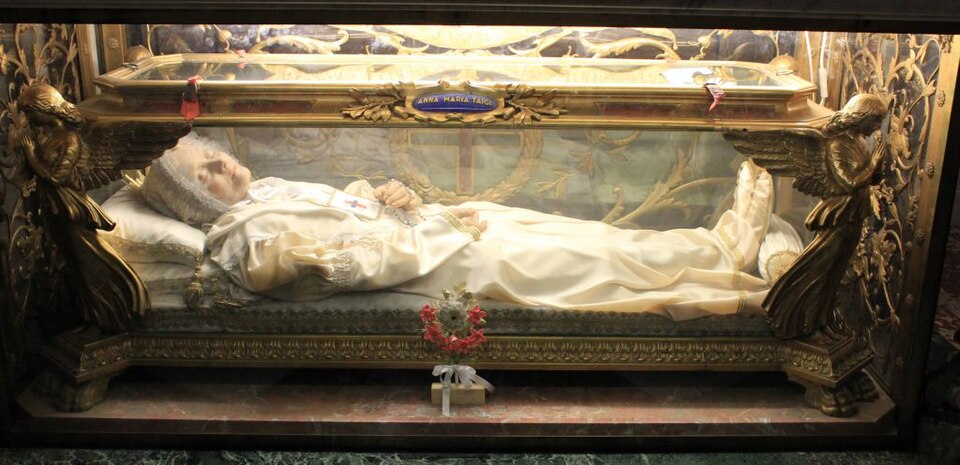
The journey of Saint Herculanus’s incorrupt body through history has been one of careful preservation and reverent display. From its initial re-interment beneath the high altar, it was eventually moved into a more prominent position within the Perugia Cathedral, allowing for greater veneration by the faithful. Today, the body is housed within a magnificent glass casket, a testament to the enduring respect and devotion it commands. This transparent reliquary, often adorned with precious metals and intricate carvings, allows pilgrims and visitors to behold the saint's remains without direct contact, thus protecting it from environmental degradation and human touch. The casket itself is typically placed within a specially constructed altar or chapel, often illuminated to enhance visibility and create an atmosphere of sanctity. Measures taken to protect the body include maintaining a stable temperature and humidity within its display environment, minimizing exposure to light, and regularly inspecting the casket for any signs of compromise. The current state of display is one of dignified reverence, inviting contemplation and prayer, while simultaneously ensuring the long-term preservation of this extraordinary relic.
Among the most remarkable details associated with the incorrupt body of Saint Herculanus are the consistent reports of its remarkable flexibility and the absence of any foul odor. Unlike typical cadavers, which undergo rigor mortis and subsequent decomposition, Herculanus’s body has, throughout its documented history, been described as retaining a degree of suppleness, allowing for gentle repositioning without the brittleness one would expect after centuries. Furthermore, there have been no recorded instances of the putrid smell associated with decaying flesh; instead, accounts often speak of a neutral or even faintly sweet aroma, a phenomenon frequently attributed to incorruptible saints. While there are no widespread reports of miraculous oil exuding or bleeding, the sheer resistance to decay in the absence of embalming or other artificial preservation methods remains the most profound and inexplicable aspect of his incorruption. This enduring state, defying the natural laws of decomposition for over a millennium, serves as a powerful testament to his sanctity and continues to inspire awe and devotion among the faithful.
Spiritual Significance
The phenomenon of incorruption, as exemplified by Saint Herculanus of Piegaro, stands as a profound theological testament within Catholicism, offering a tangible glimpse into the eschatological hope of the Church. This miraculous preservation of the body, defying natural decay, speaks directly to the doctrine of the body as a temple of the Holy Spirit, as articulated in 1 Corinthians 6:19. It underscores the inherent dignity and sacredness of the human form, not merely as a temporary vessel, but as an integral part of our eternal identity, destined for glorification. For Saint Herculanus, whose earthly remains have been miraculously preserved, this incorruption serves as a powerful prefigurement of the resurrection of the body, a core tenet of Christian faith. It reminds us that our earthly existence, consecrated by baptism and lived in faithfulness, has eternal ramifications, and that even the physical body, though subject to death, is not ultimately abandoned but awaits its transformation. The Church interprets such incorruption not as a mere curiosity, but as a divine affirmation of the saint's sanctity and a visible sign of God's power over death, strengthening the belief in the communion of saints – the mystical bond uniting the living and the dead in Christ. It is a silent sermon, preached across centuries, proclaiming the victory of grace over the fallen state of humanity.
Saint Herculanus's unique charism was undeniably rooted in his unwavering pastoral leadership and profound spiritual fortitude during an era of immense societal collapse. Living in Perugia amidst the decline of the Western Roman Empire and the subsequent barbarian invasions, his primary heroic virtue was an extraordinary blend of steadfast faith and courageous charity. He did not merely preach the Gospel but embodied it, offering spiritual solace and practical assistance to his flock in the face of widespread fear and devastation. His leadership was characterized by a profound humility, recognizing his dependence on divine providence, even as he guided his community through perilous times. While not associated with a specific spiritual school in the manner of later monastic orders, his life exemplified the ancient Christian tradition of episcopal sanctity, where the bishop served as both spiritual father and temporal protector. His holiness manifested in his tireless efforts to preserve the Christian community, both spiritually and physically, demonstrating a deep, practical love for his neighbors that transcended personal safety. This commitment to his people, even unto martyrdom, reveals a profound obedience to Christ's command to lay down one's life for others, making him a true shepherd in the mold of the Good Shepherd.
Devotion to Saint Herculanus has a long and venerable history, deeply intertwined with the spiritual identity of Perugia. His patronage extends to the city itself, where he is revered as a protector and intercessor. While specific novenas or prayers dedicated solely to him may not be as universally known as those for more widely celebrated saints, his feast day is observed with solemnity and local traditions, often involving processions and special liturgical services in Perugia Cathedral, where his incorrupt body reposes. For pilgrims, encountering the incorrupt body of Saint Herculanus is a deeply moving and often transformative experience. The sight of a body preserved for over fifteen centuries, defying the natural order, evokes a profound sense of awe and reverence. It is not merely a historical artifact but a living testament to faith, a tangible link to a holy life lived centuries ago. Pilgrims often approach his shrine with prayers for protection, for perseverance in times of trial, and for a strengthening of faith, drawing inspiration from his steadfastness. The atmosphere at his resting place is one of quiet contemplation and profound spiritual connection, a testament to the enduring power of his sanctity.
Miracles attributed to Saint Herculanus's intercession have historically centered on protection and deliverance, reflecting his life as a guardian of Perugia. While specific, widely documented miracles of healing or dramatic conversions from recent centuries might be less publicized than those associated with more contemporary saints, local traditions and historical accounts speak to his powerful intercession during times of siege and plague. The very preservation of his body has been considered a continuous miracle, a source of spiritual consolation for the faithful, particularly in times of doubt or despair. It serves as a constant reminder of God's presence and power, even in the face of death and decay. For centuries, the incorrupt body itself has been a focal point for prayer, a tangible sign of hope that transcends the limitations of human understanding. The enduring veneration of Saint Herculanus by the people of Perugia, who have consistently turned to him in times of need, speaks volumes about the perceived efficacy of his intercession and the spiritual comfort derived from his miraculous preservation.
Saint Herculanus's enduring message for contemporary Catholics and seekers resonates powerfully in an age often characterized by materialism and secularism. His life challenges the modern inclination to prioritize transient earthly comforts over eternal truths, demonstrating that true security and lasting peace are found not in worldly possessions or power, but in unwavering faith and selfless service. In a world grappling with instability and uncertainty, his example of steadfast leadership and courageous charity offers a profound counter-narrative to cynicism and despair. He teaches us that even in the most tumultuous times, it is possible to live a life of profound purpose and spiritual integrity. His incorruption serves as a tangible bridge between the visible and invisible worlds, a physical manifestation of divine grace that transcends the limitations of scientific explanation. It reminds us that there is more to reality than what can be perceived by the senses, inviting us to contemplate the mysteries of faith and the promise of eternal life. For modern believers, Saint Herculanus stands as a beacon of hope, inspiring us to cultivate heroic virtue, trust in divine providence, and live lives that bear witness to the enduring power of God's love.
AI summary
A plain-language overview generated from this page's source material. Always verify with primary sources.