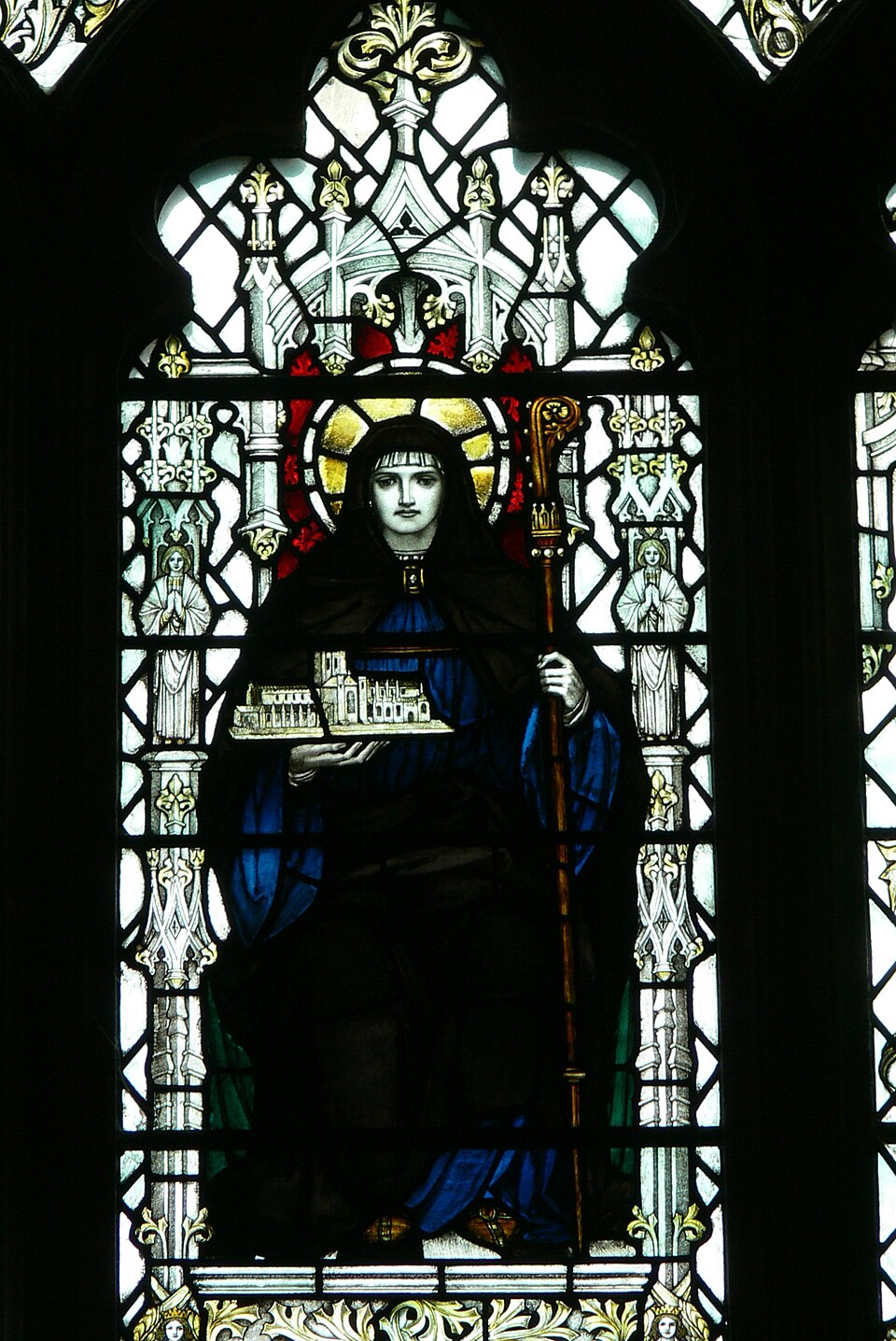
Biography
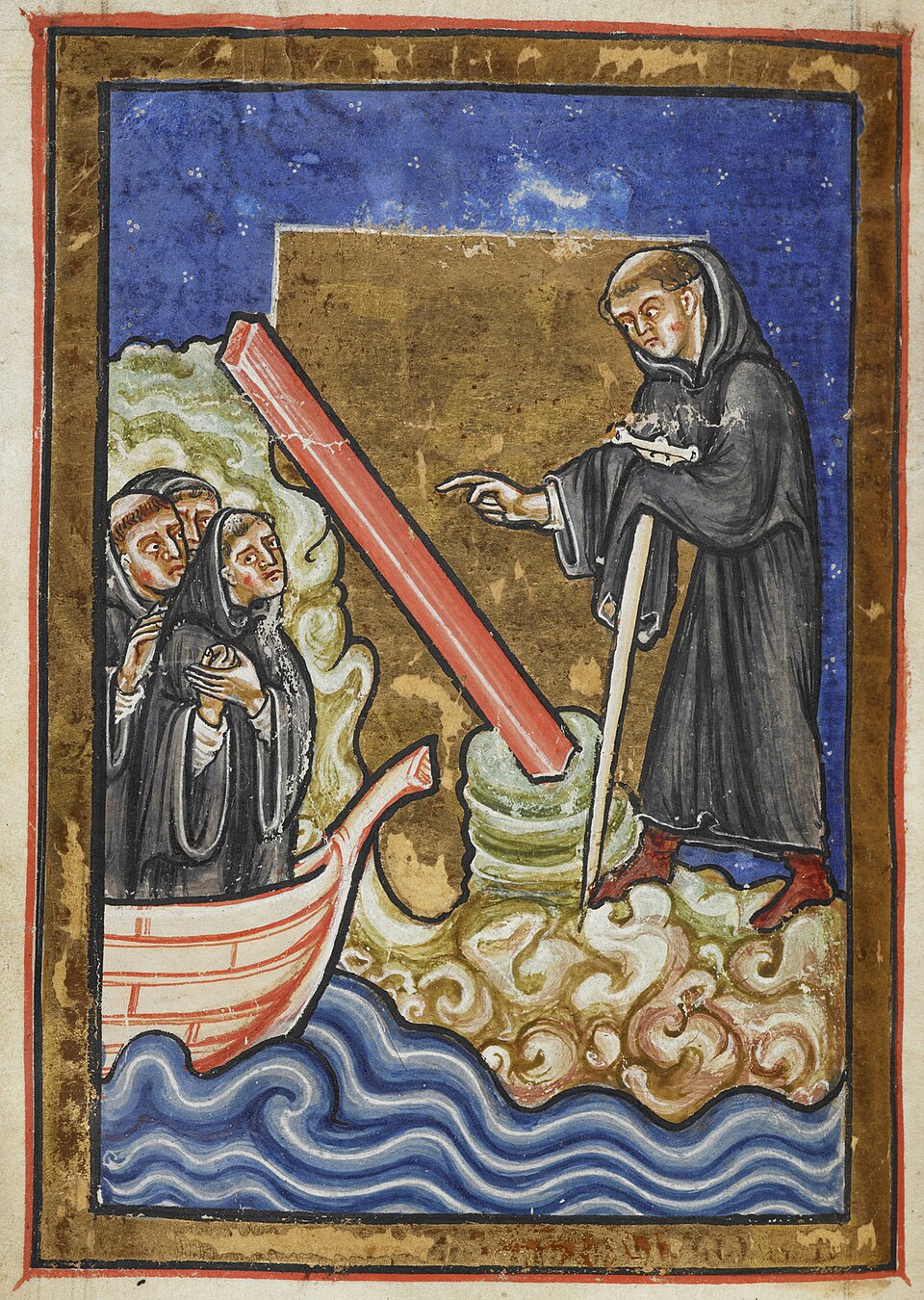
Saint Hugh of Lincoln, born Hugues d'Avalon around 1140 in Avalon, France, emerged from a noble Burgundian family, his father being William, Lord of Avalon. His early life was marked by a profound piety, fostered by his mother, Anne, who instilled in him a deep love for God and the Church. At the tender age of eight, following his mother's death, Hugh was entrusted to the care of the Augustinian canons at the monastery of Villard-Benoît, where his uncle served as prior. There, he received a rigorous education, immersing himself in scripture and spiritual discipline, which laid the foundation for his future ascetic life. At nineteen, he was ordained a deacon, but soon felt a stronger call to an even more austere form of religious life. He was drawn to the Carthusian order, renowned for its strict observance of silence, solitude, and manual labor, and entered the Grande Chartreuse, the motherhouse of the order, where he was ordained a priest.
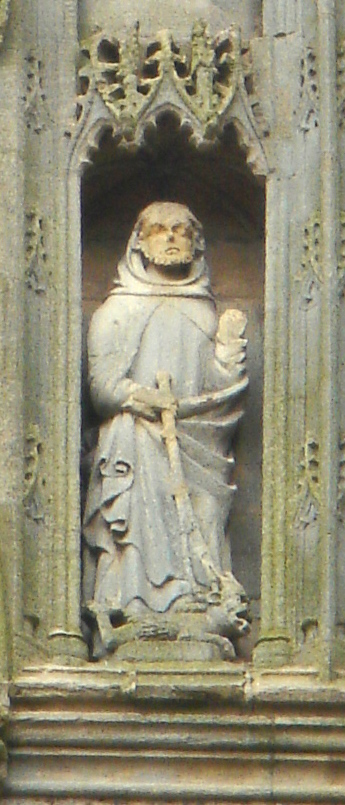
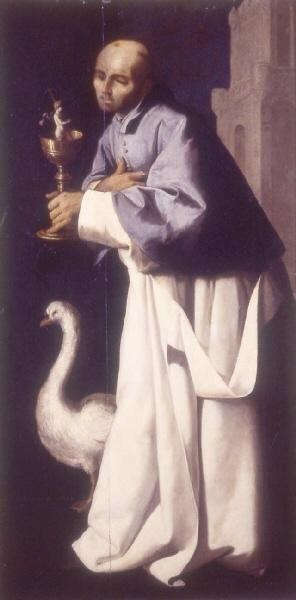
Hugh's reputation for holiness and wisdom quickly spread beyond the monastery walls. In 1175, King Henry II of England, seeking to atone for the murder of Saint Thomas Becket, founded the first Carthusian monastery in England at Witham, Somerset. He requested a prior from Grande Chartreuse, and Hugh, despite his reluctance to leave the contemplative life, was chosen. He proved to be an exceptional leader, skillfully navigating the challenges of establishing the new foundation and earning the respect of both the monks and the King, whose volatile temper he alone seemed able to temper. His unwavering integrity and spiritual fortitude impressed even the most powerful figures of his time. In 1186, against his fervent protests, Hugh was elected Bishop of Lincoln, one of the largest and most important dioceses in England. As bishop, he was a tireless reformer, dedicated to justice, pastoral care, and the defense of the poor and oppressed. He fearlessly challenged royal abuses, protected the rights of the Church, and was a zealous builder, initiating the rebuilding of Lincoln Cathedral after an earthquake, a project that would become a masterpiece of English Gothic architecture. He was also known for his deep compassion for lepers and his love for animals, famously taming a wild swan that became his constant companion.
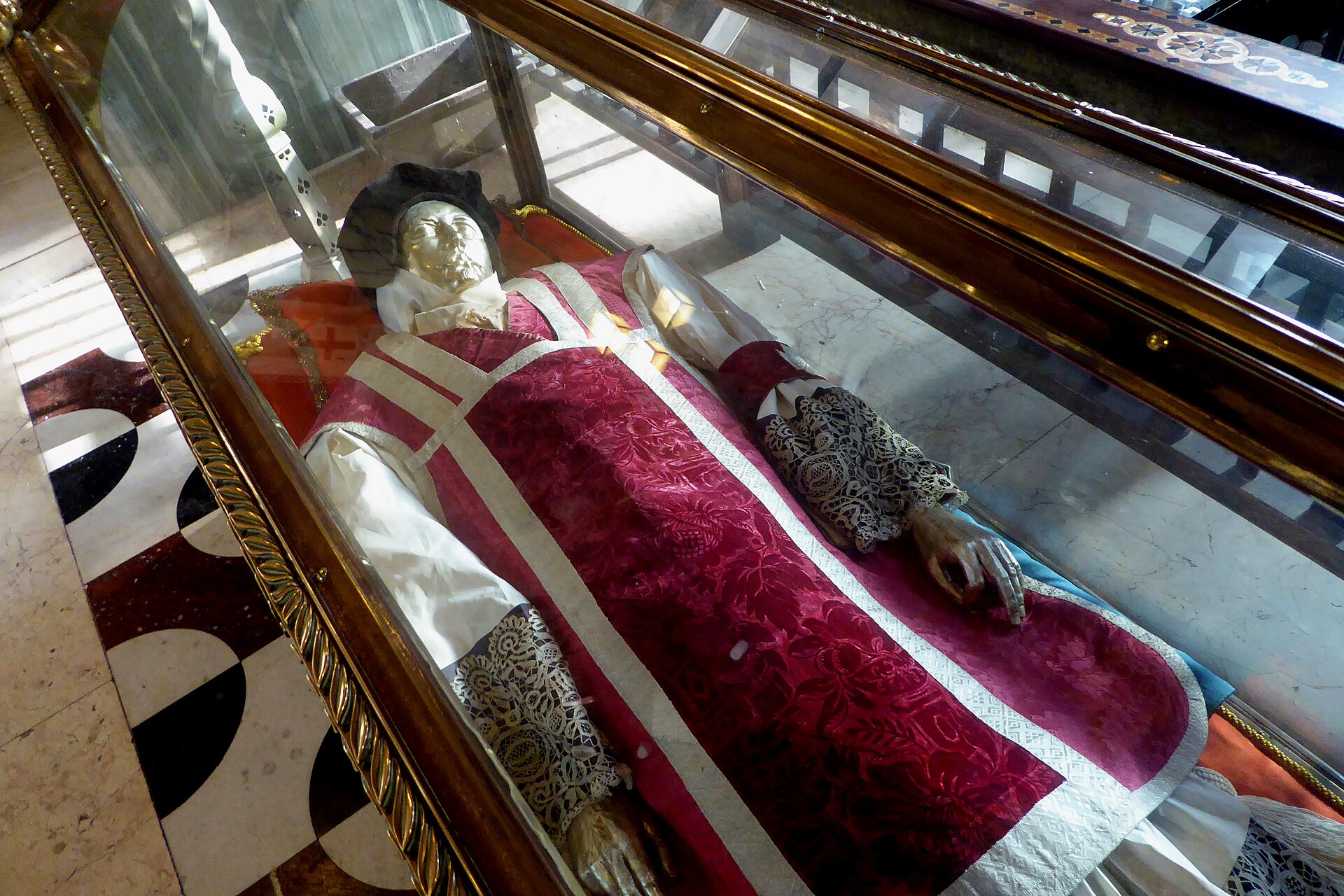
Bishop Hugh's earthly pilgrimage concluded on November 16, 1200, in London, while he was attending a national council. His body was transported back to Lincoln, where his funeral was attended by King John of England, King William I of Scotland, and a multitude of bishops, abbots, and nobles, a testament to the profound respect he commanded. Miracles were reported at his tomb almost immediately. His incorrupt body, a powerful sign of God's favor, was discovered during the translation of his relics in 1220, just twenty years after his death, a remarkable testament to his sanctity. Witnesses recorded that his body was found to be perfectly preserved, with flexible limbs and a natural color, emitting a sweet fragrance. This extraordinary state of preservation was carefully documented and served as a significant factor in his swift canonization. Today, Saint Hugh's shrine remains a focal point for pilgrims within Lincoln Cathedral, though his physical remains are no longer visibly incorrupt due to the passage of centuries and historical events, including the Reformation.
Saint Hugh was canonized by Pope Honorius III in 1220, making him the first Carthusian saint and the first English saint of the 13th century. His legacy endures as a model of episcopal courage, monastic discipline, and profound compassion. He is remembered as a fearless defender of justice, a wise counselor, and a loving shepherd of his flock. Pilgrims to Lincoln Cathedral can still visit the magnificent Angel Choir, built specifically to house his shrine, and contemplate the stained-glass windows depicting scenes from his life. His feast day is celebrated on November 17th, and he remains a powerful intercessor for those seeking spiritual guidance, integrity in leadership, and a deeper commitment to Christ. His life continues to inspire countless faithful to live lives of holiness and service, echoing his unwavering dedication to God and His Church.
Discovery
The remarkable phenomenon of incorruption, a testament to God's grace and often a sign of sanctity, has captivated believers for centuries. Among the most compelling cases in Catholic history is that of Saint Hugh of Lincoln, whose earthly remains offered a profound witness to his holy life long after his passing. Hugh, a Carthusian monk and later Bishop of Lincoln, died on November 16, 1200, in London, and his body was subsequently transported to Lincoln Cathedral for burial. The initial interment was, as was customary, a solemn affair, placing his venerated remains within the hallowed ground of the cathedral he had so diligently served. However, it was not until a later period, during a canonical process to investigate his sanctity and prepare for his eventual canonization, that the extraordinary state of his body was first brought to light. While precise contemporary records detailing the *first* exhumation specifically to discover incorruption are somewhat scarce, the tradition firmly holds that when his tomb was opened, likely in the early 13th century as part of the formal inquiry into his miracles and virtues, those present were met with an astonishing sight. Instead of the expected skeletal remains, Bishop Hugh's body was found to be remarkably intact, a state that defied the natural processes of decomposition. This initial discovery, witnessed by ecclesiastical authorities and likely members of the cathedral chapter, would have undoubtedly caused a profound stir, immediately lending credence to the popular belief in his sanctity and fueling the fervor for his canonization, which ultimately occurred in 1220.
Following this initial discovery, the veneration of Saint Hugh grew exponentially, and his incorrupt body became a focal point for pilgrims. While detailed accounts of every subsequent exhumation are not perfectly preserved through the centuries, it is understood that the body was examined periodically, particularly as his shrine became more prominent. These examinations consistently confirmed the remarkable preservation of his remains. The body was noted for its flexibility and an absence of the usual signs of decay, which further solidified the belief in its miraculous nature. Over the years, as the cult of Saint Hugh flourished, his body was elevated and enshrined within a magnificent reliquary, allowing for greater public veneration. This elevation, a common practice for canonized saints, would have involved a more thorough examination and preparation of the body for display. The consistent reports of its incorrupt state, despite the passage of time, served as a powerful spiritual magnet, drawing countless faithful to Lincoln Cathedral seeking intercession and spiritual solace.
The journey of Saint Hugh's remains through history has been one of both veneration and vulnerability. After its initial discovery and subsequent enshrinement, the body was housed within Lincoln Cathedral, a place of immense spiritual significance. However, the tumultuous period of the English Reformation brought profound changes to the landscape of religious practice and the veneration of saints. During this era, many shrines were dismantled, and relics were destroyed or desecrated. While the precise fate of Saint Hugh's incorrupt body during the most intense phases of the Reformation is not entirely clear, it is believed that efforts were made to conceal and protect it from iconoclastic fervor. This period likely saw the body moved from its prominent shrine to a more discreet location within the cathedral or its grounds, perhaps even re-interred to safeguard it. Later, as religious tensions eased, parts of his remains, though no longer fully displayed as an incorrupt body, were eventually recovered and placed in reliquaries. Today, while the full incorrupt body is not openly displayed, fragments of his relics are venerated within Lincoln Cathedral, a testament to his enduring legacy and the historical accounts of his extraordinary preservation. The current display, though not of the full body, maintains the tradition of his sanctity and the historical fact of his incorruption.
Among the most remarkable details associated with the incorrupt body of Saint Hugh of Lincoln were the consistent reports of its flexibility and the absence of the typical rigidity of death. Witnesses throughout the centuries noted that his limbs remained pliable, a phenomenon that defied natural explanation. There were also accounts, though less frequently documented than the flexibility, of a sweet, ethereal fragrance emanating from his remains, a characteristic often attributed to incorrupt saints, believed to be a sign of their heavenly purity and God's favor. While there are no widespread reports of bleeding or the exudation of oil from Saint Hugh's body, its sheer resistance to decay in the absence of artificial preservation methods was itself considered a profound miracle. This natural preservation, enduring through centuries, served as a powerful visual sermon, reinforcing the belief in the resurrection of the body and the enduring power of holiness. The historical accounts, though sometimes fragmented, consistently point to a body that remained remarkably intact and supple long after death, a truly extraordinary manifestation of divine grace that continues to inspire and intrigue.
Scientific Analysis
The historical accounts of the incorruption of Saint Hugh of Lincoln’s body present a fascinating subject for scientific inquiry, yet formal medical or scientific examinations in a modern sense are largely absent from the historical record. During the medieval period, the observation of a body resisting decay was primarily a theological rather than a medical phenomenon, interpreted through a lens of divine favor. Contemporary records from the time of his death in 1200 and subsequent translations of his relics describe the body as remarkably preserved, particularly the skin and internal organs, long after death. These observations were made by ecclesiastical authorities and lay witnesses, not by individuals trained in anatomical or forensic pathology. For instance, chroniclers such as Adam of Eynsham, Hugh’s chaplain and biographer, meticulously documented the state of the body during its initial burial and subsequent reinterments. While these accounts are detailed, they lack the objective, quantitative data that modern scientific examination would provide. There are no records of physicians performing autopsies or tissue analyses, nor of specific dates for such examinations beyond the general timeframe of his death and canonization. The "findings" are therefore descriptive and qualitative, emphasizing the body's lack of putrefaction and its pliable state, which was considered miraculous.
The perceived incorruption of Saint Hugh's body presents a significant scientific mystery, as it appears to defy the normal processes of decomposition. Human decomposition is a complex biological process initiated by autolysis (self-digestion by cellular enzymes) and accelerated by putrefaction (bacterial activity). This leads to liquefaction of tissues, gas formation, and eventual skeletalization. The environmental factors typically present in burial conditions, such as the soil microbiome, temperature fluctuations, and moisture, usually promote rapid decay. Lincoln Cathedral, where Saint Hugh was interred, would have provided an environment with varying degrees of humidity and microbial presence, factors generally conducive to decomposition. The historical accounts, however, suggest a remarkable preservation of soft tissues. While natural preservation phenomena like saponification (adipocere formation) can occur, where fatty tissues transform into a wax-like substance, this process typically requires specific conditions: a moist, anaerobic environment, and significant body fat. Adipocere formation primarily preserves fatty tissues and often alters the body's appearance, making it waxy and pale. The descriptions of Saint Hugh's body, however, often emphasize a more lifelike preservation, including the pliability of skin and the integrity of internal organs, which goes beyond typical adipocere formation. There is no historical evidence of deliberate embalming or preservation treatments being applied to Saint Hugh's body, which was not a common practice for non-royal figures in medieval England, further deepening the scientific enigma.
Various natural explanations have been proposed for cases of apparent incorruption, including saponification and mummification. Saponification, or adipocere formation, as mentioned, involves the hydrolysis of body fats into fatty acids, which then combine with metal ions in the soil to form a soap-like substance. While this can preserve the general form of the body, it typically does not maintain the pliability and lifelike appearance described for Saint Hugh. Mummification, either natural (desiccation in dry environments) or artificial (embalming), is another form of preservation. However, the burial conditions within Lincoln Cathedral are unlikely to have been consistently dry enough for natural mummification. Artificial mummification, as practiced in ancient Egypt, involved specific chemical treatments and evisceration, none of which are documented for Saint Hugh. Skeptics often attribute such cases to misinterpretation of natural processes, delayed decomposition due to unusual burial conditions (e.g., lead coffins creating an anaerobic environment), or simply the subjective nature of historical accounts. However, the consistent descriptions across multiple witnesses and over extended periods regarding Saint Hugh's preservation suggest that something beyond typical decomposition was at play, even if the precise mechanism remains unconfirmed by modern forensic analysis.
From a modern scientific perspective, the case of Saint Hugh of Lincoln, like other historical claims of incorruption, highlights the limitations of retrospective analysis without direct access to the remains. Such cases fit into the broader scientific study of taphonomy, the processes affecting an organism from death to fossilization. Modern techniques, such as computed tomography (CT) scans, magnetic resonance imaging (MRI), carbon dating, and detailed tissue analysis (histology, proteomics, genomics), could provide invaluable insights. CT scans could reveal the internal state of organs and skeletal structures without invasive procedures. Carbon dating could confirm the age of the remains, while tissue analysis could identify specific biochemical changes indicative of preservation mechanisms like adipocere or natural mummification, or even the presence of unknown preserving agents. Unfortunately, direct application of these techniques to Saint Hugh's remains, which are likely fragmented and dispersed as relics, is improbable. The primary questions that remain unanswered revolve around the precise biochemical and environmental factors that led to the reported preservation, and whether the historical accounts accurately reflect a truly anomalous state of preservation or are influenced by religious interpretation and the subjective nature of observation. Without direct scientific examination of the original remains, the incorruption of Saint Hugh of Lincoln remains a historical and theological marvel, offering a compelling challenge to purely naturalistic explanations based on current scientific understanding.
Spiritual Significance
The phenomenon of incorruption, particularly as exemplified by figures like Saint Hugh of Lincoln, stands as a profound testament within Catholic theology to the sanctity of the human body and the enduring power of God's grace. In a world often prone to desacralizing the physical, the preservation of a saint's earthly remains, defying natural decay, powerfully underscores the doctrine of the body as a temple of the Holy Spirit, as articulated in 1 Corinthians 6:19. It suggests that a life lived in profound union with Christ can imbue even the mortal coil with a unique sacredness, a foretaste of the glorified body promised in the resurrection. For Saint Hugh, whose life was a continuous ascent towards God, his incorrupt state was interpreted by the Church not as magic, but as a divine affirmation of his exceptional holiness, a visible sign of the invisible grace that permeated his being. It served as a tangible link between the earthly pilgrimage and the heavenly reward, a silent sermon on the eternal destiny of those who faithfully serve the Lord. This miraculous preservation reinforces the communion of saints, reminding the faithful that those who have gone before us remain intimately connected to the Church Militant, their sanctity radiating even from their physical remains.
Saint Hugh of Lincoln's unique charism was deeply rooted in his Carthusian formation, a spiritual tradition renowned for its austere discipline, profound solitude, and contemplative prayer. His heroic virtues were manifold, but perhaps most striking was his unwavering commitment to justice and pastoral care, even when it meant confronting powerful monarchs like Henry II and Richard I. He exhibited extraordinary humility, often choosing to live simply despite his episcopal office, and an unparalleled charity, particularly towards the poor and the lepers, whom he personally tended. His obedience to the dictates of his conscience, guided by divine law, superseded any earthly authority, making him a fearless advocate for the Church's freedom and the welfare of his flock. Hugh's mysticism was not an ethereal detachment from the world, but rather an intense interior life that fueled his outward actions, allowing him to perceive Christ in every person he encountered. His life demonstrated that true holiness is not merely passive piety but an active engagement with the world, transforming it through love and truth, all while maintaining a profound interior silence and union with God.
Devotion to Saint Hugh of Lincoln blossomed rapidly after his death in 1200, fueled by the widespread recognition of his sanctity and the immediate reports of miracles. His canonization in 1220, a mere two decades after his passing, speaks volumes about the popular veneration he enjoyed. Lincoln Cathedral, his final resting place, quickly became a significant pilgrimage site, drawing countless faithful seeking his intercession. While he is not associated with specific novenas in the modern sense, his feast day on November 17th is observed, and prayers for his intercession often focus on themes of justice, courage in the face of adversity, and care for the poor and sick. Pilgrims visiting Lincoln Cathedral today are still drawn to the site where his relics were once enshrined, though the exact location of his incorrupt body is no longer publicly accessible in the same way due to historical events and reburials. Nevertheless, the spiritual legacy of his incorruption continues to inspire, with the very stones of the cathedral whispering tales of his unwavering faith and the divine favor bestowed upon him. The experience of visiting his shrine, even without direct access to his physical remains, is one of profound encounter with a saint whose life continues to resonate with holiness.
Miracles attributed to Saint Hugh's intercession began even during his lifetime and continued posthumously, solidifying his reputation as a powerful intercessor. Numerous accounts of healings, particularly of the blind and the lame, were documented, along with instances of deliverance from various afflictions. His incorrupt body itself was seen as a continuous miracle, a source of profound spiritual consolation for the faithful. It served as a tangible sign of God's presence and power, inspiring hope and strengthening belief in the resurrection. The very sight of his preserved remains, defying the natural order, was a powerful catalyst for conversions and a reaffirmation of divine truth in an age that deeply valued such visible manifestations of the sacred. For many, approaching his shrine and praying in his presence was an experience of encountering the divine through the sanctity of his person, a conduit for God's grace and mercy. These documented wonders underscore the Catholic belief in the enduring efficacy of saintly intercession and the power of God to work through His chosen servants.
For contemporary Catholics and seekers alike, Saint Hugh of Lincoln offers an enduring message of courage, integrity, and radical commitment to Christ. In a world often characterized by moral relativism and a relentless pursuit of material gain, his life challenges us to prioritize spiritual values, to speak truth to power, and to serve the marginalized with unwavering compassion. His incorruption serves as a potent reminder that the human person, body and soul, is destined for glory and that a life lived in conformity with God's will can transcend the limitations of earthly existence. He bridges the visible and invisible worlds, demonstrating that sanctity is not an abstract concept but a lived reality, capable of leaving an indelible mark even on the physical realm. From Saint Hugh, we learn the importance of contemplative prayer as the wellspring of action, the necessity of defending the vulnerable, and the transformative power of humility. His legacy invites us to examine our own lives, to strive for holiness in our daily choices, and to trust in the ultimate triumph of grace over decay, offering a beacon of hope in an often-disillusioned age.
AI summary
A plain-language overview generated from this page's source material. Always verify with primary sources.