Biography
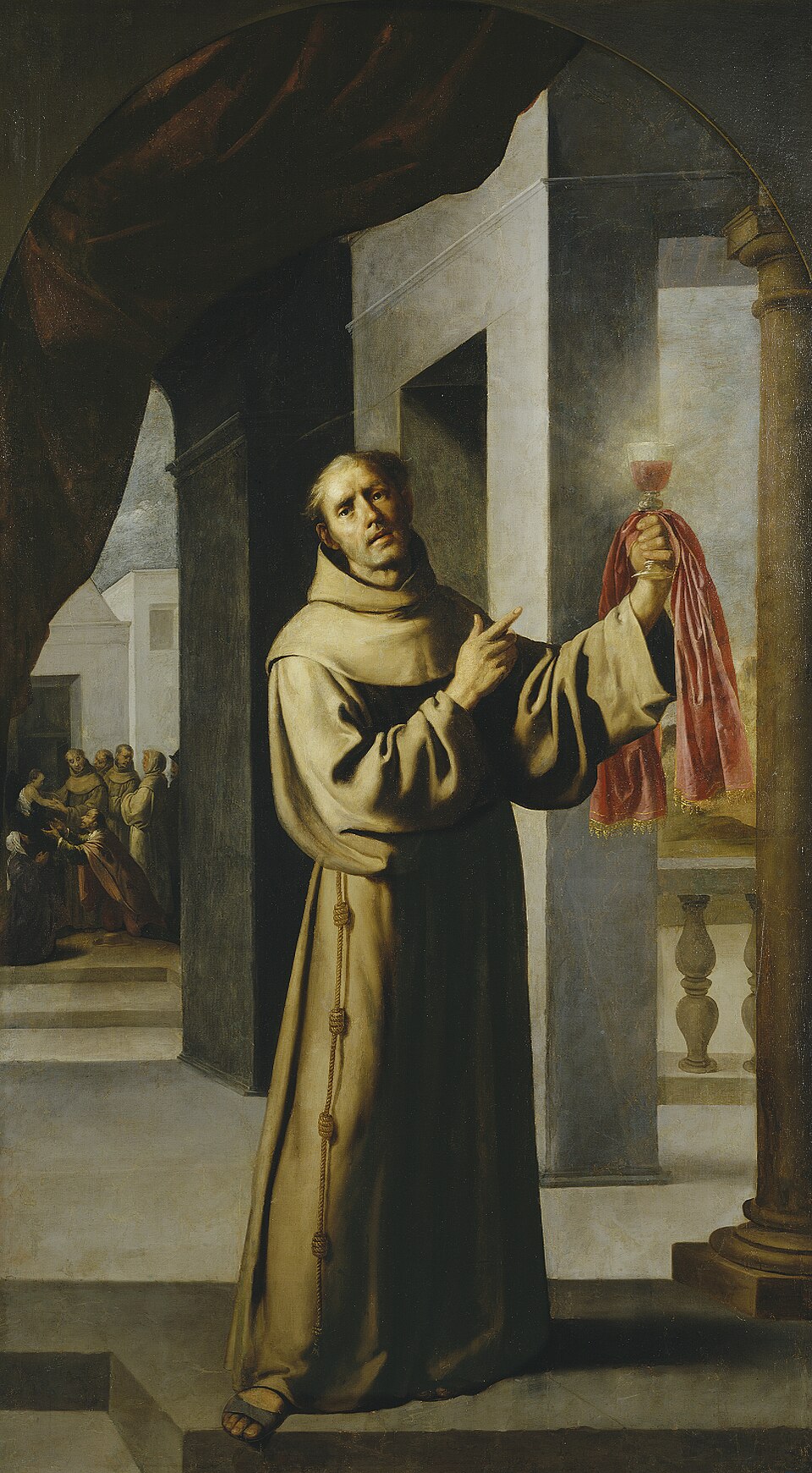
Born Domenico Gangale in 1391 in Monteprandone, a small town in the Marches region of Italy, Saint James of the Marches entered a world shaped by the burgeoning Renaissance and the lingering echoes of the Great Western Schism. His family, though not wealthy, instilled in him a deep piety and a thirst for knowledge. Young Domenico pursued his studies with fervor, first in Offida and then at the University of Perugia, where he excelled in philosophy and law. It was during these formative years that he encountered the vibrant intellectual and spiritual currents of his time, eventually leading him to discern a call to religious life. In 1416, he renounced a promising career in law to enter the Order of Friars Minor, taking the name James in honor of Saint James the Greater, and dedicating himself to a life of poverty, penance, and preaching.
As a Franciscan friar, Saint James of the Marches quickly distinguished himself as a powerful and tireless evangelist. He became a prominent figure in the Observant reform movement within the Franciscan Order, advocating for a stricter adherence to the Rule of Saint Francis. His ministry spanned across Italy, Germany, Bohemia, Hungary, and Poland, where he preached with compelling eloquence against heresy, particularly the Hussite movement, and exhorted the faithful to repentance and a deeper commitment to Christ. He was renowned for his austere lifestyle, his profound theological knowledge, and his fervent devotion to the Blessed Sacrament and the Immaculate Conception. His efforts were instrumental in founding numerous friaries and hospitals, and he served as an inquisitor, working diligently to uphold the purity of the Catholic faith in a turbulent era.
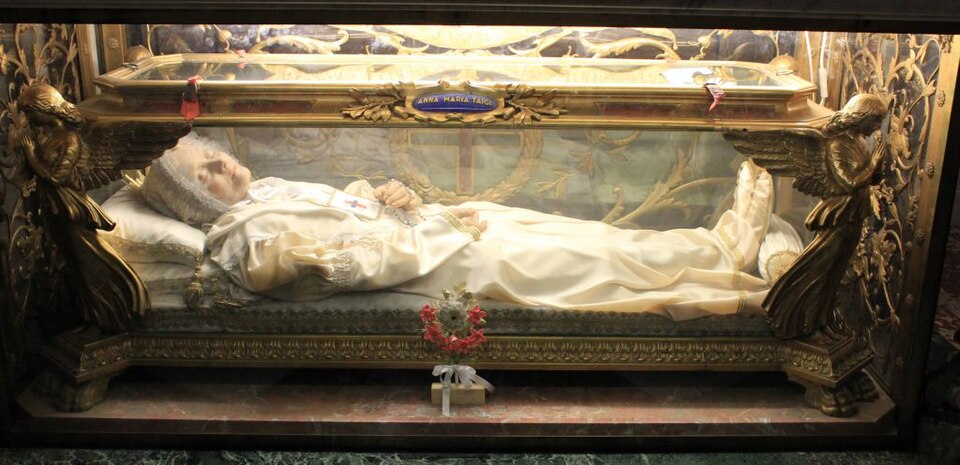
Saint James of the Marches died on November 28, 1476, in Naples, at the venerable age of 85, after a life of extraordinary labor and sanctity. His passing was met with widespread mourning, and his reputation for holiness was such that his body was interred with great reverence. Years later, upon exhumation, his body was found to be remarkably preserved, exhibiting the phenomenon of incorruption – a testament to his profound union with God. Today, his incorrupt body rests in the Church of Santa Maria Nova in Naples, a sacred pilgrimage site where the faithful can venerate his earthly remains, still remarkably intact after centuries.
The legacy of Saint James of the Marches endures as a beacon of Franciscan zeal and unwavering fidelity to the Church. He was beatified in 1629 and canonized by Pope Benedict XIII in 1726, solidifying his place among the Church's most revered saints. His writings, including sermons and theological treatises, continue to inspire scholars and spiritual seekers. Pilgrims who visit his shrine in Naples today are invited to reflect on his exemplary life of prayer, penance, and tireless preaching, drawing inspiration from his enduring incorruptibility as a sign of God's grace and the promise of eternal life. His feast day is celebrated on November 28th, a day when the Church remembers this great Franciscan saint who dedicated his life to proclaiming the Gospel and serving the poor.
Discovery
The earthly journey of Domenico Gangale, later known as Saint James of the Marches, concluded in Naples in 1476, and his initial burial was, as was customary, a simple interment. However, the story of his physical remains took a remarkable turn in 1628, a full 152 years after his death. It was in this year, during a routine exhumation and transfer of remains within the Church of Santa Maria La Nova, that the friars made a discovery that sent ripples of astonishment through the Franciscan community and beyond. As the earth was carefully removed from his tomb, the body of Friar James was revealed not as skeletal remains, but as remarkably preserved. Accounts from the period describe the body as appearing pliable, with skin still adhering to bone, and the features of his face discernible, albeit somewhat shrunken. The air around the tomb was said to have been filled with a sweet, unidentifiable fragrance, a phenomenon often associated with incorrupt saints. Witnesses, including the local bishop and numerous Franciscan friars, were reportedly awestruck by this unexpected state of preservation, leading to immediate veneration and the recognition of a potential miracle. This initial discovery cemented his reputation for sanctity and set the stage for further examination and devotion.
Following the initial exhumation in 1628, the body of Saint James of the Marches underwent several subsequent examinations and transfers, each revealing a consistent, if subtly changing, state of incorruption. In 1629, less than a year after its discovery, a more thorough canonical examination was conducted by ecclesiastical authorities. During this inspection, the body was found to be largely intact, with flexible limbs and a natural coloration, though some drying and hardening of the tissues were noted, a natural progression for any preserved body over such an extended period. The examiners meticulously documented the condition of his hands, feet, and face, noting the absence of any artificial embalming agents, which further underscored the miraculous nature of its preservation. Another significant examination occurred in 1700, coinciding with the growing devotion to the saint and the plans for a more prominent display. At this time, the body was again found to be remarkably preserved, though the skin had further darkened and tightened, giving it a more mummified appearance. Despite these changes, the overall integrity of the body remained astonishing, and the sweet odor, though perhaps fainter, was still reported by some. These repeated inspections, spanning over a century, consistently affirmed the extraordinary preservation of Saint James of the Marches, solidifying his place among the revered incorruptibles.
The journey of Saint James of the Marches's body from a simple grave to its current venerated display is a testament to enduring faith and careful preservation. After the initial discovery and subsequent examinations, the body was initially housed in a more secure, yet still somewhat concealed, location within Santa Maria La Nova. As his cult grew and his canonization approached, a more fitting reliquary was deemed necessary. In the early 18th century, the body was carefully placed within a glass-sided coffin, allowing the faithful to view the preserved remains directly. This transparent casket was then enshrined within a more elaborate altar, designed to facilitate public veneration. Over the centuries, the body has remained within Santa Maria La Nova, a testament to the stability of its preservation and the continuous devotion of the faithful. To protect the delicate remains from environmental degradation and the effects of light, the glass casket is often kept within a larger, protective sarcophagus, which is only opened on special feast days or for specific veneration. The environment within the display area is also carefully monitored to maintain stable temperature and humidity, crucial for the long-term preservation of such a unique relic. Today, pilgrims to Santa Maria La Nova can gaze upon the remarkably preserved form of Saint James of the Marches, a silent witness to a life of sanctity and an enduring mystery of faith.
Beyond the remarkable physical preservation, the body of Saint James of the Marches has been associated with several unusual phenomena that have further deepened the devotion surrounding him. From the very first exhumation, the most frequently reported marvel was the persistent, sweet fragrance emanating from his remains. This aroma, often described as floral or akin to incense, was present even after centuries and was considered a clear sign of divine favor, distinguishing it from the typical odor of decay. While not as widely reported as with some other incorruptibles, there have been occasional accounts of the body exhibiting a degree of flexibility, particularly in the limbs, even after centuries of repose. This pliability, defying the natural stiffening of tissues post-mortem, has been noted during transfers and examinations, adding to the mystique of his incorruption. Though not a bleeding incorruptible, the consistent and natural appearance of his skin, despite its age and exposure, has often been cited as extraordinary. The absence of significant deterioration, even in conditions that would typically lead to rapid decomposition, has been a recurring theme in the historical accounts of his preservation. These remarkable details, meticulously documented by those who have witnessed them, underscore the extraordinary nature of Saint James of the Marches's incorruption and continue to inspire awe and reverence among the faithful.
Spiritual Significance
The phenomenon of incorruption, as exemplified by Saint James of the Marches, holds profound theological significance within Catholic doctrine, serving as a tangible testament to the sanctity of the human body and the ultimate promise of resurrection. This miraculous preservation of the physical form, defying natural processes of decay, powerfully underscores the teaching that the body is a temple of the Holy Spirit (1 Corinthians 6:19). It suggests a divine intervention, a special grace bestowed upon certain individuals whose lives were so deeply consecrated to God that even their mortal remains bear witness to their extraordinary holiness. For Saint James, whose body rests remarkably preserved in Santa Maria La Nova, Naples, his incorruption is interpreted by the Church not as a mere curiosity, but as a sign of his exceptional virtue and a foretaste of the glorified body promised at the general resurrection. It bridges the visible and invisible, reminding the faithful that while death marks a separation, the soul and body are destined for reunification in eternal glory. This enduring physical presence also strengthens the doctrine of the communion of saints, affirming a continued, vibrant connection between the living and those who have entered eternal life, with the incorrupt body acting as a physical anchor for this spiritual reality.
Saint James of the Marches distinguished himself through a unique charism centered on fervent preaching, tireless missionary work, and an unwavering commitment to Franciscan poverty and reform. His heroic virtues were manifold, encompassing profound humility, which saw him renounce a promising legal career for a life of mendicancy, and an intense charity that fueled his efforts to combat heresy and promote moral renewal across Europe. He was a scholar of great intellect, yet he embraced a radical simplicity, living out the Franciscan ideal with an uncompromising spirit. His obedience to the Church and his superiors was legendary, even when it meant undertaking arduous journeys and facing significant opposition. Furthermore, he possessed a deep mystical inclination, evident in his profound prayer life and his passionate devotion to the Holy Name of Jesus, a devotion he tirelessly propagated. He was a central figure in the Observant reform movement within the Franciscan Order, advocating for a stricter adherence to the Rule of Saint Francis, thereby contributing significantly to a spiritual tradition that emphasized evangelical poverty, penitence, and intense popular preaching. His life was a living sermon, manifesting a holistic holiness that integrated intellectual rigor with ascetic discipline and compassionate service.
Devotion to Saint James of the Marches developed organically, fueled by his widespread reputation for sanctity during his lifetime and the subsequent discovery of his incorrupt body. From the moment of his death in 1476, pilgrims flocked to his tomb, drawn by his spiritual legacy and the extraordinary preservation of his remains. His patronage extends to lawyers, students, and those seeking spiritual guidance, reflecting his own intellectual pursuits and his role as a spiritual director. While specific traditional novenas or prayers may not be as widely known as those for some other saints, his feast day on November 28th is observed with reverence, particularly in the Franciscan Order and in the regions where he ministered. Today, visiting his shrine in Santa Maria La Nova in Naples is a profoundly moving experience for pilgrims. The incorrupt body, displayed for veneration, offers a tangible connection to a saint who walked the earth centuries ago. Pilgrims often spend time in silent prayer before his relics, seeking his intercession, reflecting on his life of virtue, and finding solace in the visible sign of God's grace manifest in his preserved form, a powerful reminder of the enduring presence of the saints among us.
Numerous miracles have been attributed to the intercession of Saint James of the Marches, both during his lifetime and after his death, further solidifying his reputation for sanctity. Historical accounts document instances of documented healings, where the sick and infirm were restored to health through his prayers. Stories abound of conversions, where individuals hardened by sin or error were brought back to the faith through his compelling preaching and spiritual guidance. Answered prayers, ranging from the resolution of personal dilemmas to the alleviation of communal suffering, have been consistently reported by those who invoked his aid. The incorrupt body itself has been a continuous source of spiritual consolation for the faithful. Its very existence is seen as a miracle, a divine affirmation of his holy life, offering a powerful visual reminder of the resurrection and the ultimate triumph over death. For centuries, pilgrims have touched devotional objects to his relics, believing that a spiritual grace can be transmitted, fostering a deep sense of connection and hope. This tangible link to the divine, manifested through his preserved remains, continues to inspire faith and offer comfort to countless believers seeking solace and spiritual strength.
The enduring message of Saint James of the Marches holds profound relevance for contemporary Catholics and seekers in an increasingly secularized world. His life challenges the pervasive materialism of our age by demonstrating the profound richness and fulfillment found in radical detachment from worldly possessions and an unwavering pursuit of spiritual goods. In an era often marked by moral relativism, his uncompromising stand for truth and his tireless efforts to combat error offer a powerful example of conviction and courage. Modern believers can learn from his intellectual rigor combined with deep piety, showing that faith and reason are not adversaries but complementary paths to understanding. His incorruption serves as a tangible bridge between the visible and invisible worlds, a physical sign pointing to the reality of eternal life and the power of God's grace. It reminds us that sanctity is attainable, that human beings can, through divine assistance, live lives so pleasing to God that even their mortal remains bear witness to their extraordinary virtue. In an age seeking meaning and transcendence, Saint James of the Marches stands as a powerful witness to the enduring truth of the Gospel and the transformative power of a life lived entirely for Christ.
AI summary
A plain-language overview generated from this page's source material. Always verify with primary sources.