Biography
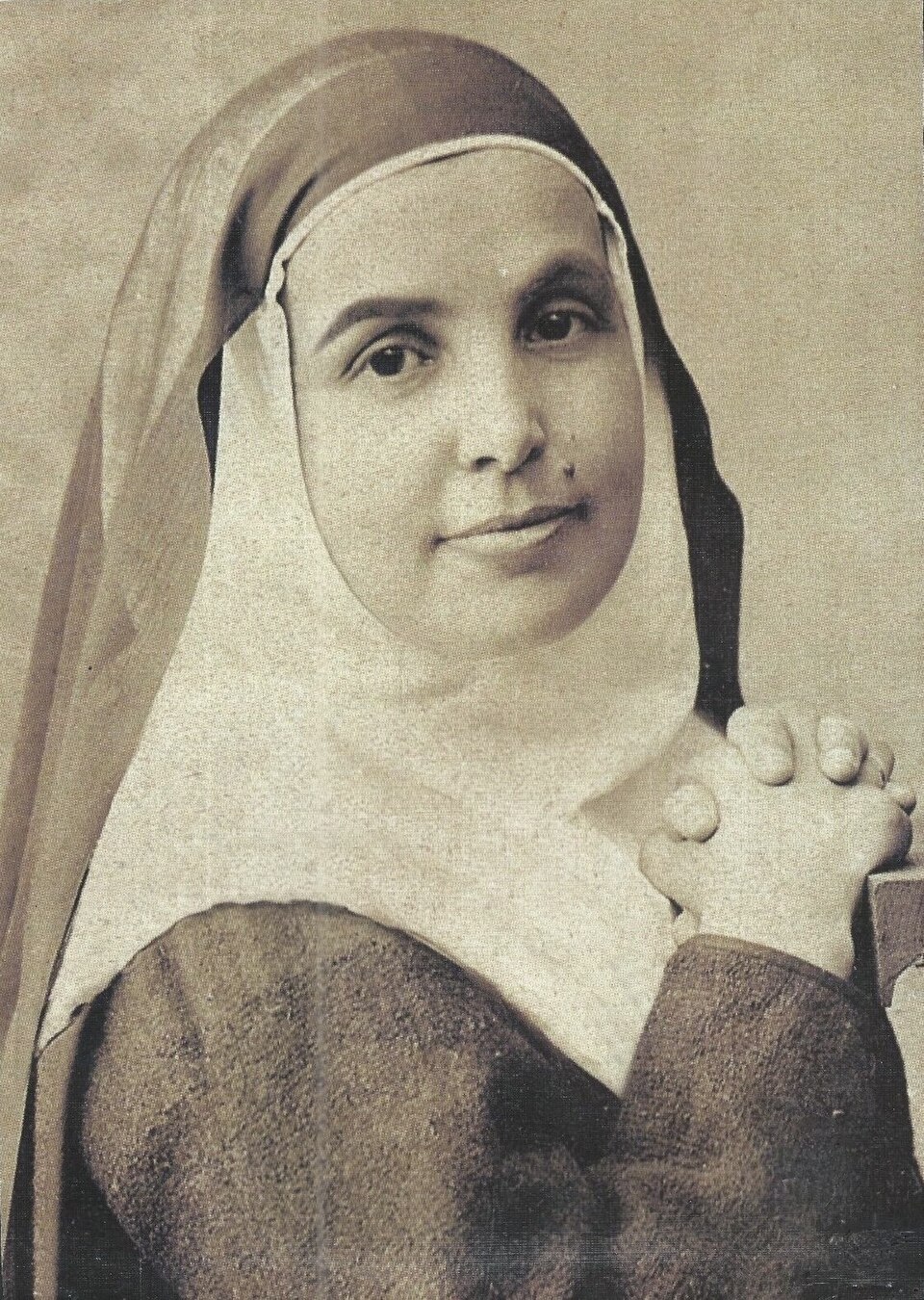
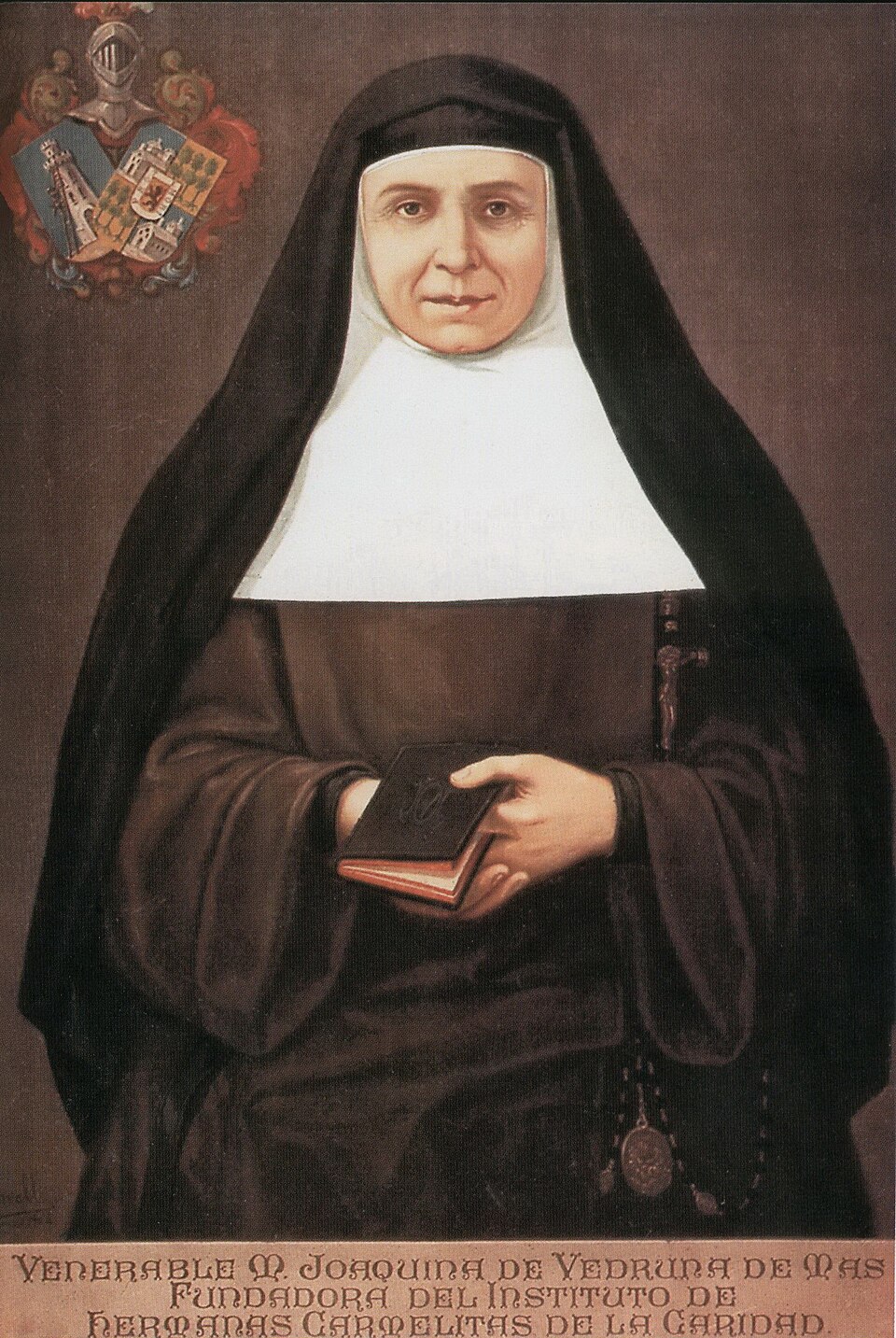
Born Joaquina de Vedruna in Barcelona, Spain, on April 16, 1783, Saint Joaquina Vedruna de Mas hailed from a noble and deeply pious family. Her early life was marked by a profound spirituality and a charitable spirit, evident even in her youth. At the tender age of 12, she expressed a desire to enter a Carmelite convent, but her parents, recognizing her youth, encouraged her to wait. At 16, she married Teodoro de Mas, a distinguished lawyer and landowner. Their union was blessed with nine children, and Joaquina embraced her role as a wife and mother with exemplary devotion, managing a large household while nurturing the spiritual growth of her family. The early 19th century in Spain was a period of great political upheaval, and Joaquina experienced firsthand the turmoil of the Napoleonic Wars, which tragically claimed the life of her beloved husband in 1816. Widowed at 33, she dedicated herself entirely to the upbringing of her children and to works of charity, deepening her prayer life and discerning God's call for her future.
After her children were grown and settled, Joaquina felt an undeniable call to religious life, a desire that had never truly left her. Guided by her spiritual director, Father Esteban de Olot, a Capuchin friar, she founded the Institute of the Carmelite Sisters of Charity in Vic, Spain, in 1826. Her vision was to establish a congregation dedicated to serving the poor, the sick, and the uneducated, particularly children. The sisters would live a life of prayer and active ministry, combining the contemplative spirit of Carmel with practical works of mercy. Despite facing initial challenges and political obstacles, her unwavering faith and tireless efforts led to the rapid growth of the order. She personally oversaw the establishment of numerous schools, hospitals, and homes for the elderly, always emphasizing compassion, humility, and a deep trust in Divine Providence. Her leadership during a time of intense anti-clericalism in Spain was a testament to her courage and conviction.
Saint Joaquina’s final years were marked by suffering, as she endured paralysis and other ailments, yet she embraced these trials with heroic patience and resignation to God's will. She passed away peacefully on August 28, 1854, during a cholera epidemic, having lived a life entirely consecrated to God and neighbor. Her body was initially interred in the cemetery of the Carmelite Sisters of Charity in Vic. However, upon exhumation for canonical processes, her body was found to be remarkably preserved, a sign of God's favor and a source of inspiration for the faithful. Today, her incorrupt body rests in the chapel of the Motherhouse of the Carmelite Sisters of Charity in Barcelona, Spain, encased in a glass reliquary, a silent testament to her sanctity.
Saint Joaquina Vedruna de Mas was canonized by Pope John XXIII on April 12, 1959, an official recognition of her holy life and the miracles attributed to her intercession. Her legacy endures through the global presence of the Carmelite Sisters of Charity, who continue her mission of service in various countries, operating schools, hospitals, and social welfare programs. Pilgrims visiting Barcelona can venerate her incorrupt body, reflecting on her extraordinary life of faith, charity, and perseverance. She remains a powerful intercessor for families, educators, and all who seek to serve Christ in the poor and suffering, embodying the profound truth that a life lived in humble service to God can bear abundant and lasting fruit.
Discovery
The extraordinary phenomenon of incorruptibility, a testament to God's grace and a source of profound spiritual reflection, was revealed in the earthly remains of Joaquina Vedruna de Mas decades after her passing. She died in 1854 amidst a cholera epidemic in Vich, Spain, having founded the Carmelite Sisters of Charity. Her initial burial was, as was customary, in a simple grave in the local cemetery. The first exhumation, a routine procedure undertaken to make space in the crowded cemetery, occurred approximately twelve years later, in 1866. It was during this event that the first signs of her remarkable preservation were observed. When her coffin was opened in the presence of several religious sisters, local clergy, and municipal officials, a collective gasp of astonishment filled the air. Rather than the skeletal remains typically expected after such a period, the body of Mother Joaquina was found to be largely intact. Her skin, though discolored, retained its form, and her features were recognizable. There was no putrid odor; instead, a faint, sweet fragrance was reported by some witnesses, a detail often associated with incorruptible saints. The immediate reaction was one of awe and reverence, prompting the ecclesiastical authorities to take special measures for its continued care and observation. This initial discovery laid the groundwork for the future veneration of her remains.
Following this initial revelation, the body of Saint Joaquina Vedruna de Mas underwent several subsequent exhumations and examinations, each affirming and further documenting its unusual state of preservation. In 1881, for instance, her remains were transferred from the cemetery in Vich to the chapel of the Carmelite Sisters of Charity in the same city. This transfer provided another opportunity for a more thorough inspection, confirming the sustained integrity of her body. Medical professionals and ecclesiastical officials were present, meticulously recording their observations. They noted the remarkable suppleness of her limbs and the preservation of her internal organs, details that defied natural decomposition. Later, in 1928, after her beatification, her body was again exhumed and translated to the Motherhouse of the Carmelite Sisters of Charity in Barcelona, a more prominent location befitting her elevated status within the Church. This move was particularly significant, as it allowed for even more rigorous scientific and theological scrutiny. Each examination consistently reported the absence of significant decay, the preservation of her soft tissues, and the lack of any artificial embalming agents, further solidifying the claim of her incorruptibility. The consistent nature of these findings over many decades, despite varying environmental conditions and multiple disturbances, is a compelling aspect of her story.
The journey of Saint Joaquina's preservation and display reflects a careful balance between veneration and protection. After her beatification and subsequent canonization, her body was placed in a magnificent glass casket, allowing the faithful to view her remains while ensuring their continued protection from environmental factors. This casket is housed within a beautiful altar in the Motherhouse of the Carmelite Sisters of Charity in Barcelona, serving as a focal point for prayer and devotion. The environment within the display area is carefully monitored to maintain stable temperature and humidity, crucial for the long-term preservation of such delicate relics. The glass casket itself is designed to be airtight, further safeguarding the body from degradation. Over the years, minor restorative work has been undertaken, primarily to address superficial discoloration or to re-clothe the body in fresh habits, but these interventions have been minimal and always with the utmost respect for the integrity of the remains. The current presentation allows pilgrims and visitors to witness firsthand the extraordinary gift of her incorruptibility, fostering a deeper connection to her life and sanctity.
Among the most remarkable details associated with the incorrupt body of Saint Joaquina Vedruna de Mas are the consistent reports of its flexibility and the absence of the typical odor of decay. Witnesses to various exhumations, including medical doctors, have attested to the surprising suppleness of her joints, allowing for a degree of manipulation that would be impossible in a naturally decomposed corpse. This flexibility is a recurring theme in accounts of incorrupt saints, defying the natural stiffening and rigidity that accompanies death and decomposition. Furthermore, throughout the numerous transfers and examinations, there has been a consistent absence of any putrid odor. Instead, some accounts from the early exhumations mention a faint, sweet, and inexplicable fragrance emanating from her remains, a phenomenon often referred to as the "odor of sanctity." While not always present or universally perceived, its occasional manifestation adds another layer of mystique to her incorruptibility. These unusual phenomena, coupled with the remarkable visual preservation of her features and soft tissues, continue to inspire wonder and reinforce the belief in the miraculous nature of her incorrupt state, serving as a powerful testament to her holy life and God's enduring favor.
Scientific Analysis
The phenomenon of the apparent incorruption of certain deceased individuals, particularly within religious traditions, presents a compelling subject for scientific inquiry. In the case of Saint Joaquina Vedruna de Mas, who died in 1854, the reported state of preservation of her remains has long been a source of both spiritual veneration and scientific curiosity. While comprehensive, publicly accessible scientific reports detailing formal medical examinations are often scarce for historical cases of incorruption, anecdotal accounts and limited historical records provide some insight. It is understood that following her death, her body was interred, and upon exhumation at a later, unspecified date, it was found to be remarkably intact. Such exhumations, particularly for individuals considered for beatification or canonization within the Catholic Church, typically involve an ecclesiastical commission, which may include medical professionals. These examinations primarily serve to confirm identity and assess the state of the remains. For Saint Joaquina, the consistent reports over decades describe a body that has resisted the typical processes of putrefaction and decay, maintaining a degree of flexibility and natural appearance, even if desiccated, that is inconsistent with normal post-mortem changes after such a prolonged period. Specific details regarding the names of examining physicians, precise dates of examinations beyond the initial exhumation, or detailed institutional affiliations are not widely documented in publicly available historical records, which is a common challenge when investigating historical cases of incorruption that predate modern forensic science protocols.
The scientific mystery surrounding the preservation of Saint Joaquina Vedruna de Mas's body lies in its apparent defiance of the natural laws governing decomposition. Under typical conditions, a human body, after death, undergoes a predictable sequence of changes driven by autolysis (self-digestion by cellular enzymes) and putrefaction (bacterial decomposition). These processes lead to liquefaction of tissues, gas formation, and ultimately, skeletalization. The rate of decomposition is influenced by numerous environmental factors, including temperature, humidity, oxygen availability, and the presence of microorganisms in the soil or burial environment. Given her death in 1854, and the subsequent period of interment, one would expect complete skeletalization. Barcelona, Spain, where she is interred, has a Mediterranean climate, characterized by warm, dry summers and mild, wet winters. Such conditions, while not extreme, would generally accelerate decomposition rather than inhibit it, especially in the absence of specific embalming or preservation treatments. There is no historical record suggesting any deliberate embalming or chemical preservation techniques were applied to her body, which was not a common practice for ordinary burials in the mid-19th century in Spain, particularly for religious figures unless specifically requested and recorded. The sustained integrity of soft tissues, even if mummified or desiccated, over more than a century and a half, without documented artificial intervention, presents a significant anomaly from a forensic taphonomic perspective.
Various natural explanations are often proposed for cases of apparent incorruption, primarily focusing on specific environmental conditions that can inhibit decomposition. Saponification, or adipocere formation, is one such process, where body fats hydrolyze into a waxy, soap-like substance under anaerobic, moist conditions. This can preserve the general body form but results in a distinct waxy texture and appearance, often described as "grave wax." Mummification, another natural process, occurs in extremely dry or cold environments where moisture is rapidly removed from the tissues, preventing bacterial growth. While these processes can explain some instances of preserved remains, they often fall short in fully explaining cases like Saint Joaquina's. The descriptions of her remains do not consistently align with the typical characteristics of extensive adipocere formation, nor do the climatic conditions of Barcelona perfectly match the extreme dryness required for natural mummification without other contributing factors. Skeptics often attribute such preservation to specific, albeit undocumented, burial conditions that inadvertently led to mummification or saponification, or to the natural variations in decomposition rates that can occur. However, the consistent reports of a relatively well-preserved body over such an extended period, without clear evidence of these specific natural processes being the sole cause, leaves a significant gap in a purely naturalistic explanation. The absence of detailed scientific analysis makes it difficult to definitively confirm or refute these hypotheses.
From a modern scientific perspective, the case of Saint Joaquina Vedruna de Mas, like other historical cases of incorruption, represents a valuable, albeit challenging, subject for forensic taphonomy and preservation science. Modern techniques, such as computed tomography (CT) scans, magnetic resonance imaging (MRI), carbon dating, and detailed histological and biochemical tissue analysis, could provide invaluable insights. CT scans could reveal the internal state of organs and tissues without invasive procedures, while tissue analysis could identify specific chemical markers of decomposition, preservation, or the presence of natural or artificial preserving agents. Carbon dating could precisely determine the age of the remains, confirming their identity. The application of these techniques could differentiate between true mummification, adipocere formation, or other forms of preservation, and potentially identify any unknown natural or artificial factors contributing to the body's state. Such studies could contribute to a broader understanding of human decomposition and preservation under diverse conditions. However, the ethical and religious sensitivities surrounding the examination of venerated remains often preclude such extensive scientific investigation. Therefore, many questions remain unanswered, particularly regarding the precise mechanisms of preservation, the exact state of internal organs, and the specific environmental conditions of her burial site. The phenomenon continues to exist at the intersection of faith and science, presenting a mystery that, without further empirical investigation, remains largely unexplained by current scientific understanding alone.
Spiritual Significance
The phenomenon of incorruption, as exemplified by Saint Joaquina Vedruna de Mas, stands as a profound theological signpost within the Catholic tradition, speaking directly to the Church's understanding of the human body and its ultimate destiny. Far from being a mere biological anomaly, the preservation of her earthly remains, even decades after her passing, is interpreted as a divine affirmation of her sanctity and a prefigurement of the resurrection of the body. This miraculous state underscores the biblical truth that the body is a temple of the Holy Spirit, as articulated in 1 Corinthians 6:19. For Saint Joaquina, whose life was a testament to unwavering faith and selfless service, her incorrupt body serves as a tangible reminder that those who dedicate themselves fully to God are honored even in death. It reinforces the doctrine of the communion of saints, illustrating that the bond between the living and the dead in Christ remains unbroken, and that the physical vessel once inhabited by a soul so intimately united with God can, by divine grace, transcend the natural processes of decay. The Church, in recognizing and venerating such incorrupt bodies, invites the faithful to contemplate the power of grace to transform not only the soul but also, in extraordinary cases, the very flesh.
Saint Joaquina Vedruna de Mas's life was characterized by a unique charism centered on compassionate service and an unwavering trust in divine providence, even amidst profound personal and societal upheaval. Her heroic virtues were manifold, but perhaps most prominent was her profound charity, which extended from her own large family to the countless poor and sick she served through the religious congregation she founded, the Carmelite Sisters of Charity. Her humility was evident in her willingness to embrace various states of life – from a noblewoman and devoted wife and mother of nine, to a widow, and finally, a foundress of a religious order, always submitting to God's will. She practiced an extraordinary obedience, particularly to the spiritual direction she received and to the promptings of the Holy Spirit in establishing her congregation. While not a mystic in the traditional sense of experiencing extraordinary visions, her spirituality was deeply contemplative, rooted in the Carmelite tradition's emphasis on interior prayer and union with God, which she seamlessly integrated with active apostolic work. This blend of contemplative prayer and active charity became the hallmark of her spiritual legacy, demonstrating that profound holiness could be lived out in the midst of worldly responsibilities and tumultuous times.
Devotion to Saint Joaquina Vedruna de Mas has flourished since her death, particularly within Spain and among the Carmelite Sisters of Charity, who continue her mission of education and healthcare. Her incorrupt body, housed in the Motherhouse of her order in Barcelona, Spain, has become a focal point of veneration and pilgrimage. Pilgrims from around the world visit her shrine, drawn by the palpable sense of her enduring presence and the extraordinary preservation of her remains. The experience of visiting her resting place is often described as one of profound peace and spiritual upliftment, a tangible encounter with sanctity. While she is not formally designated as a patron saint for a specific cause, she is widely invoked for intercession in matters of family life, the care of the sick, and the founding of religious communities. Her feast day is celebrated with special Masses and prayers, and novenas dedicated to her intercession are common, particularly by those seeking strength in adversity and guidance in their vocations. The very sight of her incorrupt body serves as a powerful testament to the enduring power of faith and the sanctity she embodied.
Numerous miracles have been attributed to the intercession of Saint Joaquina Vedruna de Mas, solidifying her status as a powerful intercessor in heaven. Documented healings, often involving severe illnesses, have been reported and meticulously investigated by the Church, contributing to her beatification and canonization. These miracles serve not only as proof of her sanctity but also as a source of immense spiritual consolation for the faithful, demonstrating that her compassion and care continue beyond her earthly life. Beyond physical cures, countless conversions and answered prayers are attributed to her intercession, particularly for those struggling with family difficulties, vocational discernment, or the challenges of founding and sustaining religious communities. The incorrupt body itself, beyond being an object of veneration, has been a profound source of spiritual solace. For many, gazing upon her preserved form reinforces the reality of eternal life and the power of God to transcend natural limitations, offering hope and strengthening faith in the face of suffering and death. It is a visible sign of God's favor and a reminder that the saints, though in heaven, remain intimately connected to the struggles and hopes of those on earth.
Saint Joaquina Vedruna de Mas's enduring message for contemporary Catholics and seekers resonates powerfully in an age often characterized by materialism and secularism. Her life challenges the notion that true fulfillment lies in worldly possessions or fleeting pleasures, instead pointing to the profound joy found in selfless service and unwavering faith. In a world grappling with family breakdown and societal unrest, her example as a devoted wife, mother, and later, a religious foundress, offers a compelling model of how to navigate diverse life stages with grace and purpose, always rooted in Christ. She teaches us the importance of integrating contemplative prayer with active charity, demonstrating that spiritual depth is not incompatible with engagement in the world's needs. Her incorruption serves as a tangible bridge between the visible and invisible worlds, a concrete reminder that there is more to existence than what meets the eye, and that heaven is not a distant, abstract concept but a vibrant reality inhabited by those who have lived lives of heroic virtue. Her legacy encourages us to embrace our own vocations, whatever they may be, with the same fervent love and trust in God that defined her extraordinary life, reminding us that sanctity is attainable for all who earnestly seek it.
AI summary
A plain-language overview generated from this page's source material. Always verify with primary sources.