Biography
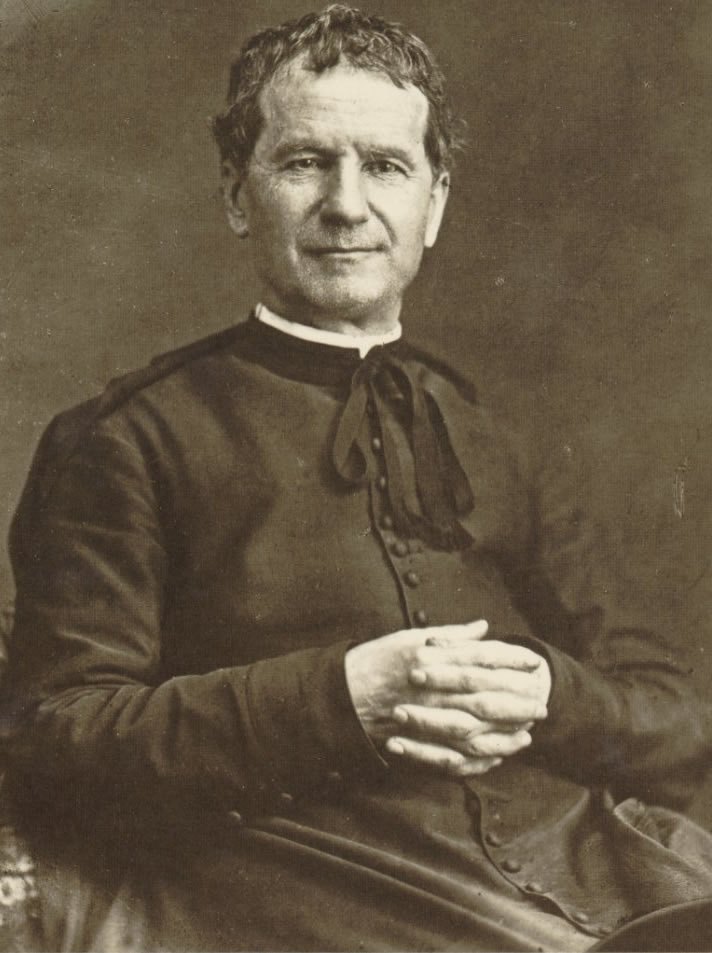
Saint John Bosco, affectionately known as Don Bosco, was born Giovanni Melchiorre Bosco on August 16, 1815, in Becchi, a small hamlet near Castelnuovo d'Asti, Piedmont, Italy. His early life was marked by hardship and a profound sense of divine calling. Orphaned at the tender age of two, he was raised by his devout mother, Margherita Occhiena, who instilled in him deep faith and a strong work ethic. From a young age, John displayed remarkable empathy and a natural ability to connect with others, particularly children. He would often entertain his peers with magic tricks and acrobatics, always concluding with a prayer or a retelling of the Sunday sermon, foreshadowing his future ministry. Despite immense poverty and the challenges of pursuing an education, he persevered, driven by a dream he had at nine years old – a vision of transforming wild animals into gentle lambs, which he understood as a call to guide wayward youth.
Ordained a priest in 1841, Don Bosco dedicated his life entirely to the education and welfare of disadvantaged boys in Turin, a city grappling with the social upheaval of the Industrial Revolution. He established the Oratory of St. Francis de Sales, a haven providing shelter, education, and vocational training, all rooted in his innovative "Preventive System." This system, founded on reason, religion, and loving-kindness, sought to prevent rather than punish, fostering an environment of trust and joy. His tireless efforts led to the founding of the Salesians of Don Bosco in 1859, a religious congregation of priests and brothers, and later, with Saint Mary Mazzarello, the Institute of the Daughters of Mary Help of Christians in 1872, both dedicated to continuing his mission. Don Bosco's work touched countless lives, transforming street urchins into skilled artisans and devout Christians, and his influence spread rapidly across Italy and beyond.
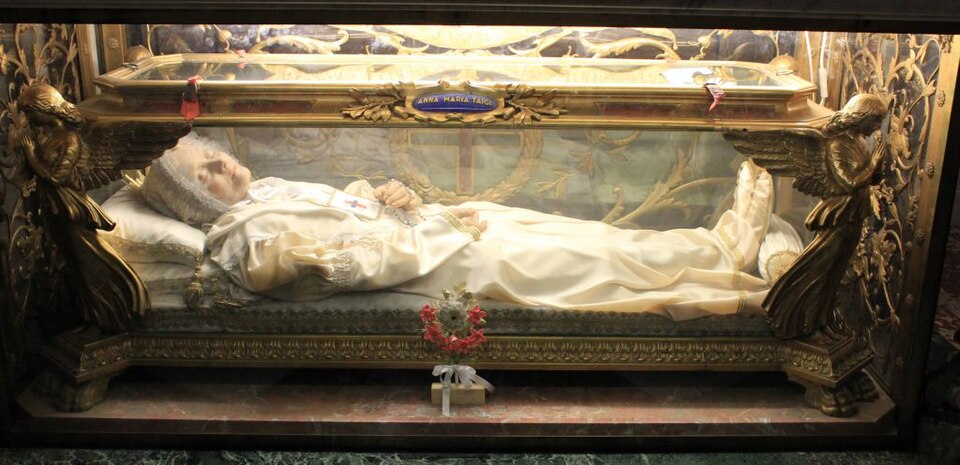
Don Bosco passed away peacefully on January 31, 1888, leaving behind a flourishing legacy. Forty-one years later, in 1929, as part of the process for his beatification, his body was exhumed. To the astonishment of those present, his remains were found in a remarkable state of preservation. His face was still recognizable, and his hands retained a degree of flexibility, defying the natural process of decay. Medical examination confirmed that no embalming had been performed, rendering the preservation truly extraordinary. To ensure his venerable remains could be venerated by the faithful, a wax mask was reverently applied to his face for display. Today, his incorrupt body, encased within a glass sarcophagus, rests in the Basilica of Mary Help of Christians in Turin, Italy, a testament to his sanctity.
Canonized by Pope Pius XI on Easter Sunday, April 1, 1934, Don Bosco is celebrated as the "Father and Teacher of Youth." His incorruption is widely regarded by the faithful as a powerful sign of God's favor and a testament to his profound love for young people and his holy life. Pilgrims from across the globe continue to flock to Turin to venerate his relics, seeking his intercession and drawing inspiration from his enduring spirit. His Salesian family, comprising priests, brothers, sisters, and lay collaborators, continues his mission in over 130 countries, educating and evangelizing millions of young people, ensuring that Don Bosco's legacy of hope, joy, and dedication to the marginalized youth of the world continues to thrive.
Discovery
The story of Saint John Bosco's remarkable preservation begins decades after his passing, not with an immediate discovery of incorruption, but with a necessary exhumation in preparation for his beatification process. On June 10, 1929, forty-one years after his death on January 31, 1888, the tomb of Don Bosco in the Salesian cemetery at Valsalice, near Turin, was opened. This solemn occasion was attended by ecclesiastical authorities, medical professionals, and Salesian priests, all keenly aware of the spiritual significance of the moment. As the coffin was carefully lifted and opened, a hush fell over those gathered. What they beheld was truly astonishing: the body of Don Bosco, despite having been buried for over four decades, was found in an extraordinary state of preservation. His face, though somewhat sunken, was clearly recognizable, bearing the familiar features captured in countless photographs. His hands, often described as having a certain flexibility, were also remarkably intact. The vestments he had been buried in, though discolored, still clung to his form. This initial discovery sparked a profound sense of awe and confirmed for many the sanctity of the beloved founder of the Salesians. The immediate reaction was one of profound reverence and thanksgiving, a clear sign that God had chosen to honor His faithful servant in a most extraordinary way.
Following this initial discovery, the body of Saint John Bosco underwent a series of examinations and preparations for its veneration. After the 1929 exhumation, the body was carefully transferred to the Basilica of Mary Help of Christians in Turin, a place intimately connected with Don Bosco's life and work. It was here that further assessments were made regarding its condition. While the initial reports highlighted the remarkable preservation, it was understood that for public veneration and long-term display, additional measures would be necessary. The natural processes of decay, though significantly retarded, still presented challenges. Therefore, a decision was made to apply a wax mask to his face and hands. This was not an attempt to deceive, but rather a common practice of the time to create a lifelike representation for the faithful to behold, while simultaneously offering a protective layer to the delicate tissues beneath. This process, carried out with immense respect and skill, aimed to present Don Bosco's features as they were remembered by those who knew him, allowing pilgrims to connect more intimately with his spiritual presence. The body, thus prepared, was then placed within a magnificent glass casket, designed to allow pilgrims to view the preserved remains while ensuring their protection.
The journey of Saint John Bosco's preserved body has been one of reverence and careful guardianship. Since its transfer to the Basilica of Mary Help of Christians in Turin, it has remained a focal point of devotion for countless pilgrims from around the world. The glass casket in which he rests is itself a work of art, often adorned with symbolic imagery and placed within a prominent altar, allowing for clear viewing. This transparent enclosure serves a dual purpose: it permits the faithful to behold the physical remains of their beloved saint, fostering a deeper connection to his life and legacy, while simultaneously protecting the delicate state of preservation from environmental factors and direct contact. No reports of unusual phenomena such as sweet fragrances, bleeding, or oil exuding have been consistently documented in relation to Don Bosco's body, unlike some other incorruptible saints. His incorruption is primarily characterized by the remarkable retention of his physical form and recognizable features decades after death. The careful application of the wax mask and the controlled environment of the glass casket are integral to its current presentation, ensuring that the "Father and Teacher of Youth" continues to inspire and draw pilgrims to the Salesian heartland, a testament to his enduring sanctity and the extraordinary grace bestowed upon him.
Preservation
Body displayed in the Basilica of Mary Help of Christians, Turin.
Scientific Analysis
The preservation of Saint John Bosco's remains has been a subject of considerable interest, particularly within the context of forensic science and religious tradition. Following his death in 1888, his body was exhumed in 1929 as part of the canonization process. A formal medical examination was conducted by a panel of medical professionals, including Dr. Vincenzo Marro, a professor of legal medicine at the University of Turin, and Dr. Giovanni Battista Berruti, a physician and anatomist. Their findings, documented in official reports, confirmed a remarkable state of preservation. Specifically, the internal organs, including the brain, lungs, and heart, were noted to be largely intact, albeit desiccated. The skin, while discolored and leathery, retained its general form, and the facial features were still recognizable. Crucially, the medical team explicitly stated that there was no evidence of embalming or any artificial preservation techniques having been employed. This conclusion was based on the absence of incision marks typically associated with embalming, the lack of chemical residues commonly used in such procedures, and the natural desiccation patterns observed. The examination highlighted the extraordinary nature of the preservation, especially considering the 41 years that had elapsed since his burial.
The scientific enigma surrounding Saint John Bosco's incorruption lies in the defiance of normal post-mortem decomposition processes. Typically, after death, the human body undergoes a series of predictable changes driven by autolysis (self-digestion by cellular enzymes) and putrefaction (bacterial decomposition). These processes are accelerated by factors such as ambient temperature, humidity, and the presence of microorganisms in the soil. Saint John Bosco was interred in a crypt within the Basilica of Mary Help of Christians in Turin, Italy. While crypt burial can offer some protection from environmental extremes compared to direct earth burial, it does not inherently prevent decomposition. Turin's climate, characterized by warm summers and cold winters, along with the natural microbial activity present in any burial environment, should have led to significant skeletalization within a few decades. The observed preservation of soft tissues, particularly internal organs, without any documented embalming, presents a significant challenge to conventional forensic understanding. While some natural phenomena like saponification (the transformation of body fat into a waxy, soap-like substance known as adipocere) can preserve soft tissues, this process usually requires specific anaerobic conditions and high moisture levels, often found in wet, clay-rich soils. The description of Saint John Bosco's remains as desiccated and leathery, rather than waxy, suggests that adipocere formation was not the primary mechanism of preservation.
Various hypotheses have been proposed to explain such cases of unusual preservation. Natural mummification, a process of desiccation where the body dries out before significant putrefaction can occur, is one possibility. This typically requires extremely dry conditions, either in arid environments or in well-ventilated crypts that promote rapid dehydration. However, the exact microclimatic conditions within Saint John Bosco's crypt over four decades are not fully documented in a way that definitively supports such rapid and complete desiccation of internal organs. Skeptics often point to the possibility of undocumented or rudimentary preservation attempts, or they emphasize the variability of decomposition rates influenced by individual physiological factors, such as body mass index, cause of death, and pre-mortem health. Yet, the consistent findings of multiple medical examinations, specifically ruling out embalming, make these alternative explanations less compelling in this particular instance. The remarkable integrity of internal organs, often the first to decompose, remains a particularly challenging aspect to explain through purely natural processes without further detailed environmental data from the burial site.
From a modern scientific perspective, the case of Saint John Bosco's preservation offers an intriguing subject for advanced forensic investigation. While historical accounts and visual examinations provide valuable data, contemporary techniques could offer deeper insights. Non-invasive methods such as CT scans or MRI could provide detailed anatomical information about the internal structures without further disturbance, potentially revealing the extent of desiccation and the precise condition of tissues. Chemical analysis of tissue samples, if ethically permissible and carefully conducted, could identify any trace elements or compounds that might indicate natural preservation processes or, conversely, rule out artificial agents with greater certainty than visual inspection alone. Carbon dating could confirm the age of the tissues, though this is less relevant given the known date of death. The application of microbial analysis could also shed light on the types of bacteria and fungi present in the burial environment and on the remains, which could offer clues about the decomposition pathways. Such comprehensive scientific scrutiny, while respecting the religious significance of the remains, could contribute significantly to our understanding of the complex interplay of factors that can lead to unusual post-mortem preservation, bridging the gap between empirical observation and the unexplained.
Spiritual Significance
The phenomenon of incorruption, particularly as exemplified by figures like Saint John Bosco, holds profound theological significance within Catholic doctrine, serving as a tangible testament to the sanctity of the human body and the enduring power of divine grace. In Catholic theology, the body is not merely a vessel but a temple of the Holy Spirit, as articulated in 1 Corinthians 6:19. The preservation of a saint's body from natural decay, even centuries after death, is thus interpreted as a miraculous sign from God, affirming the individual's extraordinary holiness and their intimate union with Christ. It foreshadows the ultimate doctrine of the resurrection of the body, a cornerstone of Christian faith, reminding believers that our physical forms, redeemed by Christ, are destined for glorification. For Saint John Bosco, whose body rests in Turin, adorned with a wax mask to present a lifelike appearance while acknowledging the natural processes of time, this incorruption is understood by the Church as a divine affirmation of his profound love for young people and his unwavering commitment to their spiritual and temporal well-being. It underscores the belief that his earthly life was so permeated by grace that even his physical remains bear witness to his sanctity, inviting the faithful to contemplate the eternal destiny awaiting those who live in communion with God. This visible sign bridges the gap between the earthly and the heavenly, offering a glimpse into the communion of saints, where those who have gone before us continue to intercede and inspire.
Saint John Bosco's unique charism was undeniably his extraordinary love and dedication to the young, especially those most marginalized and at risk. This particular spiritual gift manifested in his pioneering work with street children and delinquents in 19th-century Turin, where he established oratories, schools, and workshops, providing them with education, vocational training, and, most importantly, spiritual guidance and a sense of belonging. His heroic virtues were numerous, but paramount among them were his boundless charity, expressed in his tireless efforts to save souls and uplift the downtrodden, and his profound humility, always attributing his successes to God's providence. He practiced an almost mystical obedience to the will of God, often guided by prophetic dreams and visions that directed his ministry. His specific way of holiness, known as the Salesian Preventive System, was characterized by reason, religion, and loving-kindness, fostering an environment where young people could flourish in freedom and joy, rather than fear. This innovative approach, emphasizing positive reinforcement and a deep personal relationship with each child, became the cornerstone of the Salesian spiritual tradition, which continues to inspire educators and youth ministers worldwide. Don Bosco's life was a living testament to the power of proactive love in transforming lives, demonstrating how a spirit of joyful service could overcome immense societal challenges and lead countless souls to Christ.
Devotion to Saint John Bosco has blossomed extensively since his death, particularly among those involved in education and youth ministry, and among young people themselves. He is widely recognized as the patron saint of schoolchildren, apprentices, editors, and magicians, reflecting the diverse facets of his life and work. Pilgrims from across the globe journey to the Basilica of Mary Help of Christians in Turin, Italy, where his incorrupt body is enshrined, to pay homage and seek his intercession. The experience of visiting his shrine is often described as deeply moving, a tangible encounter with a saint whose legacy continues to resonate. Many pilgrims engage in personal prayer before his relics, light candles, and leave petitions, feeling a profound connection to his spirit of compassion and hope. Novenas and special prayers dedicated to Don Bosco are widely recited, particularly around his feast day on January 31st, seeking his guidance for young people, vocational discernment, and educational endeavors. The Salesian Family, comprising priests, brothers, sisters, and lay collaborators, actively promotes his spirituality and continues his mission, ensuring that his charism of loving service to the young remains a vibrant force in the Church and the world. This enduring veneration underscores the belief that saints, even after death, remain active participants in the life of the Church, offering their prayers and inspiration to the faithful.
Countless miracles have been attributed to Saint John Bosco's intercession, both during his lifetime and after his death, further solidifying his reputation for sanctity and the efficacy of his prayers. Documented healings from various ailments, conversions of hardened hearts, and numerous answered prayers for employment, education, and family challenges are regularly reported by those who invoke his name. During his lifetime, he was known for his prophetic insights and his ability to multiply food for his hungry boys, echoing biblical miracles. After his passing, the presence of his incorrupt body itself has been a profound source of spiritual consolation for the faithful. Many who visit his shrine speak of feeling a deep sense of peace, hope, and renewed faith. The very sight of his preserved remains, even with the aid of a wax mask, serves as a powerful reminder of the supernatural dimension of life and the reality of God's intervention in human affairs. For those grappling with doubt or suffering, the incorrupt body of Don Bosco acts as a tangible sign of God's love and the enduring power of holiness, offering a beacon of hope that transcends the limitations of the material world and points towards the promise of eternal life.
Saint John Bosco's enduring message holds immense relevance for contemporary Catholics and seekers navigating the complexities of the modern world. His life challenges the prevalent materialism and secularism of our age by demonstrating the profound joy and fulfillment found in a life dedicated to God and the service of others, especially the most vulnerable. In a society often characterized by individualism and a focus on fleeting pleasures, Don Bosco's unwavering commitment to the holistic development of young people—spiritually, intellectually, and morally—offers a powerful counter-narrative. He teaches us that true happiness lies not in accumulation but in giving, not in self-indulgence but in self-sacrifice for the good of others. Modern believers can learn from his example the importance of patience, perseverance, and an unshakeable faith in divine providence, even in the face of daunting obstacles. His incorruption, in this context, serves as a tangible bridge between the visible and invisible worlds, a physical manifestation of spiritual truth. It reminds us that our earthly lives have eternal consequences and that holiness is not an abstract concept but a lived reality that can transform individuals and societies. Don Bosco's legacy encourages us to embrace our call to sanctity, to nurture the young, and to build a more compassionate and just world, grounded in the timeless values of faith, hope, and charity.
AI summary
A plain-language overview generated from this page's source material. Always verify with primary sources.