Biography
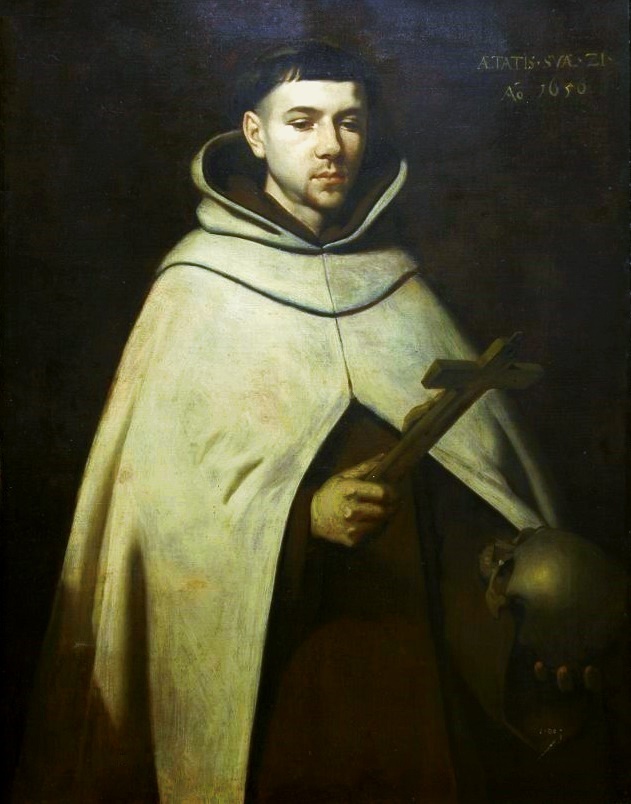
Saint John of the Cross, born Juan de Yepes y Álvarez in 1542 in Fontiveros, Spain, entered a world marked by hardship and fervent faith. His father died when John was young, leaving his mother to raise three children in poverty. This early experience of suffering instilled in him a profound empathy and a deep reliance on divine providence. He received his education at a Jesuit college, where his intellectual brilliance and spiritual fervor quickly became evident. Though initially drawn to the Carthusian order, known for its strict asceticism, divine inspiration led him to the Carmelite order in 1563, where he took the name John of St. Matthias. It was his encounter with Saint Teresa of Ávila in 1567 that proved to be the pivotal moment in his life, as he became her ardent collaborator in the reform of the Carmelite order, seeking a return to its primitive rule of poverty, prayer, and contemplation.
As a Discalced Carmelite, Saint John of the Cross dedicated his life to guiding souls on the path of mystical union with God. His ministry was characterized by profound spiritual direction, often delivered amidst intense persecution and misunderstanding from those who resisted the reform. Despite imprisonment and suffering, he poured out his soul in sublime poetry and theological treatises, including the immortal "Dark Night of the Soul," "Ascent of Mount Carmel," and "Spiritual Canticle." These works, born from his personal experience of the purifying stages of the soul's journey to God, remain cornerstones of mystical theology, illuminating the transformative power of suffering and the boundless love of God. He served as prior in various reformed monasteries, always upholding the strict observance of the rule while fostering a deep interior life among his brethren.
Saint John of the Cross passed into eternal life on December 14, 1591, in Úbeda, Spain. His death, though peaceful, was followed by a remarkable testament to his sanctity. When his body was exhumed nine months later, it was found to be incorrupt, a phenomenon that defied natural explanation. Even more astonishingly, when a finger was amputated for a relic, fresh blood reportedly flowed from the wound, a vivid and scientifically inexplicable sign of the vibrant life that still permeated his earthly remains. Today, pilgrims can venerate his partially incorrupt body, particularly the main portion of his body, which rests in the Discalced Carmelite monastery in Segovia, Spain, a testament to his enduring spiritual power.
Canonized in 1726 and later declared a Doctor of the Church, Saint John of the Cross's legacy is immense. His writings continue to inspire and challenge countless individuals seeking a deeper relationship with God, offering profound insights into the nature of prayer, suffering, and divine love. His feast day on December 14 is celebrated throughout the Catholic world, honoring the "Mystical Doctor" whose life and works illuminate the arduous yet ultimately joyful path to union with the Divine. His incorruption, particularly the miraculous flow of blood, serves as a powerful spiritual sign, testifying to the extraordinary grace that animated his life and the enduring presence of God in His saints.
Discovery
The earthly journey of Saint John of the Cross concluded on December 14, 1591, in Úbeda, Spain. His passing, however, was not the end of his profound impact, for it was merely months later, in May of 1592, that the first extraordinary sign of divine favor was revealed. The Carmelite friars, having initially interred his body in Úbeda, sought to transfer his remains to the Discalced Carmelite monastery in Segovia, a place more central to the burgeoning reform movement he had so passionately championed. Upon exhumation, a sense of awe and wonder permeated the small gathering of friars and local officials. Despite the passage of five months since his burial, the body of Juan de Yepes y Álvarez, as he was known in life, was discovered to be remarkably preserved. There was no trace of the putrefaction typically associated with human remains; instead, his flesh was supple, his habit unblemished, and a sweet, unearthly fragrance was said to emanate from the coffin, filling the small chapel. It was during this initial examination that a particularly astonishing event occurred: as one of the friars, perhaps driven by a combination of reverence and a desire for a relic, attempted to remove a finger, fresh blood was observed to flow from the wound, as if the saint were still alive. This miraculous occurrence cemented in the minds of those present the profound sanctity of the deceased friar, and word of the incorrupt body quickly spread, further solidifying his reputation for holiness.
The miraculous preservation of Saint John of the Cross's body led to a complex and, at times, contentious journey of preservation and veneration. Following the initial discovery in Úbeda, the decision was made to transport the body to Segovia. This journey itself was fraught with challenges, as various communities vied for the honor of housing the saint's remains. Ultimately, the main portion of his body found its resting place in the Convento de los Carmelitas Descalzos in Segovia. Over the centuries, numerous examinations and exhumations have been conducted, often in response to requests for relics or to assess the body's condition. While the initial state of perfect incorruption has naturally diminished somewhat over time, reports consistently speak of a remarkable resistance to decay. His skin, though darkened, has retained a certain suppleness, and his bones remain articulated, not having disintegrated into dust. The practice of distributing relics, common in the Catholic Church, resulted in various parts of his body being dispersed. For instance, his right leg and arm were sent to Úbeda, where he died, and portions of his hand and other bones are revered in various Carmelite monasteries throughout Spain and beyond. This distribution, while fulfilling the spiritual needs of the faithful, also meant that the entire body was not preserved as a single, intact entity.
Today, the principal relics of Saint John of the Cross are housed in a magnificent reliquary in the Discalced Carmelite monastery in Segovia, Spain. The main portion of his body, consisting of his torso and head, is reverently displayed within a glass-fronted casket, allowing the faithful to gaze upon his preserved remains. The environment within the reliquary is carefully controlled to mitigate further deterioration, though the natural processes of time are undeniable. Despite the passage of over four centuries, the saint's form is still discernible, a testament to the extraordinary grace bestowed upon him. The dark habit he wore in life still clings to his frame, and the contours of his face, though aged and solemn, are clearly visible. The other significant relics, such as his right leg and arm in Úbeda, are similarly enshrined in ornate reliquaries, often adorned with precious metals and jewels, reflecting the profound veneration accorded to this Doctor of the Church. These displays serve not only as objects of devotion but also as tangible links to a man whose mystical writings and profound spiritual journey continue to inspire countless souls.
Beyond the remarkable state of preservation, several compelling details have been associated with Saint John of the Cross's incorrupt body throughout history. The most striking, as mentioned, was the fresh blood that reportedly flowed from his finger during the initial exhumation. This phenomenon is a recurring motif in the accounts of incorruptible saints, signifying a persistent vitality even in death. Furthermore, a persistent sweet fragrance, often described as an unearthly perfume, has been reported to emanate from his tomb and relics at various times. This "odor of sanctity" is another hallmark often attributed to those deemed exceptionally holy. While the body's initial flexibility has naturally diminished over the centuries, early accounts consistently emphasize the suppleness of his limbs, a stark contrast to the rigidity typically observed in deceased bodies. These extraordinary phenomena, coupled with the enduring physical preservation, have solidified Saint John of the Cross's place among the ranks of the incorruptible saints, serving as a powerful and enduring testament to the profound mystery of divine grace.
Preservation
Relics distributed across several locations in Spain.
Scientific Analysis
The phenomenon of incorruption, particularly as observed in the remains attributed to Saint John of the Cross, presents a compelling subject for scientific inquiry, challenging conventional understandings of post-mortem decay. Historical accounts and subsequent examinations describe a state of preservation that deviates significantly from the expected course of human decomposition. While precise, detailed forensic reports from the earliest periods are scarce, given the historical context, later observations and anecdotal evidence provide a foundation for analysis. The most striking claim, often cited, is the reported flow of fresh blood from the body months after death, a phenomenon that, if accurately observed, stands in direct contradiction to established physiological processes following circulatory arrest.
The scientific mystery surrounding Saint John of the Cross's remains lies in the reported degree and nature of preservation, which appears to defy normal decomposition. Human decomposition typically involves autolysis, the breakdown of tissues by the body's own enzymes, followed by putrefaction, the microbial degradation of organic matter. These processes are influenced by a multitude of environmental factors, including temperature, humidity, oxygen availability, and the presence of microorganisms. Given his death in 1591, over four centuries ago, and the typical burial conditions of the era, one would anticipate complete skeletalization. Reports of pliable flesh, intact organs, and the aforementioned blood flow are highly anomalous. While natural mummification can occur in arid or extremely cold environments, and adipocere formation (saponification) can preserve tissues in wet, anaerobic conditions, these processes typically result in a hardened, waxy, or leathery texture, not the reported suppleness or fluid discharge. There is no historical record of deliberate embalming or sophisticated preservation treatments being applied to his body, which would have been an extraordinary and unlikely practice for a Carmelite friar of that period.
Proposed natural explanations, such as adipocere formation, often fall short in fully accounting for the specific characteristics attributed to Saint John of the Cross's remains. Adipocere, or "grave wax," is the result of the hydrolysis and hydrogenation of body fats, leading to a soap-like substance that can preserve the general form of tissues. However, adipocere typically presents as a firm, brittle, or waxy material, not as soft, pliable flesh or, crucially, as a source of fresh blood. The environmental conditions within a typical monastic tomb in Spain, while potentially offering some protection from rapid decay compared to open-air exposure, are unlikely to induce such an extreme and unusual form of preservation without external intervention. Skeptics rightly point to the lack of contemporary, rigorous scientific documentation for these early observations, suggesting that accounts may have been influenced by religious fervor or misinterpretations of natural post-mortem changes. However, even accounting for potential embellishment, the consistent narrative of unusual preservation across centuries remains a subject of intrigue.
From a modern scientific perspective, cases like that of Saint John of the Cross offer unique opportunities for forensic anthropology and taphonomy. While historical descriptions are valuable, contemporary scientific techniques could provide definitive answers. Non-invasive methods such as CT scans could reveal the internal state of organs and skeletal structures without disturbing the remains. Carbon dating could confirm the age of the tissues, and advanced tissue analysis, including histology and molecular biology techniques, could identify the specific biochemical composition and state of preservation of the tissues. Examining microbial communities present, or absent, could shed light on the inhibition of putrefaction. The application of these modern tools could determine whether the reported phenomena are indeed inexplicable by current scientific understanding or if they represent a rare, extreme manifestation of known taphonomic processes. The persistent questions revolve around the precise nature of the reported incorruption, the mechanisms that might have inhibited decomposition, and whether any of the more extraordinary claims, such as the flow of fresh blood, can be substantiated or explained through a rigorous scientific lens.
Spiritual Significance
The partial incorruption of Saint John of the Cross stands as a profound theological testament within the Catholic tradition, offering a tangible glimpse into the eschatological hope of the resurrection of the body and the enduring sanctity of those who dwell in Christ. Within Catholic doctrine, the human body is revered as a temple of the Holy Spirit, as articulated in 1 Corinthians 6:19, a vessel consecrated by divine indwelling. The phenomenon of incorruption, particularly in a saint whose life was so deeply intertwined with mystical union, speaks volumes about the transformative power of grace on both soul and flesh. The Church interprets such preservation not as mere biological anomaly, but as a divine affirmation of extraordinary holiness, a prefigurement of the glorified body promised at the General Resurrection. For Saint John, whose spiritual journey plumbed the depths of suffering and purification, his incorrupt remains underscore the belief that true sanctity permeates every aspect of existence, even transcending the natural processes of decay. It serves as a visible sign of the communion of saints, reminding us that those who have passed into glory remain intimately connected to the Church militant, their earthly remains echoing their heavenly triumph.
Saint John of the Cross possessed a unique charism centered on the mystical ascent to God through profound purification and contemplative prayer. His heroic virtues were manifold, most notably his radical humility, which allowed him to endure immense suffering and persecution with unwavering faith. His poverty was not merely external but an interior detachment from all created things, mirroring Christ's own self-emptying. Obedience, often tested in the crucible of ecclesiastical politics, was a cornerstone of his Carmelite reform. Above all, his mystical genius, expressed in his seminal works like "Dark Night of the Soul" and "Ascent of Mount Carmel," elucidated the arduous yet ultimately beatific path to divine union. His daily life, often marked by severe penance and intense prayer, was a living embodiment of his teachings, demonstrating that true holiness is forged in the crucible of self-denial and unwavering love for God. He was a principal architect of the Discalced Carmelite tradition, a school of thought emphasizing rigorous asceticism, contemplative prayer, and a deep interior life, profoundly shaping Western spirituality.
Devotion to Saint John of the Cross has blossomed over the centuries, evolving from a recognition of his profound theological insights to a widespread veneration of him as a guide through spiritual darkness. He is widely invoked as the patron saint of contemplatives, mystics, and those undergoing spiritual trials, particularly the "dark night of the soul." His feast day on December 14th is observed with special reverence, often marked by readings from his mystical treatises and prayers for deeper spiritual understanding. While specific novenas dedicated solely to his incorruption are less common, his intercession is frequently sought in prayers for perseverance in faith and a deeper union with God. Pilgrims visiting the Convento de los Carmelitas Descalzos in Segovia, Spain, where his partially incorrupt body rests, often experience a profound sense of awe and spiritual connection. The very presence of his preserved remains, particularly the miraculous flowing blood mentioned in historical accounts, serves as a powerful catalyst for prayer and reflection, inviting visitors to contemplate the enduring power of sanctity and the mystery of God's grace.
Miracles attributed to Saint John of the Cross's intercession are numerous, though often subtle, reflecting the interior nature of his spirituality. While dramatic physical healings are recorded, many of the documented graces pertain to spiritual transformations: profound conversions, renewed faith in times of doubt, and the alleviation of spiritual desolation. His incorrupt body itself has been a source of immense spiritual consolation for the faithful, acting as a tangible link to his powerful intercession. The historical accounts of his body bleeding even after death, a phenomenon noted during the various transfers of his remains, were interpreted as a continuation of his mystical union with Christ's passion, a visible sign of his enduring participation in the divine life. These occurrences, though not always subject to modern scientific scrutiny, deeply resonated with believers, reinforcing their faith in the efficacy of his prayers and the reality of the communion of saints.
For modern believers and seekers alike, Saint John of the Cross offers an enduring and profoundly relevant message. In a world saturated with materialism and secularism, his life challenges the notion that fulfillment can be found in external possessions or fleeting pleasures. He teaches us that true joy and lasting peace are discovered in radical detachment and an unreserved surrender to God's will, even through periods of intense spiritual aridity. His example encourages perseverance in the face of adversity, reminding us that suffering, when embraced with faith, can be a pathway to profound spiritual growth. His incorruption serves as a powerful, tangible bridge between the visible and invisible worlds, a physical manifestation of divine power and the promise of eternal life. It stands as a silent witness to the transformative power of grace, inviting contemporary individuals to embark on their own journey into the "dark night," trusting that beyond the shadows lies the radiant dawn of divine union.
AI summary
A plain-language overview generated from this page's source material. Always verify with primary sources.