Biography
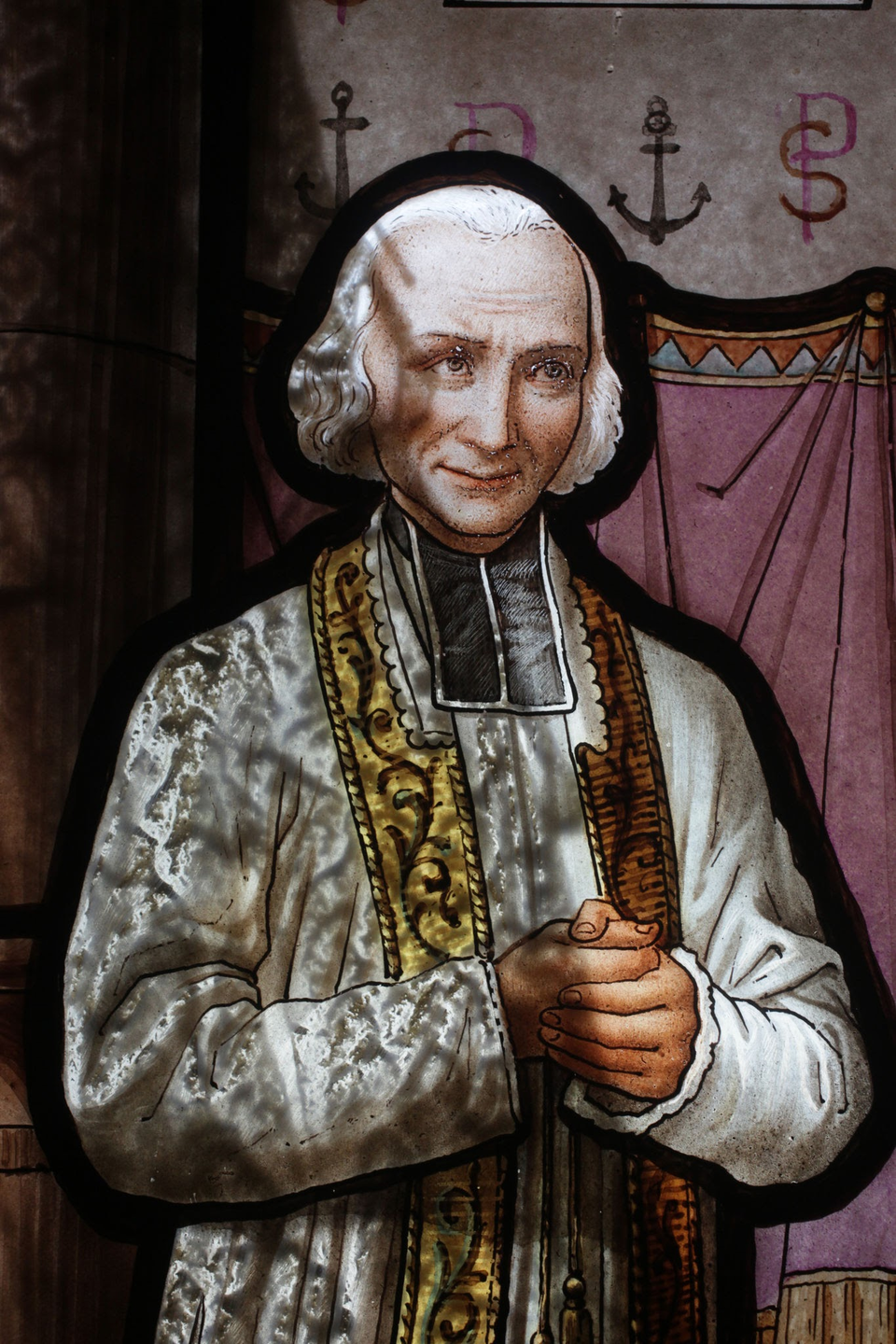
Born in 1786 in Dardilly, France, Jean-Baptiste-Marie Vianney entered a world profoundly shaped by the French Revolution, a time of immense upheaval for the Church. His family were devout farmers, and young Jean-Marie's early life was marked by simple piety and hard labor. Despite the turbulent times, his parents instilled in him a deep love for God and a desire to serve Him. He received little formal schooling, often having to hide for catechism classes due to the anti-clerical laws of the era. His early attempts at seminary were fraught with academic difficulties, particularly in Latin, leading to doubts about his suitability for the priesthood. Yet, his unwavering spiritual director, Father Balley, recognized a profound holiness and perseverance in him, advocating for his ordination despite his intellectual struggles. This early period of academic challenge and spiritual discernment forged a man of profound humility and reliance on divine grace.
Ordained in 1815, Father Vianney was assigned to the remote and spiritually neglected parish of Ars-sur-Formans, a small village where religious practice had largely withered. It was here that he would become known as the "Curé of Ars." His ministry was characterized by extraordinary penance, fervent prayer, and an unparalleled dedication to the Sacrament of Confession. He would spend up to sixteen hours a day in the confessional, drawing pilgrims from across Europe who sought his spiritual guidance and absolution. He preached with simple eloquence, converting countless souls through his profound love for Christ and the Blessed Mother. He endured severe spiritual attacks from the devil, often experiencing physical torments, yet he remained steadfast in his pastoral duties, performing numerous miracles of healing and discernment, and establishing an orphanage for girls, La Providence.
Father Vianney passed into eternal life on August 4, 1859, at the age of 73, exhausted by his tireless ministry. Forty-five years later, in 1904, his body was exhumed as part of the canonization process. To the astonishment of those present, his body was found remarkably preserved, particularly his face, which remained intact and recognizable. While a wax mask was later placed over his features to protect them from the elements and the veneration of pilgrims, the underlying incorruption of his flesh was undeniable. Even more remarkably, his heart, the organ of his immense charity and love for God, was also found to be incorrupt, remaining soft and pliable for over 160 years, a phenomenon for which medical science offers no natural explanation. This dual incorruption of body and heart serves as a powerful testament to his sanctity.
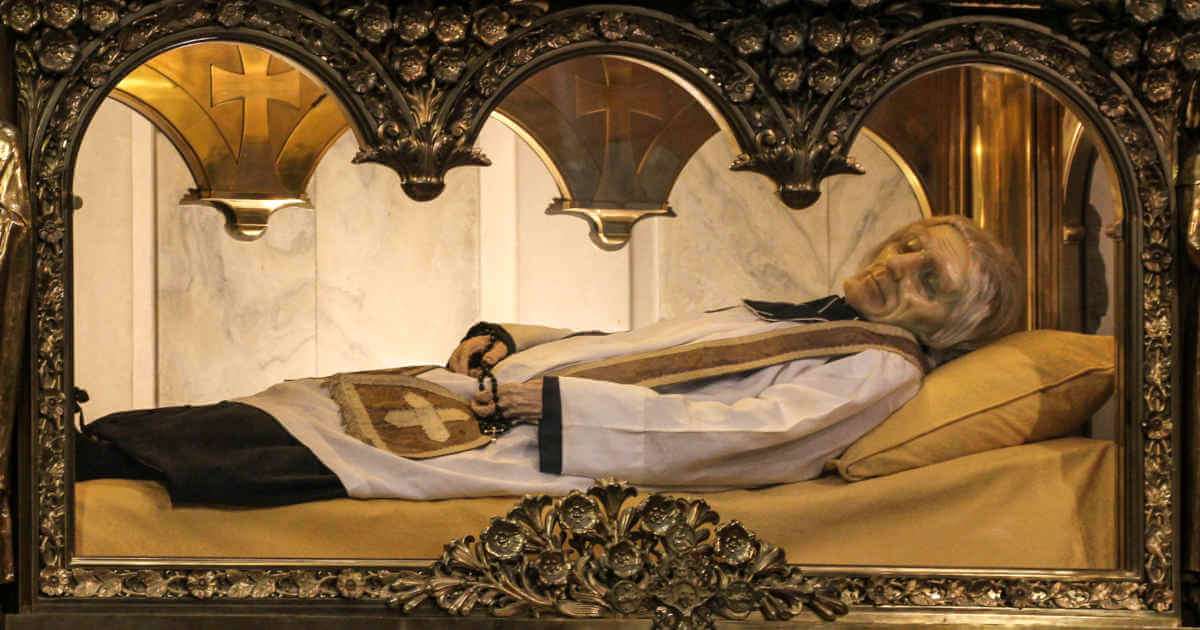
Canonized by Pope Pius XI in 1925, Saint John Vianney was declared the patron saint of parish priests, a fitting honor for one who so perfectly embodied the pastoral ideal. Today, pilgrims from around the world continue to flock to Ars-sur-Formans to venerate his incorrupt body, displayed in a glass reliquary in the Basilica of Ars. His incorrupt heart is also separately enshrined, offering a tangible link to his profound spiritual life. His legacy endures as a beacon for priests and laity alike, reminding all of the transformative power of the sacraments, the efficacy of prayer, and the boundless mercy of God, especially through the Sacrament of Reconciliation. His life and incorruption continue to inspire renewed faith and devotion in the hearts of countless Catholics.
Discovery
The remarkable preservation of the Curé of Ars, Saint John Vianney, became evident not long after his passing, though its full significance was only truly grasped decades later. Upon his death in 1859, the beloved priest was interred in the parish church of Ars, a simple burial befitting his humble life. However, the first formal exhumation, and the moment the world began to understand the extraordinary nature of his remains, occurred on May 31, 1904. This event was not merely a curiosity but a necessary step in his beatification process, which had been formally introduced in 1896. As per ecclesiastical custom, the body of the Servant of God needed to be identified and examined. Present at this momentous occasion were ecclesiastical authorities, medical professionals, and witnesses, all meticulously documenting the proceedings. When the coffin was opened, 45 years after his burial, a profound silence fell over those gathered. Instead of the skeletal remains typically expected after such a span, they beheld a body that was astonishingly well-preserved. His face, though perhaps slightly sunken, was entirely recognizable, retaining the distinctive features that had been so familiar to his parishioners. The skin had not decayed, and the overall integrity of the body was maintained to a degree that defied natural explanation. The immediate reaction was one of awe and profound wonder, a clear sign to many that God was indeed working through this holy man, even in death. This initial discovery laid the groundwork for his eventual beatification in 1905 and canonization in 1925, cementing his place among the Church's most revered saints.
Following the initial, astonishing discovery in 1904, the body of Saint John Vianney underwent further examinations and careful attention. The immediate preservation observed during the exhumation prompted ecclesiastical authorities to take measures to ensure the continued veneration of his remains. While there haven't been subsequent full exhumations in the same manner as the 1904 event, the body has been regularly attended to and examined by specialists over the decades to monitor its condition and ensure its proper display. For instance, in 1929, after his canonization, further work was undertaken to prepare the body for its permanent public veneration. During these interventions, medical and preservation experts confirmed the consistent and remarkable state of preservation. It was noted that while some slight desiccation had occurred over time, the fundamental integrity of the tissues and the recognizable features remained. These subsequent examinations consistently affirmed the initial findings, reinforcing the belief in the miraculous nature of his incorruption. The consistency of his preserved state across these decades, without the aid of embalming or other artificial means, has been a key factor in the Church's continued veneration of his body as a relic.
The journey of Saint John Vianney's body from a simple grave to its current place of veneration in the Basilica of Ars is a testament to the Church's dedication to preserving and honoring its saints. After the 1904 exhumation and the confirmation of its remarkable state, steps were taken to prepare the body for public display. To protect the delicate features of his face and hands from environmental degradation and the effects of veneration, a thin wax mask was carefully applied to his face, and his hands were similarly covered. This was not an attempt to reconstruct or create an image, but rather a protective measure to preserve the existing, recognizable features. The body was then clothed in his priestly vestments and placed within a magnificent glass reliquary, allowing pilgrims to view his preserved form. This reliquary is prominently displayed beneath the main altar of the Basilica of Ars, where countless faithful come to pray and seek his intercession. A particularly striking detail of his incorruption is the preservation of his heart, which was found to be remarkably intact and is considered a primary relic. This heart is housed in a separate, ornate reliquary, also displayed for public veneration, often in a side chapel within the Basilica. The constant monitoring of the reliquary's environmental conditions, such as temperature and humidity, further ensures the long-term stability of the sacred remains, allowing generations of pilgrims to witness this extraordinary sign of sanctity.
Beyond the physical preservation, the incorrupt body of Saint John Vianney has been associated with certain remarkable details that further underscore its miraculous nature. While there are no widespread accounts of bleeding or oil exuding from his remains, a consistent and profound observation has been the notable flexibility of his limbs and the absence of the typical rigidity of rigor mortis, even decades after death. Witnesses during the exhumations and subsequent examinations have often remarked on the supple nature of his body, a characteristic that defies the natural processes of decomposition and desiccation. Furthermore, there have been numerous anecdotal reports from pilgrims and those who have been close to his reliquary of a distinct, sweet fragrance emanating from his remains, particularly during moments of intense prayer or veneration. This phenomenon, often referred to as the "odor of sanctity," is a recurring theme in the lives of many incorruptible saints and is seen as a supernatural sign of divine favor. While scientific explanations for such phenomena are often sought, the Church views these occurrences as further evidence of the extraordinary grace bestowed upon Saint John Vianney, inviting believers to reflect on the power of God and the sanctity of His servants.
Preservation
Body displayed in the Basilica of Ars. Incorrupt heart displayed separately in a reliquary.
Scientific Analysis
The remarkable state of preservation observed in the remains of Jean-Baptiste-Marie Vianney, particularly his cardiac tissue, has been a subject of considerable interest to both religious devotees and scientific observers. Following his death in 1859, his body was exhumed in 1904 as part of the canonization process. During this examination, physicians noted an unusual degree of preservation. While specific names of the medical professionals involved in the initial 1904 exhumation are not widely publicized in readily accessible scientific literature, accounts from the period consistently describe the body as being in an exceptionally well-preserved state, far beyond what would be expected for a natural interment of nearly half a century. It is documented that a wax mask was subsequently applied to his face and hands to present a more lifelike appearance for veneration, a common practice for relics of this nature. This application of a wax mask, however, does not explain the underlying preservation of the tissues beneath. The most striking observation, and one frequently cited, concerns the heart. Reports from medical examinations, including those conducted during subsequent inspections, describe the cardiac tissue as retaining a degree of softness and pliability, a phenomenon highly atypical for organic matter exposed to decomposition for over 160 years. These examinations, while not always documented with modern forensic rigor, consistently highlighted the absence of the expected advanced stages of decomposition.
The scientific enigma surrounding the preservation of Saint John Vianney's body, particularly his heart, lies in its apparent defiance of conventional biological decomposition processes. Under normal circumstances, following death, the human body undergoes a predictable series of changes driven by autolysis (self-digestion by enzymes) and putrefaction (bacterial activity). Factors such as temperature, humidity, and the presence of oxygen significantly influence the rate and extent of decomposition. The environmental conditions of his burial in Ars-sur-Formans, France, would typically lead to complete skeletalization within a few decades, especially given the temperate climate. There is no historical record or scientific evidence to suggest that any embalming or artificial preservation treatments were applied to his body at the time of death in 1859. The reported pliability of the cardiac tissue is particularly challenging to explain. Cardiac muscle, like other soft tissues, is highly susceptible to enzymatic degradation and bacterial decay. The persistence of its structural integrity and reported elasticity over such an extended period, without known intervention, stands in stark contrast to the expected outcomes of post-mortem changes.
Various natural explanations have been proposed for instances of unusual body preservation, such as saponification (the transformation of fatty tissues into a waxy, soap-like substance known as adipocere) or mummification (desiccation of tissues in dry environments). However, these explanations do not fully account for the reported state of Saint John Vianney's remains. Adipocere formation typically results in a firm, brittle consistency, not the reported softness and pliability of the heart. Mummification requires extremely dry conditions, which were not characteristic of his burial environment. While skeptics often point to the possibility of misinterpretation of visual evidence or the effects of the wax mask obscuring the true state of the underlying tissues, these arguments do not address the consistent reports of the heart's unusual preservation. The absence of a definitive, universally accepted scientific explanation for this specific aspect of his preservation leaves a significant gap in our understanding from a purely naturalistic perspective.
From a modern scientific perspective, the case of Saint John Vianney's incorruption presents an intriguing subject for advanced forensic and biological analysis. While historical accounts and visual inspections provide valuable qualitative data, modern techniques could offer quantitative insights. Non-invasive methods such as computed tomography (CT) scans could provide detailed three-dimensional imaging of the internal organs and skeletal structure without disturbing the remains. This would allow for a precise assessment of tissue density, structural integrity, and the extent of any internal preservation. Carbon dating could accurately determine the age of the tissues, confirming their authenticity. Furthermore, advanced tissue analysis techniques, such as histology and immunohistochemistry, if ethically permissible and practically feasible, could investigate the cellular and molecular mechanisms underlying the reported preservation. Examining protein integrity, lipid composition, and the presence of microbial activity could shed light on whether unique biochemical processes or environmental factors, previously unconsidered, might have played a role. The application of such rigorous scientific methodologies could either provide a naturalistic explanation for the phenomenon or further underscore its exceptional nature, contributing to the broader scientific study of post-mortem preservation and the complex interplay of biological and environmental factors in decomposition. Many questions remain unanswered, particularly regarding the precise biochemical state of the preserved tissues and the specific environmental conditions within the coffin that may have contributed to this unusual outcome.
Spiritual Significance
The phenomenon of incorruption, particularly as exemplified by Saint John Vianney, offers a profound theological meditation on the sanctity of the human body and its ultimate destiny. Within Catholic doctrine, the body is not merely a vessel for the soul but is itself a temple of the Holy Spirit, destined for resurrection and glorification. Saint Paul’s exhortation in 1 Corinthians 6:19, reminding believers that their bodies are temples of the Holy Spirit, finds a tangible echo in the preserved remains of saints like the Curé of Ars. His incorruption serves as a miraculous foretaste of the general resurrection, a visible sign that death does not have the final word over those who live lives of exceptional holiness. The Church interprets such phenomena not as mere biological anomalies, but as divine affirmations of a soul’s intimate union with God, even after earthly departure. It underscores the belief in the communion of saints, demonstrating that those who have passed into glory remain powerfully connected to the Church militant, offering intercession and inspiration. The preservation of Saint John Vianney’s body, therefore, is not an end in itself, but a powerful sacramentum, a sign pointing beyond itself to the enduring power of grace and the promise of eternal life.
Saint John Vianney’s unique charism was undeniably his extraordinary dedication to the sacrament of confession and his profound pastoral care, earning him the title of the Curé of Ars. His heroic virtues were manifold, but humility, an unyielding charity, and an almost superhuman obedience to God’s will shone brightest. Despite his intellectual struggles in seminary, his spiritual director recognized a profound holiness that transcended academic prowess. This humility allowed him to empty himself completely for the sake of his flock. His charity manifested in tireless hours spent in the confessional, often sixteen to eighteen hours a day, offering spiritual guidance, penance, and absolution to countless souls who journeyed from across France to seek his counsel. He lived a life of extreme poverty, denying himself even basic comforts, and practiced rigorous asceticism, often eating very little and sleeping even less. His spirituality was deeply rooted in the French school of spirituality, emphasizing interiority, self-denial, and an intense devotion to the Eucharist and the Blessed Mother. He was a mystic in the truest sense, experiencing profound spiritual battles and consolations, always directing souls back to the love of God and the transformative power of grace. His life was a living testament to the power of a simple, unwavering faith to transform lives and communities.
Devotion to Saint John Vianney has blossomed exponentially since his death, particularly among priests and those who value the sacrament of reconciliation. As the patron saint of parish priests, his intercession is widely sought by clergy facing the challenges of ministry, inspiring them to emulate his pastoral zeal and unwavering commitment to souls. Lay faithful also turn to him for guidance in their spiritual lives, especially in matters of confession and conversion. His feast day on August 4th is celebrated with particular reverence in dioceses and parishes around the world, often marked by special Masses, novenas, and prayers for priests. Pilgrims from every corner of the globe journey to the Basilica of Ars, where his incorrupt body reposes, to venerate his relics and seek his intercession. The experience of visiting his shrine is often described as deeply moving, a tangible encounter with holiness. To stand before his preserved remains, albeit with a wax mask to present a more lifelike appearance, is to be confronted with a life lived entirely for God, a silent sermon on the power of grace and the enduring reality of sanctity. It is a place where many report profound spiritual experiences, renewed faith, and a deeper appreciation for the priesthood.
Miracles attributed to Saint John Vianney’s intercession are numerous and varied, ranging from physical healings to profound spiritual conversions. During his lifetime, he was known for his prophetic insights, his ability to discern consciences, and his miraculous knowledge of people’s hidden sins, which often led to dramatic conversions in the confessional. After his death, countless testimonies of answered prayers have been recorded, including cures from debilitating illnesses, reconciliation of estranged families, and significant spiritual breakthroughs. The incorrupt body itself has been a continuous source of spiritual consolation for the faithful. Its very existence is seen as a miracle, a testament to God’s favor and a tangible sign of hope. For many, gazing upon his preserved form reinforces their belief in the supernatural, offering comfort and reassurance in a world often characterized by doubt and skepticism. It serves as a powerful reminder that God continues to work wonders through His saints, extending their ministry and intercession beyond the veil of death. The continuous stream of pilgrims to Ars is a living testament to the enduring power of his intercession and the profound impact of his holy life.
Saint John Vianney’s enduring message for contemporary Catholics and seekers is one of radical commitment to God, the transformative power of grace, and the paramount importance of the sacraments, especially confession. In an age often characterized by materialism, secularism, and a pervasive sense of spiritual indifference, his life challenges us to re-evaluate our priorities, to seek spiritual riches over worldly possessions, and to embrace a life of self-giving love. He reminds us that true fulfillment is found not in external comforts but in an intimate relationship with God. From his example, modern believers can learn the profound value of humility, perseverance in the face of adversity, and the boundless mercy of God. His life is a powerful counter-narrative to the idea that holiness is unattainable or reserved for a select few; rather, it demonstrates that even those with humble beginnings and perceived intellectual limitations can achieve extraordinary sanctity through unwavering faith and dedication. His incorruption serves as a tangible bridge between the visible and invisible worlds, a concrete sign that the spiritual realm is real, that saints are truly alive in Christ, and that their intercession remains powerful. It is a beacon of hope, inviting all to embrace a deeper spiritual journey and to experience the transformative power of God’s love in their own lives.
AI summary
A plain-language overview generated from this page's source material. Always verify with primary sources.