Biography
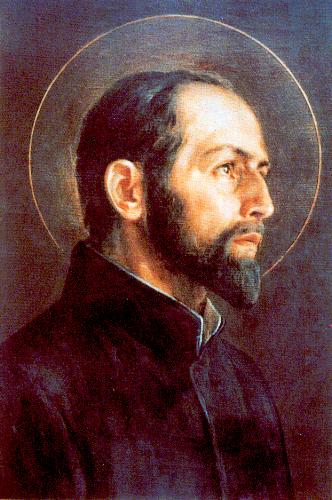
Saint Josaphat Kuntsevych, born in 1580 in Volodymyr, Volhynia (modern-day Ukraine), entered a world deeply divided by religious strife. Raised in an Orthodox family, he was baptized John and showed an early devotion to prayer and study. His formative years were spent in Vilnius, then a vibrant intellectual and religious center, where he apprenticed with a merchant. However, the allure of worldly success held little sway over his soul. Drawn instead to the monastic life, he entered the Monastery of the Holy Trinity of the Basilian Order in Vilnius, taking the name Josaphat, meaning "Yahweh judges." This decision marked a profound turning point, as he embraced the monastic ideals of asceticism, contemplation, and unwavering fidelity to Christ.
As a zealous proponent of the Union of Brest (1596), which sought to reconcile Orthodox Christians in the Polish-Lithuanian Commonwealth with the See of Rome while preserving their Eastern rites, Josaphat became a tireless advocate for Christian unity. Ordained a priest in 1609, his eloquent preaching and profound theological understanding quickly earned him recognition. He rose rapidly through the ecclesiastical ranks, becoming the Archimandrite of the Basilian Order and later the Archbishop of Polotsk in 1617. His ministry was characterized by fervent pastoral care, tireless efforts to reform the clergy, and a passionate defense of the Catholic faith, often amidst intense opposition and persecution from those who rejected the Union. He rebuilt churches, established schools, and sought to uplift the spiritual life of his flock, all while facing threats and calumnies. His unwavering commitment to unity, however, ultimately led to his martyrdom.
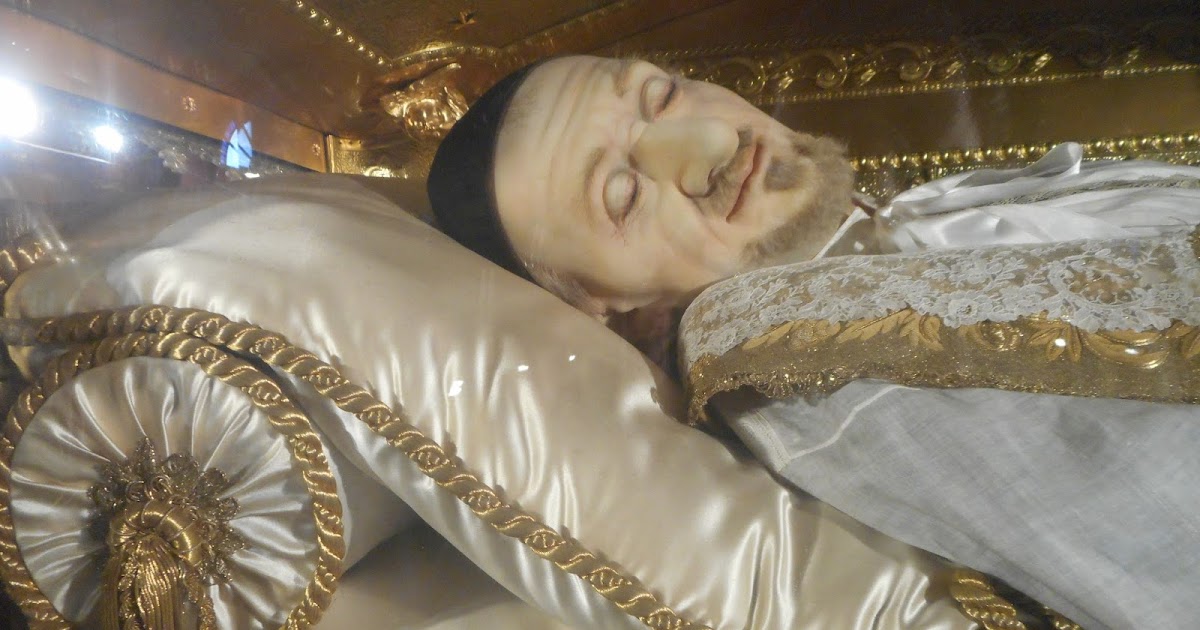
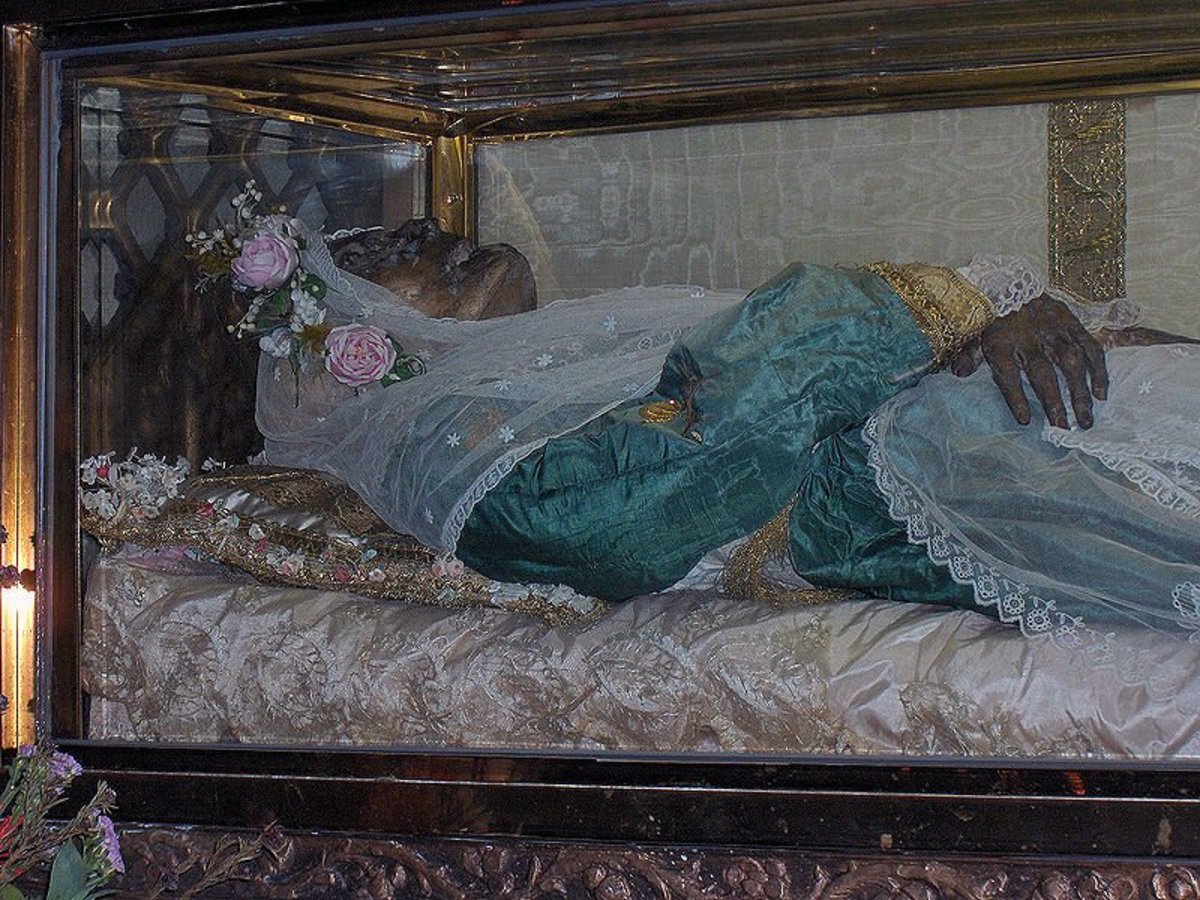
On November 12, 1623, while visiting Vitebsk, Saint Josaphat was brutally murdered by a mob incited by anti-Unionist factions. He was shot, then beheaded, and his body was thrown into the Dvina River. Miraculously, his body was later recovered, emitting a radiant light, and was found to be incorrupt, a state it has maintained for centuries despite the violence of his death. This extraordinary preservation, defying natural decay, is considered a profound sign of divine favor and a testament to his sanctity. Today, his incorrupt body rests in the Basilica of Saint Peter in Vatican City, a silent yet powerful witness to his life and sacrifice.
Saint Josaphat's enduring legacy is primarily as a "Martyr for Unity." His life and death continue to inspire efforts towards reconciliation between Eastern and Western Christianity. He was beatified in 1643 and canonized by Pope Pius IX in 1867, becoming the first Eastern Catholic saint to be canonized by the Latin Church. His feast day, November 12, is observed by both Eastern and Western Catholics. Pilgrims who visit his tomb in the Vatican can experience a tangible connection to this holy man whose incorrupt body serves as a perpetual reminder of the cost of discipleship and the enduring call for Christian unity, a cause for which he so bravely gave his life.
Discovery
The story of Saint Josaphat Kuntsevych's incorrupt body is a profound testament to divine intervention, unfolding across centuries and bearing witness to his unwavering faith even in death. His martyrdom in Vitebsk on November 12, 1623, was a brutal act, a violent end to a life dedicated to the unity of the Church. Following his assassination, his body was cruelly desecrated and cast into the Dvina River. However, a miraculous intervention occurred, as his body, illuminated by a celestial light, floated against the current, eventually coming to rest near the village of Zelenitsa. It was recovered by faithful villagers and initially interred in the Basilian monastery church in Vitebsk. The first formal exhumation, and the astonishing discovery of his incorrupt state, took place in 1624, less than a year after his death. Church authorities, including Bishop Andrew of Polotsk, were present, along with numerous clergy and laypeople. They were met with a body that defied the natural laws of decay, appearing as if he had only recently fallen asleep. His flesh was supple, his features recognizable, and there was no odor of putrefaction, but rather a faint, sweet fragrance. This immediate and undeniable incorruption was widely seen as a sign of his sanctity and a vindication of his mission. The news spread rapidly, solidifying his reputation as a martyr and a saint in the hearts of the faithful.
Over the centuries, the miraculous preservation of Saint Josaphat's body has been affirmed through numerous examinations and translations. In 1637, his remains were moved from Vitebsk to the more secure environment of the Trinity Monastery in Polotsk, a journey undertaken with great solemnity and reverence. Each transfer provided a renewed opportunity for ecclesiastical authorities to inspect the body, and each time, the incorrupt state was confirmed. Perhaps one of the most significant examinations occurred in 1705, during the turbulent Great Northern War. Fearing desecration by invading forces, the Basilian monks secretly reburied the body. It was not until 1753, almost fifty years later, that his remains were rediscovered during renovations of the monastery church. Despite the prolonged interment in damp earth, the body was found to be in the same miraculously preserved condition as before, a truly astonishing feat that further deepened the conviction of his incorruptibility. These repeated inspections, spanning over a century, consistently noted the remarkable integrity of his flesh, the natural color of his skin, and the absence of any signs of decomposition, defying all scientific explanation.
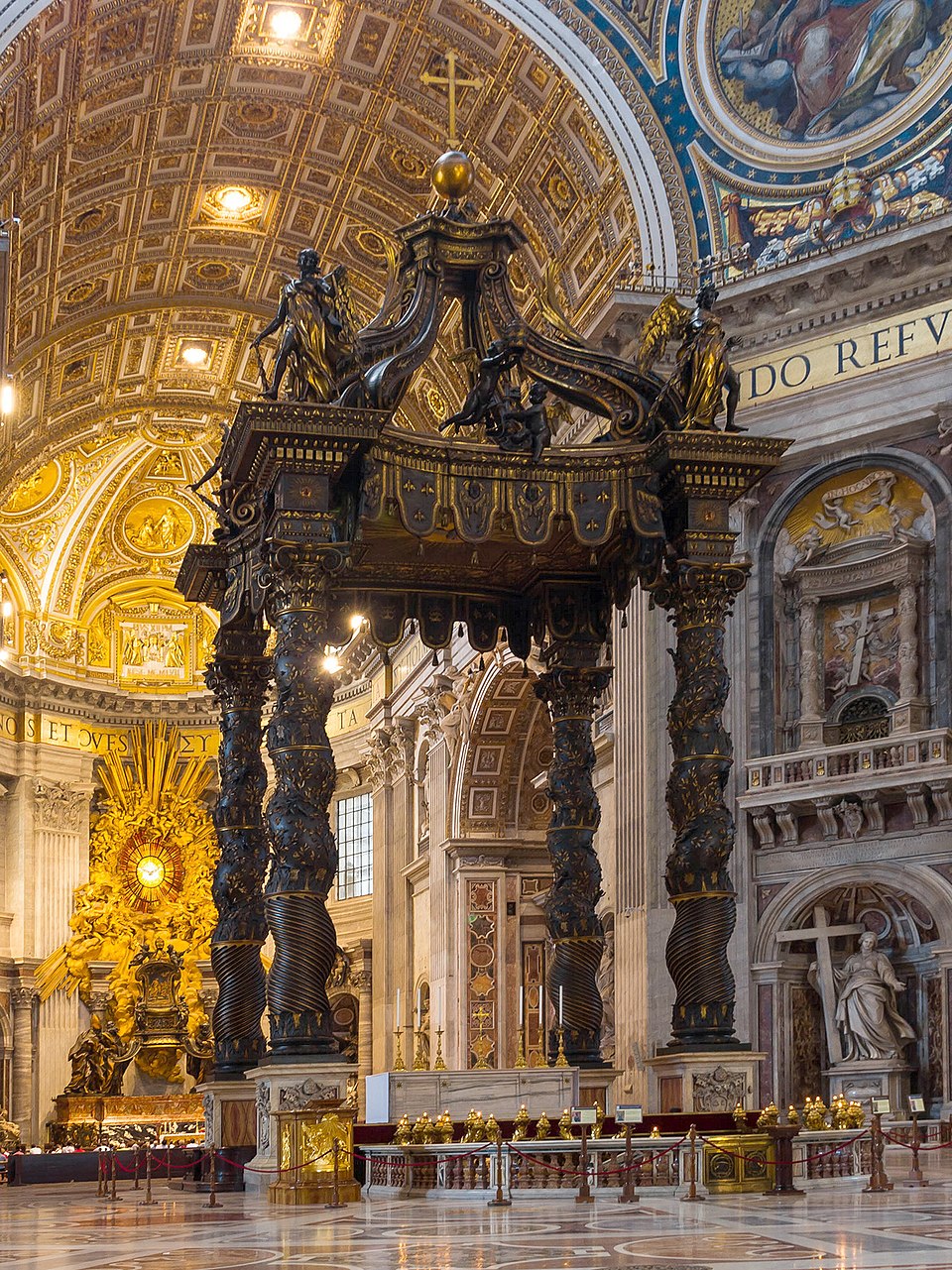
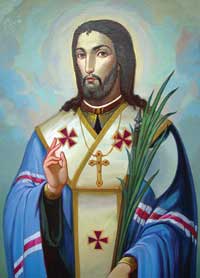
The journey of Saint Josaphat's incorrupt body continued through various locations, each move reflecting the political and religious upheavals of Eastern Europe, yet always with the utmost care for its preservation. After the suppression of the Basilian Order in the Russian Empire, his remains were secretly moved to the Church of Saint Barbara in Biała Podlaska, Poland, in 1867, the very year of his canonization. Here, the body was placed in a specially constructed crypt, protected from both the elements and potential adversaries. Following World War I, in 1916, as the front lines approached, the body was again moved, this time to Vienna, Austria, for safekeeping. Finally, in 1949, after World War II, the venerable relics of Saint Josaphat found their ultimate resting place in the crypt beneath the altar of Saint Basil the Great in St. Peter's Basilica in Vatican City. Today, his body is encased within a glass-fronted reliquary, allowing pilgrims to venerate the miraculously preserved remains of the "Martyr for Unity." The reliquary itself is further enclosed within a larger, ornate sarcophagus, ensuring both protection and dignified display. The body is vested in the episcopal vestments of the Eastern Catholic tradition, a poignant reminder of his unwavering commitment to the union of the Churches.
Beyond the remarkable physical preservation, various accounts speak to other extraordinary phenomena associated with Saint Josaphat's incorrupt body. Throughout the centuries, pilgrims and clergy have reported a distinct, sweet fragrance emanating from his remains, a scent often described as that of roses or lilies, quite unlike any earthly perfume. This "odor of sanctity" is a recurring motif in the hagiography of incorruptible saints and has been consistently noted in connection with Saint Josaphat. Furthermore, some historical records suggest instances of the body exhibiting a certain flexibility, particularly during its various transfers and re-vestments, a characteristic often observed in other incorruptible saints. While not as widely documented as the fragrance, these accounts contribute to the profound sense of the miraculous surrounding his relics. The very fact that a body, subjected to such violence and then to centuries of varying environmental conditions, has remained so remarkably intact, without the aid of embalming or artificial preservation methods, stands as a powerful and enduring testament to his holiness and the inexplicable power of divine grace.
Preservation
Body preserved in St. Peter's Basilica, Vatican City.
Scientific Analysis
The phenomenon of preserved human remains, particularly those attributed to religious figures, often prompts rigorous scientific scrutiny. In the case of Saint Josaphat Kuntsevych, a martyr who died violently in 1623, the reported state of incorruption has been a subject of interest. Formal medical and scientific examinations on his remains have been limited in scope and detail, particularly in comparison to modern forensic standards. Historical accounts suggest that initial observations of his body's preservation were made shortly after his death and subsequent exhumations. These early assessments were largely observational, noting the absence of typical decomposition. Specific, named medical professionals or institutions conducting comprehensive examinations with detailed methodologies are not widely documented in the historical record immediately following his death or during his earlier exhumations. Later inspections, often associated with canonical processes or reinterments, would have involved visual inspections by ecclesiastical authorities and, occasionally, attending physicians. These examinations primarily confirmed the reported state of preservation, noting the flexibility of limbs and the lack of putrefaction, rather than performing invasive analyses. For instance, during the reinterment in St. Peter's Basilica, medical personnel would have been present to verify the condition of the remains, but detailed reports of their findings, including histological or chemical analyses, are not publicly available or were not conducted to modern forensic standards. The primary focus during these events was often on the authentication of the relics for veneration, rather than a deep scientific inquiry into the mechanisms of preservation.
The scientific remarkable aspect of Saint Josaphat's preservation lies in the reported defiance of normal decomposition processes, especially considering the circumstances of his violent death. Following his assassination, his body was reportedly thrown into the Dnieper River before being recovered. Submersion in water, particularly a river environment, typically accelerates decomposition due to microbial activity, oxygen deprivation, and the action of aquatic scavengers. Furthermore, the trauma of a violent death often introduces bacteria and compromises tissue integrity, further hastening decay. Yet, historical accounts consistently describe his body as having resisted these destructive forces. Environmental factors such as burial conditions, climate, and soil composition are critical determinants of decomposition rates. While the specific burial conditions immediately following his recovery are not extensively detailed in scientific terms, the general climate of Eastern Europe, with its seasonal variations, would typically promote decomposition. The absence of embalming or known preservation treatments applied at the time of death or shortly thereafter makes the reported state of preservation particularly intriguing. While some historical figures were embalmed, there is no indication that Saint Josaphat received such treatment. The perceived lack of typical decay, therefore, challenges conventional understanding of post-mortem changes under such conditions.
Various natural explanations have been proposed for instances of unusual body preservation, such as saponification (adipocere formation) or mummification. Saponification, the transformation of body fat into a waxy, soap-like substance, occurs in specific anaerobic, moist environments, often with alkaline soil. While adipocere can preserve body contours, it typically results in a hard, brittle texture, which contrasts with historical descriptions of Saint Josaphat's body retaining a degree of flexibility. Mummification, on the other hand, usually requires extremely dry conditions, either naturally occurring or artificially induced, to desiccate tissues and inhibit microbial growth. Neither of these processes fully aligns with the reported conditions of Saint Josaphat's preservation, particularly the initial submersion in water. Skeptics often attribute such cases to natural processes that are either poorly understood or not fully documented in historical accounts, suggesting that specific environmental factors, even if unrecorded, might have contributed. They might also point to the possibility of limited or localized preservation rather than complete incorruption. However, the consistent historical narrative across multiple exhumations, spanning centuries, describing a remarkably preserved body, leaves aspects that remain unexplained by these common natural phenomena. The specific combination of violent death, river submersion, and subsequent preservation poses a complex scientific puzzle.
From a modern scientific perspective, the case of Saint Josaphat Kuntsevych, like other reported instances of incorruption, represents a valuable, albeit challenging, subject for the study of post-mortem preservation. While extensive invasive analyses have not been performed, modern techniques could offer unprecedented insights. Non-invasive methods such as CT scans and MRI could reveal internal organ preservation, bone density, and tissue integrity without disturbing the remains. Carbon dating, if applied to small tissue samples, could verify the age of the remains and rule out any later substitutions, though this is not typically a concern in cases with well-documented historical provenance. Detailed tissue analysis, including histological and chemical assays, could identify the specific biochemical processes that have occurred, potentially revealing unique microbial activity or environmental interactions that contributed to preservation. For instance, the presence of specific minerals or compounds in the tissues could indicate a unique form of mineralization or chemical stabilization. Such analyses could also help differentiate between natural mummification, adipocere formation, or other less common preservation mechanisms. The primary questions that remain unanswered revolve around the precise biochemical and environmental factors that contributed to this specific preservation, and whether these factors represent a unique combination or a poorly understood natural phenomenon. The challenge lies in balancing the scientific imperative for investigation with the reverence and ethical considerations surrounding such relics.
Spiritual Significance
The enduring presence of Saint Josaphat Kuntsevych’s incorrupt body within the hallowed halls of St. Peter’s Basilica offers a profound theological testament to the Catholic understanding of the human person and the ultimate destiny of the redeemed. Within Catholic theology, the incorruption of a saint’s body is not merely a biological anomaly but a miraculous sign, interpreted as a divine affirmation of their sanctity and a foretaste of the resurrection of the body. It speaks directly to the doctrine articulated in 1 Corinthians 6:19, that our bodies are temples of the Holy Spirit, consecrated by baptism and destined for glory. For Saint Josaphat, whose life was a fervent pursuit of Christian unity and fidelity to the See of Peter, his preserved remains serve as a powerful symbol of God’s favor upon those who suffer for the faith. The Church interprets this phenomenon not as embalming or natural preservation, but as a supernatural intervention, a tangible link between the earthly pilgrimage and the heavenly communion of saints. It underscores the belief that the saints, though in heaven, remain intimately connected to the Church militant, their bodies awaiting the final resurrection, already touched by the divine grace that will transform all things. This visible sign reinforces the reality of the spiritual realm and the ultimate triumph of grace over the corruption of sin and death.
Saint Josaphat’s unique charism was undeniably his burning zeal for Christian unity, particularly the reconciliation of the Eastern and Western Churches under the primacy of the Pope. Born into a religiously fractured world, he dedicated his life to healing the schism, embodying the heroic virtues of unwavering fidelity, profound humility, and an almost audacious charity towards those who opposed him. His spiritual journey, rooted in the rigorous asceticism and contemplative practices of Eastern monasticism, was marked by intense prayer, fasting, and a deep commitment to theological study. He was a brilliant apologist for the Union of Brest, tirelessly working to bridge doctrinal divides through reasoned discourse and fervent prayer. His holiness manifested not in quiet retreat, but in active, sometimes confrontational, engagement with the complex religious landscape of his time. He was a shepherd willing to lay down his life for his flock, and indeed, he did, martyred for his steadfast commitment to the Catholic faith and the cause of unity. His life exemplifies a particular school of thought within Eastern Catholicism that seeks to preserve the rich liturgical and theological traditions of the East while remaining in full communion with Rome, a delicate balance he navigated with extraordinary grace and courage.
Devotion to Saint Josaphat has blossomed over the centuries, particularly within Eastern Catholic communities, where he is revered as a preeminent martyr for unity. His patronage extends to those striving for Christian reconciliation and those suffering religious persecution. Pilgrims from across the globe, especially those of the Byzantine Rite, make their way to St. Peter’s Basilica to venerate his incorrupt body, which lies beneath the altar of Saint Basil the Great. The experience of visiting his shrine is often one of profound awe and spiritual connection, a tangible encounter with a saint whose physical presence transcends the boundaries of time. While specific novenas dedicated solely to him may be less widespread than for some other saints, his feast day on November 12th is a significant occasion for prayer and reflection on the vital importance of Christian unity. His story is frequently invoked in homilies and catechesis, reminding the faithful of the cost of discipleship and the enduring call to overcome division. The very act of gazing upon his preserved remains serves as a powerful catalyst for prayer, inspiring petitions for peace, understanding, and the healing of schisms within the Body of Christ.
Numerous miracles have been attributed to Saint Josaphat’s intercession, both during his lifetime and after his martyrdom. Accounts speak of spiritual conversions, physical healings, and answered prayers for those who invoked his name, particularly in matters related to religious strife or personal suffering. His incorrupt body itself has been a continuous source of spiritual consolation for the faithful, a silent witness to the power of God and the sanctity of His servants. In an age where skepticism often challenges the supernatural, the physical reality of his preserved remains stands as a compelling testament to the divine. For many, the very existence of such a phenomenon strengthens their faith, offering a tangible bridge between the visible world and the invisible realities of grace and eternity. The quiet reverence surrounding his reliquary speaks volumes of the deep spiritual impact he continues to have, fostering a sense of hope and reassurance that the saints in heaven are indeed powerful intercessors for those still on earth.
Saint Josaphat’s enduring message for contemporary Catholics and seekers resonates with particular urgency in our fragmented world. His life challenges the pervasive materialism and secularism of our age by demonstrating that there are eternal truths worth living and dying for, that spiritual unity is a treasure beyond measure. From his example, modern believers can learn the profound value of steadfast faith, courageous advocacy for truth, and compassionate engagement with those who hold differing views. His incorruption serves as a potent reminder that the human person is not merely a biological entity destined for dust, but a soul and body destined for resurrection and eternal communion with God. It is a tangible bridge between the visible and invisible worlds, a concrete sign that the spiritual realm is real and that God actively intervenes in human history. In an era often characterized by division and cynicism, Saint Josaphat’s legacy calls us to strive for unity, to defend the faith with both charity and conviction, and to embrace the transformative power of divine grace, offering a beacon of hope and a model of holiness for all who seek a deeper connection with the sacred.
AI summary
A plain-language overview generated from this page's source material. Always verify with primary sources.