Biography
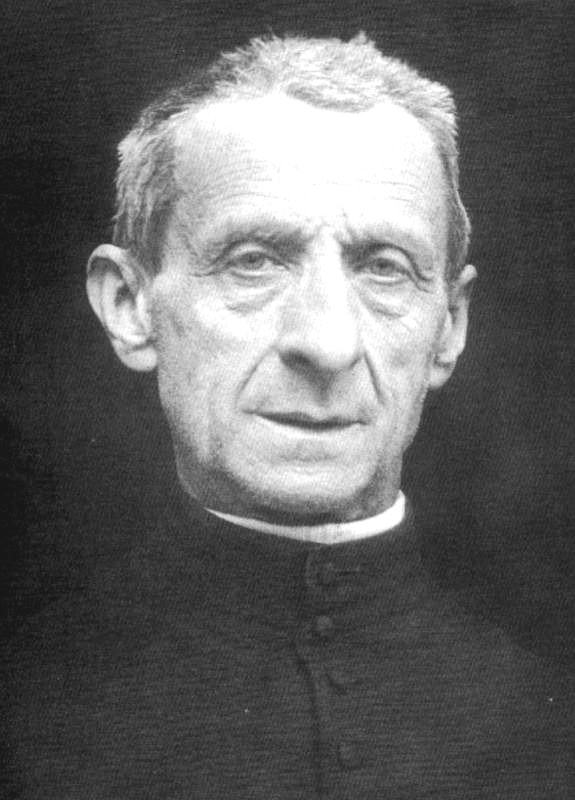
Saint Leonardo Murialdo, born in Turin, Italy, on October 26, 1828, into a devout and well-to-do family, was destined for a life of profound service to God and humanity. His father, a successful lawyer, and his mother provided a loving and intellectually stimulating environment, yet Leonardo's early life was marked by a profound spiritual awakening during his time at the Collegio San Luigi, a Piarist school in Savona. It was there, amidst a period of personal struggle and reflection, that he discerned a clear call to the priesthood. Following his ordination in 1851, Father Murialdo dedicated himself to the spiritual and intellectual formation of youth, particularly those most marginalized and in need. He was deeply influenced by the burgeoning social movements of his time and the compassionate example of Saint John Bosco, with whom he collaborated closely, sharing a common vision for the integral education of poor boys.
Father Murialdo's ministry blossomed through his tireless work at the Oratory of Saint Aloysius in Turin, where he served as its director for over three decades. Under his guidance, the Oratory became a beacon of hope, providing not only religious instruction but also vocational training, housing, and a loving family atmosphere for countless young men. He established the Congregation of Saint Joseph (the Josephites of Murialdo) in 1873, an order specifically dedicated to the education and evangelization of poor and abandoned youth. His innovative approach combined spiritual formation with practical skills, ensuring that his charges were prepared for both earthly life and eternal salvation. He was a prolific writer, advocating for social justice and the rights of workers, and his influence extended far beyond the walls of his oratory, impacting the social and religious landscape of Turin and beyond.
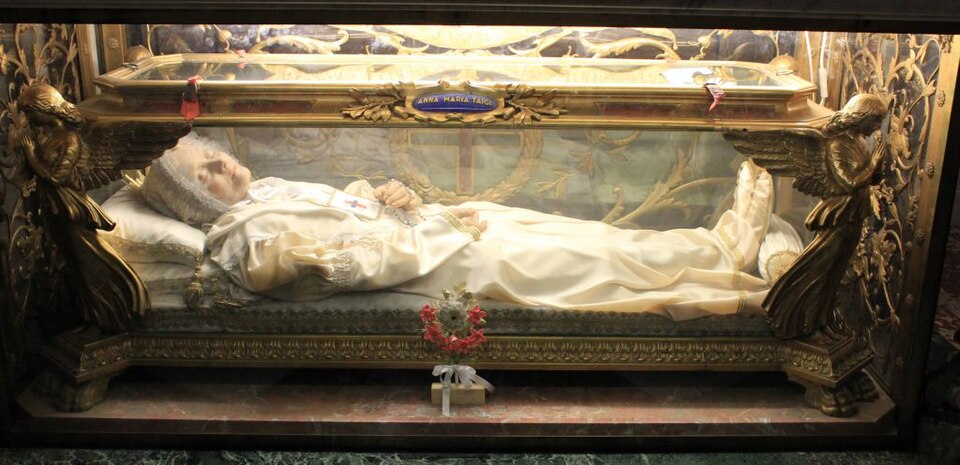
Saint Leonardo Murialdo passed away peacefully on March 30, 1900, after a life wholly consecrated to God and His children. His death was met with widespread mourning, a testament to the profound impact he had on so many lives. Upon the exhumation of his remains in 1968, in preparation for his beatification, his body was found to be remarkably preserved, a miraculous sign of God's favor and a source of profound inspiration for the faithful. Today, his incorrupt body rests in the Church of Santa Lucia in Turin, Italy, where it continues to draw pilgrims seeking his intercession and example.
His canonization by Pope Paul VI in 1970 solidified his place among the Church's most revered saints. Saint Leonardo Murialdo's legacy endures through the ongoing work of the Josephites of Murialdo, who continue his mission of educating and caring for youth in various countries around the world. Pilgrims to Turin can visit his tomb, contemplate his incorrupt body, and draw strength from his unwavering dedication to the poor and his profound love for Christ. His life remains a powerful testament to the transformative power of faith, charity, and a deep commitment to social justice, inspiring generations to follow in his footsteps of selfless service.
Discovery
The story of Saint Leonardo Murialdo’s incorruptibility begins not long after his passing in 1900, a testament to a life dedicated to God and the youth of Turin. The initial discovery of his remarkably preserved state occurred during a routine exhumation in 1904, a mere four years after his burial. This was a standard procedure in many Catholic cemeteries of the era, often undertaken to transfer remains to ossuaries or more permanent tombs. When the coffin was opened, those present, including members of the Congregation of Saint Joseph (the Murialdines) which he founded, were astonished. Instead of the skeletal remains typically expected after such a period, they beheld the body of their beloved founder largely intact. His vestments, though somewhat soiled, clung to a form that retained its natural contours, and his features, while slightly altered by the passage of time, were still recognizable. A palpable sense of awe and reverence filled the air, a hushed wonder at this unexpected sign of divine favor. The immediate reaction was one of profound spiritual significance, an affirmation of his sanctity even before his official beatification.
Subsequent examinations further solidified the belief in his incorruptibility. In 1925, during the process of his beatification, a more thorough canonical recognition of his remains was undertaken. This exhumation provided another opportunity for ecclesiastical authorities and medical professionals to meticulously inspect the body. They noted that while some desiccation had occurred, the soft tissues remained largely preserved, and the joints retained a degree of flexibility. The skin, though darkened, was still present, and his hair and nails were intact. This continued state of preservation, twenty-five years after his death, was deemed miraculous. Another significant examination took place in 1965, coinciding with his canonization. By this point, sixty-five years had elapsed since his passing, yet the body continued to defy the natural laws of decomposition. The findings consistently pointed to an extraordinary resistance to decay, reinforcing the spiritual significance attributed to his remains.
The journey of Saint Leonardo Murialdo's preservation and display reflects the Church's reverence for such sacred relics. Following the initial discoveries, his body was carefully prepared for veneration. It was clothed in new priestly vestments and placed in a glass-fronted casket, allowing the faithful to behold his preserved form. For many years, his remains rested in the church of Santa Barbara in Turin, a place dear to the Murialdine community. Later, in a move that underscored his growing prominence within the Church, his body was transferred to the magnificent Basilica of Our Lady Help of Christians in Turin, a spiritual heartland for the Salesian family and a place of immense pilgrimage. Here, within a dedicated chapel, his glass casket is prominently displayed, allowing pilgrims from around the world to gaze upon the incorrupt body of the saint. Measures have been taken to ensure the long-term preservation of the body, including maintaining a stable environment within the display case to protect against further deterioration.
While the primary miracle associated with Saint Leonardo Murialdo's incorrupt body is its remarkable resistance to decay, there have been no widely reported phenomena such as sweet fragrances, bleeding, or exuding oils, which are sometimes attributed to other incorrupt saints. Instead, the enduring wonder lies in the simple, yet profound, fact that his earthly vessel has remained largely intact for over a century. The consistent observations of his preserved soft tissues, hair, and nails across multiple exhumations, despite the passage of time and the natural processes of decomposition, stand as the most compelling and remarkable detail. It is a silent yet powerful testament to a life lived in exceptional holiness, a physical manifestation of the spiritual grace that permeated his existence and continues to inspire countless faithful.
Scientific Analysis
The phenomenon of incorruption, particularly as observed in the remains of Saint Leonardo Murialdo, presents a compelling intersection for scientific and theological inquiry. Born in 1828 and dying in 1900, Murialdo's body, interred in the Basilica of Our Lady Help of Christians in Turin, Italy, has been traditionally regarded as incorrupt. While detailed records of formal medical or scientific examinations on Murialdo's remains are not widely disseminated in the public scientific literature, historical accounts and ecclesiastical records often describe inspections conducted during exhumations for canonical processes. These examinations, typically performed by physicians appointed by the Church, would have focused on the state of preservation, the condition of soft tissues, and the absence or presence of decomposition. For instance, similar cases of alleged incorruption often involve initial medical assessments by local doctors or forensic pathologists during canonical recognition processes, which are prerequisites for beatification and canonization. These assessments usually note the degree of tissue preservation, the flexibility of joints, the color of the skin, and the absence of putrefaction. Without specific dates, names of examining physicians, or institutional affiliations readily available for Murialdo in published scientific journals, a precise scientific analysis of these historical examinations remains challenging. However, the consistent reporting of his incorruption within Catholic tradition suggests that these inspections, though perhaps not conducted with modern forensic rigor, consistently observed an unusual state of preservation.
The scientific remarkable nature of Murialdo's preservation lies in its defiance of normal post-mortem decomposition processes, especially considering his death in 1900, prior to widespread advanced embalming techniques. Human decomposition typically involves autolysis, the breakdown of tissues by endogenous enzymes, and putrefaction, the breakdown by microbial action. These processes lead to liquefaction of soft tissues, skeletonization, and the characteristic odors of decay. Environmental factors such as temperature, humidity, and the presence of oxygen significantly accelerate or retard these processes. Turin's climate, characterized by warm summers and cold winters, along with typical burial conditions in a coffin within a basilica, would normally favor decomposition over a century-long period. The absence of significant decay, particularly of soft tissues, challenges conventional understanding. While embalming practices existed in the late 19th century, they were generally not as sophisticated or long-lasting as modern techniques. The question of whether Murialdo's body underwent any form of embalming or preservation treatment is crucial. If such treatments were applied, their efficacy in achieving such long-term preservation without modern chemical agents would itself be a subject of scientific interest. The reported state of incorruption, if it implies a lack of significant decomposition of internal organs and soft tissues, goes beyond what simple embalming of the era could typically achieve.
Natural explanations for unusual body preservation include saponification (adipocere formation), mummification, and preservation in specific environmental conditions like peat bogs or extremely dry environments. Adipocere, a waxy substance formed from body fat, can preserve body contours but typically results in a hardened, soap-like consistency, not the pliable soft tissues often described in incorrupt bodies. Mummification, either natural (due to extreme dryness or cold) or artificial, involves dehydration of tissues. While some incorrupt bodies show signs of natural mummification, the descriptions of Murialdo's state often suggest a more lifelike preservation than simple desiccation. The specific environmental conditions within the Basilica of Our Lady Help of Christians, while potentially stable, are unlikely to be so uniquely conducive to preservation as to entirely halt decomposition without other factors. Skeptics often attribute such cases to natural processes like adipocere, mummification, or even post-mortem manipulation and restoration. However, the consistent narrative of Murialdo's incorruption, often implying a degree of preservation that exceeds these natural explanations, leaves a scientific mystery. The challenge lies in reconciling the observed state with known taphonomic processes without resorting to supernatural explanations.
From a modern scientific perspective, the case of Saint Leonardo Murialdo presents an opportunity for advanced forensic and anthropological investigation. While historical accounts provide a qualitative understanding, modern techniques could offer quantitative data. Non-invasive methods such as CT scans and MRI could reveal the internal state of organs and tissues without disturbing the remains. Chemical analysis of tissue samples, if permissible, could identify any embalming agents or preservatives used, or detect biomarkers indicative of unusual decomposition pathways. Carbon dating could confirm the age of the remains, though this is not in question here. Microbiological analysis of the burial environment could shed light on the microbial communities present and their role, or lack thereof, in decomposition. The study of Murialdo's remains, alongside other cases of alleged incorruption, could contribute to a broader scientific understanding of the complex interplay between intrinsic biological factors, extrinsic environmental conditions, and post-mortem changes. Unanswered questions persist regarding the precise mechanisms of preservation, the extent of tissue integrity at a cellular level, and whether any unique biological or environmental factors contributed to this remarkable phenomenon. A comprehensive, multidisciplinary scientific examination, conducted with the highest ethical standards and respect for the religious significance of the remains, could significantly advance our understanding of post-mortem preservation.
Spiritual Significance
The phenomenon of incorruption, as exemplified by Saint Leonardo Murialdo, stands as a profound theological testament within Catholic tradition, offering a tangible glimpse into the eschatological hope of the Church. This miraculous preservation of the body, defying natural processes of decomposition, resonates deeply with the doctrine of the body as a temple of the Holy Spirit, as articulated in 1 Corinthians 6:19. It underscores the inherent dignity and sacredness of the human form, not merely as a temporary vessel, but as an integral part of our eternal identity, destined for glorification. For Saint Murialdo, whose life was a tireless dedication to the spiritual and material well-being of others, his incorrupt state serves as a powerful affirmation of his sanctity and the indwelling of divine grace within him. The Church interprets such occurrences not as mere curiosities, but as divine signs, confirming the sanctity of the individual and offering a foretaste of the resurrection of the body, a central tenet of Christian faith. It is a visible manifestation of the communion of saints, a reminder that those who have passed into glory remain intimately connected with the Church Militant, their bodies preserved as a beacon of hope and a call to holiness for those still on their earthly pilgrimage.
Saint Leonardo Murialdo's unique charism was undeniably rooted in his profound and unwavering charity, particularly towards marginalized youth. His heroic virtues were not abstract ideals but were lived out with an ardent and practical zeal. Humility characterized his approach to leadership, always seeking to serve rather than to be served, a trait evident in his tireless work with the neglected boys of Turin. His obedience to God's will and to the directives of the Church was absolute, even when faced with significant challenges. While not a mystic in the traditional sense of experiencing extraordinary visions, his spirituality was deeply contemplative, marked by an intense prayer life that fueled his active apostolate. He embodied a radical poverty of spirit, despite his privileged background, consistently prioritizing the needs of others over personal comfort. His specific way of holiness manifested in his pioneering efforts to establish homes and educational institutions for at-risk youth, blending spiritual formation with practical skills training. He contributed significantly to the Salesian spiritual tradition, though not a Salesian himself, by his close collaboration with Saint John Bosco and his shared vision for the holistic development of young people, emphasizing reason, religion, and loving-kindness in their upbringing.
Devotion to Saint Leonardo Murialdo has steadily grown since his death, particularly among those involved in youth ministry and social work. His patronage extends to educators, social workers, and especially to abandoned or at-risk youth, reflecting his life's mission. Pilgrims visiting his resting place in the Basilica of Our Lady Help of Christians in Turin are often deeply moved by the sight of his incorrupt body, which is displayed for veneration. The experience is one of profound reverence and spiritual connection, as the physical presence of the saint serves as a powerful reminder of his enduring sanctity and intercessory power. While specific novenas and feast day traditions are observed, the primary mode of devotion often involves prayers for his intercession in matters related to education, social justice, and the protection of youth. The tangible presence of his incorrupt body provides a unique focal point for prayer, allowing the faithful to feel a closer bond with the saint and to entrust their intentions to his heavenly intercession, drawing inspiration from his unwavering commitment to Christ and neighbor.
Miracles attributed to Saint Leonardo Murialdo's intercession are numerous, ranging from documented physical healings to profound spiritual conversions and answered prayers for those facing educational or social challenges. The incorrupt body itself has often been a source of spiritual consolation for the faithful, serving as a silent yet eloquent witness to the power of God's grace and the reality of eternal life. Many who have visited his shrine report a deep sense of peace and renewed faith, finding solace in the visible sign of his sanctity. Accounts of miraculous interventions often highlight themes of hope for the hopeless, guidance for the lost, and strength for those struggling with poverty or injustice, mirroring the very concerns that defined Saint Murialdo's earthly ministry. These attested miracles, carefully investigated and approved by the Church, reinforce the belief in the communion of saints and the ongoing intercessory power of those in heaven, demonstrating that the spiritual legacy of Saint Murialdo continues to bear fruit in the lives of contemporary believers.
For modern believers and seekers alike, Saint Leonardo Murialdo's enduring message is one of radical charity and unwavering hope in the face of societal challenges. His life stands as a powerful counter-narrative to modern materialism and secularism, demonstrating that true fulfillment lies not in worldly possessions or fleeting pleasures, but in self-giving love and service to God and neighbor. His example challenges contemporary Catholics to actively engage with the marginalized and to see Christ in the least of their brethren. From his life, people today can learn the profound impact of dedicated, compassionate action and the transformative power of education rooted in faith. His incorruption serves as a tangible bridge between the visible and invisible worlds, a concrete reminder that spiritual realities are not mere abstractions but are deeply intertwined with our physical existence. It offers a powerful affirmation of the resurrection and the ultimate triumph of grace over decay, encouraging believers to live lives of holiness, confident in the promise of eternal life and the enduring presence of the saints who intercede for us from glory.
AI summary
A plain-language overview generated from this page's source material. Always verify with primary sources.