Biography
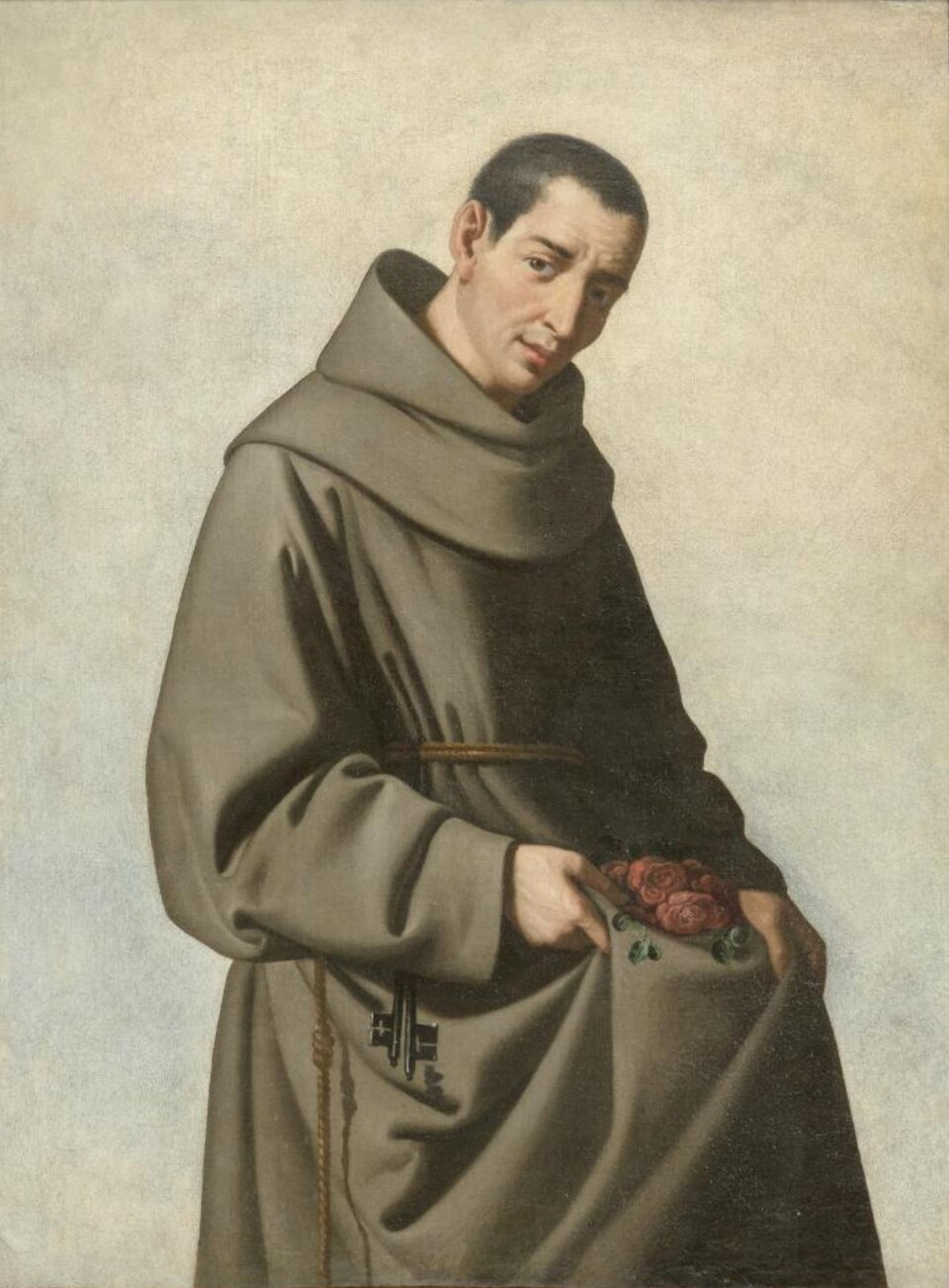
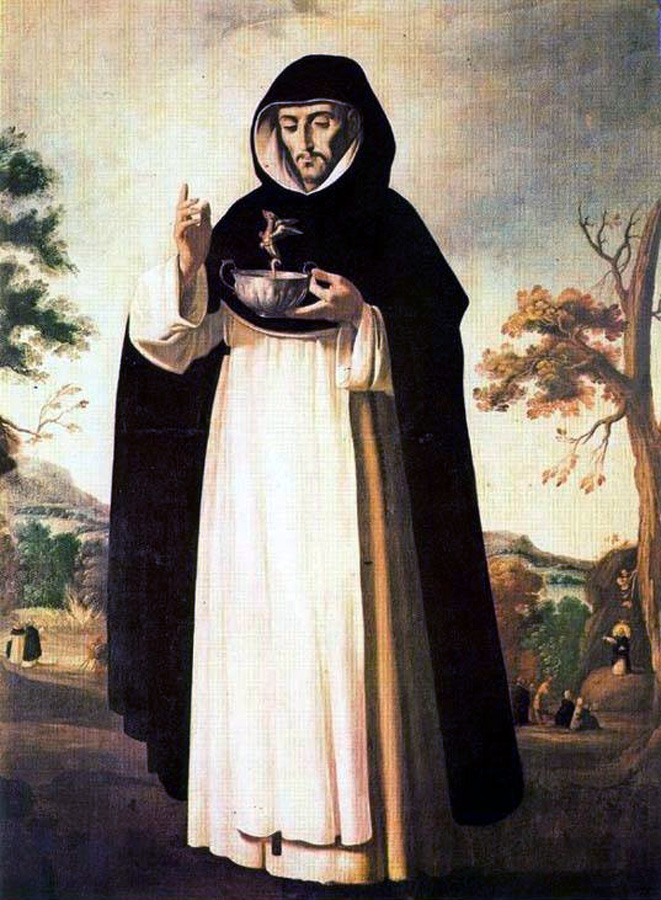
Saint Louis Bertrand, born Lluís Bertran in Valencia, Spain, in 1510, entered a world steeped in fervent Catholic faith and the burgeoning Age of Exploration. From a young age, Louis displayed a profound piety and a deep desire to serve God. His noble family, devout and influential, provided him with a solid religious upbringing, fostering his intellectual curiosity and spiritual inclinations. He was particularly drawn to the contemplative life, and at the age of eighteen, he answered the call to religious life, entering the Dominican Order at the Convent of St. Onuphrius in Valencia. His early years as a friar were marked by intense prayer, rigorous study, and a commitment to asceticism, laying the spiritual foundation for his future missionary endeavors. He quickly distinguished himself by his humility, charity, and an unwavering dedication to the Rule of St. Dominic.
Ordained a priest in 1537, Father Louis served as Master of Novices, guiding younger friars in their spiritual formation, and later as Prior of several Dominican convents. However, his heart yearned for a more challenging mission, a desire that intensified with news of the New World and its unevangelized peoples. In 1562, at the age of 52, he embarked on a perilous journey to South America, arriving in Cartagena, New Granada (modern-day Colombia). There, he dedicated himself tirelessly to the evangelization of the indigenous populations, learning their languages, defending their rights against colonial abuses, and baptizing thousands. He became renowned for his powerful preaching, his unwavering courage in the face of danger, and the numerous miracles attributed to his intercession, including instances of speaking in tongues to communicate with different tribes. His ministry extended to various regions, establishing churches and fostering a deep devotion among the native peoples.
After seven years of arduous missionary work, Louis Bertrand returned to Spain in 1569 due to ill health, though his spirit remained fervent. He continued to serve as a spiritual director and confessor, offering counsel to many, including Saint Teresa of Avila. He passed away peacefully in his native Valencia on October 9, 1581, at the age of 71. Upon his death, his body was laid to rest, and it was later discovered to be incorrupt, a testament to his sanctity and God's favor. Today, his incorrupt body is venerated in the Basilica of San Vicente Ferrer in Valencia, Spain, where pilgrims can witness this miraculous preservation.
Saint Louis Bertrand was canonized by Pope Clement X in 1671, solidifying his place among the Church's most revered saints. His legacy endures as a powerful example of missionary zeal, unwavering faith, and compassionate service to the marginalized. He is honored as the patron saint of Colombia and of the city of Valencia. Pilgrims visiting the Basilica of San Vicente Ferrer can not only venerate his incorrupt relics but also reflect on his profound impact on the evangelization of the Americas and his enduring message of love and justice. His life continues to inspire countless individuals to embrace their faith with courage and to dedicate themselves to the service of God and neighbor.
Discovery
The remarkable story of Saint Louis Bertrand's incorrupt body begins not with his death in 1581, but with a series of exhumations that revealed an extraordinary preservation. Following his passing, the Dominican friar, renowned for his missionary zeal in the New World and his austere piety, was interred within the Convent of Santo Domingo in Valencia, Spain. It was customary in those times for the remains of revered individuals to be periodically exhumed, often for reburial in more prominent locations or to verify their sanctity. The initial exhumation, the precise date of which is not definitively recorded but is understood to have occurred some decades after his death, likely during a period of convent renovation or the elevation of his cult, brought forth the first astonishing discovery. Those present, likely a gathering of Dominican friars, ecclesiastical authorities, and perhaps a few devout laypersons, were met not with skeletal remains, but with a body that defied the natural processes of decay. Accounts from the period, though sometimes embellished by devotional fervor, consistently describe a body that was remarkably intact, with supple skin and discernible features, emitting a sweet, unearthly fragrance that filled the crypt. This initial finding immediately fueled the veneration of Louis Bertrand, solidifying his reputation for sanctity and prompting further careful attention to his earthly remains.
Subsequent examinations over the centuries continued to confirm this miraculous state of preservation, each instance deepening the mystery and reinforcing the belief in his incorruption. One significant re-examination occurred in 1709, nearly 130 years after his death, during which the body was once again observed to be remarkably well-preserved. Detailed records from this period, often meticulously kept by the Dominican order, describe the skin as still adhering to the bones, the limbs retaining a degree of flexibility, and the overall appearance being far removed from what one would expect of a body interred for over a century. These observations were not merely superficial; they involved close inspection by medical professionals and ecclesiastical officials, all of whom attested to the extraordinary condition. Another notable instance of examination took place in 1845, a period of significant political and religious upheaval in Spain. Despite the passage of centuries and varying environmental conditions within the crypt, the body continued to exhibit its remarkable state. While some natural desiccation had occurred over time, as is common even in cases of incorruption, the fundamental integrity of the body remained, a testament to its enduring miraculous preservation. These repeated inspections served not only to document the phenomenon but also to inspire generations of the faithful, offering a tangible link to the saint's powerful intercession.
The preservation journey of Saint Louis Bertrand's body has been one of careful veneration and protection, reflecting the profound reverence accorded to his remains. Following the initial discoveries, the body was typically re-interred in a more dignified manner, often within a specially constructed tomb or sarcophagus within the Convent of Santo Domingo. Over time, as his cult grew and the desire for public veneration increased, measures were taken to make his incorrupt body more accessible to the faithful while ensuring its ongoing protection. Today, the body of Saint Louis Bertrand is housed within a magnificent glass casket, allowing pilgrims and visitors to view his remains directly. This casket is itself often placed within a larger reliquary, sometimes adorned with precious metals and intricate carvings, reflecting the artistic and spiritual traditions of the Church. The environment within the display is carefully controlled to mitigate further deterioration, though the primary factor in its preservation remains the miraculous nature of its incorruption. The body lies in a state of repose, clothed in the Dominican habit, its features still discernible, though naturally altered by the passage of centuries. This public display serves as a powerful focal point for devotion, inviting contemplation on the mysteries of sanctity and the enduring power of faith.
Among the most remarkable details associated with Saint Louis Bertrand's incorrupt body is the consistent report of a sweet, fragrant odor emanating from his remains. This phenomenon, often described as the "odor of sanctity," has been noted during multiple exhumations and is a recurring motif in the hagiographical accounts of incorrupt saints. Unlike the stench of decay, this fragrance is often likened to flowers or spices, a supernatural perfume that defies natural explanation. While the body has naturally undergone some mummification over the centuries, it has never exhibited the typical signs of putrefaction. Furthermore, early accounts sometimes speak of a certain flexibility in the limbs, an unusual characteristic for a body long deceased, though this is a detail that tends to diminish over time with desiccation. These extraordinary phenomena, observed by numerous witnesses over hundreds of years, distinguish Saint Louis Bertrand's incorrupt body as a profound and enduring testament to divine intervention, offering a palpable connection to the spiritual realm and inspiring countless pilgrims to seek his intercession.
Scientific Analysis
The phenomenon of human body preservation beyond the typical course of decomposition, often termed incorruption within religious contexts, presents a compelling area for scientific inquiry. In the specific case of Saint Louis Bertrand, who died in 1581 and whose remains are interred at the Convent of Santo Domingo in Valencia, Spain, detailed medical and scientific examinations have been notably sparse, at least in publicly accessible records. Unlike some other cases of alleged incorruption where extensive forensic analysis has been undertaken, information regarding formal investigations into Saint Louis Bertrand's remains is limited. Historical accounts often rely on visual observations made during canonical examinations, typically conducted by ecclesiastical authorities to verify the state of the body. These examinations, while important for religious purposes, rarely involve the rigorous scientific protocols of modern forensic pathology. For instance, reports from the 17th and 18th centuries, often documented in hagiographical texts, describe the body as supple, with intact skin and discernible features, sometimes even emitting a pleasant odor. However, these accounts lack the specificity of medical terminology, precise measurements, or detailed histological findings that would be expected from a contemporary scientific examination. The absence of documented formal medical autopsies or forensic anthropological studies by independent scientific bodies, including specific dates, names of medical professionals, or institutional affiliations, makes a definitive scientific assessment challenging based solely on historical records. Without such data, any claims regarding the state of preservation remain largely within the realm of anecdotal evidence and religious tradition rather than empirical scientific verification.
The scientific mystery surrounding the alleged incorruption of Saint Louis Bertrand lies in the reported defiance of normal decomposition processes, particularly given the historical context and typical burial conditions of the 16th century. Human decomposition is a complex biological process driven by autolysis (self-digestion by cellular enzymes) and putrefaction (bacterial activity), leading to the breakdown of soft tissues. Environmental factors such as temperature, humidity, oxygen availability, and the presence of microorganisms significantly influence the rate and extent of decay. Valencia, with its Mediterranean climate characterized by hot summers and mild, humid winters, would generally accelerate decomposition, especially in a conventional burial setting. The absence of reported significant decay, such as liquefaction of tissues, skeletal disarticulation, or extensive insect activity, would be scientifically remarkable under such conditions. One natural explanation for unusual preservation is saponification, or adipocere formation, where body fats transform into a waxy, soap-like substance in anaerobic, moist environments. This process can preserve the general body contours and features, but it typically results in a distinct, often brittle texture, not the reported suppleness. Another potential factor is mummification, either natural (desiccation in dry environments) or artificial (embalming). While natural mummification could occur in extremely arid conditions, Valencia's climate does not typically support this without specific environmental controls. The historical record does not indicate any elaborate embalming procedures for Saint Louis Bertrand comparable to those used in ancient Egypt or even the more sophisticated techniques developed later in Europe. While some basic preservation methods, such as evisceration and packing with aromatic substances, were known, their efficacy over centuries without modern chemical agents is questionable in preventing extensive decay. The lack of detailed information regarding the specific burial environment, such as the type of coffin, crypt conditions, or soil composition, further complicates any scientific assessment of potential natural preservation mechanisms.
Skeptical perspectives on cases of alleged incorruption often propose natural explanations such as mummification, adipocere formation, or the presence of preserving agents, even if undocumented. In the absence of detailed forensic analysis for Saint Louis Bertrand, such natural processes are often posited as the most probable scientific explanations. However, these explanations frequently fall short in fully accounting for the specific claims of "incorruption," particularly the reported suppleness of tissues and the preservation of internal organs, which are less commonly observed in natural mummification or adipocere. For instance, while adipocere can preserve external features, it typically does not maintain the flexibility of joints or the integrity of internal soft tissues over centuries. Similarly, natural mummification, while preserving tissues, usually results in a desiccated, hardened state, not the reported "incorrupt" characteristics. Skeptics also point to the potential for post-mortem alterations, such as the application of waxes or resins during canonical examinations or re-interments, which could create an appearance of preservation. The subjective nature of historical observations, often influenced by religious belief, can also lead to interpretations that exaggerate the actual state of preservation. Without objective scientific data, distinguishing between natural processes, deliberate preservation efforts, and perceptual biases becomes exceedingly difficult. The persistence of the "mystery" in such cases often stems from this data deficit, where anecdotal accounts clash with the expected outcomes of known decomposition processes.
From a modern scientific perspective, the case of Saint Louis Bertrand, like other alleged cases of incorruption, represents a fascinating opportunity to apply advanced forensic techniques to understand the processes of post-mortem preservation. While direct access to the remains for extensive analysis might be restricted due to religious reverence, non-invasive techniques could offer significant insights. For example, high-resolution CT scans or MRI could provide detailed anatomical information without disturbing the body, revealing the state of internal organs, bone structure, and the presence of any embalming materials or foreign substances. Carbon dating of tissue samples, if permissible, could verify the age of the remains and rule out later substitutions. Microscopic analysis of tissue biopsies, if obtained, could identify cellular structures, evidence of putrefaction, or the presence of preserving agents. Spectroscopic analysis could detect the chemical composition of preserved tissues and any applied substances. Such studies, conducted by independent forensic scientists and anthropologists, could objectively determine the actual state of preservation, differentiate between natural processes and artificial interventions, and contribute to the broader scientific understanding of taphonomy – the study of decomposition and preservation. Without such empirical data, the case of Saint Louis Bertrand remains largely an enigma, poised at the intersection of faith and scientific curiosity, awaiting the application of modern scientific rigor to unravel its centuries-old mystery.
Spiritual Significance
The phenomenon of incorruption, as exemplified by Saint Louis Bertrand, stands as a profound theological statement within Catholic tradition, offering a tangible witness to the sanctity of the human body and the promise of resurrection. For the Church, the preservation of a saint's body from natural decay, often without embalming, is not merely a biological anomaly but a divine sign, a miraculous affirmation of a life lived in extraordinary union with God. It resonates deeply with Saint Paul's teaching that our bodies are temples of the Holy Spirit (1 Corinthians 6:19), suggesting that the indwelling Spirit can, even in death, manifest its sanctifying power. In the case of Saint Louis Bertrand, whose body rests in the Convent of Santo Domingo in Valencia, this incorrupt state is interpreted as a special grace, highlighting his exceptional holiness and his participation in the communion of saints. It serves as a prefigurement of the glorified body promised at the general resurrection, a physical testament to the victory of Christ over death and decay, and a visible reminder that our earthly existence, when lived in grace, has eternal consequences. The Church, in acknowledging such phenomena, invites the faithful to contemplate the profound dignity of the human person and the transformative power of divine grace.
Saint Louis Bertrand's unique charism was undeniably rooted in his fervent missionary zeal, a gift that blossomed from his deep contemplative life and rigorous asceticism within the Dominican Order. His heroic virtues were manifold, but his profound humility, evident in his willingness to serve the most marginalized, and his unwavering charity, which drove him to evangelize in the New World, stand out. He embraced a radical poverty, not merely in material possessions but in spirit, relying entirely on divine providence in his arduous journeys. His life was a testament to obedience, both to his religious superiors and to the promptings of the Holy Spirit, which guided his perilous missions. As a Dominican, he embodied the order's intellectual tradition, yet he seamlessly integrated profound theological understanding with a practical, compassionate approach to evangelization. His specific way of holiness manifested in his tireless preaching, his administration of the sacraments, and his courageous defense of indigenous peoples against colonial abuses, making him a powerful advocate for justice and human dignity. He contributed significantly to the Dominican tradition of active contemplation, demonstrating how intense prayer fuels courageous action in the world.
Devotion to Saint Louis Bertrand has flourished since his death in 1581, growing organically from the profound impact he had during his lifetime and the subsequent recognition of his sanctity. He is widely venerated as the patron saint of Colombia and of novices, reflecting his missionary endeavors and his commitment to spiritual formation. His feast day, October 9th, is celebrated with particular reverence in Valencia and throughout Latin America, often marked by special Masses, processions, and novenas dedicated to his intercession. Pilgrims visiting the Convent of Santo Domingo in Valencia today are drawn to the sacred space where his incorrupt body reposes, a powerful focal point for prayer and reflection. The experience of standing before his preserved remains is often described as deeply moving, fostering a profound sense of connection to the saint and to the broader communion of saints. It is a moment where the veil between the earthly and heavenly realms seems to thin, inviting contemplation on the enduring power of faith and the promise of eternal life. The reverence shown to his relics is not worship of the saint himself, but a veneration that directs the faithful to God, the source of all holiness.
Numerous miracles have been attributed to the intercession of Saint Louis Bertrand, both during his lifetime and posthumously, cementing his reputation as a powerful intercessor. Documented accounts speak of miraculous healings, often from grave illnesses, and profound conversions of heart, transforming individuals from lives of sin to fervent faith. His prayers were believed to have calmed storms at sea, protected communities from disease, and brought about abundant harvests. The incorrupt body itself has been a continuous source of spiritual consolation for the faithful, serving as a tangible reminder of God's presence and power. Many pilgrims report a sense of peace, renewed faith, and even physical or spiritual healing after visiting his shrine and praying in his presence. These miracles, whether physical or spiritual, underscore the Catholic belief in the ongoing intercession of the saints in heaven, demonstrating that their love for God and humanity continues beyond their earthly lives. The preservation of his body, in itself a miracle, reinforces the conviction that God honors those who honor Him, providing a visible sign of divine favor and a beacon of hope for those seeking solace and divine assistance.
The enduring message of Saint Louis Bertrand resonates profoundly with contemporary Catholics and seekers, offering a powerful counter-narrative to the challenges of modern materialism and secularism. His life challenges us to prioritize spiritual wealth over worldly possessions, demonstrating that true fulfillment lies not in accumulation but in self-giving love and service. In an age often characterized by spiritual apathy, his fervent faith and missionary zeal serve as an inspiring call to deepen our own relationship with God and to courageously share the Gospel. His advocacy for justice and his defense of the marginalized offer a timeless lesson in compassionate action, urging us to confront societal injustices with courage and charity. For modern believers, his incorruption serves as a tangible bridge between the visible and invisible worlds, a physical reminder that there is more to existence than what meets the eye, and that the spiritual realm is profoundly real and impactful. His example encourages us to live lives of heroic virtue, reminding us that ordinary individuals, when surrendered to God's grace, can achieve extraordinary sanctity and leave an indelible mark on the world, inspiring generations to come.
AI summary
A plain-language overview generated from this page's source material. Always verify with primary sources.