Biography
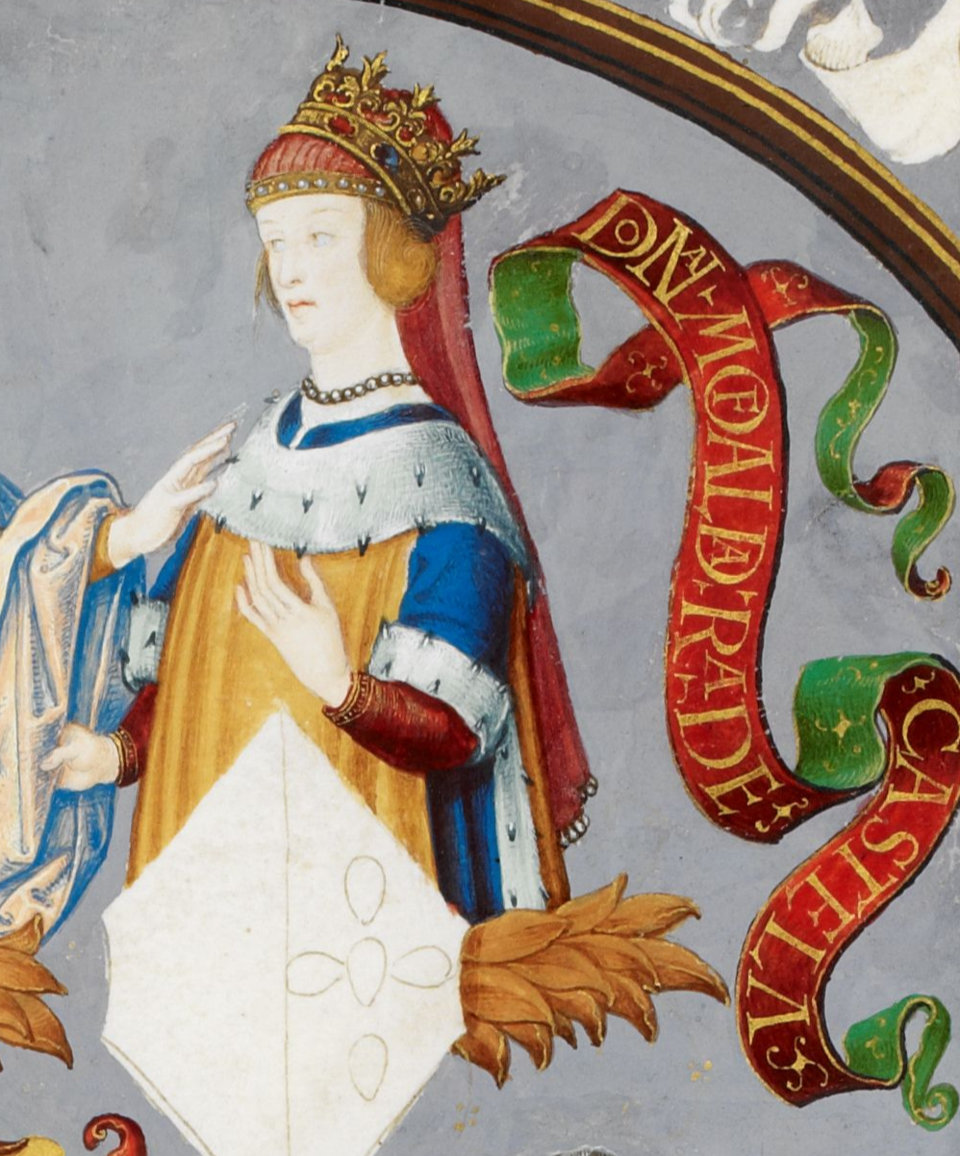
Born around 1195, Infanta Mafalda of Portugal was the daughter of King Sancho I, often called "the Colonizer" for his efforts in populating the newly reconquered lands from the Moors, and Queen Dulce of Aragon. Her early life was steeped in the royal court, a world of political intrigue, dynastic marriages, and the burgeoning Christian kingdoms of the Iberian Peninsula. As a young woman, she was briefly married to King Henry I of Castile, a union tragically cut short by his accidental death in 1217. This early widowhood, while a personal sorrow, also freed her from the burdens of secular rule and allowed her to pursue a deeper spiritual calling. She was known for her piety and generosity even in her youth, often using her royal influence to support the poor and the Church.
Following her return to Portugal, Mafalda, deeply devout, felt an undeniable pull towards a life consecrated to God. Despite her royal lineage and the expectations that came with it, she chose to enter the Cistercian Order, a monastic tradition known for its austerity and commitment to manual labor and contemplative prayer. She became a nun at the Monastery of Arouca, which she generously endowed and helped to reform, transforming it into a vibrant spiritual center. Her time as an abbess was marked by her exemplary leadership, her unwavering faith, and her profound humility. She dedicated herself to prayer, penance, and the spiritual guidance of her sisters, embodying the Cistercian ideals of simplicity and devotion. She was also instrumental in establishing hospitals and supporting charitable works, extending her compassion beyond the monastery walls.
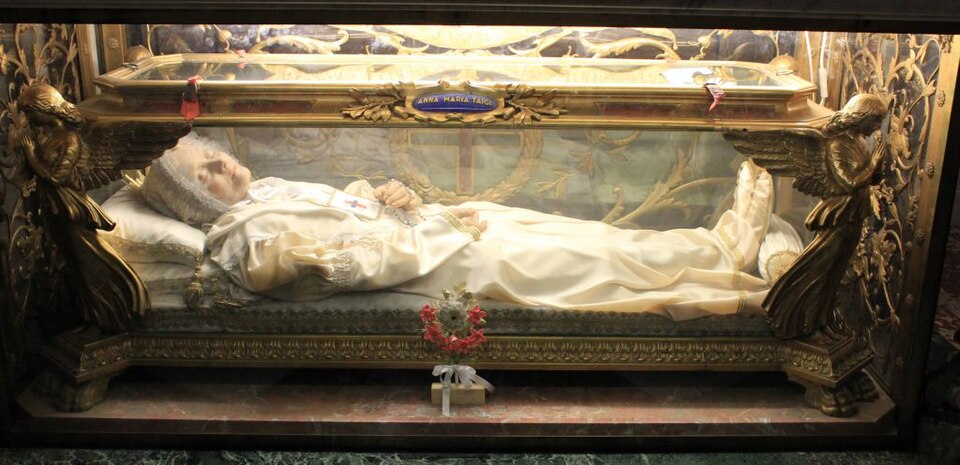
Saint Mafalda passed away in 1257, her life a testament to royal dignity transformed by divine grace. Her death was mourned by many who had witnessed her profound sanctity. Over three centuries later, in 1616, her tomb was opened during a canonical recognition process. To the astonishment of those present, her body was found to be perfectly preserved, her skin supple and her features recognizable, a miraculous sign of God's favor. This incorruption, a phenomenon observed in several saints, was a powerful affirmation of her holy life. Her relics are now enshrined in a silver casket in the Monastery of Arouca, where they continue to be venerated by the faithful.
The incorrupt body of Saint Mafalda remains a profound source of inspiration and a testament to her enduring sanctity. Canonized by Pope Urban VIII in 1793, she is remembered not only as a royal princess but as a humble nun whose life was entirely dedicated to Christ. Pilgrims today can visit the Monastery of Arouca in Portugal, where her incorrupt body is displayed, offering a tangible connection to her holy life and legacy. Her story serves as a powerful reminder that true royalty lies not in earthly crowns, but in a heart surrendered to God, and that even centuries after death, the Lord can preserve His saints as a sign of His eternal glory.
Discovery
The remarkable journey of Infanta Mafalda of Portugal, daughter of King Sancho I and Queen Dulce of Aragon, from royal court to beatification, is intrinsically linked to the extraordinary preservation of her earthly remains. Her incorruptibility was first brought to light during a canonical recognition of her virtues and a subsequent exhumation of her tomb. On May 22, 1617, nearly 360 years after her death in 1257, the tomb of the venerable Infanta, then residing in the Monastery of Arouca, was opened. This event was not a casual undertaking but a formal ecclesiastical process, likely initiated by a growing local devotion and the desire to advance her cause for beatification. Present at this momentous occasion were ecclesiastical authorities, local dignitaries, and members of the monastic community, all bearing witness to a sight that would confirm the burgeoning belief in her sanctity. Upon the removal of the heavy stone slab, instead of the expected skeletal remains, the assembled witnesses beheld the body of Mafalda, lying peacefully within her coffin, remarkably intact. Her flesh, though discolored by centuries, remained supple, and her features, though aged, were still discernible. A profound sense of awe and reverence filled the chamber as the news quickly spread, solidifying her reputation as a holy woman and prompting further investigation into this miraculous preservation.
Following this initial discovery, the body of Saint Mafalda underwent several subsequent examinations and transfers, each reaffirming its incorrupt state. In 1618, just a year after the first exhumation, a more thorough examination was conducted, confirming the initial observations. The body was found to be flexible, and her hair, though thinned, was still present. Notably, a sweet, ethereal fragrance, often associated with incorruptible saints, was reported by those present. This phenomenon, known as the "odor of sanctity," further underscored the miraculous nature of her preservation. In 1793, as the Monastery of Arouca underwent renovations and the need arose for a more secure and fitting resting place, her remains were once again exhumed and carefully transferred. Each time, despite the passage of additional centuries, her body was consistently found to be in an extraordinary state of preservation, defying the natural laws of decomposition. Accounts from these examinations consistently describe her skin as retaining a degree of elasticity, her joints as not being entirely rigid, and the general integrity of her form remaining remarkably intact. These repeated confirmations, documented by ecclesiastical and medical observers, have provided a continuous record of her incorruptibility over centuries.
The preservation journey of Saint Mafalda's body reflects a delicate balance between veneration and scientific understanding, evolving with the times. After the 1617 discovery and subsequent confirmations, her body was initially placed in a more prominent location within the Monastery of Arouca, allowing for greater public veneration. In 1793, following the aforementioned transfer, her remains were enshrined in an ornate silver casket, a testament to her elevated status and the enduring reverence she commanded. This casket, itself a work of art, was designed not only for protection but also for display, often featuring glass panels through which the faithful could behold her incorrupt form. Today, Saint Mafalda's body rests within a glass-sided reliquary, allowing for clear visibility while simultaneously protecting her from environmental degradation and physical contact. This modern display method ensures both accessibility for pilgrims and the long-term preservation of her miraculous remains. The reliquary is carefully maintained in a climate-controlled environment within the Monastery of Arouca, minimizing the effects of humidity and temperature fluctuations that could otherwise compromise her delicate state. This careful stewardship underscores the profound respect and enduring belief in the sanctity of Infanta Mafalda, whose incorrupt body continues to serve as a powerful testament to her holy life.
Beyond the remarkable physical preservation, several extraordinary details have been associated with Saint Mafalda's body throughout the centuries. As mentioned, the consistent report of a sweet, floral fragrance emanating from her remains, the "odor of sanctity," is a recurring theme in the accounts of her exhumations. This phenomenon, distinct from the putrid smell of decay, has been interpreted by the faithful as a divine sign of her holiness. Furthermore, observers have often noted the surprising flexibility of her limbs, even centuries after her death, a characteristic highly unusual for a body that has undergone such a prolonged period of interment. While not exhibiting phenomena such as bleeding or the exuding of oil, which are sometimes reported in other incorruptible saints, the sheer longevity of her preservation in such a remarkably intact state, coupled with the reported sweet fragrance and flexibility, places Saint Mafalda among the most compelling examples of incorruptibility. These details, meticulously recorded over centuries, serve not only as a source of wonder but also as a profound testament to the enduring mystery and spiritual significance of her life and legacy.
Scientific Analysis
The phenomenon of incorruptibility, particularly in the context of religious veneration, presents a fascinating intersection for scientific inquiry. The case of Saint Mafalda of Portugal, whose body is traditionally held to be incorrupt since her death in 1257, offers a compelling example for detailed examination. While comprehensive, publicly accessible scientific reports detailing formal medical or forensic examinations of Saint Mafalda's remains are not readily available in the same manner as modern forensic cases, historical accounts and limited observations provide some insight. Records indicate that her body has been observed on several occasions throughout history, notably during translations or reinterments. For instance, in 1617, during a reinterment at the Monastery of Arouca, contemporary accounts describe the body as being remarkably well-preserved, retaining flexibility and natural color, observations that were documented by ecclesiastical authorities and local chroniclers. These historical observations, while lacking the rigor of modern scientific methodology, consistently report a state of preservation far exceeding typical post-mortem decay. Without specific names of medical professionals or institutional affiliations from these early periods, a precise scientific assessment of these historical observations remains challenging. However, the consistent narrative across centuries regarding her preserved state forms the basis for the traditional claim of incorruptibility.
The scientific mystery surrounding Saint Mafalda's alleged incorruption lies in its defiance of typical decomposition processes. Normal human decomposition involves a cascade of biochemical reactions, primarily driven by autolysis (self-digestion by cellular enzymes) and putrefaction (bacterial action), leading to the breakdown of tissues into simpler organic compounds and gases. This process is significantly influenced by environmental factors such as temperature, humidity, and the presence of oxygen and microorganisms. Mafalda died in 1257, and her burial conditions, typical for the era, would have likely involved interment in a tomb or crypt within a monastery. Such environments, while offering some protection from external elements, are generally not conducive to long-term preservation without specific embalming or preservation treatments. The climate of Arouca, Portugal, characterized by moderate temperatures and varying humidity, would typically accelerate decomposition rather than inhibit it. The absence of historical records detailing any deliberate embalming or preservation techniques applied to her body further deepens the mystery. Had she been embalmed with sophisticated methods, historical records would likely mention such an expensive and specialized procedure. Therefore, the reported state of preservation, particularly the retention of soft tissues and flexibility over centuries, challenges conventional understanding of taphonomy—the study of decomposition and preservation.
Natural explanations for body preservation, such as saponification (the transformation of fatty tissues into a waxy, soap-like substance known as adipocere) or mummification (desiccation of tissues in extremely dry conditions), are often proposed for cases of unusual preservation. Adipocere formation typically occurs in cool, moist, anaerobic environments, leading to a rigid, waxy appearance rather than the flexible, natural color described for Saint Mafalda. Mummification, on the other hand, requires very dry conditions that would rapidly dehydrate tissues, again not aligning with the reported characteristics of her remains. While certain environmental conditions within a sealed tomb could theoretically slow decomposition, achieving the reported degree of preservation without deliberate intervention is highly improbable. Skeptics often attribute such claims to misinterpretations of natural processes, the effects of partial preservation, or even pious exaggeration over time. However, the consistent historical accounts across multiple centuries, describing a remarkable state of preservation that goes beyond mere skeletal remains, continue to pose a challenge to purely naturalistic explanations, especially in the absence of any documented embalming.
From a modern scientific perspective, the case of Saint Mafalda offers a compelling opportunity for interdisciplinary research. While historical accounts provide valuable qualitative data, the application of contemporary forensic and medical techniques could yield definitive answers. Non-invasive methods such as CT scans or MRI could provide detailed internal anatomical information without disturbing the remains, revealing the extent of tissue preservation and any underlying structural anomalies. Carbon dating could precisely determine the age of the remains, confirming their authenticity. Tissue analysis, if permitted, could identify the specific biochemical composition of the preserved tissues, differentiating between natural adipocere formation, mummification, or other unknown preservation mechanisms. Furthermore, microbiological analysis could identify any unique microbial communities that might have played a role in either preservation or degradation. The unanswered questions revolve around the precise nature of the preservation, the specific environmental conditions within her tomb throughout the centuries, and whether any natural or unknown factors contributed to this extraordinary state. Such a study would not only contribute to the scientific understanding of taphonomy but also provide a robust empirical framework for evaluating claims of incorruptibility, bridging historical tradition with modern scientific inquiry.
Spiritual Significance
The phenomenon of incorruption, particularly as exemplified by figures like Saint Mafalda of Portugal, stands as a profound theological testament within the Catholic tradition, offering a tangible glimpse into the eschatological hope of the Church. This miraculous preservation of the human body, defying natural processes of decay, is not merely a biological anomaly but a deeply symbolic affirmation of foundational Catholic doctrines. It powerfully underscores the belief in the body as a sacred vessel, a "temple of the Holy Spirit" (1 Corinthians 6:19), consecrated by baptism and destined for glory. The incorrupt body of Saint Mafalda, therefore, serves as a prefigurement of the resurrection of the body, a visible sign that the material creation, redeemed by Christ, will ultimately participate in eternal life. It speaks to the integrity of the human person, soul and body united, and the ultimate triumph over death. The Church, in recognizing such incorruption, interprets it as a divine seal of sanctity, a sign of God's favor and a confirmation of the saint's heroic virtue, inviting the faithful to contemplate the transformative power of grace and the promise of future glory. This physical preservation bridges the temporal and the eternal, reminding us that our earthly existence, lived in Christ, holds eternal significance.
Saint Mafalda's unique charism and virtues were deeply rooted in a profound commitment to charity and a radical embrace of Christian poverty, particularly after her early widowhood. Having been born into the opulent world of royalty as the daughter of King Sancho I, her subsequent detachment from worldly power and her dedication to the spiritual life represent a powerful conversion of heart. Her specific way of holiness manifested in her tireless efforts to establish and support religious institutions, most notably the Cistercian Monastery of Arouca, where she eventually became a nun. This was not merely an act of patronage but an active participation in the monastic ideal, reflecting a deep desire for contemplative prayer and service. Her generosity was legendary, often directed towards the poor and the marginalized, embodying the Gospel call to care for the least among us. She exemplified heroic obedience to God's will, accepting the vicissitudes of her royal life and later embracing the disciplined life of a religious. Her spiritual legacy is intertwined with the Cistercian tradition, a school of thought emphasizing simplicity, manual labor, and a deep devotion to the Eucharist and the Blessed Mother, all of which Mafalda embraced with unwavering fidelity, transforming her royal status into an instrument of divine love and service.
Devotion to Saint Mafalda has flourished over the centuries, particularly within Portugal, where she is revered as a national saint and a powerful intercessor. Her patronage extends to those seeking solace in widowhood, those discerning a religious vocation, and those dedicated to charitable works. The Monastery of Arouca, her final resting place, became a significant pilgrimage site, drawing countless faithful seeking her intercession. While specific novenas and feast day traditions may vary regionally, the general practice involves prayers for her intercession, particularly on her feast day. Pilgrims today continue to visit her incorrupt body, which is often displayed in a reliquary, offering a profound spiritual experience. The act of beholding her preserved remains is often described as deeply moving, evoking a sense of awe and a tangible connection to the communion of saints. It is a moment of quiet contemplation, where the visible presence of her incorrupt body serves as a powerful reminder of the enduring power of faith and the reality of eternal life, strengthening the pilgrim's own spiritual journey and fostering a renewed commitment to holiness.
Miracles attributed to Saint Mafalda's intercession have been a cornerstone of her veneration, solidifying her reputation as a powerful intercessor with God. While specific documented accounts of healings and conversions may require deeper historical research, the oral traditions and popular piety surrounding her speak of numerous answered prayers and spiritual consolations. The very incorruption of her body is often considered a continuous miracle, a sign of divine favor that has, in itself, been a source of immense spiritual solace for the faithful. Pilgrims visiting her shrine frequently report a profound sense of peace, a renewed faith, and a deeper connection to the divine. The tangible presence of her incorrupt remains serves as a powerful catalyst for prayer, inspiring confidence in her ability to intercede on behalf of those who seek her help. This spiritual consolation extends beyond the physical, often leading to conversions of heart, a strengthening of faith in times of doubt, and a renewed commitment to living a virtuous life, demonstrating the enduring power of saintly intercession to impact lives in manifold ways.
Saint Mafalda's enduring message for contemporary Catholics and seekers resonates deeply in a world often characterized by materialism and secularism. Her life, marked by a radical detachment from worldly power and wealth in favor of spiritual pursuits, offers a powerful counter-narrative to the prevailing cultural emphasis on accumulation and transient pleasures. She challenges modern believers to re-evaluate their priorities, reminding them that true fulfillment lies not in earthly possessions but in a life dedicated to God and service to others. Her incorruption, in an age that often dismisses the supernatural, serves as a tangible bridge between the visible and invisible worlds, a concrete reminder of the spiritual realities that transcend our immediate experience. It invites seekers to ponder the mysteries of faith, the promise of eternal life, and the transformative power of grace. Her example of charity, humility, and unwavering faith provides a timeless model for navigating the complexities of modern life, encouraging a deeper commitment to prayer, compassion, and a courageous pursuit of holiness, demonstrating that a life lived for Christ leaves an indelible mark on both earth and eternity.
AI summary
A plain-language overview generated from this page's source material. Always verify with primary sources.