Biography
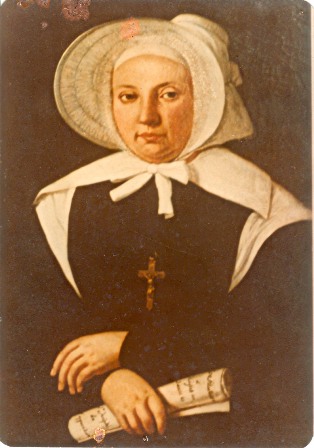
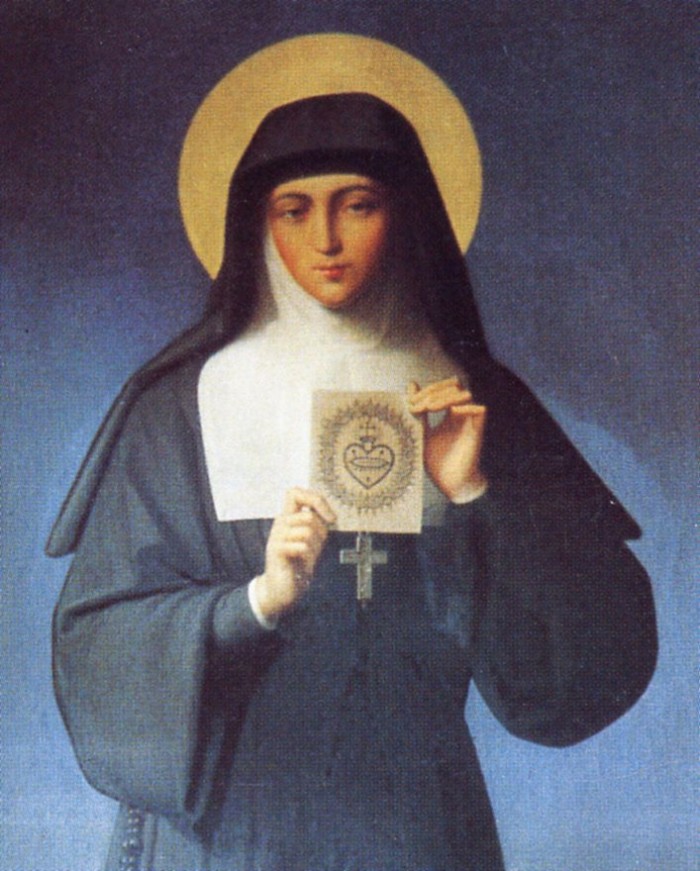
Saint Margaret Mary Alacoque, born Marguerite Alacoque in 1647 in Verosvres, Burgundy, France, was a child of deep piety and suffering. Her early life was marked by illness, beginning at the age of four with a crippling rheumatic fever that confined her to bed for four years and left her with a lifelong limp. This period of physical suffering, coupled with the early death of her father and the subsequent financial hardships and mistreatment by relatives, instilled in her a profound sense of humility and dependence on God. Despite these trials, she developed a fervent devotion to the Blessed Sacrament and a deep interior life, often spending hours in prayer. Her longing for a life consecrated to God led her to overcome family opposition and enter the Order of the Visitation of Holy Mary at Paray-le-Monial in 1671, where she took the name Margaret Mary.
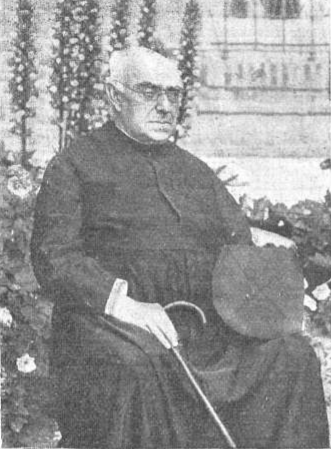
It was within the quiet cloisters of the Visitation convent that Sister Margaret Mary's life took on an extraordinary dimension. Beginning in 1673, she experienced a series of profound visions of Jesus Christ, who revealed to her His Sacred Heart, burning with love for humanity. These revelations, which continued for several years, emphasized the boundless love of God and called for a special devotion to the Sacred Heart, including the practices of First Friday devotions, Holy Hour, and the establishment of a feast day. Initially met with skepticism and even ridicule by some within her community, she found a staunch supporter in her spiritual director, Saint Claude de la Colombière, a Jesuit priest, who recognized the divine origin of her experiences. Through her unwavering obedience and humility, she persevered in spreading the message of the Sacred Heart, enduring much spiritual and physical suffering in the process.
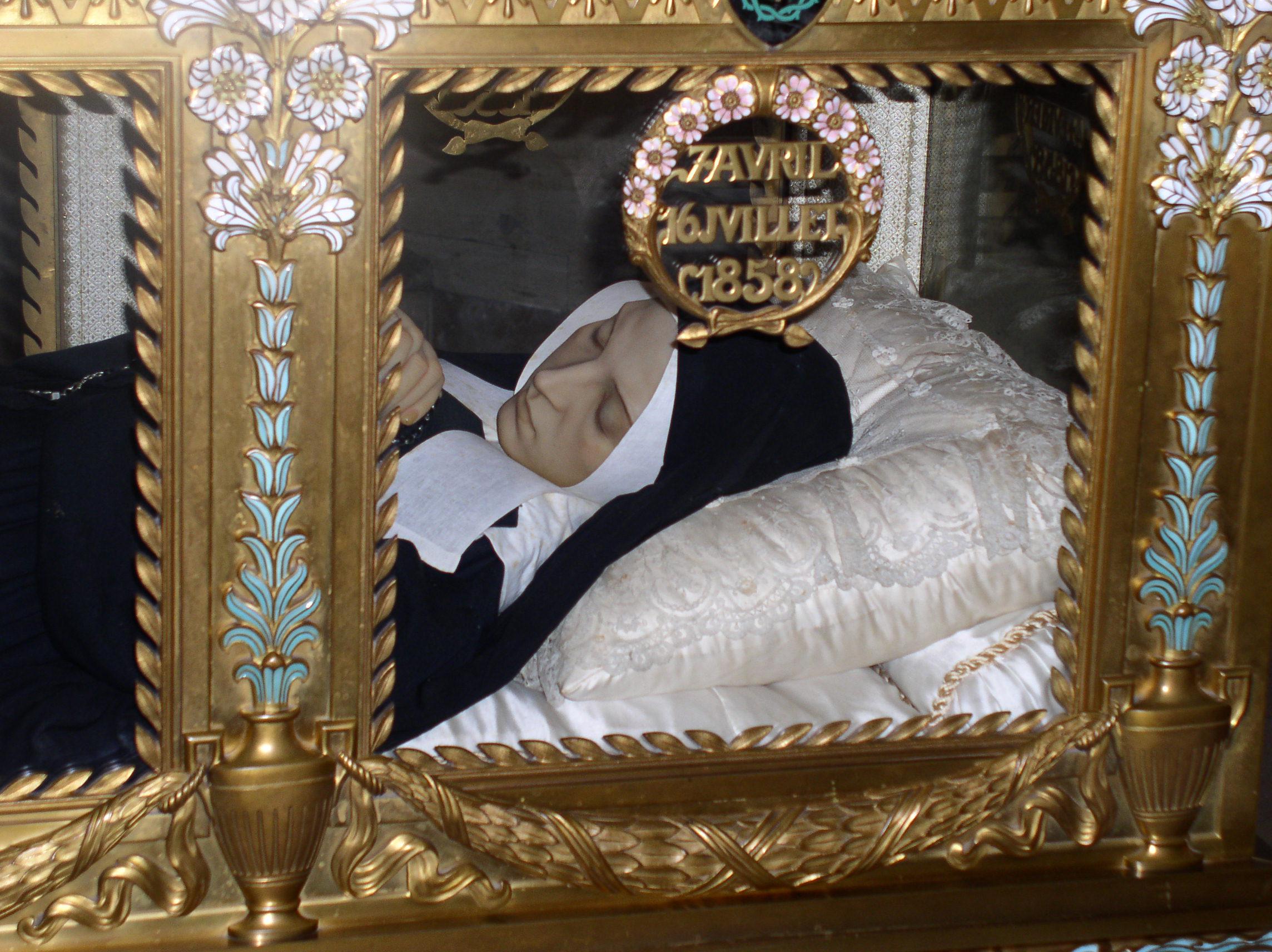
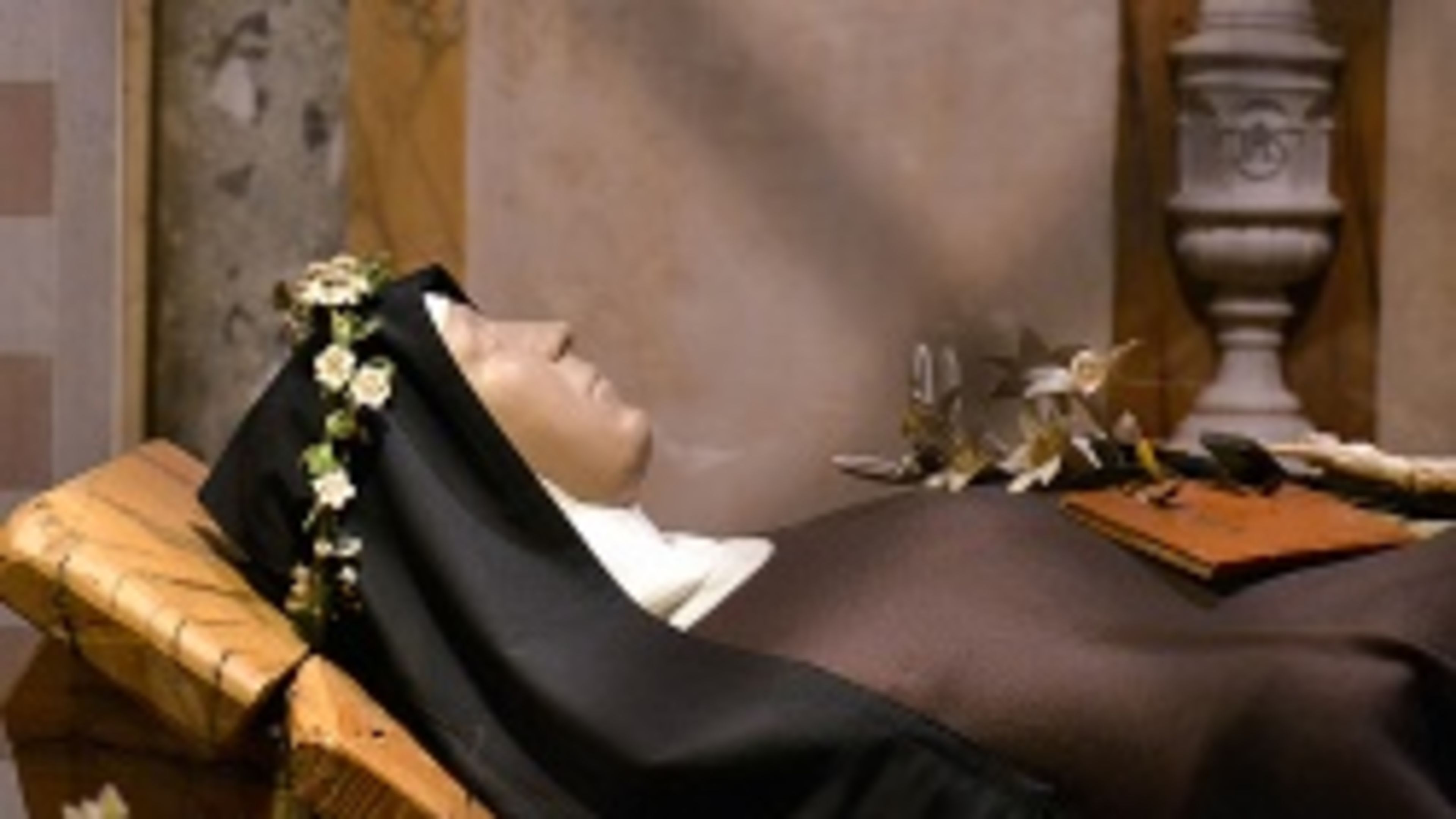
Sister Margaret Mary's earthly life concluded on October 17, 1690, at the age of 43, after a brief illness. Her death was as humble as her life, yet her legacy was destined to shine brightly. When her tomb was opened in 1864, her body was found to be remarkably preserved, exhibiting the phenomenon of incorruption, a testament to her sanctity and a source of wonder for the faithful. Today, her incorrupt body rests in a glass reliquary above the altar in the Chapel of the Apparitions at the Visitation Monastery in Paray-le-Monial, France. The skin of her face and hands has darkened over time, but her form remains intact, a silent witness to the grace of God.
The devotion to the Sacred Heart of Jesus, propagated through Saint Margaret Mary's visions, has become one of the most widespread and cherished devotions in the Catholic Church. She was canonized by Pope Benedict XV in 1920, formally recognizing her heroic virtues and the authenticity of her divine encounters. Pilgrims from around the world continue to flock to Paray-le-Monial, a place now known as the "City of the Sacred Heart," to venerate her relics, pray in the very chapel where she received her visions, and deepen their own devotion to the Sacred Heart of Jesus, drawing inspiration from her life of profound love, suffering, and unwavering faith. Her enduring legacy is a powerful reminder of God's infinite love and His desire for humanity to respond with a love that mirrors His own.
Discovery
The remarkable story of Saint Margaret Mary Alacoque's incorruptibility begins not at her death in 1690, but nearly two centuries later, in the spring of 1864. It was during this period, as the Church prepared for the beatification process of the visionary nun of Paray-le-Monial, that the initial exhumation of her remains was deemed necessary. On July 24, 1864, in the presence of ecclesiastical authorities, medical professionals, and members of the Visitation community, the tomb containing her earthly remains was opened. The atmosphere was undoubtedly charged with anticipation and reverence, as the sisters had long held a deep veneration for their sainted predecessor. When the coffin was opened, a profound silence fell upon those gathered. To their astonishment, the body of Saint Margaret Mary, though interred for 174 years, was found to be remarkably preserved. Her flesh, though somewhat discolored by the passage of time, had not succumbed to the expected processes of decomposition. Her features remained discernible, and a sense of peaceful repose emanated from her form. The immediate reaction was one of awe and profound spiritual affirmation, seen as a divine sign of her sanctity and the veracity of her mystical experiences.
Following this initial discovery, the body underwent further examination and preparation. The first exhumation confirmed the extraordinary state of preservation, leading to a more formal ecclesiastical recognition of her incorruptibility. Over the subsequent decades, as her cause for canonization progressed, additional examinations were conducted to document the body's condition. In 1893, another significant exhumation took place, again confirming the remarkable state of preservation, though some natural changes had occurred, primarily a further darkening of the skin. It was noted that despite the passage of over 200 years, the skeletal structure remained intact, and soft tissues were still present, defying the natural course of decay. These repeated inspections, meticulously documented by Church officials and medical experts, served to strengthen the conviction that a supernatural intervention was at play, distinguishing her case from mere mummification or saponification, which typically result in a much more altered appearance. The consistency of these findings across multiple centuries underscored the miraculous nature of her preservation.
The journey of Saint Margaret Mary's body from its initial resting place to its current venerated display is a testament to the enduring devotion inspired by her life and revelations. After the initial exhumations, her body was carefully prepared for public veneration. It was clothed in the habit of the Visitation Order, symbolic of her lifelong dedication, and placed within a magnificent glass reliquary. This reliquary, designed to allow pilgrims to view her sacred remains, is now housed in the Chapel of the Visitation Monastery in Paray-le-Monial, France, the very place where she experienced her profound visions of the Sacred Heart of Jesus. The body rests in a recumbent position, visible to all who come to pray and seek her intercession. The glass casing protects the body from environmental degradation while allowing for an intimate connection with the saint. This careful preservation and display reflect the Church's reverence for the physical remains of its saints, believing them to be temples of the Holy Spirit and tangible links to the heavenly realm.
While the primary miracle associated with Saint Margaret Mary's incorruptibility is the general preservation of her body, there have been no widespread reports of unusual phenomena such as sweet fragrances, flexibility, or bleeding often attributed to other incorrupt saints. Her case is primarily characterized by the sustained integrity of her physical form against the natural processes of decomposition over an extended period. The remarkable aspect lies in the sheer duration and consistency of this preservation, confirmed through multiple inspections spanning centuries. The absence of extreme decay, particularly in the soft tissues, is the core of her incorruptibility. This enduring state of preservation, without the need for artificial embalming or extraordinary environmental conditions, serves as a powerful testament to her sanctity and continues to inspire countless pilgrims who visit her shrine, drawing them closer to the message of the Sacred Heart that she so faithfully proclaimed.
Scientific Analysis
The phenomenon of purported incorruption, particularly as observed in the remains of Saint Margaret Mary Alacoque, presents a compelling subject for scientific inquiry, bridging historical accounts with contemporary forensic understanding. Formal medical and scientific examinations of her remains have been documented, though details regarding specific dates and the full extent of modern forensic analysis are often limited in publicly available records. Following her death in 1690, her body was interred in the Chapel of the Visitation Monastery in Paray-le-Monial, France. Accounts suggest that her remains were exhumed on multiple occasions, notably in 1864 during the process of her beatification, and again in 1890 for her canonization. During these exhumations, witnesses, including ecclesiastical authorities and medical professionals of the time, reported finding her body remarkably preserved, described as being flexible and possessing a natural color, contrary to the expected state of decomposition after such a prolonged period. While specific names of examining physicians from the 17th or 19th centuries are not consistently recorded with the same rigor as modern forensic reports, the consistent reports of unusual preservation across multiple centuries by various observers underscore the historical perception of her incorruption. It is important to note that these examinations predate modern forensic pathology and imaging techniques, relying primarily on visual inspection and tactile assessment.
The scientific mystery surrounding Saint Margaret Mary Alacoque's preservation lies in its defiance of typical post-mortem decomposition processes. Under normal circumstances, a body interred in a coffin within the earth would undergo a complex series of biological and chemical changes, leading to skeletalization within a few decades, particularly in the absence of deliberate preservation techniques. The environmental factors in a typical burial, including the presence of microorganisms, moisture, and fluctuating temperatures, are conducive to rapid decay. The reported state of preservation, including the retention of soft tissues and a natural appearance, challenges these expectations. There is no historical record or scientific evidence suggesting that any embalming or artificial preservation treatments were applied to her body at the time of her death in 1690. Such practices were either rudimentary or non-existent for common individuals, and certainly not for nuns, during that era. The absence of such interventions makes the reported incorruption particularly intriguing from a scientific perspective, as it eliminates one of the most common explanations for delayed decomposition.
Various natural explanations have been proposed for cases of delayed decomposition, including saponification (adipocere formation) and mummification. Saponification occurs when body fats are hydrolyzed into a waxy, soap-like substance (adipocere) in anaerobic, moist environments, often preventing further decomposition. Mummification, conversely, typically occurs in dry, arid conditions or exceptionally cold environments, where desiccation inhibits microbial activity. While these processes can preserve soft tissues, they usually result in a distinct appearance—adipocere bodies are often rigid and waxy, while mummified remains are shrunken and desiccated. The historical descriptions of Saint Margaret Mary Alacoque's body, emphasizing flexibility and a natural color, do not perfectly align with the typical outcomes of either saponification or mummification. Skeptics often point to the subjective nature of historical observations, the potential for misinterpretation, or the possibility of partial preservation rather than complete incorruption. However, the consistent reports over centuries, and the lack of a clear, universally accepted natural explanation that fully accounts for the described state of preservation, leave a residual scientific mystery.
From a modern scientific perspective, the case of Saint Margaret Mary Alacoque, like other purported cases of incorruption, offers an opportunity for advanced forensic analysis. While historical accounts provide valuable context, contemporary techniques could offer definitive insights. Non-invasive methods such as CT scans or MRI could reveal the internal state of the tissues, bone density, and any structural anomalies without disturbing the remains. Chemical analysis of tissue samples, if permitted, could identify the presence of adipocere, collagen degradation, or other biomolecular markers indicative of specific preservation pathways. Carbon dating could confirm the age of the remains, and DNA analysis could provide insights into health and genetic predispositions, though these are less relevant to the preservation itself. The application of such techniques could differentiate between true biological anomalies and forms of natural preservation that were poorly understood in past centuries. Currently, without such comprehensive modern examinations, the scientific community largely relies on historical descriptions, which, while compelling, lack the empirical rigor of modern forensic science. Therefore, while the phenomenon remains an object of faith for many, it also represents an intriguing, largely unanswered question for scientific inquiry, awaiting the potential application of contemporary investigative tools to fully understand the mechanisms, or lack thereof, behind its enduring preservation.
Spiritual Significance
The phenomenon of incorruption, particularly as exemplified by Saint Margaret Mary Alacoque, stands as a profound theological testament within the Catholic tradition, offering a tangible glimpse into the eschatological hope of the Church. Her preserved remains, resting in the Chapel of the Visitation Monastery in Paray-le-Monial, are not merely a curiosity but a powerful catechesis on the sanctity of the human body, a vessel consecrated by baptism and destined for glory. This miraculous preservation resonates deeply with the Pauline teaching that the body is a temple of the Holy Spirit (1 Corinthians 6:19), suggesting a divine affirmation of a life lived in extraordinary union with God. It foreshadows the doctrine of the resurrection of the body, reminding the faithful that our physical forms, though subject to decay in this earthly life, are ultimately destined for a glorified state in the new heavens and new earth. For Saint Margaret Mary, whose life was marked by profound suffering and spiritual intimacy, her incorruption serves as a visible sign of her participation in the communion of saints, a living bridge between the Church militant and the Church triumphant, inviting believers to contemplate the eternal destiny of those who faithfully serve Christ. The Church interprets such phenomena not as a guarantee of salvation for the individual, but as a divine sign, a grace that points to the transcendent reality of God's power over death and decay, affirming the sanctity of a life dedicated to Christ.
Saint Margaret Mary Alacoque's unique charism was undeniably her profound mystical union with Christ, particularly through the Sacred Heart. This devotion, which she received directly through a series of apparitions, became the defining feature of her spiritual life and her lasting legacy to the Church. Her heroic virtues were manifest in her unwavering humility, despite the immense spiritual graces she received and the skepticism she often faced. Her charity extended not only to her fellow sisters but to all humanity, as she tirelessly promoted the message of God's merciful love. Obedience was a cornerstone of her spirituality, as she submitted her extraordinary experiences to the scrutiny of her superiors and confessors, embodying a profound trust in the Church's discernment. Her mysticism was not an escape from reality but a deeper engagement with it, transforming her suffering into a source of redemptive grace. She lived a life of profound poverty of spirit, detached from worldly comforts and focused solely on her divine Spouse. Her contributions to the spiritual tradition are immense, as she became the primary instrument through which the devotion to the Sacred Heart of Jesus was promulgated, a devotion that emphasizes God's boundless love for humanity and calls for reparation for sin. Her way of holiness was one of radical surrender and fervent love, a testament to the transformative power of divine grace in a human life.
The devotion to Saint Margaret Mary Alacoque and the Sacred Heart of Jesus has blossomed remarkably over the centuries, transcending geographical and cultural boundaries. Her patronage extends to those suffering from heart ailments, those seeking spiritual consolation, and those devoted to the Sacred Heart. Countless prayers, novenas, and devotions have been composed in her honor, particularly those focused on the First Fridays of the month, a practice she herself promoted in response to Christ's request. Her feast day on October 16th is celebrated with particular reverence by communities dedicated to the Sacred Heart. Pilgrims from across the globe journey to Paray-le-Monial, France, to visit her shrine and venerate her incorrupt body, which is displayed for public veneration. The experience of standing before her preserved remains is often described as deeply moving, evoking a sense of awe and profound connection to a saint whose life was entirely dedicated to divine love. For many, it is a moment of intense spiritual encounter, a tangible reminder of the enduring power of faith and the reality of the communion of saints. The very presence of her incorrupt body serves as a focal point for prayer and reflection, drawing the faithful into a deeper appreciation of the mysteries of grace and sanctity.
Miracles attributed to Saint Margaret Mary Alacoque's intercession are numerous and continue to be reported, testifying to her powerful advocacy in heaven. Documented healings, both physical and spiritual, have been attributed to her prayers, often involving those who have sought her intercession for heart conditions or for a deepening of their devotion to the Sacred Heart. Conversions of hardened hearts and profound spiritual transformations are also frequently cited as fruits of her intercession. The incorrupt body itself has been a source of immense spiritual consolation for the faithful, acting as a visible anchor for prayer and a powerful symbol of hope. Many pilgrims report feeling a profound sense of peace, spiritual renewal, or a renewed commitment to their faith after visiting her shrine. The very persistence of her incorruption, defying natural laws, is considered a continuous miracle, a silent yet eloquent testimony to God's power and her sanctity. This tangible sign of divine favor strengthens the faith of believers, reminding them that God continues to work wonders through His saints, offering comfort and encouragement in a world often marked by doubt and despair.
Saint Margaret Mary Alacoque's enduring message holds profound relevance for contemporary Catholics and seekers alike, offering a powerful antidote to the prevailing materialism and secularism of our age. Her life challenges the notion that true fulfillment can be found in worldly possessions or fleeting pleasures, instead pointing to the boundless joy and peace found in a deep, personal relationship with Christ. Her unwavering faith in the face of skepticism and suffering serves as an inspiration for those navigating a world increasingly hostile to religious belief. From her example, modern individuals can learn the transformative power of humility, the strength found in obedience to divine will, and the profound beauty of selfless love. Her devotion to the Sacred Heart offers a spiritual pathway for those longing for a deeper connection with God, emphasizing His infinite mercy and compassion. Her incorruption, a visible anomaly in a world that often dismisses the supernatural, serves as a tangible bridge between the visible and invisible worlds, a silent yet powerful affirmation of the reality of God's presence and the ultimate destiny of humanity. It invites us to look beyond the immediate and temporal, to embrace the eternal truths of faith, and to find hope in the promise of resurrection and everlasting life.
AI summary
A plain-language overview generated from this page's source material. Always verify with primary sources.