Biography
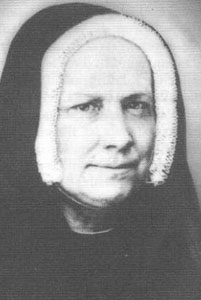
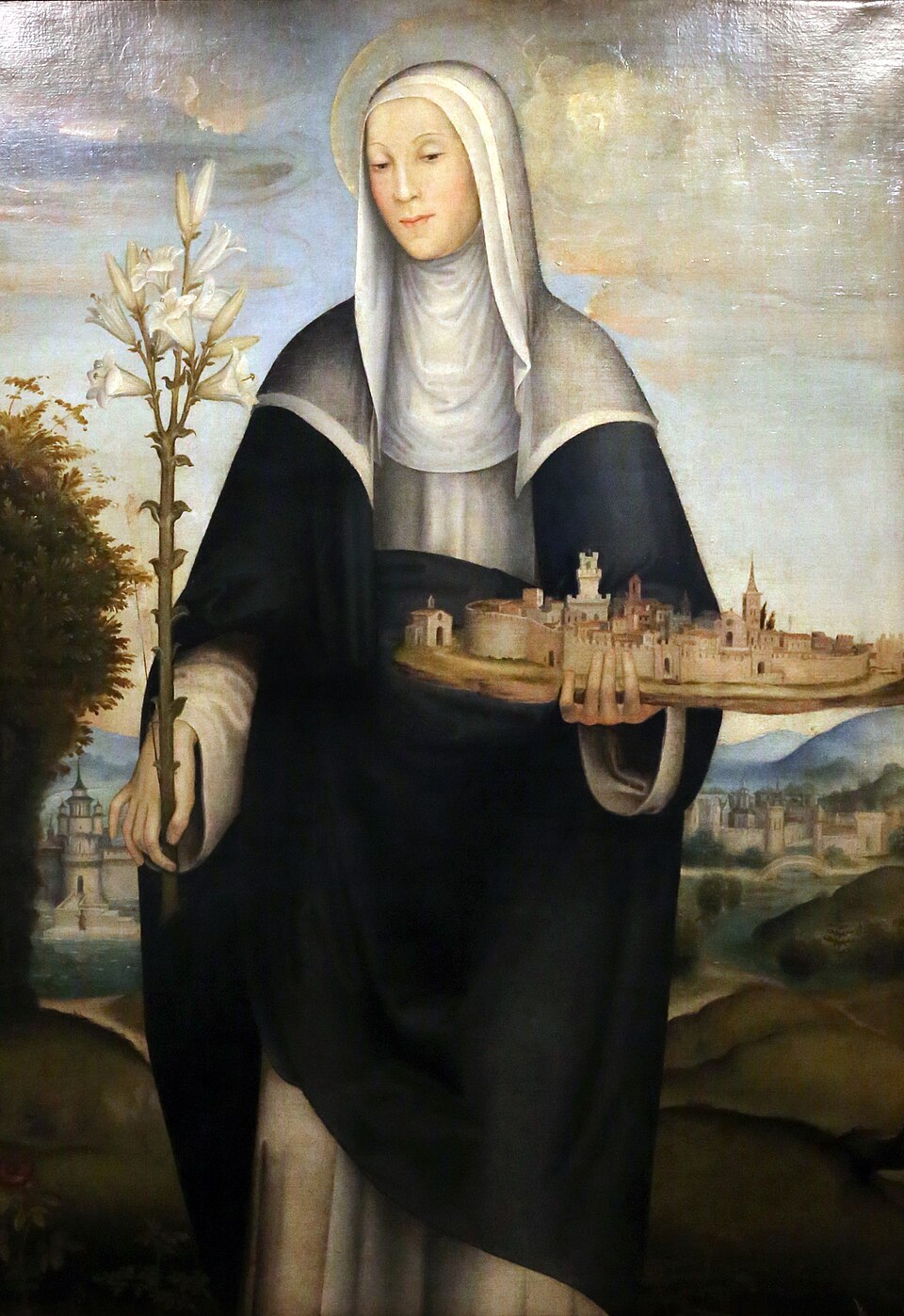
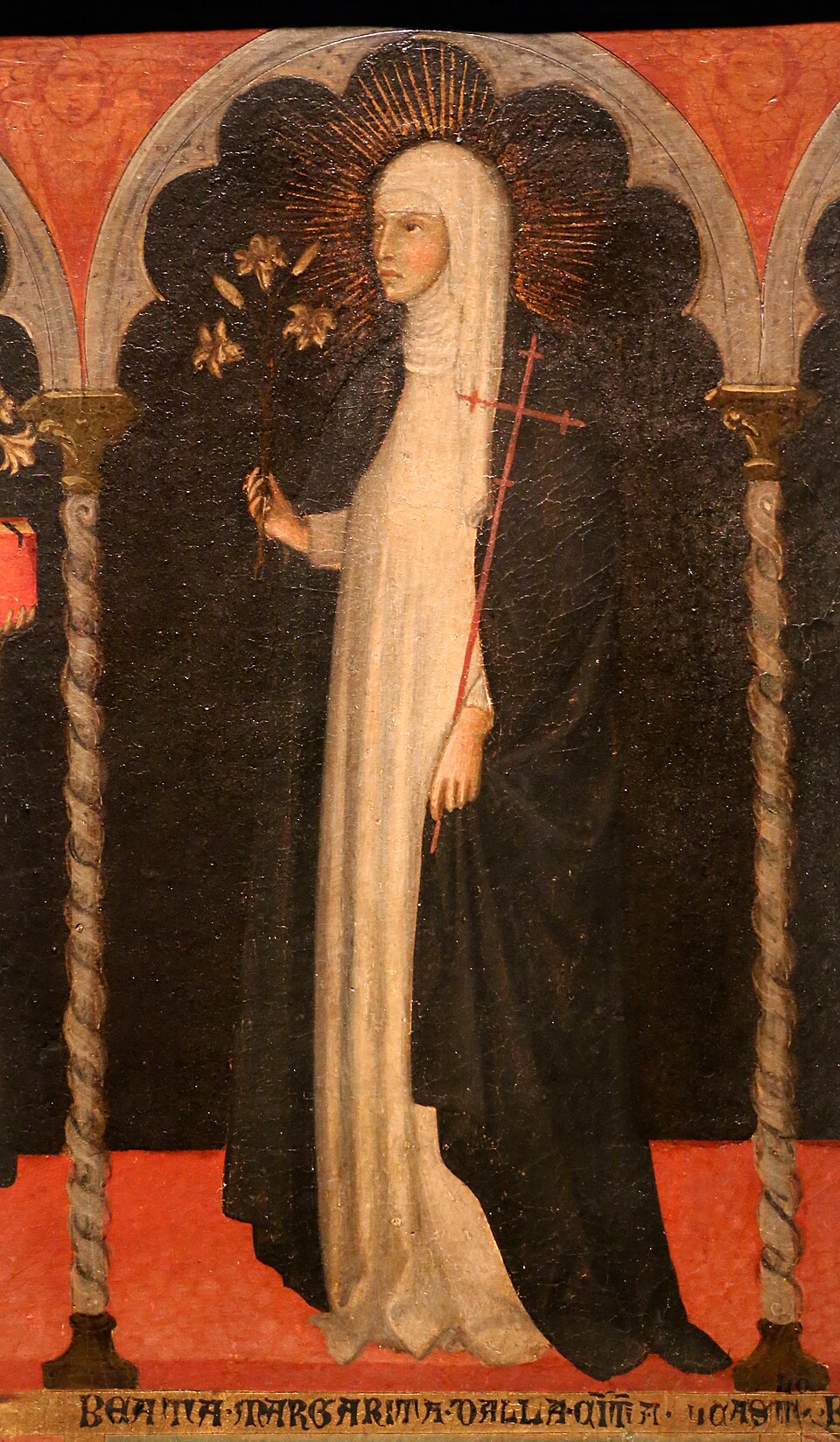
Born in 1287 into the noble family of Parisio and Emilia in Metola, Italy, Margherita was a child marked by profound physical challenges from birth. Blind, severely hunchbacked, and with a pronounced limp, her parents, ashamed of her deformities, kept her hidden away in a small chapel on their estate for the first six years of her life. Her only solace was the daily Mass celebrated by a kind chaplain and the occasional visits from her pious mother. At the age of six, desperate for a cure, her parents took her on a pilgrimage to a shrine in Città di Castello, renowned for its miraculous healings. When their prayers went unanswered, they abandoned her in the foreign city, leaving the blind, crippled child to fend for herself. Yet, even in this profound abandonment, God's providence was at work.
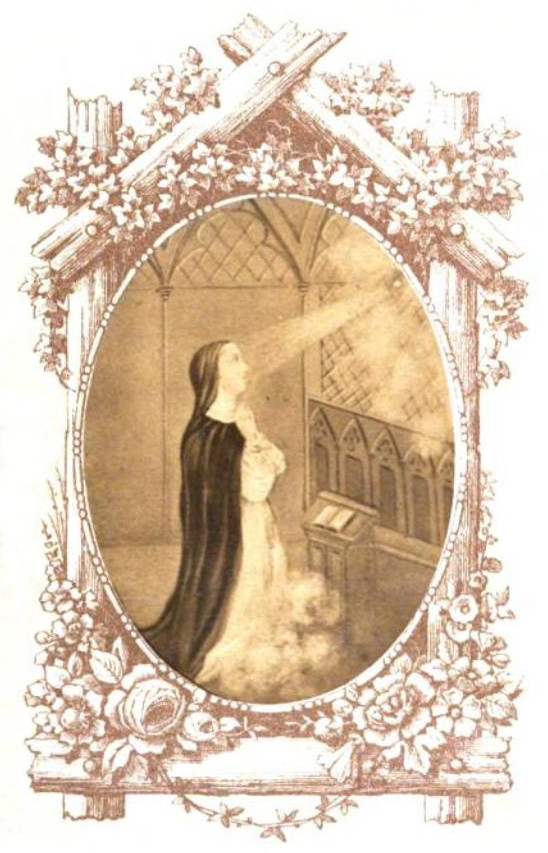
Alone and vulnerable, Margherita was taken in by the kind poor of Città di Castello, who recognized her extraordinary piety and gentle spirit. She found refuge with a community of Dominican nuns, but her physical ailments and the sisters' lack of understanding led to her eventual expulsion. Undeterred, Margherita found a home with a devout couple, Grigia and Venturino, who became her spiritual parents. It was here that she embraced the life of a Dominican tertiary, dedicating herself to prayer, penance, and acts of charity. Despite her disabilities, she became a beacon of hope for the poor and sick, offering spiritual counsel and comfort. She taught the children of the town the truths of the faith, and her profound wisdom and deep spiritual insight drew many to her, recognizing in her a true saint. She was known for her fervent devotion to the Eucharist and the Blessed Mother, and many attributed miracles of healing and conversion to her intercession during her lifetime.
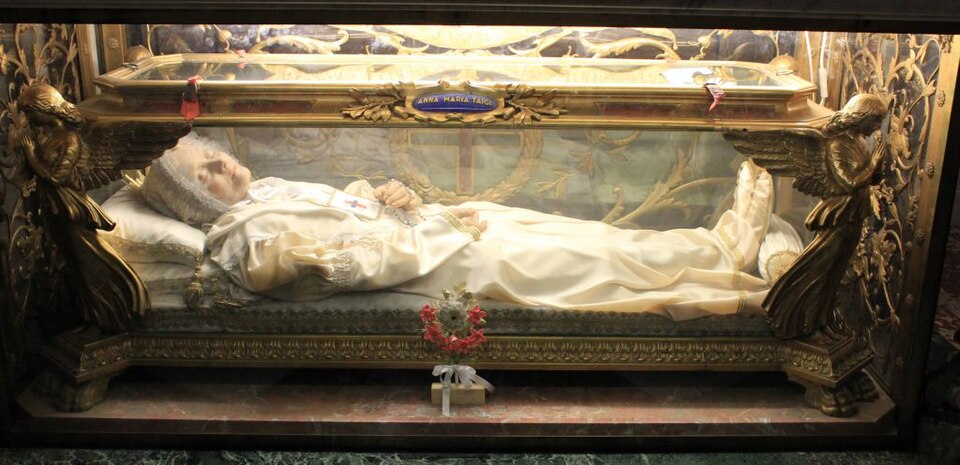
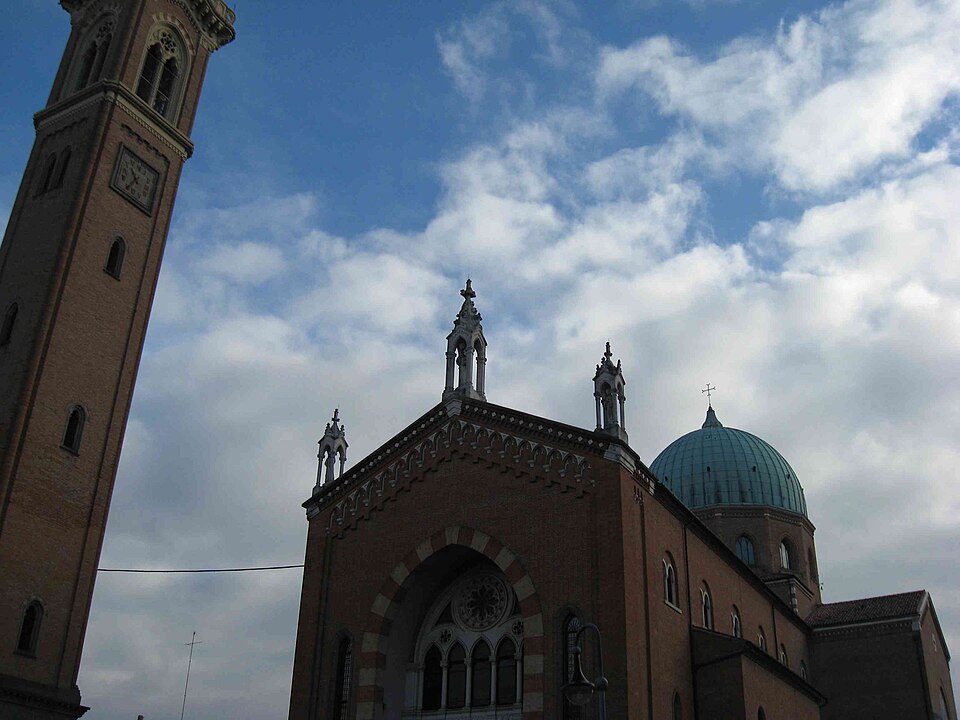
Margherita died peacefully in 1320 at the age of 33, her passing mourned by the entire community of Città di Castello. So profound was the veneration for her that when her body was exhumed in 1558, 238 years after her death, it was found to be perfectly incorrupt. Her skin was supple, her limbs flexible, and even her hair and nails appeared as if she had only recently passed. This miraculous preservation was a powerful testament to her sanctity. Her body, still incorrupt, rests today in the Church of St. Domenico in Città di Castello, enshrined in a glass coffin, allowing pilgrims to venerate her.
Saint Margaret of Castello's legacy is one of profound faith, unwavering hope, and triumphant love in the face of immense suffering and abandonment. Though never formally canonized through the usual process, her cultus was confirmed by Pope Paul V in 1609, and she was beatified in 1678. In 2021, Pope Francis extended her veneration to the universal Church, recognizing her as a saint. Pilgrims from around the world visit her shrine, drawn by her story of resilience and her powerful intercession. She remains a patroness for the disabled, the abandoned, and those who suffer, a radiant example of how God chooses the weak and despised of the world to confound the strong, revealing His glory through humility and unwavering trust.
Discovery
The remarkable story of Margherita of Castello's incorruption begins not at her death in 1320, but centuries later, in the year 1558. It was then that the Dominican community in Città di Castello, preparing to inter the body of a deceased friar, found themselves in need of additional space within their church. The decision was made to exhume the remains of several individuals buried beneath the floor, among them the humble Margherita, whose reputation for sanctity had quietly persisted through the generations. As the earth was carefully removed and her simple wooden coffin brought to light, a gasp rippled through the small gathering of friars and local parishioners. Instead of the skeletal remains one would expect after over two centuries, Margherita's body was found to be astonishingly intact. Her skin, though discolored by the passage of time and the damp earth, still adhered to her bones, and her features, though softened, were recognizable. Her habit, too, was remarkably preserved. The immediate reaction was one of profound awe and reverence, a clear sign to those present that God had chosen to honor this "little blind one" in an extraordinary way. News of the discovery spread quickly through the town, drawing many to witness this miraculous preservation.
Following this initial discovery, the body of Margherita underwent several examinations and transfers, each revealing the persistent nature of her incorruption. In 1677, a more thorough examination was conducted by ecclesiastical authorities, who further attested to the body's remarkable state. Despite the centuries that had passed since her death, her flesh remained pliable to a degree, and her internal organs, though shrunken, were still discernible. This examination confirmed the earlier findings and solidified the belief in her sanctity. Another significant event occurred in 1709, when her body was again exhumed and placed into a more honorable casket, a testament to the growing devotion to her. During these transfers, it was consistently noted that her body, while certainly showing the effects of time and burial, had defied the natural process of decomposition to an extent that could only be described as miraculous. The consistency of these observations over centuries, by different witnesses and under varying conditions, lent significant weight to the claims of her incorruption.
The preservation journey of Saint Margaret of Castello's body reflects the evolving practices of veneration and protection within the Church. After the 1558 discovery, her body was initially placed in a simple, wooden casket within the Church of St. Dominic in Città di Castello. As her veneration grew, and especially after her beatification in 1609, more elaborate measures were taken. In 1709, her remains were transferred to a more ornate, glass-sided casket, allowing the faithful to view her incorrupt body directly. This casket was then enshrined within a dedicated altar in the church, making her accessible for public veneration. Over the centuries, the environment within the church itself has contributed to the body's continued preservation, with a stable temperature and humidity. Today, her body rests within a glass reliquary, clothed in a Dominican habit, allowing pilgrims to gaze upon the physical manifestation of her enduring sanctity. This careful display not only honors her memory but also serves as a constant reminder of the extraordinary grace bestowed upon her.
Beyond the physical preservation, certain remarkable details have been associated with Saint Margaret's incorrupt body. Throughout the centuries, numerous witnesses have reported a distinct, sweet fragrance emanating from her remains, particularly during periods of intense veneration or during transfers. This phenomenon, often described as the "odor of sanctity," is a recurring theme in accounts of incorrupt saints and is seen as a supernatural sign. While the body itself does not exude oils or blood, its unusual resistance to decay, despite being buried in damp earth for over two centuries, is itself a profound miracle. The fact that her skin and some internal organs remained intact, defying the natural laws of decomposition, underscores the extraordinary nature of her incorruption. These details, coupled with the consistent observations of her preserved state over hundreds of years, contribute to the profound spiritual impact her incorrupt body has had, and continues to have, on the faithful who journey to Città di Castello to seek her intercession.
Scientific Analysis
The phenomenon of apparent incorruption, particularly in figures such as Saint Margaret of Castello, presents a compelling subject for scientific inquiry, bridging historical observation with modern forensic understanding. While formal, comprehensive medical and scientific examinations on Saint Margaret's remains have not been extensively documented in contemporary peer-reviewed scientific literature, historical accounts and ecclesiastical records offer insights into observations made over centuries. The most significant examination occurred in 1978, prior to her beatification, when her body was exhumed and studied. This examination was primarily overseen by ecclesiastical authorities with the assistance of medical professionals, though specific names of forensic pathologists or detailed institutional affiliations beyond general medical practitioners are not widely publicized in scientific journals. Reports from this period describe the body as remarkably well-preserved, retaining significant soft tissue integrity, including skin, muscle, and internal organs, despite the passage of over 650 years since her death in 1320. These observations noted a pliable quality to the skin and a general absence of the putrefactive changes typically associated with post-mortem decomposition. The examination also aimed to confirm her identity and assess any signs of embalming or artificial preservation, with findings generally indicating a lack of overt chemical treatments.
The scientific mystery surrounding Saint Margaret's incorruption lies in its defiance of typical decomposition processes. Normal human decomposition, driven by autolysis and microbial activity, typically results in the disintegration of soft tissues within months to a few years, depending on environmental factors. The body of Saint Margaret of Castello, interred in 1320, should have undergone complete skeletalization long ago. Her resting place in the Church of St. Dominic in Città di Castello, Italy, while potentially offering some environmental stability, is not described as having exceptionally dry, cold, or anaerobic conditions that would naturally halt decay on such a prolonged timescale. Standard burial conditions in a church crypt, while often drier than direct soil burial, still typically allow for significant decomposition. The absence of clear evidence of embalming or other sophisticated preservation techniques, especially given the historical period, further deepens the scientific enigma. Medieval embalming practices, though existing, were often rudimentary and not typically effective for centuries-long preservation of soft tissues. The reported state of preservation, therefore, challenges conventional forensic understanding of taphonomy – the study of decomposition and fossilization.
Various natural explanations for body preservation, such as saponification (adipocere formation) or natural mummification, have been proposed for other cases of apparent incorruption. Adipocere, a waxy substance formed from body fats in moist, anaerobic environments, can preserve body contours but typically results in a distinct, soap-like consistency and color, and does not retain the pliable soft tissue described for Saint Margaret. Natural mummification, occurring in extremely dry or cold conditions, desiccates tissues, leading to a leathery, shrunken appearance, which also does not align with the reported observations of Saint Margaret's remains. Skeptics often point to these natural processes, or to the possibility of undocumented historical embalming, as explanations. However, in cases like Saint Margaret's, where the reported state of preservation does not neatly fit these known taphonomic pathways, and where the environment was not overtly conducive to such extreme natural preservation, these explanations fall short. The persistent soft tissue integrity over centuries, without clear environmental or artificial intervention, remains a significant challenge to purely naturalistic explanations.
From a modern scientific perspective, the case of Saint Margaret of Castello, alongside other reported cases of incorruption, highlights the limitations of current taphonomic models and underscores the need for rigorous, multidisciplinary investigation. While historical observations provide a foundation, the application of modern forensic techniques could offer unprecedented insights. Non-invasive methods like CT scans and MRI could reveal internal organ preservation and structural integrity without disturbing the remains. Carbon dating could precisely confirm the age of the tissues, while advanced tissue analysis, including histology, proteomics, and DNA analysis, could identify the specific cellular and molecular mechanisms of preservation, if any, and rule out or confirm the presence of natural or artificial preservatives. Such studies, conducted with appropriate ethical and religious sensitivities, could potentially uncover novel biochemical pathways of tissue stabilization or identify previously unknown environmental factors that contribute to such extraordinary preservation. The questions that remain unanswered are profound: what specific molecular changes prevented putrefaction? Were there unique microbial interactions? Or do these cases represent extremely rare, yet naturally occurring, combinations of factors that defy easy categorization within current scientific understanding? The scientific community, while maintaining its empirical framework, acknowledges that such phenomena warrant continued, rigorous investigation.
Spiritual Significance
The phenomenon of incorruption, as exemplified by Saint Margaret of Castello, holds profound theological significance within the Catholic tradition, serving as a tangible testament to the sanctity of the human body and the promise of future resurrection. The Church teaches that the body, created in God's image and redeemed by Christ, is a temple of the Holy Spirit, as articulated in 1 Corinthians 6:19. When a saint's body remains miraculously preserved from natural decay, it is interpreted not as an embalming process, but as a divine affirmation of this truth, a sign that the individual's life was so profoundly united with God that even their mortal remains bear witness to His glory. For Saint Margaret, whose life was marked by physical suffering and abandonment, her incorruption underscores the dignity of every human person, regardless of physical appearance or societal standing. It is a powerful reminder that God sees beyond the outward form, valuing the purity of heart and the depth of faith. This extraordinary preservation also points directly to the doctrine of the resurrection of the body, offering a foretaste of the glorified bodies promised to the faithful at the end of time, a visible link between our earthly pilgrimage and our eternal destiny within the communion of saints.
Saint Margaret's unique charism was her unwavering faith and profound interior joy amidst unimaginable physical deformities and social rejection. Born blind, severely hunchbacked, and lame, she was abandoned by her parents, yet she never succumbed to bitterness or despair. Her heroic virtues included an extraordinary humility, accepting her lot with grace and never seeking worldly recognition. Her charity extended to all, especially the poor and sick, whom she served with a compassionate heart despite her own limitations. She embraced a life of poverty, relying entirely on divine providence, and her obedience to God's will was absolute. Margaret's spirituality was deeply mystical, finding solace and profound connection with God in prayer and contemplation. She became a Third Order Dominican, aligning herself with the charism of preaching and service, even though her physical condition prevented her from active ministry in the conventional sense. Her life was a silent sermon, a testament to the power of inner beauty and spiritual fortitude, demonstrating that true holiness transcends all physical barriers and societal judgments, radiating from a soul deeply immersed in God's love.
Devotion to Saint Margaret of Castello has flourished over the centuries, drawing countless pilgrims to her shrine in the Church of St. Dominic in Città di Castello, Italy. Her patronage is sought by those suffering from physical disabilities, the abandoned, and those facing societal rejection, offering them a powerful intercessor and a beacon of hope. Pilgrims today approach her incorrupt body with reverence and awe, often kneeling in prayer, touching her glass-encased remains, and leaving petitions. The experience of visiting her shrine is one of profound spiritual encounter, where the visible presence of her preserved body bridges the gap between the earthly and the heavenly. Her feast day, celebrated on April 13th, is marked by special Masses and devotions, and novenas dedicated to her intercession are widely practiced. The enduring nature of her physical presence serves as a constant reminder of her sanctity and her continued intercessory power, fostering a deep sense of connection between the faithful on earth and the saints in heaven, reinforcing the vibrant reality of the communion of saints.
Miracles attributed to Saint Margaret's intercession are numerous and well-documented, spanning centuries. These include countless healings of physical ailments, particularly those related to blindness, deformities, and chronic illnesses, mirroring her own life's struggles. Beyond physical cures, her intercession has been credited with profound spiritual conversions, bringing individuals back to faith and offering solace to the despairing. The incorrupt body itself has been a source of immense spiritual consolation for the faithful, serving as a tangible sign of God's favor and the enduring power of holiness. Many pilgrims report a deep sense of peace and renewed hope upon encountering her preserved remains, feeling the presence of God and the intercession of His saint. These miracles, both physical and spiritual, reinforce the belief that the saints, though in heaven, remain actively engaged in the lives of those on earth, continuing their work of charity and intercession through the grace of God.
Saint Margaret's enduring message for contemporary Catholics and seekers is one of radical acceptance, unwavering faith, and the profound dignity of every human life. In a world often obsessed with physical perfection and material wealth, her life challenges modern materialism and secularism by demonstrating that true worth lies not in outward appearance or worldly possessions, but in the purity of heart and a deep relationship with God. She teaches us that suffering, when united with Christ, can be a path to profound sanctity and that even in abandonment, divine providence is at work. Her example inspires individuals to embrace their unique challenges with grace, to find joy in adversity, and to serve others with unconditional love. Her incorruption serves as a powerful, tangible bridge between the visible and invisible worlds, a constant reminder that life extends beyond our earthly existence and that the saints are not distant figures of the past, but living intercessors who continue to guide and inspire us on our journey towards God.
AI summary
A plain-language overview generated from this page's source material. Always verify with primary sources.