Biography
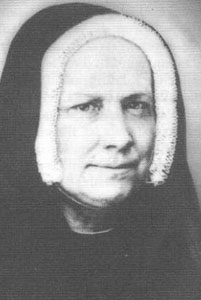
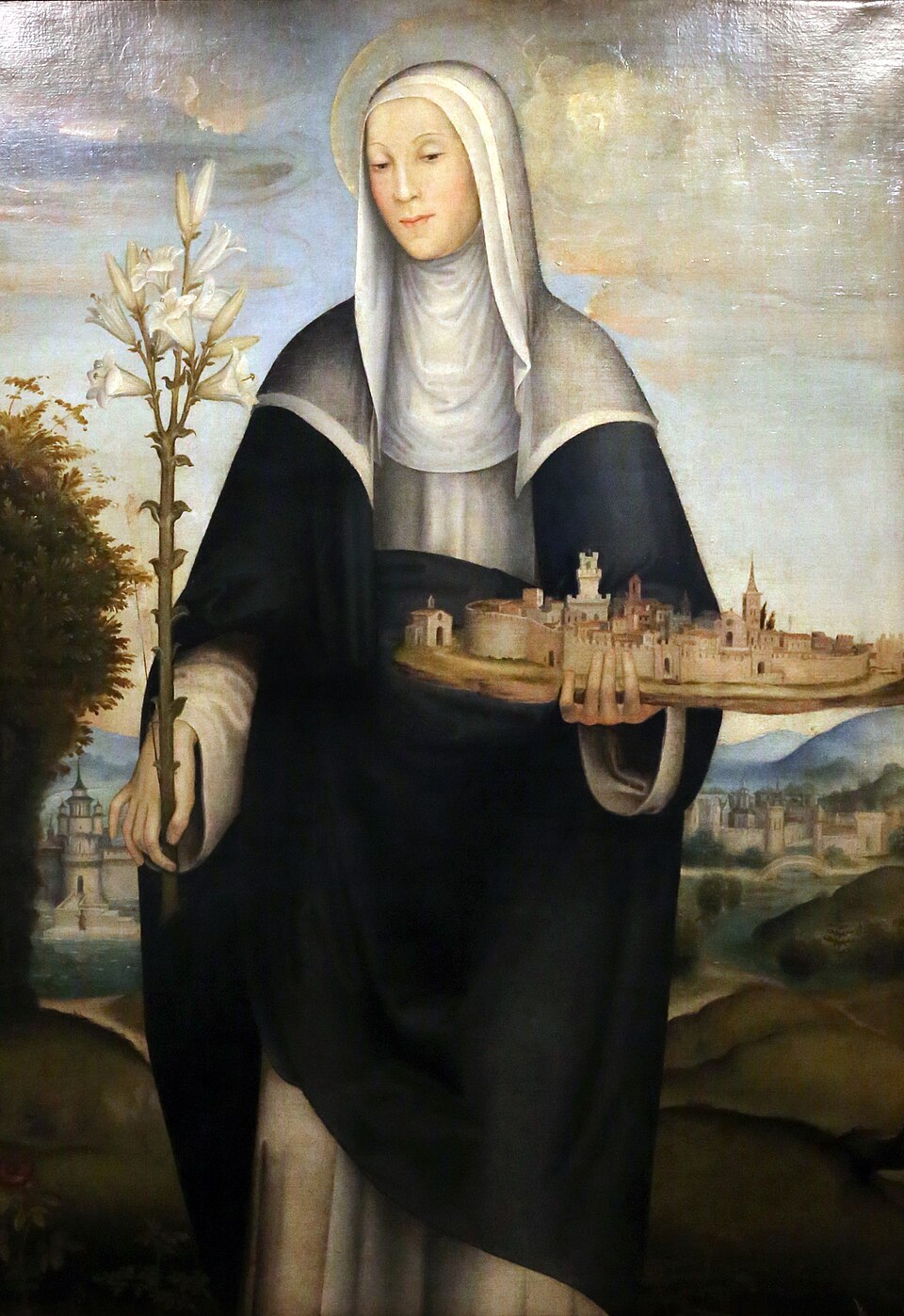
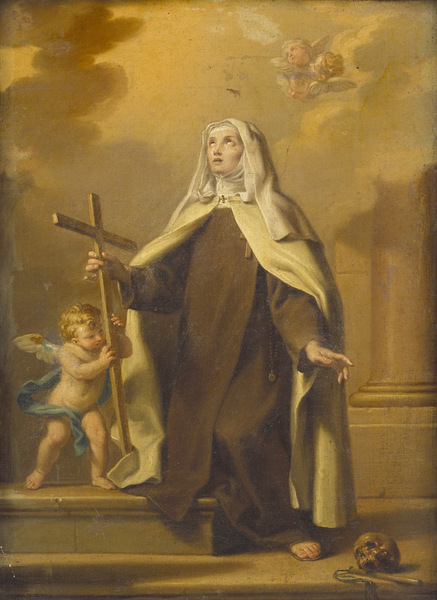
Saint Margaret of Cortona, often hailed as "The Magdalene of the Franciscans," was born in 1247 into a humble farming family in Laviano, Tuscany. Her early life was marked by the loss of her mother when Margaret was but seven years old, a void that her stepmother could not fill, leading to a strained and unhappy childhood. At the tender age of seventeen, Margaret fled her home with a young nobleman from Montepulciano, embarking on a nine-year period as his mistress. During this time, she bore him a son and lived a life of luxury and worldly pleasure, yet beneath the surface, a spiritual disquiet stirred within her. This tumultuous chapter of her life came to an abrupt and horrifying end when her lover failed to return home one day. Margaret, guided by his faithful dog, discovered his brutally murdered body, a sight that shattered her worldly illusions and ignited a profound and immediate conversion of heart.
Overwhelmed by remorse and a fervent desire for penance, Margaret returned to her father's house, seeking forgiveness and a path to redemption. Though initially rejected, she soon found solace and spiritual direction from the Franciscan friars in Cortona. Embracing a life of radical poverty and austere penance, she became a Franciscan Tertiary, dedicating herself wholeheartedly to prayer, fasting, and works of charity. Margaret established a hospital for the sick and poor, personally tending to their needs with boundless compassion, and founded a community of Tertiary sisters known as the "Poverelle" (Little Poor Ones), who continued her mission of service. Her deep spiritual experiences included profound mystical visions and intense struggles with demonic temptations, which she overcame through unwavering faith and persistent prayer.
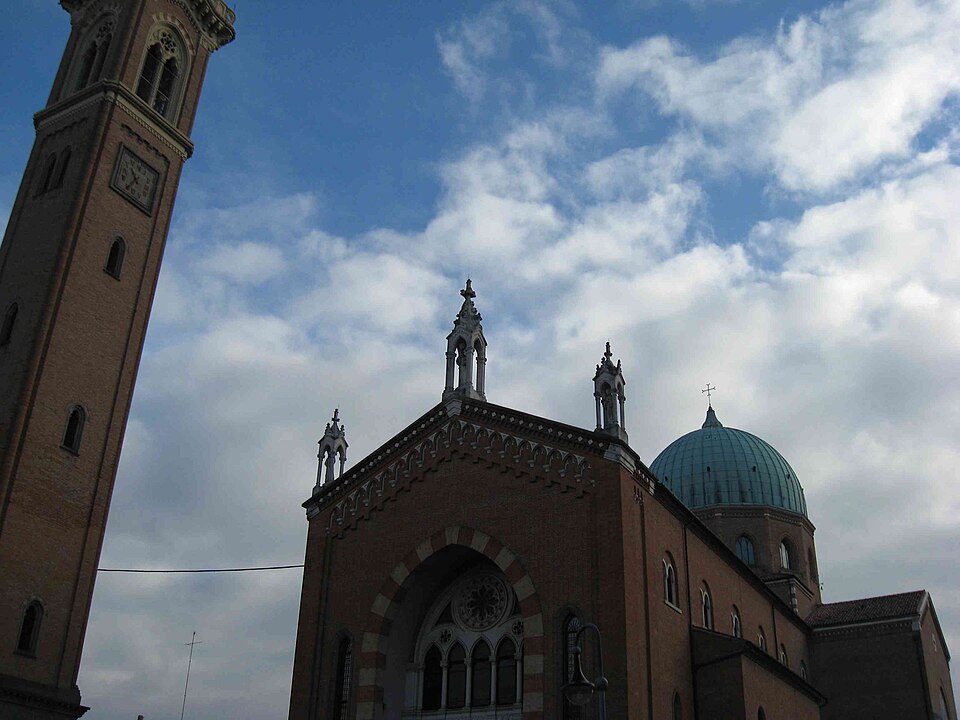
Margaret's earthly journey concluded in 1297, and her death was followed by an extraordinary testament to her sanctity. Her body was discovered to be incorrupt, a state of preservation that has defied the natural processes of decay for over seven centuries. Though her skin has darkened over time, a natural phenomenon observed in many incorruptible saints, her form remains remarkably intact, without any artificial embalming or preservation. Today, pilgrims can venerate her sacred relics enshrined within the Basilica of Santa Margherita in Cortona, where her body is displayed for public veneration. Scientific examinations throughout the centuries have consistently affirmed the miraculous nature of her preservation, further solidifying her status as a beacon of God's grace.
Canonized in 1728 by Pope Benedict XIII, Saint Margaret of Cortona stands as a powerful and enduring symbol of God's boundless mercy and the transformative power of repentance. Her life story, from a life of sin to one of profound sanctity, offers hope and inspiration to countless souls seeking conversion and forgiveness. Her incorrupt body serves as a tangible reminder of the eternal life promised to those who turn to Christ, and her unwavering devotion to the poor and suffering continues to inspire acts of charity and compassion throughout the Church. Pilgrims who visit Cortona today are not only drawn to the beauty of the Tuscan landscape but also to the spiritual solace found in the presence of this remarkable saint, whose legacy echoes the timeless message of redemption and divine love.
Discovery
The remarkable preservation of the earthly remains of Saint Margaret of Cortona, often reverently called "The Magdalene of the Franciscans," stands as a profound testament to the mysteries of divine grace. Her death occurred on February 22, 1297, and she was laid to rest in the Church of San Basilio in Cortona. However, it was not until 1300, a mere three years after her passing, that the extraordinary state of her body was first revealed. The Franciscans, who had been instrumental in her spiritual transformation, decided to move her remains to a more prominent location within their church, a decision that would unveil a miracle. Upon opening her tomb, those present were met with an astonishing sight: Margaret's body, despite the passage of time and the natural processes of decomposition, was found to be entirely incorrupt. Her flesh, though perhaps slightly discolored, remained supple, and her features were recognizable, bearing none of the typical signs of decay. This discovery immediately ignited a fervor among the local populace and the religious community, who recognized it as a clear sign of her sanctity. The immediate reaction was one of awe and reverence, solidifying the burgeoning devotion to the woman who had transformed from a penitent sinner to a beacon of holiness.
Following this initial discovery, the body of Saint Margaret underwent several subsequent examinations and transfers, each revealing its continued incorruptibility, albeit with some changes over the centuries. In 1300, after its initial exhumation, the body was moved to the Church of San Basilio, where it was placed in a more accessible location for veneration. As her cult grew, particularly after her beatification in 1516, there was a desire to house her remains in a more fitting and prominent shrine. Thus, in 1538, her body was transferred to the newly constructed Basilica of Santa Margherita, which was built atop the ruins of the old Church of San Basilio. During these transfers, careful inspections were conducted, consistently confirming the incorrupt state of her remains. While the initial reports spoke of a remarkably fresh appearance, over the centuries, the skin of Saint Margaret’s body has naturally darkened, a common phenomenon observed in many incorruptibles where the body is exposed to air and light. However, the integrity of her form, the preservation of her internal organs, and the absence of skeletal decomposition have remained constant, defying the natural course of decay for over seven hundred years. These repeated examinations, often witnessed by ecclesiastical authorities and medical professionals, have only served to deepen the conviction of her miraculous preservation.
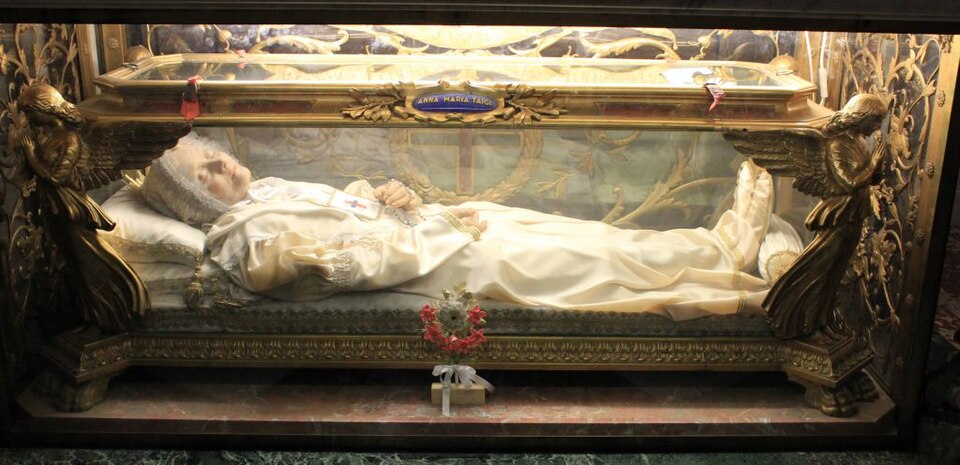
The journey of Saint Margaret's body from a humble tomb to its current place of veneration is a testament to the enduring faith of the Catholic Church in the phenomenon of incorruption. Today, her preserved remains are housed in a magnificent glass reliquary, allowing pilgrims and visitors to gaze upon her form. This reliquary is prominently displayed within the Basilica of Santa Margherita in Cortona, a sacred space dedicated to her memory. The body lies in a recumbent position, clothed in the habit of the Third Order of Saint Francis, which she embraced during her penitential life. While no specific embalming techniques were applied, the natural conditions within the tomb, combined with what is believed to be divine intervention, contributed to her preservation. The glass casket, while protecting the body from environmental degradation and dust, also allows for its continuous veneration, a practice that has continued uninterrupted for centuries. The darkened hue of her skin, a natural consequence of time and exposure, does not detract from the profound sense of awe experienced by those who witness this enduring miracle.
Among the remarkable details associated with the incorrupt body of Saint Margaret of Cortona, one of the most frequently cited, particularly in earlier accounts, was the reported flexibility of her limbs even centuries after her death. Though this phenomenon, like the sweet fragrance often attributed to other incorruptibles, is more difficult to verify through modern scientific methods, it speaks to the profound impact her preservation had on the early faithful. While there are no widely documented accounts of bleeding or oil exuding from her body, the consistent reports of her body remaining intact despite various exhumations and transfers, often under less than ideal conditions, underscore the extraordinary nature of her incorruption. The resistance to decay, particularly in the absence of deliberate embalming and for such an extended period, remains the primary and most compelling phenomenon associated with her remains. This enduring physical integrity, even with the natural darkening of her skin over time, continues to draw countless pilgrims to Cortona, offering a tangible connection to a life lived in profound devotion and penitence, and a visible sign of heavenly favor.
Preservation
Body displayed in a glass reliquary in the Basilica of Santa Margherita, Cortona.
Scientific Analysis
The phenomenon of apparent incorruption, exemplified by figures such as Saint Margaret of Cortona, presents a compelling intersection for scientific inquiry and traditional belief. In the case of Saint Margaret, her remains, interred in the Basilica of Santa Margherita in Cortona, Italy, have been subject to various examinations over centuries, though detailed, modern forensic analyses are less publicly documented than historical accounts. Early observations, often conducted by ecclesiastical authorities or physicians in their employ, noted the body's remarkable preservation. While specific names and institutional affiliations for comprehensive, modern medical examinations are not readily available in public records to the same extent as some other incorrupt saints, historical accounts consistently describe the body as retaining its form and flexibility long after death, without evidence of deliberate embalming. These historical observations, while lacking the rigor of contemporary forensic science, consistently report a state of preservation that defied the expected course of natural decomposition. The darkening of the skin, a common feature in many alleged incorrupt bodies, is frequently noted in descriptions of Saint Margaret's remains.
The scientific enigma surrounding cases like Saint Margaret of Cortona lies in the defiance of typical post-mortem decomposition processes. Under normal circumstances, following death, the body undergoes a series of predictable changes driven by autolysis (self-digestion by cellular enzymes) and putrefaction (bacterial activity). Environmental factors such as temperature, humidity, and the presence of oxygen significantly accelerate or retard these processes. Saint Margaret died in 1297 and was interred in a tomb, presumably within the basilica, which would expose the body to ambient conditions. Without active preservation techniques, a body interred for centuries would typically reduce to skeletal remains. The reported retention of soft tissues, even in a darkened and desiccated state, challenges the expected trajectory of decay. The absence of artificial embalming, as consistently reported, further deepens the scientific mystery. The specific microclimates within tombs can sometimes contribute to preservation, but usually in ways that lead to mummification (desiccation) or adipocere formation, not necessarily the retention of lifelike form often attributed to incorrupt bodies.
Various natural explanations have been proposed for instances of apparent incorruption, including saponification (adipocere formation) and natural mummification. Adipocere, or grave wax, forms when fatty tissues convert into a waxy, soap-like substance in cool, moist, anaerobic environments. This can preserve body contours but typically results in a distinct, waxy texture and appearance, often described as having a rancid odor. Natural mummification occurs in extremely dry or cold conditions, where rapid dehydration prevents bacterial decomposition. While these processes can explain some forms of preservation, they often fall short in fully accounting for the reported characteristics of incorrupt bodies, particularly the retention of a supple or flexible quality sometimes attributed to them, or the preservation of internal organs in a non-mummified state. Skeptics often point to these natural processes as the underlying mechanisms, suggesting that historical accounts may be exaggerated or that subtle environmental factors created conditions conducive to atypical preservation. However, the consistent reporting of preservation across diverse burial environments and the lack of clear evidence for these natural processes in all cases leave a substantial gap in purely naturalistic explanations for some of the more extraordinary claims.
From a modern scientific perspective, the study of incorruption offers a unique opportunity to understand the limits and variations of human decomposition. While historical accounts provide a foundation, contemporary forensic techniques could offer invaluable insights. Non-invasive methods like CT scans or MRI could provide detailed internal imaging without disturbing the remains, revealing the state of internal organs and tissues. Microscopic tissue analysis could identify the presence of adipocere, mummification, or other preservation mechanisms at a cellular level. Carbon dating could precisely determine the age of the tissues, confirming the historical timeline. Analysis of burial garments and tomb environments could shed light on microclimatic conditions. Such detailed scientific scrutiny, while respecting the religious significance, could either definitively identify natural preservation mechanisms at play or highlight truly anomalous biological phenomena that warrant further investigation, contributing to the broader scientific understanding of taphonomy – the study of decomposition and fossilization. Many questions remain unanswered, particularly concerning the precise biochemical and environmental factors that contribute to such long-term preservation without deliberate intervention.
Spiritual Significance
The phenomenon of incorruption, particularly as exemplified by figures like Saint Margaret of Cortona, stands as a profound theological signpost within Catholic tradition, illuminating core doctrines with tangible, albeit mysterious, witness. Far from being mere biological anomaly, the preservation of a saint's body, even in a darkened state as with Margaret, is understood as a divine affirmation of the sanctity achieved during life, a testament to the indwelling of the Holy Spirit that transformed the very flesh. Saint Paul's exhortation in 1 Corinthians 6:19, that "your body is a temple of the Holy Spirit within you," finds a literal, albeit extraordinary, echo in such cases. The Church interprets incorruption as a prefigurement of the resurrection of the body, a gentle whisper of the glorified state awaiting the faithful at the eschatological culmination. It underscores the sanctity of the human person, body and soul, and reinforces the belief in the communion of saints, demonstrating that those who have passed into eternal life remain intimately connected to the Church militant, their earthly remains serving as a sacred link. For Saint Margaret, whose life was marked by profound repentance and radical conversion, her incorruption is seen as an especially potent symbol of God's boundless mercy and the transformative power of grace, a physical manifestation of the spiritual purification she underwent. It speaks to the divine regard for the human body, even one that had once been given over to sin, as a vessel capable of profound holiness and destined for glory.
Saint Margaret's unique charism was undeniably her profound and radical conversion, a spiritual journey so intense that it earned her the moniker "The Magdalene of the Franciscans." Her heroic virtues, forged in the crucible of repentance, were manifold. Humility became the bedrock of her new life, a deep awareness of her past sins leading her to embrace a life of penance and self-abasement. Charity, particularly towards the poor and the sick, blossomed from her newfound love for Christ, manifesting in her tireless service and the establishment of a hospital. Her obedience to her spiritual directors, initially hesitant but ultimately unwavering, demonstrated a profound surrender to God's will. While not a mystic in the contemplative, cloistered sense, Margaret experienced intense spiritual visions and ecstasies, a direct communication with God that guided her penitential path. Her poverty was not merely material but spiritual, a complete detachment from worldly possessions and desires, embracing the Franciscan ideal with fervor. She lived out her holiness through active service, her life a living sermon on the possibility of redemption and the boundless mercy of God, contributing significantly to the Franciscan Third Order by embodying its spirit of penance, prayer, and charitable works in the world.
Devotion to Saint Margaret of Cortona has steadily grown over the centuries, solidifying her place as a beloved intercessor. Her canonization in 1728 formalized a veneration that had long been present among the faithful, particularly in Tuscany. She is widely invoked as the patroness of the falsely accused, the homeless, single mothers, and those struggling with sexual temptation or seeking a radical conversion. Prayers to Saint Margaret often emphasize themes of repentance, forgiveness, and perseverance in the face of adversity. While specific novenas dedicated solely to her may be less common than for some other saints, her feast day on February 22nd is observed with reverence, particularly in Cortona. Pilgrims today flock to the Basilica of Santa Margherita in Cortona, where her incorrupt, albeit darkened, body reposes in a glass reliquary. The experience of visiting her shrine is often described as deeply moving and spiritually profound. To stand before the physical remains of a saint, whose life story is so dramatically marked by sin and subsequent, radical grace, offers a tangible connection to the transformative power of faith. It is a place where many find solace, inspiration for their own struggles, and a renewed sense of hope in God's mercy.
Miracles attributed to Saint Margaret's intercession are numerous, both during her lifetime and after her death, solidifying her reputation as a powerful advocate before God. Documented healings, conversions from lives of sin, and answered prayers for those in desperate need have been recorded throughout the centuries. Her incorrupt body itself has been a source of spiritual consolation, not only for its miraculous preservation but also for the profound spiritual experiences it has inspired in countless pilgrims. Accounts speak of individuals experiencing deep peace, a renewed sense of faith, and even miraculous physical and spiritual healings simply by being in the presence of her sacred remains. These attestations reinforce the Catholic belief in the intercessory power of saints and the enduring efficacy of God's grace working through His chosen ones. The very existence of her incorrupt body serves as a perpetual miracle, a silent sermon on the triumph of grace over sin and decay, offering tangible hope and encouragement to those who seek God's mercy and transformation in their own lives.
Saint Margaret of Cortona's enduring message for contemporary Catholics and seekers resonates with particular power in an age often characterized by moral relativism and a diminishing sense of sin and redemption. Her life challenges modern materialism by demonstrating that true fulfillment and lasting joy are found not in worldly pleasures or possessions, but in a radical surrender to God and a life of sacrificial love. In a secularized world that often dismisses the possibility of profound spiritual change, Margaret's dramatic conversion stands as a beacon of hope, proving that no one is beyond the reach of divine mercy, and that even the most broken lives can be utterly transformed by grace. People today can learn from her example the courage to confront their own failings, the humility to seek forgiveness, and the perseverance required to walk a path of genuine repentance and holiness. Her incorruption serves as a tangible bridge between the visible and invisible worlds, a physical reminder that life on earth is but a prelude to eternity, and that the saints, though departed, remain vibrant members of the Mystical Body of Christ, offering their prayers and inspiration from the heavenly realm. She reminds us that our bodies, though mortal, are destined for glory, and that every act of love and repentance contributes to the sanctification of both body and soul.
AI summary
A plain-language overview generated from this page's source material. Always verify with primary sources.