Biography
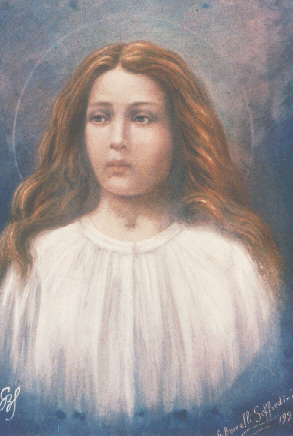
Maria Teresa Goretti was born on October 16, 1890, in Corinaldo, Italy, to a poor but devout farming family. The third of seven children, Maria's early life was marked by the hardships common to agricultural laborers of the era. Her parents, Luigi and Assunta Goretti, instilled in their children a deep faith and a strong work ethic. When Maria was just six years old, her family, in search of better opportunities, moved to Ferriere di Conca, near Nettuno, to work as sharecroppers. Tragically, in 1900, her father died of malaria, leaving her mother to care for the large family alone. This profound loss thrust Maria into a role of greater responsibility, helping her mother with household chores, caring for her younger siblings, and tending to the farm, all while maintaining her innocent devotion to God and her fervent desire to receive her First Holy Communion.
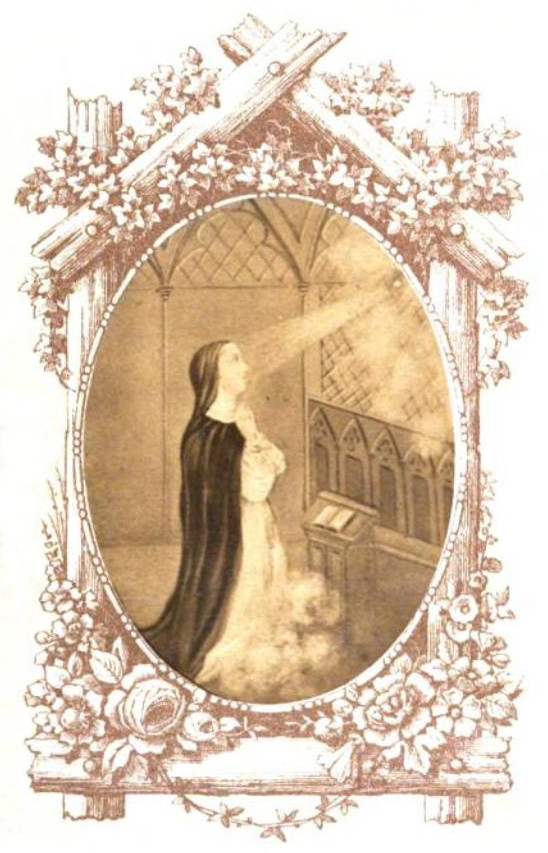
Maria's short life reached its poignant climax on July 5, 1902. While her mother and siblings were working in the fields, Maria was alone at home, mending clothes. Alessandro Serenelli, the 19-year-old son of their landlord and a neighbor, approached her with impure intentions. When Maria resisted his advances, crying out, "No! It is a sin! God does not want it!", Alessandro, in a fit of rage, attacked her with a stiletto, stabbing her fourteen times. Despite her severe wounds, Maria was rushed to the hospital, where she lingered for twenty-two hours. Before succumbing to her injuries, she forgave her attacker, stating, "I forgive Alessandro Serenelli, and I want him to be with me in Paradise." This extraordinary act of charity and her steadfast defense of her purity at the cost of her life cemented her status as a martyr for purity.
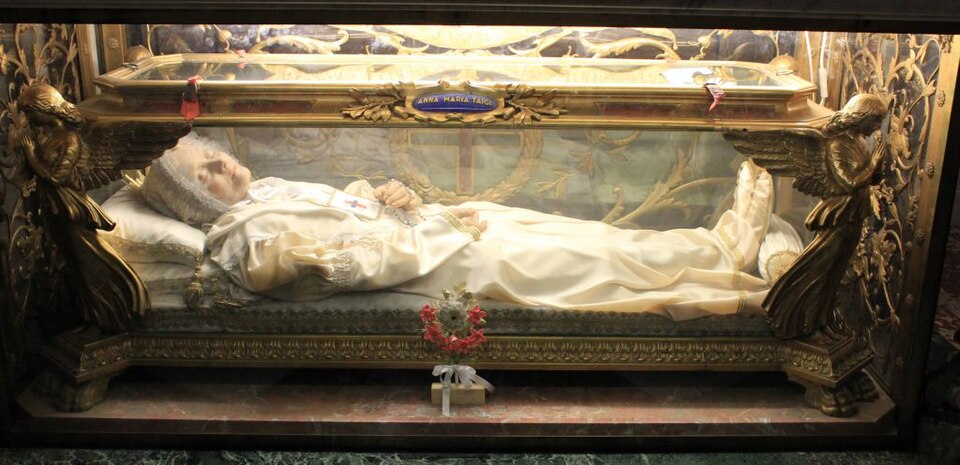
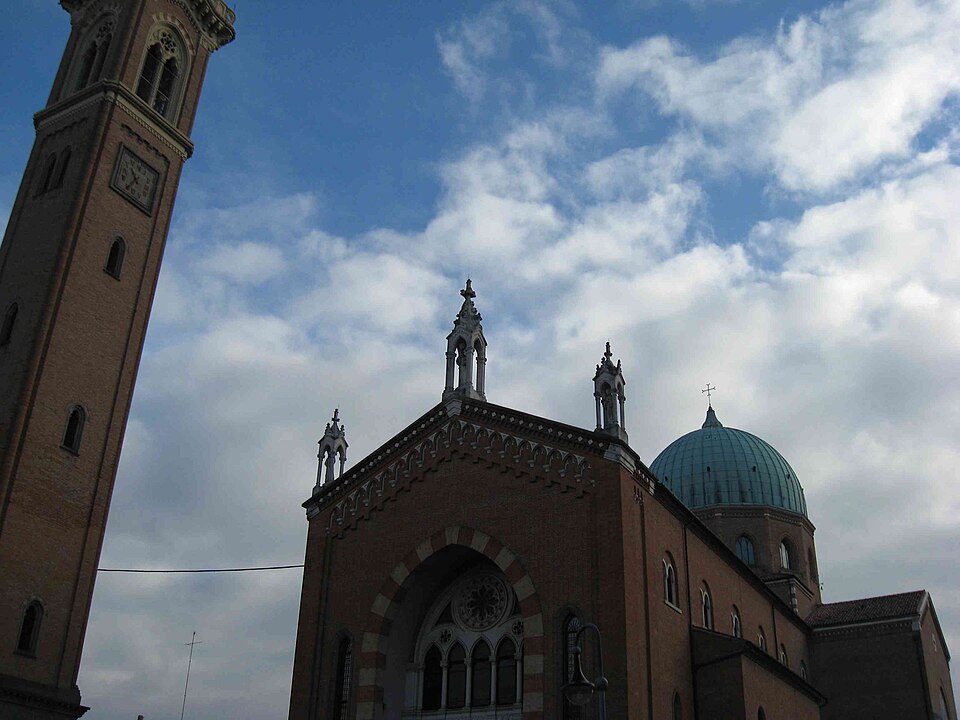
Maria Goretti died on July 6, 1902, and was buried in the Nettuno cemetery. Her story, particularly her heroic forgiveness, quickly spread, inspiring countless faithful. In 1929, Alessandro Serenelli, while serving his sentence, experienced a profound conversion after a dream in which Maria offered him lilies. Upon his release, he publicly sought forgiveness from Maria's mother, Assunta, who, following her daughter's example, granted it. Maria's body was exhumed in 1929 as part of her beatification process and found to be remarkably preserved, a testament to her sanctity. Today, her incorrupt body, encased in a wax effigy, rests in the Basilica of Our Lady of Graces and St. Maria Goretti in Nettuno, Italy, where pilgrims can venerate her.
Saint Maria Goretti was canonized by Pope Pius XII on June 24, 1950, in the presence of her mother and Alessandro Serenelli, a truly unprecedented event in Church history. She is venerated as the patroness of purity, children, and victims of assault, and her feast day is celebrated on July 6th. Her enduring legacy lies not only in her martyrdom for purity but profoundly in her radical act of forgiveness, which transformed the heart of her attacker and continues to inspire millions. Pilgrims visiting Nettuno can experience a profound spiritual encounter at her shrine, reflecting on her courage, innocence, and boundless charity, which shine as a beacon of hope and a powerful example of Christian virtue in the modern world.
Discovery
The story of Maria Goretti’s earthly remains is one intertwined with both tragedy and profound spiritual affirmation. Her body, interred in the Nettuno cemetery following her brutal murder in 1902, lay undisturbed for decades. It was not until 1929, as the process for her beatification gained momentum, that the ecclesiastical authorities deemed it necessary to exhume her remains for canonical recognition. This solemn event, presided over by Bishop Domenico Ruggiero of Albano, took place on a somber day, with local clergy, medical professionals, and witnesses present. To the astonishment of those gathered, upon opening the coffin, Maria’s body was found to be remarkably preserved, especially considering the conditions of burial and the passage of twenty-seven years. While not in a state of perfect, lifelike incorruption often associated with some saints, her skeletal structure was intact, and certain tissues, particularly around her head and face, showed an unusual resistance to decay. The initial examination confirmed the wounds she sustained, providing physical evidence consistent with the historical accounts of her martyrdom. This discovery, though not a complete incorruption, was nevertheless considered miraculous by many, a testament to her purity and sanctity.
Following this initial exhumation, Maria Goretti’s remains underwent further scrutiny and preparation. In 1947, prior to her beatification, a more comprehensive examination was conducted. By this time, the natural processes of decomposition had progressed further, as is to be expected, yet her skeletal structure remained remarkably articulated. It was during this period that a significant decision was made regarding the presentation of her relics. To ensure the long-term veneration of her body while acknowledging the natural changes it had undergone, her skeleton was carefully articulated and encased in a lifelike wax effigy. This effigy, crafted with great care to resemble Maria as she appeared in life, was designed to protect her sacred bones and allow the faithful to visually connect with the young martyr. This method of preservation, while not presenting a miraculously preserved flesh-and-blood body, is a common and reverent practice within the Church for saints whose remains, though not perfectly incorrupt, are still considered precious relics.
The journey of Maria Goretti’s relics has been one of both careful preservation and widespread veneration. After the creation of the wax effigy, her body was placed in a glass casket, allowing pilgrims to view her remains. This casket has been the centerpiece of her shrine in the Basilica di Nostra Signora delle Grazie e di Santa Maria Goretti in Nettuno, Italy, ever since. The basilica itself has become a significant pilgrimage site, drawing countless faithful who come to pray for her intercession and reflect on her heroic virtue. The glass casket, a modern and secure reliquary, protects her remains from environmental degradation while allowing for continuous public veneration. There have been no reports of unusual phenomena such as sweet fragrances or flexibility associated with her remains; rather, the miracle is understood to be the exceptional preservation of her skeleton and the enduring spiritual power of her story. The decision to encase her bones in a wax effigy reflects a practical and reverent approach to relic veneration, ensuring that future generations can continue to honor the physical remains of this beloved saint.
The enduring presence of Maria Goretti’s relics in Nettuno serves as a powerful reminder of her sacrifice and sanctity. While her body did not defy decomposition in the same dramatic way as some other incorrupt saints, the initial discovery of her remarkably preserved remains in 1929, and the subsequent careful articulation and presentation of her skeleton, underscore the Church’s deep respect for the physical vestiges of its holy men and women. The wax effigy, though a human creation, allows pilgrims to contemplate the youthful face of the martyr, connecting them to the purity and courage that defined her brief life. This method of preservation ensures that her sacred bones, the very instruments of her martyrdom, remain accessible for veneration, continuing to inspire countless individuals to live lives of faith, purity, and forgiveness, just as Maria Goretti did.
Spiritual Significance
The phenomenon of incorruption, particularly as exemplified by Saint Maria Goretti, offers a profound theological statement within the Catholic tradition, speaking directly to the sanctity of the human body and the promise of resurrection. In a world often prone to desacralizing the physical, Maria’s miraculously preserved remains serve as a tangible affirmation of Saint Paul’s teaching that our bodies are temples of the Holy Spirit (1 Corinthians 6:19). Her incorruption is not merely a biological anomaly, but a divine sign, a prefigurement of the glorified body promised to all believers at the final resurrection. The Church interprets such incorruption as a special grace, a testament to the extraordinary purity and holiness of the individual, suggesting that even in death, God honors the vessel that housed such profound virtue. It underscores the Catholic belief in the communion of saints, where those who have gone before us remain intimately connected to the living, their physical presence, even in death, offering a powerful spiritual conduit. Maria’s uncorrupted state thus transcends mere historical curiosity, becoming a living sermon on the dignity of human life and the ultimate triumph of grace over decay, a visible bridge between the earthly realm and the eternal glory awaiting the faithful.
Maria Goretti's unique charism was undeniably her unwavering commitment to purity and her heroic forgiveness, virtues that manifested profoundly in her short, yet impactful, life. Born into poverty and hardship, her daily existence was a testament to humility and obedience, as she diligently assisted her mother and cared for her younger siblings after her father's untimely death. However, her most celebrated virtue was her fierce defense of her chastity, even unto death, a heroic act of fortitude that elevated her to the status of a martyr for purity. Her dying words, forgiving her assailant, Alessandro Serenelli, encapsulated a charity so profound it transformed him from a murderer into a penitent, and eventually, a devout convert. This act of forgiveness, born of an innocent and deeply spiritual heart, is perhaps her most enduring legacy, demonstrating the transformative power of Christian love. She did not contribute to a specific spiritual school of thought in the academic sense, but her life itself became a living embodiment of the Gospel's call to purity, forgiveness, and unwavering faith in the face of extreme adversity, a simple yet powerful testament accessible to all.
Devotion to Saint Maria Goretti has flourished since her canonization, particularly among those seeking strength in upholding purity and finding the grace to forgive. Her patronage extends to purity, children, victims of sexual assault, and those struggling with forgiveness. Pilgrims from around the world journey to the Basilica di Nostra Signora delle Grazie e di Santa Maria Goretti in Nettuno, Italy, where her incorrupt body rests within a glass reliquary, allowing for direct veneration. The experience of visiting her shrine is often described as deeply moving and spiritually profound. Many approach her reliquary with prayers for intercession, leaving behind petitions, rosaries, and votive offerings. Novenas and special feast day traditions, particularly around her feast day on July 6th, are observed with great solemnity, drawing countless faithful who seek her intercession and inspiration. The sight of her preserved remains, though a century removed from her tragic death, evokes a powerful sense of her presence and the enduring reality of her sanctity, fostering a deep connection between the earthly pilgrim and the heavenly saint.
Miracles attributed to Saint Maria Goretti's intercession are numerous and varied, ranging from physical healings to profound spiritual conversions. Documented cases include inexplicable cures from serious illnesses, the resolution of seemingly insurmountable personal crises, and, most notably, the spiritual transformation of her murderer, Alessandro Serenelli. His conversion, a direct result of Maria's dying forgiveness and subsequent appearances to him in prison, stands as one of the most compelling miracles associated with her, demonstrating the radical power of grace and intercession. Beyond dramatic events, countless individuals report answered prayers for strength in maintaining chastity, for healing from past traumas, and for the grace to forgive those who have wronged them. The incorrupt body itself, far from being a mere relic, serves as a continuous source of spiritual consolation. For many, gazing upon her preserved form reinforces faith in the afterlife, in the sanctity of the human body, and in the tangible reality of God's presence working through His saints, offering a powerful reminder that even in suffering, divine grace can triumph.
For modern believers and seekers alike, Saint Maria Goretti's enduring message is a powerful antidote to the prevailing materialism and secularism of our age. Her life challenges the notion that human dignity is solely derived from worldly success or physical gratification, instead affirming the profound value of spiritual purity and moral integrity. In a culture that often trivializes sexual morality, Maria's unwavering commitment to chastity, even at the cost of her life, serves as a radical call to uphold the sacredness of the human body and the sanctity of sexual love within its proper context. Her act of forgiveness, extended to her assailant, offers a profound lesson in mercy and reconciliation, a desperately needed message in a world often consumed by anger and retribution. Her incorruption itself acts as a tangible bridge between the visible and invisible worlds, a concrete sign that there is more to existence than what can be perceived by the senses. It reminds us that sanctity is attainable, that God honors those who strive for holiness, and that the ultimate triumph belongs to those who live by faith, hope, and charity, offering a timeless example for navigating the complexities of contemporary life.
AI summary
A plain-language overview generated from this page's source material. Always verify with primary sources.