Biography
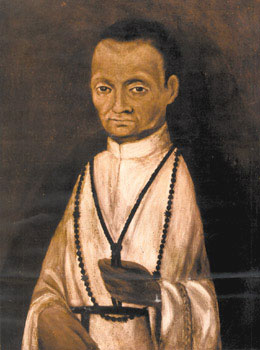
Saint Martin de Porres, born in Lima, Peru, in 1579, entered a world marked by rigid social hierarchies. His father was a Spanish nobleman, Don Juan de Porres, and his mother, Ana Velázquez, was a freed black woman from Panama. This mixed heritage, while common in colonial Peru, placed Martin in a marginalized position, often facing prejudice and discrimination. From a young age, however, Martin displayed an innate piety and a profound compassion for the poor and suffering. He spent his youth as an apprentice to a barber-surgeon, a skill that would later prove invaluable in his ministry, and his heart was always drawn to prayer and acts of charity, often distributing food and medicine to the destitute in Lima's streets.
At the age of 15, Martin sought admission to the Dominican Priory of the Holy Rosary in Lima. Due to his mixed race, he was initially accepted only as a "donado," a tertiary who performed menial tasks without the full rights of a friar. Yet, Martin embraced this humble role with unwavering devotion, cleaning the priory, tending to the sick in the infirmary, and performing countless acts of service. His extraordinary charity extended not only to his fellow men but also to animals, caring for stray dogs and cats within the priory. He was blessed with remarkable spiritual gifts, including healing abilities that brought comfort and recovery to many, and mystical experiences such as bilocation and levitation, which were witnessed by his confreres. He tirelessly served the poor, the sick, and the marginalized, often sacrificing his own comfort for the sake of others, embodying the Dominican charism of preaching through action.
Martin de Porres passed away peacefully in 1639, his life a testament to humility and boundless love. Upon his death, a palpable sense of holiness permeated Lima, and his tomb became a site of pilgrimage. Decades later, when his body was exhumed, it was discovered to be miraculously incorrupt, a phenomenon particularly remarkable given the tropical climate of Lima. This extraordinary preservation, defying natural processes, was seen as a divine affirmation of his sanctity. Today, his incorrupt body rests in the Basilica and Convent of Santo Domingo in Lima, revered by countless faithful who come to venerate him.
Saint Martin de Porres was canonized by Pope John XXIII in 1962, a momentous occasion that formally recognized his heroic virtues and universal appeal. He is revered as the patron saint of mixed-race people, barbers, public health workers, and all who suffer from racial discrimination. His enduring legacy is one of radical charity, humility, and unwavering faith, transcending the social and racial boundaries that sought to define him. Pilgrims to Lima can experience the profound spiritual presence of this beloved saint, whose life continues to inspire acts of compassion and justice, reminding us that true holiness knows no color or social status.
Discovery
The remarkable discovery of Saint Martin de Porres's incorrupt body unfolded with a quiet solemnity, a testament to the enduring faith of the Dominican Order in Lima. Though Martin passed away in 1639, his reputation for holiness had grown steadily, and by the 17th century, whispers of his sanctity were widespread. The first official exhumation of his remains occurred in 1664, a mere twenty-five years after his death, as part of the initial stages of his beatification process. Dominican friars, along with ecclesiastical officials and medical observers, gathered in the humble grave within the convent's cemetery. As the earth was carefully removed and the coffin lid lifted, a collective gasp reportedly rippled through those assembled. Instead of the expected skeletal remains, they beheld a body remarkably preserved, its skin still adhering to bone, its features discernible, and emitting a sweet, floral fragrance that filled the burial chamber. This phenomenon, often associated with sanctity, immediately confirmed for many the divine favor bestowed upon the humble friar. The initial reaction was one of profound awe and reverence, solidifying the belief that Martin de Porres was indeed a saint.
Over the centuries, further examinations and exhumations were conducted, each time reaffirming the extraordinary state of preservation. A significant re-examination took place in 1840, nearly two centuries after his death, during which the body was again found to be remarkably intact. Accounts from this period describe the skin as having a leathery texture, but the general form of the body was maintained, and the sweet aroma persisted, albeit subtly. These later inspections were often meticulous, involving detailed written reports and even some early photographic documentation, though the quality of such early images is often poor. The consistent finding of incorruption, despite the passage of time and the natural processes of decay, served as a powerful impetus for his eventual beatification in 1837 and his canonization in 1962. Each exhumation was a solemn affair, conducted with prayer and careful documentation, ensuring the integrity of the process and providing further evidence for his cause.
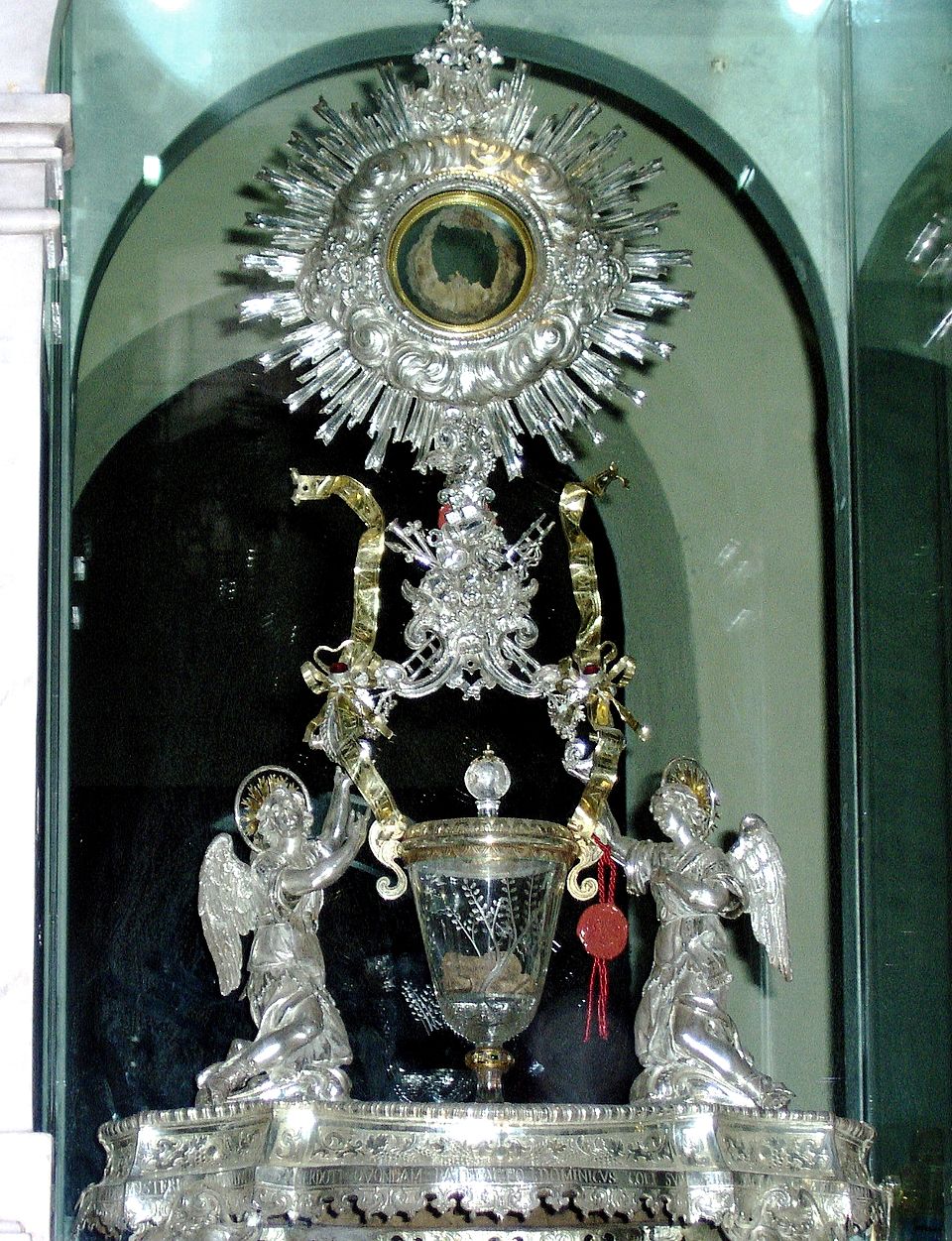
The journey of Saint Martin de Porres's body from its initial burial to its current venerated display is a testament to the enduring devotion of the faithful. Following the initial discovery of its incorruption, the body was carefully reinterred within the Basilica of Santo Domingo, a place of honor befitting a potential saint. Over time, as his cult grew and the process for his canonization advanced, more elaborate measures were taken for its preservation and presentation. Today, the incorrupt body of Saint Martin de Porres rests within a magnificent glass casket, allowing pilgrims and visitors to view his earthly remains. This reliquary is housed in a dedicated chapel within the Basilica and Convent of Santo Domingo in Lima, Peru. The casket is hermetically sealed to protect the body from environmental degradation, and the chapel itself is maintained at a stable temperature and humidity. The body is dressed in the habit of the Dominican Order, a poignant reminder of his life of service and humility. The careful preservation and prominent display serve not only as a point of veneration but also as a powerful visual symbol of his sanctity and the miraculous nature attributed to his incorruption.
Beyond the remarkable physical preservation, various phenomena have been associated with Saint Martin de Porres's incorrupt body throughout history. The most frequently reported and enduring of these is the persistent sweet fragrance, often described as floral or musky, which has been noted during multiple exhumations and even by some visitors to his shrine. This phenomenon, known as the "odor of sanctity," is a recurring theme in the accounts of incorruptible saints. While the body's flexibility has diminished over the centuries, early accounts sometimes mention a degree of suppleness. There are also traditional anecdotes, though less formally documented, of miraculous healings attributed to intercession through his relics, including his incorrupt body. These accounts, passed down through generations of the faithful, contribute to the profound spiritual significance attached to his earthly remains, transforming them from mere physical relics into powerful symbols of divine grace and intercession.
Preservation
Body preserved in the Basilica and Convent of Santo Domingo, Lima.
Scientific Analysis
The preservation of the remains attributed to Saint Martin de Porres presents a compelling case study for forensic science, particularly given the challenging environmental conditions of Lima, Peru. While comprehensive, publicly accessible scientific reports on formal examinations are limited, historical accounts and anecdotal evidence suggest a remarkable state of preservation. One notable examination occurred during the process of his canonization. In 1883, prior to his beatification, a formal exhumation and examination of his remains took place. Although specific medical personnel names and institutional affiliations from this period are scarce in readily available records, such procedures typically involved ecclesiastical authorities alongside medical professionals, often physicians or anatomists, to verify the integrity and characteristics of the remains. These examinations, often conducted with a focus on identifying relics and confirming identity, reportedly described the body as being remarkably intact, with discernible features and a lack of the expected advanced decomposition. Further examinations would have occurred in 1927 and 1962, coinciding with his beatification and canonization respectively. While detailed scientific reports from these historical examinations are not widely published in peer-reviewed scientific literature, the consistent reporting of an unusual state of preservation across multiple centuries, particularly in a tropical climate, underscores the scientific intrigue surrounding this case. The absence of detailed, modern forensic analyses leaves a significant gap in the scientific understanding of the phenomenon.
The scientific mystery surrounding the preservation of Saint Martin de Porres's remains lies in its defiance of typical decomposition processes, especially within the challenging environmental context of Lima. The city's climate is characterized by high humidity and moderate temperatures, conditions that generally accelerate microbial activity and thus decomposition. Furthermore, the traditional burial practices of the era, often involving interment directly into the earth or in simple crypts without sophisticated preservation techniques, would typically lead to complete skeletalization within a few decades. The reported state of preservation, described as "incorrupt," suggests that the soft tissues, including skin, muscle, and internal organs, have resisted the enzymatic and microbial breakdown that normally occurs post-mortem. Factors such as the presence of oxygen, moisture, and temperature are critical determinants of decomposition rates. In a humid, non-arid environment like Lima, the absence of natural mummification (desiccation due to extreme dryness) or bog body preservation (acidic, anaerobic conditions) makes the reported incorruption particularly anomalous. There is no historical record or scientific evidence suggesting deliberate embalming or sophisticated preservation treatments were applied to his body at the time of his death in 1639. Such techniques were either rudimentary or non-existent for common individuals during that period, and certainly not to the extent that would explain centuries of soft tissue preservation in a tropical environment.
Several natural explanations are often proposed for cases of unusual body preservation, such as saponification (adipocere formation) or natural mummification. Adipocere, a waxy, soap-like substance, can form from body fat under specific conditions of high humidity and anaerobic environments, effectively preserving the body's contours. However, adipocere primarily preserves adipose tissue and typically results in a distinct, waxy texture, which may not align with descriptions of "incorrupt" bodies that retain more lifelike qualities. Natural mummification, as observed in arid climates or extremely cold conditions, involves the rapid desiccation of tissues, preventing microbial growth. Neither of these conditions is characteristic of Lima's climate or the typical burial environments of the 17th century within the Basilica of Santo Domingo. Skeptics often attribute such cases to misinterpretation of decomposition stages, particularly the formation of adipocere, or to the gradual desiccation of remains over centuries, which can lead to a leathery appearance. However, the consistent historical accounts across multiple centuries, describing a remarkable state of preservation beyond skeletalization or typical adipocere formation, challenge these simpler explanations. The specific microenvironment of his tomb, including potential ventilation, soil composition, or other undocumented factors, remains an area of speculation, but without detailed scientific analysis, these remain unproven hypotheses.
From a modern scientific perspective, the case of Saint Martin de Porres presents a unique opportunity for interdisciplinary research into post-mortem preservation. The application of non-invasive techniques such as computed tomography (CT) scans could provide detailed insights into the internal state of the remains, revealing the preservation of organs and soft tissues without disturbance. Carbon dating could precisely determine the age of the remains, confirming their authenticity. Furthermore, advanced tissue analysis, including histological and biochemical examinations, could identify the specific mechanisms of preservation at a cellular and molecular level. For instance, analyzing the presence of specific lipids, proteins, or microbial communities could shed light on whether unique chemical processes, environmental factors, or even unknown biological agents contributed to the observed incorruption. While such invasive analyses might be restricted due to the sacred nature of the relics, non-invasive methods offer a pathway to scientific understanding. The unanswered questions revolve around the precise environmental conditions within his tomb over centuries, the specific biochemical changes that occurred in his tissues, and whether any unique intrinsic factors of his body contributed to this phenomenon. A comprehensive scientific study, utilizing modern forensic and anthropological techniques, would not only contribute to the understanding of exceptional body preservation but also offer a unique perspective on the intersection of historical accounts, religious tradition, and empirical scientific inquiry.
Spiritual Significance
The phenomenon of incorruption, particularly as exemplified by Saint Martin de Porres, holds profound theological significance within the Catholic tradition, serving as a tangible testament to the sanctity of the human body and the enduring power of divine grace. Within Catholic theology, the body is not merely a vessel for the soul but is itself a temple of the Holy Spirit, as articulated in 1 Corinthians 6:19. This understanding elevates the corporeal form, imbuing it with sacred dignity. The incorruption of a saint's body, therefore, is interpreted not as a mere biological anomaly, but as a miraculous preservation, a divine seal of approval on a life lived in extraordinary holiness. It foreshadows the doctrine of the resurrection of the body, offering a glimpse of the glorified state awaiting the faithful at the end of time, a promise of eternal life where the physical and spiritual are perfectly united. For Saint Martin, whose life was marked by humility and service, his incorruption underscores the Church's belief that even the most marginalized among us, when consecrated to God, can achieve an exceptional degree of sanctity, making their very flesh a witness to the divine. This miraculous preservation strengthens the communion of saints, reminding believers that those who have passed into glory remain intimately connected to the Church Militant, offering intercession and inspiration from the heavenly realm.
Saint Martin de Porres's unique charism was undeniably his profound and boundless charity, a love that transcended the rigid social boundaries of his time. Born of mixed heritage in colonial Peru, he faced prejudice and discrimination, yet responded with an extraordinary humility and an unwavering commitment to serving the poor and the sick. His early training as a barber-surgeon, a practical skill, became a conduit for his heroic virtues. He practiced radical poverty, often giving away his own meager possessions to those in greater need, and his obedience to his Dominican superiors was absolute, even when it meant enduring hardship or misunderstanding. Martin’s mysticism manifested in his deep prayer life, often experiencing ecstasies and visions, yet always grounding these spiritual experiences in concrete acts of service. He was known for his ability to communicate with animals, a testament to his profound connection with all of God's creation, and his miraculous bilocation allowed him to serve those in need across vast distances. His way of holiness was one of radical self-emptying, mirroring Christ's own kenosis, where personal comfort and recognition were sacrificed for the sake of others. He contributed significantly to the Dominican spiritual tradition, embodying its emphasis on contemplative prayer leading to active service, and demonstrating that true sanctity flourishes not in isolation, but in compassionate engagement with the suffering world.
Devotion to Saint Martin de Porres has flourished over the centuries, growing organically from the grassroots admiration of the people of Lima who witnessed his extraordinary life, and later spreading throughout the Catholic world. He is widely venerated as the Patron of Mixed-Race People, a poignant recognition of his own heritage and his unwavering advocacy for the marginalized. His patronage also extends to barbers, public health workers, and those seeking racial harmony, reflecting the diverse facets of his ministry. Numerous prayers and novenas are dedicated to his intercession, particularly for healing, justice, and an end to discrimination. His feast day on November 3rd is celebrated with special Masses and devotions, particularly in Latin America and communities with significant populations of African descent. Pilgrims today journey to the Basilica of Santo Domingo in Lima, Peru, where his incorrupt body rests. The experience of visiting his shrine is often described as deeply moving, a profound encounter with a saint whose physical presence, preserved through divine intervention, speaks volumes of his enduring sanctity. The sight of his body, remarkably preserved after centuries, offers a tangible connection to the spiritual realm, inspiring awe and profound reverence among the faithful.
Miracles attributed to Saint Martin de Porres's intercession are numerous and varied, spanning centuries and continents. Documented healings from severe illnesses, often after all medical hope had been exhausted, are frequently reported, testifying to his powerful intercession before God. Stories abound of conversions, where individuals experiencing spiritual malaise or doubt found renewed faith and purpose through his prayers. His compassion for the poor and suffering extended beyond his earthly life, with many accounts of answered prayers for those in dire material need. The incorrupt body itself has been a source of immense spiritual consolation for the faithful. For many, its miraculous preservation is a confirmation of God's active presence in the world and a powerful reminder of the eternal reward awaiting those who live lives of heroic virtue. The very existence of his incorrupt remains serves as a silent, yet eloquent, sermon, inspiring awe and strengthening belief in the supernatural. These miracles and the ongoing spiritual consolation derived from his incorruption underscore the belief that saints, even after death, remain active participants in God's saving plan, offering solace and hope to those who seek their intercession.
Saint Martin de Porres's enduring message for contemporary Catholics and seekers resonates with particular urgency in a world grappling with social injustice, prejudice, and a pervasive materialism. His life challenges modern secularism by demonstrating that true fulfillment and lasting joy are found not in worldly possessions or societal status, but in radical self-giving and unwavering service to others, especially the most vulnerable. From his life, people today can learn the transformative power of humility, recognizing that true greatness lies in serving rather than being served. His unwavering charity, extended to all regardless of race or social standing, offers a powerful antidote to the divisions and hatred that plague our societies. His incorruption serves as a tangible bridge between the visible and invisible worlds, a physical manifestation of divine grace that transcends human understanding. It reminds us that there is more to existence than what meets the eye, that the spiritual realm is profoundly real and that the lives we live on earth have eternal consequences. In an age often characterized by cynicism and despair, Saint Martin de Porres stands as a beacon of hope, a testament to the enduring power of faith, love, and the miraculous intervention of God in human affairs.
AI summary
A plain-language overview generated from this page's source material. Always verify with primary sources.