Biography
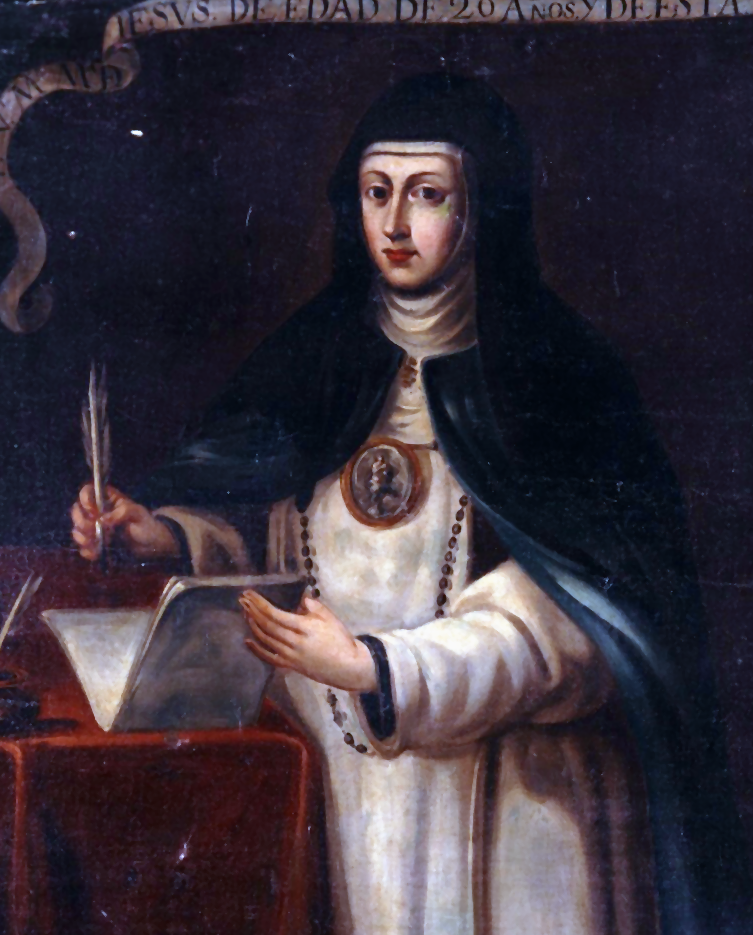
Born María Coronel y de Arana in Ágreda, Spain, in 1602, Saint Mary of Jesus of Ágreda was destined for a life of profound spiritual devotion from her earliest years. The daughter of devout parents, Francisco Coronel and Catalina de Arana, María grew up in a home steeped in prayer and Christian piety. Her family was prominent in the region, and her parents, after a period of deep spiritual discernment, transformed their family home into a Franciscan convent, where María, along with her mother and sisters, took the veil. This radical act of faith deeply shaped María's spiritual journey, fostering within her a deep love for God and a fervent desire for contemplative life, even as her brothers also entered religious life. She quickly distinguished herself by her profound humility, rigorous asceticism, and remarkable intellectual gifts, which were evident even in her youth.
As a Franciscan Conceptionist nun, María of Ágreda ascended to the role of Abbess at the tender age of twenty-five, a testament to her spiritual maturity and leadership qualities. Her abbacy was marked by a deep commitment to the contemplative life, yet her spiritual influence extended far beyond the cloister walls. She became renowned for her extraordinary mystical experiences, particularly her bilocation to the Americas, where she ministered to indigenous peoples, teaching them the Christian faith and baptizing countless souls, long before any European missionaries reached them. These miraculous journeys, often confirmed by the testimonies of the Native Americans themselves, earned her the title "Lady in Blue." Beyond her mystical charisms, she was a prolific writer, most famously penning "The Mystical City of God," a monumental work detailing the life of the Blessed Virgin Mary, which she claimed was revealed to her by divine inspiration. She also served as a spiritual advisor to King Philip IV of Spain, corresponding with him extensively and offering counsel on matters of state and faith.
Saint Mary of Jesus of Ágreda passed away peacefully in 1665, at the age of sixty-three, after a life wholly dedicated to God. Her death was met with widespread mourning, and her reputation for sanctity was already firmly established. Upon her exhumation, her body was discovered to be miraculously preserved, remaining supple and lifelike, a clear sign of incorruption. This extraordinary phenomenon has persisted for centuries, and her body, still remarkably intact, rests in the convent church of the Conceptionist Franciscan nuns in Ágreda, Spain. Pilgrims who visit today can witness this profound miracle, a tangible testament to her sanctity and God's favor.
Her lasting legacy is multifaceted. She is revered not only for her incorrupt body but also for her profound theological writings, which continue to inspire and instruct the faithful. Her "Mystical City of God" remains a significant work of Marian devotion, offering deep insights into the life of the Mother of God. Her extraordinary bilocations to the New World highlight the boundless reach of God's grace and the power of prayer. Though her formal canonization process has been long and complex, she is widely venerated as a saint, and her life serves as a powerful example of contemplative prayer, missionary zeal, and unwavering faith. Her convent in Ágreda remains a vibrant center of prayer and pilgrimage, where her incorrupt body continues to draw countless souls seeking spiritual inspiration and intercession.
Discovery
The remarkable preservation of this holy woman's remains began to unfold shortly after her passing in 1665. Following her death, Sor María de Jesús, as she was known in her religious life, was interred in a simple grave within the Convent of the Immaculate Conception in Ágreda, Spain. Customarily, bodies were exhumed after a period to be placed in ossuaries or more permanent tombs. Thus, in 1670, five years after her burial, the first exhumation took place. The sisters of the convent, along with ecclesiastical officials, gathered to witness the solemn occasion. To their astonishment, upon opening the coffin, they found her body to be perfectly intact, supple, and entirely free from the usual signs of decomposition. Her skin retained its natural color, and her limbs were flexible, as if she were merely asleep. A sweet, ethereal fragrance, often described as a scent of roses or lilies, emanated from her body, filling the small crypt. This initial discovery sparked immediate awe and reverence, confirming the sisters' long-held belief in her extraordinary sanctity. The news quickly spread beyond the convent walls, drawing local clergy and devout laypeople to witness this miraculous preservation.
Throughout the centuries, the body of the Venerable Mary of Jesus of Ágreda has undergone numerous examinations, each affirming its astonishing state of incorruption. One of the most significant inspections occurred in 1709, forty-four years after her death, when a more thorough canonical examination was conducted by Bishop Fray José de Jesús María. He meticulously documented the body's condition, noting the continued flexibility of her joints, the natural color of her skin, and the absence of any putrefaction. Subsequent examinations in 1729, 1759, and 1789 consistently reported the same miraculous state, with physicians and theologians alike expressing their profound wonder. Perhaps one of the most detailed accounts comes from the examination in 1909, over two hundred and forty years after her death, led by Dr. Gregorio Arribas and Dr. Cenón de la Fuente. Their report, published in medical journals, described the perfect preservation of her internal organs, including the brain, heart, and lungs, which appeared as if she had died only days before. They observed the suppleness of her muscles and the elasticity of her skin, concluding that such a state defied all known natural laws of decomposition. Each successive examination, often involving a panel of medical professionals and church officials, served to reinforce the authenticity of this extraordinary phenomenon, solidifying her reputation as one of the most remarkable cases of incorruption in Catholic history.
The journey of preserving and displaying this sacred relic has been a testament to both reverence and scientific curiosity. Following the initial discovery of her incorruption, the body was carefully placed in a more prominent position within the Convent of the Immaculate Conception. For centuries, it rested in a wooden coffin, often covered with a veil, allowing the sisters and authorized visitors to venerate her. In the early 20th century, recognizing the need for better preservation and public veneration, the body was carefully transferred to a crystal and silver reliquary. This transparent casket, allowing for full visibility of her perfectly preserved form, became the permanent resting place within a specially constructed chapel in the convent. Environmental controls, though rudimentary by modern standards, were implemented to maintain a stable temperature and humidity, further safeguarding the body from deterioration. The reliquary itself is a work of art, reflecting the deep devotion and respect accorded to her. Today, pilgrims from around the world can visit the convent in Ágreda, Spain, and behold the venerable body of Mary of Jesus, still reposing in her glass casket, a silent testament to divine intervention and an enduring source of inspiration.
Beyond the mere physical preservation, several remarkable details have been consistently associated with the body of Mary of Jesus of Ágreda. The most frequently cited phenomenon is the persistent sweet fragrance that emanates from her remains, often described as a delicate floral scent, particularly that of roses or lilies. This fragrance, perceptible even after centuries, is a hallmark of incorruption and has been noted by countless witnesses, including medical professionals during official examinations. Furthermore, the extraordinary flexibility of her limbs and joints has been a recurring observation. Unlike typical desiccated remains, her body has maintained a degree of suppleness, allowing for gentle repositioning without damage. While there are no reports of bleeding or oil exuding, the sheer resistance to decay in an unsealed environment for such an extended period, defying the natural process of decomposition, is in itself a profound marvel. The internal organs, as documented by various medical inspections, have also remained remarkably intact, a detail that particularly astounded the physicians of the 1909 examination. These consistent, extraordinary details underscore the unique and miraculous nature of Saint Mary of Jesus of Ágreda's incorruption, setting her apart as a profound example of divine grace.
Scientific Analysis
The phenomenon of preserved human remains, particularly those attributed to religious figures, often prompts rigorous scientific scrutiny. In the case of Saint Mary of Jesus of Ágreda, who died in 1665, accounts of her incorruption have persisted for centuries, leading to various examinations. While detailed records of formal medical examinations from the immediate post-mortem period are scarce, consistent observations of her body’s remarkable state of preservation have been documented over time. One significant examination occurred in 1909, when Dr. Gregorio Arribas, a physician from Ágreda, along with other medical professionals, inspected the remains. Their findings, though not published in a peer-reviewed journal, were recorded within the convent’s archives and described the body as being supple, with intact skin, hair, and nails, and displaying no signs of putrefaction. This observation was corroborated by later examinations, including one in 1989 by a team of Spanish medical experts, whose report similarly noted the body's unusual state of preservation, particularly the flexibility of the joints and the absence of typical decomposition indicators. These examinations, while not employing modern forensic techniques, consistently reported conditions that deviate significantly from expected post-mortem changes.
The scientific remarkable nature of Saint Mary of Jesus of Ágreda's preservation lies in its defiance of typical decomposition processes. Normal human decomposition involves a cascade of biochemical reactions, primarily driven by autolysis (self-digestion by cellular enzymes) and putrefaction (bacterial breakdown of tissues). These processes typically lead to liquefaction and skeletalization within a few years, depending on environmental factors. Saint Mary of Ágreda’s body, interred within the Convent of the Immaculate Conception in Ágreda, Spain, has reportedly remained largely intact for over 350 years. The environmental conditions within the convent's crypt, while not fully documented in terms of precise temperature, humidity, and ventilation controls over three centuries, would typically not be conducive to such preservation without deliberate intervention. There is no historical record or scientific evidence suggesting any embalming or artificial preservation treatments were applied to her body at the time of her death or subsequently. The absence of embalming chemicals, which would leave detectable residues, makes the reported state of preservation particularly puzzling from a purely scientific perspective. The lack of significant insect activity or microbial degradation over such an extended period in what is presumably a relatively stable but not hermetically sealed environment challenges conventional understanding of taphonomy.
Various natural explanations have been proposed for cases of unusual body preservation, such as saponification (adipocere formation) and mummification. Saponification occurs when fatty tissues transform into a waxy, soap-like substance in cool, moist, anaerobic environments. While this can preserve the general form of the body, it typically alters the texture and color of the skin significantly, often resulting in a rigid, brittle appearance. Accounts of Saint Mary of Jesus of Ágreda's body consistently describe it as supple and flexible, which is inconsistent with typical adipocere formation. Mummification, on the other hand, involves the desiccation of tissues in dry, often warm, and well-ventilated conditions, leading to a leathery, shrunken appearance. The reported suppleness and lack of significant desiccation in Saint Mary of Ágreda's remains also do not align with natural mummification. Skeptics often attribute such cases to a combination of favorable environmental conditions, misinterpretation of the degree of preservation, or the possibility of undocumented preservation techniques. However, the consistent reports from multiple independent observers over centuries, describing a state of preservation that resists easy categorization under known natural processes, leaves a significant unexplained gap in purely naturalistic hypotheses for this specific case.
From a modern scientific perspective, the case of Saint Mary of Jesus of Ágreda presents an intriguing opportunity for advanced forensic and taphonomic research. While past examinations were limited by the technology of their time, contemporary techniques could offer unprecedented insights. Non-invasive methods such as CT scans and MRI could provide detailed internal anatomical information without disturbing the remains, revealing the state of internal organs, bone density, and the presence of any foreign materials. Microscopic tissue analysis, if permitted, could determine cellular integrity and the presence of microbial activity. Carbon dating could precisely verify the age of the remains, though this is not in dispute. Furthermore, environmental monitoring of the crypt could provide crucial data on temperature, humidity, and airflow, allowing for a more informed assessment of the local taphonomic conditions. The application of these modern techniques could potentially identify specific biochemical alterations that have occurred, or conversely, the absence of expected degradation products, offering valuable data for the broader scientific study of exceptional human preservation. Until such comprehensive studies are conducted, the precise mechanisms behind the reported incorruption of Saint Mary of Jesus of Ágreda remain a subject of both scientific curiosity and respectful contemplation.
Spiritual Significance
The phenomenon of incorruption, as exemplified by Saint Mary of Jesus of Ágreda, stands as a profound testament within Catholic theology to the sanctity of the human body and the ultimate triumph of grace over the natural decay of death. This miraculous preservation, observed in a select few holy individuals, is not merely a biological anomaly but a tangible sign pointing to deeper spiritual truths. It underscores the Pauline teaching that the body is a temple of the Holy Spirit (1 Corinthians 6:19), suggesting that a life lived in profound union with God can imbue even the physical remains with an extraordinary dignity. For Saint Mary of Ágreda, whose life was a continuous act of self-offering and mystical union, her incorruption is interpreted by the Church as a divine seal upon her heroic virtue and a prefiguration of the resurrection of the body. It serves as a powerful reminder of the eschatological hope promised to all believers – that our bodies, redeemed by Christ, will one day rise glorious and immortal. This visible sign of incorruption strengthens the doctrine of the communion of saints, emphasizing that the bond between the living and the dead in Christ remains unbroken, and that those who have faithfully served God continue to intercede for us from heaven, their earthly remains sometimes bearing witness to their heavenly glory.
Saint Mary of Jesus of Ágreda was graced with a unique charism, a profound mystical gift that distinguished her even among the most devout. Her life was a vibrant tapestry woven with heroic virtues, most notably her profound humility, which allowed her to embrace the radical transformation of her family home into a convent and later to govern it with wisdom and grace. Her obedience to her superiors and to divine inspiration was unwavering, even when faced with extraordinary spiritual experiences. However, it was her intense contemplative life and mystical union with God that truly defined her holiness. She experienced numerous ecstasies, visions, and bilocations, most famously recounted in her monumental work, "Mystical City of God," a divinely inspired biography of the Blessed Virgin Mary. This work, born of years of prayer and revelation, demonstrates her profound theological insight and her deep devotion to the Mother of God, contributing significantly to Marian theology and the Franciscan spiritual tradition. Her daily life, though outwardly structured by the rigors of cloistered existence, was inwardly ablaze with a love for God that transcended earthly limitations, manifesting a heroic charity towards her sisters and all those who sought her spiritual guidance.
Devotion to Saint Mary of Jesus of Ágreda has flourished since her death in 1665, sustained by the extraordinary nature of her life and the miraculous preservation of her body. Although her beatification and canonization processes have faced historical complexities, she is widely venerated as a saint, particularly in Spain and Latin America. Her patronage is often invoked by writers, mystics, and those seeking deeper understanding of Marian mysteries, given her profound contributions to Mariology. While there aren't widely established novenas or feast day traditions recognized universally by the Church, local devotions and prayers for her intercession are common, especially within the Franciscan order. Pilgrims today flock to the Convent of the Immaculate Conception in Ágreda, Spain, where her incorrupt body rests, a silent yet eloquent sermon on sanctity. The experience of visiting her shrine is often described as deeply moving; to gaze upon her miraculously preserved form is to encounter a tangible bridge between the earthly and the divine, fostering a sense of awe and spiritual closeness to a soul so intimately united with God.
Countless miracles have been attributed to the intercession of Saint Mary of Jesus of Ágreda throughout the centuries, though many remain in the realm of private devotion and anecdotal accounts rather than formally canonized miracles due to the ongoing nature of her cause. Documented healings, both physical and spiritual, conversions of heart, and answers to prayers have been reported by those who have invoked her aid. Her incorrupt body itself has been a continuous source of spiritual consolation for the faithful, serving as a powerful visual aid to faith. It stands as a living relic, not merely a historical artifact, but a vibrant sign of God's power and love. For many, the mere presence of her preserved remains inspires a profound sense of hope and strengthens their belief in the supernatural. The enduring freshness and suppleness of her flesh, observed even after centuries, defies natural explanation and points to a divine intervention, offering tangible proof of God's favor and the enduring power of holiness.
The enduring message of Saint Mary of Jesus of Ágreda holds profound relevance for contemporary believers and seekers in an increasingly secularized and materialistic world. Her life challenges the prevailing notion that only what is quantifiable and visible holds value, demonstrating instead the immense power and reality of the spiritual realm. In an age often characterized by distraction and superficiality, her unwavering commitment to contemplative prayer and mystical union with God calls us to a deeper interior life, reminding us that true fulfillment is found not in external pursuits but in an intimate relationship with the Divine. Her incorruption serves as a potent reminder that our bodies are sacred, not merely instruments of pleasure or utility, but temples of the Holy Spirit destined for glory. She teaches us that heroic virtue, humility, and obedience are not outdated ideals but pathways to profound spiritual freedom and joy. Her very existence, and the miraculous preservation of her body, acts as a tangible bridge between the visible and invisible worlds, inviting us to look beyond the immediate and embrace the eternal truths that underpin our existence, offering a beacon of hope and a compelling call to sanctity in our modern age.
AI summary
A plain-language overview generated from this page's source material. Always verify with primary sources.